Our readers keep the lights on and my smoothie glass nicely filled. As an Amazon Associate, I earn from qualifying purchases.
Lower back pain from a desk chair isn’t a character flaw — it’s a geometry problem. Most chairs are built around a one-size-fits-all lumbar bump that misses your spine’s actual curve by inches, leaving you to compensate with poor posture and a sore tailbone by 3 PM. The fix is a chair with adjustable lumbar support that matches your specific lumbar curve, seat depth that keeps your thighs parallel, and a backrest height that reaches your shoulder blades.
I’m Mohammad Maruf — the founder and writer behind WellFizz. I’ve spent hundreds of hours cross-referencing foam densities, lumbar adjustment ranges, mesh tension ratings, and real user feedback to identify which chairs actually deliver the relief they promise.
Whether you work from home full-time or just need to end the day without a stiff lower back, this guide cuts through the marketing fluff to find the best desk chair for back support for your body type, budget, and daily sitting demands.
How To Choose The Best Desk Chair For Back Support
A desk chair’s ability to support your back comes down to four interconnected variables: lumbar adjustability, seat cushion density, backrest height, and tilt mechanism. Chairs that lack adjustment in any of these areas force your body to compensate, which is exactly what leads to that familiar end-of-day ache.
Lumbar Adjustment Range (Depth + Height)
Fixed lumbar bumps are useless for anyone outside a narrow height range. Look for a chair that lets you shift the lumbar support both vertically (to hit the small of your back) and horizontally (to push into your curve, not just press against your spine). A range of at least 3 inches vertical and 1.5 inches horizontal gives you room to dial it in.
Seat Cushion Density and Material
Sponge cushions packed below a 1.5-pound density will sag after three months, dropping your hips below your knees and tilting your pelvis backward. Virgin foam or high-density polyurethane foam (3.5 inches thick or more) resists compression, keeping your pelvis neutral and your lumbar curve intact. Mesh seats eliminate heat buildup but require proper tension to avoid hammocking your hips.
Backrest Height and Shoulder Reach
A low back (mid-back height) supports only the lumbar region; a high back reaches your shoulder blades and helps you maintain upright posture without slumping forward. For users over 5’10”, a backrest under 20 inches tall leaves the upper back unsupported, shifting the load to your neck and lower trapezius.
Tilt Mechanism and Lockable Recline
Synchro-tilt mechanisms allow the seat and backrest to move together, keeping your torso angle consistent as you recline. A lockable recline (three positions minimum) lets you change posture during the day without losing lumbar contact. Fixed upright chairs transfer all your upper body weight to the lumbar pad — a recipe for focused pressure instead of distributed support.
Quick Comparison
On smaller screens, swipe sideways to see the full table.
| Model | Category | Best For | Key Spec | Amazon |
|---|---|---|---|---|
| ELABEST Ergonomic Mesh Office Chair | Mid-Range | All-day coding with maximum airflow | BIFMA 5.1 Certified, 3D armrests | Amazon |
| COLAMY Executive Chair | Premium | Luxury cushion with pop-out lumbar | 6.7″ thick high-density foam cushion | Amazon |
| GABRYLLY Ergonomic Chair with Footrest | Mid-Range | Napping breaks and reclined work | 135° recline with retractable footrest | Amazon |
| MOLENTS Ergonomic Desk Chair | Mid-Range | Full lumbar/arm adjustability at mid-range | 2D lumbar + 3D armrests, BIFMA | Amazon |
| Sharper Image S600 Active Lumbar Chair | Premium | Heated massage with active lumbar | Active lumbar + vibration massage | Amazon |
| CASASIO Ergonomic Office Chair | Mid-Range | Virgin foam seat for heavy sitters | Virgin foam cushion, 300 lbs capacity | Amazon |
| YFO Home Office Desk Chair | Mid-Range | Cross-legged sitting with armless option | Rubber casters, spring-bag seat cushion | Amazon |
| DUMOS Executive Chair with Footrest | Mid-Range | Big and tall users needing a footrest | 58.2 lbs weight, 5-point segmented support | Amazon |
| TRALT Ergonomic Office Chair | Budget | Budget-first buyers wanting basic adjustability | 3.5″ high-density sponge cushion, 330 lbs | Amazon |
In‑Depth Reviews
1. ELABEST Ergonomic Mesh Office Chair

The ELABEST chair earns the top spot because it solves the two things that ruin most desk chairs for back support: breathable mesh that doesn’t trap heat and a bionic-curve backrest with adjustable lumbar that actually follows your spine. The synchro-tilt mechanism locks into three positions with adjustable tension, so you can recline without losing lumbar contact — the difference between a chair that supports you and one that just holds you up.
The seat uses a high-grade stretch-resistant mesh that prevents hammocking, a frequent failure point in cheaper mesh chairs where the fabric sags after six months and tilts your pelvis. The 3D adjustable armrests reduce shoulder strain during typing, and the BIFMA 5.1 commercial certification means this chair is built for daily multi-shift use. Users report zero back pain after three months of ownership, with the caveat that the armrests are better suited for medium-to-large frames.
Assembly averages 20 minutes with clearly labeled parts and included tools. The warranty card connects you directly with the manufacturer for gas cylinder swaps or replacement parts. For the price, this chair delivers commercial-grade adjustability that competes with chairs at three times the cost.
Why it’s great
- BIFMA 5.1 certified for demanding daily use
- Adjustable 2D lumbar with synchro-tilt keeps spine aligned while reclining
- Wide breathable mesh seat prevents heat and pressure buildup
Good to know
- Armrests may be too wide for users under 5’4″
- Lacks a headrest — ideal for focused work, not napping
2. COLAMY Office Ergonomic Desk High Back Executive Chair

The COLAMY is a leather executive chair built for those who refuse to sacrifice cushion depth for ergonomics. The pop-out lumbar support adjusts with a push-button mechanism — not a screw or strap — making mid-day micro-adjustments frictionless. The 6.7-inch thick high-density foam cushion is the thickest in this guide, and the waterfall seat edge relieves thigh pressure that accumulates during marathon sitting sessions.
The flip-up armrests are a practical touch for small desks, tucking the chair under your workspace when not in use. The selected leather upholstery is easy to clean, and the heavy-duty metal base supports up to 300 pounds. Users consistently mention the pop-out lumbar as the standout feature — it protrudes deeper than passive pads, providing genuine lordotic support rather than a vague pressure point.
One caveat: the headrest adjustment buttons can be finicky. A minority of users report the headrest drops to its lowest setting unexpectedly. The chair’s recline range is also moderate, so if you need to lay flat for naps, look elsewhere. Assembly takes 20 minutes with clear instructions.
Why it’s great
- Pop-out lumbar support delivers targeted, adjustable lower back contact
- Extra thick high-density foam cushion resists sagging
- Flip-up arms save desk space and allow easy storage
Good to know
- Headrest buttons can be inconsistent over time
- Limited recline range compared to dedicated task chairs
3. GABRYLLY Ergonomic Office Chair with Footrest
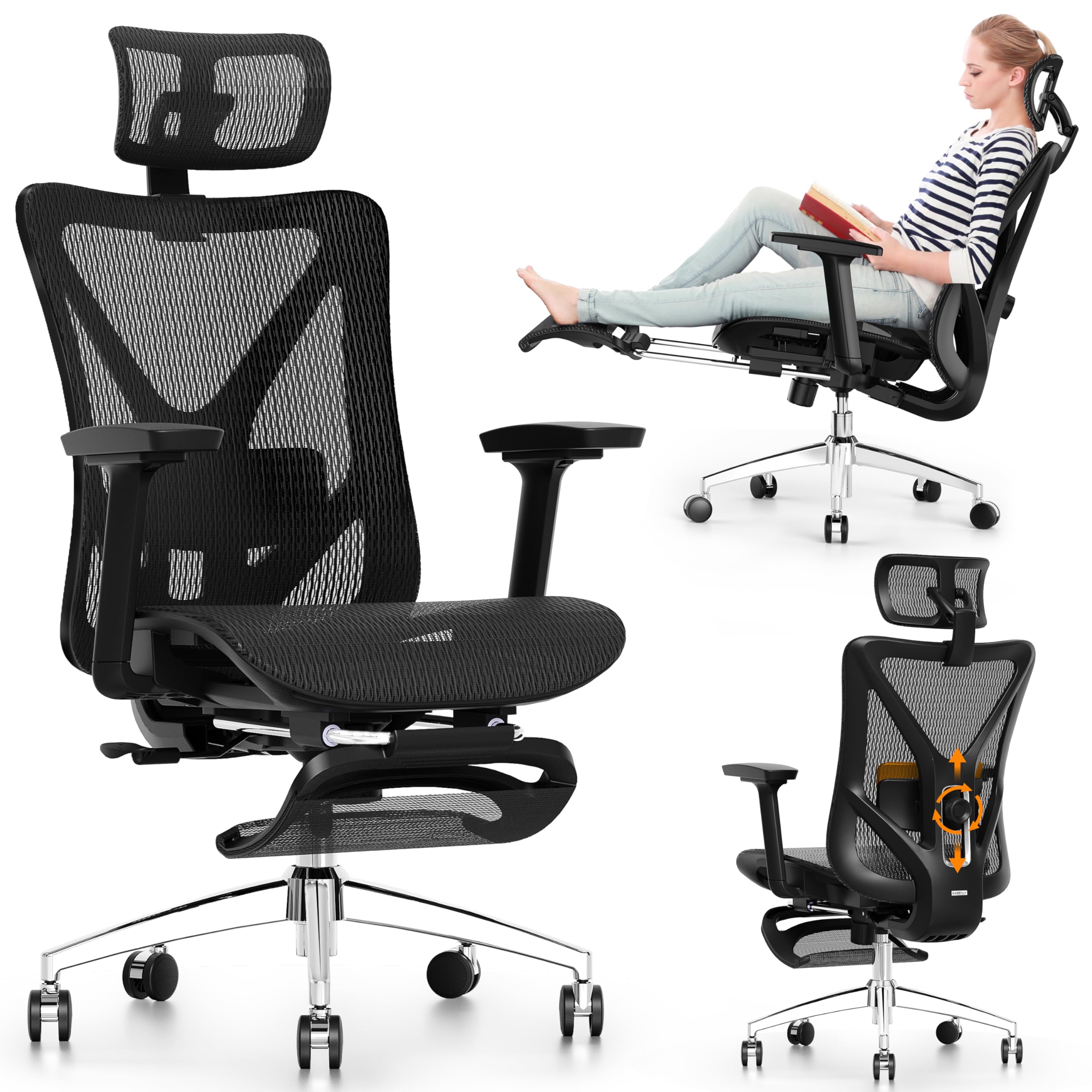
The GABRYLLY is built around the idea that back support shouldn’t vanish the moment you recline. Its 2-way adjustable lumbar support (3 inches vertical, 1.6 inches horizontal) works independently from the 135-degree recline mechanism, so your lower back stays engaged whether you’re upright typing or leaning back reading. The retractable steel footrest extends to 18.1 inches — stable enough to support your legs during actual naps, not just a token foot hammock.
The mesh back is taut and breathable, but the tension is high — users with very thin frames may find the mesh feels stiff against the spine. The 3D armrests adjust in height, width, and depth, though the armrest panels shift slightly under aggressive typing. A heavy-duty steel base with a 27.5-inch leg span provides wobble-free stability even at full recline.
The 3-year parts warranty is better than the 1-year standard in this category. Assembly takes 15-25 minutes. The main trade-off is the price: you’re paying for a footrest and full recline, so if you never nap at your desk, you might overspend on features you won’t use.
Why it’s great
- Adjustable lumbar stays effective throughout the full recline range
- Steel footrest is stable enough for genuine leg support during naps
- Large steel base and 300 lb capacity maximize stability
Good to know
- Mesh back is very taut — may feel stiff for lighter individuals
- Armrest panels shift unintentionally under pressure
4. MOLENTS Ergonomic Desk Chair

The MOLENTS chair packs the highest density of adjustability at its price tier: 2D lumbar support (up-down and forward-backward), 3D armrests, tilt lock at three positions between 90 and 120 degrees, and seat height range from 19.5 to 23.3 inches. The full mesh seat eliminates heat buildup entirely — a critical advantage for anyone working in a warm climate or sitting longer than six hours.
The lumbar support protrudes enough to fill the curve of the lower back without feeling like a rock. Users report that the chair eliminated their lower back pain within three days, often mentioning the adjustable lumbar as the deciding factor compared to fixed-support chairs they’d tried previously. The tilt tension is controlled but firm — you won’t accidentally tip backward while leaning forward to type.
The packaging is compact but cleverly organized: the base legs are stored inside the seat cushion box, so you won’t mistake them for missing parts. Customer service (Alice from MOLENTS) proactively emails after purchase to confirm satisfaction — an uncommon level of post-sale support. The trade-off is that the mesh seat may feel hard to users accustomed to plush foam cushions.
Why it’s great
- Lumbar adjusts both forward/back and up/down for precise curve matching
- Full mesh seat stays cool and prevents heat-related discomfort
- Exceptional customer service with proactive follow-up
Good to know
- Mesh seat is firm — may feel hard to users preferring plush cushions
- Wheels may roll poorly on thick carpet without a mat
5. Sharper Image S600 Active Lumbar Executive Massage Chair
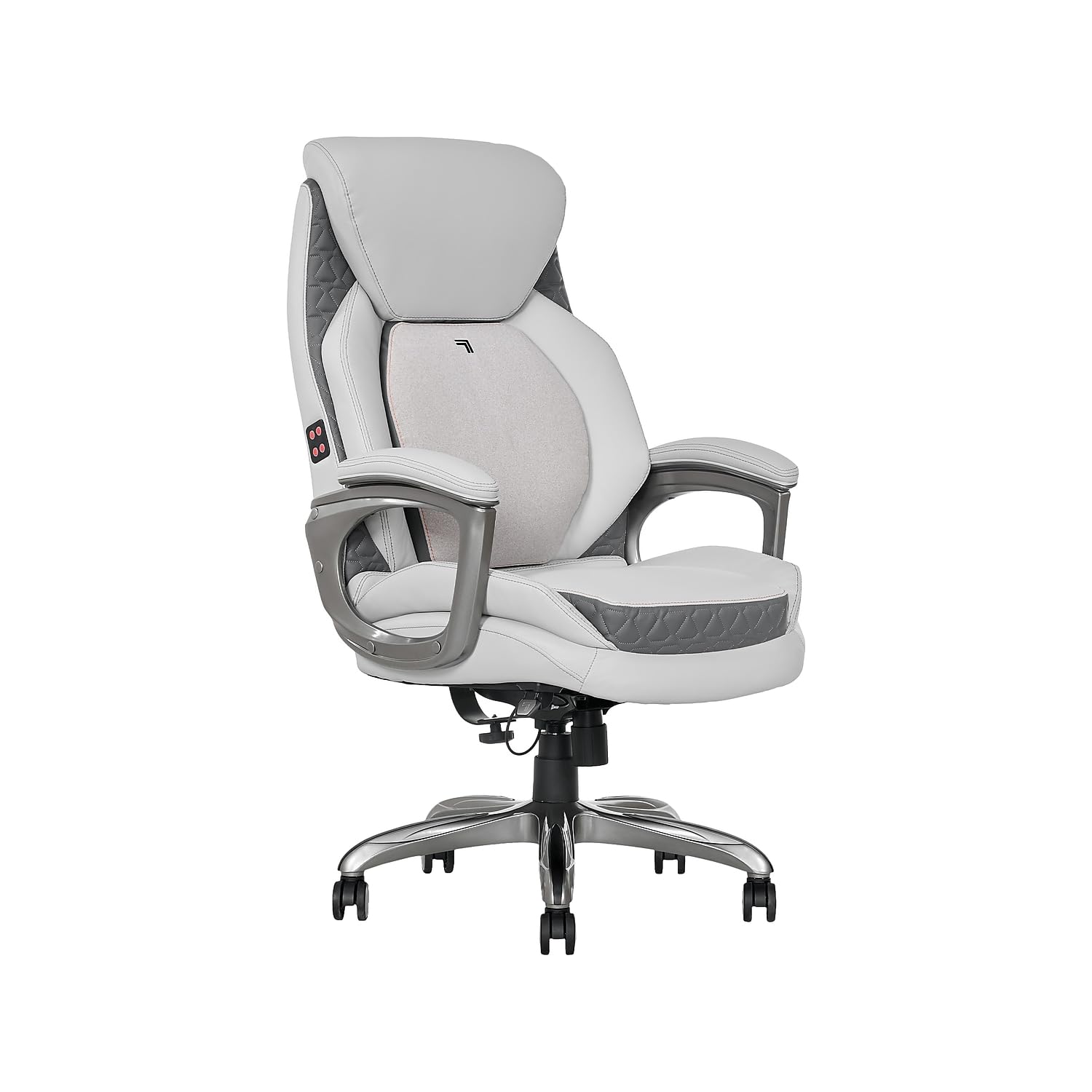
The Sharper Image S600 takes a different approach: instead of a static lumbar pad, it uses an “active lumbar” mechanism that dynamically shifts support as you change posture. The bonded leather upholstery with high-density foam padding is plush enough that users frequently call it “cloud-like” — a legitimate selling point for anyone who finds mesh backs too firm. The built-in vibration massage and heating pad add a comfort layer that helps soothe lower back tension during extended sessions.
The massage function is primarily vibration, and the heat requires a wall outlet (not battery), but for users with chronic lower back tightness, the combination provides noticeable relief throughout the day. The chair is assembled in under 30 minutes, and the padded armrests adjust between 26.75 and 29.75 inches — a solid range for most desk heights. At 5’3”, users report perfect reach to the floor without toe-dangling, and the off-white color resists denim transfer.
The main limitation is the recline range — it does not lean back very far, so this is not a chair for napping or lounging. The massage vibration is subtle, not deep-tissue-level. If your primary need is purely ergonomic back support without frills, a simpler chair with better lumbar adjustability may serve you better.
Why it’s great
- Active lumbar moves with you instead of staying static
- Heated massage function provides genuine lower back relief
- Plush bonded leather with high-density foam is exceptionally comfortable
Good to know
- Massage is vibration only, not deep-tissue kneading
- Limited recline — not suitable for napping or full reclining
6. CASASIO Ergonomic Office Chair (Virgin Foam)
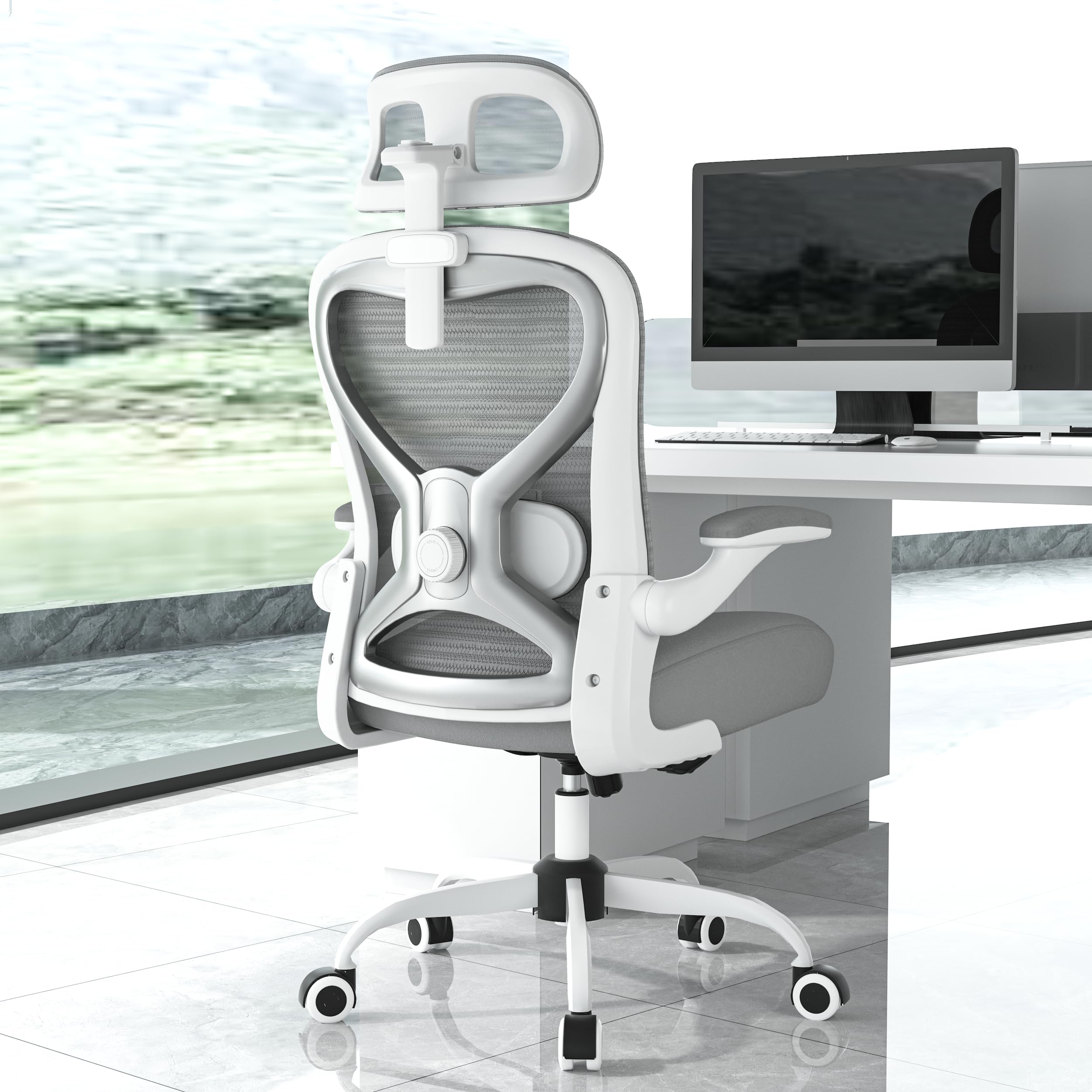
The CASASIO chair uses a 3.5-inch virgin foam cushion — a material choice that matters more than most buyers realize. Virgin foam resists compression better than shredded or recycled foam, meaning the seat maintains its shape and support for years instead of three months. The contoured mesh back follows the spine’s natural S-curve, and the dual-direction adjustable lumbar lets you dial in both height and depth for precise lower back contact.
The 3D adjustable headrest (height, depth, and angle) is a rare feature at this price point — it cradles the neck during reclined reading or breaks without pushing your head forward. The tilt-and-rock mechanism has adjustable tension, allowing you to set the rock resistance to match your body weight. Users consistently mention that the chair eliminates the soreness they experienced with their previous chairs, specifically in the hips and lower back.
Assembly requires patience — the instructions are clear, but some bolts are easy to cross-thread if you overtighten. The nylon frame is lightweight (28 pounds) but rated for 300 pounds, so portability doesn’t come at the cost of durability. The main trade-off is that the mesh back lacks the upper-back support of a high-back chair.
Why it’s great
- Virgin foam cushion resists sagging and maintains structure long-term
- Dual-direction adjustable lumbar matches your specific curve
- 3D headrest adjusts in height, depth, and angle for custom neck support
Good to know
- Assembly can be tricky with potential for cross-threaded bolts
- Mesh back is mid-height, offering less shoulder support for tall users
7. YFO Home Office Desk Chair

The YFO chair is a mid-back leather chair designed for users who prefer to sit cross-legged or without armrests obstructing their movement. The 2-in-1 design lets you install the armrests or leave them off entirely — a quasi-unique feature that nobody else in this guide offers. The seat cushion uses a spring-bag construction (coil springs inside foam) that provides bounce and reduces bottoming-out over long hours.
The rubber casters are genuinely quiet on hardwood and tile floors — a meaningful upgrade over standard plastic casters that sound like ball bearings on concrete. The brown bonded leather has a retro aesthetic that some users describe as “70s race car style.” The 22-inch seat width is generous, accommodating hip width without squeezing, and the backrest foam padding is dense enough to provide support without the need for an adjustable lumbar pad.
However, the back support is passive: there is no adjustable lumbar mechanism. The built-in lumbar curve works well for average-sized users, but taller individuals may find the curve hits too high on their back. Assembly is straightforward, and the instructions include labeled parts. The after-sales service is responsive, with the manufacturer offering replacement parts quickly.
Why it’s great
- Can be used with or without armrests for cross-legged sitting
- Rubber casters roll silently and protect hardwood floors
- Spring-bag seat cushion provides bounce and long-term support
Good to know
- No adjustable lumbar — built-in curve may not fit all spine shapes
- Mid-back design lacks upper back support for taller users
8. DUMOS Executive Chair with Footrest
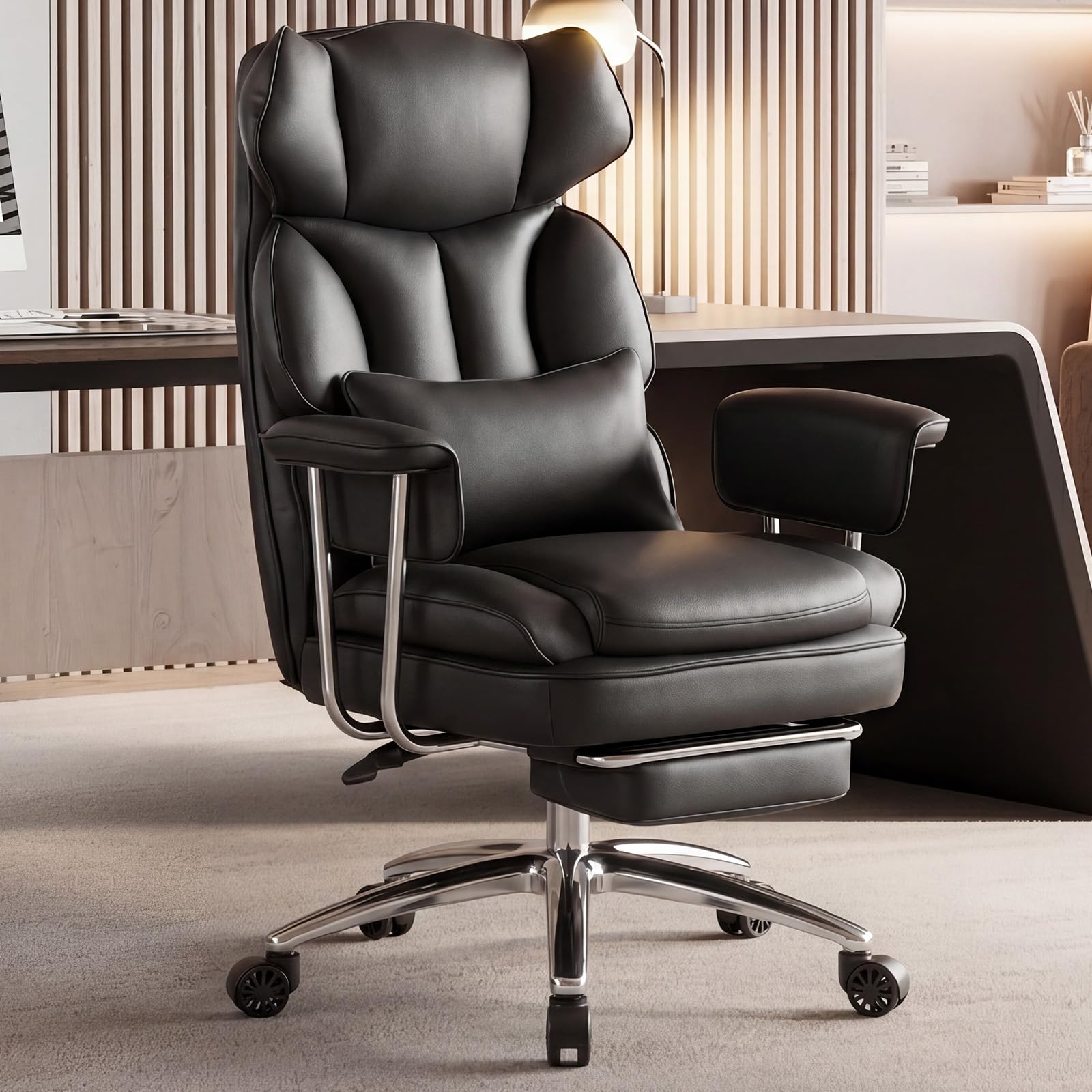
The DUMOS chair uses a three-dimensional segmented foam cushion that supports your head, shoulders, back, buttocks, and legs in five distinct zones — a design more common in premium ergonomic chairs. The memory-sponge material adapts to body pressure, providing personalized support that feels firmer than standard polyurethane foam without being hard. The retractable leather footrest is a genuine perk for midday decompression, extending far enough to support your full lower legs.
The PU leather is environmental-grade with a thick, soft texture that users compare to genuine leather. The reclining back allows a 135-degree tilt, and the tension adjustment lets you customize the resistance. At 58.2 pounds, this is the heaviest chair in the guide — the metal base and SGS-certified Class 3 gas cylinder make it stable under larger frames. Users report that the chair remains creak-free after over a year of daily use, with the five-point support effectively distributing weight and preventing pressure points.
The fixed armrests are the main ergonomic limitation — they cannot be adjusted in width or angle. The chair is also large, so if you have a small workspace, the 58-pound weight and 31.5-inch depth may feel bulky. Assembly is straightforward with clear instructions and a helpful pre-threading tip to avoid cross-threading the bolts.
Why it’s great
- Five-point segmented foam supports body across multiple zones
- Memory sponge conforms to your specific weight distribution
- Durable construction remains stable and silent over years of use
Good to know
- Fixed armrests cannot be adjusted in width or angle
- Bulky size and weight may be excessive for small workspaces
9. TRALT Ergonomic Office Chair
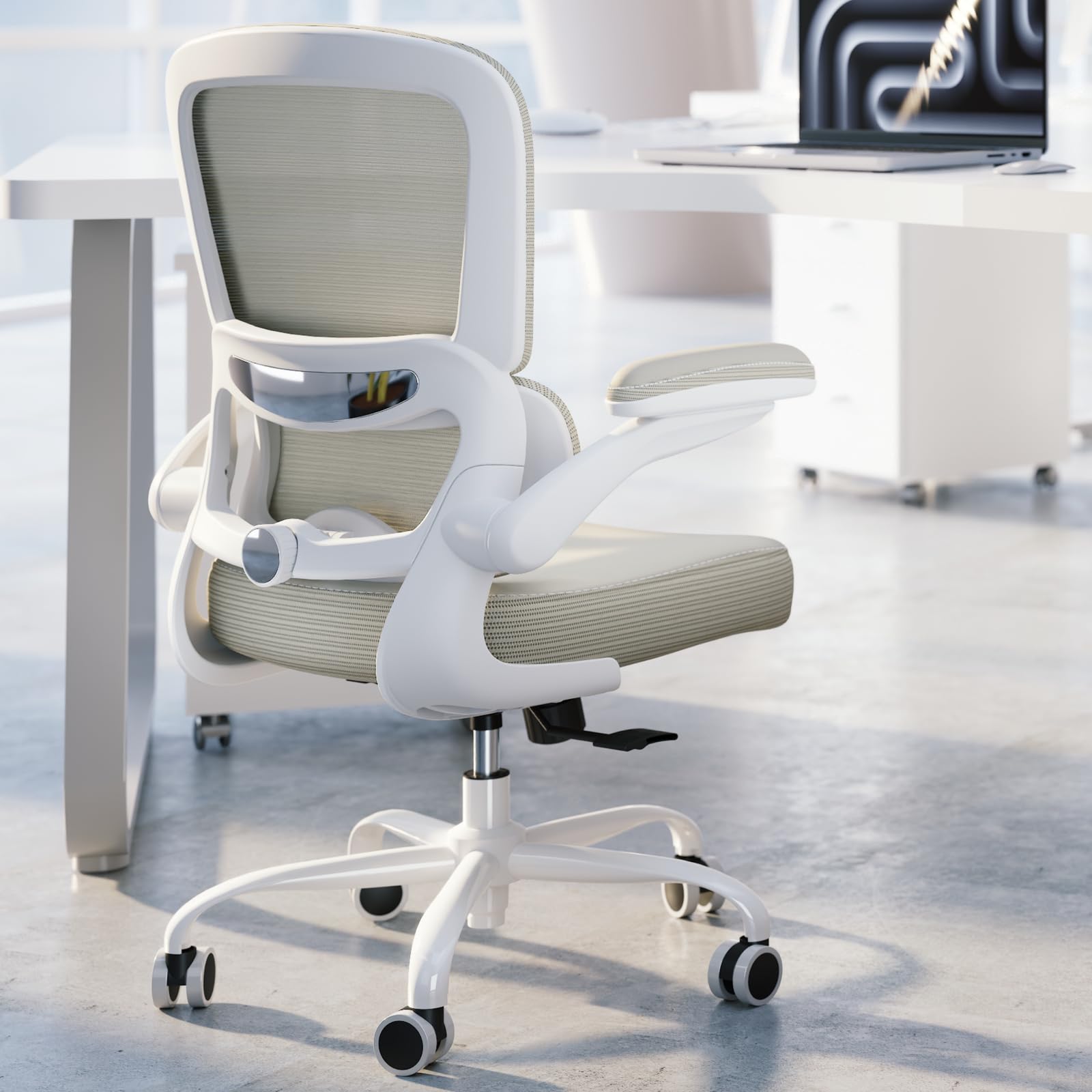
The TRALT chair is the most affordable option in this guide, but it doesn’t cut corners on the fundamentals that matter for back support. The adjustable lumbar support provides a decent range of motion for the price, and the 3.5-inch high-density sponge cushion does not sag noticeably even after extended use. The wider seat (20 inches) distributes weight evenly, and the 330-pound capacity makes it one of the sturdiest entry-level chairs available.
The leather cushion is easy to clean — a practical advantage if you eat at your desk. The mesh backrest keeps your back ventilated, reducing the sticky feeling that plagues all-leather chairs during summer months. Flip-up armrests make the chair easy to tuck under a desk when not in use. Users consistently describe the assembly as hassle-free, with clear instructions and a helpful video taking 25-30 minutes.
The lumbar support is mechanical but less sophisticated than mid-market options — it doesn’t offer horizontal depth adjustment, only vertical positioning. The budget price means the casters are standard plastic, not upgraded rubber, but they roll smoothly on hard floors. If your budget is tight and you need basic back support without sacrificing build quality, this is your chair.
Why it’s great
- High-density sponge cushion resists sagging at a budget price
- 330-pound capacity provides sturdy support for larger users
- Flip-up armrests save desk space and simplify storage
Good to know
- Lumbar support lacks horizontal depth adjustment
- Standard plastic casters, not upgraded rubber wheels
FAQ
Does a higher backrest always mean better back support?
Can a mesh chair provide the same lumbar support as a foam chair?
What is the ideal seat height for preventing lower back strain?
Final Thoughts: The Verdict
For most users, the best desk chair for back support winner is the ELABEST Ergonomic Mesh Office Chair because it combines BIFMA 5.1 commercial-grade durability with 2D adjustable lumbar, 3D armrests, and a breathable mesh seat — all at a price that undercuts premium brands by hundreds. If you want a plush cushion with pop-out lumbar that you can adjust with one hand, grab the COLAMY Executive Chair. And for heavy users or those who need a footrest for reclined work, nothing beats the GABRYLLY Ergonomic Chair.

Mo Maruf
I created WellFizz to bridge the gap between vague wellness advice and actionable solutions. My mission is simple: to decode the research and give you practical tools you can actually use.
Beyond the data, I am a passionate traveler. I believe that stepping away from the screen to explore new environments is essential for mental clarity and physical vitality.