Our readers keep the lights on and my smoothie glass nicely filled. As an Amazon Associate, I earn from qualifying purchases.
A steak knife should glide through a seared crust as though the meat were butter. That same knife hitting a cheap, hard board turns every slice into a micro-battle that blunts the edge, splinters the wood, and scatters precious juices across the counter. A dedicated steak cutting board solves all of that — but only if the grain, depth, and material are matched to the job.
I’m Mohammad Maruf — the founder and writer behind WellFizz. I’ve spent hundreds of hours analyzing wood grain patterns, board thickness, and juice-management systems to understand exactly what separates a carving surface that protects your cutlery from one that destroys it.
This guide cuts through the noise to deliver the best options, grouped by build quality and performance. Whether you prefer end-grain teak or a massive bamboo slab, the right cutting board for steak will keep your knives sharper and your countertops cleaner.
How To Choose The Best Cutting Board For Steak
The biggest mistake home cooks make when buying a steak board is prioritising looks over grain type. A beautiful flat-sawn board will show deep cut marks after a single prime rib session, and those grooves become hiding spots for bacteria. You need a surface that self-heals, stays stable, and channels juices away from your work surface.
End-Grain vs. Edge-Grain vs. Bamboo
End-grain boards — made by gluing together small blocks of wood with the grain facing up — allow knife edges to slip between the fibres rather than slicing through them. This keeps your blades sharper and the board looking newer for years. Edge-grain boards are less expensive but show scars faster. Bamboo is harder than most hardwoods and will dull your knives noticeably quicker unless you go with a parquet (end-grain) bamboo construction.
Thickness, Weight, and Stability
A steak board needs to sit dead flat and not skate across the counter when you bear down on a bone-in ribeye. Look for at least 1.5 inches of thickness; boards in the 1.7 to 2-inch range offer enough mass to stay planted without rubber feet. Non-slip feet or a recessed base help, but sheer weight does the heavy lifting.
Juice Groove Depth and Pour Spouts
Shallow grooves that are only a quarter-inch deep overflow the moment you carve a resting steak. The best boards for steak have grooves at least half an inch deep and a corner reservoir or pour spout so you can redirect drippings straight into a pan for gravy. A reversible board with a juice groove on one side and a flat surface on the other gives you the best of both worlds.
Quick Comparison
On smaller screens, swipe sideways to see the full table.
| Model | Category | Best For | Key Spec | Amazon |
|---|---|---|---|---|
| Dalstrong Lionswood Teak | End-Grain Teak | Knife-edge protection | 2″ thick end-grain teak | Amazon |
| BABILONIA Black Walnut | End-Grain Walnut | All-in-one prep & serve | 1.7″ thick end-grain walnut | Amazon |
| WoodForChef Walnut | Edge-Grain Walnut | XL surface for large roasts | 24″x18″x1.5″ walnut | Amazon |
| Totally Bamboo Pro Board | End-Grain Bamboo | Eco-friendly heavy carving | 2″ thick end-grain bamboo | Amazon |
| Greener Chef Bamboo | Bamboo | Turkey & brisket carving | 24″x18″x0.75″ bamboo | Amazon |
| FANICHI Acacia | End-Grain Acacia | Budget-friendly full-size board | 17″x13″x1.5″ acacia | Amazon |
| GAOMON Acacia | Edge-Grain Acacia | Stovetop cover & large prep | 24″x18″x1.1″ acacia | Amazon |
In‑Depth Reviews
1. Dalstrong Cutting Board – Lionswood End-Grain Teak

The Dalstrong Lionswood board is the benchmark for knife-friendly steak carving. At 2 inches thick with genuine end-grain teak, the fibrous structure absorbs the impact of each cut rather than blunting your edge. The alternating wood-grain direction — a checkerboard of small blocks — allows the board to self-heal, so deep gouges from a carving knife close back up over time with proper oiling. Steel carrying handles embedded into the sides turn this into a serving platter that can go straight to the table without transferring the mess.
Teak’s natural oils make this board highly resistant to moisture absorption and discolouration, which matters when you are cutting into a juicy medium-rare steak that pools liquid on the surface. The half-moon cut-out near the edge lets you slide chopped produce or carved slices directly into a pan or bowl without lifting the board. At roughly 16 inches by 12 inches, the footprint is manageable for most counters while still offering enough room for a full porterhouse or two ribeyes side by side.
One downside reported by a small number of buyers is that the board can arrive dry or cracked if the packaging fails during shipping. Dalstrong’s replacement service appears to handle this promptly, often sending a pre-seasoned board with a moisture packet. This is a premium piece that requires regular conditioning with mineral oil or beeswax to maintain the teak’s resilience. For a dedicated steak board that protects your knife investment, this is the top contender.
Why it’s great
- Full 2-inch end-grain teak absorbs knife impact and resists warping
- Steel handles and plate cut-out make serving and transfer seamless
- Natural teak oils repel moisture and discolouration from meat juices
Good to know
- Some units may arrive with cracks; check packaging and season immediately
- Requires monthly mineral oil treatment to keep the end-grain elastic
2. BABILONIA American Black Walnut Cutting Board
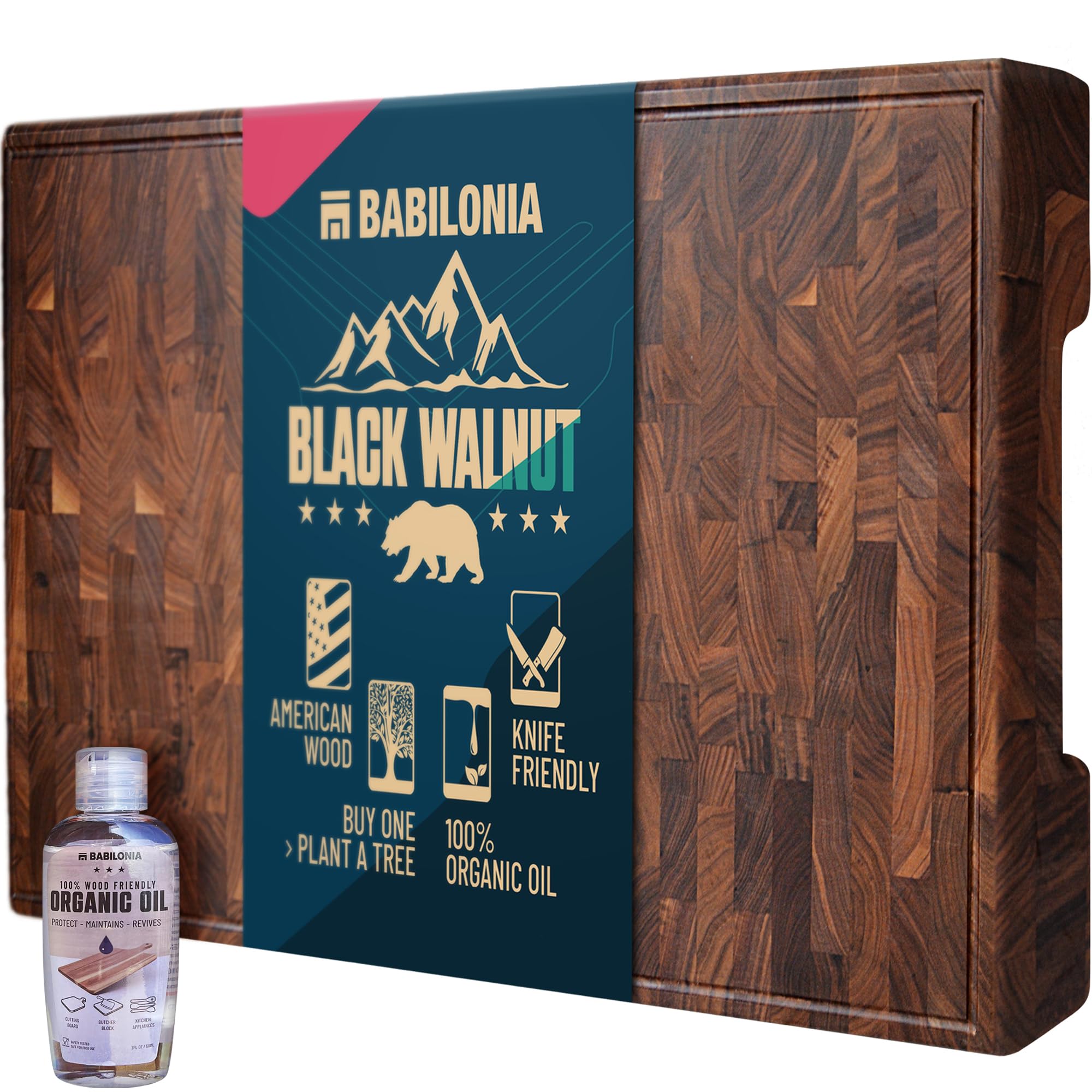
The BABILONIA board hits the sweet spot of end-grain performance and extra-thick stability at 1.7 inches. Crafted from 100% American black walnut, the end-grain surface is noticeably softer on knife edges than edge-grain or bamboo alternatives. The board comes pre-seasoned with mineral oil and includes a small dish that fits into a clever undercut groove, allowing you to slide chopped steak trimmings or garlic directly into the dish without bending. This is a genuinely useful feature when you are juggling multiple prep tasks.
At 19.7 inches long and 12.2 inches wide, the board provides ample space for carving multiple steaks while the built-in juice groove runs along the perimeter. The groove is deep enough to hold drippings from a resting strip loin without overspill. The hidden handle design keeps the profile clean and reversible, so you can flip it for serving charcuterie or cheese. Rubber feet on the base prevent sliding even on smooth granite surfaces.
The walnut finish darkens beautifully with each oiling, and the included bottle of organic conditioning oil makes first-month care simple. One buyer reported a split after two months, but BABILONIA’s customer service replaced the board quickly. This is a mid-range price point for a true end-grain walnut board, making it the most balanced choice for steak enthusiasts who want knife protection without the full teak premium.
Why it’s great
- 1.7-inch end-grain walnut is supremely knife-friendly and stable
- Innovative undercut groove holds a plate for easy ingredient transfer
- Pre-seasoned and includes oil — ready to use out of the box
Good to know
- The plate slot may not accommodate very large serving bowls
- End-grain walnut requires periodic oiling to maintain self-healing properties
3. WoodForChef Extra Large Walnut Cutting Board

When you need to carve an entire brisket or a pair of tomahawk steaks without bumping elbows with the board edge, the WoodForChef XL delivers a massive 24-by-18-inch surface. At 1.5 inches thick and weighing over 13 pounds, this board is not going anywhere once you set it down. The edge-grain walnut construction is not as forgiving on knives as end-grain, but it is significantly more durable against deep scoring and requires less frequent conditioning than softer woods.
The deep juice groove encircles the entire board, and the generous well at the corner collects drippings for easy gravy-making. WoodForChef uses FSC-certified North American hardwood and pre-seasons the board with a mineral oil and beeswax blend. Out of the box, it is ready for immediate use, though some buyers note that an initial extra coat of oil helps the walnut grain fully hydrate. The reversible design gives you a clean surface on the reverse side for prepping vegetables away from raw meat.
The size is the double-edged sword — this board takes up serious counter real estate and will not fit in a standard sink for cleaning. You will need to wipe it down with a damp cloth and dry it upright. For steak-focused cooks who own a dedicated carving station or have ample counterspace, this board provides a stable, stain-resistant base that handles the heaviest roasts without complaint.
Why it’s great
- Monumental 24×18-inch surface fits whole briskets and tomahawk steaks
- FSC-certified walnut is pre-seasoned with beeswax and mineral oil
- Deep juice groove and corner well prevent countertop mess
Good to know
- Edge-grain construction is harder on knife edges than end-grain
- Too large for most sinks; requires upright drying after hand-washing
4. Totally Bamboo Pro Board 16×16
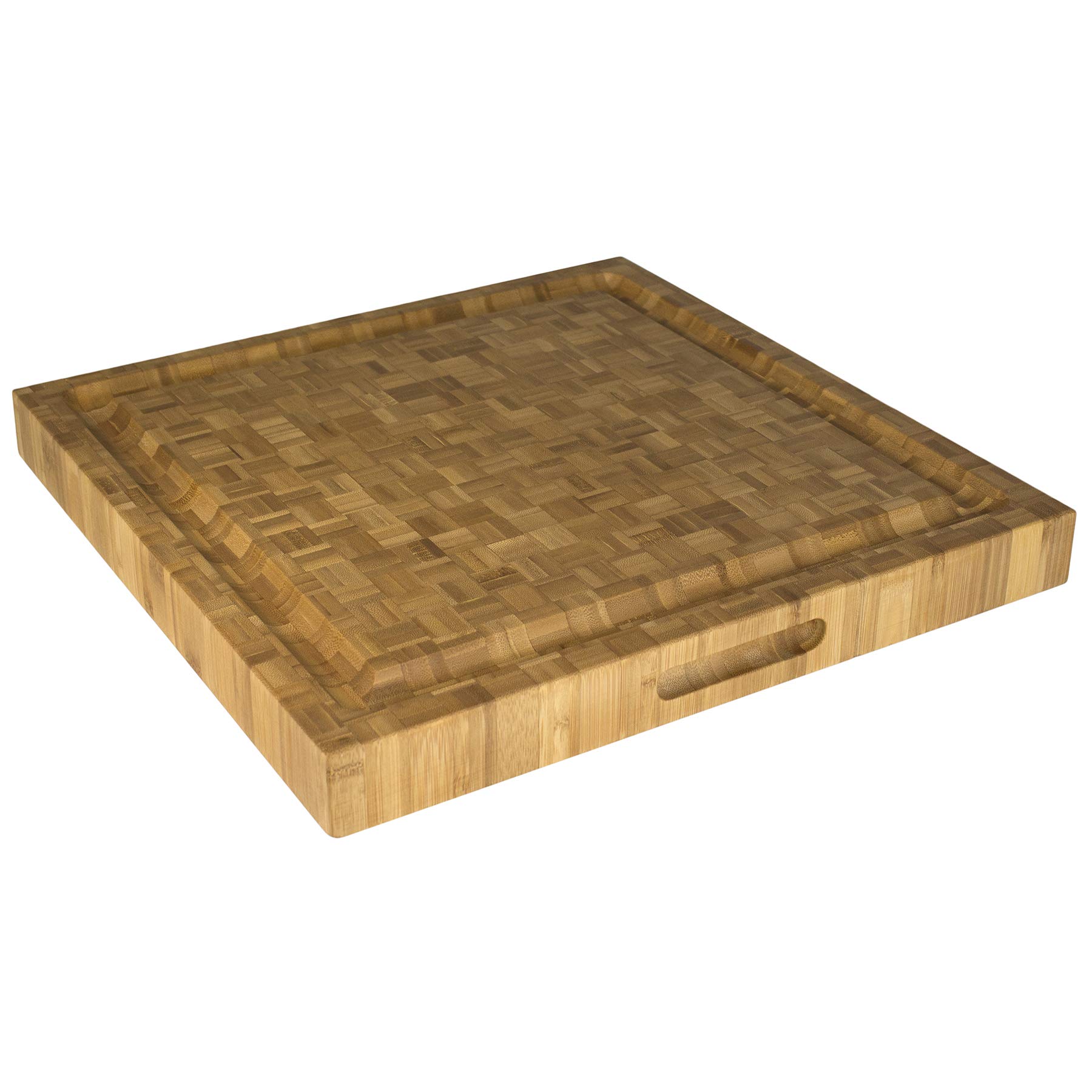
The Totally Bamboo Pro Board is an exception to the rule that bamboo dulls knives. This board uses parquet end-grain construction — small bamboo blocks oriented vertically — which mimics the self-healing properties of end-grain hardwood. At a full 2 inches thick and weighing over 10.5 pounds, it provides the mass and stability needed for heavy steak carving. The square 16-by-16-inch shape offers a generous cutting field without dominating the counter.
A deep, wide juice groove runs along the interior edge of the board, capable of holding a surprising volume of liquid from a resting roast. The non-skid rubber feet keep the board planted even during vigorous slicing. Moso bamboo, the material used, is significantly harder than most domestic hardwoods, but the end-grain orientation prevents the board from becoming a knife killer. Buyers consistently report that this board shows far fewer cut marks than standard bamboo boards after months of use.
One design choice worth noting: the board is one-sided, so the juice groove is always on top and the flat bottom cannot be used as a secondary cutting surface. The bottom also features a tapered hollow section that reduces weight without sacrificing stability. This board does require regular mineral oil applications, and the initial bamboo smell fades after the first wash and oiling. For an eco-conscious cook who wants end-grain performance from a rapidly renewable material, this board is a strong contender.
Why it’s great
- 2-inch end-grain bamboo rivals hardwood in knife-friendliness
- Deep juice groove holds ample drippings for gravy
- Heavy 10.5-pound mass keeps board stable during carving
Good to know
- One-sided design means the juice groove is always exposed
- Hollow bottom cannot be refinished; limits long-term renewal
5. Greener Chef Extra Large Bamboo Carving Board
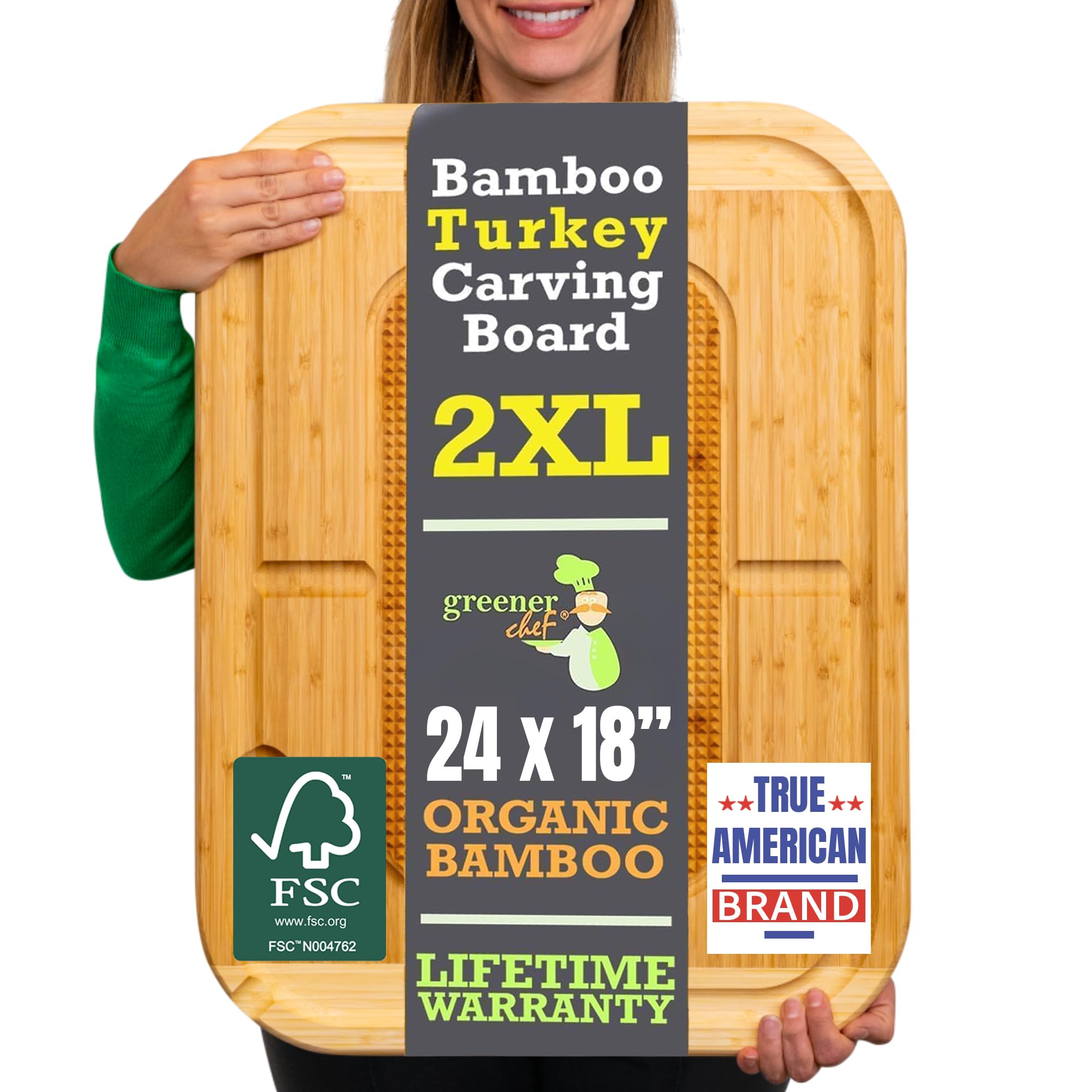
The Greener Chef board is purpose-built for the carving stage of steak preparation. Measuring 24 by 18 inches with a thickness of three-quarters of an inch, it is thinner than the premium boards in this list, but its design compensates with features aimed squarely at large cuts of meat. The board includes two rows of meat-holding spikes on one side that grip a turkey or roast in place, preventing the dangerous sliding that can occur when carving a fatty prime rib. The reverse side is flat for general chopping.
The juice management system is the star here. A deep half-cup well sits in one corner, connected to a channel that funnels drippings directly to a pour spout. You can tilt the board and pour the collected juices straight into a pan without spilling. The diamond-texture pattern on the carving side adds grip for the meat, though those same grooves make cleaning slightly more tedious — a brush is needed to dislodge food particles from the textured surface.
Bamboo at this price point is harder than walnut or acacia, so you will notice slightly faster knife dulling compared to end-grain boards. Greener Chef offers a lifetime replacement warranty against cracking or warping, which adds peace of mind for a board this large. At a hair under 7 pounds, it is easy to lift and store despite the oversized footprint. This is the board to grab when the holiday roast or Sunday steak dinner is the main event.
Why it’s great
- Integrated meat spikes hold large roasts steady during carving
- Deep corner well with pour spout lets you collect drippings cleanly
- Lifetime replacement warranty covers cracking and warping
Good to know
- Diamond texture on carving side requires brush cleaning
- Bamboo surface dulls knives faster than end-grain hardwood
6. FANICHI Acacia End Grain Cutting Board

The FANICHI board proves that entry-level pricing does not mean sacrificing end-grain construction. At 17 by 13 inches with a 1.5-inch thickness, this acacia board provides a solid, knife-friendly surface for carving steaks without breaking the bank. The end-grain pattern is vertically oriented, which means the board absorbs knife impacts rather than deflecting them, preserving your edge through multiple servings. Acacia is naturally dense and water-resistant, making it a reliable choice for daily steak prep.
The dual-sided design is thoughtfully executed. One side features a juice groove around the perimeter with inner side handles for easy transport. The reverse side has three built-in compartments — perfect for separating cooked steak slices from raw vegetables or holding dipping sauces. This makes the board unusually versatile: it works as a carving station, a serving platter for charcuterie, or a prep board for mise en place. Given the accessible tier, having end-grain construction at all is exceptional value.
A few buyers note that the board shows scratches more readily than pricier hardwoods, which is typical of acacia’s softer grain. That visual wear does not affect performance, but it means the board will develop a patina faster. Following the hand-wash-only care instructions and applying mineral oil every few weeks extends the life considerably. For the budget-conscious cook seeking an end-grain board that will not destroy steak knives, this is a smart entry point.
Why it’s great
- True end-grain acacia protects knife edges without a premium price
- Reversible with juice groove on one side and three compartments on the other
- 1.5-inch thickness provides stable cutting platform
Good to know
- Acacia scratches more visibly than walnut or teak
- Compartments on the reverse side limit flat cutting area
7. GAOMON XXL Acacia Cutting Board

The acacia wood construction at 1.1 inches thick is lighter than the thicker boards in this guide, but the sheer surface area makes it an excellent choice for cooks who need to carve large steaks and also want a board that doubles as a stove cover or a noodle-rolling station. The edge-grain pattern is sturdy and resists warping, though it will show cut marks faster than end-grain alternatives.
A built-in juice groove runs along the edges to catch escaping liquids, and the board is reversible so you can keep one side for raw meat and the other for cooked items or serving. At roughly 9 pounds, it is heavy enough to stay put during use but light enough to lift for cleaning or storage. Buyers regularly mention using this board to cover a gas stovetop, effectively reclaiming counter space in a compact kitchen — a smart dual-purpose move when preparing steak dinners.
The primary trade-off is the thinner profile. At 1.1 inches, the board has less thermal mass and may feel less substantial under heavy carving pressure compared to the 1.5-inch-and-up models. It also lacks the self-healing properties of end-grain wood, so deep cuts from a carving knife will remain visible. For cooks who prioritise massive surface area and multi-functionality over knife-edge protection, however, the GAOMON delivers incredible utility at a reasonable cost.
Why it’s great
- Massive 24×18-inch surface fits whole roasts and doubles as stove cover
- Edge-grain acacia resists warping and stays flat on counters
- Juice groove keeps countertops clean during carving
Good to know
- Edge-grain shows permanent cut marks and does not self-heal
- 1.1-inch thickness feels less solid than thicker carving boards
FAQ
What grain type is best for a steak cutting board?
How thick should a steak cutting board be?
Can I use a bamboo board for steak without dulling my knives?
What is the best wood for a steak cutting board?
How do I clean and maintain a wooden steak cutting board?
Final Thoughts: The Verdict
For most users, the cutting board for steak winner is the BABILONIA American Black Walnut Cutting Board because it delivers genuine end-grain knife protection at a mid-range price with the thoughtful plate slot for easy ingredient transfer. If you want the ultimate in knife-edge preservation from a dense, moisture-resistant wood, grab the Dalstrong Lionswood Teak Board. And for massive carving projects like tomahawk steaks or whole briskets, nothing beats the WoodForChef Extra Large Walnut Board for sheer surface area and stability.

Mo Maruf
I created WellFizz to bridge the gap between vague wellness advice and actionable solutions. My mission is simple: to decode the research and give you practical tools you can actually use.
Beyond the data, I am a passionate traveler. I believe that stepping away from the screen to explore new environments is essential for mental clarity and physical vitality.