Our readers keep the lights on and my smoothie glass nicely filled. As an Amazon Associate, I earn from qualifying purchases.
The promise of a basic phone is simple: calls, texts, and a battery that lasts longer than your patience for apps. Yet the market is flooded with devices that claim simplicity but deliver frustrating carrier lock-ins, menus with too many layers, or hardware that breaks within weeks. Finding a reliable handset that truly strips away complexity without sacrificing call quality or durability is harder than it should be.
I’m Mohammad Maruf — the founder and writer behind WellFizz. This guide is the result of many hours spent analyzing carrier compatibility lists, battery specs, button layouts, and real user feedback across dozens of models to separate the genuinely simple phones from the impostors.
Whether you need a distraction-free device for digital detox, a rugged companion for the job site, or an easy-to-use phone for a senior family member, the best basic phone must balance tactile hardware with reliable network support and day-long power.
How To Choose The Best Basic Phone
Buying a basic phone means prioritizing a short list of non-negotiable features over flashy specs. The best device for you will depend entirely on your carrier, your tolerance for tiny buttons, and whether you need the phone to survive a drop onto concrete. Here are the three factors that matter most.
Carrier Compatibility Is Everything
A basic phone that doesn’t work on your network is just a paperweight. Many budget-friendly and even premium models are locked to a single carrier or only support specific bands. Before considering any other feature, confirm the phone supports your carrier’s 4G LTE bands. T-Mobile and its MVNOs often have the widest selection of unlocked basic phones, while Verizon and AT&T phones tend to be locked and require their own prepaid plans. Always check the product description for explicit carrier compatibility statements — “Not compatible with Verizon Post Paid” or “For T-Mobile ONLY” are deal-breakers if you are on the wrong network.
Battery Life: Talk Time vs. Standby Time
Basic phones are expected to last days, not hours. Pay attention to two numbers: talk time and standby time. A phone with a higher mAh capacity generally provides longer standby, but talk time depends heavily on the processor efficiency and network signal strength. For users who make frequent calls, look for a phone with at least 10 hours of rated talk time. For occasional use, a smaller battery with easy recharging via a charging dock might be more convenient than raw capacity.
Button Size and Build Quality
The physical interface is the entire experience on a basic phone. Large, well-spaced buttons with audible click feedback reduce typos and frustration. A sturdy hinge (for flip phones) tested to tens of thousands of cycles indicates long-term reliability. For seniors or users with reduced dexterity, an SOS button, speed dial keys, and a charging dock eliminate the need to plug in small cables. Rugged models rated IP68 or IP69K offer peace of mind for outdoor use, but their thicker frames and smaller buttons may trade off some ease of use.
Quick Comparison
On smaller screens, swipe sideways to see the full table.
| Model | Category | Best For | Key Spec | Amazon |
|---|---|---|---|---|
| Artfone G6 | Flip | Seniors & safety | 120,000 flip cycle hinge | Amazon |
| AGM M9 | Rugged | Outdoor & job sites | IP68/IP69K waterproof | Amazon |
| Lively Jitterbug Smart4 | Smartphone | Senior smartphone users | 6.7-inch screen | Amazon |
| Tracfone Nokia 2760 | Flip | Digital detox | 3.8 hours talk time | Amazon |
| Verizon TCL Go Flip 7 | Flip | Verizon prepaid users | 10.5 hours talk time | Amazon |
In‑Depth Reviews
1. Artfone G6 Flip Phone
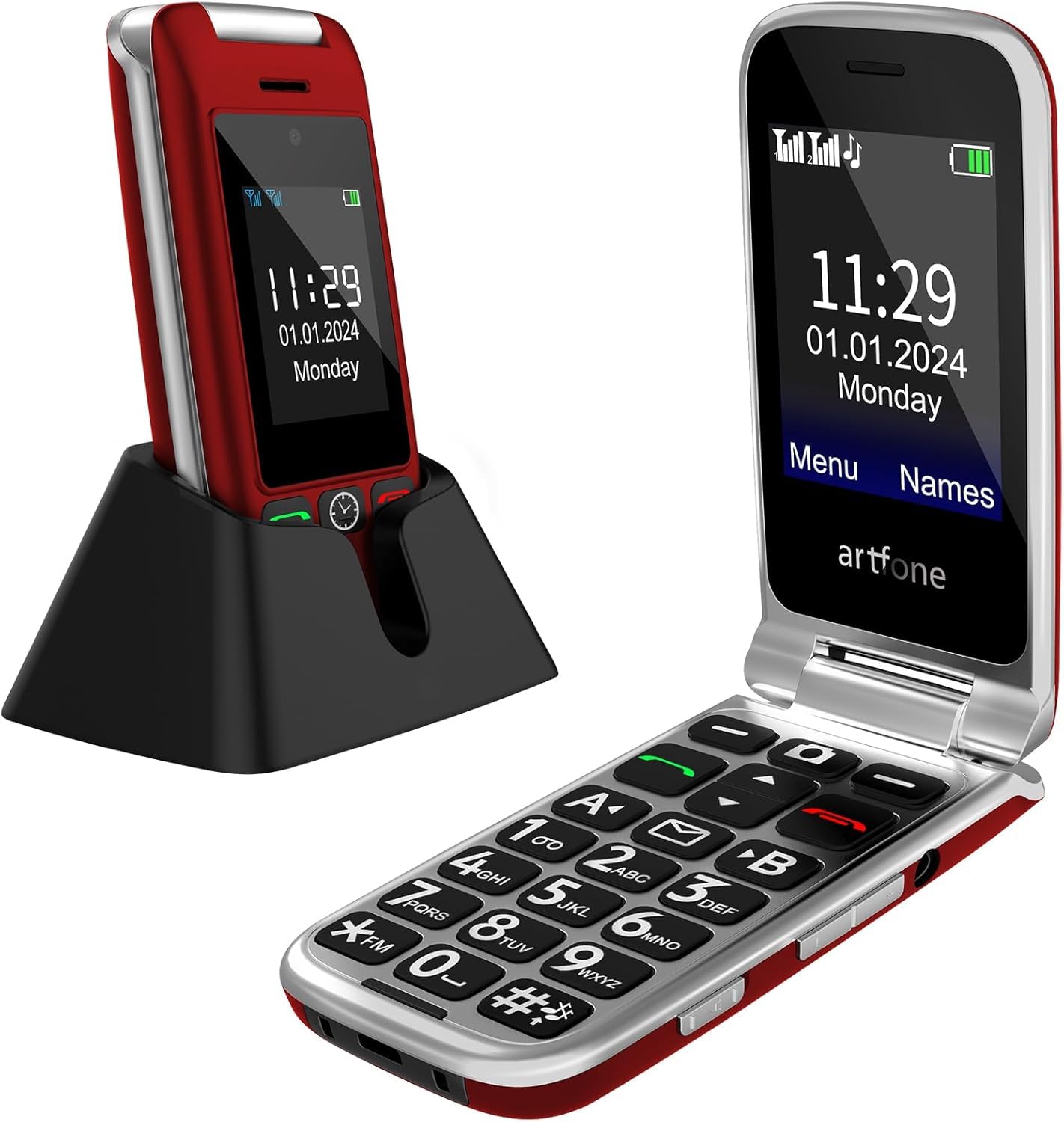
The Artfone G6 is the most thoughtfully designed basic flip phone for seniors, with a hinge tested to 120,000 flips and oversized backlit buttons that reduce dialing errors. Its dual-screen setup — a 2.4-inch internal display and a 1.8-inch outer screen — lets users check the time and caller ID without opening the phone. The dedicated SOS button on the back automatically dials up to five preset contacts, sending distress messages until someone answers, making it a genuine safety tool.
The device is unlocked for T-Mobile and its MVNOs (US Mobile, Tello, Red Pocket GSMT) but is not compatible with Verizon or AT&T networks. Setup is straightforward: the included charging dock eliminates the need to fumble with a USB cable, and the voice time announcement feature (long-press volume up) is a small but appreciated touch for users with vision challenges. The 1300mAh battery provides a full day of moderate use and charges in about an hour via the dock.
Audio quality is a standout — the phone supports a hearing enhancement mode when connected to earphones or hearing aids, amplifying surrounding voices during face-to-face conversation. The 0.3MP camera is basic but sufficient for capturing a quick reference photo. A minor downside is that the initial setup menus default to English, requiring a language switch for non-English users, and the speakerphone volume does not get as loud as some competing models.
Why it’s great
- Exceptional build quality with 120,000-cycle hinge
- SOS button with multi-contact emergency dialing
- Charging dock eliminates cable frustration
- Hearing enhancement mode for hearing aid users
Good to know
- Limited to T-Mobile network and its MVNOs
- Camera is very low resolution (0.3MP)
- Speakerphone could be louder for noisy environments
2. AGM M9 Rugged Feature Phone
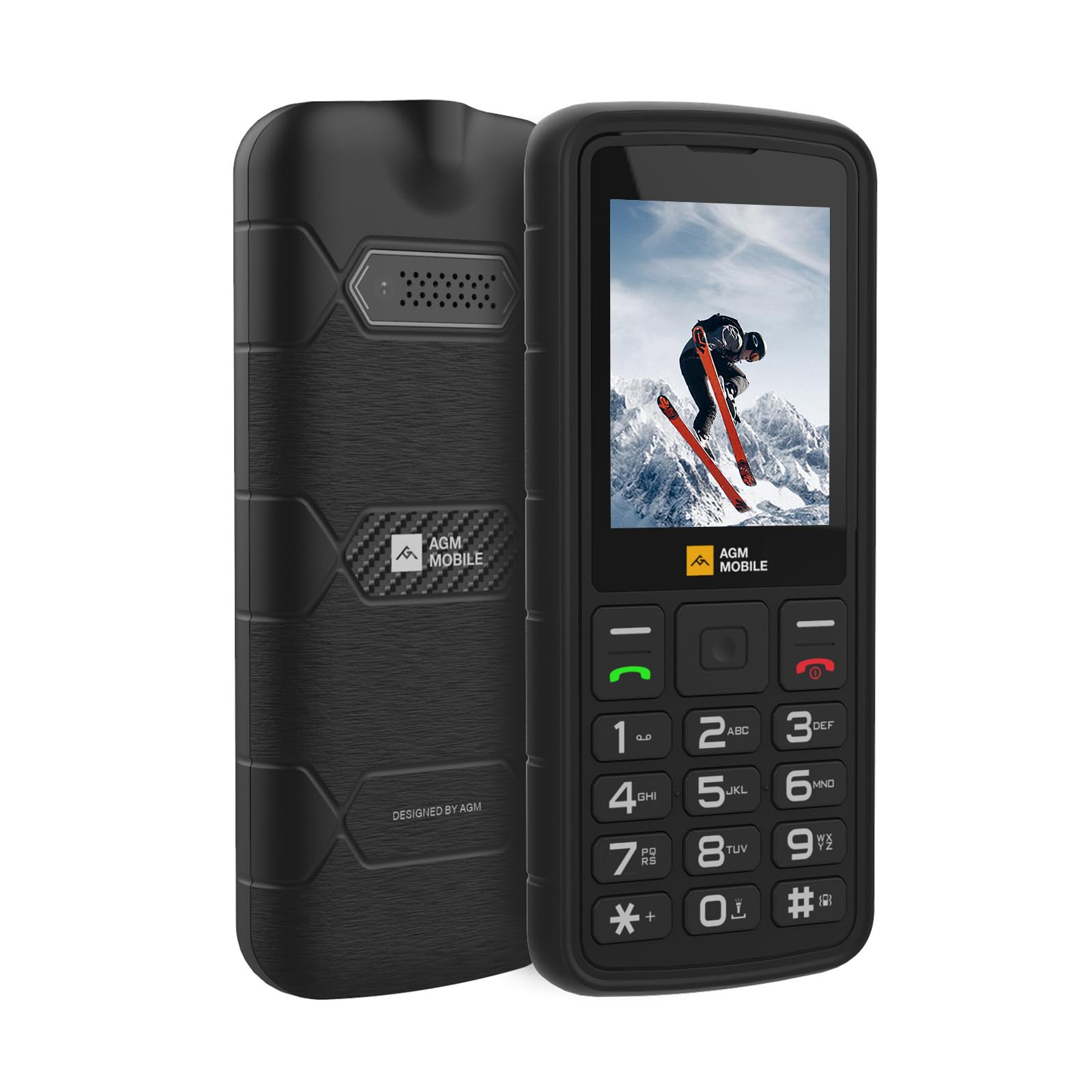
The AGM M9 is built for environments where a standard flip phone would shatter. With IP68 dust and water resistance and IP69K protection against high-pressure water jets, it can survive drops from 1.8 meters and full submersion. The textured rubberized body provides a secure grip even with wet or gloved hands, making it a natural fit for construction workers, outdoor guides, and anyone who needs a phone that refuses to die.
Connectivity is limited exclusively to T-Mobile networks, so you must be on T-Mobile or one of its MVNOs. The phone features three card slots — two for nano SIMs and one for a TF card up to 128GB — allowing you to keep work and personal lines separate while loading music or audio files. The 1200mAh battery is user-replaceable, which is a rare and valuable feature for long trips or backup use, and the built-in high-intensity flashlight provides reliable illumination without draining the main battery.
The M9 deliberately omits Wi-Fi, apps, and internet browsing, creating a true distraction-free experience. The FM radio and music player work without data, and the large tactile buttons with extra-large fonts make calling and texting straightforward. Some users report that Bluetooth significantly drains the battery, and the T9 texting interface may feel cumbersome for anyone accustomed to a touchscreen. A few units have also shown reliability issues after several weeks of use, though most owners report solid durability.
Why it’s great
- Industrial-grade IP68/IP69K waterproof and dustproof rating
- User-replaceable battery and dual SIM slots
- No Wi-Fi or apps for total distraction-free use
- High-intensity flashlight built into the chassis
Good to know
- Strictly T-Mobile only — no other carrier support
- Bluetooth usage heavily reduces battery life
- Small number of reliability complaints after extended use
3. Lively Jitterbug Smart4

The Lively Jitterbug Smart4 is a smartphone designed specifically for seniors, trading the flip form factor for a large 6.7-inch screen with a simplified menu interface. It runs Android underneath but presents a clean, icon-based launcher that reduces confusion. The phone is only compatible with Lively’s own service plans, which include unlimited talk and text plus 24/7 access to a support team — a trade-off that provides simplicity but prevents switching carriers.
The 5000mAh battery is massive for a basic phone, delivering up to 37 hours of talk time and days of standby. The camera system includes an 8MP front-facing camera and a 13MP rear camera, a significant upgrade over the previous Smart3 model. The Urgent Response button provides direct access to help, and the phone supports real-time call captioning for users with hearing difficulties. Activation is done online, though some users report that the process can take over an hour and may require a factory reset.
One key drawback is the lack of traditional speed dial — calls require navigating through menus, which can confuse seniors with dementia or cognitive decline. Additionally, the data slows to 128kb after 20GB of usage, and Lively’s refund policy on plans has frustrated some customers. For caregivers who prioritize a simple smartphone experience with human backup, the Jitterbug Smart4 is a solid choice, but it is not a true basic phone in the flip-phone sense.
Why it’s great
- Very large, bright 6.7-inch screen for easy reading
- Massive 5000mAh battery with 37 hours talk time
- Urgent Response button for emergency help
- Upgraded camera system over previous generation
Good to know
- Locked to Lively service only — no carrier flexibility
- No traditional speed dial; multi-step calling process
- Setup can be lengthy and occasionally problematic
4. Tracfone Nokia 2760 Flip

The Tracfone Nokia 2760 is a classic flip phone running Kai OS, a streamlined operating system that includes essential apps like weather, notes, and an alarm clock without the distractions of a full smartphone. Its 5MP rear camera with a built-in flash is functional for quick snapshots, and the 1.3GHz quad-core processor keeps the interface responsive for calls, texts, and basic tasks. The 4GB of built-in memory is limited but adequate for a feature phone.
Battery life is rated at 3.8 hours of talk time and up to 21.4 days of standby, which is modest for talk but impressive for idle periods. The phone is locked to Tracfone’s prepaid network, which runs on Verizon’s infrastructure. Activation is handled online, though some users have reported issues with the phone not being “properly scanned” during purchase, requiring a replacement or prepaid return label. The 1.33:1 aspect ratio and small screen are typical for flip phones, but the T9 texting interface may feel slow to modern users.
For users who want a no-frills backup phone or a tool for a digital detox, the Nokia 2760 delivers a reliable calling and texting experience at an entry-level price. The build feels solid, and the familiar Nokia design language inspires confidence. However, the lack of WhatsApp support and the dependence on Tracfone’s activation system may frustrate users who prefer a more flexible carrier setup.
Why it’s great
- Classic Nokia build quality with Kai OS simplicity
- 5MP camera with flash for basic photography
- Long standby time at 21.4 days
- Good option for backup or digital detox
Good to know
- Only 3.8 hours of talk time — below average
- Locked to Tracfone (Verizon MVNO) — no carrier switching
- Activation issues reported with some units
5. Verizon Prepaid TCL Go Flip 7
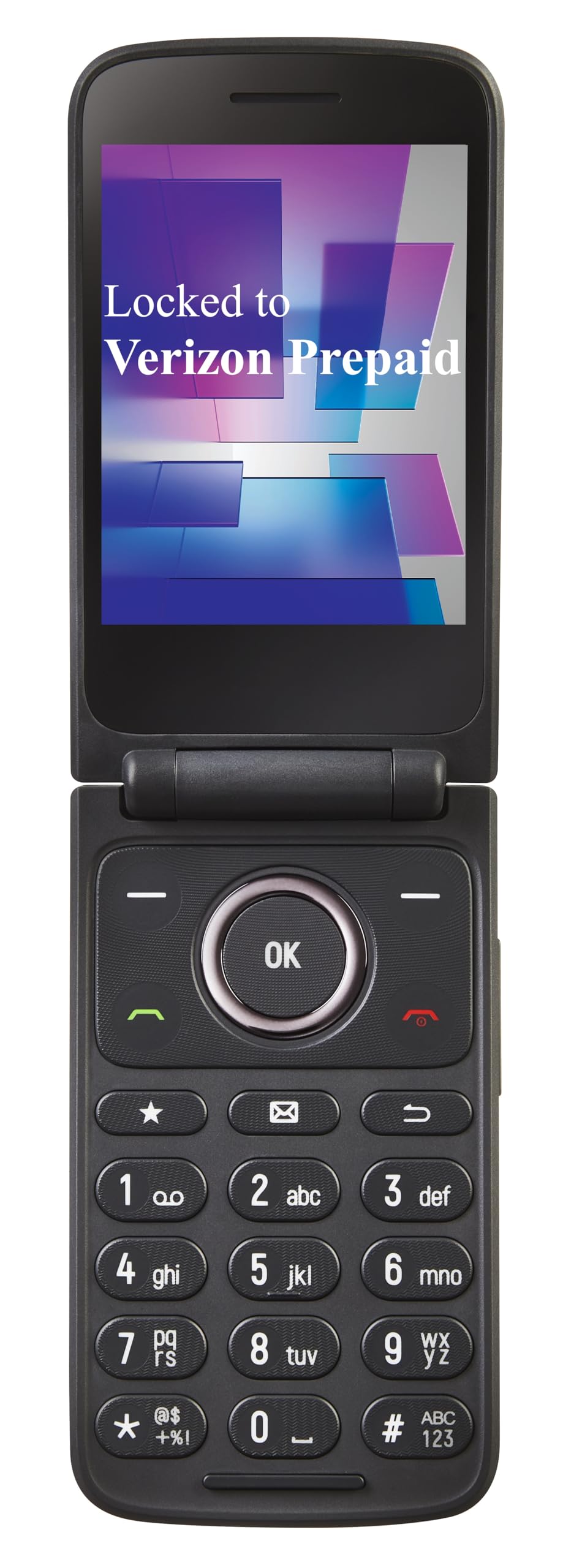
The TCL Go Flip 7 is a modern flip phone locked to Verizon’s prepaid network, offering a clean, straightforward interface with large tactile buttons and a bright 2.8-inch internal display. The 1.77-inch external color screen shows caller ID, message notifications, and the time without requiring the user to open the phone. It is hearing aid compatible with an M4/T4 rating and includes a loud speakerphone option, making it a strong choice for users with hearing difficulties.
The 1850mAh battery delivers an excellent 10.5 hours of talk time, significantly outperforming the Nokia 2760 in this metric. The phone includes a 5MP camera, Bluetooth, Wi-Fi, and a USB-C connector for modern charging. Face recognition is listed as a biometric feature, which is unusual for a basic phone but adds a layer of convenience for unlocking the device. A key limitation is that this phone is not compatible with Verizon’s postpaid plans — it only works with Verizon Prepaid, which requires a separate prepaid plan and activation through Verizon’s website.
Real-world feedback highlights easy SIM swapping and sturdy build quality, though some users have encountered activation issues because the phone is flagged as a prepaid device that cannot be used on standard Verizon accounts. The UI is simple enough for all ages, and the convenience of the external display makes checking notifications effortless. For anyone already on Verizon Prepaid or willing to switch, the Go Flip 7 offers the best talk time in this list at a very accessible cost.
Why it’s great
- Excellent 10.5-hour talk time battery life
- Convenient external color display for notifications
- M4/T4 hearing aid compatible with loud speakerphone
- Modern USB-C charging and Bluetooth support
Good to know
- Only works with Verizon Prepaid — not postpaid
- Activation can be confusing for prepaid new users
- Limited to Verizon network only
FAQ
Can I use a basic phone on any carrier?
How long do basic phone batteries typically last?
Are flip phones still made with durable hinges?
Do basic phones support hearing aids?
Can I use WhatsApp or other apps on a basic phone?
Final Thoughts: The Verdict
For most users, the best basic phone winner is the Artfone G6 because it combines the most durable hinge, a genuine SOS safety feature, and a charging dock that simplifies daily use for seniors and digital detoxers alike. If you need a phone that can survive water, dust, and drops, grab the AGM M9. And for a modern senior smartphone with a huge screen and enormous battery, nothing beats the Lively Jitterbug Smart4.

Mo Maruf
I created WellFizz to bridge the gap between vague wellness advice and actionable solutions. My mission is simple: to decode the research and give you practical tools you can actually use.
Beyond the data, I am a passionate traveler. I believe that stepping away from the screen to explore new environments is essential for mental clarity and physical vitality.