Our readers keep the lights on and my smoothie glass nicely filled. As an Amazon Associate, I earn from qualifying purchases.
A budget gaming headset splits the difference between competitive audio and keeping your wallet intact. The wrong pick delivers muddy footsteps, a muffled mic, and aching ears after one round. The right pick changes how you play — without changing your financial reality.
I’m Mohammad Maruf — the founder and writer behind WellFizz. I analyze hundreds of hours of gaming hardware data, sifting through frequency response graphs, driver materials, mic polar patterns, and real-world durability reports to find what actually works at each price tier.
This guide isolates the truly capable wired headsets under an approachable ceiling rank. Each pick balances driver clarity, mic isolation, and long-session comfort so you don’t waste a cent on plastic that sounds like a tin can. Read on for the best budget pc gaming headset choices that actually deliver round after round.
How To Choose The Best Budget PC Gaming Headset
A budget headset relies on three core pillars: driver architecture that separates in-game layers, a microphone that ignores ambient noise, and chassis ergonomics that stay comfortable past hour two. Ignore marketing specs — look for materials and measurable performance.
Driver Size and Diaphragm Coating
Larger 50mm drivers move more air, which translates to better bass impact and spatial separation for directional audio — crucial for hearing enemy position. Titanium-coated diaphragms (found on mid-range models) reduce distortion at higher volumes, preserving clarity for gunshots and vocal cues simultaneously. Standard 32mm or 40mm drivers work for casual play but struggle with busy soundscapes.
Microphone Polar Pattern and Mute Mechanism
A cardioid mic focuses sound pickup on your mouth and rejects keyboard clatter and room noise — essential for team communication. Omnidirectional mics pick up everything, including fan hums and background chatter. Flip-to-mute or detachable designs add reliability over inline mute switches, which can fail loose over time or become confusing to operate mid-game.
Passive Noise Isolation vs. Software Surround Sound
Closed-back ear cups with a tight seal provide passive noise cancellation that blocks real-world distractions without introducing digital delay. Software-based 7.1 surround sound (available on some budget models) widens the soundstage for virtual positioning in shooters but requires compatible Windows drivers. Prioritize a good passive seal first — it works on every platform without software dependency.
Quick Comparison
On smaller screens, swipe sideways to see the full table.
| Model | Category | Best For | Key Spec | Amazon |
|---|---|---|---|---|
| Razer BlackShark V2 X | Mid-Range | Competitive shooters & all-day sessions | 50mm Triforce Titanium drivers | Amazon |
| Logitech G Astro A10 Gen 2 | Mid-Range | Durability & cross-platform use | 32mm dynamic drivers | Amazon |
| JBL Quantum 100M2 | Entry-Level | Comfort-focused beginners | JBL QuantumSOUND Signature | Amazon |
| OneOdio Pro-10 | Budget | Studio monitoring & music | 50mm neodymium drivers | Amazon |
| Turtle Beach Recon 50 | Budget | Entry-level console/PC hybrid | 40mm speakers | Amazon |
In‑Depth Reviews
1. Razer BlackShark V2 X
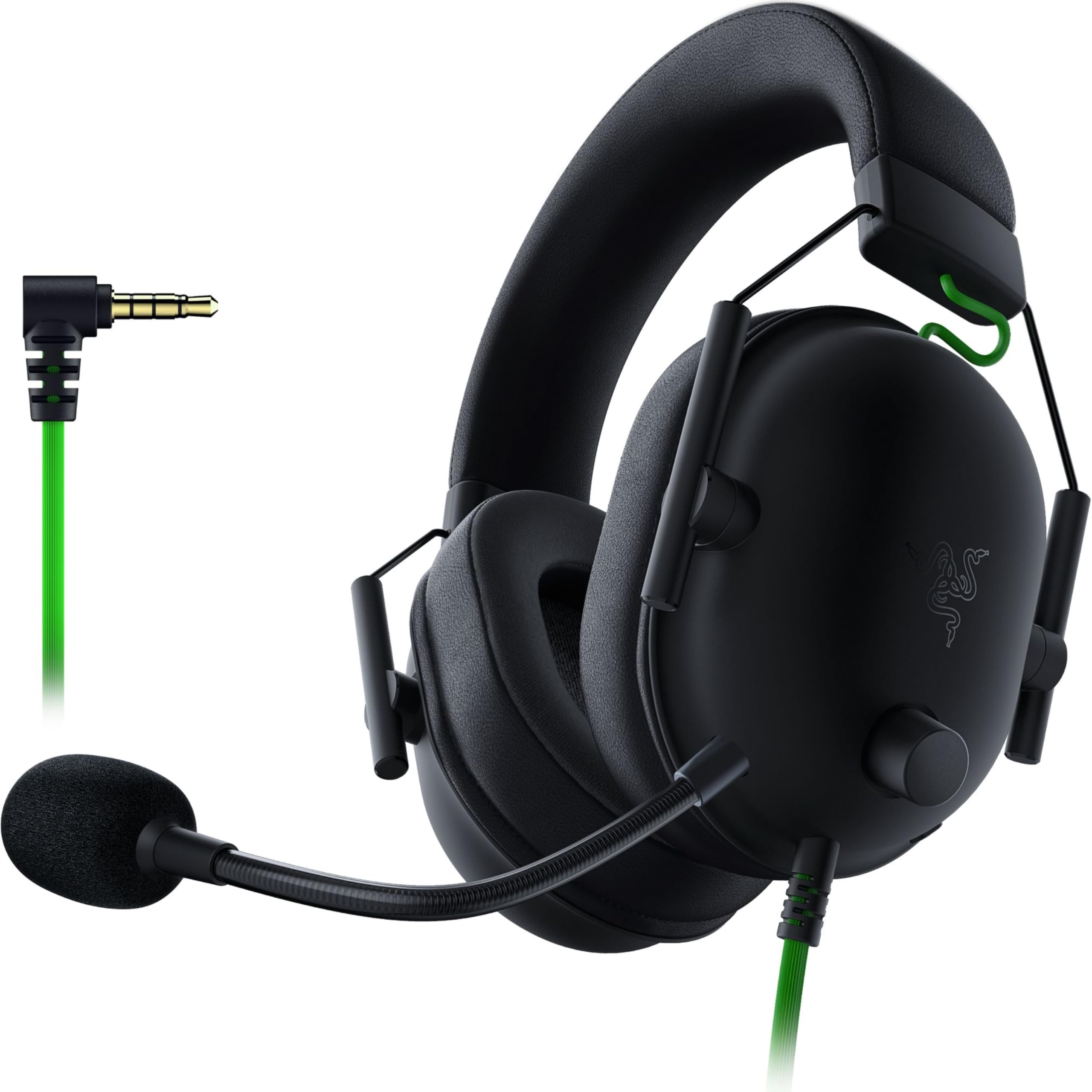
The BlackShark V2 X separates itself from the budget pack with its proprietary Triforce Titanium 50mm drivers. The three-part driver architecture independently tunes highs, mids, and lows — preventing the muddied midrange that plagues most headsets under fifty dollars. Footstep directional cues remain crisp even during chaotic firefights, and the titanium-coated diaphragm keeps distortion in check at high volumes.
At 240 grams, the frame is remarkably light, and the breathable memory foam ear cushions avoid the sweaty ear-clamp feeling after hours of wear. The Razer HyperClear cardioid mic effectively rejects ambient keyboard and fan noise, delivering vocal clarity comparable to a phone call. Passive noise cancellation from the closed-back design seals out room chatter without requiring any software.
The 7.1 surround sound is software-enabled through Razer Synapse (Windows 10 64-bit only), giving PC players a legitimate positional audio upgrade. The volume knob runs reversed compared to convention, which takes some adjustment, and there is no mute LED indicator on the mic. For the combination of driver engineering, lightweight comfort, and mic isolation, this is the definitive pick for competitive gaming on a budget.
Why it’s great
- Triforce Titanium 50mm drivers deliver separate frequency tuning — rare at this price tier.
- Ultra-lightweight 240g design with breathable memory foam for long sessions.
- Cardioid mic effectively rejects background noise for clear comms.
Good to know
- Volume wheel rotates opposite to typical direction — muscle memory adjustment needed.
- No mute status LED; you must test mute state manually.
- 7.1 surround requires Windows 10 64-bit and Razer Synapse installation.
2. Logitech G Astro A10 Gen 2

The Astro A10 Gen 2 rebuilds the original A10 formula with an emphasis on structural survivability. The ultra-durable headband and sturdy plastic construction survive drops, tugs, and travel abuse that would snap cheaper frames. The 32mm dynamic drivers prioritize vocal clarity and midrange presence over bass slam — a trade-off that works well for competitive shooters where callouts matter more than explosions.
Flip-to-mute is mechanically intuitive: the boom mic mutes instantly when flipped up and reactivates when lowered, removing the guesswork of inline mute switches. The closed-back circumaural design provides reliable passive isolation, and the replaceable ear cushions and headband pad extend the headset’s lifespan well beyond the typical budget window. The removable cable with inline volume control adds modular convenience for replacement without junking the whole headset.
Cross-platform compatibility covers PS5, PS4, Xbox Series X|S, Nintendo Switch, PC, Mac, and VR setups via the 3.5mm jack. The 32mm drivers lack the bass extension and spatial separation of larger 50mm competitors, so atmospheric single-player games feel less immersive. Still, for a headset built to survive years of abuse with a mic system that never fails mid-round, the A10 Gen 2 is the durability champion in this class.
Why it’s great
- Flip-to-mute mic is mechanically reliable and immediately intuitive during gameplay.
- Ultra-durable frame survives drops and cable tugs without performance degradation.
- Replaceable ear cushions and headband pad extend product lifespan significantly.
Good to know
- 32mm drivers lack bass depth and spatial separation of larger 50mm options.
- Atmospheric single-player games feel less immersive due to compressed soundstage.
- Clamp force can feel tight for some users during the break-in period.
3. JBL Quantum 100M2

The Quantum 100M2 earns its position with the most comfortable ear cushions in this budget class. Fabric-covered memory foam breathes significantly better than the leatherette found on similarly priced competitors, preventing heat buildup during extended sessions. The lightweight headband distributes pressure evenly without creating hotspots on the crown — a common failure point in other entry-level headsets.
JBL QuantumSOUND Signature tuning emphasizes clarity across the frequency range, making footsteps and environmental cues distinct without artificially boosting bass. The mute feature is handled via the detachable connection rather than a physical switch.
Windows Sonic Spatial Sound compatibility provides virtual surround on PC and Xbox without proprietary software, and the 3.5mm jack works with PlayStation, Nintendo Switch, mobile devices, and VR headsets. The build quality thread from user reports shows variability — some units develop connection issues at the 3.5mm jack after a few months. For beginners prioritizing all-day wear comfort over battle-hardened durability, this is the softest landing in the category.
Why it’s great
- Fabric-covered memory foam ear cushions are the breathable and comfortable in this price tier.
- JBL QuantumSOUND Signature delivers clear, well-separated audio without artificial bass boost.
- Compatible with Windows Sonic Spatial Sound for virtual surround without software installs.
Good to know
- Omnidirectional mic picks up room noise, keyboard, and fan hums during chat.
- Reported QC issues with 3.5mm jack connection durability over time.
- No physical mute switch — rely on detaching mic or software mute.
4. OneOdio Pro-10

The OneOdio Pro-10 blurs the line between gaming headset and studio monitor. Equipped with 50mm neodymium magnet drivers, it delivers powerful bass, clear vocals, and crisp highs with a balanced stereo sound profile that excels equally for music production and game audio. The 90-degree swiveling ear cups enable single-ear monitoring — a feature borrowed from DJ headphones that works great for checking real-world audio levels without removing the headset.
The self-adjusting flexible headband and soft padded ear cushions provide fatigue-free wear during extended studio sessions or gaming marathons. The shared audio port lets you daisy-chain a second headset for co-op play without a splitter. Dual included cables (3.5mm with 1/4-inch adapter and a coiled cable) provide broad compatibility with audio interfaces, mixers, PC sound cards, and gaming consoles.
The trade-off is build quality: several user reports note the ear cushion coating begins peeling after extended use, and the included auxiliary cables feel fragile compared to the headset frame itself. There is no integrated microphone, so this headset is best suited for PC gaming where you already own a desktop mic. For gamers who want a dual-purpose headset for mixing music or listening to tracks with genuine audio fidelity, the Pro-10 punches significantly above its entry-level price.
Why it’s great
- 50mm neodymium drivers deliver professional-grade clarity for both gaming and music production.
- 90-degree swiveling ear cups enable single-ear DJ-style monitoring.
- Shared audio port allows second headset connection without a splitter.
Good to know
- No built-in microphone — requires a separate desktop mic for voice chat.
- Ear cushion coating can peel after extended use.
- Included auxiliary cables are reported as fragile and prone to failure.
5. Turtle Beach Recon 50
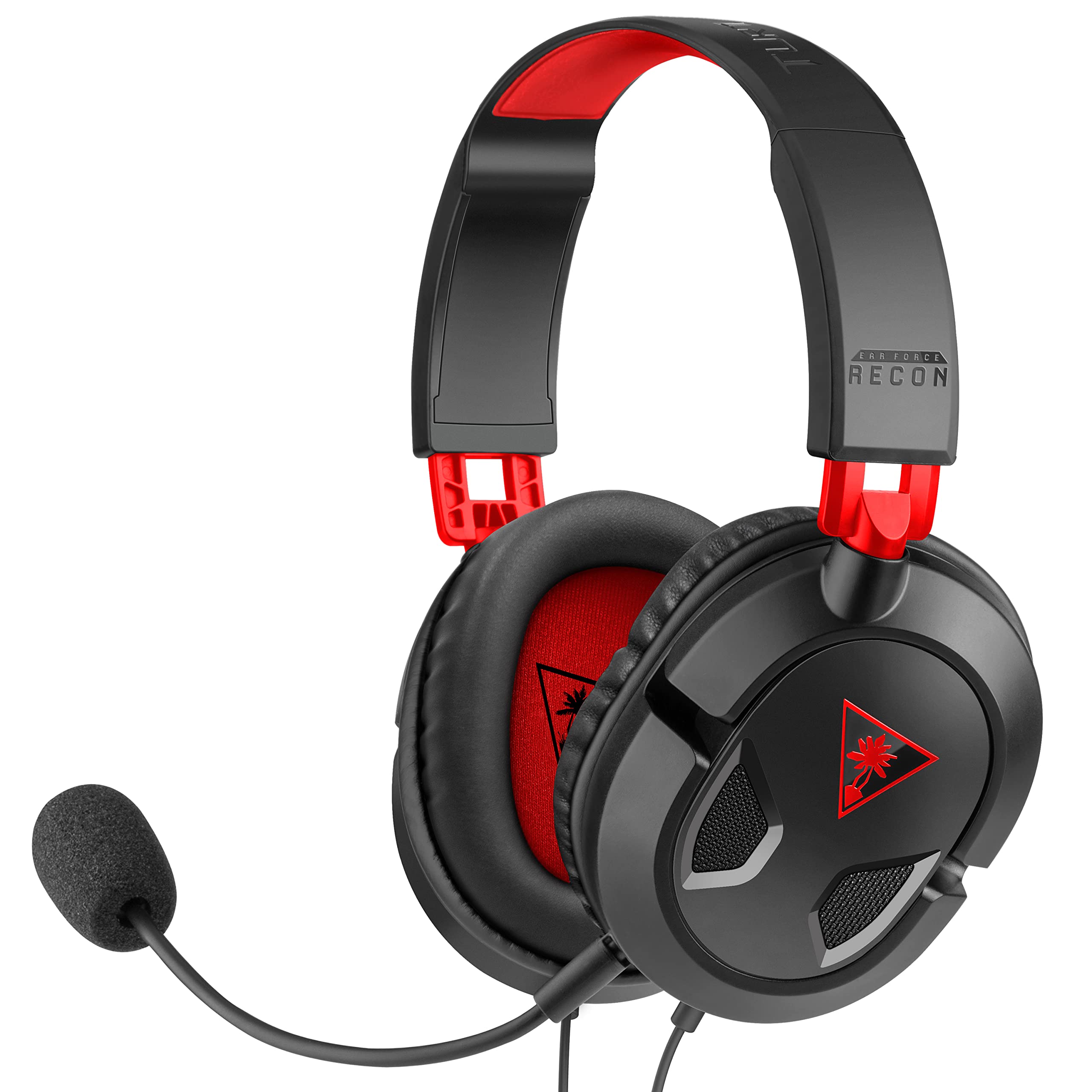
The Recon 50 is foundational Turtle Beach — lightweight, plug-and-play, and built around a 40mm speaker driver that handles game audio adequately for casual players. Footstep clarity is present, explosions have some weight, and the mids can feel recessed, which means music playback sounds flat compared to gaming audio. The removable omni-directional mic includes a windscreen that reduces breath pops but does pick up room noise.
The leatherette ear cushions create a decent passive seal for noise isolation, and the adjustable headband fits comfortably on larger head shapes. The inline volume and mic mute controls are convenient but the switch design can be confusing — the orange indicator is difficult to see in dim lighting, leading to accidental muted comms. The attached cable is only four feet, which is fine for console controllers but may require a USB extension for desktop PC setups.
The included PC splitter cable connects separate audio and mic jacks on desktop computers, and compatibility spans Xbox, PlayStation, PC, Mac, and mobile devices via the 3.5mm jack. The mic insertion requires aligning a small notch, which can be finicky if you remove the mic frequently. For someone buying their first gaming headset or needing a dedicated spare for LAN parties, the Recon 50 delivers predictable performance with zero software setup.
Why it’s great
- Lightweight build stays comfortable for extended sessions without neck fatigue.
- Plug-and-play compatibility across PC, console, and mobile without software.
- PC splitter cable included for separate audio and mic jacks on desktop.
Good to know
- Mids are recessed; music playback sounds flat compared to gaming audio.
- Four-foot cable is short for desktop setups — USB extension likely required.
- Inline mute status indicator is nearly invisible in low-light conditions.
FAQ
Does a budget gaming headset need 7.1 surround sound to be competitive?
Why does my budget headset microphone sound muffled to teammates?
Can a budget PC gaming headset work for Xbox and PlayStation too?
How important is impedance matching on a budget gaming headset?
Final Thoughts: The Verdict
For most users, the best budget pc gaming headset winner is the Razer BlackShark V2 X because it combines Triforce Titanium 50mm drivers, a lightweight chassis, and a cardioid mic at a price that outperforms its entire bracket. If you want unbreakable build quality with a mechanically reliable flip-to-mute mic, grab the Logitech G Astro A10 Gen 2. And for marathon sessions where breathable memory foam comfort is the priority, nothing beats the JBL Quantum 100M2.

Mo Maruf
I created WellFizz to bridge the gap between vague wellness advice and actionable solutions. My mission is simple: to decode the research and give you practical tools you can actually use.
Beyond the data, I am a passionate traveler. I believe that stepping away from the screen to explore new environments is essential for mental clarity and physical vitality.