Our readers keep the lights on and my smoothie glass nicely filled. As an Amazon Associate, I earn from qualifying purchases.
A podcast camera does more than just record your face—it defines your show’s professional credibility. A grainy, poorly focused frame with muffled audio tells listeners you haven’t taken your craft seriously, and in a crowded market, that first visual impression often decides whether a new viewer clicks away or subscribes. The right camera for this job must balance sharp 4K video, reliable autofocus so you don’t look soft when you lean forward, and clean audio capture that matches the rest of your production value.
I’m Mohammad Maruf — the founder and writer behind WellFizz. For this guide, I spent countless hours cross-referencing sensor specs, autofocus systems, audio interface options, and real-world user feedback to find the cameras that truly deliver for podcasters on a budget.
Whether you record solo episodes, host multi-guest roundtables, or stream live to your audience, finding the right tool can be overwhelming. That’s why I built this guide to the best affordable camera for podcasting after digging through hours of buyer complaints and hands-on feedback from content creators just like you.
How To Choose The Best Affordable Camera For Podcasting
Podcasting is a unique hybrid: you demand great video but your primary focus is clean, uninterrupted conversation. A camera that overheats after 30 minutes or loses autofocus when you gesture with your hands will sabotage your show. These are the specific specs that matter for podcasting setups.
Autofocus Reliability and Face Detection
Unlike run-and-gun vlogging, your face is mostly static—but you lean in, look down at notes, or turn to a guest. A camera with phase-detection autofocus (PDAF) and reliable face/eye tracking stays locked on you without the hunting and pulsing that ruins a take. Contrast-detect-only systems can struggle in dim solo-podcast lighting.
Audio Inputs That Matter
Built-in camera microphones are never adequate for a podcast. You need a 3.5mm external mic jack or, better yet, dual XLR inputs with phantom power so you can plug professional microphones directly into the camera. This eliminates the need for a separate audio recorder and keeps your sync perfect every time.
Video Resolution and Frame Rate
4K at 24 or 30 fps is the standard for a polished podcast, giving you the option to crop into a clean close-up during editing without resolution loss. Avoid cameras that crop the sensor during 4K recording, as that tightens your frame and changes your lens’s effective field of view—problematic if your space is small.
Connection Options for Streaming and Monitoring
If you stream live to YouTube or Twitch, check for clean HDMI output and UVC/UAC (webcam) compatibility. A headphone jack for real-time audio monitoring is non-negotiable so you can catch echo or audio dropouts mid-recording. Ethernet (RJ45) or USB-C for stable data transfer also matters in professional workflows.
Quick Comparison
On smaller screens, swipe sideways to see the full table.
| Model | Category | Best For | Key Spec | Amazon |
|---|---|---|---|---|
| NearStream VM20 | Streaming Camera | Multi-cam live podcast | 40x Hybrid Zoom / 8-MIC Array | Amazon |
| Canon PowerShot V10 | Compact Vlog Cam | Solo on-the-go podcast | 1-inch CMOS / 19mm Wide | Amazon |
| Zoom Q8n-4K | Audio-First Recorder | Music/podcast XLR workflow | 2x XLR+Phantom / 4-Track | Amazon |
| Canon EOS R100 (Kit) | Mirrorless Entry | Interchangeable lens podcast | 24.1MP APS-C / Dual Pixel AF | Amazon |
| GoPro MAX2 | 360 Action Cam | Unique 360 B-roll podcast | 8K 360 / 6-Mic Audio | Amazon |
| Canon EOS R100 Bundle | Starter Bundle | Beginner complete kit | 24.2MP APS-C / Wi-Fi+BT | Amazon |
| Canon EOS M50 (Renewed) | Mirrorless Mid | Budget 4K with mic jack | 24.1MP APS-C / External Mic | Amazon |
| Canon EOS R50 Bundle | Advanced Mirrorless | 6K oversampled 4K video | 24.2MP APS-C / Dual Pixel AF II | Amazon |
| Sony ZV-E10 Bundle | Vlogger Premium | Top-tier vlog/podcast hybrid | 24.2MP APS-C / 425 AF Points | Amazon |
In‑Depth Reviews
1. NearStream VM20
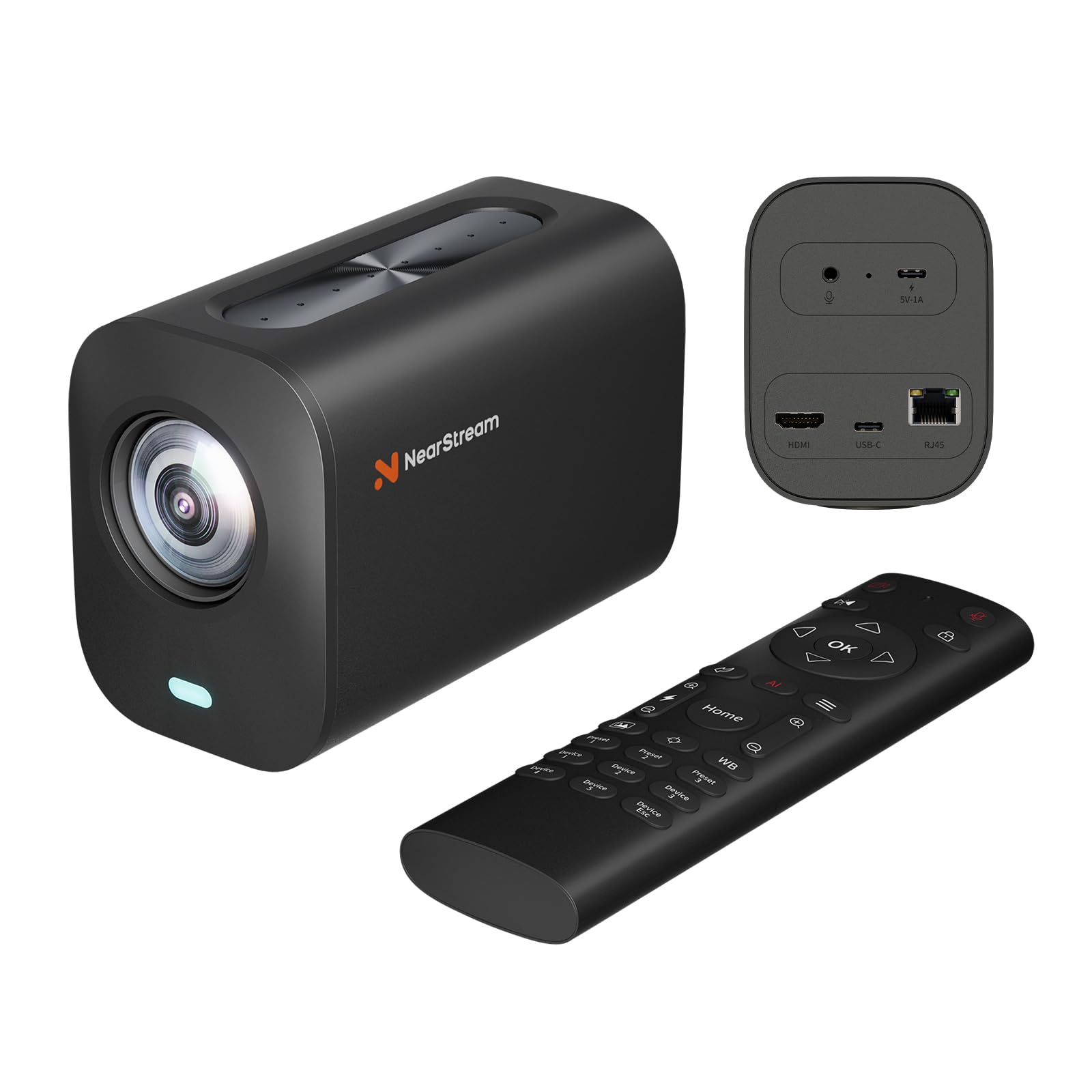
The NearStream VM20 is built specifically for the kind of multi-camera, software-driven production that podcasters with a bit of technical ambition need. Its 8-MEMS microphone array with AI noise canceling captures 360-degree audio within a 16-foot radius, but the real advantage is the 3.5mm external audio input for your own lav or shotgun mic. The 40x hybrid zoom (8x optical plus 5x digital) lets you punch in on a guest without moving the camera, and the HDMI, USB, and Ethernet outputs give you total flexibility in how you route video to your streaming software.
In practice, the VM20 delivers solid 4K at 30fps with stable color and white balance, though you must accept that this camera is designed for software-based workflows—not plug-and-play consumer use. The remote control allows individual pan/tilt/zoom adjustments for each VM20 in a multi-cam setup, a genuine time-saver for roundtable shows. Build quality feels substantial, and users report responsive support from NearStream when issues arise.
The biggest caveat is that firmware and software (NearSync) can be buggy—settings like zoom, image flip, and focus mode may reset after the camera sleeps. This isn’t a camera you just turn on and trust blindly; you will need to verify your settings before each recording session. For the price, however, the combination of audio flexibility, zoom range, and multi-output architecture is unmatched in this tier.
Why it’s great
- 8-MIC array with AI noise canceling plus 3.5mm external input for professional audio.
- Three simultaneous output formats (HDMI, USB, RJ45) for complex streaming setups.
- 40x hybrid zoom with remote PTZ control for multi-guest framing.
Good to know
- Settings can reset after the camera goes to sleep, requiring pre-recording checks.
- NearSync macOS app has known stability and UI issues.
- Optimized for software workflows—not a simple plug-and-play webcam.
2. Canon PowerShot V10

The Canon PowerShot V10 is the definition of a pocketable podcast camera—it fits in a fanny pack, deploys its own fold-out stand in seconds, and records clean 4K video from a 1-inch back-illuminated CMOS sensor. For the solo podcaster who records in coffee shops, hotel rooms, or small home offices, the V10’s fixed 19mm wide-angle lens captures the whole desk scene without needing to move the camera back. The built-in stereo mic array plus a central third mic for noise reduction produces surprisingly listenable audio for a camera its size.
Three image stabilization modes (Off, On, Enhanced) mean handheld or desk-recorded footage stays steady, and the retractable front-facing screen makes framing yourself trivial. Battery life is adequate for a single episode of 30-45 minutes, but reviewers note it drains faster than expected if you leave the screen on. Low-light performance is solid for a compact camera, though you’ll still want a key light for professional results.
The biggest trade-off is the lack of zoom while recording—you are locked into that 19mm field of view throughout your episode. You also cannot swap lenses, so you are committing to Canon’s wide-angle-only perspective. For a beginner who wants zero setup friction and a camera that disappears into a pocket between shoots, the V10 is a joy. For anyone needing XLR inputs or a tighter framing option, this is not the right tool.
Why it’s great
- Ultra-compact body with built-in stand for instant desk deployment.
- 1-inch CMOS sensor delivers excellent video quality for its size class.
- Three image stabilization modes reduce shake in handheld recordings.
Good to know
- No zoom available during video recording—fixed 19mm wide-angle only.
- Battery life is moderate; expect to recharge between longer episodes.
- No external mic jack or XLR inputs for professional audio upgrades.
3. Zoom Q8n-4K

The Zoom Q8n-4K solves one of the most painful podcasting problems: keeping video and audio perfectly in sync by recording both on-device. Two XLR inputs with phantom power let you plug professional dynamic or condenser microphones directly into the camera, and the four-track audio engine captures each mic on its own channel. This is a video recorder designed by an audio company, and it shows in the pristine sound quality and flexible routing options.
The F2.8 wide-angle lens with five field-of-view presets (indoor, outdoor, nighttime, concert) helps you quickly match the lighting environment. The 3.5-inch flip-out screen and companion remote control app make solo operation feasible. You can stream live via USB while simultaneously recording local 4K to an SD card up to 512GB—a huge advantage for podcasters who want a local backup while broadcasting.
Video quality is the Q8n-4K’s weakest link. In good lighting, 4K output is acceptable for YouTube and podcast distribution, but low-light performance is genuinely poor—grain and noise creep in fast, and there is no image stabilization. Several user reviews describe the video as “terrible” even at 4K, and one noted that an iPhone shoots better video in the same scene. If you prioritize audio quality and sync simplicity above pristine video, the Q8n-4K is a mid-range gem. If you need cinematic visuals, look elsewhere.
Why it’s great
- Two XLR inputs with phantom power for direct professional microphone connection.
- Four-track audio recording keeps multiple mics on separate channels for post-production.
- USB streaming plus simultaneous local 4K recording for live podcast workflows.
Good to know
- Video quality is mediocre in low light and lacks stabilization.
- No zoom capability—only preset field-of-view widths via lens swap.
- Bulkier than a standard mirrorless body; not a discreet travel camera.
4. Canon EOS R100

The Canon EOS R100 brings the power of interchangeable lenses to the budget podcasting segment. The included RF-S 18-45mm f/4.5-6.3 IS STM lens gives you a versatile zoom range for framing solo shots or two-person interviews, and the 24.1MP APS-C CMOS sensor with DIGIC 8 processor produces sharp, vibrant 4K video at up to 24fps. Dual Pixel CMOS AF with human face and eye detection keeps you in focus even when you lean into a story, and the 143 AF zones cover most of the frame reliably.
At 4K you are limited to 24fps, and there is a crop factor that effectively tightens your wide-angle view—something to test with your actual desk setup. The kit lens performs well in good light but its f/4.5-6.3 aperture means you will need a dedicated lighting kit for a professional podcast look. The camera body itself is the smallest and lightest in the EOS R series, making it easy to mount on a desk arm or small tripod.
Battery life is solid for a day of shooting, and the wireless connectivity via Wi-Fi and Bluetooth makes file transfer painless. The main drawbacks are the lack of in-body stabilization (the kit lens has IS, but it’s not as effective as IBIS) and the cropped 4K mode. Beginners will love the intuitive menu system, but advanced users may find the 4K crop and 24fps limit creatively restricting for a podcast-centric setup.
Why it’s great
- Interchangeable RF-S lens mount lets you upgrade to a brighter prime for better low-light video.
- Dual Pixel CMOS AF with face/eye detection locks focus reliably during movement.
- Compact, lightweight body ideal for small desk or tripod setups.
Good to know
- 4K video records at only 24fps and includes a sensor crop that narrows your field of view.
- Kit lens is slow (f/4.5-6.3), requiring good lighting for clean results.
- No in-body image stabilization; relies on lens-based stabilization only.
5. GoPro MAX2
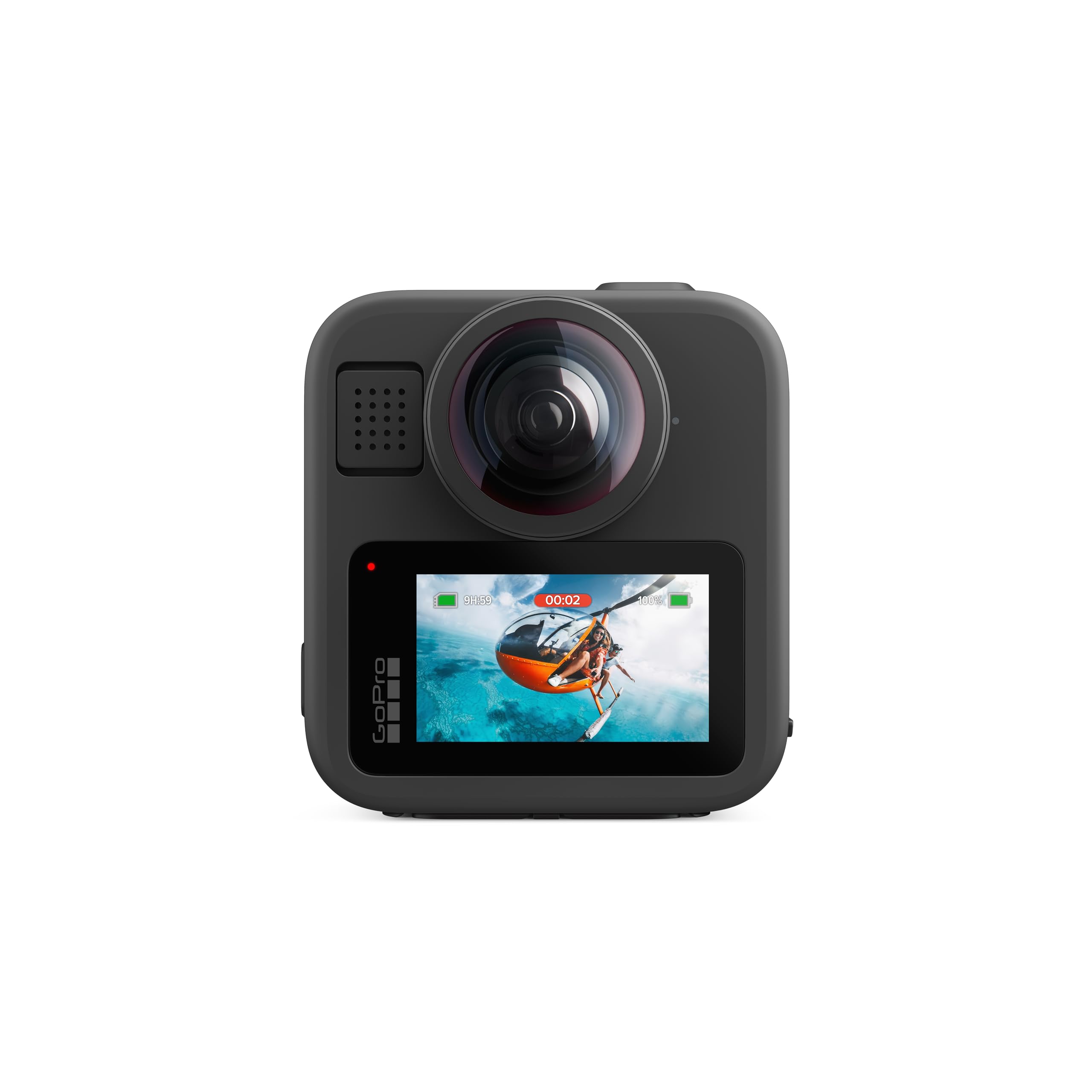
The GoPro MAX2 is a wildcard in the podcasting space, but it opens up creative 360-degree shots that no traditional camera can match. True 8K spherical video means you record everything around you simultaneously, then reframe into standard 4K in the Quik app after the fact. For a podcast that includes B-roll of the studio, guest reactions, or unique establishing shots, the MAX2 delivers a perspective that sets your show apart visually. The invisible pole mount creates the illusion of a cameraperson following the conversation.
Six microphones capture ambisonic audio that shifts perspective with the reframed video—a genuinely impressive feature for immersive content. HyperSmooth stabilization keeps Horizon Lock locked even when you spin the camera 360 degrees, and the replaceable glass lenses mean a scratch doesn’t kill your entire unit. The 1960mAh Enduro battery lasts roughly an hour of heavy 360 time-lapse, which is about right for a single podcast session.
This is not a primary podcast camera for most people. It lacks an external mic jack (relying on the internal 6-mic array), and the spherical workflow adds editing time. It also runs hot and can overheat in extreme conditions. Buy the MAX2 as a secondary creative camera to complement your main locked-down interview shot, not as your sole recording device.
Why it’s great
- True 8K 360 spherical video enables unique reframed shots impossible with fixed cameras.
- Six-microphone ambisonic audio shifts perspective dynamically with reframed footage.
- Replaceable glass lenses and waterproof build for rugged production environments.
Good to know
- No external mic input limits you to the internal ambisonic array.
- Requires additional app-based reframing workflow post-recording.
- Battery drains at about 50% per hour; can overheat in sustained use.
6. Canon EOS R100 Bundle

This bundle version of the Canon EOS R100 adds a shoulder bag, 64GB SD card, and the LC-E17 battery charger that the base kit omits. The core camera remains the same: a 24.2MP APS-C CMOS sensor, DIGIC 8 processor, and the RF-S 18-45mm f/4.5-6.3 IS STM lens. For the absolute beginner who wants to unbox and start recording without a separate trip to the accessories store, this bundle saves inconvenience and a small amount of money.
The Dual Pixel CMOS AF with 143 zones and face/eye detection performs well in well-lit environments, and the 6.5 fps burst rate is irrelevant for talking-head podcasting but nice for occasional stills. Video recording tops out at 4K 24p with crop, which is acceptable for YouTube-standard podcasts but not ideal if you need to punch in during post. Full HD 60p is uncropped and suitable for live streaming directly to platforms.
The bundled tripod and bag are entry-level quality—the tripod is light and can tip with a heavy lens combo, and the bag offers basic protection. For the price, you get a competent mirrorless camera and all the essential peripherals to start filming your podcast immediately. If you already have a bag and card, buy the body-only kit instead.
Why it’s great
- All-in-one kit includes bag, card, and battery charger—ready to shoot out of the box.
- 24.2MP APS-C sensor with Dual Pixel AF delivers sharp video and reliable tracking.
- Compact and lightweight: ideal for desk-mount or tripod podcast setups.
Good to know
- 4K video has a sensor crop and is limited to 24fps only.
- Bundled accessories are basic quality; the tripod is not studio-grade.
- Kit lens is slow; dedicated lighting is required for clean indoor footage.
7. Canon EOS M50 (Renewed)

The Canon EOS M50 has been a darling of budget content creators for years, and this renewed unit brings that same 24.1MP APS-C sensor and Dual Pixel CMOS AF into a lower price bracket. The EF-M15-45mm kit lens covers the essential wide-to-standard zoom range, and the camera includes a 3.5mm external mic input—a non-negotiable feature for podcasters who want to bypass built-in camera audio. The touch-and-drag AF on the OLED EVF is a nice ergonomic bonus.
Video specs include 4K UHD 24p and 1080p at up to 60fps, plus HD 120p for slow-motion b-roll. The 4K mode, however, introduces a significant crop factor and relies on contrast-detect autofocus (not the faster phase-detect used in stills), which can hunt during movement. At 1080p, the Dual Pixel AF works well and the footage looks clean with proper lighting. The built-in flash adds flexibility for still photography.
As a renewed product, quality varies—many buyers report units that look and perform like new, but a minority receive units with cosmetic wear. The M50 also lacks sensor-based stabilization, so you will need a stable tripod or gimbal for desk recording. For podcasters on a tight budget who can tolerate the 4K crop and want a proven Canon body with an external mic jack, the M50 is a solid entry point.
Why it’s great
- External 3.5mm mic input for clean audio separate from the camera body.
- Proven 24.1MP APS-C sensor and Dual Pixel AF for sharp 1080p video.
- Hot shoe and mic mount for adding accessories without a cage.
Good to know
- 4K mode crops the sensor and switches to contrast-detect AF, reducing tracking reliability.
- Renewed condition can vary; some units show cosmetic wear.
- ISO performance degrades above 3200; good lighting is essential.
8. Canon EOS R50 Bundle

The Canon EOS R50 is a significant step up in video processing power, featuring a 24.2MP APS-C sensor with the DIGIC X processor that oversamples 6K down to 4K for noticeably sharper and cleaner 30fps video. The Dual Pixel CMOS AF II covers a wide area with 121 AF points and includes subject tracking for people, animals, and vehicles—excellent for locking onto a speaking subject even as they move. This is the first camera on this list that can record 4K uncropped, which is a major advantage for maintaining your intended framing.
This bundle adds a Deco Gear bag, mini condenser microphone, two tripods (one full-size, one tabletop grip), a 64GB memory card, and editing software. The microphone is basic but functional for getting started, and the tabletop grip is genuinely useful for placing the camera on a desk at eye level. UVC/UAC compatibility means you can plug the R50 directly into a computer for webcam use, making it a seamless hybrid for live podcast streaming.
The main missing piece is in-body image stabilization; you rely on lens-based stabilization or a tripod for steady footage. The articulating touchscreen is excellent for self-framing when you are in front of the lens. Battery life is good, and the 15 fps electronic shutter is overkill for podcasts but nice for stills. For a podcaster ready to invest in real video quality without jumping to full-frame prices, the R50 is the sweet spot.
Why it’s great
- 6K oversampled 4K uncropped video delivers superior sharpness for the price.
- Dual Pixel CMOS AF II with subject tracking locks focus reliably during movement.
- UVC/UAC webcam mode for seamless live streaming without capture cards.
Good to know
- No in-body stabilization; works best with a tripod or stabilized lens.
- The included mini condenser microphone is entry-level; plan to upgrade.
- Bundle items like the full-size tripod are basic; considered disposable extras.
9. Sony ZV-E10 Bundle

The Sony ZV-E10 is a content-creation machine purpose-built for vloggers and podcasters. Its 24.2MP APS-C Exmor CMOS sensor captures UHD 4K at 30fps and Full HD at 120fps for slow-motion b-roll, and the 425-point Fast Hybrid AF with Real-Time Eye Tracking is among the most reliable in its class. The side flip-out touchscreen lets you monitor yourself while recording, and the directional 3-capsule microphone with included windscreen gives you usable scratch audio while you plug in a proper external mic via the 3.5mm port.
This 40-piece bundle from Al’s Variety is absurdly comprehensive: two 64GB SD cards, an LED video light, a 3-piece filter kit, a macro kit, a 0.43x wide-angle and 2.2x telephoto attachment lens, a steady grip pod, two batteries with a travel charger, and a full-size tripod. For a podcaster starting from nothing, this bundle covers every accessory need in one purchase. The ZV-E10 also features Background Defocus and Face Priority AE, which automatically adjust exposure to keep your face well-lit even in mixed lighting.
The ZV-E10 body is compact and lightweight, making it ideal for both desk-mounted and on-the-go recording. The main drawbacks are the lack of in-body stabilization (the kit lens has Optical SteadyShot, but it’s not gimbal-level) and the fact that this is an international version—meaning the included warranty is from the seller, not Sony. The microphone quality on the bundled accessories is poor and should be replaced quickly. As a camera body alone, the ZV-E10 is arguably the best value on this list for video-first podcasting.
Why it’s great
- 425-point Fast Hybrid AF with Real-Time Eye Tracking locks onto your eyes even when turning your head.
- Massive all-in-one bundle covers everything from lighting to extra batteries and lenses.
- Directional 3-capsule mic with windscreen plus 3.5mm jack for clean audio capture.
Good to know
- No in-body stabilization; rely on the lens OSS or a tripod for steady footage.
- International version means seller warranty instead of Sony USA warranty.
- Bundled microphone accessories are low quality; plan to upgrade immediately.
FAQ
Can I use a standard mirrorless camera as a webcam for live podcasting?
Is 4K necessary for a podcast, or is 1080p enough?
Why do some podcasters use the Zoom Q8n-4K instead of a regular mirrorless camera?
How important is face detection autofocus for a solo podcast?
Final Thoughts: The Verdict
For most users, the best affordable camera for podcasting winner is the NearStream VM20 because its 8-MIC array, 3.5mm audio input, and multi-format output (HDMI, USB, RJ45) give podcasters professional audio and video routing typically found in much more expensive PTZ cameras. If you want the best interchangeable-lens video quality for your money, grab the Canon EOS R50 Bundle for its 6K oversampled 4K and reliable Dual Pixel AF II. And for a solo podcaster who needs zero setup and pocketable portability, nothing beats the Canon PowerShot V10.

Mo Maruf
I created WellFizz to bridge the gap between vague wellness advice and actionable solutions. My mission is simple: to decode the research and give you practical tools you can actually use.
Beyond the data, I am a passionate traveler. I believe that stepping away from the screen to explore new environments is essential for mental clarity and physical vitality.