Our readers keep the lights on and my smoothie glass nicely filled. As an Amazon Associate, I earn from qualifying purchases.
A dead CPAP in the middle of a power outage isn’t just an inconvenience—it can mean waking up gasping, battling morning headaches, and losing an entire night of restorative sleep. Battery backups specifically engineered for CPAP machines solve this by providing clean, stable DC or pure sine wave AC power that keeps your therapy uninterrupted through blackouts, camping trips, or travel. Unlike standard portable power stations, the best options here include voltage-matched DC cables that eliminate conversion losses and offer pass-through charging so the battery stays topped off without waking you.
I’m Mohammad Maruf — the founder and writer behind WellFizz. For this guide, I’ve spent weeks analyzing runtime charts, connector compatibility lists, battery chemistries, and real user feedback across nine different CPAP battery solutions to find the ones that actually deliver on their promises.
Whether you need a lightweight unit for weekend camping or a whole-home powerhouse for hurricane season, this roundup of the best battery backup for cpap machines covers every scenario with honest, data-backed recommendations.
How To Choose The Best Battery Backup For CPAP
Selecting a CPAP battery isn’t like buying a generic power bank. Your therapy machine’s voltage, power draw, and humidity settings dramatically change how long a battery lasts. Understanding a few key specs will prevent you from buying a unit that dies before dawn.
Match Voltage to Your Machine
Most ResMed machines run on 24V DC, while Philips DreamStation units use 12V or 19V DC. Using the wrong voltage forces the battery to convert through AC, wasting 10–15% of its capacity as heat. The best models include multiple DC cables—look for labeled outputs at 12V, 15V, and 24V to match your specific CPAP without efficiency losses.
Capacity vs. Runtime Reality
Battery capacity is measured in watt-hours (Wh). A ResMed AirSense 11 with humidifier off draws roughly 60–70W at a pressure of 10 cmH₂O. That means a 300Wh battery gives around 4–5 hours of actual use—far less if the heated tube or humidifier is on. For a full night of therapy (8 hours), aim for at least 240Wh of usable capacity, and double that if you need two nights without recharging.
Pass-Through Charging Is Critical
A battery with pass-through capability lets your CPAP draw power from the wall outlet while simultaneously charging the battery. If a blackout hits, the battery seamlessly takes over without interrupting your therapy. Without this feature, you’ll have to manually switch power sources—a scenario that guarantees lost sleep.
Battery Chemistry Matters
LiFePO₄ (lithium iron phosphate) batteries last 3,000 to 4,000 charge cycles before degrading, compared to roughly 500 cycles for standard lithium-ion. They also handle extreme temperatures better and are inherently safer. If you plan to keep the battery connected at home full-time, LiFePO₄ is the clear winner for long-term value.
Quick Comparison
On smaller screens, swipe sideways to see the full table.
| Model | Category | Best For | Key Spec | Amazon |
|---|---|---|---|---|
| Jackery Explorer 1000 v2 | Large Power Station | Whole-home backup plus CPAP | 1070Wh / 1500W AC inverter | Amazon |
| EF ECOFLOW DELTA Pro | Massive Capacity | Multi-day home & RV back-up | 3600Wh / 3600W AC output | Amazon |
| EASYLONGER ES960 Pro | LiFePO₄ CPAP Battery | Multi-night CPAP use without AC | 297.6Wh / 6 output ports | Amazon |
| BLUETTI X30 CPAP Battery | Dedicated CPAP Pack | Lightweight CPAP-only backup | 297Wh / 3 DC output ports | Amazon |
| EASYLONGER ES720 PRO | Lithium-Ion CPAP Pack | 2-3 night CPAP camping trips | 276Wh / 100W USB-C output | Amazon |
| BLUETTI Elite 30 V2 | Compact Power Station | Portable UPS for CPAP & devices | 288Wh / 600W AC inverter | Amazon |
| LIBRIDS C600 | Mid-Range Power Station | Home backup with CPAP priority | 640Wh / 600W pure sine wave | Amazon |
| VTOMAN Jump 600X | Multi-Function Backup | CPAP + car jump starter combo | 299Wh / regulated 12V DC output | Amazon |
| Pilot-24 Lite by Medistrom | TSA-Approved Travel Pack | Air travel & carry-on backup | 95Wh / 24V direct output | Amazon |
In‑Depth Reviews
1. Jackery Explorer 1000 v2

The Jackery Explorer 1000 v2 is the gold standard for anyone who wants a CPAP backup that doubles as a whole-home power station. Its 1,070Wh LiFePO₄ battery can run a ResMed AirSense 11 for roughly 14 to 16 hours on a full charge (humidifier off), giving you nearly two weeks of nightly therapy before needing a recharge. The 1,500W pure sine wave inverter also handles more demanding appliances like refrigerators, space heaters, and medical devices without breaking a sweat.
What sets this apart is the fast charging: you can go from zero to full in about one hour using the Jackery app’s emergency charge mode, or a more battery-friendly 1.7-hour default. The app also lets you switch to a 30 dB quiet overnight charging mode, which is a lifesaver if you keep the unit in your bedroom. At 23.8 pounds, it’s not a backpacking battery, but the foldable handle makes it easy to wheel from room to room during an outage.
The only catch for strict CPAP use is that it lacks dedicated 24V DC output cables, so you’ll lose some efficiency routing power through the AC inverter. However, the sheer capacity and build quality more than make up for that—especially if you want a single battery that powers your CPAP, router, kitchen appliances, and lights all at once.
Why it’s great
- Massive 1,070Wh capacity runs CPAPs for 2+ weeks
- LiFePO₄ battery with 4,000-cycle lifespan
- 1-hour fast charge via emergency mode
- App-controlled quiet overnight charging
Good to know
- No direct DC output for CPAP voltage matching
- 23.8 lbs is heavy for travel
- Premium price for those needing only CPAP backup
2. EF ECOFLOW DELTA Pro
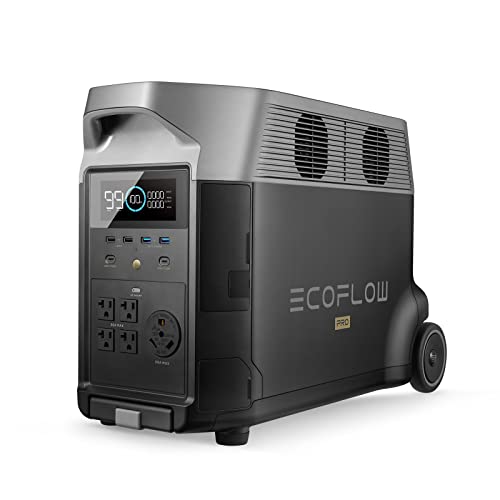
The EF ECOFLOW DELTA Pro is the ultimate solution for users who need days—not hours—of CPAP therapy during extended blackouts or off-grid living. With a 3,600Wh LiFePO₄ battery and 3,600W pure sine wave AC output, this unit can power a ResMed AirSense 11 with humidifier for roughly 35 to 40 hours straight. That’s nearly five full nights of therapy without recharging, and you can expand capacity to 25kWh with extra batteries.
X-Stream fast charging is a standout feature: a 240V outlet refills the battery in 1.8 hours, while standard 120V wall charging takes 2.7 hours. It also supports solar charging at up to 2,400W via four 400W panels, making it a proper renewable energy hub for RV or off-grid setups. The five AC outlets and 15 total output ports let you run a refrigerator, sump pump, routers, and CPAP simultaneously without worrying about overload.
At 99 pounds, this is a stationary unit—you won’t be tossing it in a carry-on. But if your priority is long-duration home backup and you want a battery that can keep your therapy running through multi-day outages without a generator, the DELTA Pro is nearly overkill in the best way.
Why it’s great
- 3,600Wh base capacity, expandable to 25kWh
- Runs CPAP with humidifier for multiple nights
- X-Stream fast charge in under 2 hours
- Smart app control for monitoring and customization
Good to know
- 99 pounds; not portable for travel
- Premium investment for CPAP-only users
- Requires space for ventilation
3. EASYLONGER ES960 Pro

The EASYLONGER ES960 Pro is purpose-built for multi-night CPAP use without wall power. Its 297.6Wh LiFePO₄ battery delivers over 36 hours of runtime on a ResMed AirSense 10 with humidifier and heated tube turned off—based on real user tests showing just 1% battery drain per 25 minutes of therapy. That gives you three to four full nights of sleep before needing a recharge, making it a top choice for extended camping trips or hurricane preparedness.
It ships with four color-coded DC cables covering ResMed S9, AirSense 10/11, AirCurve 10/11, AirMini, Philips DreamStation 1/2, and Luna G3. The 60W USB-C PD port is powerful enough to fast-charge laptops and tablets, and the 6 total output ports let you charge a phone or run a small fan alongside your CPAP. Pass-through charging works seamlessly—plug the battery into the wall and your CPAP into the battery, and the system automatically switches to battery the instant mains power drops.
The only downside is the weight: 6.6 pounds makes it heavier than some travel-focused options, and it’s not TSA-approved for air travel since it exceeds the 160Wh limit. But for car camping, RV use, or home backup where you prioritize runtime over portability, the ES960 Pro is hard to beat.
Why it’s great
- 36+ hours runtime on AirSense 10 (no heat/humidity)
- LiFePO₄ battery with 3,000+ cycle lifespan
- Four included DC cables for major CPAP brands
- True pass-through charging for uninterrupted sleep
Good to know
- 6.6 lbs; heavier than competitor CPAP packs
- Not TSA-approved for carry-on air travel
- Accidental light button activation reported
4. BLUETTI X30 CPAP Battery

The BLUETTI X30 is purpose-designed for CPAP users who prioritize lightweight portability above all else. Weighing just 4.1 pounds with a compact 8x5x3-inch form factor, it’s one of the lightest 300Wh-class CPAP batteries on the market—perfect for car camping, road trips, or tossing into a go-bag for hurricane season. Despite the small size, it packs 297Wh of power, which translates to roughly five to seven nights of use for a ResMed AirSense 10 or AirMini with humidifier off.
What really makes the X30 shine is its three dedicated DC output ports at 12V/5A, 15V/4A, and 24V/4A, plus a USB-A port for charging phones. The included five-cable kit is clearly labeled with compatibility info, so you won’t be guessing which wire goes to which machine. Real users report that a ResMed AirSense 10 at a pressure of 10 cmH₂O draws only about 16% battery per night, giving you nearly a week of therapy on a single charge.
The biggest limitation is that it only powers one device at a time, so you can’t charge your phone and run your CPAP simultaneously unless you use the USB-A port alongside DC output. Additionally, the included cables are relatively short, which can be a minor nuisance when routing power from the floor to a nightstand. Still, for the weight-to-capacity ratio, the X30 is an outstanding dedicated CPAP companion.
Why it’s great
- 4.1 lbs; extremely light for 297Wh capacity
- Three voltage-specific DC outputs for efficiency
- Five included cables with clear compatibility labels
- 5–7 nights of therapy on a single charge
Good to know
- Only powers one device at a time
- Cables are short for flexible placement
- Compatibility issues reported with Philips DreamStation
5. EASYLONGER ES720 PRO
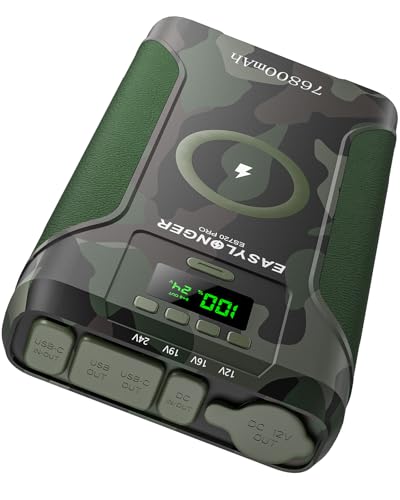
The EASYLONGER ES720 PRO is built specifically for the camping crowd—users who need a reliable CPAP battery that can survive two to three nights away from any wall outlet. The 276Wh lithium-ion pack is paired with four included DC cables covering ResMed AirSense 10/11, AirCurve 10/11, AirMini, Luna TravelPAP, and Philips DreamStation 1/2. Real-world testing shows it running a ResMed machine for a full 7-hour night while using just 24% of the battery, which gives you roughly three nights of therapy before needing a recharge.
A unique feature is the upgraded smart display with dedicated voltage adjustment, letting you toggle between 12V, 15V, and 24V settings with one button. This is especially useful if you switch between machines or share the battery with a partner. The 100W USB-C PD port is four times faster than standard USB-C outputs and can charge a MacBook Pro 14 from zero to 50% in under 30 minutes—handy for powering laptops during grid-down scenarios.
At just 3.35 pounds, it’s one of the lightest batteries in this capacity range, but the lithium-ion chemistry means you’ll get roughly 500 recharge cycles compared to 3,000+ with LiFePO₄. It also isn’t TSA-approved for air travel since it exceeds the 160Wh limit. The camo water-transfer printing gives it a unique look, but that’s purely aesthetic—functionally, it’s a solid mid-range CPAP battery that prioritizes weight savings over cycle longevity.
Why it’s great
- 3.35 lbs; very portable for its capacity
- Adjustable voltage selector for multi-machine use
- 100W USB-C PD fast charging for laptops
- Pass-through charging for uninterrupted therapy
Good to know
- Lithium-ion chemistry; ~500 cycle lifespan
- Not TSA-approved for carry-on flights
- Camo pattern may not suit everyone’s taste
6. BLUETTI Elite 30 V2
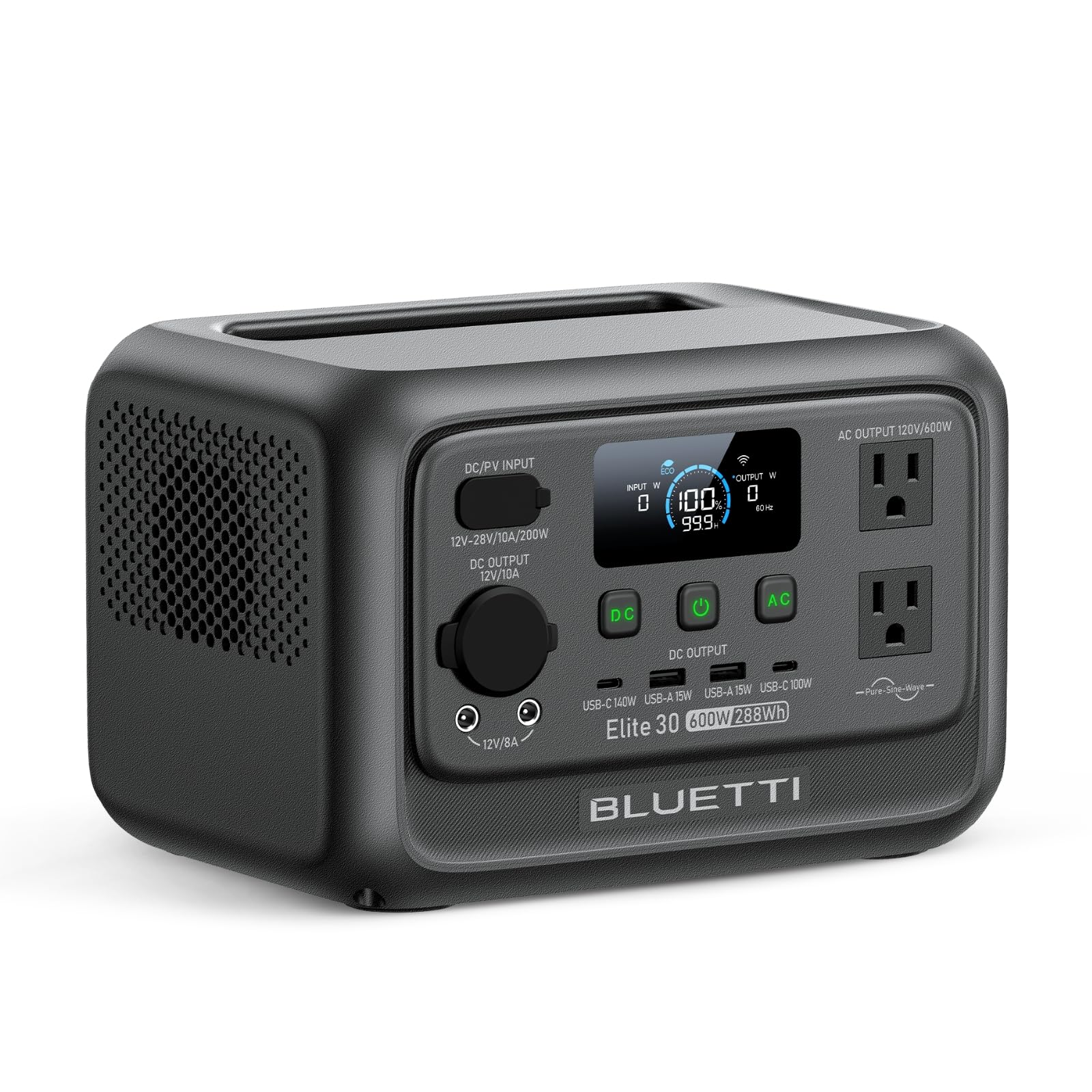
The BLUETTI Elite 30 V2 is a compact power station that doubles as a 10ms UPS for your CPAP, making it a fantastic choice for home backup during storms and outages. With 288Wh of LiFePO₄ capacity and a 600W pure sine wave AC inverter, it can run a ResMed AirSense 11 for about 4 to 5 hours on AC power, or slightly longer if you use the DC output with an adapter. The 10ms UPS switch is fast enough that your machine won’t restart or blink—you’ll never know the power went out.
A standout feature is its charging speed: the Elite 30 V2 goes from zero to 80% in 45 minutes and to full in 70 minutes. That’s exceptionally fast for a sub- power station and ensures you’re never stuck waiting for a recharge right before bed. It also offers eight charging modes including AC wall, solar, and car charging, giving you plenty of flexibility when you’re on the road. The built-in smart cooling system keeps power consumption 50% lower than previous models, which means less heat and fan noise during nighttime operation.
The main limitation for CPAP use is that it doesn’t ship with dedicated DC voltage cables—you’ll need to buy a third-party 24V adapter or run your machine through the AC outlet, which introduces conversion losses. At 9.4 pounds, it’s also heavier than dedicated CPAP packs like the X30, but the extra weight gets you a full power station that can also charge laptops, run a mini-fridge, and power lights during an outage.
Why it’s great
- 10ms UPS switch prevents CPAP restarts
- Fast charging: 0-80% in 45 minutes
- LiFePO₄ battery with excellent cycle life
- Compact form factor for home and camping use
Good to know
- No dedicated CPAP DC cables included
- 9.4 lbs; heavier than dedicated CPAP packs
- AC-only output reduces battery efficiency
7. LIBRIDS C600
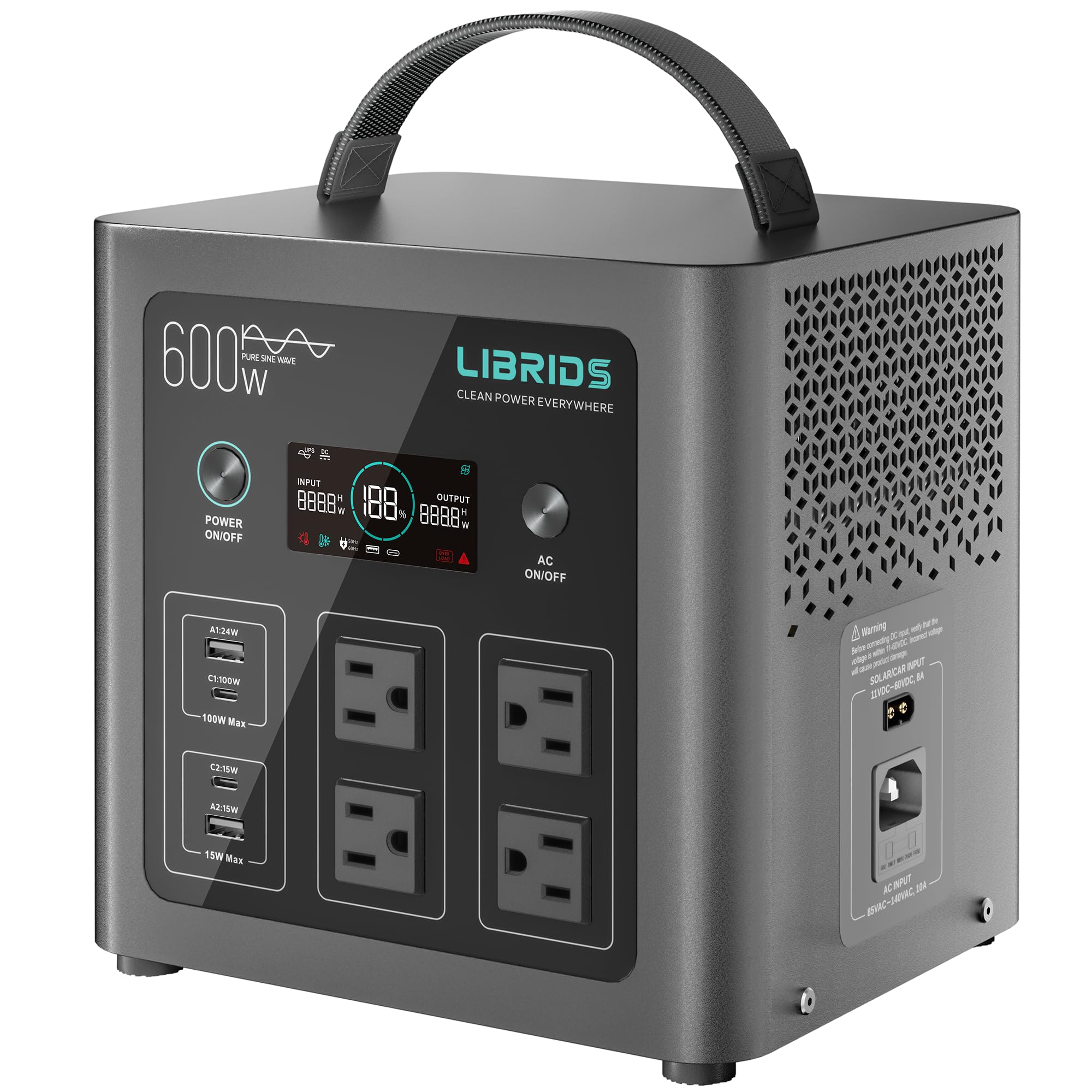
The LIBRIDS C600 is a mid-range power station that hits the sweet spot for home backup CPAP users who want more capacity than a dedicated CPAP battery but don’t need the massive scale of a Jackery 1000. Its 640Wh LiFePO₄ battery can run a ResMed AirSense 11 with humidifier off for roughly 10 to 11 hours, giving you a full night’s therapy with plenty of margin. With 8 output ports including 4 AC outlets, you can power your CPAP, router, phone charger, and a lamp simultaneously.
The pure sine wave inverter is rated at 600W continuous with a 1,200W surge, and the 10ms UPS switch ensures your CPAP never blinks during power flickers. One of the most practical features is the ultra-fast 1.5-hour recharge time—you can get a full charge during dinner and be ready for bedtime. The metal enclosure also aids heat dissipation, making it a safer choice for indoor use during extended blackouts.
The biggest drawback for CPAP users is the lack of dedicated DC voltage cables. You’ll need to run your machine through the AC inverter, which wastes 10–15% of the battery’s capacity as heat. Real-world testing shows that a 7-hour CPAP session consumed about 24% battery, which aligns well with the theoretical capacity but could be even better with a direct DC connection. The metal frame makes it feel premium and durable, but adds to the unit’s weight of about 8 pounds.
Why it’s great
- 640Wh capacity runs CPAP for 10+ hours
- 1.5-hour full recharge is class-leading
- LiFePO₄ battery rated for 4,000+ cycles
- Metal enclosure for better heat dissipation
Good to know
- No dedicated CPAP DC cables included
- AC-only output wastes 10–15% efficiency
- Not TSA-approved for air travel
8. VTOMAN Jump 600X

The VTOMAN Jump 600X is a unique 2-in-1 device that combines a 299Wh LiFePO₄ power station with a car jump-start port, making it ideal for RV travelers, van-dwellers, and anyone who wants a CPAP battery that can also rescue a dead vehicle battery. The 600W AC inverter (1,200W surge) runs a ResMed AirSense 11 for about 5 to 6 hours on a full charge, while the regulated 12V/10A DC outputs are perfect for direct connection to CPAPs that support 12V input—bypassing the AC inverter for better efficiency.
A standout feature is the ability to expand capacity from 299Wh to 939Wh with VTOMAN’s optional extra battery, turning it into a multi-night power station when needed. The constant-power technology means it won’t shut off if you accidentally plug in a device exceeding 600W—it continues delivering 600W of continuous power as an emergency workaround. It also supports pass-through charging, so you can run your CPAP while the battery recharges from a wall outlet.
The biggest trade-off is weight: at 14.6 pounds, it’s the heaviest option in the sub-300Wh category due to the jump-start components and metal casing. The charging time of about 3 hours is also slower than competitors like the BLUETTI Elite 30 V2. But if you live in a vehicle and want a single device that powers your CPAP, charges your devices, and jump-starts your engine, the Jump 600X earns its spot.
Why it’s great
- Built-in car jump starter saves space and money
- Regulated 12V DC output for CPAP efficiency
- Expandable to 939Wh with extra battery
- Constant-power mode prevents shutoffs
Good to know
- 14.6 lbs; heavy for general travel
- 3-hour recharge is slower than some rivals
- Jump-start cables sold separately
9. Pilot-24 Lite by Medistrom

The Pilot-24 Lite is the only TSA-approved CPAP battery on this list, with a 95Wh capacity that keeps it under the 100Wh FAA limit for carry-on luggage. Weighing just 1.3 pounds and built into a tough aluminum case, it’s the go-to choice for air travelers who need in-flight CPAP power or a lightweight backup for overnight trips. Medistrom reports up to 16 hours of runtime for the ResMed AirMini—one of the most efficient CPAPs on the market—and real users confirm 8 to 10 hours for a standard ResMed AirSense 10 with humidifier off.
The package includes two DC cables: one for direct connection to the AirMini and another for the AirSense 10. Additional cables for AirSense 11, S9, DreamStation Go, and other 24V machines are sold separately, which is a slight inconvenience if you switch machines. The 24V direct output is exceptionally efficient—no AC conversion losses, so every watt-hour goes straight to your therapy. Recharge time is a quick 2 to 3 hours, making it easy to top off between flights or at a hotel.
The obvious trade-off is capacity. At 95Wh, it’s best used as a travel companion or a single-night emergency backup rather than a multi-day solution. Users have reported cable reliability issues, with some connectors requiring finicky positioning to maintain a connection—though the manufacturer’s customer service tends to replace defective cables promptly. For the frequent flyer who must sleep with CPAP therapy on a plane or in a hotel without accessible outlets, the Pilot-24 Lite is unmatched.
Why it’s great
- TSA-approved for carry-on air travel
- 1.3 lbs; lightest CPAP battery reviewed
- Direct 24V DC output with zero conversion loss
- Rugged aluminum case for travel durability
Good to know
- 95Wh capacity limited to single-night use
- Additional cables sold separately for some machines
- Some reports of cable connector sensitivity
FAQ
Can I use any portable power station for my CPAP machine?
How many nights will a 300Wh CPAP battery last?
What does pass-through charging mean for CPAP batteries?
Can I fly with a CPAP battery backup in my carry-on?
LiFePO₄ vs lithium-ion: which is better for CPAP backup?
Final Thoughts: The Verdict
For most users, the battery backup for cpap winner is the BLUETTI X30 because it combines dedicated 24V DC output with a 297Wh LiFePO₄ pack in a 4.1-pound frame that delivers five to seven nights of therapy. If you want whole-home power that also keeps your CPAP running for two weeks, grab the Jackery Explorer 1000 v2. And for the frequent flyer who needs TSA-approved power in a 1.3-pound package, nothing beats the Pilot-24 Lite by Medistrom.

Mo Maruf
I created WellFizz to bridge the gap between vague wellness advice and actionable solutions. My mission is simple: to decode the research and give you practical tools you can actually use.
Beyond the data, I am a passionate traveler. I believe that stepping away from the screen to explore new environments is essential for mental clarity and physical vitality.