Our readers keep the lights on and my smoothie glass nicely filled. As an Amazon Associate, I earn from qualifying purchases.
Trusting a single blood pressure reading from a busy clinic visit can leave you anxious about numbers that shift with every step. The real picture of your cardiovascular health emerges from consistent, reliable measurements taken in the calm of your own home — if the device you choose doesn’t introduce its own drama of error codes and misfitting cuffs. A quality home monitor should fade into the background, delivering repeatable readings that match what your doctor sees, without demanding you decode a technical manual first.
I’m Mohammad Maruf — the founder and writer behind WellFizz. I sift through clinical validation claims, cuff sizing specs, and real-user reliability reports to separate monitors that quietly track your health from those that add stress to the routine.
This guide evaluates seven top contenders to help you find the most dependable best bp machine for consistent, clinical-grade tracking right from your living room.
How To Choose The Best BP Machine
Selecting a blood pressure monitor for home use goes far beyond picking the cheapest option. Consistency, fit, and validation are the three pillars that determine whether your device will be a trustworthy health partner or a source of confusing, fluctuating numbers.
Cuff Size and Arm Fit
An improperly sized cuff is the leading cause of inaccurate home readings. A cuff that is too small can artificially inflate systolic pressure by 10 to 40 mmHg, while one that is too large can under-report it. Measure your upper arm circumference mid-bicep and compare it to the monitor’s stated range. Standard cuffs typically fit 8.5 to 16.5 inches, but some models now offer dedicated extra-large cuffs reaching up to 21 inches for larger arms.
Clinical Validation and Accuracy Protocols
Not all monitors on Amazon are clinically validated. Look for devices that explicitly reference testing against protocols like ESH (European Society of Hypertension), BIHS (British and Irish Hypertension Society), or AAMI/ISO standards. A monitor rated AA by BIHS, for example, has passed the highest accuracy tier across a wide range of blood pressure levels — a crucial detail for anyone managing hypertension.
User Memory and Multi-User Support
Tracking trends over time requires more than a simple reading display. Monitors vary widely here — some store 30 readings for a single user, while others support up to 199 readings each for two separate users. If multiple family members need to monitor their pressure, choose a model with distinct user profiles so data stays separate and reports for the doctor remain clean.
Quick Comparison
On smaller screens, swipe sideways to see the full table.
| Model | Category | Best For | Key Spec | Amazon |
|---|---|---|---|---|
| Microlife BPM2 | Premium | Clinical accuracy gold standard | BIHS AA rated accuracy | Amazon |
| iHealth Track | Premium | Smartphone data tracking | Bluetooth + unlimited app storage | Amazon |
| Blood Pressure Monitor (Acenis) | Mid-Range | Large color screen for seniors | XL adjustable cuff + 2 user slots | Amazon |
| Konquest KBP-2704A | Mid-Range | Durable daily home use | Backlit screen + 4 user profiles | Amazon |
| Cocacis U80BH | Mid-Range | Extra large cuffs for bigger arms | Two cuffs (M/L + XL up to 21”) | Amazon |
| Braun ExactFit 2 | Budget-Friendly | Quick gentle inflation readings | Inflation-based measurement + color code | Amazon |
| Medline MDS4001 | Budget-Friendly | Simple no-frills clinical consistency | 90 readings per user (2 users) | Amazon |
In‑Depth Reviews
1. Microlife BPM2
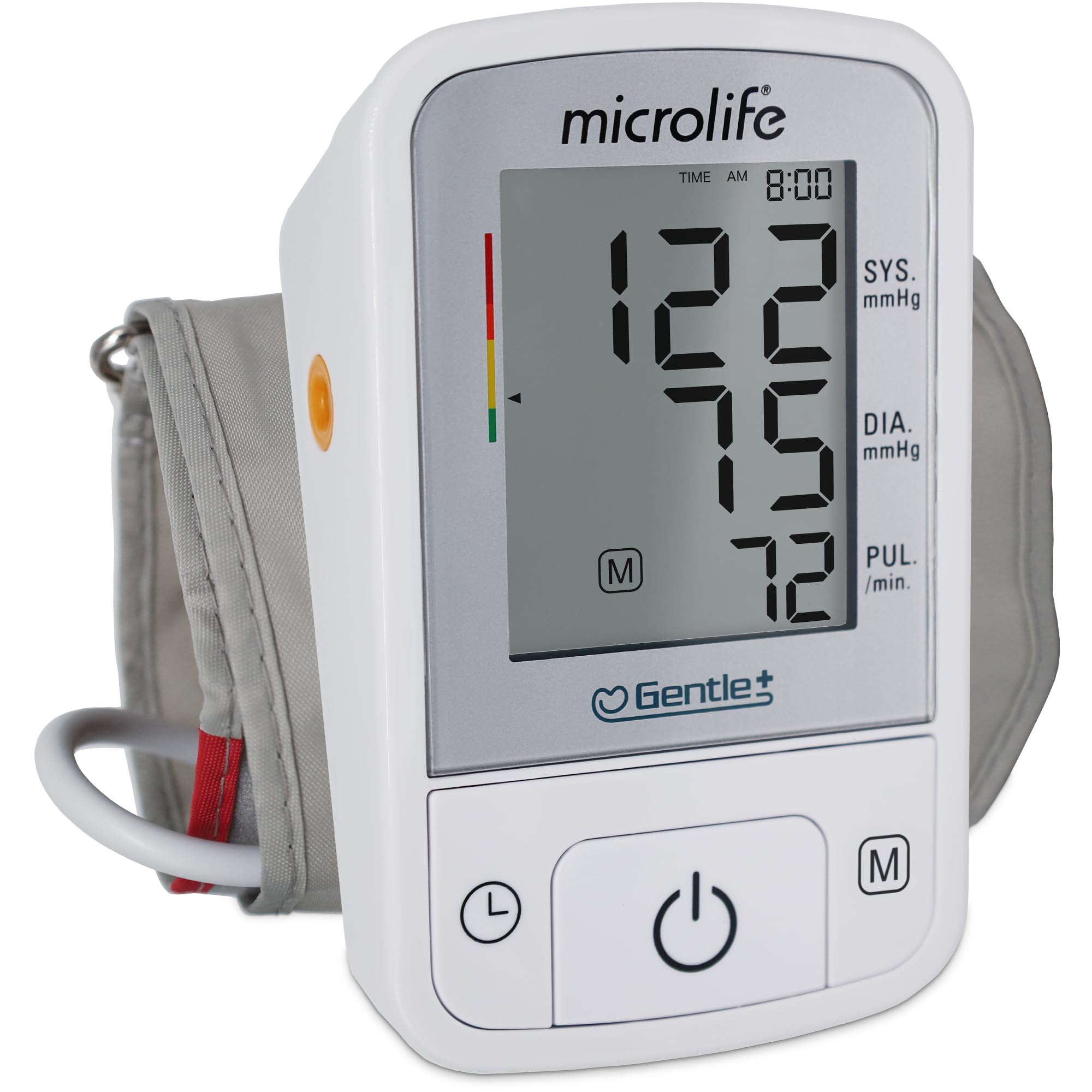
The Microlife BPM2 earns its spot at the top because it carries the highest accuracy rating awarded by the British and Irish Hypertension Society (BIHS AA). This is not a marketing claim — it means the device was tested against a mercury sphygmomanometer across a wide range of pressures and passed the strictest tier. For anyone managing hypertension or sharing data with a cardiologist, that validation alone justifies the investment.
Its Gentle+ Technology uses less pressure and less time during inflation, which makes the measurement noticeably more comfortable than monitors that crank the cuff to a default high level. The wide-range contoured cuff (8.7 to 16.5 inches) is softer than standard cuffs and easier to position correctly — a small detail that reduces user error significantly.
The BPM2 stores the last 60 readings and displays your average based on all stored memories, which is useful for spotting trends without manual logging. It also includes an irregular heartbeat detector and a hypertension risk indicator, giving you more than just raw numbers. The only trade-off is the lack of Bluetooth or smartphone app connectivity — this is a pure clinical tool, not a smart device.
Why it’s great
- Highest clinical accuracy rating (BIHS AA)
- Gentle+ inflation for a more comfortable experience
- Contoured wide-range cuff reduces fit errors
- Includes irregular heartbeat detection
Good to know
- No Bluetooth or app syncing
- Only 60 reading memory, less than some competitors
- XL cuff sold separately for arms over 16.5 inches
2. iHealth Track Smart Upper Arm Monitor
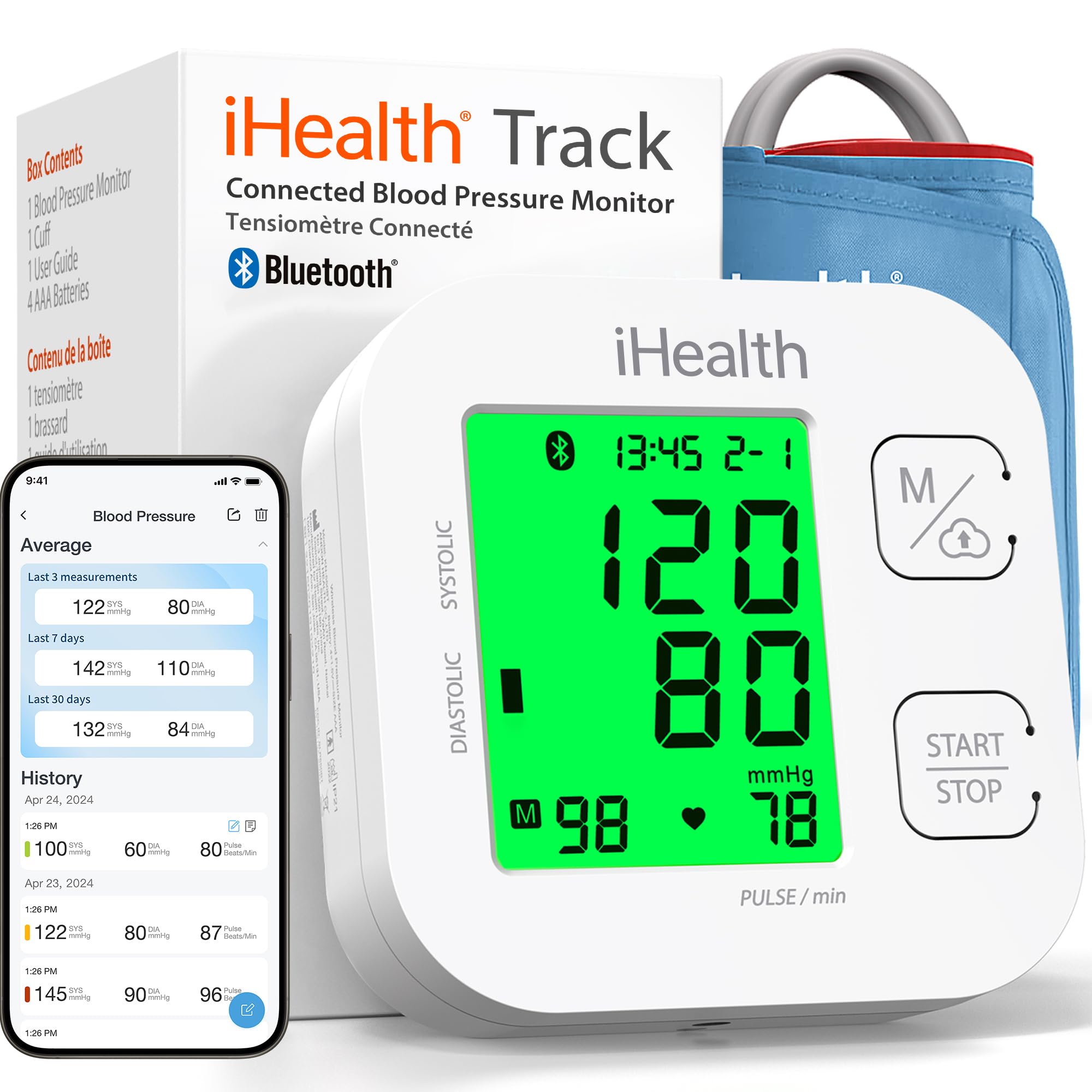
The iHealth Track is the best option for users who want their blood pressure data to live on their phone without manual entry. It uses Bluetooth to sync seamlessly with both iOS and Android devices, and readings flow directly into the iHealth app — and from there, into Apple Health. For anyone who presents trend data to their doctor, this eliminates the risk of transcription errors.
The monitor itself stores up to 99 readings on the device, but the app holds an unlimited history, making long-term trend analysis simple. The large multi-color backlit display uses green, yellow, and red zones aligned with WHO guidelines, so you can interpret results instantly without referencing a chart. The oversized numbers are genuinely helpful for users with vision concerns.
It also includes automatic detection of heart rhythm disturbances — a warning symbol appears if an irregular rhythm is detected after a measurement. The wide-range cuff fits 8.7 to 16.5 inch arms, which covers most adults. One consistent user note is that the accompanying app includes ads and may push unwanted downloads; many experienced users simply take readings from the device and ignore the app entirely while still benefiting from the Bluetooth sync.
Why it’s great
- Seamless Bluetooth sync with iOS and Android health apps
- Large color backlit display with WHO zones
- Identifies heart rhythm disturbances automatically
- Unlimited history in the app for trend tracking
Good to know
- App includes ads and may feel cluttered
- Requires Bluetooth 4.0 or newer
- Cuff may feel snug for upper range of sizes
3. Acenis AOJ-30F
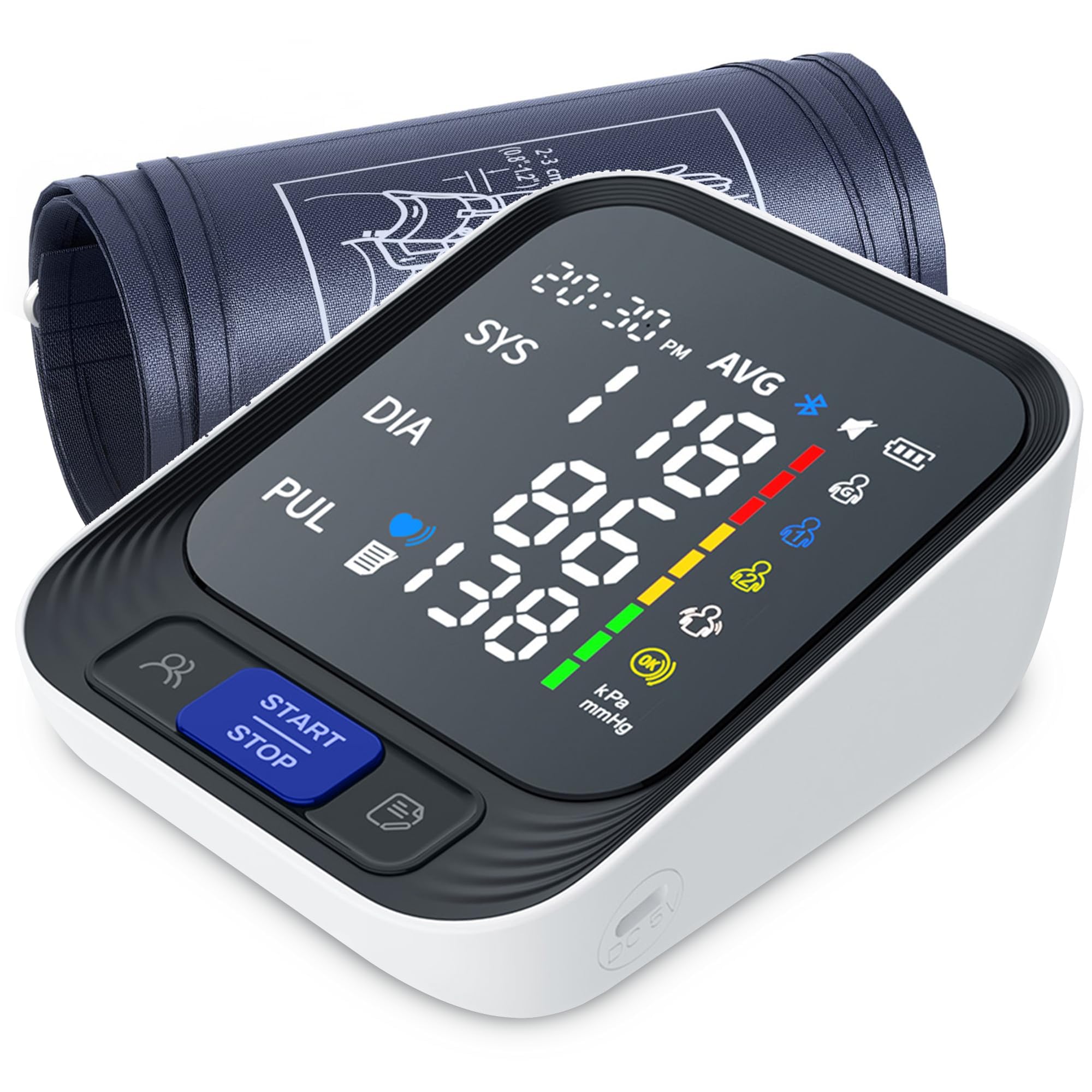
The Acenis monitor puts readability first with its large color screen and oversized digits, making it a strong choice for older users or anyone who finds small LCD panels frustrating. The one-touch operation delivers results in about 40 seconds, and the XL adjustable cuff fits a wide range of arm sizes comfortably without slipping during inflation.
It supports two user profiles with separate memory banks, which is practical for couples who both need regular monitoring. Each user can track their own readings without mixing up data, and the device also offers a three-reading averaging mode that helps smooth out natural daily fluctuations before reporting a result.
The device comes with both AAA batteries and a USB power cable, giving flexibility for placement near a desk or bedside table without worrying about battery drain. Some users found the initial date and time setup slightly unintuitive, but once configured the daily operation is straightforward. The included generic batteries are weak — plan to replace them early or use the USB cable as the primary power source.
Why it’s great
- Large color screen with easy-to-read digits
- XL adjustable cuff fits most arm sizes
- Two user profiles with separate memory banks
- Dual power (batteries and USB cable)
Good to know
- Date/time setup process is not intuitive
- Included batteries have poor longevity
- No Bluetooth or app connectivity
4. Konquest KBP-2704A

The Konquest KBP-2704A has earned a reputation for durability, with users reporting consistent daily use for over four years before the pump started showing signs of wear. That kind of longevity in this price tier is rare, and it speaks to the build quality of the internal components. The backlit LCD screen is bright and shows systolic, diastolic, pulse, date, and time all on one clear display.
It supports up to four user profiles with individual memory storage, making it the most family-friendly option in this lineup. Each user can store multiple readings for trend tracking, and the device includes a WHO blood pressure indicator that color-codes results on the display. The irregular heartbeat detector adds another layer of clinical utility without complicating the one-button operation.
The adjustable cuff fits arms from 8.5 to 16.5 inches, and the unit can also be powered by an optional 6V AC adapter (sold separately) for those who prefer not to rely on AA batteries. The only common criticism is that the inflation can feel tight if the cuff is wrapped too snugly — follow the manual’s guidance on placement to avoid discomfort.
Why it’s great
- Proven long-term durability (years of daily use)
- Supports four separate user profiles
- Backlit display readable in low light
- Consistent readings matching clinical sphygmomanometers
Good to know
- 6V adapter required for non-battery power (sold separately)
- Display shows many numbers at once, some find it busy
- Cuff inflation can be uncomfortable if wrapped too tight
5. Cocacis U80BH
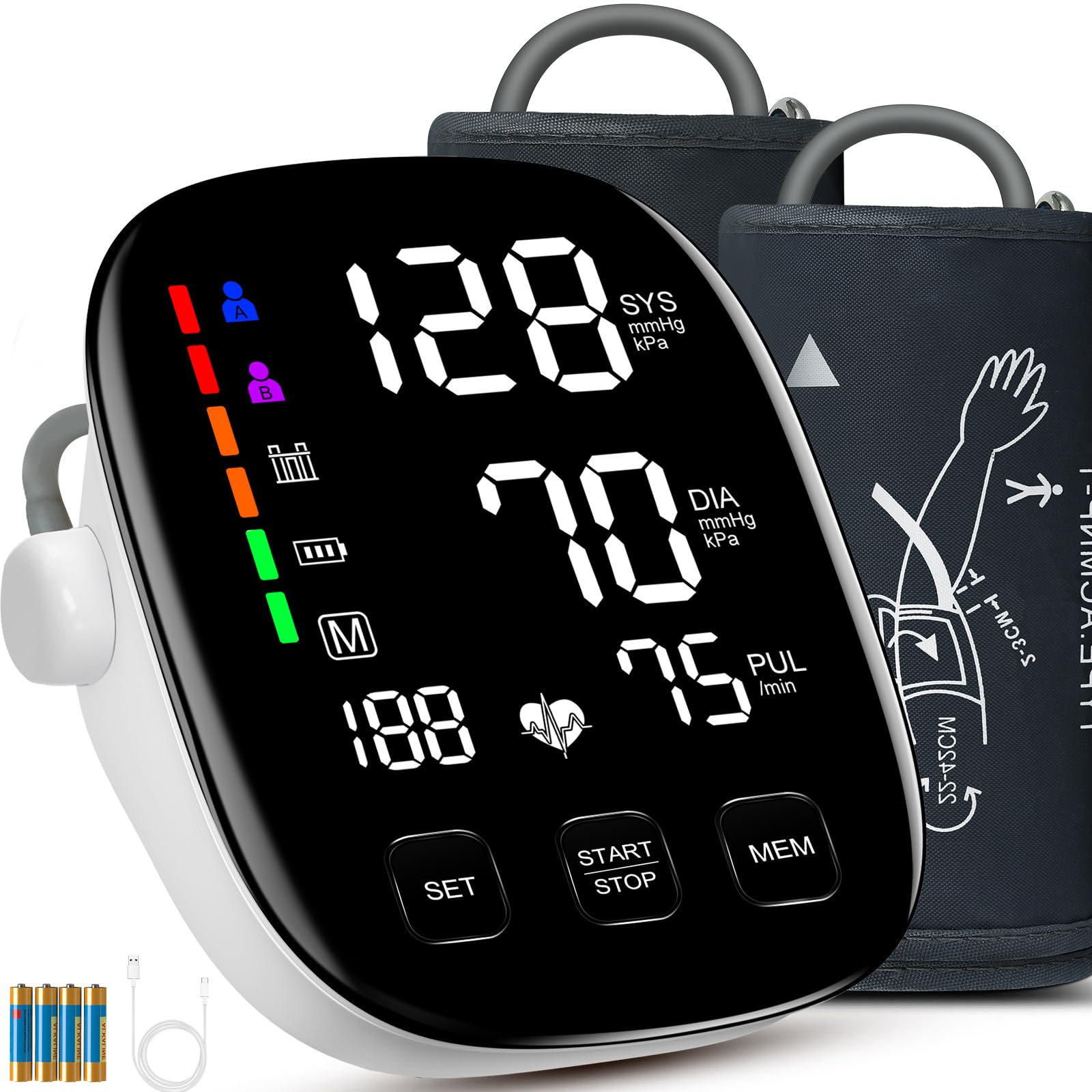
The Cocacis U80BH solves the most common accuracy problem at home — wrong cuff size — by including two cuffs in the box: a medium/large cuff (9 to 17 inches) and an extra-large cuff (13 to 21 inches). For users with larger upper arms who have been getting falsely elevated readings from standard cuffs, this dual-cuff approach is a practical fix that doesn’t require buying accessories separately.
The 6-inch HD backlit screen is among the largest in this category, with oversized numbers that are genuinely easy to read from across the room. The WHO color-coded indicator on the upper right corner of the display uses green, orange, and red zones to classify results as normal, mild hypotension, or high — giving immediate visual context without needing to interpret the numbers.
It supports two users with 199 memory slots each, which is generous for long-term trend tracking. The dual power system (4 AAA batteries plus a Type-C USB cable) means you can run it from a wall adapter indefinitely. One user noted that initial error readings were actually caused by incorrect cuff placement — once corrected, the device performed reliably and matched manual readings closely.
Why it’s great
- Includes both standard and extra-large cuffs
- Very large 6-inch backlit display
- Generous 199 reading memory per user (2 users)
- Dual power via AAA batteries or Type-C USB
Good to know
- Battery life could be better under heavy use
- Initial error codes may indicate incorrect cuff placement
- No Bluetooth or app for data export
6. Braun ExactFit 2
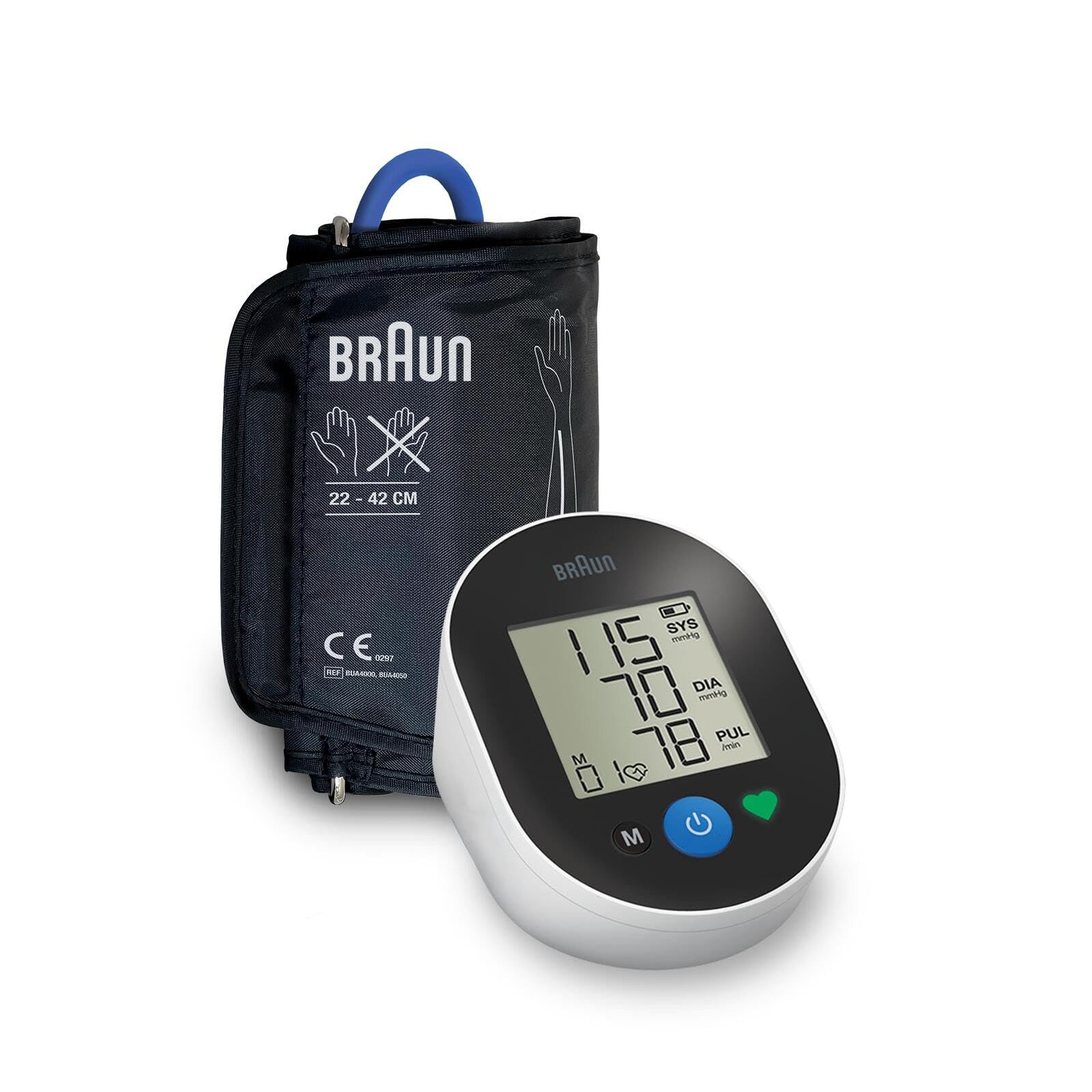
Braun’s ExactFit 2 uses a different approach than most monitors — it measures your blood pressure while the cuff is still inflating, rather than during deflation. This allows the cuff to stop tightening as soon as it has captured the reading, which reduces the overall inflation pressure and makes the experience more comfortable for users who find standard cuffs painfully tight.
The color-coded indicator on the display instantly classifies systolic and diastolic values, and the universal cuff fits arms from 8.6 to 16.5 inches. The device is clinically validated following internationally recognized testing protocols, which provides confidence in the accuracy. It stores the last 30 readings for a single user, which is sufficient for personal tracking but less generous than multi-user models.
Users consistently praise the ease of use and the clean, simple interface. The large display is easy to read without glasses for most, and the device is compact enough for travel. The main trade-offs are the limited 30-reading memory and the single-user focus — if two people need to track readings separately, this model won’t keep them organized without manual logging.
Why it’s great
- Gentler inflation-based measurement
- Clinically validated accuracy
- Color-coded results for instant interpretation
- Easy to use and portable
Good to know
- Only 30 reading memory, no multi-user profiles
- Universal cuff may not fit very large arms
- No Bluetooth or app connectivity
7. Medline MDS4001

The Medline MDS4001 comes from a company that manufactures medical-grade equipment for hospitals and clinics, and that pedigree shows in the build quality and reading consistency. This is a no-nonsense monitor that skips Bluetooth, color screens, and app integration in favor of straightforward clinical accuracy at a budget-friendly price point.
It supports two users with 90 readings each — which is generous for this tier — and the large digital LCD readout shows systolic, diastolic, and pulse rate clearly. The colored scale beside the display helps interpret results without needing to memorize target zones. Advanced error detection helps catch improper cuff placement or movement during measurement, reducing the chance of a bad reading.
The adult cuff fits arms 8.6 to 11.8 inches, which is narrower than most competitors. Users with arms larger than 12 inches in circumference will find this cuff restrictive and may need to look for a model with a wider range. For those within the size range, the readings have been reported to closely match clinical manual measurements, making it a reliable secondary check between doctor visits.
Why it’s great
- Medical-grade brand with consistent accuracy
- Supports two users with 90 readings each
- Advanced error detection prevents bad measurements
- Very affordable for the build quality
Good to know
- Cuff size limited to 8.6 to 11.8 inches
- No backlit screen for low-light reading
- Basic design — no Bluetooth or smart features
FAQ
How should I sit for the most accurate home reading?
Why do my home readings differ from the doctor’s office readings?
Final Thoughts: The Verdict
For most users, the best bp machine winner is the Microlife BPM2 because it carries the highest clinical accuracy rating (BIHS AA) and delivers comfortable readings with Gentle+ Technology, all without unnecessary complexity. If you want smartphone data tracking and unlimited trend history, grab the iHealth Track. And for users with larger arms who need an accurate cuff that actually fits, the Cocacis U80BH with its dual-cuff system is the most practical solution.

Mo Maruf
I created WellFizz to bridge the gap between vague wellness advice and actionable solutions. My mission is simple: to decode the research and give you practical tools you can actually use.
Beyond the data, I am a passionate traveler. I believe that stepping away from the screen to explore new environments is essential for mental clarity and physical vitality.