Our readers keep the lights on and my smoothie glass nicely filled. As an Amazon Associate, I earn from qualifying purchases.
Flat feet aren’t just a foot shape—they’re a mechanical condition where your arch collapses under load, transferring stress up through your ankles, knees, hips, and lower back. Without structured support, every step reinforces poor alignment, and the standard arch support found in most shoes is too soft to hold your foot in a neutral position. Whether you’re standing an eight-hour shift or logging miles on pavement, a properly designed orthotic insert is the difference between chronic fatigue and pain-free movement.
I’m Mohammad Maruf — the founder and writer behind WellFizz. I’ve spent hundreds of hours analyzing the materials science behind foot orthotics: comparing PORON foam densities, TPU arch plate stiffness, heel cup depth measurements, and the real-world break-in curves that separate relief from disappointment.
This guide cuts through the shelf clutter to identify the best arch support for flat feet based on how each product manages collapse forces, distributes pressure across the footbed, and holds its structure under heavy daily use.
How To Choose The Best Arch Support For Flat Feet
Not all orthotics are built the same, and buyers who pick an insole based on softness alone often end up disappointed. Flat feet require a firm, structured support that resists collapse under body weight—not a squishy cushion that sinks flat within weeks. Here are the three specs that separate an effective orthotic from a foot pad.
Arch Height: Medium vs High Profile
Flat feet are defined by a low or missing arch, but the correct orthotic may surprise you. Many flat-footed people need a medium arch profile because a high profile lifts the arch too aggressively, creating pressure on the navicular bone and causing discomfort. Start with a medium height and only move to high if your foot rolls inward severely (overpronation). If the insole comes with three height options, choose the one that matches the wet test impression of your foot.
Heel Cup Depth and Rigidity
The heel cup is the anchor of any orthotic. A shallow, flexible cup allows the heel to shift, which defeats the purpose of arch support entirely. Flat-foot orthotics need a deep U-shaped heel cup that cups the calcaneus (heel bone) firmly and is made of a rigid material—usually TPU (thermoplastic polyurethane) or a high-density polymer. This rigidity controls rearfoot motion and prevents the foot from rolling over the edge of the insole during the gait cycle.
Material Stack and Weight Rating
Flat feet generate more ground reaction force because the arch no longer acts as a natural spring. The insole material must absorb that shock and return to shape thousands of times without flattening. Look for dual-layer constructions: a firm bottom layer (TPU or rigid polymer) for structural support and a top layer of PORON foam, which retains 95% of its thickness after repeated compressions. Many brands now explicitly rate their insoles for body weight ranges—models rated for 220+ or 230+ pounds use denser materials that won’t bottom out.
Full-Length vs 3/4-Length vs Sandal Specific
Full-length insoles replace the entire factory footbed and work best in athletic shoes, boots, and casual sneakers with removable insoles. 3/4-length orthotics stop before the toes, fitting into tighter shoes like dress shoes, loafers, or heels where full-length would curl the toe box. Sandal-specific orthotics are built directly into the footbed of open footwear and cannot be swapped between pairs. Choose based on the footwear you use most during the day—if you stand in work boots, full-length wins; if you alternate between shoes, 3/4-length offers versatility.
Quick Comparison
On smaller screens, swipe sideways to see the full table.
| Model | Category | Best For | Key Spec | Amazon |
|---|---|---|---|---|
| Rihero Orthopedic Sandals | Sandal | Open footwear / summer wear | Built-in orthotic footbed | Amazon |
| Fit Geno Heavy Duty Insoles | Full Insole | Heavy body frames (220+ lbs) | TPU arch plate + PORON foam | Amazon |
| Professional Heavy Duty Orthotics | Full Insole | Long shifts / work boots | Double PORON + 8.15 oz weight | Amazon |
| VALSOLE Heavy Duty Orthotics | Full Insole | Impact absorption on concrete | High arch + shock-absorbing bottom | Amazon |
| OUOKK 3/4-Length Inserts | 3/4 Insert | Tight shoes / versatile fit | 26mm arch / 2.89 oz | Amazon |
In‑Depth Reviews
1. Professional Heavy Duty Support Pain Relief Orthotics – Psveb

This insole uses double PORON cushioning—a premium shock-absorbing foam originally developed for high-performance footwear—layered over a full PU base. The Golden Triangle design places support points at the forefoot, arch, and heel simultaneously, which prevents any single point from taking the entire load. Testers wearing size 10 work boots on concrete for 9-10 hours reported no flattening, no odor accumulation, and noticeable foot fatigue reduction within the first week.
The medium arch profile is calibrated specifically for flat feet rather than high arches, which makes it immediately wearable without a break-in period where you feel like you are standing on a rock. The deep U-shaped heel cup wraps the calcaneus snugly, preventing lateral slippage during walking or light jogging. At 8.15 ounces per pair, it is dense enough to stay in place without adding noticeable bulk inside the shoe.
Skin-friendly, sweat-proof fabric tops the stack, so even in non-breathable work boots the insole wicks moisture rather than trapping it. Customer reports confirm that after minor trimming (using the printed size lines), the insole fits sneakers, boots, and gym shoes without bunching at the toe. For the price point, the combination of dual-material cushioning and triangulated support is hard to beat.
Why it’s great
- Double PORON foam absorbs shock without losing thickness
- Golden Triangle three-point support reduces overpronation
- Holds structure through 10-hour shifts on hard flooring
Good to know
- Medium arch may not provide enough lift for severe overpronation
- Initial slickness in steel-toe boots reported by one user
2. Fit Geno Heavy Duty Support Insoles
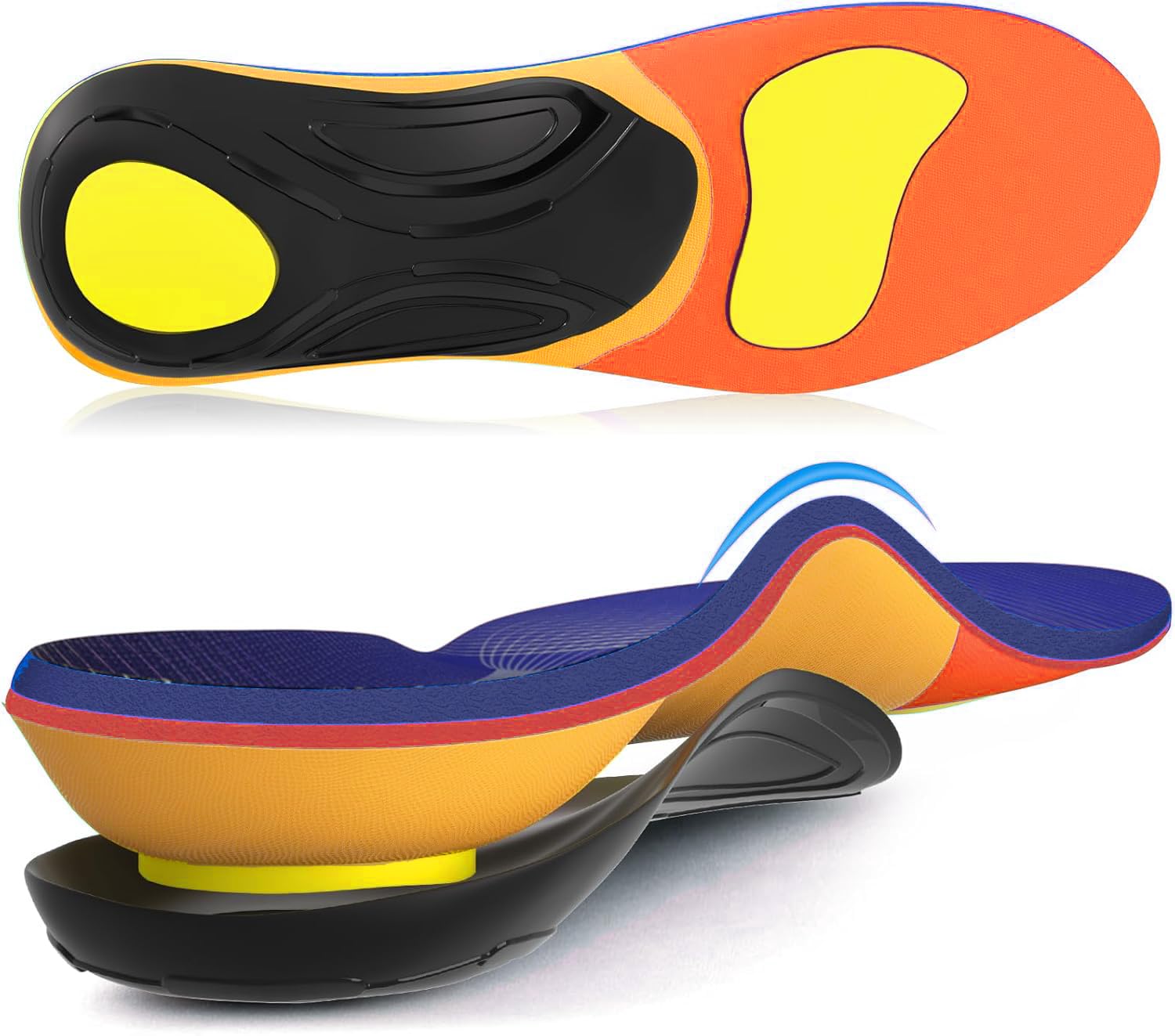
Fit Geno builds its insoles specifically for heavier frames—the company rates them for 220+ pounds and designs the arch support density accordingly. A rigid TPU plate sits under the arch, and this is the key structural difference from budget orthotics: the TPU resists bending under load, holding the foot in neutral alignment even when the user weighs closer to 300 pounds. The deep heel cup is molded from the same rigid material, so it does not splay open with daily wear.
Poron foam pads the heel and ball of foot areas, providing impact protection without interfering with the TPU’s supportive role. The removable arch plate is a thoughtful touch—users who find the rigid arch too aggressive for long walking days can take it out and retain a semi-supportive insole. One reviewer who is 6’5” and 235 pounds reported zero knee and foot pain after one day, a common pattern among users with chronic overpronation who had never tried a TPU-reinforced orthotic before.
Breathable fabric top sheet keeps odor manageable through 12-hour nursing shifts or warehouse work. The trim-to-fit design uses printed size lines that match standard shoe sizing charts, so you can cut to fit work boots, running shoes, or casual sneakers without guesswork. After cutting, the edge holds cleanly without fraying—a sign of decent material quality in the binding layer.
Why it’s great
- TPU arch plate resists bending under 220+ pound loads
- Removable arch plate offers two support levels in one insole
- Immediate pain relief reported by heavy users (6’5”, 235 lbs)
Good to know
- Rigid arch too aggressive for long walking days without removing plate
- Heavier weight (10.23 oz) adds noticeable bulk to low-profile shoes
3. VALSOLE Heavy Duty Support Orthotics
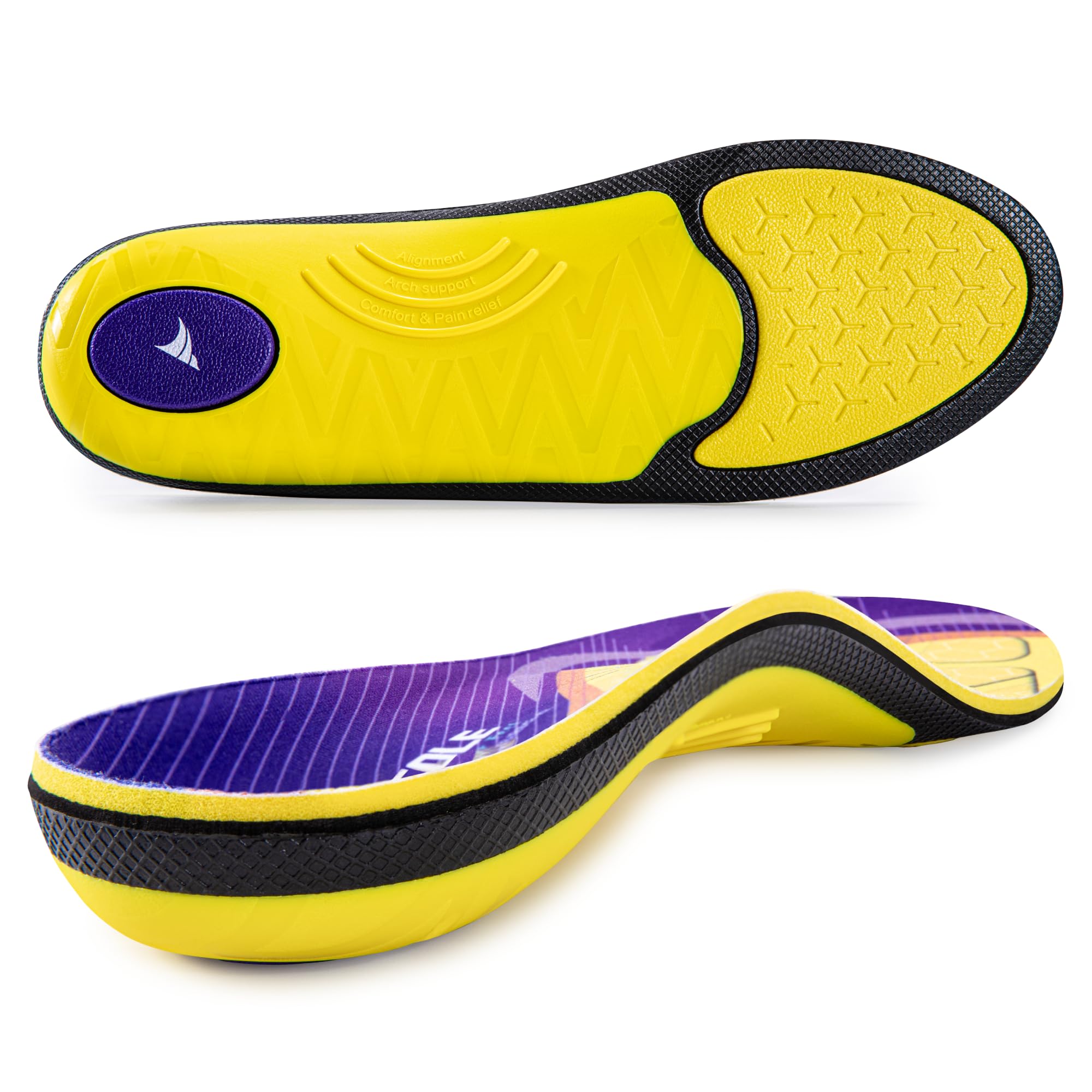
VALSOLE’s orthotic carries a high arch profile, which makes it better suited for flat feet with moderate overpronation rather than people with extremely flexible low arches. The shock-absorbing bottom layer is noticeably thicker than mid-range competitors, and user reports from warehouse workers on cement floors confirm a dramatic reduction in lower back pain after switching from factory insoles. The high arch lifts the midfoot enough to unload the plantar fascia, which is why multiple reviewers mention relief within the first shift.
The fit is forgiving for larger shoe sizes—one user at size 14 (men’s) found the insole wide enough to avoid edge pressure, which is a common complaint among big-footed buyers. After a brief adaptation period (2 to 3 days where the high arch feels unusual), users report that the insole becomes invisible during walking and eliminates foot and knee fatigue. Several reviewers describe it as “worth every penny” without referencing a specific dollar amount, which matches the mid-range pricing tier.
Durability holds up through 8-10 hour daily use, with no flattening or compression set visible after several weeks. The insole is stiffer than PORON-only models out of the box, so users with very sensitive feet should expect a break-in period before the rigid arch conforms to their foot shape. For the intersection of price and structural support, VALSOLE punches above its tier.
Why it’s great
- Thick shock-absorbing bottom reduces back pain on hard floors
- High arch provides firm lift for moderate overpronation
- Accommodates larger shoe sizes (up to size 14) without edge pressure
Good to know
- High arch too aggressive for very flexible flat feet without adaptation
- Cushioning is “alright to good” compared to premium-tier models
4. Rihero Orthopedic Sandals for Women
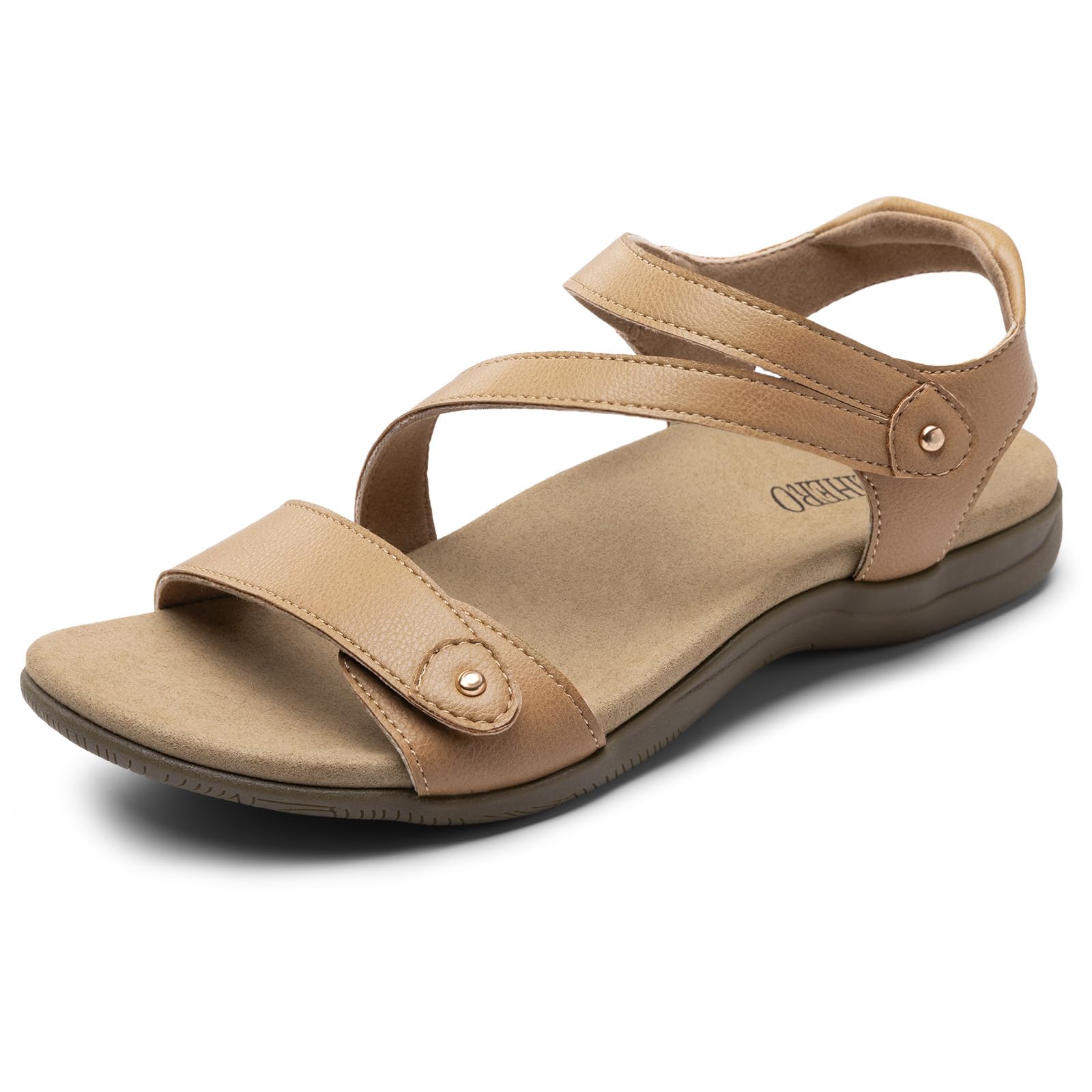
Rihero solves a persistent problem for flat-footed people: finding sandals with genuine arch support. Most open footwear has a flat, unsupportive footbed that causes the arch to collapse with each step. Rihero builds a molded orthotic directly into the sandal base, with a raised medial arch that runs from midfoot to heel. The footbed is firm but not hard, striking a balance between structure and walking comfort that allows all-day wear without the bottoming-out sensation typical of cheap flip-flop materials.
The adjustable strap across the vamp is a practical detail—flat feet often have a wider midfoot profile, and a fixed strap can create pressure points or instability. With full adjustability, you can dial in the fit without compressing the arch. The faux leather upper is soft and avoids the blister-prone edges of cheaper plastic sandals. Roomy toe space is another deliberate feature: it prevents the toes from being squeezed, which is important when the footbed is rigid and cannot conform to a narrow toe box.
Real wearers consistently describe these as “best sandal ever” and report walking miles on vacation without foot pain—a strong real-world test for any summer orthopedic product. The built-in orthotic cannot be transferred to other footwear, but for open-shoe wearers who spend summers on their feet, this sandal eliminates the need to layer insoles into shoes that have non-removable footbeds.
Why it’s great
- Molded orthotic footbed eliminates arch collapse in sandals
- Adjustable strap accommodates wider flat-foot profiles
- Roomy toe space prevents edge pressure from rigid footbed
Good to know
- Insole cannot be removed or transferred to other shoes
- Color descriptions on Amazon may not match actual appearance
5. OUOKK 3/4-Length Arch Support Inserts
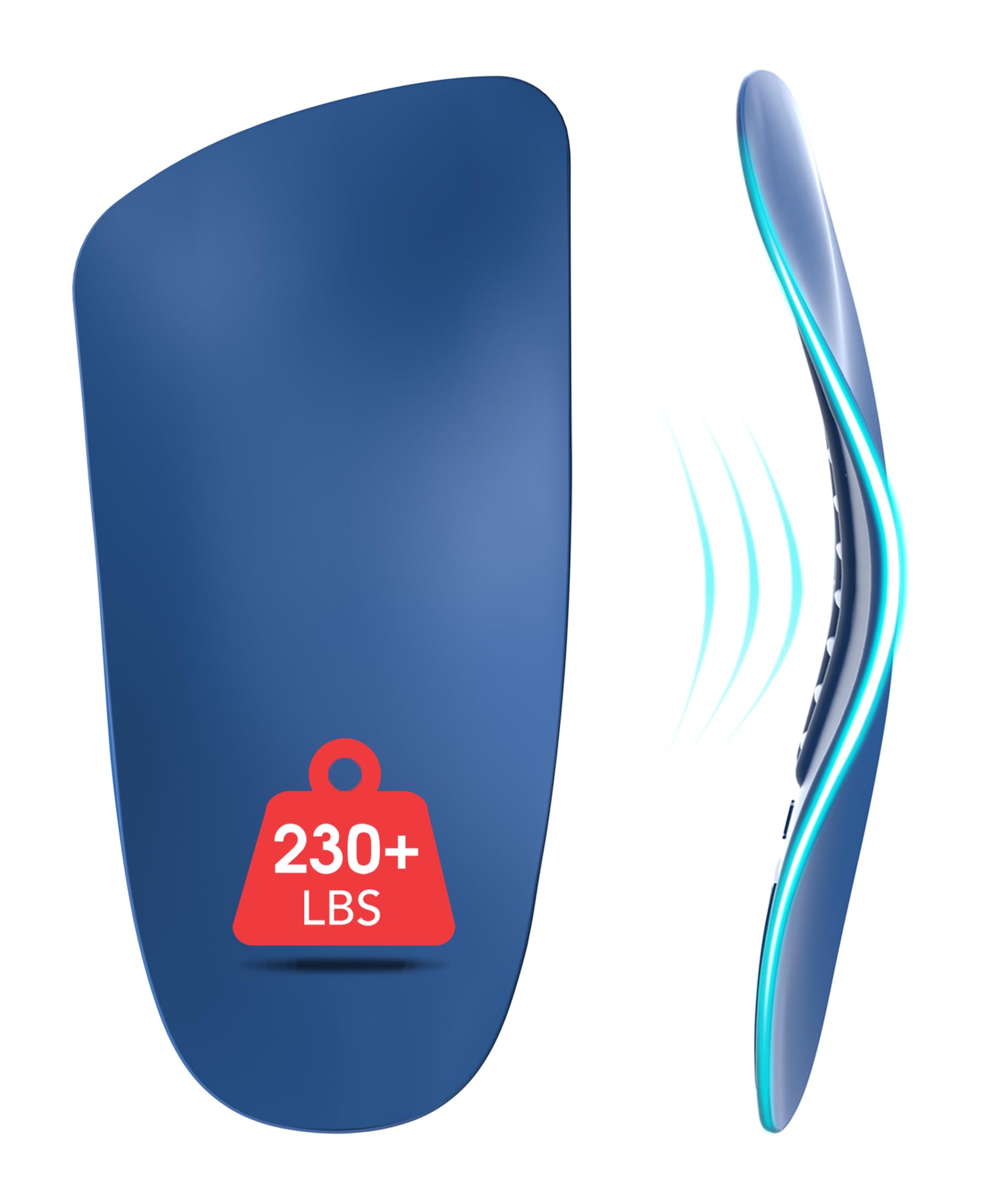
OUOKK’s 3/4-length design solves the clearance problem that plagues full-length insoles in tight shoes. By stopping before the toe, this insert fits into loafers, flats, low-profile sneakers, and even some dress shoes where a full insole would curl the toe box upward. The 3/4-length approach also means no trimming is required for most foot sizes—the insert sits under the arch and heel, leaving the toe area unchanged. The 26mm arch height is generous for a 3/4 design, providing enough lift to correct mild overpronation without bulging out of the shoe opening.
The premium TPU elastic arch provides the structural backbone, and the soft thin edges save space so that users do not need to buy wider shoes to accommodate the orthotic. This is the single biggest advantage over full-length insoles for people switching between multiple shoe types. Customer feedback consistently praises the immediate relief for plantar fasciitis and heel pain, with several users noting that the arch support felt effective from the first wear without a long break-in.
One caveat: because the insert is 3/4 length, it lacks a deep heel cup that wraps around the entire calcaneus. Users who overpronate severely may find that the insert shifts slightly inside the shoe during active movement. The included arch height options (low, medium, high) allow customization, but selecting the correct height depends on accurately identifying your arch type before purchase. For everyday walking and standing in low-profile footwear, this insert delivers support where full-length designs cannot physically fit.
Why it’s great
- 3/4-length design fits tight shoes where full insoles curl the toe box
- 26mm arch provides effective lift without bulging
- No trimming needed for most foot sizes
Good to know
- May shift slightly inside shoes during active movement
- Choosing correct arch height requires accurate arch identification
FAQ
Should I choose medium or high arch support for flat feet?
How long does it take to adapt to rigid orthotics?
Can I put orthotic insoles in sandals or open shoes?
What is the difference between full-length and 3/4-length orthotics?
Final Thoughts: The Verdict
For most users, the best arch support for flat feet winner is the Professional Heavy Duty Support Orthotics because its double PORON foam and Golden Triangle three-point support deliver immediate relief without a punishing break-in period. If you need heavy-duty support for a 220+ pound frame, grab the Fit Geno Heavy Duty Insoles for the TPU arch plate that physically prevents collapse under load. And for summer wear or tight shoes where full-length insoles won’t fit, nothing beats the Rihero Orthopedic Sandals for built-in arch support that keeps your feet aligned even in open footwear.

Mo Maruf
I created WellFizz to bridge the gap between vague wellness advice and actionable solutions. My mission is simple: to decode the research and give you practical tools you can actually use.
Beyond the data, I am a passionate traveler. I believe that stepping away from the screen to explore new environments is essential for mental clarity and physical vitality.