Our readers keep the lights on and my smoothie glass nicely filled. As an Amazon Associate, I earn from qualifying purchases.
Shooting after dark often means sacrificing image quality for usable exposure. A camera that handles high ISO, wide apertures, and slow shutter speeds without introducing destructive noise or color banding separates casual snapshots from portfolio-worthy images.
I’m Mohammad Maruf — the founder and writer behind WellFizz. I’ve spent hundreds of hours researching sensor technology, lens ecosystems, and image stabilization systems to identify which bodies genuinely deliver clean, detailed results when the sun goes down.
Whether you shoot cityscapes, astro landscapes, or dimly lit interiors, finding the right tool requires understanding sensor size, dynamic range, and stabilization. This guide breaks down the finest options to help you confidently choose a camera for night photography.
How To Choose The Best Camera For Night Photography
Night photography demands hardware that can capture light efficiently and process minimal noise. The three pillars—sensor performance, stabilization, and lens availability—determine your ceiling in dim conditions.
Sensor Size & Megapixel Density
Full-frame sensors (35.6mm x 23.8mm) physically collect more light per pixel than APS-C or Micro Four Thirds sensors at the same megapixel count. Larger photosites mean less electronic amplification is required, which directly reduces luminance noise. A 24MP full-frame sensor will generally produce cleaner shadows than a 40MP APS-C sensor, despite the higher resolution of the latter.
Image Stabilization (IBIS vs OIS)
In-body image stabilization allows you to shoot at shutter speeds several stops slower than the reciprocal rule would normally allow without introducing camera shake. For night photography, where every fraction of a second matters, 5-axis IBIS rated at 5.0 stops or higher can turn a previously impossible handheld scene into a sharp capture. Some systems also combine IBIS with optically stabilized lenses for additive effect.
Autofocus Sensitivity & Low-Light Accuracy
Phase-detection autofocus points that operate down to -4 EV or -6 EV ensure reliable locking in dark environments. Cameras that rely heavily on contrast detection may hunt or fail entirely under streetlight-level illumination. Look for models with dedicated low-light AF modes or a high density of cross-type phase-detection pixels across the frame.
Quick Comparison
On smaller screens, swipe sideways to see the full table.
| Model | Category | Best For | Key Spec | Amazon |
|---|---|---|---|---|
| Sony Alpha 7 IV | Full-Frame Mid-Range | Hybrid shooters wanting 33MP detail | 33MP BSI Sensor + 693 AF Points | Amazon |
| Canon EOS R5 | Full-Frame Premium | High-res stills + 8K video | 45MP Stacked CMOS + IBIS 8-Stop | Amazon |
| Sony a7 III | Full-Frame Mid-Range | All-around night performance | 24.2MP BSI Sensor + 693 AF Points | Amazon |
| Nikon Z 6II | Full-Frame Mid-Range | Event & wedding low-light | 24.5MP BSI Sensor + Dual Card Slots | Amazon |
| Fujifilm X-H2 | APS-C Premium | Ultra-detailed APS-C stills | 40MP APS-C Sensor + 7-Stop IBIS | Amazon |
| Panasonic LUMIX S5II | Full-Frame Mid-Range | Video-focused night work | 24.2MP Full-Frame + Phase Hybrid AF | Amazon |
| Fujifilm X100VI | Premium Compact | Street & everyday night carry | 40.2MP + 23mm f/2 Fixed Lens | Amazon |
| Canon EOS RP | Full-Frame Entry | Budget entry to full-frame | 26.2MP + RF 24-105mm f/4-7.1 | Amazon |
| Panasonic LUMIX G85 | Mirrorless Mid-Range | Stabilized video & travel | 16MP M43 + 5-Axis Dual IS | Amazon |
| Nikon COOLPIX P1100 | Superzoom Bridge | Extreme telephoto in moonlight | 16MP + 125x Optical Zoom (24-3000mm) | Amazon |
| OM SYSTEM E-M1X | M43 Pro Flagship | Rugged pro M43 performance | 20.4MP + 7.5-Stop Sync IS | Amazon |
In‑Depth Reviews
1. Sony Alpha 7 IV

The Sony Alpha 7 IV combines a 33MP back-illuminated full-frame sensor with the BIONZ XR processing engine, delivering excellent dynamic range and low noise up to ISO 6400. Its 693 phase-detection points with Real-time Eye AF for humans and animals lock on reliably even under dim streetlight conditions, making it one of the surest focusing systems for night shoots.
Video capabilities include 4K 60p 10-bit 4:2:2 with full pixel readout from a 7K oversampled area, producing clean low-light footage that requires minimal noise reduction. The in-body stabilization compensates for several stops of shake, allowing handheld long-exposure experiments at acceptably sharp results.
Dual card slots (CFexpress Type A / SD) provide robust file management, while the improved menu system and comfortable grip make extended nighttime sessions less fatiguing. The battery life is exceptional for a mirrorless body, often exceeding 2,000 shots per charge in real-world use.
Why it’s great
- Excellent 33MP sensor with wide dynamic range for shadow recovery
- Fast, accurate autofocus in low light with Real-time Eye AF
- Powerful IBIS supports handheld nighttime shooting
- Strong battery life for long sessions
Good to know
- 4K 60p has a slight crop factor
- Slightly heavier than some competitors
- Menu system can be complex for first-time Sony users
2. Canon EOS R5

Canon’s EOS R5 packs a 45MP stacked full-frame sensor paired with the DIGIC X processor, achieving clean images up to ISO 12800 with remarkably low luminance noise. Its Dual Pixel CMOS AF II covers 100% of the frame with 1,053 points, maintaining fast, silent focusing well into near-darkness.
The in-body image stabilization is rated for up to 8 stops of compensation, turning otherwise impossible handheld long exposures into sharp reality. This is particularly valuable for night architecture and static landscape work where a tripod is not feasible.
Beyond stills, the R5 records internal 8K RAW and 4K 120p video with outstanding color science. The body is weather-sealed with a comfortable deep grip, and the 0.5-inch OLED viewfinder provides a bright, lag-free preview in dark conditions.
Why it’s great
- Outstanding 45MP resolution with low noise at high ISOs
- 8-stop IBIS enables handheld night shots
- Fast, accurate Dual Pixel AF in low light
- Excellent build and ergonomics
Good to know
- Overheating can occur during extended 8K recording
- Battery life is shorter than some full-frame rivals
- Body-only; requires premium RF lenses for best results
3. Sony a7 III

The Sony a7 III remains a benchmark for night photography value. Its 24.2MP back-illuminated full-frame sensor combined with the BIONZ X processor delivers remarkably clean files at ISO 6400 and usable results at ISO 12800. The 693 phase-detection and 425 contrast-detection points cover 93% of the frame, ensuring reliable acquisition in dim environments.
The 15-stop dynamic range allows significant shadow recovery without introducing color noise, which is critical for exposing for highlights in high-contrast night scenes. The 5-axis IBIS provides about 5 stops of stabilization, enough for handheld shots down to 0.5 seconds with steady technique.
Battery life is a standout feature with approximately 710 shots per CIPA rating. The included 28-70mm kit lens is adequate for daylight, but pairing the body with a fast prime like a 35mm f/1.8 unlocks its full low-light potential.
Why it’s great
- Excellent high-ISO performance for its price tier
- Wide dynamic range aids shadow recovery
- Long battery life for extended sessions
- Proven reliable autofocus in low light
Good to know
- Menu system is cluttered and slow
- Kit lens is slow (f/3.5-5.6) for night work
- Single UHS-II slot limits high-speed burst
4. Nikon Z 6II

Nikon’s Z 6II features a 24.5MP back-side illuminated full-frame sensor that excels in low light, producing clean files up to ISO 12800 with excellent color fidelity. The improved dual EXPEED 6 processors enable 14 fps continuous shooting and faster readout, reducing rolling shutter in night video.
The 273-point phase-detection autofocus system works down to -4.5 EV, so it locks on subjects even under moonlight or dim street lighting. The 5-axis IBIS offers up to 5 stops of correction, helping to tame the slight shake that becomes magnified in low-light handheld situations.
The body is weather-sealed and comfortable for long shoots, with dual card slots (CFexpress/XQD + UHS-II SD) providing flexible backup. Video capabilities include 4K 60p with full pixel readout, making it a strong hybrid choice for nighttime content creation.
Why it’s great
- Excellent low-light sensor with clean noise handling
- Reliable autofocus down to -4.5 EV
- Dual card slots for professional backup
- Good stabilization for handheld shots
Good to know
- Screen does not flip forward for self-filming
- Native Z lens selection still growing
- Buffer depth limits sustained high-speed bursts
5. Fujifilm X-H2

The Fujifilm X-H2 pushes APS-C to its modern limits with a 40MP X-Trans CMOS 5 HR sensor and X-Processor 5. While higher pixel density typically means more noise, the back-side illumination and optimized pixel layout keep noise under control up to ISO 6400, with Film Simulations offering pleasing luminosity at high ISOs.
Its 7-stop in-body image stabilization allows photographers to handhold shots at significantly slower shutter speeds than the old 1/focal-length rule suggests. The Pixel Shift Multi-Shot mode can produce 160MP images for archival work where detail is paramount, though requires a tripod and still subject.
Video capabilities include 8K 30p internal ProRes 10-bit and 4K 60p with 13+ stops of dynamic range. The large electronic viewfinder and robust weather-sealed build make it a reliable companion for night shoots in challenging weather.
Why it’s great
- Incredible 40MP resolution with decent high-ISO noise
- 7-stop IBIS for steady handheld work
- Awesome film simulations reduce post-processing
- Excellent build quality and weather sealing
Good to know
- A fast prime lens is essential for full low-light potential
- APS-C sensor has less light-gathering than full-frame at same pixel count
- Price is premium for an APS-C body
6. Panasonic LUMIX S5II
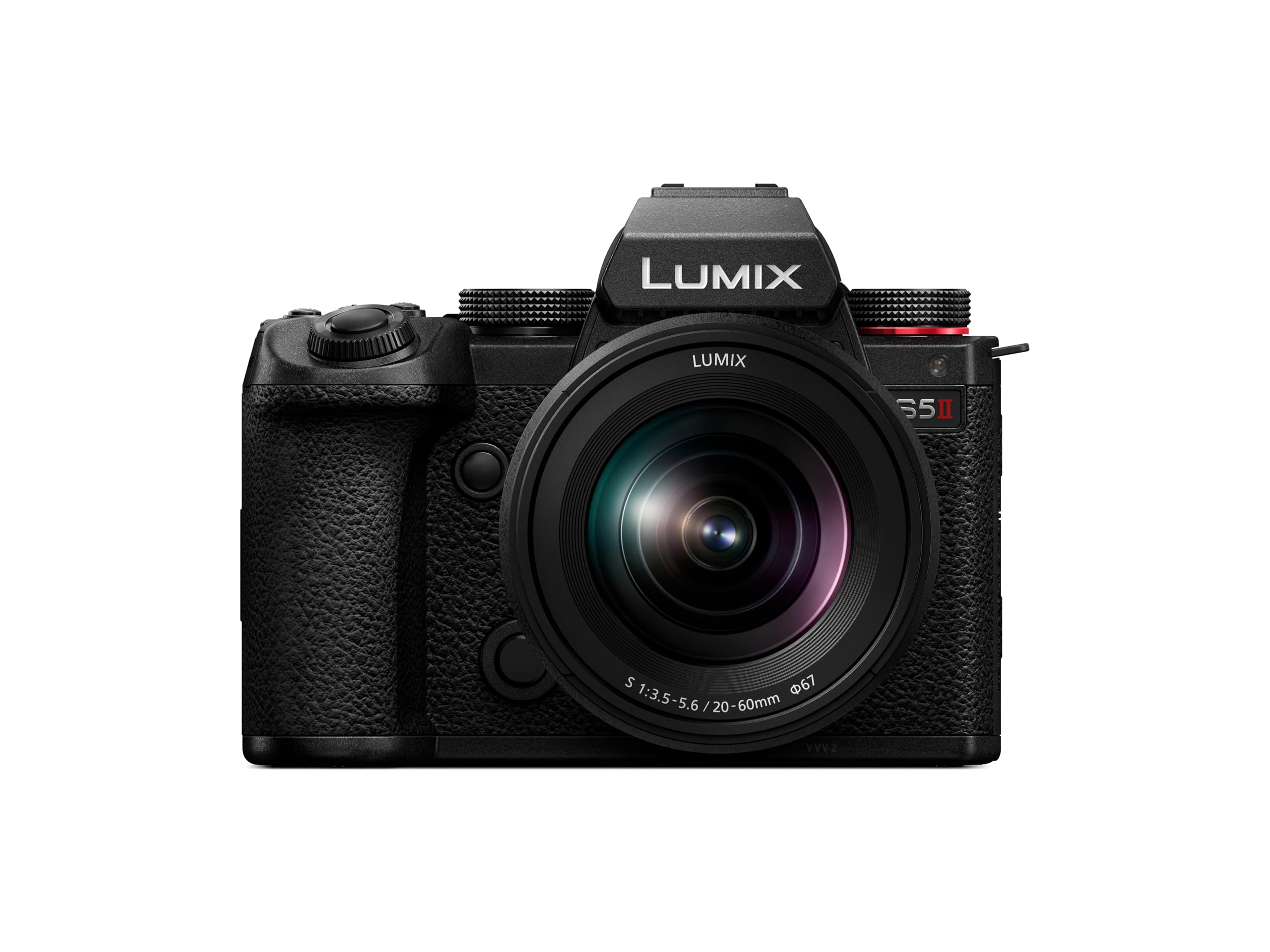
The S5II marks Panasonic’s adoption of Phase Hybrid AF, solving past low-light autofocus issues. Its 24.2MP full-frame sensor delivers excellent dynamic range, with colors that many videographers prefer straight out of camera. The 14+ stop V-Log allows significant flexibility in grading night footage without introducing banding.
Active I.S. technology extends stabilization to walking shots, making handheld night videography more feasible. The unlimited 4:2:2 10-bit recording with built-in fan prevents overheating during long takes, which is critical for nighttime events or performances.
The L-mount ecosystem gives access to Sigma and Leica glass, though telephoto options are currently less extensive than Sony or Canon offerings. The body is compact for its class, with intuitive handling and high-quality weather-resistant construction.
Why it’s great
- Excellent color science and dynamic range for video
- Reliable Phase Hybrid AF finally solves low-light focus
- Active I.S. smoothes walking night footage
- Unlimited recording with internal fan
Good to know
- Battery life is average; spares needed for long sessions
- Some settings fail to save after power-off
- Lens ecosystem still maturing
7. Fujifilm X100VI

The Fujifilm X100VI combines a 40.2MP X-Trans CMOS 5 HR sensor with a fixed 23mm f/2 lens (35mm equiv.) and up to 6 stops of IBIS. This combination allows solid performance at ISO 12800 for street night photography. The built-in 4-stop ND filter is invaluable for achieving wide-aperture motion blur in nighttime scenes with bright lighting.
Its hybrid viewfinder can switch between optical and electronic, giving photographers the choice of a bright, battery-saving view at night or a precise preview with exposure simulation. The film simulations deliver beautiful out-of-camera JPEGs that often eliminate the need for post-processing, even in tricky mixed lighting.
The fixed focal length teaches compositional discipline and is ideal for discreet street shooting. Battery life is shorter than some rivals, and the autofocus can occasionally be inconsistent in very dark environments, especially compared to larger full-frame systems.
Why it’s great
- Impressive IBIS for a fixed-lens compact
- Excellent film simulations for immediate night results
- Built-in ND filter for creative control
- Compact and stylish, always ready in hand
Good to know
- Fixed lens limits framing flexibility
- Battery life is relatively short
- Autofocus can hunt in deep darkness
8. Canon EOS RP

The EOS RP provides an entry point to full-frame night photography with its 26.2MP sensor and Dual Pixel CMOS AF. The autofocus is fast in moderate light but struggles in deep darkness compared to more expensive bodies. High-ISO performance is decent up to ISO 6400, though noise becomes prominent above that.
The included RF 24-105mm f/4-7.1 kit lens is versatile for daylight but slow for night work; pairing the body with an affordable RF 50mm f/1.8 or adapted EF 35mm f/2 transforms its low-light capability. The body is the lightest full-frame mirrorless on the market, making it comfortable for long walks.
The electronic viewfinder is sharp and the flip-out touchscreen helps with awkward-angle night compositions. Battery life is modest, so carrying an extra battery is advisable. For budget-conscious photographers wanting full-frame low-light performance, this is a viable starting point.
Why it’s great
- Lightweight full-frame body easy to carry
- Good Dual Pixel AF works well in moderate light
- Cheapest entry to RF mount full-frame
- Compatible with affordable fast primes
Good to know
- Kit lens is too slow for serious night work
- Battery life is below average
- Limited buffer for continuous shooting
9. Panasonic LUMIX G85

The G85 demonstrates that Mirrorless Four Thirds still has merit for night photography, particularly through its class-leading Dual I.S. 2 system that combines in-body and lens stabilization. This allows handheld shooting at shutter speeds impossible on many larger systems, effectively compensating for the smaller sensor’s higher noise at equivalent ISOs.
The 16MP sensor skips the low-pass filter for increased sharpness, and the 49-point contrast-detect AF system works adequately in moderate low light. The magnesium-alloy body features weather sealing, and the OLED viewfinder is bright enough for night composition.
Where the G85 excels is value and portability: an affordable body plus stabilized kit lens that covers everyday needs. The Micro Four Thirds ecosystem offers many affordable fast primes (like the 25mm f/1.7) that restore low-light capability. It is a strong pick for travelers and budget-focused videographers who prioritize stabilization.
Why it’s great
- Outstanding Dual I.S. stabilizes handheld night shots
- Weather-sealed robust body
- Affordable with access to many lenses
- Bright EVF for dark scenes
Good to know
- 16MP sensor is at the low end of resolution
- No low-pass filter but still limited detail
- Slower autofocus for video in deep low light
10. Nikon COOLPIX P1100

The Nikon P1100 handles night photography in a very specific niche: capturing distant subjects under low light where no interchangeable lens can reach. Its 125x optical zoom (24-3000mm equivalent) can photograph the moon, distant wildlife, or cityscapes from extreme distances even in dim conditions, enabled by Dual Detect Optical VR that delivers 4-stop shake reduction.
The 16MP sensor is small, so noise is visible from ISO 800 upward, but the sheer reach advantage means you get an image where a full-frame camera would see nothing. A tripod is essential at full zoom during twilight or nighttime to avoid motion blur. The Bird-Watching mode and Raw (.NRW) shooting are useful additions for serious nature photographers.
It is a point-and-shoot with manual controls, but the interface can be sluggish compared to mirrorless or DSLR systems. For photographers whose priority is reach at any reasonable cost, the P1100 is unmatched. For general low-light quality, a larger sensor body is far better.
Why it’s great
- Unmatched 125x optical zoom for distant night subjects
- Effective VR reduces shake at extreme telephoto
- Bird-watching mode for specific use cases
- Shoots raw files for flexibility
Good to know
- Small sensor produces significant noise at high ISO
- Requires tripod for usable results at full zoom
- Controls and menus are not intuitive
11. OM SYSTEM Olympus OM-D E-M1X

The E-M1X is built as a rugged professional M43 body with dual TruePic VIII processors and the world’s most effective sync IS (7.5 stops). This stabilization is remarkable: it can produce handheld 50MP High Res shots and smooth handheld video in low light where any other system would show motion blur. The Live ND feature simulates neutral density filter effects without needing an actual filter, beneficial for nighttime light trails.
Its 121 cross-type on-chip phase-detection autofocus works well in low light, and the dual joystick controls (one for vertical orientation) make fast handling instinctive. The magnesium alloy weather sealing is built for harsh environments, and the 400,000 actuation shutter life speaks to its durability.
The 20.4MP sensor is lower resolution than some rivals, but the stabilization trickery and rugged design make it a specialized tool for wildlife, sports, or event photographers who work at night and need the smallest possible high-performance kit. The smaller sensor means noisier files at equivalent ISOs compared to full-frame, but the stabilization often compensates.
Why it’s great
- Unrivaled 7.5-stop IBIS for handheld night work
- Rugged, weather-sealed pro build
- Live ND and 50MP handheld modes are creative tools
- Excellent ergonomics with dual joysticks
Good to know
- M43 sensor yields more noise than full-frame at higher ISOs
- Very expensive for the system size
- 20.4MP resolution limits cropping flexibility
FAQ
Do I need full-frame for night photography?
What is the most important lens for low-light shooting?
How many stops of IBIS do I really need for handholding at night?
Final Thoughts: The Verdict
For most users, the camera for night photography winner is the Sony Alpha 7 IV because it delivers an exceptional balance of high-ISO performance, resolution, autofocus reliability, and video capability. If you want the absolute cleanest high-ISO files for stills-only, grab the Canon EOS R5. And for budget-conscious shooters pursuing maximum value, nothing beats the proven Sony a7 III.

Mo Maruf
I created WellFizz to bridge the gap between vague wellness advice and actionable solutions. My mission is simple: to decode the research and give you practical tools you can actually use.
Beyond the data, I am a passionate traveler. I believe that stepping away from the screen to explore new environments is essential for mental clarity and physical vitality.