Our readers keep the lights on and my smoothie glass nicely filled. As an Amazon Associate, I earn from qualifying purchases.
A microphone that turns your voice into a warm, intelligible signal without breaking your budget is the single biggest upgrade a singer can make. The wrong mic, regardless of price, will leave your vocals sounding thin, boomy, or buried in background noise, robbing your performance of its emotional impact.
I’m Mohammad Maruf — the founder and writer behind WellFizz. My research process for this guide involved cross-referencing frequency response curves, polar pattern rejection specs, and hundreds of verified user experiences to identify which affordable microphones actually deliver clear, usable vocal reproduction.
Whether you are recording demos at home, singing at open mics, or streaming live performances, choosing the right tool makes the difference between a recording that sounds amateur and one that commands attention. This is the definitive guide to finding the best affordable microphone for singing that fits your specific setup and style.
How To Choose The Best Affordable Microphone For Singing
A microphone is a transducer that converts acoustic energy into an electrical signal, but not all transducers are built the same. For singing, the two main categories are dynamic and condenser microphones, and each serves a different environment. Dynamics are rugged, handle high sound pressure levels without distortion, and reject background noise naturally — making them ideal for live stages and untreated rooms. Condensers are more sensitive, capture a wider frequency range and subtle detail, but require phantom power and a quieter recording space to avoid picking up room echo and hum.
Polar Pattern: Cardioid Is King for Vocals
A cardioid polar pattern picks up sound primarily from the front of the microphone while rejecting noise from the sides and rear. This is critical for singing because it isolates your voice from monitor speakers, other instruments, and room reflections. Supercardioid patterns offer even tighter rejection but require more precise positioning. Avoid omnidirectional patterns for singing unless you are recording in a treated vocal booth.
Frequency Response Tailoring for Vocals
Look for a frequency response that gently lifts the presence range (roughly 2 kHz to 8 kHz) to add clarity and intelligibility to your voice without harshness. Many vocal microphones also feature a low-frequency roll-off that reduces handling rumble and proximity effect — the bass boost that occurs when you sing very close to the mic. A mic with a flat response might sound natural but can lack the articulation needed to cut through a mix.
Connectivity: XLR vs. USB
XLR microphones require an audio interface or mixer with a preamp and a standard XLR cable. This setup offers higher sound quality, lower latency, and the ability to upgrade components individually. USB microphones have a built-in preamp and analog-to-digital converter, allowing plug-and-play connection to a computer. USB mics are convenient for home recording and streaming, but they cannot be used with a traditional PA system or mixer without additional adapters.
Quick Comparison
On smaller screens, swipe sideways to see the full table.
| Model | Category | Best For | Key Spec | Amazon |
|---|---|---|---|---|
| AKG D5 | Dynamic | Live vocals with feedback rejection | Supercardioid / Varimotion diaphragm | Amazon |
| Sennheiser e 935 | Dynamic | Stage vocals with natural clarity | Neodymium magnet / Cardioid | Amazon |
| Audio-Technica AT2020 | Condenser | Studio recording with detail | Cardioid / 20 Hz–20 kHz response | Amazon |
| Blue Yeti | USB Condenser | Desktop recording and streaming | Tri-capsule array / 4 patterns | Amazon |
| Sennheiser E825-S | Dynamic | Club PA and vocal projection | Cardioid / 25 dB self-noise | Amazon |
| PreSonus PD-70 | Dynamic Broadcast | Podcast and close vocal work | Cardioid / 350 Ohm impedance | Amazon |
| Shure PGA58 | Dynamic | Entry-level live vocal practice | Cardioid / 50 Hz–16 kHz range | Amazon |
In‑Depth Reviews
1. AKG D5 Vocal Dynamic Microphone

The AKG D5 uses a patented laminated Varimotion diaphragm that delivers a crisp, articulate top end while maintaining a solid low-mid presence. Vocalists who found the Shure SM58 muddy in the mids report that the D5 cuts through a live mix with noticeably more clarity and definition. The supercardioid polar pattern offers tighter rejection of off-axis stage noise than a standard cardioid, which is a real advantage when monitors are loud.
Dual shock mounts inside the capsule effectively isolate handling noise, so you can grip the mic aggressively without transmitting rumble into the signal. The spring-steel wire-mesh grille and die-cast housing are built to survive drops and road wear without degrading performance. An integrated pop filter reduces wind and breath pops without requiring an external accessory.
With an SPL handling of 149 dB at 1% THD, this mic handles belted vocals without distorting, making it suitable for everything from soft jazz to hard rock. Users consistently rate the D5 as outperforming other dynamics in its tier, praising its sensitivity and vocal tone. For a singer who needs one mic for both rehearsals and live shows, the AKG D5 represents the best balance of build, clarity, and feedback rejection at a mid-range price.
Why it’s great
- Supercardioid rejection is excellent for loud stage environments and feedback-prone setups.
- Varimotion diaphragm provides a crisp, present high end that helps vocals cut through a mix.
- Dual internal shock mounts reduce handling noise significantly compared to many competitors.
Good to know
- Some users report slightly more handling noise than the Shure Beta 58.
- The integrated pop filter is effective but does not eliminate the need for a separate filter in studio recording.
2. Sennheiser Pro Audio e 935 Cardioid Dynamic Vocal Microphone
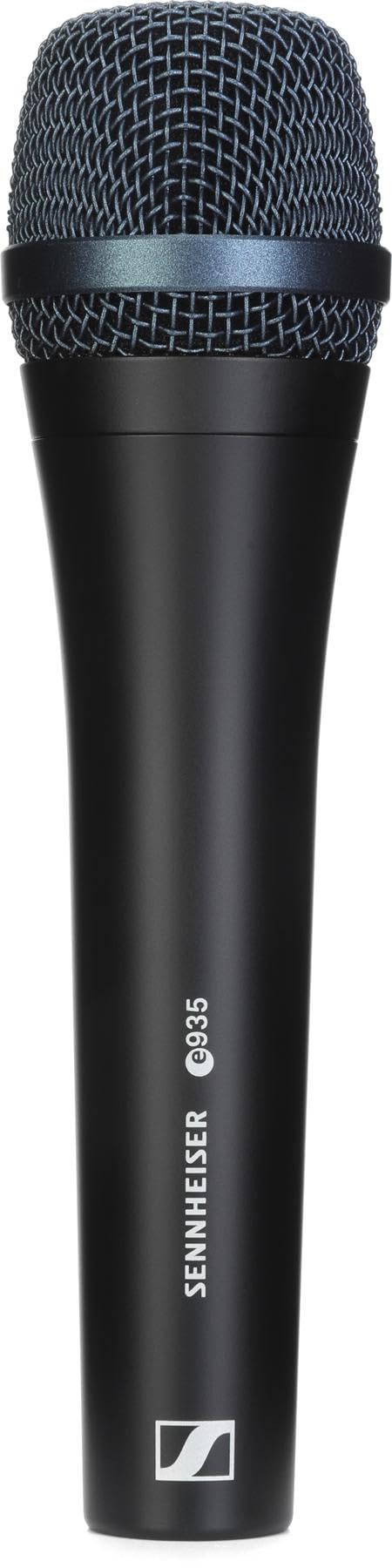
The Sennheiser e 935 is a premium dynamic microphone engineered with a neodymium ferrous magnet that maintains consistent magnetic flux regardless of temperature or humidity. This translates to stable output and predictable sound in outdoor venues or sweaty club settings. Its cardioid pattern provides excellent isolation from other stage signals without the higher handling noise typical of supercardioid mics.
Users describe the e 935 as warm and natural with a detailed high end that projects every vocal nuance without sounding brittle. Vocalists with varied ranges — from contralto to baritone — report that this mic handles blending and dynamics effortlessly, making it a favorite for family bands and working musicians who need one mic for multiple voices. The metal construction is rugged and durable, surviving regular drops that would crack cheaper plastic housings.
The e 935 has no on/off switch, which simplifies the signal path and eliminates a common failure point. With a 10-year warranty from Sennheiser, this mic is a long-term investment for a touring singer. While it demands a higher initial outlay, its build quality and natural, uncolored sound make it a top-tier choice for any singer who values consistency and reliability on stage.
Why it’s great
- Natural, uncolored sound that works well across different vocal ranges and styles without EQ adjustment.
- Neodymium magnet design ensures stable performance in varying temperatures and climates.
- Rugged all-metal chassis and 10-year warranty make it a reliable workhorse for touring musicians.
Good to know
- Lacks an on/off switch, which some users prefer for quick muting on stage.
- Requires a separate mic stand adapter (3/8″ to 5/8″) for some standard stands.
3. Audio-Technica AT2020 Cardioid Condenser Studio XLR Microphone

Its custom-engineered low-mass diaphragm delivers an extended frequency response from 20 Hz to 20 kHz with superior transient response, capturing the subtle details of a vocal performance that dynamic mics often miss. Sibilance and breath sounds are rendered with natural detail, not exaggerated harshness.
This microphone operates on 48V phantom power, so you need an audio interface or mixer with XLR inputs and phantom power. The cardioid polar pattern provides good rejection of ambient room noise, though its sensitivity means it will pick up room echo, computer fan hum, and traffic sounds if your recording space is untreated. Users consistently call it the best value in its class, noting that it outperforms many microphones costing two or three times as much.
The AT2020 handles high SPLs without distortion, making it suitable for loud vocal passages and even instrument recording. Its robust metal construction has proven reliable over years of use, with many users reporting consistent sound quality after a decade of home studio work. For the singer focused on recording demos or home studio projects, the AT2020 is the go-to condenser microphone that offers professional-grade sound without a professional price tag.
Why it’s great
- Exceptional transient response and frequency extension capture vocal detail and nuance effectively.
- High SPL handling allows recording loud vocal performances without distortion.
- Durable metal construction and consistent performance make it a long-lasting investment for home studios.
Good to know
- Requires an audio interface with 48V phantom power; not plug-and-play like a USB mic.
- Sensitive to ambient room noise and plosives, so a pop filter and acoustic treatment are recommended.
4. Logitech Creators Blue Yeti USB Microphone
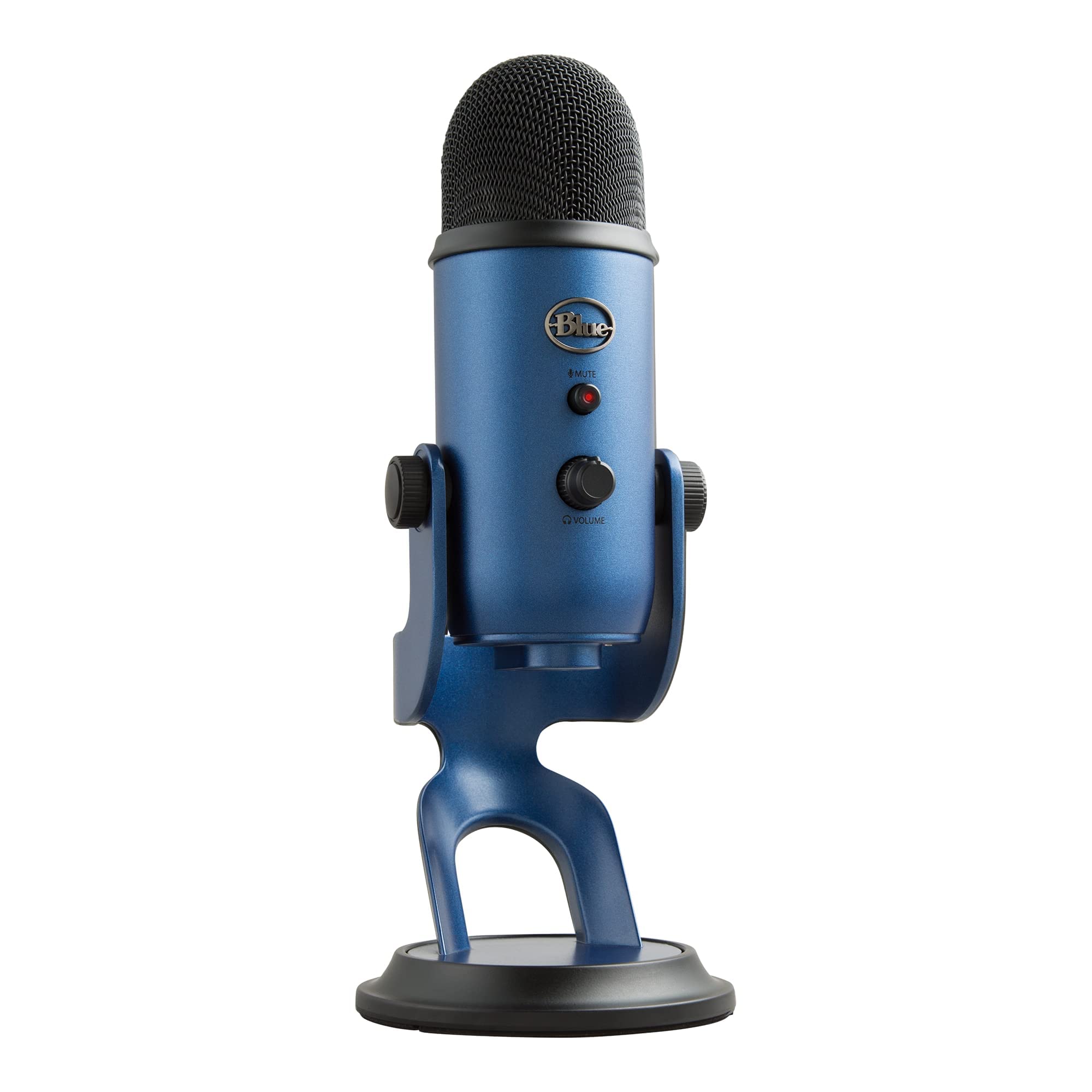
The Blue Yeti is a USB condenser microphone built around a custom three-capsule array that supports four selectable polar patterns: cardioid, omni, bidirectional, and stereo. This flexibility makes it uniquely versatile for a singer who also records podcasts, streams, or hosts interviews. In cardioid mode, it captures vocals with clear, broadcast-quality detail that users consistently describe as a dramatic improvement over built-in laptop or webcam mics.
Onboard controls for headphone volume, pattern selection, instant mute, and mic gain put essential adjustments at your fingertips without needing to reach for software settings. The adjustable desktop stand allows you to pivot the mic toward your mouth, optimizing the sound source position. Built-in no-latency monitoring lets you hear your voice in real time, which is crucial for pitch accuracy while recording.
Because it is a condenser microphone, the Yeti is sensitive and will pick up keyboard clicks, room echo, and background conversations if not positioned carefully. Users strongly recommend pairing it with a shock mount and pop filter to minimize handling noise and plosives. For the singer who wants a single, easy-to-use microphone for recording vocals at a desk and also needs the versatility of multiple polar patterns, the Blue Yeti is a top contender in the USB category.
Why it’s great
- Four selectable polar patterns offer unmatched versatility for singing, podcasting, and streaming.
- Plug-and-play USB connectivity works instantly with any computer without requiring an audio interface.
- Onboard gain control, mute, and zero-latency headphone monitoring streamline the recording process.
Good to know
- Condenser sensitivity means it picks up significant background noise without a treated room.
- Requires a separate shock mount and pop filter for best results in close vocal recording.
5. SENNHEISER E825-S Handheld Cardiod Dynamic Microphone

The Sennheiser E825-S is a cardioid dynamic microphone designed for club, instrument, and vocal PA applications where feedback rejection is paramount. Its internal damping mechanism isolates the capsule from handling noise, so you can move freely on stage without transmitting knocks and vibrations into the signal. Users consistently praise its bold, clear sound and solid feel in the hand.
Compared to the more expensive e 935, the E825-S is a simpler design with a slightly less refined top end, but it retains Sennheiser’s characteristic clarity and projection. The silent on/off switch is a practical feature for stage use, allowing you to mute the mic between songs without an audible click. Many vocalists have used this mic for years as a reliable backup or primary budget workhorse.
At its price point, the E825-S competes directly with the Shure SM58 and is frequently described by users as a better value, with a slightly brighter and more articulate sound. It requires an XLR cable and audio interface or mixer, and some users note that you may need a 3/8-inch to 5/8-inch stand adapter. For the singer performing in loud clubs or community venues, the E825-S offers professional-grade feedback rejection and durability at a mid-range price.
Why it’s great
- Excellent feedback rejection makes it ideal for loud stage monitoring environments.
- Internal damping effectively minimizes handling noise during energetic performances.
- Silent on/off switch is a practical feature for live sets without audible clicks.
Good to know
- May require a 3/8-inch to 5/8-inch stand adapter for standard microphone stands.
- Sound signature is slightly less refined than Sennheiser’s higher-end e 900 series mics.
6. PreSonus PD-70 Dynamic Vocal Microphone

The PreSonus PD-70 is a dynamic broadcast microphone that brings the tonal character of high-end studio dynamics like the Shure SM7B into a more accessible price bracket. Its cardioid polar pattern and tailored frequency response are optimized for close vocal work, delivering exceptional clarity for spoken word and singing alike. An integrated windscreen reduces plosives and fricatives without requiring an external pop filter.
Users describe the build quality as outstanding, with a heavy die-cast body that feels robust and professional. In A/B comparisons with much more expensive microphones, the PD-70 holds its own after minor EQ adjustments, particularly in the low end where it is slightly light. It pairs well with any audio interface equipped with a microphone preamp, and users report excellent results when matched with PreSonus interfaces.
This microphone is not designed for handheld live performance work — its weight causes fatigue during extended handheld use, and handling noise is higher than typical stage dynamics. It shines as a studio tool for recording vocals, podcasts, and live streaming where it is mounted on a boom arm. For the singer who primarily records at a desk and values broadcast-quality vocal tone, the PD-70 is a compelling choice in the budget-conscious broadcast mic category.
Why it’s great
- Sound quality rivals expensive broadcast dynamics like the SM7B, especially after EQ tweaks.
- Included integrated windscreen effectively reduces plosives for clean vocal takes.
- Exceptional build quality with a heavy, durable all-metal body.
Good to know
- Heavy design causes fatigue during extended handheld use; best used with a boom arm.
- Handling noise is higher than typical live stage dynamics, making it unsuitable for active stage performance.
7. Shure PGA58 Dynamic Microphone
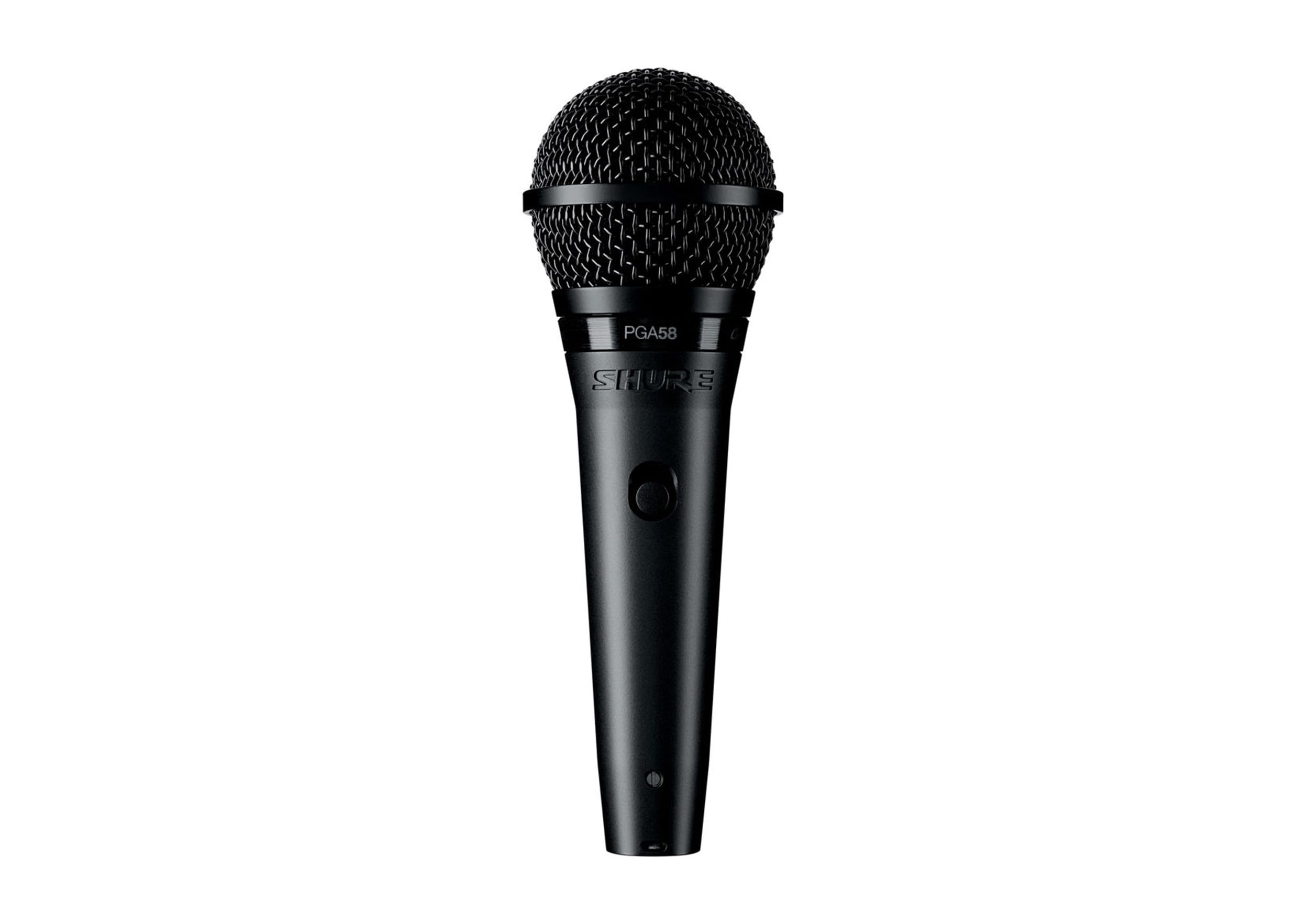
The Shure PGA58 is an entry-level dynamic microphone from a brand synonymous with live vocal performance. Its tailored cartridge design is engineered to provide natural clarity in the vocal frequency range, and the cardioid polar pattern effectively rejects ambient noise so the singer’s voice remains the focus. The package includes a 15-foot XLR-to-quarter-inch cable, a stand adapter, and a zipper pouch, making it a complete starter kit for the beginning vocalist.
Users report that the PGA58 delivers solid projection and clarity for backyard parties, small venue gigs, and practice sessions. It features an on/off switch for discrete control, which is helpful for muting between songs. The build quality is typical Shure — sturdy with a black metallic finish and grille that looks professional on stage.
While the PGA58 does not reach the sonic refinement of Shure’s higher-end models like the SM58, it captures the essential Shure voicing — a smooth midrange with controlled high frequencies — at a lower entry cost. Some users note that output level is slightly lower than professional stage mics, but this is manageable with preamp gain adjustment. For the first-time singer buying their own microphone, the PGA58 is an accessible and trustworthy starting point with the Shure reliability guarantee.
Why it’s great
- Complete bundle with cable, stand adapter, and carrying pouch provides immediate usability.
- Shure build quality ensures reliability and durability for beginners and casual use.
- Cardioid polar pattern provides good noise rejection for live practice and party environments.
Good to know
- Output level is slightly lower than professional-stage microphones, requiring more preamp gain.
- Sound quality, while good, does not match the detail and clarity of premium-tier dynamics like the SM58 or e 935.
FAQ
Should I choose a dynamic or condenser microphone for singing at home?
Can I use a USB microphone with a PA system for live singing?
Final Thoughts: The Verdict
For most users, the best affordable microphone for singing winner is the AKG D5 because it combines supercardioid feedback rejection, a crisp Varimotion diaphragm, and rugged build quality at a price that undercuts many competitors while outperforming them in vocal clarity and live sound isolation. If you need a studio condenser for detailed home recording, grab the Audio-Technica AT2020. And for a beginner who wants a reliable all-in-one kit for practice and small gigs, nothing beats the Shure PGA58.

Mo Maruf
I created WellFizz to bridge the gap between vague wellness advice and actionable solutions. My mission is simple: to decode the research and give you practical tools you can actually use.
Beyond the data, I am a passionate traveler. I believe that stepping away from the screen to explore new environments is essential for mental clarity and physical vitality.