Our readers keep the lights on and my smoothie glass nicely filled. As an Amazon Associate, I earn from qualifying purchases.
Finding a travel camera that balances reach, portability, and image quality without breaking the bank is the central challenge of packing for any trip. The market is flooded with options that promise the world but deliver soft images, dead batteries by midday, or zooms that barely reach the next table.
I’m Mohammad Maruf — the founder and writer behind WellFizz. I’ve spent years analyzing mirrorless, point-and-shoot, and action camera specs, filtering through hours of user reports to identify which sensors, stabilization systems, and zoom ranges actually perform in real-world travel conditions.
The goal is simple: find the affordable travel camera that delivers sharp zooms, reliable battery life, and a compact body so you actually bring it on every excursion.
How To Choose The Best Affordable Travel Camera
Picking the right travel camera depends on how you shoot. Do you need extreme reach for wildlife or a wide-angle for vlogging? Here are the factors that separate a good travel companion from a regret.
Optical Zoom vs. Digital Zoom
Optical zoom uses the lens to magnify the image without losing quality. Digital zoom crops and enlarges pixels, resulting in blurry photos. For travel, a camera with at least 10x optical zoom lets you capture distant landmarks and wildlife without carrying heavy telephoto lenses.
Sensor Size and Low-Light Performance
A larger sensor (1-inch or APS-C) gathers more light, producing cleaner images in dim conditions and natural background blur. Smaller sensors in budget point-and-shoots struggle after sunset. If you shoot interiors or evening street scenes, prioritize sensor size over pure zoom range.
Stabilization System
Optical Image Stabilization (OIS) in the lens or sensor compensates for hand shake without degrading quality. Digital stabilization crops the frame and can introduce artifacts. For handheld telephoto shots or walking video, OIS is non-negotiable.
Connectivity and Charging
Built-in Wi-Fi or Bluetooth lets you transfer images to your phone for quick sharing. USB-C charging is a major plus, letting you recharge from a power bank without carrying a separate charger. Some travel cameras still use older micro-USB, which is slower to transfer and charge.
Quick Comparison
On smaller screens, swipe sideways to see the full table.
| Model | Category | Best For | Key Spec | Amazon |
|---|---|---|---|---|
| Panasonic LUMIX ZS99 (White) | Point-and-Shoot | All-purpose travel zoom | 30x optical zoom (24-720mm) | Amazon |
| Panasonic LUMIX ZS99 (Silver) | Point-and-Shoot | All-purpose travel zoom | 30x optical zoom (24-720mm) | Amazon |
| Canon EOS R100 Kit | Mirrorless | Interchangeable lens starter | 24.1MP APS-C sensor | Amazon |
| Sony ZV-1F (White) | Compact Vlog | Wide-angle vlogging | 20mm ultra-wide F2 lens | Amazon |
| Panasonic LUMIX G100 Kit | Mirrorless | Hybrid photo/video creation | Micro Four Thirds sensor | Amazon |
| Sony Alpha a3000 Kit | Mirrorless | Budget interchangeable lens | 20.1MP APS-C sensor | Amazon |
| Canon PowerShot V10 | Vlog Compact | Ultra-portable vlogging | 19mm wide-angle fixed lens | Amazon |
| Kodak PIXPRO AZ528 | Bridge | Super-zoom on a budget | 52x optical zoom | Amazon |
| GoPro HERO Black Bundle | Action Camera | Adventure and underwater | Waterproof to 33 feet | Amazon |
In‑Depth Reviews
1. Panasonic LUMIX ZS99 (White)

The Panasonic LUMIX ZS99 packs a 24-720mm LEICA lens into a body that truly slips into a jacket pocket. That 30x optical zoom range covers everything from wide landscapes to distant wildlife without swapping lenses. The 1,840k-dot tiltable touchscreen makes low-angle and overhead compositions easy, and USB-C charging means one cable for your laptop and camera.
Image quality holds up well through ISO 1600, with decent detail retention at moderate zoom levels. The 5-Axis HYBRID O.I.S. does a respectable job steadying handheld telephoto shots, though it won’t replace a monopod at full 720mm in dim light. Rapid-fire 4K PHOTO at 30fps captures fleeting moments like a dolphin breach or a child’s expression.
Bluetooth v5.0 with a dedicated Send Image button makes sharing almost instant — select shots on the camera and they appear on your phone. The stepped zoom function lets you jump to preset focal lengths (24mm, 35mm, 50mm, etc.), a surprisingly helpful framing tool for composition consistency. The ZS99 is the most complete pocket zoom for the price.
Why it’s great
- Pocketable body with 30x optical reach
- USB-C charging for travel convenience
- Fast Bluetooth transfer with dedicated button
Good to know
- Autofocus can hunt in very low light
- Menu system has a learning curve
- Small sensor limits high-ISO performance
2. Panasonic LUMIX ZS99 (Silver)

The silver variant of the ZS99 offers identical specs — 24-720mm LEICA zoom, 4K video, Bluetooth 5.0, and the same tiltable touchscreen — in a lighter aesthetic that some travelers prefer for avoiding a black camera that soaks up heat in direct sun. The 60x iZoom combines optical and intelligent digital processing for extra reach in good light.
Lens Position Resume is a standout travel feature: turn the camera off at a zoom setting and it returns to that exact focal length when powered back on, ideal for concert-goers or birders who want instant readiness. The PASM dial gives direct control over aperture, shutter, and ISO without digging into menus.
Feedback from users frequenting concerts and family road trips confirms the ZS99 produces noticeably better colors and sharpness than the Sony DSC-HX99 at similar zoom ranges, though the autofocus still drops in low-contrast scenes. The 4K 30p video is solid for casual clips and social sharing.
Why it’s great
- Same 30x LEICA zoom in a lighter-colored body
- Lens Position Resume for instant recall
- PASM dial for manual control
Good to know
- AF still struggles in dim conditions
- LCD glare in bright sunlight
- Unusable noise above ISO 3200
3. Canon EOS R100 Kit

For travelers wanting interchangeable lenses without the full-frame price tag, the Canon EOS R100 delivers a 24.1-megapixel APS-C sensor in the lightest body of the EOS R series. The included RF-S 18-45mm kit lens covers wide-angle to standard portrait range, and the Dual Pixel CMOS AF with eye/face/animal detect locks focus reliably in most scenes.
The DIGIC 8 processor enables 4K video at 24fps and Full HD up to 60fps, with 120fps HD for slow-motion highlights. The 6.5 fps burst rate in One-Shot AF captures action sequences well. The camera body weighs about 356g with battery, making it comfortable for all-day carrying with a small shoulder strap.
Battery life comfortably lasts a full day of moderate shooting (approx. 400 shots per charge), though the kit doesn’t include an external charger — you’ll need to charge via USB-C in-camera or buy an LP-E17 charger. The 143-zone AF array covers most of the frame, and wireless transfer to the Canon Camera Connect app works smoothly for social sharing.
Why it’s great
- Large APS-C sensor for excellent image quality
- Lightweight body ideal for long walks
- Reliable Dual Pixel AF with animal detect
Good to know
- No in-body stabilization
- No external charger included
- 4K is limited to 24fps
4. Sony ZV-1F (White)

The Sony ZV-1F is purpose-built for creators who film themselves while traveling. The 20mm ultra-wide F2 lens captures generous background context in selfie mode, and the 1-inch sensor delivers pleasing bokeh with the one-press background defocus button. The side-articulating touchscreen makes framing easy whether you’re recording a walking tour or a street-food review.
Eye-AF and autofocus tracking keep subjects sharp even as they move through the frame. The built-in directional 3-capsule microphone with the included windscreen captures clear audio in moderate wind, saving you from buying an external mic for casual vlogging. Product Showcase Mode transitions focus smoothly from face to object — perfect for unboxing or showing a souvenir.
Battery life runs about 45 minutes of continuous 4K recording, so carrying a spare battery or USB-C power bank is essential for full-day shoots. The lack of optical zoom is a real limitation for capturing distant subjects; this is a selfie-first camera, not a reach-out-and-touch-it zoom camera. Image stabilization is entirely digital, so walking footage shows noticeable micro-shakes.
Why it’s great
- Ultra-wide 20mm F2 lens for vlogging
- Excellent autofocus with Eye-AF
- Great built-in audio with windscreen
Good to know
- No optical zoom at all
- Short battery life in 4K
- Digital stabilization only
5. Panasonic LUMIX G100 Kit

The Panasonic LUMIX G100 splits the difference between a point-and-shoot and a full mirrorless system. Its Micro Four Thirds sensor with the 12-32mm kit lens offers more creative control than a fixed-zoom compact while staying smaller than APS-C alternatives. The built-in microphone with 360-degree tracking audio adjusts focus as the subject moves, a rare feature at this price point.
The iA (intelligent auto) mode dials in optimal settings for beginners, while full manual controls and compatibility with the entire LUMIX lens lineup give room to grow. The 5-Axis Hybrid I.S. steadies handheld shots effectively, and V-Log L recording preserves dynamic range for color grading in post-production — unusual at this tier.
One significant limitation: 4K video recording is capped at a short burst (around 10 minutes) before the camera stops, making it unsuitable for long interviews or event recording. The 1,840k-dot viewfinder is clear but small. For photo-dominant travelers who want occasional 4K clips, the G100 delivers excellent images and audio in a compact body.
Why it’s great
- Tracking microphone captures directional audio
- Interchangeable lens system for expansion
- iA mode makes it beginner-friendly
Good to know
- Severe 4K recording time limit
- EVF is small
- Battery life average for mirrorless
6. Sony Alpha a3000 Kit

The Sony Alpha a3000 is an older mirrorless model (2013) that still holds up well for travelers who want an APS-C sensor and interchangeable lenses at an entry-level price point. Its 20.1-megapixel Exmor sensor delivers image quality comparable to modern budget mirrorless cameras in good light, with pleasant color science straight from the camera.
The body features a dependable hand grip that’s comfortable even with larger telephoto lenses, and compatibility with the full Sony E-mount ecosystem means you can adapt vintage glass or buy modern Sigma/Tamron lenses. The built-in flash provides emergency fill light, and the 6.5 fps burst rate captures fast action adequately.
The downsides are substantial by modern standards: the electronic viewfinder is low resolution (201k dots), the LCD is also low-res and difficult to see in bright sun, and battery life is poor — expect 20-30% drain per hour of mixed use. The camera charges via USB but lacks an external charger in the box. For budget-conscious travelers who prioritize lens selection and sensor size, the a3000 is a capable foundation.
Why it’s great
- APS-C sensor delivers great image quality
- Full E-mount lens compatibility
- Comfortable grip for extended use
Good to know
- Very low-res EVF and LCD
- Poor battery life
- Slower wake-up from sleep
7. Canon PowerShot V10

The Canon PowerShot V10 is designed for minimalists: an all-in-one vlogging system that fits in a pocket or fanny pack. The 15.2-megapixel 1-inch back-illuminated CMOS sensor captures clean 4K 30fps video with impressive low-light performance for its size. The retractable front-facing flip screen lets you frame selfies easily, and the built-in stand folds front or back for hands-free recording on any flat surface.
Trip reviewers consistently praise the video quality and stereo mic clarity for the price point. The 19mm wide-angle lens (35mm equivalent) captures a generous field of view for walk-and-talk vlogging, though there is no zoom at all — you must physically move closer to subjects. The three image stabilization modes (Off, On, Enhanced) handle handheld shooting reasonably well in bright conditions.
The fixed lens is the biggest limitation for travel photography. You cannot zoom into a distant landmark or compress perspective. The battery life is below average for a compact camera, requiring mid-day recharging. There is no lens cover or included case — Canon recommends a soft pouch to protect the exposed glass. The V10 is a niche tool for video-first travelers who value pocketability over versatility.
Why it’s great
- Ultra-compact with built-in stand
- Excellent 4K video from 1-inch sensor
- Good stereo mic with background noise reduction
Good to know
- No zoom lens whatsoever
- Battery drains quickly
- No included case or lens cover
8. Kodak PIXPRO Astro Zoom AZ528
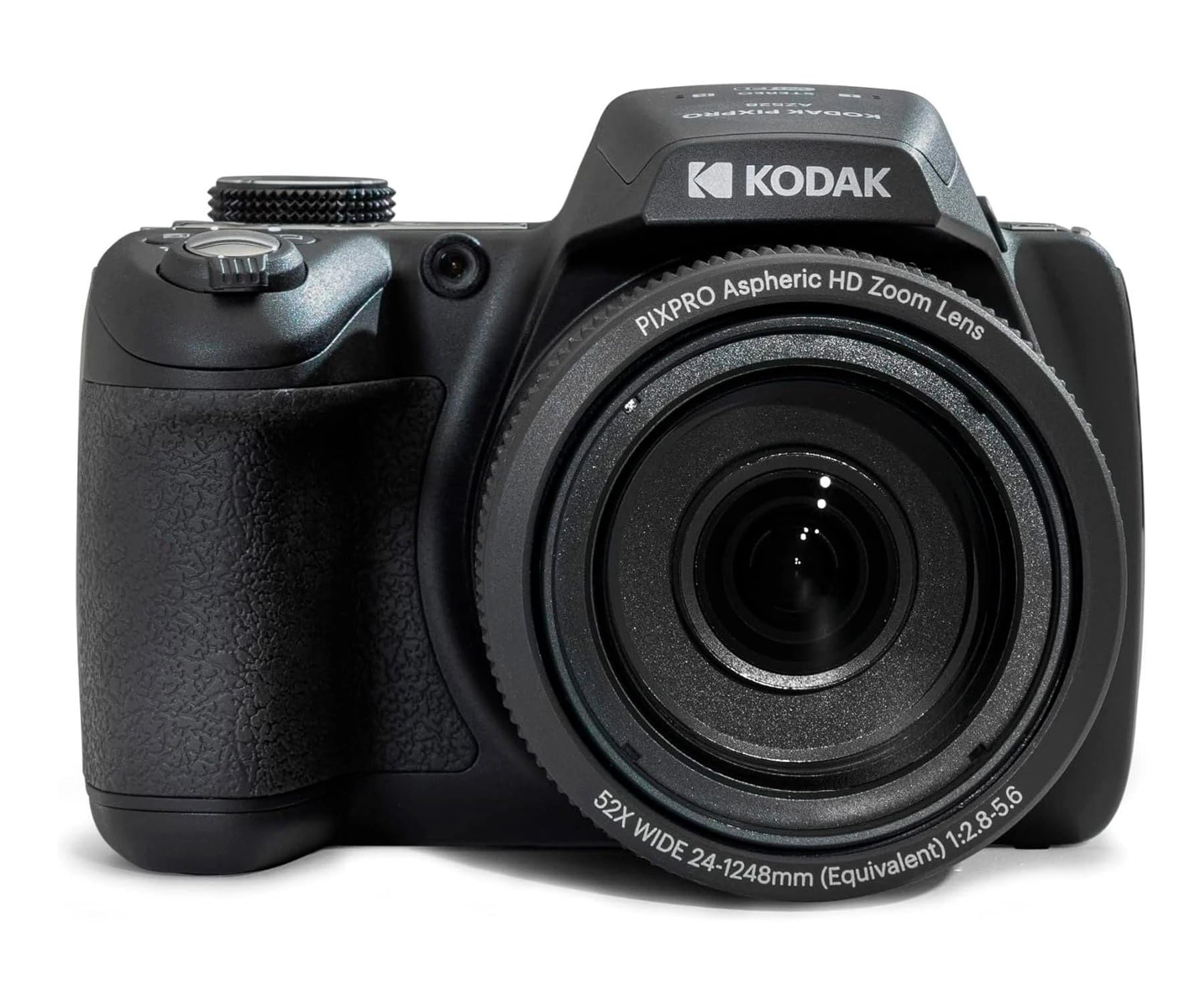
The Kodak PIXPRO AZ528 offers the longest optical zoom in this roundup — 52x — for capturing distant wildlife, moon craters, or sports from the nosebleeds. The 24mm wide-angle lens covers broad landscapes, and the 16-megapixel BSI CMOS sensor with optical image stabilization keeps telephoto shots reasonably sharp in good light. The 6 fps burst mode is useful for action sequences.
Built-in Wi-Fi lets you transfer images to a smartphone for quick posting, and the camera accepts SD cards up to 512GB — enough for thousands of photos on a multi-week trip. User reviews highlight the easy learning curve and the effectiveness of the pet scene mode for capturing fast-moving animals. The Li-ion battery provides a full day of moderate use.
The image quality shows noticeable softness at maximum zoom compared to more expensive super-zooms, and the plastic body scuffs easily in a backpack. The electronic viewfinder is basic, and the 3-inch LCD can wash out in bright sunlight. For budget travelers who prioritize reach over pixel-level sharpness, the AZ528 brings 52x into an entry-level price tier.
Why it’s great
- Massive 52x optical zoom for the price
- Easy setup and intuitive controls
- SDXC support up to 512GB
Good to know
- Soft image quality at full zoom
- Plastic body scuffs easily
- EVF and LCD are basic
9. GoPro HERO Black Bundle

The GoPro HERO is a dedicated action camera with a different design philosophy than the zoom cameras above — it prioritizes ruggedness, stabilization, and waterproofing over reach. Waterproof to 33 feet without housing, it’s the only choice for snorkeling, surfing, or shooting in heavy rain. HyperSmooth stabilization delivers cinema-smooth walking footage that no point-and-shoot can match.
The 4K30 video and 12MP photos are sharp and well-exposed in outdoor conditions. The 50-in-1 accessory kit includes mounts, a selfie stick, and a 64GB card so you can start shooting immediately. The housing-less design and 3-ounce weight make it mountable on helmets, handlebars, or backpacks for hands-free POV shots. Voice control with 8 commands works reliably for gloved or wet hands.
The non-removable battery limits shooting to about one hour at 4K, and the small sensor performs poorly in dim interiors or dusk. The app setup can be finicky — some users report compatibility issues with older phones that require upgrading to the Quik app. The bundle’s value is strong for adventure travelers, but it’s not a general-purpose travel camera for capturing distant subjects or portraits.
Why it’s great
- No-housing waterproof to 33 feet
- Best-in-class HyperSmooth stabilization
- Includes accessories and 64GB card
Good to know
- Non-removable battery limits hot-swapping
- Small sensor struggles in low light
- App setup can be problematic
FAQ
What optical zoom range is ideal for a travel camera?
Is a 1-inch sensor good enough for travel photography?
Can I use a travel camera as a webcam?
How important is Wi-Fi or Bluetooth for travel?
Final Thoughts: The Verdict
For most users, the affordable travel camera winner is the Panasonic LUMIX ZS99 (White) because it packs a 30x LEICA zoom, USB-C charging, and fast Bluetooth sharing into a genuinely pocketable body. If you want interchangeable lenses and an APS-C sensor for better low-light and creative control, grab the Canon EOS R100 Kit. And for adventure travelers who need waterproof durability and HyperSmooth stabilization, nothing beats the GoPro HERO Black Bundle.

Mo Maruf
I created WellFizz to bridge the gap between vague wellness advice and actionable solutions. My mission is simple: to decode the research and give you practical tools you can actually use.
Beyond the data, I am a passionate traveler. I believe that stepping away from the screen to explore new environments is essential for mental clarity and physical vitality.