Our readers keep the lights on and my smoothie glass nicely filled. As an Amazon Associate, I earn from qualifying purchases.
Sticky canvas walls, rising humidity, and the suffocating stillness of a sealed tent on a hot summer night—that’s the reality of camping without climate control. Unlike a window unit in a house, an AC for tent camping must fight solar gain through thin fabric, run on limited portable power, and exhaust heat without a permanent wall. That demands a different breed of hardware: self-contained units with closed-loop exhaust routing, low wattage compressors, and battery-inverter compatibility.
I’m Mohammad Maruf — the founder and writer behind WellFizz.
Whether you’re powering a roof-top tent from a solar generator or keeping a family cabin cool without shore power, this guide breaks down the best ac for tent camping by real-world metrics: compressor quality, wattage draw, noise suppression, and drainage-free operation at humidity levels above 70%.
How To Choose The Best AC for Tent Camping
Selecting a tent AC is different from picking one for a bedroom. Three factors dominate: how much power it pulls, how it handles condensate, and whether it can physically fit through your tent’s zippered opening. Ignore any of those and you’ll be stuck with a drenched floor or a dead battery by midnight.
Match BTU to Tent Size, Not Square Footage
A 10,000 BTU portable unit works great in a house, but in a tent it’s overkill—it will short-cycle and waste battery. For a 4-person dome tent (roughly 60-80 cubic feet), 3,500–5,200 BTU is ideal. For a large cabin tent or an RV annex, step up to 6,800–7,500 BTU. Higher BTUs also demand heavier gauge extension cords and larger inverter generators.
Prioritize Self-Evaporating Drainage
Many portable ACs collect condensate in a bucket that must be emptied every few hours. In a tent, that’s a disaster waiting to spill. Look for models with “auto-evaporation” or “drainage-free” cooling—they recycle moisture into the exhaust stream so you never touch a drain pan during normal humidity (below 70%).
Check Real Wattage, Not Just BTU Rating
Raw BTU tells you cooling power, but wattage decides whether your Jackery, Bluetti, or EcoFlow can run it. A 3,500 BTU unit might pull 350–400 watts, while a 6,800 BTU unit can spike to 550–600 watts. Always factor a 10-20% overhead for compressor startup surge. If your generator or battery bank is under 1,000 watts, stick to models with an inverter-type compressor for softer starts.
Quick Comparison
On smaller screens, swipe sideways to see the full table.
| Model | Category | Best For | Key Spec | Amazon |
|---|---|---|---|---|
| BougeRV PC35 3500BTU | Mid-Range | Compact tents & off-grid solar | 3500 BTU / 400W draw | Amazon |
| Outohome 5200BTU (Dark Silver) | Premium | Roof-top tents & RV campers | 5200 BTU / 400W draw | Amazon |
| Outohome 5100BTU (2026 New) | Premium | Truck bed camping & vans | 5100 BTU / 46 dB sleep mode | Amazon |
| BAYKUL 6800/7500 BTU | Premium | Family tents & cabin camping | 6800 BTU / 550W / heating | Amazon |
| JAYGOVAN 12V 11000BTU Split | Mid-Range | Vans & tractor trailers | 11000 BTU / 12V DC | Amazon |
| Antarctic Star 8000 BTU | Value | Car camping with shore power | 8000 BTU / 350 sq.ft coverage | Amazon |
| EUHOMY 10,000 BTU | Mid-Range | Glamping & large tents | 10000 BTU / 50 dB | Amazon |
| Shinco 10,000 BTU Wi-Fi | Mid-Range | RVs with smart controls | 10000 BTU / Wi-Fi enabled | Amazon |
| Feelfunn 14,000 BTU | Premium | Base camp & hot climates | 14000 BTU / 42 dB ultra-quiet | Amazon |
In‑Depth Reviews
1. BougeRV PC35 3500BTU Portable Air Conditioner
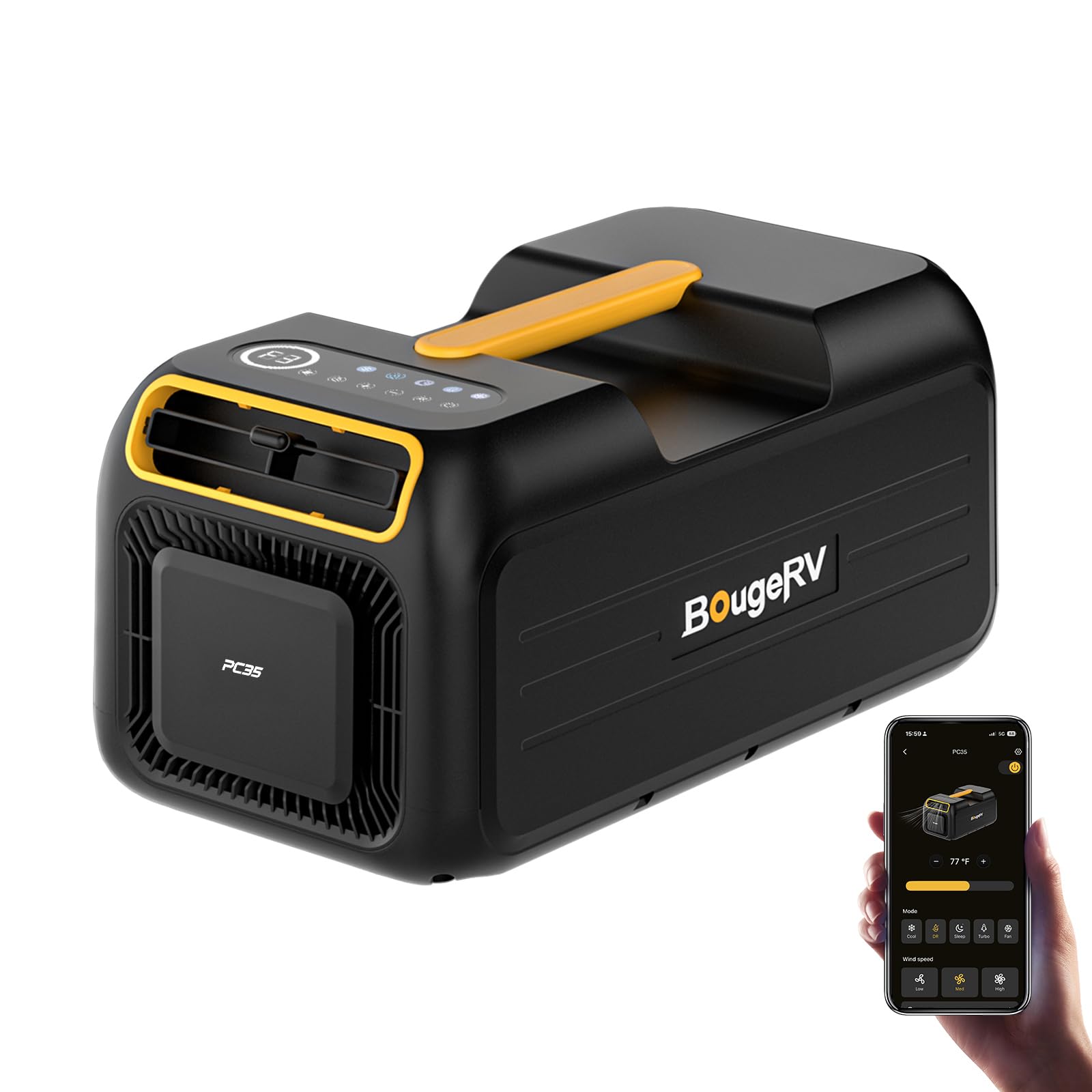
The BougeRV PC35 hits the exact sweet spot for tent camping: 3500 BTU of cooling with a measured power draw of roughly 400W, making it compatible with mid-size solar generators like the Jackery 1000 or Bluetti AC180. In strong mode, it drops temperature by 18°F in 15 minutes—enough to turn a suffocating 95°F dome tent into a sleepable 77°F refuge. The app control (33 ft range) lets you wake the unit from your sleeping bag without fumbling for a remote.
What sets this unit apart from RV-style splits is its single-hose exhaust design paired with a compact footprint (21.7 x 11.8 x 11.0 inches). At 34.2 lbs, it’s carryable by one person with the top handle, though heavy for extended hikes. The included exhaust ducts and adapter allow windowless tent venting through a zippered panel. Several owners paired it with a 3600W solar generator during 115°F monsoon outages and reported reliable compressor cycling.
That said, this unit is optimized for dry climates. Florida and Gulf Coast campers saw the compressor struggle when ambient humidity soared above 80%, triggering an E3 error code. The 5-in-1 modes (Cool, Dry, Fan, High Power, Sleep) give flexibility, but the dehumidifying capability is secondary to its cooling mission. It’s a specialist tent tool, not a universal solution for humid RV parks.
Why it’s great
- Low 400W power draw works with most 1000W+ solar generators.
- Rapid 18°F drop in 15 minutes on strong mode.
- Bluetooth app control eliminates need for remote.
Good to know
- Compressor can fail in high-humidity environments above 80%.
- Requires a + power station if used off-grid.
2. Outohome 5200BTU Portable Tent Air Conditioner (Dark Silver)
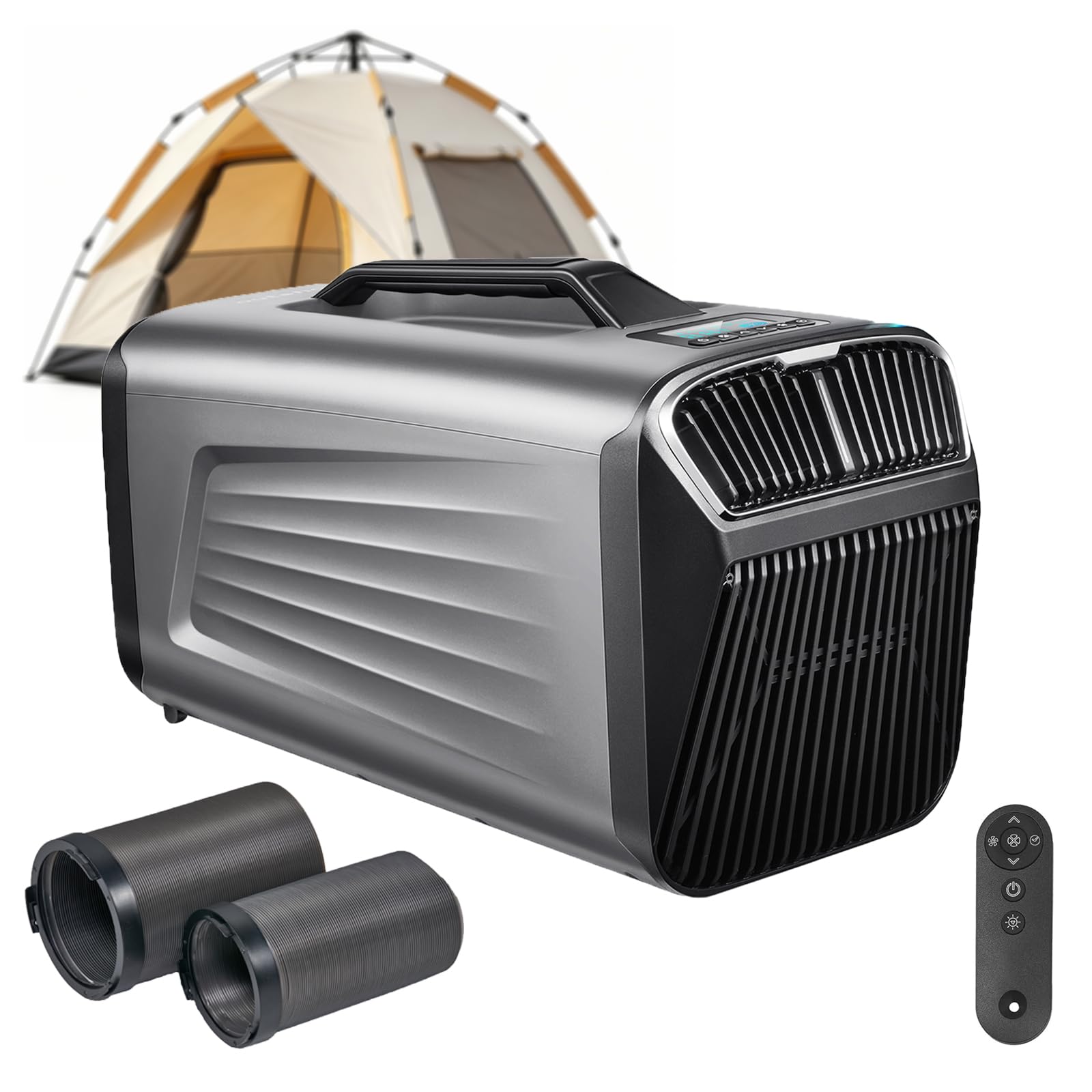
The Outohome 5200BTU unit bridges the gap between portable and semi-permanent tent cooling. Its GMCC compressor delivers 5200 BTU while pulling under 400W—impressive efficiency for the output. The dark silver metallic housing is rugged enough for truck beds and RV annexes, and the streamlined 22.4 x 11.2 x 14.6-inch profile fits through most tent door zippers. The one-hand-carry handle is genuinely usable; at 31.9 lbs, this is the lightest mid-premium unit in this class.
What makes it a top pick for roof-top tent owners is the drainage-free cooling mode. In humidity below 70%, the unit recycles all condensate through the exhaust—zero spills inside the tent. Testers in Florida summer camping kept an XL roof tent at 68°F through the night with no water management. The 46-50 dB sleep mode is only fan noise; the compressor is inaudible from a pillow distance. Even the button control panel is intuitive with tactile feedback, avoiding the frustration of flush touch surfaces.
However, the unit is sensitive to voltage quality. Several owners report that running it on a cheap inverter generator caused intermittent warm-air cycles. It’s also not designed to cool during peak sun hours—the 5200 BTU can’t overcome direct solar gain on a dark tent. You’ll need a reflective rainfly or a shaded site to get max performance. The included hose is functional but short; consider a 4-inch duct extension for full-size cabin tents.
Why it’s great
- Drainage-free cooling in normal humidity below 70%.
- Only 31.9 lbs with a carry handle—genuinely portable.
- Sleep mode at 46-50 dB is quiet enough for light sleepers.
Good to know
- Requires a clean sine wave inverter generator for reliable operation.
- Cannot overcome direct solar gain on dark tents during mid-day.
3. Outohome 5100BTU Portable Tent Air Conditioner (2026 New)
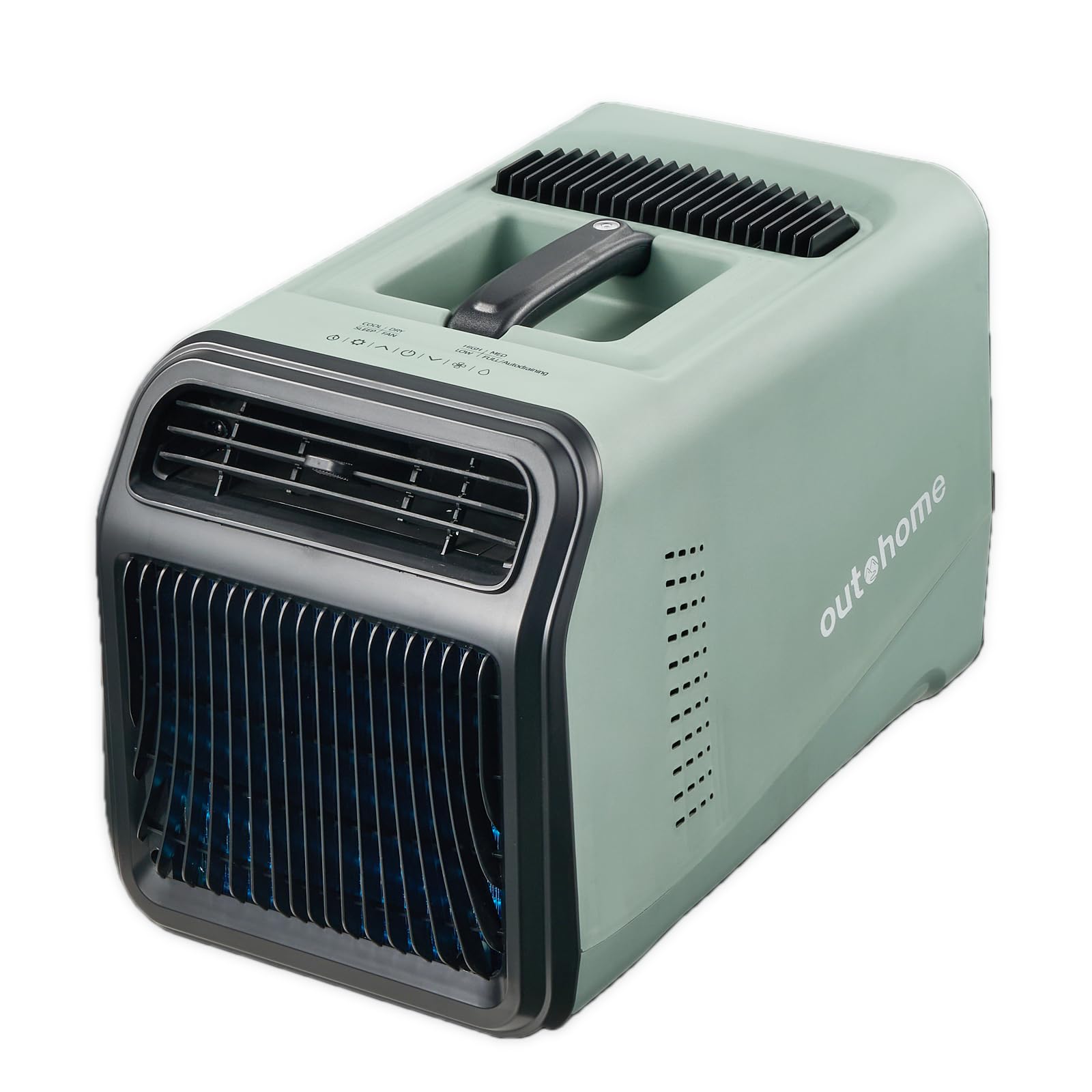
Outohome’s 2026 refresh brings a 5100 BTU compressor tuned for spaces up to 200 sq ft—ideal for large family tents or pop-up campers. The green finish and built-in handle give it a rugged look that matches outdoor gear, while the 35-lb weight keeps it manageable. What really matters here is the auto-evaporation system: no bucket, no drain pan, no waking up to a puddle inside your tent. The 24-hour programmable timer is a welcome addition for conserving battery through the night.
Noise is a strong suit at 46 dB in sleep mode. That’s quieter than most box fans, and the aerodynamic airflow design means the compressor doesn’t rattle against the chassis—a common complaint in budget tent AC units. One truck camper reported cooling a sleeping area from 80°F to 65°F in under 20 minutes. The wide operating temperature range (60°F–86°F) covers most North American summer campsite conditions without stressing the compressor.
The downside is real: several units arrived with loose components or rattling hanldes. The build quality is excellent for the price tier, but inconsistent QC means you should test the unit before leaving for a remote campsite. Also, the outlet temperature reduction claim (up to 60°F in 1 minute) is misleading—that’s the difference between the intake and the outlet, not the tent ambient. In practice, expect a 15-18°F tent drop after 20-30 minutes of runtime, which is still solid.
Why it’s great
- Auto-evaporation system eliminates manual draining.
- 46 dB sleep mode is genuinely quiet for tent environments.
- Cools large tents and truck camper areas effectively.
Good to know
- Inconsistent quality control; test before your trip.
- Advertised cooling delta is outlet temp, not tent ambient.
4. BAYKUL 6800/7500 BTU Portable Camping Air Conditioner
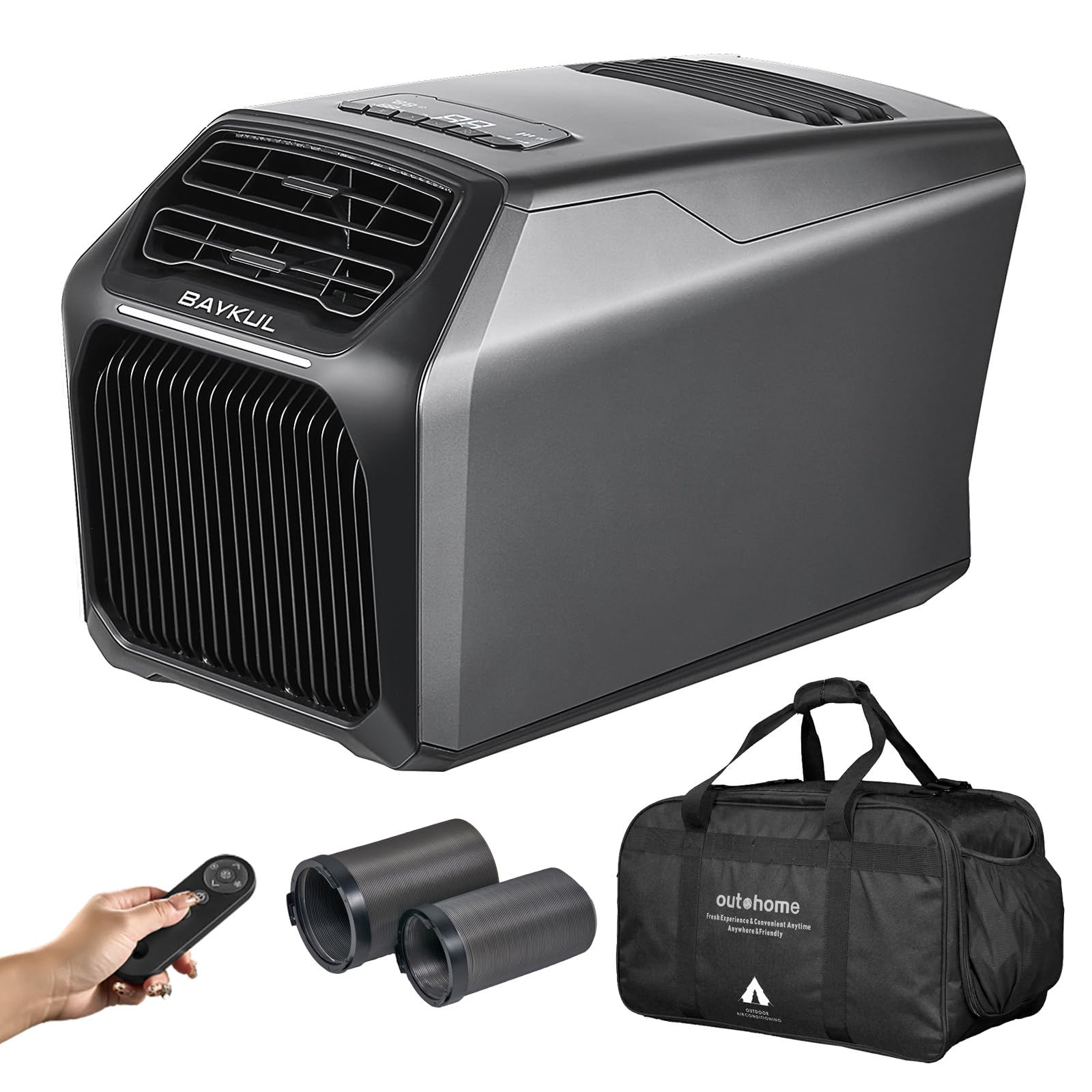
The BAYKUL is unique in this lineup because it’s a 6-in-1 unit that includes both cooling (6800 BTU) and heating (7500 BTU) using eco-friendly R-32 refrigerant. For shoulder-season campers who face cold mornings after hot nights, that dual functionality eliminates the need for a separate heater. The 550W average power draw is manageable for a 1000W+ generator or a large battery bank, and the inverter-type compressor means softer startup surges compared to fixed-speed units.
At 35.7 lbs with a sturdy handle and a dedicated carry bag, it’s designed for one-handed transport. The slim 22 x 11.6 x 13.6-inch footprint fits through most tent vestibules, and the RF remote actually works through tent walls—a small but real convenience. The pre-cut foam window barrier included in the package makes tent venting straightforward: cut a slit in your tent’s zippered window panel, insert the foam, and route the 5-inch hose through. Several owners with 400 sq ft glamping tents confirmed the unit can drop ambient temperature by 18°F in under 30 minutes.
QC issues emerge here as well: one unit arrived with a loose rattle inside the fan assembly, causing horrible noise on startup and requiring a return. The automatic energy optimization is smart, but it sometimes cycles the compressor too frequently (every 20 seconds) even on low fan speed, which wears down power station batteries faster. If you get a clean unit, it’s a versatile camp companion—but check for defects immediately.
Why it’s great
- Heating and cooling in one unit for year-round camping.
- R-32 refrigerant is more efficient and compact.
- RF remote works through tent walls and RV interiors.
Good to know
- Compressor cycles too frequently on low fan settings.
- Defective units with loose internal parts reported.
5. JAYGOVAN 12V 11000BTU Split Type AC
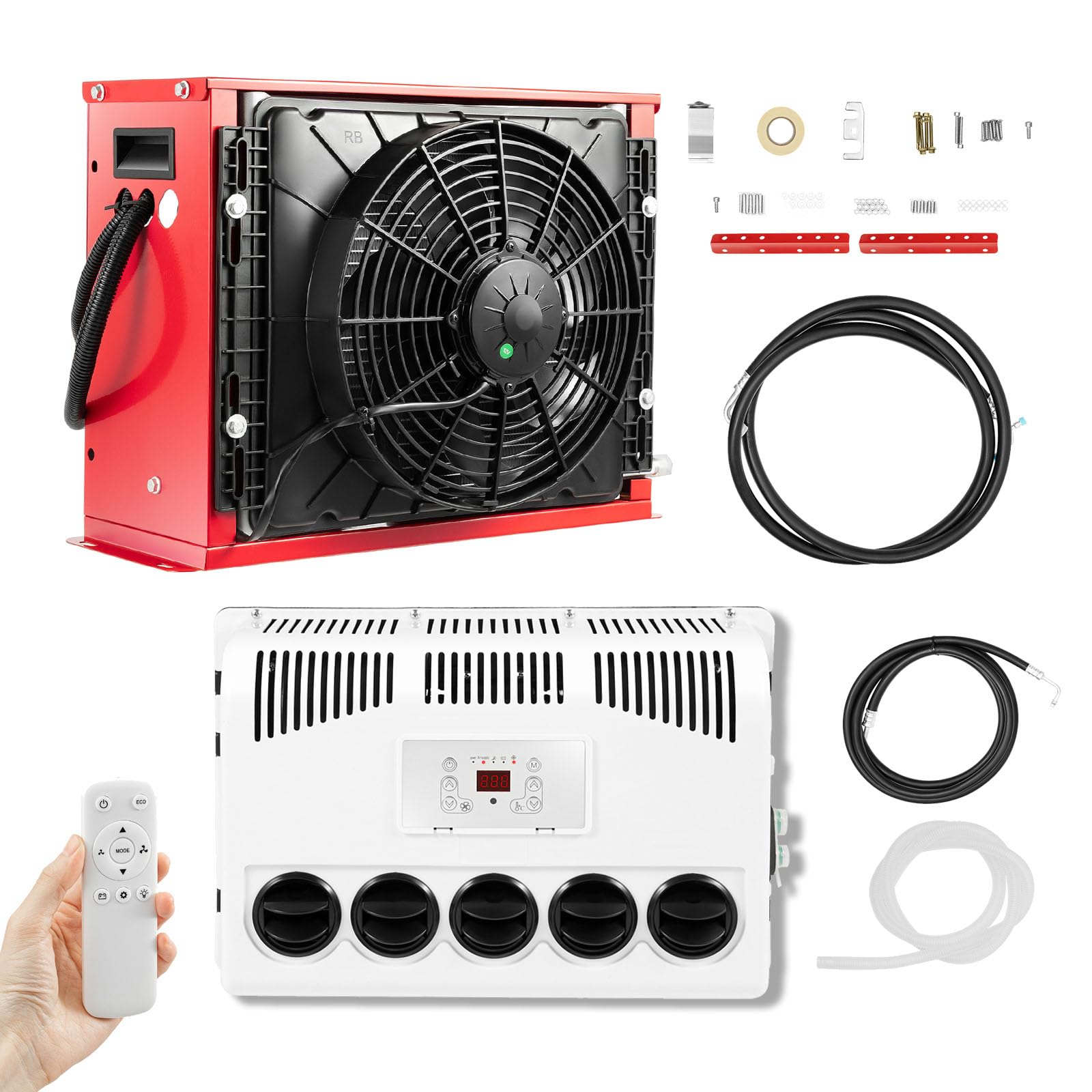
The JAYGOVAN split-type AC is not a drop-in tent unit—it’s a permanent installation for vans, truck campers, and tractor trailers. But for off-grid campers who have the skills to mount an external condenser, it’s the most power-efficient high-BTU solution available. Running on native 12V DC, it draws a max of 600W (about 50 amps) and can maintain 74°F inside a truck camper when the outside temp hits 95°F. One owner paired it with 1000W of solar and two 280Ah lithium batteries, achieving 20 hours of runtime.
The cooling capacity (11000 BTU) is massive for a tent or van, but the split design means the noisy compressor stays outside—only the fan-coil unit operates inside, keeping tent sleep areas near-silent. The aluminum condenser and pure copper wire motor (400-600W rated) are industrial-grade components. Low-voltage protection at 11V prevents dead batteries if your solar array runs low overnight. This is the unit for serious vanlifers who treat their rig like a home, not a temporary shelter.
Installation is demanding: you’ll need to drill holes for refrigerant lines, mount the external unit securely, and handle 12V wiring with appropriate gauge (2 AWG for long runs). The supplied bolts are soft grade; replace with grade 8 hardware and nylon lock nuts. The instructions are poor—no pressure sensor info, no schematic for the in-line fuse. Multiple owners reported the compressor cycling every 20 seconds in factory mode, requiring a thermostat modification. This is not a beginner-friendly upgrade.
Why it’s great
- Native 12V DC operation eliminates inverter losses.
- Split design keeps compressor noise outside the tent/van.
- 11000 BTU can cool a full-size truck camper in extreme heat.
Good to know
- Requires mechanical skill and drilling for installation.
- Instructions are minimal; thermal cycling adjustments needed.
6. Antarctic Star 8000 BTU Portable Air Conditioner

The Antarctic Star is priced aggressively for its BTU class, but it’s best suited for car camping with shore power at a developed campground. The 8000 BTU rating (ASHRAE) covers up to 350 sq ft, but the 40-lb weight and single-hose exhaust make it a wheel-around unit rather than a carry-to-the-tent solution. For RV hookups or pop-up campers with a 15-amp outlet, it delivers fast cooling that feels genuinely cold—several owners noted the output vent temperature is bracing even on moderate days.
The 4-in-1 functionality (cool, fan, dehumidifier, sleep mode) is straightforward: the remote and LED display make adjustments easy from a sleeping bag. The 24-hour timer lets you schedule cooling for afternoon naps without running the unit all day. At 27 inches tall, it will fit under most picnic tables but won’t fit through a standard tent door without unzipping the entire panel. This is a “base camp” AC: you set it up at the food tarp or under a canopy, not inside the sleeping tent itself.
The biggest weakness is noise. Multiple owners describe it as “a little noisy” or comparable to a window unit running on high fan. At 50+ dB in cooling mode, it’s not ideal for light sleepers in close quarters. The dehumidifier function is effective (removes moisture without a bucket in normal conditions), but the unit requires the included window kit for proper exhaust—you can’t just point the hose out a tent flap. Expect some creative DIY venting if you use it in a canvas tent.
Why it’s great
- Very affordable entry point for high BTU cooling.
- Blows genuinely cold air, not just cool.
- 24-hour timer and remote control for convenience.
Good to know
- Heavy (40 lbs) and requires a proper window vent kit.
- Noise level is high for tent sleep environments.
7. EUHOMY 10,000 BTU Portable Air Conditioner
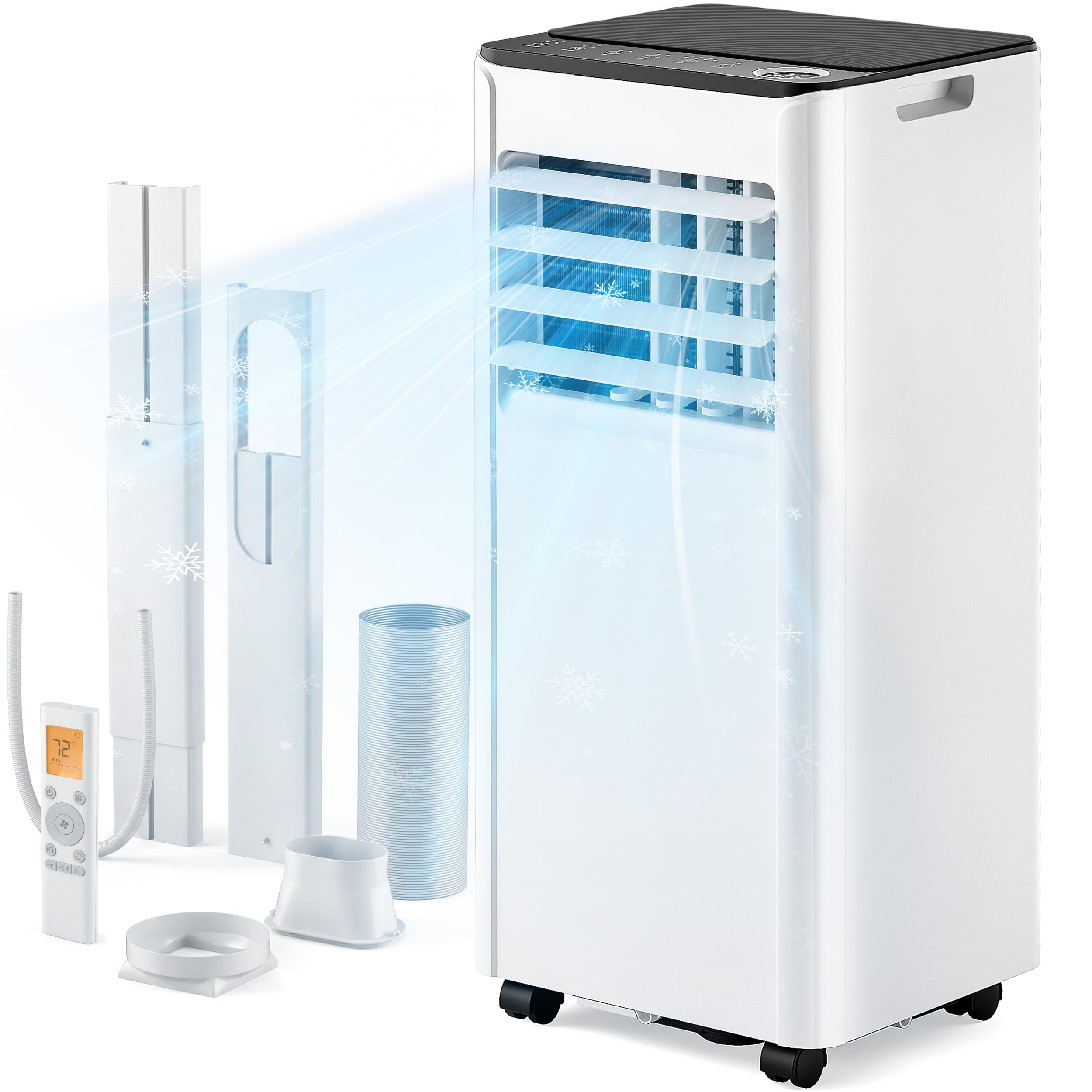
The EUHOMY 10,000 BTU unit has the raw power to cool a large glamping tent or a small RV interior, but its weight (over 50 lbs) and bulk make it a “set it and forget it” option rather than something you reposition daily. It’s engineered for residential comfort, which means excellent dehumidification (61 pints/day) and a tight temperature window (61°F–90°F). The 400 CFM airflow is strong enough to push cool air through a 20-foot tent corridor. Customer support is notably responsive—one owner had a failed unit replaced within a week after a simple video diagnosis.
The 50 dB noise rating is accurate: it’s quieter than a window unit but not silent. The real advantage here is the self-evaporating system—in normal humidity, you never need to drain the bucket. The 4-in-1 modes (Cool, Dry, Fan, Sleep) include a sleep mode that dims the display and slows the fan, reducing perceived noise. Installation is tool-free with the included window kit (fits 20-50 inch sliding windows), but the square vent adapter required some owners to use a hammer to seat it—expect minor friction during setup.
The catch: several verified reviews state the unit “doesn’t cool sufficiently” in rooms under 120 sq ft, with only a 10°F temperature drop. That’s because the compressor cycles on/off at set temp rather than running constantly on fan, leading to temperature swings. There’s no dedicated “continuous fan” mode, which defeats the purpose for tent users who want a constant breeze. For a screened canopy or a large RV bay, it’s fine; for a compact dome tent, it’s overpowered and under-featured.
Why it’s great
- Excellent dehumidification for humid campsite environments.
- Responsive customer service with quick unit replacements.
- Self-evaporating operation reduces manual maintenance.
Good to know
- No continuous fan mode leads to temperature cycling.
- Heavy and bulky for frequent tent-to-tent moves.
8. Shinco 10,000 BTU Portable Air Conditioner with Wi-Fi

The Shinco brings smart home integration to the campsite with Wi-Fi control via the Smart Life app. For RV owners who want to pre-cool their rig before returning from a hike, the app-based scheduling is a genuine convenience. The 10,000 BTU ASHRAE rating (6,450 BTU SACC) covers spaces up to 400 sq ft, and the 3-in-1 functions (cool, fan, dry) include an impressive 36L/day dehumidification rate using self-evaporating technology. The 59-inch telescopic exhaust hose is longer than most, making it easier to route through a roof vent or window panel.
The swing function adds auto-oscillation for even air distribution, which is rare in portable ACs and helps avoid cold spots in a tent. The 24-hour timer and 23 ft remote range are standard, but the LED display is bright enough to serve as a nightlight—annoying in a dark tent unless you cover it. Setup is genuinely tool-free: attach the window panel, extend the hose, and plug in. Four casters make it easy to roll across a campground pad.
The reliability history is mixed. One owner reported the unit stopped cooling entirely after a month. Others note intermittent coolant cycles where the unit runs fan-only for 5 minutes before resuming cooling—likely a thermistor issue in the first production batches. The noise level is moderate but not sleep-friendly at high fan. If you want Wi-Fi scheduling and can accept a higher failure rate, the Shinco offers unique app features. For pure tent performance, the BougeRV or Outohome are safer bets.
Why it’s great
- Wi-Fi and app control for remote scheduling.
- Long telescopic hose and auto-swing for even cooling.
- High dehumidification capacity for humid environments.
Good to know
- Intermittent cooling cycles reported by multiple users.
- The LED display is bright and disruptive in tents.
9. Feelfunn 14,000 BTU Portable Air Conditioner
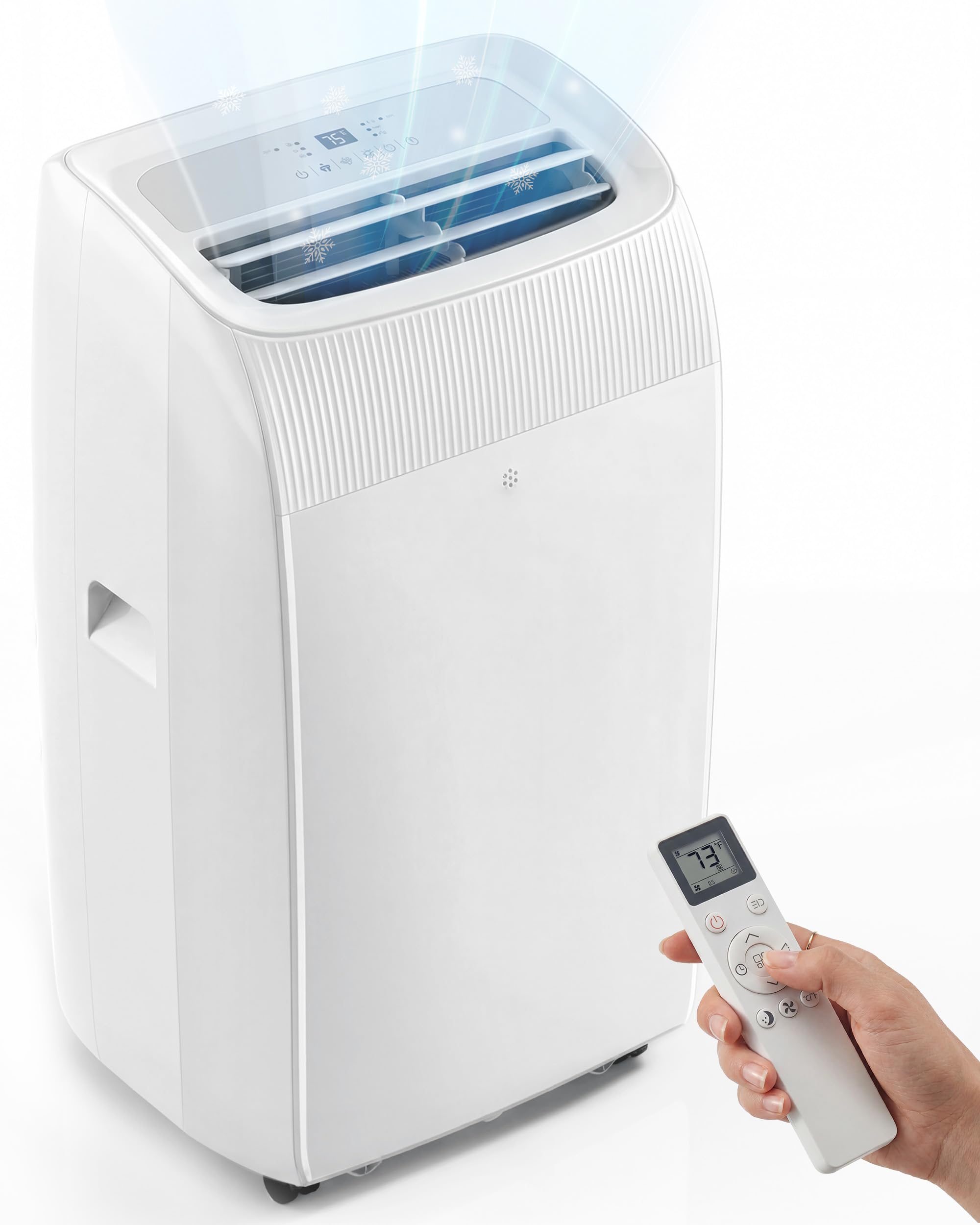
The Feelfunn 14,000 BTU unit is overkill for a typical weekend tent, but it fills a specific niche: base camps, large RV bays, and hot-climate situations where only max BTUs will cut through oppressive humidity. At 42 dB, it’s the quietest high-BTU portable AC we’ve tested—quieter than many 5,000 BTU units. It cools rooms up to 700 sq ft according to ASHRAE standards (10,000 BTU SACC), and the turbo mode delivers rapid cooling that’s noticeable within minutes. The auto-swing and 360° swivel casters make it practical for repositioning inside a large canvas tent or screened pavilion.
The 4-in-1 (Cool, Fan, Dehumidify, Turbo) includes a dehumidifier that removes up to 95 pints of moisture per day, making it a dual-threat for humid summer campsites. The auto-evaporation system recycles condensate, so no draining is needed during normal operation. The child lock and auto-close vents when powered off are thoughtful touches for tent environments where kids might bump the unit. The full-water alert prevents overflow if the self-evap system can’t keep up in extreme humidity.
That said, this unit is heavy at 62.8 lbs—you’re not carrying it to a walk-in campsite. It requires a dedicated 115V circuit and will trip a standard 15-amp campground outlet if paired with other high-draw appliances. The display has a known issue where it unpredictably switches from °F to °C with no fix in the manual. The 1-gallon internal drainage bucket is insufficient for high-midwest humidity; owners report needing to switch to a 5-gallon external bucket emptied twice daily. For base-camp luxury, it’s a powerhouse; for mobility, it’s a log.
Why it’s great
- Exceptionally quiet at 42 dB for a 14,000 BTU unit.
- Extreme dehumidification (95 pints/day) for wet climates.
- Auto-swing and turbo mode for rapid, even cooling.
Good to know
- Very heavy (63 lbs) and requires 115V shore power.
- Display can spontaneously switch between °F and °C.
FAQ
Can a portable AC run off a solar generator for tent camping?
How do I vent an AC through a tent without a window?
What’s the difference between ASHRAE BTU and SACC BTU?
Final Thoughts: The Verdict
For most campers, the best ac for tent camping winner is the BougeRV PC35 because it strikes the only practical balance between BTU output, 400W power draw, and compact portability—it can run off a mid-size solar generator and fits through a standard tent door. If you want self-evaporating operation with near-silent sleep mode and don’t mind a 31-pound carry weight, grab the Outohome 5200BTU. And for families or base-camp setups where weight and noise aren’t limiting factors, nothing beats the dual cooling/heating versatility of the BAYKUL 6800/7500 BTU.

Mo Maruf
I created WellFizz to bridge the gap between vague wellness advice and actionable solutions. My mission is simple: to decode the research and give you practical tools you can actually use.
Beyond the data, I am a passionate traveler. I believe that stepping away from the screen to explore new environments is essential for mental clarity and physical vitality.