Our readers keep the lights on and my smoothie glass nicely filled. As an Amazon Associate, I earn from qualifying purchases.
A daypack that rides loose, digs into your shoulders, or leaves your back soaked before you’ve hit the second mile isn’t a piece of gear — it’s a burden. The right backpacking daypack disappears on your body, letting you focus on the ridge line, not the rub points. This guide cuts through the hype to find packs that actually deliver on stability, ventilation, and the right capacity for a full day on the trail.
I’m Mohammad Maruf — the founder and writer behind WellFizz. I’ve spent thousands of hours analyzing suspension designs, fabric denier ratings, and bladder integration systems to separate genuine performance from marketing noise.
Whether you’re scrambling over talus, picking your way through a wet forest, or covering ten miles of rolling hills, a properly fitted pack changes everything. This is the definitive resource for finding the best backpacking daypack for your specific body type and terrain style.
How To Choose The Best Backpacking Daypack
Nailing the right daypack boils down to three non-negotiable elements: a suspension that matches your torso length, a capacity that fits your kit without encouraging overpacking, and a back panel that keeps sweat from pooling. Skip any one of these and your day on the trail will be defined by irritation, not enjoyment.
Capacity: 18L, 22L, 26L or 30L?
Resist the temptation to buy the biggest pack you can find. A 30L bag encourages filling empty space with stuff you don’t need, adding weight that ruins the whole point of a day hike. For warm-weather trips under five hours, 18L is plenty for a bladder, snacks, and a rain shell. An all-day adventure with extra layers and a first-aid kit works best in the 22L to 26L range. Only reach for 30L if you’re carrying bulky winter gear or hiking for a full light-to-dark push.
Suspension: Framed vs. Frameless
Pack weight under 12 pounds can be handled comfortably by a frameless pack with good foam padding. Once you cross 15 pounds — a full 3L bladder, lunch, layers, and a camera — a framed pack with a tensioned mesh backpanel becomes essential. A wire frame or perimeter frame transfers load to the hipbelt, keeping the pack from sagging and preventing that awful “sway” when you’re side-hilling.
Hydration System Fit
A dedicated hydration sleeve without a hanger clip means your bladder will slump to the bottom, throwing off your center of gravity. Look for a speed-clip or hook system that suspends the bladder upright near your shoulder blades. Also check the hose routing: a port that exits high on the shoulder strap keeps the tube accessible and out of your way, while a low exit forces awkward reaching.
Quick Comparison
On smaller screens, swipe sideways to see the full table.
| Model | Category | Best For | Key Spec | Amazon |
|---|---|---|---|---|
| Osprey Hikelite 26L | Mid-Range | All-day comfort with AirSpeed ventilation | 1.89 lb / 26L capacity | Amazon |
| Osprey Stratos 24L | Premium | Adjustable torso for tall hikers | 2.78 lb / adjustable wire frame | Amazon |
| Gregory Miko 30L | Premium | Flex hipbelt for dynamic movement | 30L / BioSync suspension | Amazon |
| Mammut Lithium 20L | Premium | Ultralight day hikes with minimal kit | 1.63 lb / EVA back pad | Amazon |
| CamelBak Cloud Walker 18L | Mid-Range | Compact hydration for short trails | 17.6 oz / 2.5L Crux reservoir | Amazon |
| Thule UpTake Hydration Pack | Budget | Minimalist biking and fast hikes | 1.06 lb / 4L storage | Amazon |
| Water Buffalo Sherpa 22L | Budget | Value-focused day hikes with bladder | 22L / 2L bladder included | Amazon |
In‑Depth Reviews
1. Osprey Hikelite 26L Hiking Backpack

The Hikelite 26L is the gold standard for day hikers who refuse to compromise on back ventilation. Its AirSpeed suspension uses a tensioned mesh panel stretched over a wire frame, creating a gap that lets heat and moisture escape while keeping the load off your spine. At just 1.89 pounds, it’s lighter than many packs with half the ventilation capability, and the included raincover means you won’t get caught out by an afternoon thunderstorm.
The storage layout rewards efficiency: the main compartment swallows a puffy jacket and lunch, the front shove-it pocket stashes a rain shell for quick access, and the internal hydration sleeve routes a reservoir hose cleanly through a dedicated port. Deep side pockets swallow Nalgene bottles without fighting the compression straps. The built-in raincover stores neatly in a zippered pocket at the base, so you never forget it.
Where it falters is organization. If you need a dozen internal zip pockets for gadgets and maps, you’ll want a more compartmentalized pack. The hipwings are padded but not structured enough to transfer heavy loads — load this pack under 15 pounds and it’s sublime; push past that and the frame’s limits show. For the vast majority of day hikers, however, it hits the sweet spot of weight, ventilation, and durability.
Why it’s great
- AirSpeed mesh backpanel keeps your back cool on hot climbs
- Lightweight for a framed pack — under two pounds
- Integrated raincover adds zero faff in wet weather
Good to know
- Limited internal organization; no padded laptop sleeve
- Hipbelt is more stabilizer than load-transferrer
2. Osprey Stratos 24L Men’s Hiking Backpack

The Stratos 24L takes everything that works in Osprey’s ventilation philosophy and adds a fully adjustable torso length, making it the go-to choice for hikers with longer torsos or anyone who falls between standard sizes. The injection-molded frame with 3D-tensioned mesh creates serious airflow, and the molded ladder system lets you dial in the fit over a range of body types — a rare feature in a sub-30L pack. The included raincover and #10 zipper on the panel-loading main compartment add durability that justifies the higher tier.
Organization is a step up from the Hikelite. The Stratos offers a front pocket with key clip, hipbelt pockets that actually fit a smartphone, and dual side stretch pockets that hold bottles securely even when leaning forward on steep terrain. The internal hydration sleeve routes the hose through a backpanel port, and the removable waist strap adds stability when the trail gets technical. Hikers who’ve struggled with packs riding up or digging into their shoulders will appreciate the precision fit.
The trade-off is weight. At 2.78 pounds, the Stratos is nearly a full pound heavier than the Hikelite. That extra mass comes from the adjustable frame, heavier zippers, and more robust fabric — but if you’re counting ounces for a fast-and-light approach, this isn’t the one. The hard frame also means it doesn’t compress well for air travel as a personal item. It’s a dedicated trail pack, not a travel hybrid.
Why it’s great
- Adjustable torso fits a wide range of body types
- Included raincover and heavy-duty #10 zipper
- Hipbelt pockets hold a modern smartphone
Good to know
- Heavier than the Hikelite at 2.78 pounds
- Hard frame makes it awkward as a travel bag
3. Gregory Miko 30L Unisex Day Hiking Backpack
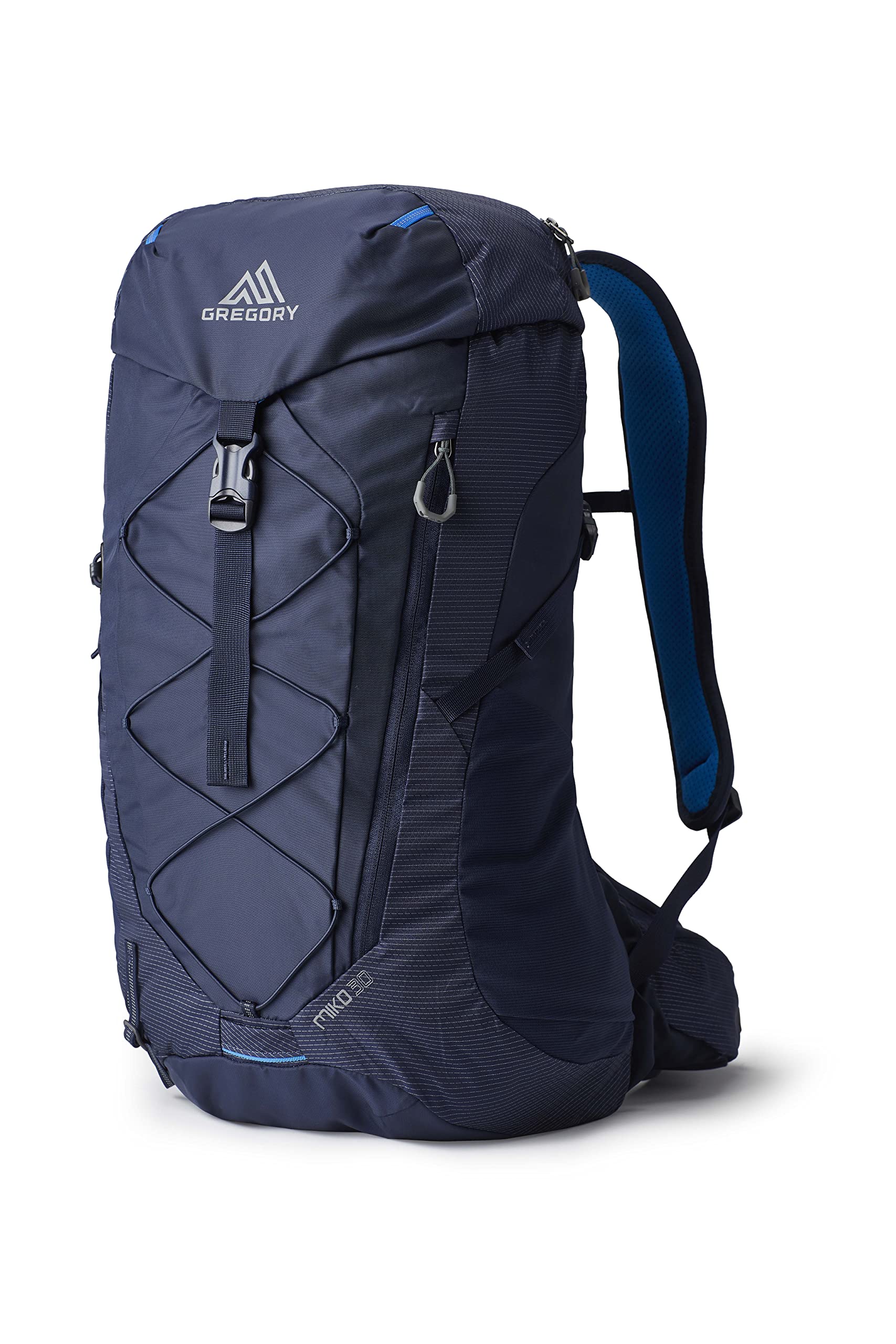
The Gregory Miko 30L redefines how a daypack moves with your body. Its BioSync flexible hipbelt and shoulder harness are engineered to stretch and pivot with the natural rotation of your pelvis and shoulders, making it feel less like a rigid box strapped to your back and more like an extension of your torso. On uneven terrain or when you’re scrambling up a boulder field, that freedom of movement translates directly to better balance and less fatigue. The channeled foam backpanel promotes airflow, though it doesn’t match the breeziness of a full trampoline mesh system.
The SpeedClip hydration hanger keeps the bladder suspended properly, and the large zippered hipbelt pockets are genuinely usable for a phone and snacks without needing to remove the pack. The adjustable torso length extends up to 3.5 inches, accommodating a wide range of heights.
The lack of a dedicated padded laptop compartment means it’s less of a travel/work hybrid than some competitors. The backpanel is comfortable but not as ventilated as the Osprey AirSpeed mesh, so on hot, humid days you’ll still feel some sweat buildup. And while the 30L capacity is generous, it’s easy to overpack and exceed the pack’s ideal 25-pound comfort ceiling.
Why it’s great
- BioSync hipbelt moves naturally with your gait
- Spacious 30L fits bulky winter layers comfortably
- Adjustable torso with SpeedClip hydration hanger
Good to know
- Backpanel ventilation lags behind mesh suspension designs
- No dedicated padded laptop sleeve for travel use
4. Mammut Lithium 20L Backpack

The Mammut Lithium 20L is the pack you reach for when simplicity matters more than feature checklists. It drops the elaborate suspension in favor of a highly breathable EVA foam back pad that mimics the feel of an internal frame without the weight — at 1.63 pounds, it’s one of the lightest packs on this list with a usable structure. The result is a clean, comfortable carry for day hikes where your kit stays under 12 pounds. The removable one-piece raincover and integrated pole carrier add trail utility without cluttering the clean profile.
The design philosophy here is about carrying only what you need. The main compartment fits a jacket, snacks, and a first-aid kit with room to spare; the front zip pocket holds a phone and map; and the hydration compatibility means you can stash a reservoir without losing balance. The removable padded hipbelt lets you strip weight when the trail is smooth, then add stability when the grade steepens. Hikers who walked the Camino de Santiago or similar long-distance day routes consistently praise its balance of storage and low weight.
The tapered bottom makes packing a bit fiddly if you’re stuffing in bulky items — rectangular gear fits better than round shapes. The plastic buckle hardware feels good but not as stout as the metal-reinforced clips on premium Osprey or Gregory packs. And for a pack in its tier, the lack of adjustable torso length means fit is more one-size-fits-most than truly customizable.
Why it’s great
- Ultralight at 1.63 pounds with EVA frame-like support
- Removable hipbelt and raincover add versatility
- Sleek urban-friendly aesthetic that works on the trail
Good to know
- Tapered bottom complicates packing bulky items
- No adjustable torso for custom fit
5. CamelBak Cloud Walker 18L Hydration Backpack
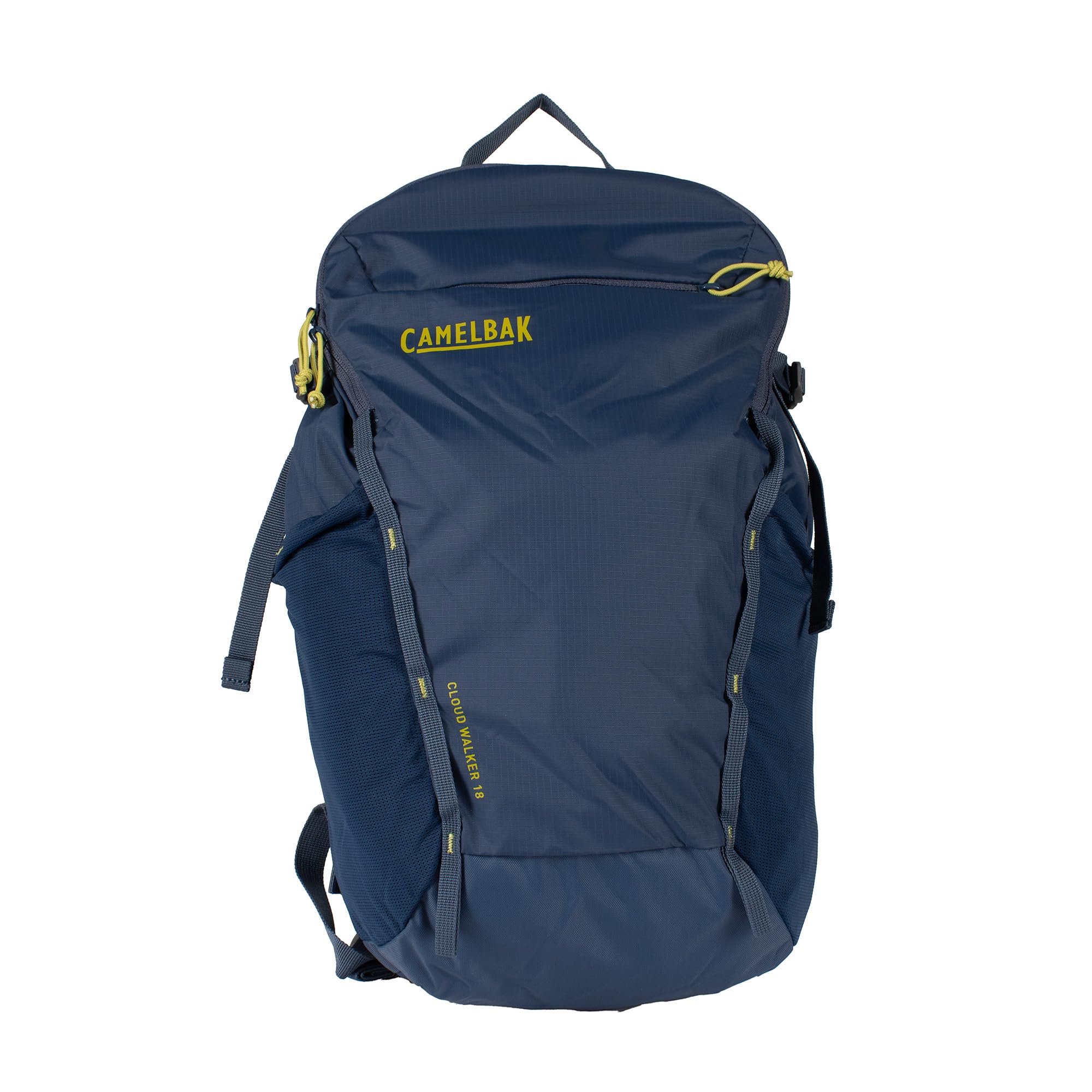
CamelBak’s Cloud Walker 18L is the hydration-first daypack for hikers who prioritize sip-on-the-move convenience over excessive cargo capacity. The included 2.5-liter Crux reservoir delivers high-flow water delivery with a bite valve that’s easy to engage with one hand, and the Air Support back panel uses Body Mapping Technology to channel airflow across the hottest zones of your back. For short to moderate day hikes where you’re moving fast and drinking frequently, this pack keeps you hydrated without ever having to stop and dig for a bottle.
The storage is intentionally minimal but functional: a secure zippered phone pocket on the hipbelt keeps your phone accessible, side stretch pockets hold an extra bottle or snacks, and compression straps tame the load when the reservoir is full but the main compartment is light. The removable waist strap adds stability on uneven trails, and the integrated trekking pole carry system means you can stow your poles without taking the pack off. Hikers with short torsos — especially those around 5 feet tall — report that the fit is outstanding, with straps that don’t rub or dig in.
The 18-liter capacity is tight for anything beyond a half-day trip. If you need to carry a puffy jacket, rain shell, lunch, first-aid kit, and a camera, you’ll be playing Tetris to make it all fit. The side pockets are stretchy but not deep enough to securely hold a tall Nalgene while running or scrambling. And while the reservoir is excellent, some users note the hose tube lacks a magnetic clip for securing it to the sternum strap — a feature found on pricier CamelBak models.
Why it’s great
- Premium Crux reservoir with high-flow bite valve
- Air Support back panel reduces sweat on hot days
- Great fit for shorter hikers and narrow shoulders
Good to know
- 18L capacity limits gear for full-day treks
- No magnetic hose retainer on the sternum strap
6. Thule UpTake Hydration Pack

The Thule UpTake is a hydration pack designed for the minimalist who wants hands-free drinking without the bulk of a traditional hiking backpack. Its standout feature is the magnetic ReTrakt hose return system — after you take a drink, the hose snaps back to your chest magnetically, eliminating the annoyance of a dangling tube. The included 2.5-liter Hydrapak reservoir with locking bite valve is a quality piece of gear in its own right, and the 4-liter cargo compartment is just enough for a pump, multitool, a spare layer, and some trail food.
The perforated foam harness and backpanel prioritize breathability, making this a strong choice for high-exertion activities like trail running or fast-paced mountain biking where staying cool matters more than carrying capacity. The external quick-access phone pocket keeps your device within reach without unclipping anything, and the reflective trim plus tail-light attachment point add safety for low-light adventures. At just over one pound fully loaded, it’s the lightest option here by a significant margin.
The obvious limitation is capacity. This is not a full-day hiking pack — 4 liters of storage means you’re limited to absolute essentials. The bladder hose is non-detachable from the reservoir, which makes cleaning and freezing more difficult than a modular system. And while the pack is comfortable for intense activity, the lack of a hipbelt or load-transferring frame means heavier loads will bounce on your shoulders.
Why it’s great
- Magnetic ReTrakt hose keeps the tube secured when not drinking
- Extremely lightweight at 1.06 pounds
- Perforated foam backpanel keeps airflow high during exertion
Good to know
- 4L storage is too small for full-day hiking gear
- Bladder hose is not detachable for easy cleaning
7. Water Buffalo Sherpa 22L Hydration Backpack
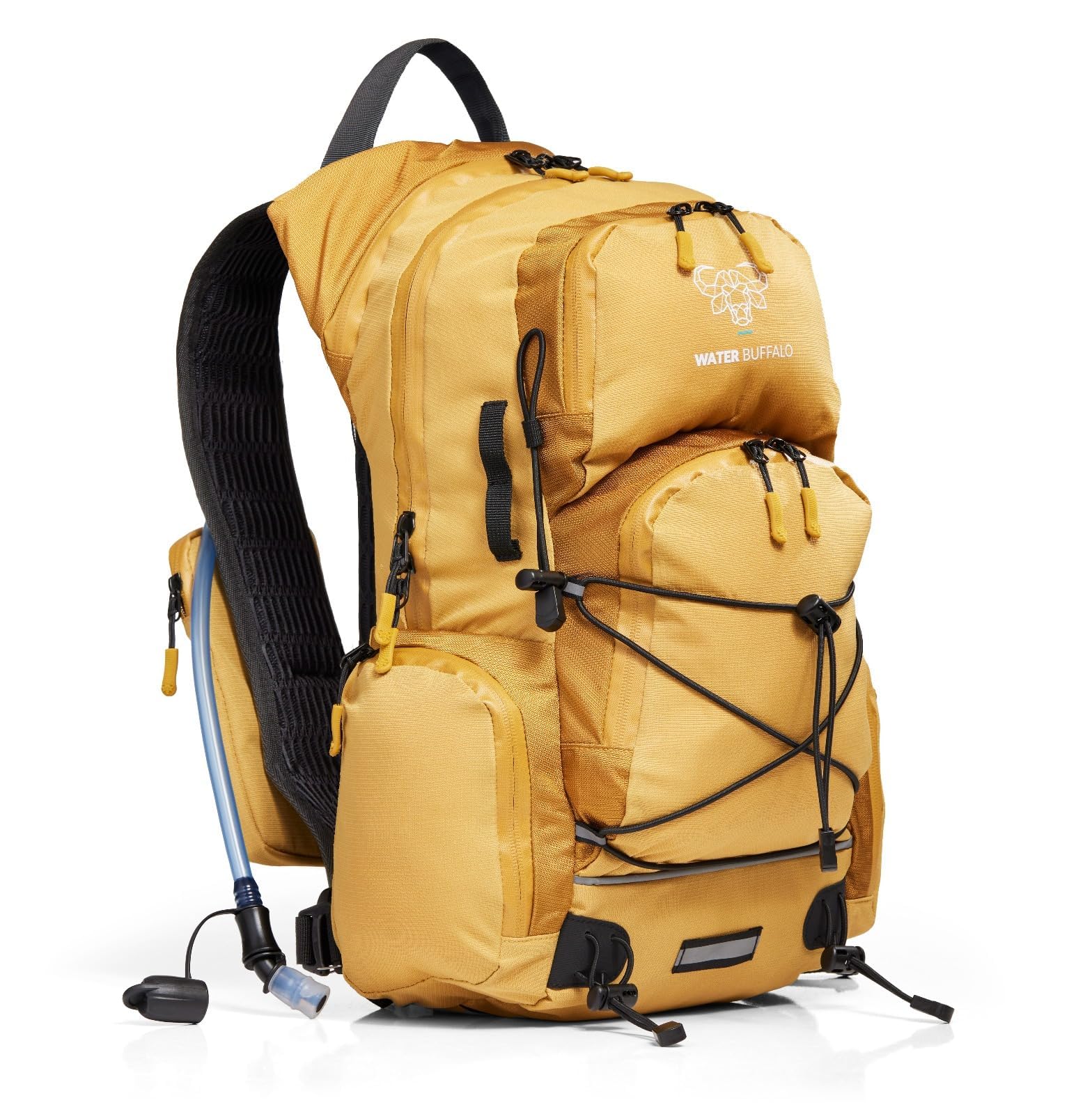
The Water Buffalo Sherpa 22L delivers impressive value for hikers who want a full-featured hydration pack without a premium price tag. It includes a BPA-free 2-liter bladder with a wide-mouth opening for easy filling and cleaning, plus six storage pockets that keep your gear organized across the main compartment, front stash pocket, and hipbelt. The 150D ripstop polyester and 420D jacquard nylon fabric feels tougher than the price would suggest, and the waterproof zipper liners offer genuine protection against afternoon showers.
Fit and stability are handled by adjustable hip and chest straps that do a decent job of cinching the load close to your body, and the hiking pole holders with drawstrings are a practical addition that many packs in this tier skip entirely. For a 5’2″ to 5’6″ hiker on a 5- to 10-mile day, the Sherpa hits a sweet spot of capacity and comfort — enough room for snacks, layers, and a first-aid kit without feeling oversized. The included bladder delivers consistent flow, though the bite valve takes a bit of practice to avoid dripping.
The included bladder is the weakest link: it lacks a wide-mouth threaded cap for easy ice insertion, and the bite valve is stiffer than premium alternatives. Several users report replacing the bladder entirely with a higher-end model while keeping the pack itself. The hipbelt pockets are small — fine for a lip balm or energy gel, but not large enough for a modern phone. And while the backpanel is padded, it doesn’t offer the ventilated mesh of packs twice the price.
Why it’s great
- Excellent value with 22L capacity and included 2L bladder
- Waterproof zipper liners protect against rain
- Pole holders and gear loops add trail-ready utility
Good to know
- Included bladder is less refined than premium reservoir systems
- Hipbelt pockets are too small for a modern smartphone
FAQ
Can I use a running vest for a full-day backpacking hike?
How do I measure my torso length for a daypack?
Is a built-in raincover necessary or can I just use a dry bag?
Final Thoughts: The Verdict
For most hikers, the best backpacking daypack winner is the Osprey Hikelite 26L because it combines a ventilated AirSpeed backpanel, integrated raincover, and lightweight frame into a single do-it-all package that handles anything from a quick afternoon scramble to a full-day ridge traverse. If you need an adjustable torso for a precise custom fit, grab the Osprey Stratos 24L. And for the hiker who values movement freedom and extra winter capacity, nothing beats the Gregory Miko 30L.

Mo Maruf
I created WellFizz to bridge the gap between vague wellness advice and actionable solutions. My mission is simple: to decode the research and give you practical tools you can actually use.
Beyond the data, I am a passionate traveler. I believe that stepping away from the screen to explore new environments is essential for mental clarity and physical vitality.