Our readers keep the lights on and my smoothie glass nicely filled. As an Amazon Associate, I earn from qualifying purchases.
Brick is a brutal surface for most adhesives. Its porous, irregular face soaks up thin glues and fails under weight, leaving you with a loose railing, a cracked veneer, or a half-assembled fire pit. You need a compound engineered for masonry’s specific density and thermal behavior — something that locks into the pores, bridges gaps, and cures into a load-bearing joint.
I’m Mohammad Maruf — the founder and writer behind WellFizz. I’ve spent years analyzing the chemistry behind construction-grade adhesives, comparing tensile strengths, cure windows, and real-world failure modes reported by homeowners and masons alike.
Strong, durable bonds on masonry start with choosing the right formula for your specific project, whether you’re anchoring a fastener or repairing a fireplace. This guide breaks down the top performers so you can pick the adhesive for brick that matches your job’s demands without guesswork.
How To Choose The Best Adhesive For Brick
Buying the wrong bonder means watching your work detach after a freeze cycle or under a modest load. Focus on three variables that dictate success on brick: the chemistry of the adhesive, its operating temperature range, and whether it fills gaps or simply coats the surface. Each product below targets a specific brick scenario — from anchoring threaded rods to patching a firebox — and the specs that separate them are non-negotiable.
Resin Chemistry vs. Hybrid Polymer
Polyester resin adhesives (like the Somafix S700) cure fast into a rigid, high-strength anchor suited for structural fasteners in solid brick or concrete. Hybrid polymer adhesives (like Gorilla’s formulation) remain slightly flexible after cure, making them ideal for bonding panels, trim, or veneer where thermal expansion and vibration occur. For load-bearing bolts or railings, choose resin; for surface-mounting, choose hybrid.
Heat Tolerance and Fire Ratings
Standard construction adhesives soften or burn out around 140°F. If your brick project involves a fire pit, pizza oven, kiln, or any fireplace repair, you must switch to a refractory mortar rated above 2000°F. The Rutland Dry Mix 211 handles 2550°F and cures without heat — a necessity for high-temp masonry that standard caulk-style adhesives cannot survive.
Gap Filling and Surface Preparation
Brick surfaces are rarely flat. A good adhesive must bridge depressions and fill minor voids without sagging. Products like Loctite Power Grab Crystal Clear offer zero-shrink performance for cosmetic repairs where visibility matters. For heavier structural gaps, the Gorilla Heavy Duty Construction Adhesive fills wider cavities while maintaining a waterproof seal. Always clean the brick surface of dust, loose mortar, and efflorescence before applying any adhesive — a clean substrate is half the bond strength.
Quick Comparison
On smaller screens, swipe sideways to see the full table.
| Model | Category | Best For | Key Spec | Amazon |
|---|---|---|---|---|
| Rutland Dry Mix 211 | Refractory Mortar | Fireplaces, kilns, pizza ovens | 2550°F heat rating | Amazon |
| Somafix S700 | Polyester Resin | Anchoring fasteners in solid brick | 10.1 fl oz / 300ml | Amazon |
| Gorilla Heavy Duty | Hybrid Polymer | General masonry bonding, gap filling | 30-second grab | Amazon |
| Loctite Power Grab Crystal Clear | Clear Hybrid | Invisible repairs, finished surfaces | Dries crystal clear | Amazon |
| SIKA SikaLatex R | Acrylic Fortifier | Bonding new mortar to old brick | 500 psi bond strength | Amazon |
In‑Depth Reviews
1. Rutland Dry Mix 211 Refractory Mortar
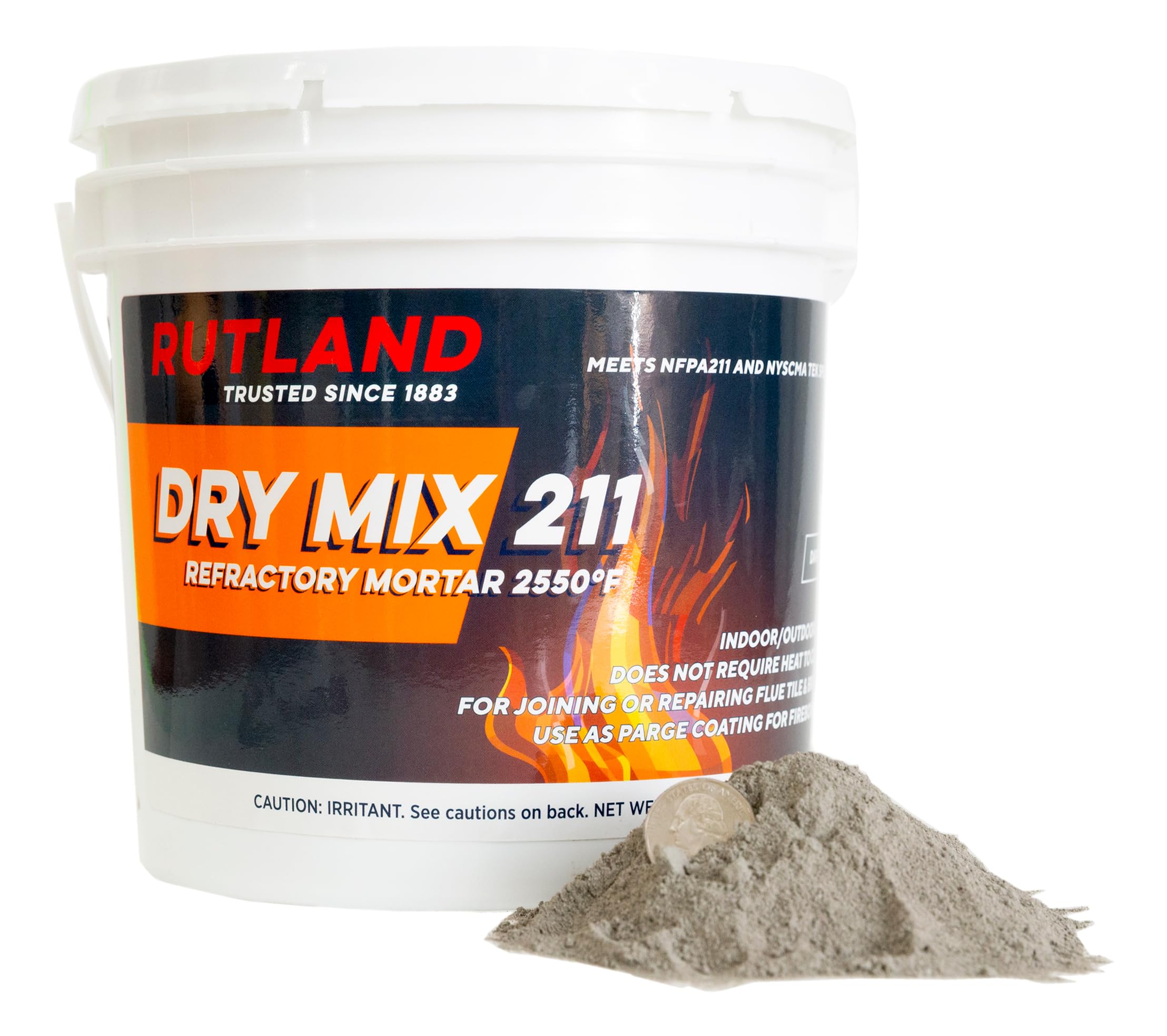
This is the only adhesive on our list that survives direct flame contact. The Rutland Dry Mix 211 is a dry refractory mortar rated to 2550°F, meaning it won’t crumble, smoke, or lose structural integrity inside a fireplace, kiln, forge, or pizza oven. It requires no heat to cure — just mix with water to a peanut-butter consistency, apply to dampened brick, and let it set for two hours before exposure.
Users consistently report that thick layers cure without cracking while thin coats may develop superficial hairline fissures that do not affect performance. The fine, fluffy powder bonds aggressively to porous firebrick and common masonry, and it can be sponged off for a clean finish. A single 10-pound tub goes a long way — enough for multiple oven builds or extensive fireplace repointing.
It does arrive as a dry powder, so you must mix on-site and work within a short open time before it stiffens. Shipping can be slow, so plan ahead. For any high-heat brick application, this is the definitive choice and a clear step above standard caulk-tube adhesives that would fail instantly at those temperatures.
Why it’s great
- Withstands 2550°F direct heat without degradation
- No heat curing required; sets in 2 hours
- Excellent adhesion to porous firebrick and standard masonry
Good to know
- Requires mixing — not a squeeze-tube product
- Thin layers may develop minor drying cracks
- Shipping can be slower than adhesives in stock at big-box retailers
2. Somafix S700 Construction Adhesive
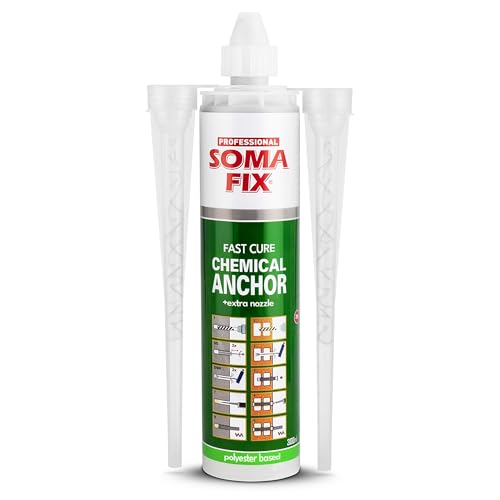
The Somafix S700 is a fast-curing polyester resin adhesive engineered specifically for anchoring threaded rods, bolts, and rebar into solid brick, concrete, and stone. Unlike hybrid polymer caulks, this resin cures rigid and achieves its full load capacity quickly, making it the right choice for structural repairs like loose railings, gate hinges, or shelf brackets where shear strength matters.
Application follows a simple sequence: drill a clean hole, inject the resin from bottom to top, insert the fastener, and wait for cure. The kit includes an extra mixing nozzle, so you can complete multiple anchor points without downtime. Users specifically mention it fixed an outdoor railing before a house listing and held securely. The grey paste blends well with mortar lines and concrete.
The work time is short — once mixed in the nozzle, you have only a few minutes to position the fastener. Beginners should practice on scrap first. Also, for hollow brick or block, you must use a mesh sleeve (not included) to keep the resin contained. If you need a structural anchor in solid brick, this is an effective, fast-setting solution at a reasonable cost.
Why it’s great
- Fast-curing polyester resin for high-strength anchoring
- Extra nozzle included for multi-point jobs
- No expansion pressure — safe for drilled holes in aged brick
Good to know
- Short working time; requires fast positioning
- Mesh sleeve needed for hollow substrates
- Not for high-heat environments
3. Gorilla Heavy Duty Construction Adhesive
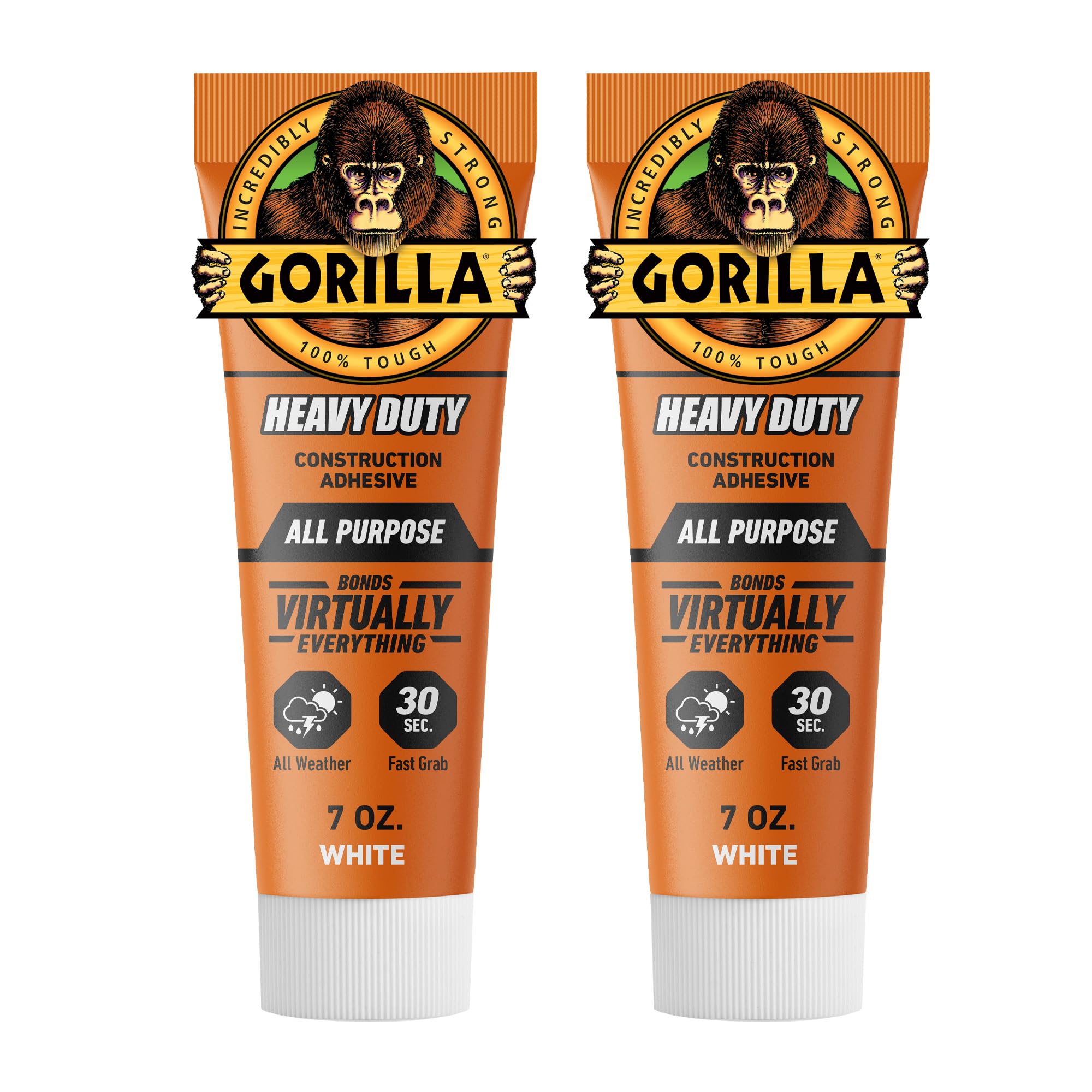
For quick everyday brick projects that don’t involve intense structural loads or direct heat, the Gorilla Heavy Duty Construction Adhesive delivers convenience and versatility. This hybrid polymer formula grabs in 30 seconds, reducing the need for bracing or nailing when bonding brick veneer, subfloor, drywall, or masonry panels. It’s waterproof and paintable, suitable for both indoor and outdoor repairs.
The squeeze-tube format (two 7-ounce tubes per pack) makes it easy to apply without a caulking gun, though controlling the bead on vertical brick surfaces takes a steady hand. It fills gaps effectively and remains slightly flexible after cure, which helps absorb minor movement without breaking the bond. Users report good adhesion on a variety of substrates, including brick, concrete, and marble.
Some users note that the white paste is visible after application — it is not clear — and while it claims heavy-duty performance, a few found the hold less rigid than expected for vertical loads. It works best for panel bonding, decorative brick installation, and general masonry repairs where some flexibility is acceptable. For pure strength, the resin-based options above are more appropriate.
Why it’s great
- 30-second grab minimizes need for bracing
- Waterproof and paintable for indoor/outdoor use
- Gap-filling formula bridges uneven brick surfaces
Good to know
- Pasty white finish, not clear
- Bond strength is flexible, not rigid like resin
- Squeeze tube can be harder to control than a caulk gun
4. Loctite Power Grab Ultimate Crystal Clear
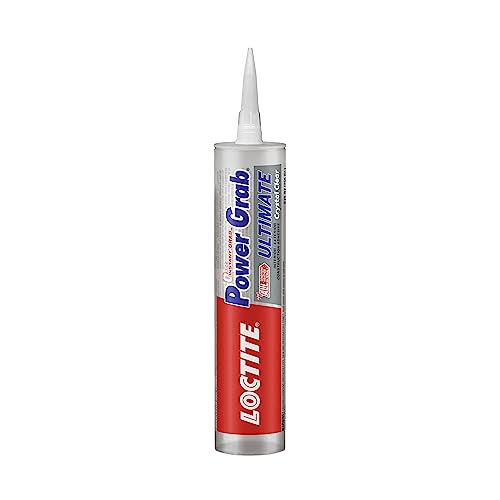
When appearance matters — such as attaching decorative ceiling tiles, clear glass blocks, or finished wood trim to a brick wall — the Loctite Power Grab Crystal Clear is the adhesive to reach for. It goes on as a translucent gel and cures to a fully clear, silicone-like finish that is nearly invisible. The bond is weatherproof, waterproof, and rated for temperatures from 0°F to 140°F.
This adhesive has a quick initial tack that reduces the need for bracing, and it stays flexible after cure, which helps absorb minor settling or vibration. Users report success bonding metal backsplashes, wood repairs, and even steel brackets — one test passed a 5-pound weight on a steel bracket after 24 hours. It cleans up easily with mineral spirits before it cures.
The main limitation is its temperature ceiling: 140°F is fine for walls and ceilings but unsuitable for fireplaces or ovens. It also failed to set properly in freezing conditions during one user’s test, so avoid outdoor applications below 40°F. For cosmetic interior brick projects where you want the bond to disappear, this is the top performer.
Why it’s great
- Cures perfectly clear for invisible repairs
- Strong, flexible bond resists weather and vibration
- Quick tack reduces need for bracing
Good to know
- Max temperature 140°F — not for fireplace use
- Poor performance in freezing ambient temperatures
- Must cap the tip immediately to prevent hardening in nozzle
5. SIKA SikaLatex R Concrete Adhesive

The SikaLatex R is not a standalone adhesive; it is an acrylic-polymer admix that you add to Portland-cement mortar or concrete to dramatically improve bond strength, freeze-thaw resistance, and tensile properties. When a repair involves bonding new mortar to old brick — such as repointing a wall or patching a concrete step — this liquid fortifier prevents the new layer from delaminating.
Users report that mixing it with quickset cement creates a paste that adheres aggressively, holds ceramic fixtures, and survives multiple freeze cycles. The manufacturer claims a 500 psi bond strength once fully cured (30-day full cure). It is simple to use: no dilution needed, just mix directly with dry cement or mortar. The white liquid can also be used as a primer coating on old brick before applying fresh mortar.
The gallon size is generous for its price tier, but the 30-day full cure means you must plan for patience. It also requires surface prep — clean, dampen the brick, and wipe the adhesive drips immediately before they harden. For substantial masonry bonding projects where you are working with cement rather than a caulk tube, this is the most reliable way to ensure long-term adhesion between old and new brickwork.
Why it’s great
- Boosts mortar bond to 500 psi tensile strength
- Excellent freeze-thaw resistance for exterior masonry
- Versatile — use as primer, admix, or grout coating
Good to know
- Requires mixing with cement — not a ready-to-use glue
- 30-day full cure needs careful planning
- One-year shelf life; check expiration date before buying
FAQ
Can I use standard construction adhesive on brick for outdoor projects?
What is the difference between a resin anchor and a construction adhesive for brick?
How do I apply adhesive to brick for the strongest bond?
Final Thoughts: The Verdict
For most users, the adhesive for brick winner is the Rutland Dry Mix 211 because it handles the widest range of real brick projects — from fireplace repairs to outdoor kilns — with unmatched heat tolerance and long-term durability. If you want a fast, structural anchor for screwing into a brick wall, grab the Somafix S700. And for invisible interior repairs that preserve the look of finished brick, nothing beats the Loctite Power Grab Crystal Clear.

Mo Maruf
I created WellFizz to bridge the gap between vague wellness advice and actionable solutions. My mission is simple: to decode the research and give you practical tools you can actually use.
Beyond the data, I am a passionate traveler. I believe that stepping away from the screen to explore new environments is essential for mental clarity and physical vitality.