Our readers keep the lights on and my smoothie glass nicely filled. As an Amazon Associate, I earn from qualifying purchases.
Top-of-foot pain makes every step a conscious effort, forcing you to lift your leg higher just to clear the ground. The right brace restores a natural gait by securing the ankle and providing targeted dorsiflexion, eliminating the drag that causes trips and falls.
I’m Mohammad Maruf — the founder and writer behind WellFizz. I’ve analyzed the mechanical design, dorsiflexion assist mechanisms, and real-user durability data across dozens of AFO braces to identify the five that actually hold up under daily walking loads.
This review compares the top ankle foot orthoses for gait correction, focusing on adjustable support, material breathability, and lace-compatible designs, to help you find the ideal brace for top of foot pain that matches your daily activity level and shoe type.
How To Choose The Best Brace For Top Of Foot Pain
The most effective AFO braces balance lift force, comfort, and shoe compatibility. Focus on three decisions: adjustability of the dorsiflexion angle, the material’s breathability for extended wear, and how the brace attaches to your footwear.
Dorsiflexion Assist Mechanism: Knob vs. Strap
Knob-adjustable systems let you fine-tune the upward lift angle in small increments without rethreading straps. Hook-and-loop models offer lower precision but are simpler to set daily. Choose knob control if your drop foot severity changes throughout the day or between shoe types.
Shoe Compatibility and Attachment Design
Lace-hook designs require shoes with eyelets or a lace loop to anchor the brace’s pull. Magnetic or buckle systems work better with sandals or loafers that lack traditional laces. Check the attachment type before buying — strap-only models often fail on slip-on footwear.
Material and Breathability for All-Day Wear
Neoprene braces are softer and contour to the ankle but trap heat during summer wear. Polypropylene shells offer rigid support but may press into the shin if the padding is thin. For daily use exceeding 8 hours, prioritize neoprene over hard plastic unless you need maximum structural support.
Quick Comparison
On smaller screens, swipe sideways to see the full table.
| Model | Category | Best For | Key Spec | Amazon |
|---|---|---|---|---|
| Tenbon AFO Brace | Triangular Frame | Stroke & MS recovery with sandals | Triangular stress design | Amazon |
| OVINESY Knob AFO Brace | Knob Adjust | Precise dorsiflexion tuning all day | Dual-hook knob, steel wire | Amazon |
| JOMECA Reel-Adjust Brace | Reel System | Ultra-light daily walking | Reel dial, 1.76 oz weight | Amazon |
| Dosh AFO Drop Foot Brace | Soft Neoprene | Budget-friendly comfort wear | 4 mm neoprene, buckle strap | Amazon |
| Alpha Medical Swedish AFO | Polypropylene | Prescription-level rigidity on a budget | Injection-molded polypropylene | Amazon |
In‑Depth Reviews
1. Tenbon AFO Foot Drop Brace
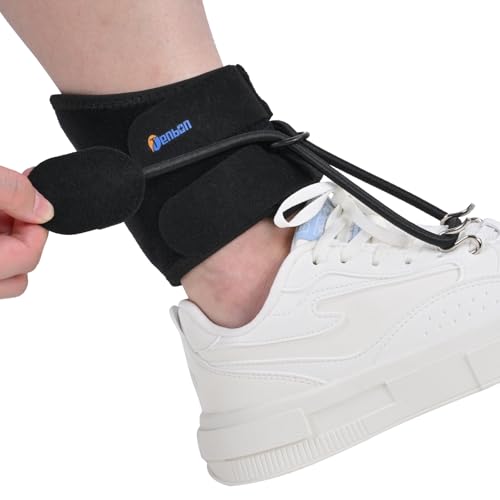
The Tenbon brace uses a triangular stress design that links the instep to the shoe upper, creating a stable upward lift that prevents the brace from shifting during walking. This geometry eliminates the foot drag that causes tripping, particularly during the swing phase of the gait cycle.
Its breathable polyester lining and pliable instep cushions make it comfortable for all-day wear, and the magnetic closure system allows quick donning without fumbling with straps. The included adjustable extension strap adds sandal compatibility, though fit is most reliable with lace-up sneakers.
Users recovering from stroke or multiple sclerosis report regaining a natural walking pattern within weeks, and the brace’s foldable design packs easily for travel. The ambidextrous sizing accommodates both left and right feet, though the medium size best fits ankle circumferences between 8 and 11 inches.
Why it’s great
- Triangular frame provides constant dorsiflexion lift
- Works with sandals using the extension strap
- Breathable padding for extended daily wear
Good to know
- Best performance requires lace-up shoes with eyelets
- Magnetic closure may not hold under very high tension
2. OVINESY Knob AFO Foot Drop Brace
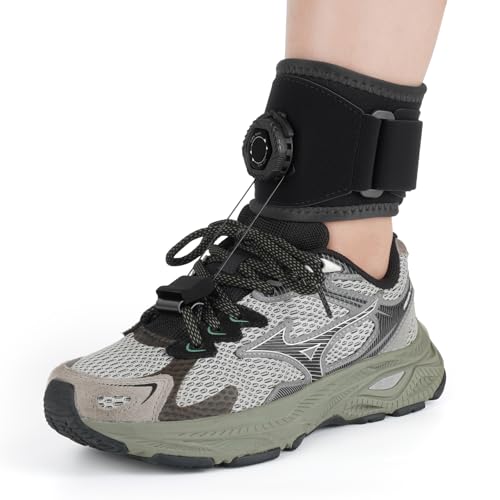
OVINESY’s exclusive dual-hook knob design allows real-time dorsiflexion angle adjustments without slipping or jamming — a frequent failure point in other reel-based braces. The reinforced steel wire connects a durable lace hook that anchors securely to standard shoe eyelets, providing a consistent upward pull throughout the walk.
The extended-length leg straps accommodate ankle circumferences from 7 to 12.5 inches in the S/M size, and the neoprene material offers enough stretch to avoid circulation restriction while maintaining support. Users note the brace stays comfortable during 8-hour wear sessions, even in warmer climates.
This brace is particularly effective for conditions like diabetic neuropathy and fibular nerve paralysis where precise tension control matters across different shoes. It is critical to loosen the knob before adjusting the angle to avoid stressing the steel wire — a step mentioned prominently in the product instructions.
Why it’s great
- Knob system enables micro-adjustments without tools
- Reinforced steel wire resists bending and breaking
- Longer straps reduce pressure points on the calf
Good to know
- Not compatible with elasticated or stretch laces
- Adjustment knob orientation must be kept on top
3. JOMECA Reel-Adjust Drop Foot Brace
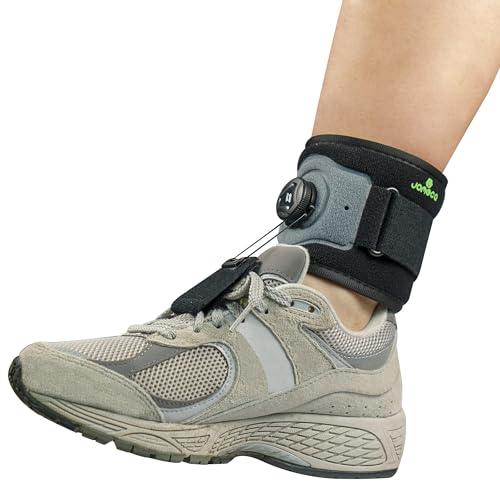
At just 1.76 ounces, the JOMECA reel-adjust brace is the lightest option in this lineup, making it ideal for users who prioritize minimizing bulk inside the shoe. The dial system tightens a thin steel wire to lift the forefoot, and a quick-release mechanism lets you relax the tension instantly when sitting.
The double-fixation leg strap and open-style frame avoid the restrictive feeling of full-shell AFOs, allowing unrestricted foot movement while still providing a consistent dorsiflexion pull. It works with lace-up shoes, sandals, and hook-and-loop closures — essentially any footwear that can thread a Velcro strap.
Multiple long-term users report six to eight months of fall-free walking after consistent use, though the Velcro attachment around the shoelace is a known wear point that may need replacement after a few months. The brace fits ankle circumferences up to 12 inches but is not recommended for severe foot drop cases requiring rigid support.
Why it’s great
- Extremely lightweight — barely noticeable inside shoes
- Reel dial allows tension changes on the go
- Quick-release button for instant relief when seated
Good to know
- Velcro lace attachment may wear out after 4–6 weeks
- Not suitable for severe drop foot requiring rigid bracing
4. Dosh AFO Foot Drop Brace

The Dosh brace uses a 4 mm neoprene construction with a secure buckle strap that outperforms the flimsy hook-and-loop fasteners found on many entry-level AFOs. The dorsiflexion assist strap is fully adjustable via a buckle, letting you customize the lift tension to match your specific foot drop severity.
Its low-profile design is nearly invisible under pants, and the soft neoprene material makes it significantly more comfortable than hard plastic alternatives. The one-size-fits-most claim works best for ankle circumferences up to 12 inches, though some users with larger ankles report the Velcro strap runs too short for a secure fit.
Users with mild to moderate foot drop consistently report reaching 10,000 daily steps without the foot drag issues they experienced with doctor-prescribed rigid braces costing significantly more. However, customer service responsiveness has been flagged as inconsistent by a minority of buyers.
Why it’s great
- Buckle closure stays secure longer than hook-and-loop
- Soft neoprene is comfortable for all-day wear
- Discrete profile fits under pants and regular shoes
Good to know
- One-size design may not fit large ankles (size 12+ shoes)
- Lace-up shoes required — not compatible with slip-ons
5. Alpha Medical Swedish Style AFO
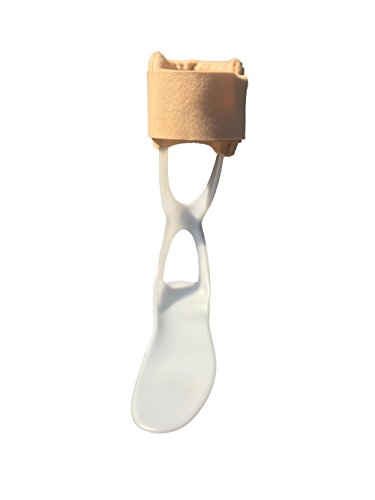
The Alpha Medical Swedish AFO uses injection-molded polypropylene with varying thickness to add structural strength where needed while keeping the overall weight low at 0.14 kg. Its PDAC L1930 approval means it meets the same standards as prescription orthoses found in clinical settings, yet it costs a fraction of the clinic price.
The calf padding covers the top edge of the splint to reduce irritation, and the brace is available in left/right specific sizing — the S/M fits men’s shoe sizes 5–9 and women’s 6–10. The rigid shell prevents toe drop effectively, but the footbed and heel area are noticeably narrow, which may cause discomfort for users with wider feet.
Several users note the brace requires minor customization (filing down sharp plastic edges) for comfortable wear, and the lack of an ankle strap can reduce walking confidence for those accustomed to a more secure wrap. It performs best for moderate foot drop in narrow-to-average width feet.
Why it’s great
- Molds to exact fit — PDAC approved clinical grade
- Lightweight polypropylene reduces leg fatigue
- Padded calf edge prevents shin pressure points
Good to know
- Narrow footbed may pinch wide feet
- No ankle strap reduces gait stability confidence
FAQ
Can I wear a top-of-foot brace with sandals or open-toe shoes?
How tight should the dorsiflexion strap be during daily walking?
Why does my brace cause shin pressure or heel pain after a few hours?
Final Thoughts: The Verdict
For most users, the brace for top of foot pain winner is the Tenbon AFO Brace because its triangular stress design delivers consistent lift across all shoe types without shifting during movement. If you want OVINESY’s knob system for precise micro-adjustments to dorsiflexion angle. And for an ultra-light, budget-friendly daily walker, the Dosh neoprene brace offers reliable support at a comfortable price point.

Mo Maruf
I created WellFizz to bridge the gap between vague wellness advice and actionable solutions. My mission is simple: to decode the research and give you practical tools you can actually use.
Beyond the data, I am a passionate traveler. I believe that stepping away from the screen to explore new environments is essential for mental clarity and physical vitality.