Our readers keep the lights on and my smoothie glass nicely filled. As an Amazon Associate, I earn from qualifying purchases.
A router that drops the signal halfway across your living room isn’t a router — it’s an expensive paperweight. The real challenge with picking a home router today isn’t finding one that works; it’s finding one that works everywhere, for every device, without constant reboots. Wi-Fi 6 and Wi-Fi 7 hardware has matured enough that even mid-range units now rival what used to cost a small fortune, but the spec sheets are loaded with traps like “aggregate speed” that mask real-world throughput.
I’m Mohammad Maruf — the founder and writer behind WellFizz. I’ve spent years digging through router datasheets, comparing chipset generations, and separating marketing claims from measurable performance to help you make a confident decision.
This guide breaks down seven of the most compelling options on the market right now, from budget-friendly upgrades to premium beasts. By the end, you’ll know exactly which home router fits your space, your device count, and your internet plan.
How To Choose The Best Home Router
Picking a router is no longer about just speed. Modern homes pack 20, 30, even 50 devices onto a single network, and each one competes for bandwidth. The three factors that define a great router today are genuine throughput (not manufacturer aggregate numbers), coverage consistency, and wired backhaul capability for when wireless just won’t cut it.
Wi-Fi Generation vs. Real-World Need
Wi-Fi 7 is here, but unless you have a multi-gig fiber plan and devices that support MLO (Multi-Link Operation), a solid Wi-Fi 6 router will serve you just as well. Don’t pay a premium for a generation you can’t actually use yet. The smart buy is a router that supports the latest standard but performs excellently on the devices you own today.
WAN Port Speeds (The Real Bottleneck)
A router’s WAN port is the gateway between your modem and your entire network. If it’s only 1 Gigabit, your wired and wireless speeds are capped there, even if your internet plan offers more. Routers with a 2.5 Gigabit WAN port are no longer luxury items — they are the new baseline for anyone with gig-plus internet or a NAS that demands fast transfers.
Coverage vs. Construction Materials
Manufacturers advertise coverage in open space, but your home has walls, floors, appliances, and ductwork. Concrete and metal studs kill 5 GHz signals fast. If your home is larger than 2,000 square feet or has a tricky layout, prioritize routers with external antennas, beamforming, or mesh compatibility. One powerful unit can outperform three weak mesh nodes in the right conditions.
Quick Comparison
On smaller screens, swipe sideways to see the full table.
| Model | Category | Best For | Key Spec | Amazon |
|---|---|---|---|---|
| GL.iNet GL-BE6500 (Flint 3e) | Premium | VPN & Advanced Users | 5x 2.5G Ethernet Ports | Amazon |
| ASUS ROG Rapture GT-AXE16000 | Premium | Gaming & Heavy Streaming | Quad-Band WiFi 6E, Dual 10G Ports | Amazon |
| NETGEAR Nighthawk RS200 | Premium | Wi-Fi 7 Early Adopters | BE6500 Speed, 2.5G WAN | Amazon |
| GL.iNet GL-BE9300 (Flint 3) | Mid-Range | Tri-Band Performance | Tri-Band WiFi 7, 5x 2.5G | Amazon |
| TP-Link Archer AX80 | Mid-Range | Large Home Coverage | AX6000, 2.5G WAN/LAN | Amazon |
| TP-Link Deco 7 BE23 | Mid-Range | Mesh Wi-Fi 7 | BE3600, Up to 2,500 sq. ft. | Amazon |
| NETGEAR R6700AX | Budget | Small Space / Rental Savings | AX1800, 1,500 sq. ft. | Amazon |
In‑Depth Reviews
1. GL.iNet GL-BE6500 (Flint 3e)
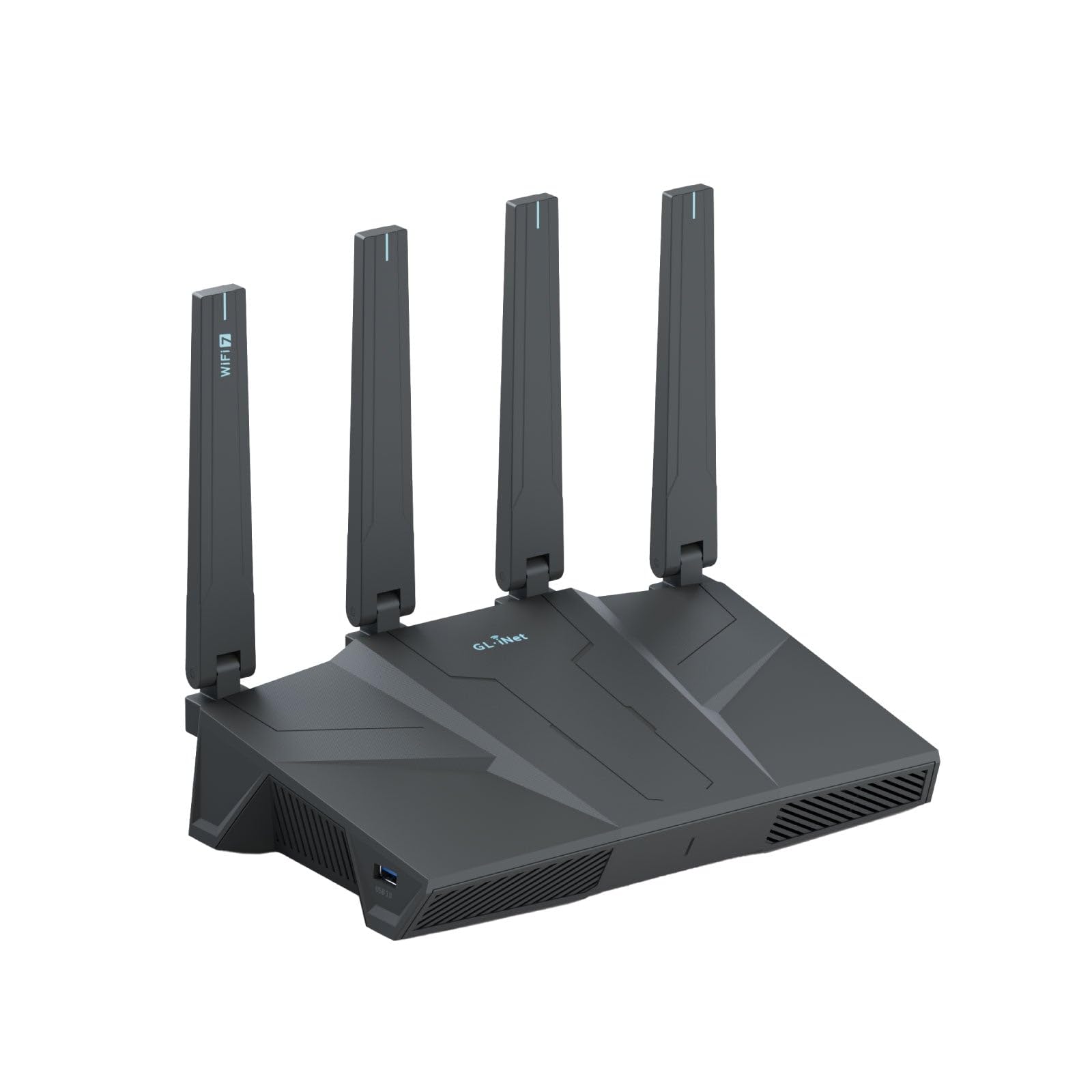
The Flint 3e is a rare breed: a Wi-Fi 7 router that prioritizes wired performance just as much as wireless. With five 2.5 Gigabit Ethernet ports, it’s the ideal centerpiece for anyone with a multi-gig fiber connection or a home NAS. Every port is a genuine multi-gig link, not a single shared lane.
Its 6.5 Gbps aggregate wireless speed is backed by MLO and 4K-QAM, and in real-world use, it delivers consistent throughput across a 2,500-square-foot home. The built-in AdGuard Home support and Wireguard VPN at up to 680 Mbps make it a powerhouse for privacy-focused users who don’t want to run a separate server.
The admin panel is responsive and fully configurable from a browser — no app lock-in. Parental controls via Bark and easy failover through a USB 4G/5G modem add versatility that most consumer routers lack.
Why it’s great
- All five Ethernet ports are true 2.5 Gigabit, not shared.
- Wireguard VPN speed of 680 Mbps without third-party hardware.
- AdGuard Home integrated, blocking trackers at the router level.
Good to know
- Customer support is email-driven and slow for complex issues.
- Initial setup can trip up users who skip the video tutorial.
2. ASUS ROG Rapture GT-AXE16000

The GT-AXE16000 is the first quad-band Wi-Fi 6E router on the market, and it uses that extra 6 GHz band to deliver genuinely low-latency performance for gaming. The three-level game acceleration prioritizes traffic from the moment it leaves your device, through the router, and out to the game server.
It’s equipped with two 10 Gbps ports (WAN/LAN) plus a dedicated 2.5 Gbps WAN port — massive overkill for most homes, but exactly what power users with multi-gig fiber need. The ASUS RangeBoost Plus ensures strong wall penetration; users report full coverage in two-story homes with no dead zones.
AiProtection Pro offers lifetime network security, and the AiMesh system allows expansion with compatible ASUS nodes. That said, the 6E standard is now superseded by Wi-Fi 7, and this router’s IoT network handling has been noted as finicky with some smart devices.
Why it’s great
- Dual 10 Gbps ports handle the fastest fiber plans without bottleneck.
- Quad-band design reduces interference on congested airwaves.
- Strong signal penetration through concrete and metal studs.
Good to know
- Very large footprint — may not fit on small shelves or cabinets.
- Some users report instability after prolonged high-load use.
3. NETGEAR Nighthawk RS200 (BE6500)

The RS200 is NETGEAR’s entry point into Wi-Fi 7, and it strikes an impressive balance. It delivers up to 6.5 Gbps aggregate wireless speed and covers up to 2,500 square feet, but it only uses a dual-band configuration. That keeps the cost down while still giving you access to the Wi-Fi 7 improvements like 4K-QAM and preamble puncturing.
The 2.5 Gigabit WAN port ensures your gig-plus internet plan isn’t wasted. Setup is handled entirely through the Nighthawk app, which is extremely intuitive. Users report a speed bump of roughly 50% compared to ISP gateways, and consistent coverage extending into backyards and basements.
The tradeoff is a lack of advanced features like VPN server support or ad blocking. It’s a straightforward, high-performance router for people who want Wi-Fi 7 without the complexity. Some users note the router doesn’t auto-recover after a power outage, requiring a manual hard reset.
Why it’s great
- Easy app-based setup even for non-technical users.
- 2.5 Gigabit WAN port unlocks full multi-gig internet plans.
- Compact body with smaller footprint than previous Nighthawks.
Good to know
- No built-in VPN server or ad-blocking features.
- May require a hard reset after long internet outages.
4. GL.iNet GL-BE9300 (Flint 3)

The Flint 3 pushes further with tri-band Wi-Fi 7, adding a dedicated 6 GHz channel for the latest flagship phones and laptops. Its aggregate speed hits 9 Gbps, and with five 2.5 Gigabit Ethernet ports, it’s ready for any wired configuration. It’s a step up from the Flint 3e in wireless future-proofing.
Built-in AdGuard Home and Wireguard VPN support mirror the 3e’s strengths, but the coverage is rated at 2,000 square feet — slightly less than its sibling. In real use, the 6 GHz band provides incredible speed at close range, but the signal weakens faster through walls than 5 GHz. Users report 950 Mbps on the 6 GHz band in the same room.
The firmware is open-source-friendly and the interface is snappy. USB 3.0 port performance is slower than expected for NAS use (~30 MB/s sustained), but it’s fine for occasional file access. The router is excellent for power users who want deep control without paying a subscription.
Why it’s great
- Tri-band with a dedicated 6 GHz channel for ultra-low latency.
- Full VPN support with minimal speed loss on Wireguard.
- Open-source firmware and deep customizability.
Good to know
- 6 GHz range is shorter through walls than 5 GHz.
- USB 3.0 port speed is underwhelming for sustained NAS transfers.
5. TP-Link Archer AX80

The Archer AX80 is a Wi-Fi 6 router with a serious coverage advantage. Eight high-gain external antennas with beamforming push the signal far enough to cover three-bedroom homes and even yards without needing a mesh extender. Users consistently report solid performance in every room and outdoor spaces.
Its 2.5 Gigabit WAN/LAN port breaks the gigabit bottleneck, and the MU-MIMO plus OFDMA combination handles over 30 devices without slowdown. The OneMesh compatibility means you can add a TP-Link extender later if needed, creating a seamless single-network name throughout the house.
The web interface is straightforward, and the HomeShield security suite provides basic protection and parental controls for free. One note: the router’s quick-install wizard can get confused by certain ISP gateways, but manually configuring through the web interface solves this in minutes.
Why it’s great
- Eight external antennas deliver exceptional range and wall penetration.
- 2.5 Gigabit port future-proofs for faster internet plans.
- OneMesh compatibility allows easy coverage expansion.
Good to know
- Quick setup wizard may redirect to ISP activation rather than router config.
- QoS feature can cause dropouts; may need to be disabled.
6. TP-Link Deco 7 BE23

The Deco 7 BE23 is a single-unit mesh node that packs Wi-Fi 7 into a sleek, white cylinder. It covers up to 2,500 square feet on its own and supports up to 150 devices — impressive numbers for a unit at this tier. The AI-driven roaming adapts to your movement patterns for seamless handoffs between nodes if you expand later.
Its two 2.5 Gigabit ports support wired backhaul, which is the secret to stable multi-gig mesh performance. The MLO technology combines both bands for better reliability, and the IoT network segregation adds a security layer for smart home gadgets. Users upgrading from ISP gear report dramatic speed improvements in previously dead zones.
Be aware that older Wi-Fi devices, especially older smart plugs and repeaters, may refuse to connect to a mesh network. Some users had to scrap legacy devices or create workarounds. The setup is painless via the Deco app, and the Homeshield subscription unlocks advanced parental controls.
Why it’s great
- Wi-Fi 7 mesh at a price competitive with standard Wi-Fi 6 systems.
- Wired backhaul support keeps speeds consistent across nodes.
- Separate IoT SSID improves security for smart home devices.
Good to know
- Some very old Wi-Fi devices are incompatible with mesh networks.
- Can cause IP conflicts if wired devices are on the same subnet.
7. NETGEAR R6700AX
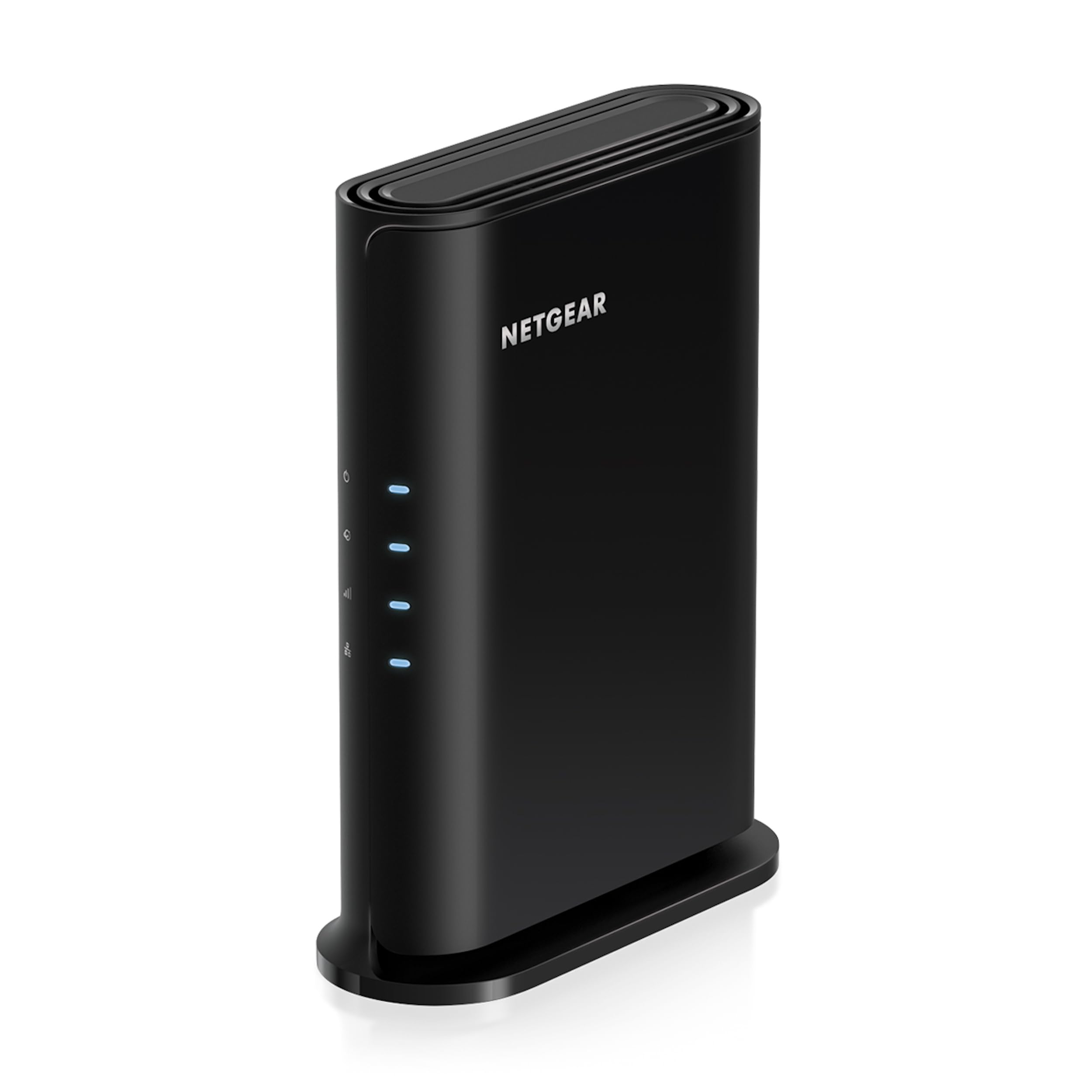
The R6700AX is the router that pays for itself. For the cost of a few months of ISP rental fees, you get a capable Wi-Fi 6 router that covers up to 1,500 square feet and handles 20 devices. It’s the perfect upgrade for apartments or small homes where a single strong unit is all you need.
Setup through the Nighthawk app is guided and straightforward, even for first-time router buyers. It supports WPA3 encryption and automatic firmware updates. In a 1,500-square-foot condo, users report full coverage across 10 devices with a 113 Mbps down speed on a standard cable plan — a clear improvement over the ISP’s rented gateway.
The limitations are real but fair: it’s a dual-band AX1800, so no multi-gig ports or tri-band magic. The 1 Gigabit WAN port caps your wired speed at 940 Mbps. It’s not for power users, but for anyone looking to stop paying a monthly rental fee and get better performance, it’s a no-brainer.
Why it’s great
- Instant savings by eliminating ISP router rental fees.
- Compact size fits easily on a desk or shelf.
- WPA3 and automatic updates included at no extra cost.
Good to know
- 1 Gigabit WAN port limits future-proofing.
- Not ideal for homes over 1,500 square feet.
FAQ
Do I still need a modem if I buy a Wi-Fi router?
Is Wi-Fi 7 worth it over Wi-Fi 6 for a typical home?
What does a 2.5 Gigabit port actually do for streaming and gaming?
Can I use a mesh node as a standalone router?
Final Thoughts: The Verdict
For most users, the best home router is the GL.iNet Flint 3e (BE6500) because it delivers true multi-gig wired performance, built-in ad blocking, and high-speed VPN support without a subscription. If you want a tri-band setup with a dedicated 6 GHz channel for the latest devices, grab the GL.iNet Flint 3 (BE9300). And for those looking to escape ISP rental fees in a smaller home, nothing beats the value of the NETGEAR R6700AX.

Mo Maruf
I created WellFizz to bridge the gap between vague wellness advice and actionable solutions. My mission is simple: to decode the research and give you practical tools you can actually use.
Beyond the data, I am a passionate traveler. I believe that stepping away from the screen to explore new environments is essential for mental clarity and physical vitality.