Our readers keep the lights on and my smoothie glass nicely filled. As an Amazon Associate, I earn from qualifying purchases.
After a long day of hauling gear up a ridgeline, the last thing you need is a sleeping bag that weighs you down or leaves you shivering through a 30°F night. The balance between packed size, total weight, and reliable warmth defines the modern backcountry sleeping bag market, where a few ounces of fill power or a single zipper design can make the difference between a great trip and a miserable one.
I’m Mohammad Maruf — the founder and writer behind WellFizz. I’ve spent years dissecting fill-power ratings, denier shell fabrics, and temperature-certification standards to separate marketing fluff from real trail performance in the outdoor sleep system category.
Whether you’re a thru-hiker optimizing every gram or a weekend warrior seeking solid rest in variable weather, choosing the right backcountry sleeping bag requires understanding how insulation type, cut, and features align with your specific terrain and season.
How To Choose The Best Backcountry Sleeping Bag
Selecting a backcountry sleeping bag is about matching three variables: the insulation type (down or synthetic), the temperature rating relative to the conditions you’ll face, and the bag’s cut and packed volume relative to your pack’s capacity. Buying purely on price or brand often leads to a bag that’s either too heavy to carry or too cold when the sun drops.
Down vs. Synthetic Insulation
Down offers the best warmth-to-weight ratio and compresses smaller than any synthetic alternative, making it the dominant choice for fast-and-light missions. However, untreated down loses nearly all insulating ability when wet. Synthetic insulation (like Cirroloft or polyester fills) retains warmth even when damp, dries faster, and costs less, but it is heavier and bulkier for the same warmth level. Your local climate dictates the choice — dry mountain environments favor down; wet coastal or rainy-season trips call for synthetic.
Temperature Ratings: Comfort vs. Limit vs. Extreme
Backcountry sleeping bags carry three EN/ISO ratings: Comfort (a cold sleeper stays warm), Limit (a warm sleeper can survive), and Extreme (hypothermia risk). Buy for the Comfort rating, not the Limit. If you sleep cold or plan to camp in shoulder seasons, add 10°F to the bag’s published rating as a safety margin. A bag rated to 20°F (Limit) is only comfortable down to about 30°F for most users.
Cut, Hoods, and Draft Management
Mummy cuts minimize internal air volume and maximize heat retention, but they restrict movement. A well-designed hood with an adjustable drawcord traps heat escaping from your head — the single biggest source of heat loss in a sleeping bag. Full-length draft tubes behind the zipper and a draft collar around the neck prevent cold spots. For side sleepers, look for a bag with more shoulder room or an asymmetric cut; for stomach sleepers, a roomier footbox allows comfortable leg positioning.
Quick Comparison
On smaller screens, swipe sideways to see the full table.
| Model | Category | Best For | Key Spec | Amazon |
|---|---|---|---|---|
| Marmot Sawtooth | Down (650FP) | 3-season all-round performance | 15°F rating, 3.3 lbs | Amazon |
| Rab Ascent | Down (650FP) | Cold-weather alpine expeditions | -11°F limit, Pertex shell | Amazon |
| Kelty Cosmic 20 Down | Down (550FP) | Budget-conscious backpackers | 20°F rating, 2.6 lbs | Amazon |
| Naturehike Ultralight Down | Down (650FP) | Ultralight summer/fall trips | 40°F comfort, 2 lbs | Amazon |
| Naturehike 0° Down Mummy | Down (650FP RDS) | Cold-weather backpacking value | 39°F comfort, 1.9 lbs | Amazon |
| Kelty Cosmic Synthetic 0° | Synthetic (Cirroloft) | Wet/cold conditions | 0°F rating, 4.9 lbs | Amazon |
| The North Face Dolomite One 15° | Synthetic 3-in-1 | Car camping versatility | 15°F rating, 5 lbs | Amazon |
| Marmot Trestles 30 | Synthetic | Warm-weather budget camps | 30°F rating, synthetic | Amazon |
| QEZER Down Mummy 0°-20° | Down (600FP) | Entry-level winter trips | 1.76 lb fill, 3.2 lbs | Amazon |
In‑Depth Reviews
1. Marmot Sawtooth Sleeping Bag
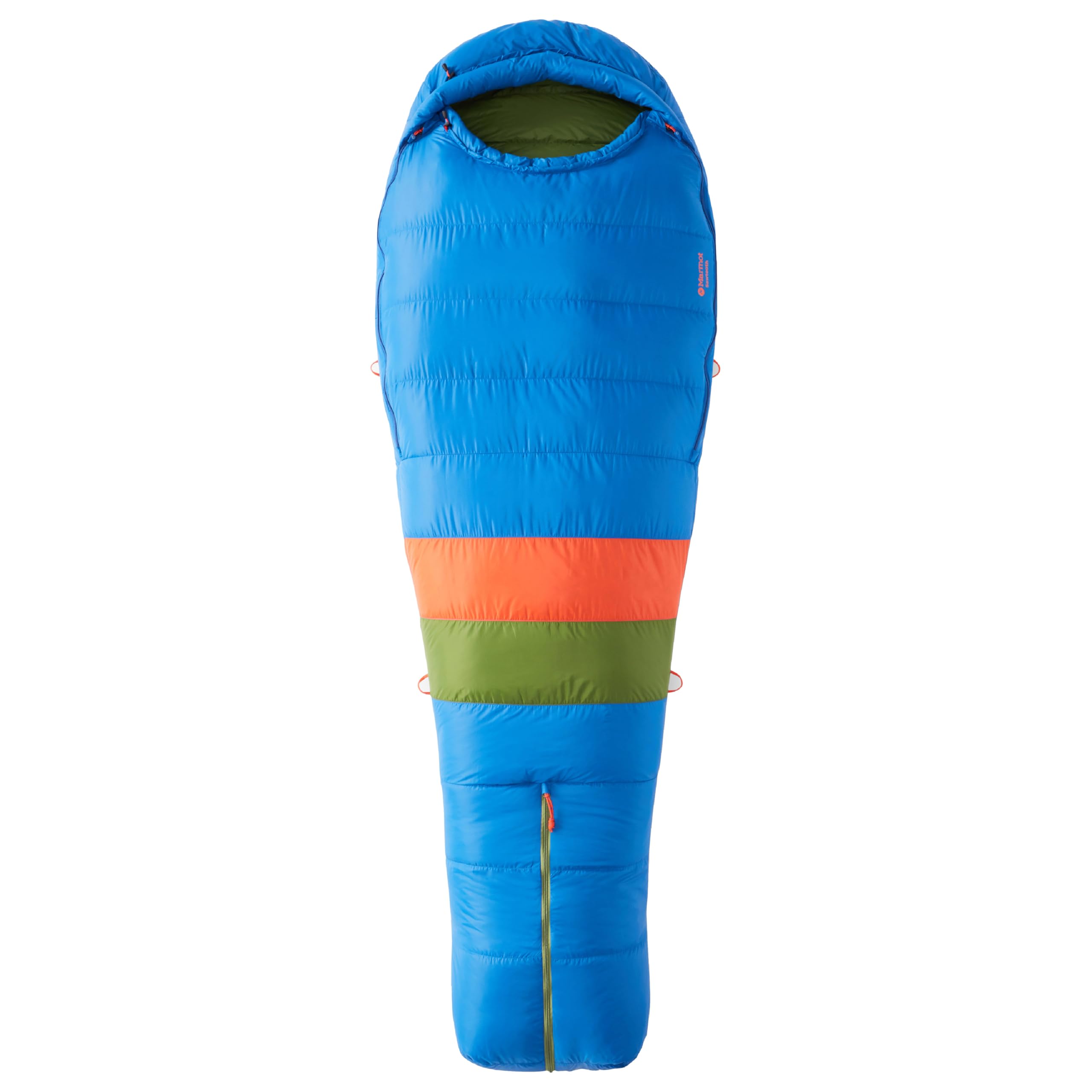
The Marmot Sawtooth packs 650-fill-power down into a 15°F-rated mummy shell that hits a sweet spot most bags miss: warm enough for early spring and late fall, yet light enough at just over 3 pounds for multi-day carries. The moisture-resistant down treatment gives you a buffer against condensation inside the tent, a common failure point for untreated down bags in three-season use.
Dual zippers and an unzippable footbox let you vent on warmer nights or expand the toe area when you need to shift position — a feature side sleepers will appreciate. The hood cinches down tightly around the face with a single drawcord, and an internal stash pocket keeps your phone or headlamp within reach without fumbling in the dark.
Reviewers consistently note the Sawtooth packs down to roughly 5 liters, squeezing easily into a 50L pack alongside a tent and pad. Some wish the shoulder girth were wider for larger frames, but the regular length accommodates a 6’1” sleeper with room to spare. This is a bag built for the long haul, not just a single season.
Why it’s great
- Moisture-resistant 650FP down delivers reliable warmth in damp tent conditions.
- Unzippable footbox provides ventilation and sleeping-position flexibility.
- Packs small for its warmth rating — fits easily in a 50L pack.
Good to know
- Shoulder area is snug for broad-chested or muscular sleepers.
- Premium tier pricing; best bought when you need genuine 15°F capability in a down bag.
2. Rab Ascent Down Sleeping Bag
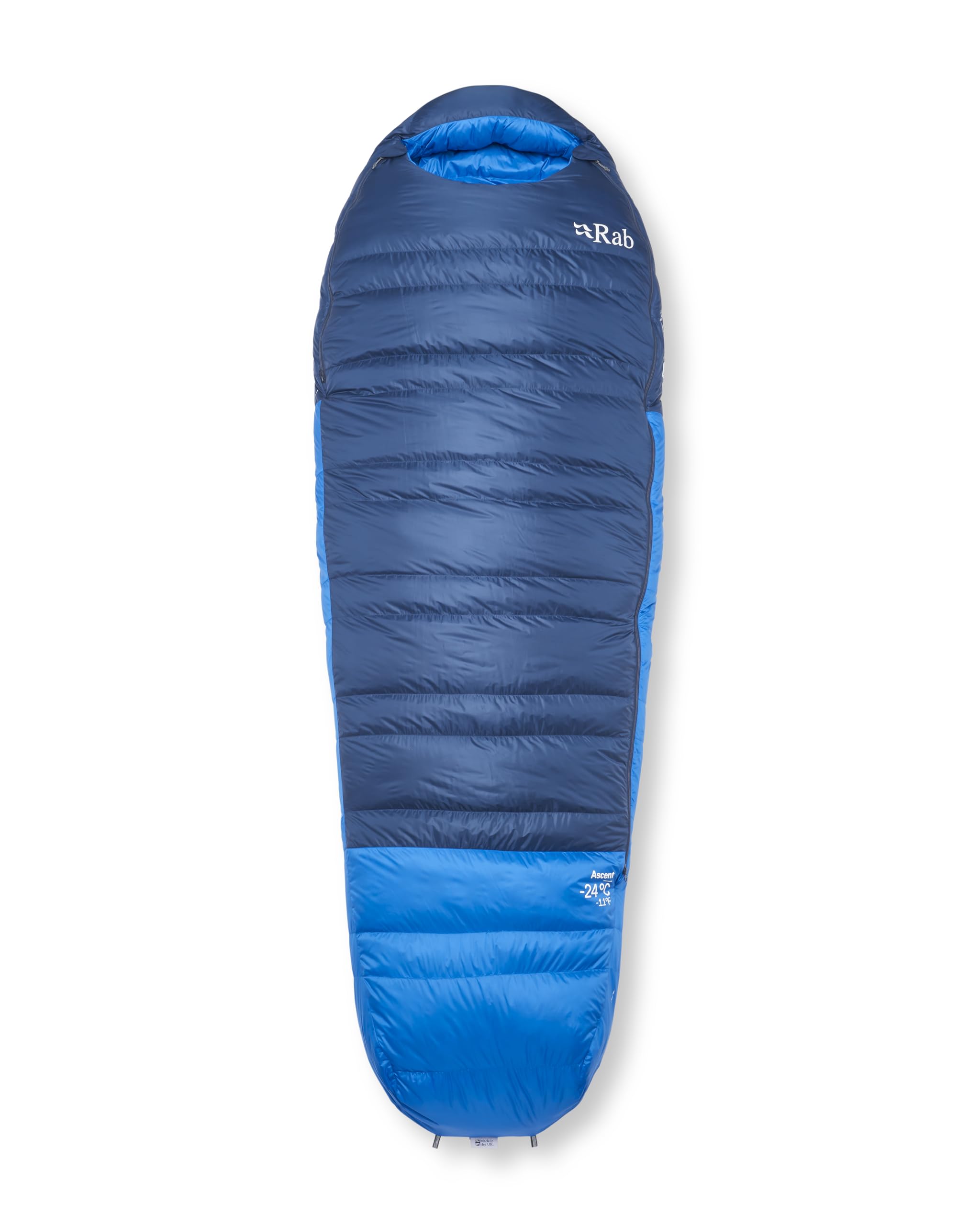
The Rab Ascent is built for serious cold: with a -11°F limit rating and a 5°F comfort rating, this mummy bag targets winter mountaineering and high-altitude camps where temperatures drop well below freezing. The 650-fill-power European duck down is treated with a hydrophobic finish, and the Pertex Quantum shell fabric blocks wind while remaining breathable enough to manage internal moisture.
A 3/4-length zipper reduces weight and cold-zip leakage, while the down-filled draft collar and anatomic hood seal heat in around the neck and head — the areas where most overnight heat loss occurs. The L.O.F.T baffling system prevents down from migrating away from your core, ensuring consistent loft across the bag’s entire length.
At roughly 4.2 pounds (regular), this is not an ultralight option, but the warmth-to-weight ratio is exceptional for sub-zero conditions. One reviewer noted the bag performed well during a West Highland Way trek in November, staying comfortable through cold, damp nights. The Rab Ascent is a specialist tool for users who regularly face genuine winter conditions.
Why it’s great
- Genuine sub-zero comfort rating (-11°F limit) for winter mountaineering.
- Hydrophobic down and windproof Pertex shell handle damp, exposed camps.
- Anatomic hood and down-filled draft collar eliminate the top two heat-loss pathways.
Good to know
- 3/4-length zipper limits venting options compared to full-length zippers.
- One user reported the rating felt optimistic near freezing; pair with a quality pad below 20°F.
3. Kelty Cosmic 20 Down Mummy Sleeping Bag

The Kelty Cosmic 20 Down has been a backpacking staple for years because it delivers 550-fill-power down performance at a price that undercuts most branded competitors. With an ISO limit rating of 21°F and an extreme rating of -11°F, this bag is comfortable down to the low 30s for most users — right where three-season backpacking lives.
Kelty uses recycled nylon and polyester taffeta for the shell and liner, treated with a PFAS-free DWR finish. The dual-direction zipper allows venting from the footbox, and the included compression stuff sack packs the bag down to roughly 13 x 7 inches, which slips into the bottom of a 50L pack without dominating the volume. The RDS-certified down means every batch is traceable to ethical sources.
Reviewers highlight the soft fabric feel and reliable warmth at 32°F with just a base layer. A few note the mummy cut is tight at the shoulders for broader builds, and the lack of a draft collar is a minor miss at this price point. Still, for a down bag that weighs around 2.6 pounds and costs what it does, the Cosmic 20 is hard to beat as a first down bag or a reliable backup.
Why it’s great
- Excellent warmth-to-weight ratio for the price with 550FP down.
- RDS-certified down with traceable batch origin for ethical sourcing.
- Compresses small enough for motorcycle saddlebag or 50L pack.
Good to know
- Tight shoulder cut — not ideal for broad-chested or muscular users.
- No draft collar or fleece lining; add a liner for extra warmth below 25°F.
4. Naturehike Ultralight Down Sleeping Bag

Weighing just 2 pounds with a packed size of 13.8 x 7.1 inches, the Naturehike Ultralight Down is built for weight-sensitive missions where every gram counts. The hybrid envelope-mummy design uses a mummy-shaped upper for head heat retention and a rectangular lower section that allows foot movement — a rare configuration that works well for stomach sleepers who find traditional mummy bags restrictive.
RDS-certified 650-fill-power down fills the bag, with a comfort rating around 40°F and a limit rating near 30°F, making it a pure three-season tool for summer and mild fall trips. The 20D ripstop nylon shell resists tears and is treated for light water resistance, though this bag is not meant for damp conditions — treat the down with a waterproofing spray if you expect condensation.
Motorcycle campers and thru-hikers especially appreciate how small this bag compresses. One reviewer paired it as a quilt over a Nemo bag for extra warmth, while others use it as a standalone summer bag. The YKK zipper is generally smooth, though a few users note occasional snagging near the footbox. For the weight-conscious backpacker who prioritizes pack volume over extreme warmth, this is a standout option.
Why it’s great
- Remarkably light at 2.0 lbs with 650FP down for ultralight packing.
- Hybrid cut allows foot movement — a major comfort win for stomach sleepers.
- RDS certified down with traceable origin.
Good to know
- Comfort rating of 40°F limits use to summer and early fall conditions.
- Occasional zipper snag; storage bag is very tight for repacking.
5. Naturehike 0 Degree RDS Down Mummy Sleeping Bag
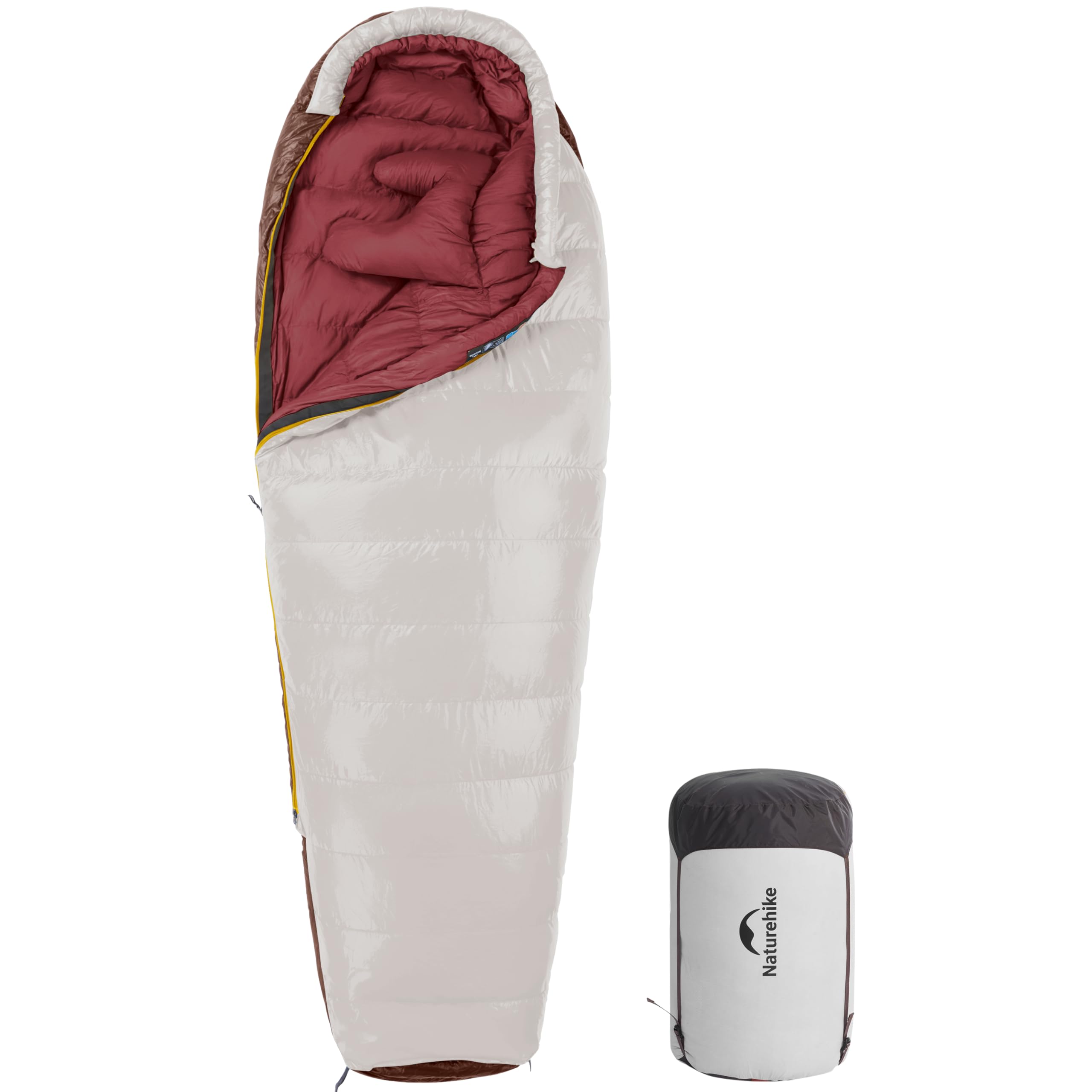
The Naturehike 0° Down Mummy brings 650-fill-power RDS-certified down into a sub-freezing package at a price that undercuts most major-brand cold-weather bags. Available in three fill-weight variants (SP400, SP700, SP1000 grams), the bag reaches a comfort rating of 39°F and a limit of 30°F — enough for proper three-season use with a buffer for cold nights.
A U-shaped neck collar and dual wind baffles behind the YKK zipper prevent the cold spots that plague budget down bags. The C-shaped wrapped design places 60% of the down on the top half of the bag, concentrating insulation where your torso needs it most, while the 3D footbox allows unrestricted toe movement. The bag packs down small enough for a 55-65L pack without crowding out your other gear.
Reviewers testing it at 25°F with a liner stayed warm and praised the anti-snag zipper and internal pocket. One user noted the description was slightly misleading regarding the exact temperature rating vs. fill weight (the SP400 is the 30°F limit model, not 0°F actual comfort), so confirm which variant you’re buying. For the price, this bag delivers genuine cold-weather down performance with features typically found on bags costing twice as much.
Why it’s great
- Dual wind baffles and U-neck collar seal heat effectively for the price.
- RDS-certified 650FP down with traceable batch origin.
- C-shaped design puts more down on top for better core warmth.
Good to know
- Temperature ratings vary by fill weight — the base SP400 is only rated to 30°F (limit), not 0°F.
- Storing uncompressed before first use is critical for down loft recovery.
6. Kelty Cosmic Synthetic 0 Degree Backpacking Sleeping Bag
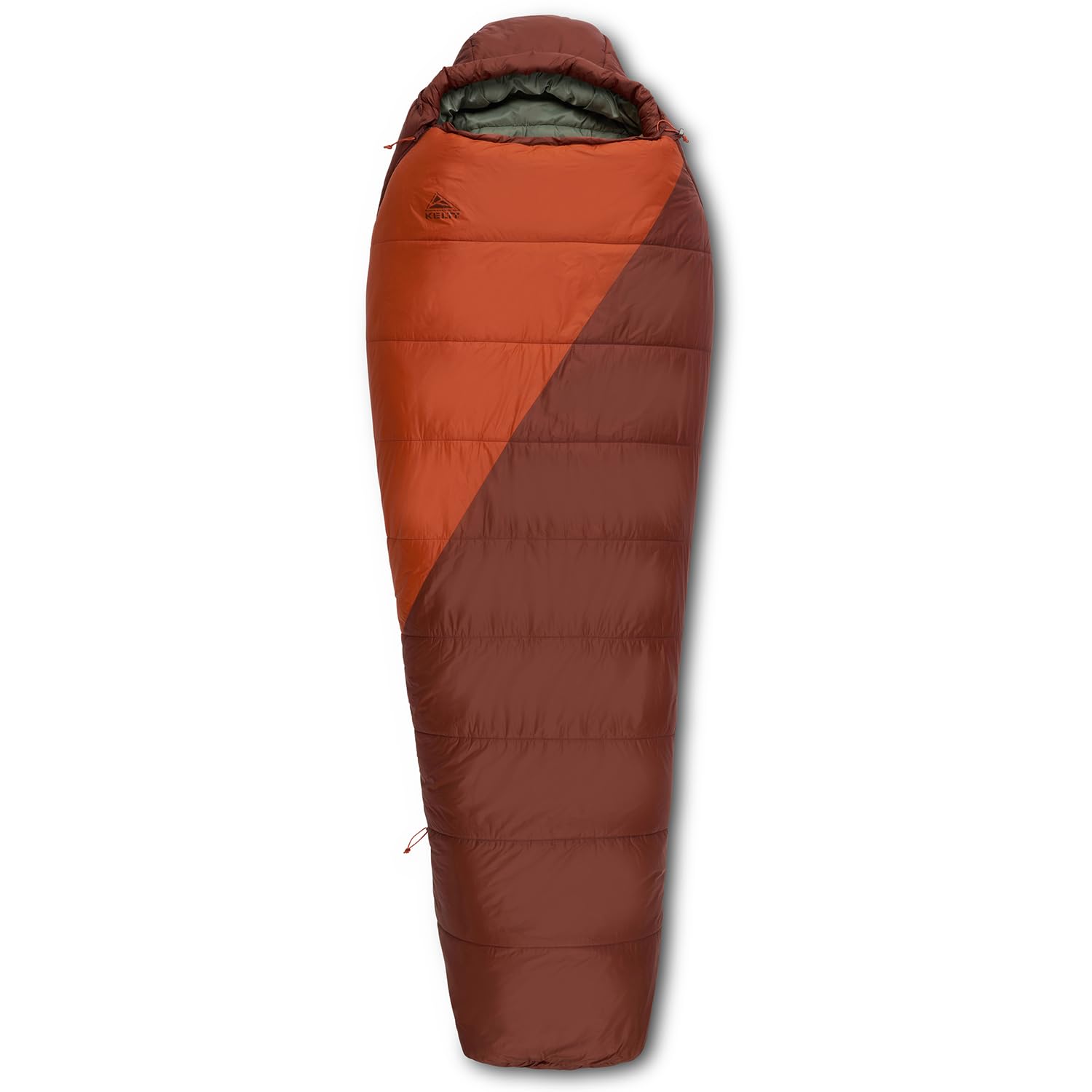
When rain and condensation are unavoidable, the Kelty Cosmic Synthetic 0° bag gives you reliable warmth that down cannot match in wet conditions. The Cirroloft synthetic fill retains loft and insulating capacity even when damp, and it dries out quickly once you’re back in dry air. At a 0°F rating (with an 18°F ISO comfort temperature) and roughly 60 ounces of fill weight in the long version, this bag is a heavy but warm workhorse for cold, wet camps.
The integrated compression stuff sack uses straps to reduce packed volume better than most synthetic bags, though at 4 pounds 11 ounces (long), this bag is not for gram-counters — it belongs in the pack of winter car campers, scout leaders, and base-camp setups where weight is secondary to reliable warmth in damp climates. A spacious footbox and stash pocket add convenience.
Reviewers report staying warm and cozy at 40°F and below, with the bag puffing up well and fighting compression night after night. A few note the zipper can snag near the bicep area, and the lack of a Velcro closure at the neck is mildly annoying. For anyone who camps in the Pacific Northwest, the Northeast, or any region where wet snow or drizzle is common, this synthetic bag is a smarter choice than an equivalently priced down option.
Why it’s great
- Synthetic fill maintains warmth when wet — essential for rainy or high-humidity trips.
- ISO comfort rating of 18°F provides genuine sub-freezing protection.
- Integrated compression stuff sack reduces packed volume effectively.
Good to know
- Heavy at nearly 5 pounds — not suitable for ultralight backpacking.
- Zipper snag reported near the shoulder; no Velcro draft flap at neck.
7. The North Face Dolomite One 15F / -9C 3-in-1 Sleeping Bag
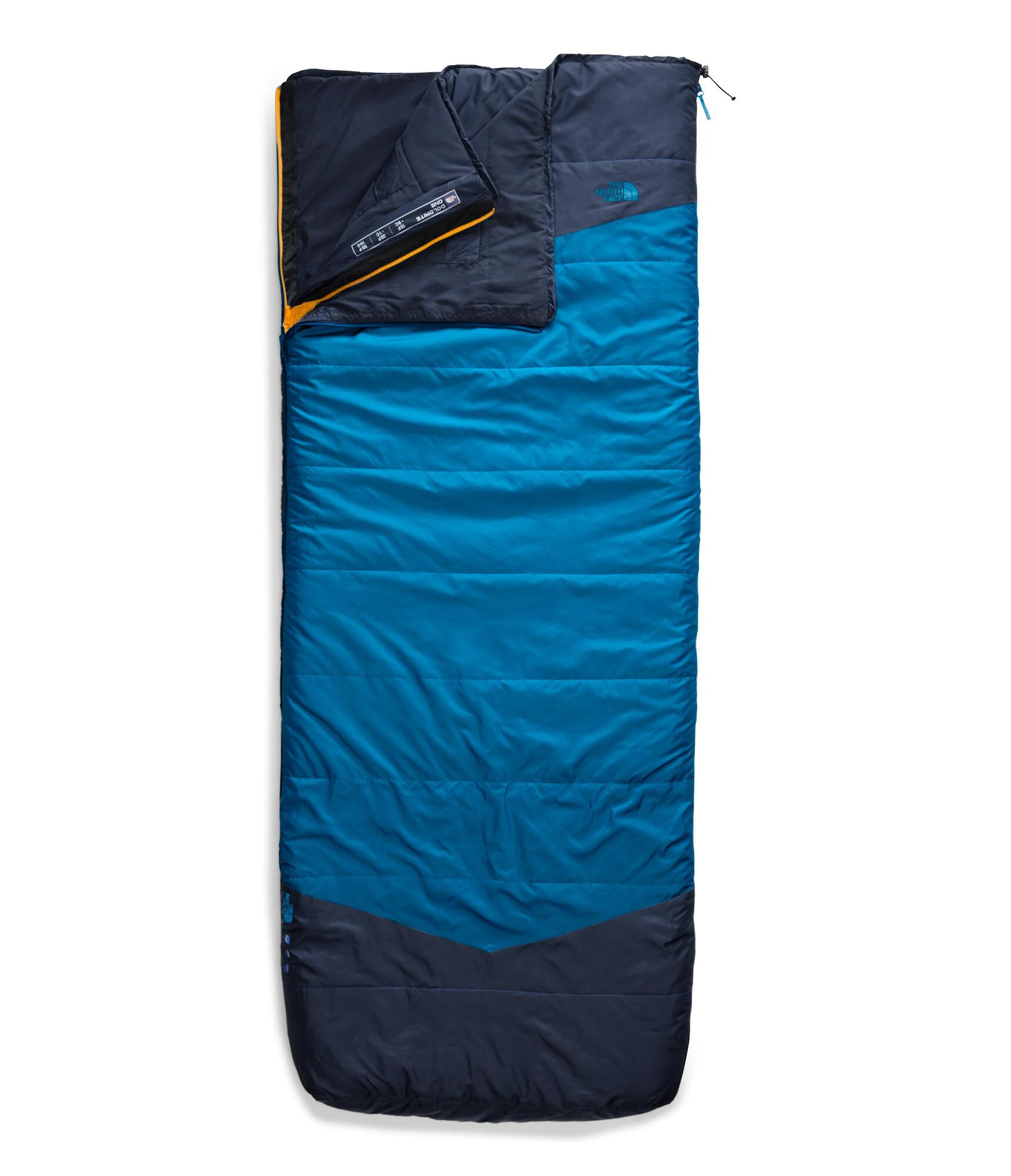
The North Face Dolomite One is not a backcountry bag for ultralighters — it is a modular sleep system designed for car camping and base camps where versatility trumps weight. Three separate synthetic layers zip together to cover a temperature range from 15°F to 50°F: a 50°F-rated top layer for summer, a 30°F-rated fleece-lined mid-layer for cool nights, and both combined for 15°F winter protection.
The rectangular shape offers far more interior space than any mummy bag, and the fleece lining adds comfort for restless sleepers. The system disassembles into separate throws or blankets for use around the campsite. A non-PFC DWR finish sheds light moisture, and the zippers are hefty enough to handle repeated layer changes without binding.
Reviewers love the flexibility for changing mountain weather, though the 5-pound Regular weight and 11 x 20-inch stuffed size make it impractical for backpacking beyond a short carry to a walk-in site. The Dolomite One is ideal for families who want one bag system that adapts across seasons, or for campers who drive to their site and want modular comfort.
Why it’s great
- Three-in-one modular system covers 15°F to 50°F in a single bag.
- Rectangular cut provides generous interior space for side sleepers.
- Fleece-lined mid-layer adds warmth and comfort.
Good to know
- Too bulky and heavy (5+ pounds) for backpacking or motorcycle camping.
- Premium price for a car-camping bag; consider if you truly need modularity.
8. Marmot Trestles 30 Sleeping Bag

The Marmot Trestles 30 is a straightforward synthetic mummy bag built for warm-weather backpacking and motorcycle camping where weight matters but down is not an option due to moisture. Rated to 30°F, it offers a comfort zone around 38-40°F for most sleepers, making it a reliable summer-to-early-fall bag that retains warmth even when damp.
Dual side-top zippers allow torso venting on warmer nights, and the footbox is roomy enough for size 13 boots. The compression sack included with the bag reduces packed volume significantly, though it is not as compact as a down bag of equivalent warmth. At roughly 2.6 pounds (estimate based on user reports), it is competitive with entry-level down bags in weight.
Reviewers consistently mention the Trestles fits tall users well — one 6’2” reviewer slept comfortably at 40°F with room to spare. The head cinch uses stretchy bands that can snap back into the face during side sleeping, which is a minor annoyance. For the price, this is a solid synthetic choice for anyone who camps in humid climates or wants a bag that won’t be ruined by an unexpected rain splash through the tent fly.
Why it’s great
- Synthetic fill holds warmth when damp — ideal for humid summer camps.
- Spacious footbox accommodates larger feet and provides comfort for side sleepers.
- Dual side zippers offer excellent torso venting for warm nights.
Good to know
- Not a winter bag; use only for camping above freezing.
- Stretchy head-cinch bands can snap into face during side sleeping.
9. QEZER Down Sleeping Bag 0°-20°F 600FP

The QEZER Down Mummy bag brings 600-fill-power natural duck down to a sub- price point with a claimed comfort range from 0°F to 20°F. With 1.76 pounds of down fill and a total weight of 3.2 pounds, this bag delivers serious warmth for the weight class. The 400T tear-resistant nylon shell prevents down leakage and adds durability against snags from tent poles or ground debris.
A wide trapezoidal footbox prevents the cramped feeling common in budget mummy bags, and the left-right zipper compatibility lets two bags zip together for a double-wide setup — a rare feature at this price. The included compression sack reduces packed volume significantly, though the bag requires a 3-4 hour air-out period after unpacking to reach full loft, which is standard for compressed down.
Reviewers who tested the bag in single-digit Colorado temperatures reported staying warm, praising the smooth zipper and draft tube. A few noted the inner mesh bag ripped on first use, but the outer compression sack held up fine. For a budget-conscious backpacker stepping into winter camping for the first time, the QEZER offers genuine down warmth at a fraction of the cost of premium brands, with the understanding that long-term durability may not match a Marmot or Kelty.
Why it’s great
- 600-fill-power down provides genuine sub-freezing warmth at a low cost.
- Trapezoidal footbox eliminates cramped toes common in budget mummy bags.
- Left-right zipper compatibility allows pairing two bags into a double.
Good to know
- Inner storage bag ripped on first use for some buyers — replace with a sil-nylon sack.
- Needs extended air-out time to reach full loft after compression.
FAQ
What temperature rating should I get for a backcountry bag?
Is down or synthetic better for a backcountry sleeping bag?
How small should a backcountry sleeping bag pack down?
Final Thoughts: The Verdict
For most users, the best backcountry sleeping bag winner is the Marmot Sawtooth because it balances 650-fill-power down warmth, a 15°F rating, and moisture-resistant treatment into a package that works across three seasons without weighing your pack down. If you need true winter expedition capability, grab the Rab Ascent for its sub-zero rating and Pertex shell. And for wet-weather trips where down fails, nothing beats the Kelty Cosmic Synthetic 0° for reliable warmth in damp, cold conditions.

Mo Maruf
I created WellFizz to bridge the gap between vague wellness advice and actionable solutions. My mission is simple: to decode the research and give you practical tools you can actually use.
Beyond the data, I am a passionate traveler. I believe that stepping away from the screen to explore new environments is essential for mental clarity and physical vitality.