Our readers keep the lights on and my smoothie glass nicely filled. As an Amazon Associate, I earn from qualifying purchases.
Choosing an adhesive for laminate flooring means understanding the difference between a bond that survives foot traffic, temperature swings, and moisture—and one that peels within months. The wrong adhesive leaves you with curling planks and a weekend spent re-doing work.
I’m Mohammad Maruf — the founder and writer behind WellFizz. I’ve spent years analyzing construction adhesives, focusing on open time, tack strength, VOC compliance, and compatibility with various laminate and floating floor systems.
After comparing spray contact cements, PVAC-based glues, and multipurpose adhesives, I’ve narrowed the field to the top performers. This guide breaks down the real-world specs to help you find the best adhesive for laminate flooring for your specific project.
How To Choose The Best Adhesive For Laminate Flooring
Laminate flooring adhesive isn’t one-size-fits-all. The right choice depends on your installation method, the subfloor material, and whether you need a permanent or adjustable bond. Here are the three factors that matter most.
Open Time and Tack
Open time is the window you have to position your laminate plank after applying adhesive. A 30-minute open time is tight for large rooms; 60 minutes gives you breathing room for adjustments. Tack refers to how sticky the glue feels during that window. High initial tack prevents planks from sliding, but lower tack allows repositioning. For tongue-and-groove systems, a PVAC-based glue with moderate tack often works best because it creates a strong bond without immediate grab.
Subfloor Compatibility
Concrete, plywood, and existing vinyl each require different adhesive formulations. For concrete, you need an adhesive that resists alkalinity and moisture vapor—look for acrylic or latex-based options. For plywood, a standard spray contact cement or multipurpose adhesive works. For floating floors over existing vinyl, use a PVAC glue designed specifically for floating systems, as it won’t reactivate the old adhesive underneath.
VOC and Indoor Air Quality
Low-VOC adhesives (under 50 g/L) are critical for indoor spaces, especially bedrooms or basements with limited ventilation. Look for GREENGUARD certification and CARB compliance. These adhesives emit fewer fumes during and after installation, reducing headaches and long-term air quality concerns. Spray adhesives generally have higher VOC content than liquid or PVAC-based glues, so prioritize ventilation if you choose a spray.
Quick Comparison
On smaller screens, swipe sideways to see the full table.
| Model | Category | Best For | Key Spec | Amazon |
|---|---|---|---|---|
| 3M Hi-Strength 94 ET | Spray Contact Cement | Large surface lamination | 60-minute open time | Amazon |
| 3M Hi-Strength 90 CA | Spray Contact Cement | Permanent, high-strength bonds | Lace-spray adjustable nozzle | Amazon |
| Mannington MegaGlue | PVAC Liquid | Tongue-and-groove floating floors | Covers 100 sq. ft. | Amazon |
| Roberts 3085 | Solvent-Free Latex | Carpet, felt-back vinyl, cork | Solvent-free, fast-setting | Amazon |
| SIKA SikaLatex R | Concrete Admixture | Concrete subfloor repairs | 500 psi bond strength | Amazon |
In‑Depth Reviews
1. 3M Hi-Strength 94 ET Spray Adhesive
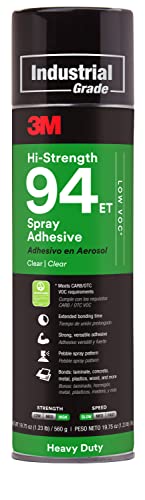
The 3M Hi-Strength 94 ET stands out for its 60-minute open time, which is more generous than most spray contact cements. This gives you ample room to position laminate planks, especially over large floor areas where alignment is critical. The aggressive tack means it grabs immediately once the two surfaces meet, reducing the need for clamping.
Low VOC compliance and GREENGUARD certification make it suitable for indoor use without overwhelming fumes, though ventilation is still recommended. Users report strong bonds on wood, metal, and plastic—materials commonly found in laminate subfloor assemblies. The spray pattern is consistent, and the can’s net weight of 19.75 oz covers multiple sheets of laminate.
One consideration: as a contact cement, both surfaces must be coated and allowed to dry before pressing together. This adds a step compared to liquid adhesives but results in a more permanent, heat-resistant bond. For DIYers installing laminate countertops or backsplashes, this extra step pays off in durability.
Why it’s great
- Longest open time in its class at 60 minutes for stress-free alignment.
- GREENGUARD certified and low VOC for better indoor air quality.
- Bonds multiple materials including wood, metal, and rubber common in flooring projects.
Good to know
- Requires both surfaces to be coated and dried before mating (contact cement method).
- Smell is noticeable; use in a well-ventilated area.
2. 3M Hi-Strength 90 CA Spray Adhesive

The 3M Hi-Strength 90 CA is formulated for permanent bonding on a wider range of materials than the 94 ET, including polypropylene and polyethylene—plastics often used in laminate underlayment. Its adjustable nozzle lets you control the spray pattern from a narrow stream to a wide lace pattern, reducing overspray waste on large surface laminations.
Users frequently cite its resistance to moisture and high temperatures, making it viable for laminate installations in kitchens or near heat registers. The low VOC formulation (under 25% by weight) is CARB and SCAQMD compliant, and it contributes to LEED credits for commercial projects. However, its “industrial/occupational use only” label means this is a step up in potency—expect stronger fumes than the 94 ET.
The fast-tacking nature means positioning is less forgiving than with the 94 ET; you have roughly 30 minutes of working time. For DIYers experienced with contact cements, this offers a faster bond with higher ultimate strength. The 19 oz can size is generous but goes fast on large laminations—consider buying multiple cans for projects over 50 square feet.
Why it’s great
- Bonds difficult plastics like polypropylene and polyethylene common in underlayment.
- Adjustable spray nozzle reduces adhesive waste on large surfaces.
- Moisture and high-temperature resistance ideal for kitchens and high-traffic areas.
Good to know
- Labeled for industrial/occupational use; strong fumes require excellent ventilation.
- Shorter open time (~30 minutes) than the 94 ET.
3. Mannington MegaGlue Laminate & Floating Flooring Adhesive

Mannington MegaGlue is a PVAC-based adhesive specifically designed for tongue-and-groove laminate flooring systems. Unlike spray adhesives that require coating both surfaces, this liquid glue is applied directly into the groove of each plank, then the tongue of the next plank is pressed in. This makes it the most practical choice for click-lock or floating floor installations.
Each 16 oz bottle covers approximately 100 square feet of flooring, which aligns well with medium-sized rooms. The glue dries clear, so any excess that squeezes out of the joint won’t leave a visible residue. Users who installed luxury vinyl tile in kitchens report flawless results, with the PVAC bond holding strong under heavy foot traffic.
A few reviews note packaging issues—bottles arriving with damaged tips or dried glue in the nozzle. This is a quality control concern worth considering. For best results, check the seal immediately on arrival and store at room temperature. Despite this, the adhesive itself performs excellently when fresh, outperforming many home-store options in grip strength.
Why it’s great
- Specifically engineered for tongue-and-groove laminate and floating floor systems.
- Dries clear, leaving no visible residue on plank surfaces.
- Covers 100 sq. ft. per 16 oz bottle—ideal for medium rooms.
Good to know
- Packaging inconsistency reported by some users (damaged tips or dried product).
- Not suitable for large surface lamination or bonding to concrete subfloors.
4. Roberts 3085 Multipurpose Adhesive
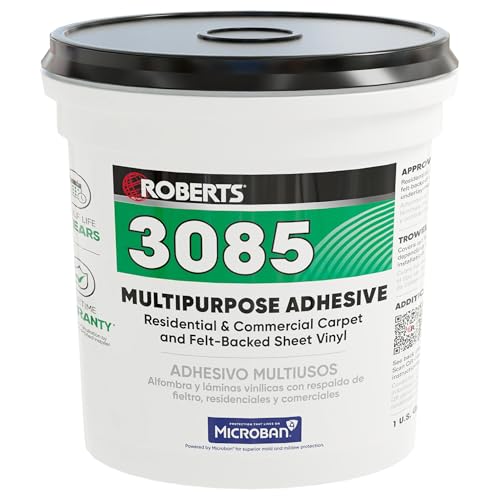
Roberts 3085 is an SBR latex adhesive that is solvent-free and fast-setting, designed for installations where minimizing downtime matters. Its primary use is for carpet, felt-back sheet vinyl, and acoustical cork underlayment, but it also bonds to concrete, APA-rated plywood, and terrazzo. This makes it a go-to for laminate installations that sit over these prepared subfloors.
The 1-gallon format is economical for larger rooms, with user reports suggesting coverage of around 92 to 100 square feet per can at a thin application. The floor remains tacky but workable for about 30 minutes after application, giving you a reasonable window to lay down planks. The solvent-free formula means less odor and easier cleanup with water.
The biggest downside is packaging—several users report receiving cans with broken seals or leaking adhesive. This is a recurring complaint across Amazon reviews, and it’s worth inspecting the can immediately upon arrival. Despite this, when the product arrives intact, it delivers a reliable, long-lasting bond for interior residential and moderate commercial traffic.
Why it’s great
- Solvent-free, fast-setting formula reduces odor and speeds up installation.
- Compatible with concrete, plywood, terrazzo, and VCT subfloors.
- Good value per gallon—covers approximately 92–100 sq. ft.
Good to know
- Frequent reports of damaged or leaking packaging upon arrival.
- Not designed for tongue-and-groove floating floors; better for glue-down sheet vinyl.
5. SIKA SikaLatex R Concrete Adhesive

SIKA SikaLatex R is an acrylic-polymer latex admixture designed to be mixed with Portland-cement mortar or concrete to increase adhesion and tensile strength. It achieves a bond strength of 500 psi, which is a significant boost for concrete repairs under laminate flooring. If you’re dealing with a cracked or uneven concrete subfloor that needs patching before laminate installation, this is the right tool.
The product can be used as a bonding grout or as an acrylic coating primer, and it freezes and thaws without damage—a critical spec for basement subfloors in colder climates. Users report excellent results when mixing it with Quikrete for brick replacement or attaching ceramic fixtures. The 1-gallon size is economical for multiple small repair jobs.
One limitation: this is not a standalone flooring adhesive. It must be mixed with cement or mortar. It’s best thought of as a subfloor preparation product rather than a direct laminate glue. For those installing laminate over a new concrete slab, using SikaLatex R as an admixture in the patching compound ensures a stronger substrate for the laminate adhesive to grip.
Why it’s great
- 500 psi bond strength transforms standard mortar into a high-performance patch.
- Resistant to freeze-thaw cycles, ideal for basement or garage subfloors.
- Versatile use as bonding grout, admixture, or acrylic primer.
Good to know
- Not a standalone flooring adhesive; must be mixed with cement or mortar.
- Full cure takes up to 30 days, so plan for extended drying time before laying laminate.
FAQ
Can I use spray adhesive for a full-room laminate floor installation?
How long does laminate flooring adhesive take to cure before foot traffic?
Is low-VOC adhesive worth the higher cost for laminate flooring?
What’s the difference between PVAC glue and spray contact cement for laminate?
Final Thoughts: The Verdict
For most users, the adhesive for laminate flooring winner is the 3M Hi-Strength 94 ET because its 60-minute open time and low-VOC certification deliver the best balance of workability and indoor safety for large surface laminations. If you need permanent bonding on plastics or moisture-prone areas, grab the 3M Hi-Strength 90 CA. And for precise tongue-and-groove floating floor installations, nothing beats the convenience of the Mannington MegaGlue.

Mo Maruf
I created WellFizz to bridge the gap between vague wellness advice and actionable solutions. My mission is simple: to decode the research and give you practical tools you can actually use.
Beyond the data, I am a passionate traveler. I believe that stepping away from the screen to explore new environments is essential for mental clarity and physical vitality.