Our readers keep the lights on and my smoothie glass nicely filled. As an Amazon Associate, I earn from qualifying purchases.
Choosing a game that genuinely strengthens the mind means looking past flashy boxes and focusing on the specific cognitive demands each activity makes. The right pick for your family or classroom will challenge memory, strategic planning, logical deduction, and spatial reasoning in a way that feels like play, not homework.
I’m Mohammad Maruf — the founder and writer behind WellFizz. I analyze games based on the specific neural pathways they exercise, comparing rule complexity, replayability, and the depth of cognitive demand to separate genuine brain-building tools from simple pastimes.
After evaluating dozens of titles, I have assembled the definitive collection of the best card or board games for cognitive development that target everything from working memory and speed-of-processing to deductive logic and executive function.
How To Choose The Best Card Or Board Games For Cognitive Development
Not every game marketed as “educational” does the heavy lifting for your brain. A truly effective cognitive development game must layer specific mental demands—like holding multiple variables in working memory or deducing rules through elimination—into a satisfying, repeatable play loop.
Identify The Primary Cognitive Target
Some games are built for memory recall, others for spatial planning, and others for deductive logic. Look at the game’s core mechanic: a game like Turing Machine forces you to test hypotheses against a hidden code, which intensely trains deductive reasoning and systematic thinking. A game like Smart Farmer, by contrast, challenges visual-spatial planning as you fit fences around animal shapes.
Progressive Difficulty Is Non-Negotiable
Children and adults alike need to feel challenged but not overwhelmed. A solid cognitive development game will offer a tiered system of challenges that escalate in complexity, just as Smart Farmer offers 60 puzzles from “starter” to “expert.” This structure keeps the brain engaged long after the initial novelty wears off and prevents the frustration that comes from hitting a wall too early.
Replayability And Independent Play
A game that can be played solo or in a group offers more cognitive mileage. Solo modes encourage self-paced problem-solving without social pressure, which is excellent for building concentration and planning skills. Replayability—driven by randomized setups or a large challenge pool—ensures the mind never settles into a memorized routine.
Quick Comparison
On smaller screens, swipe sideways to see the full table.
| Model | Category | Best For | Key Spec | Amazon |
|---|---|---|---|---|
| Turing Machine | Deduction | Logic & Hypothesis Testing | 7M+ online puzzle combinations | Amazon |
| Archduke | Memory/Strategy | Memory & Fast Strategy | 24 screen-printed wood tokens | Amazon |
| Smart Farmer | Spatial Logic | Spatial Planning | 60 progressive challenges | Amazon |
| Tea Dragon Society | Deck-Building | Strategic Planning | 30-60 minute play sessions | Amazon |
| Perfection Pop Up | Speed/Shapes | Speed & Shape Recognition | 250+ tray combinations | Amazon |
In‑Depth Reviews
1. Turing Machine
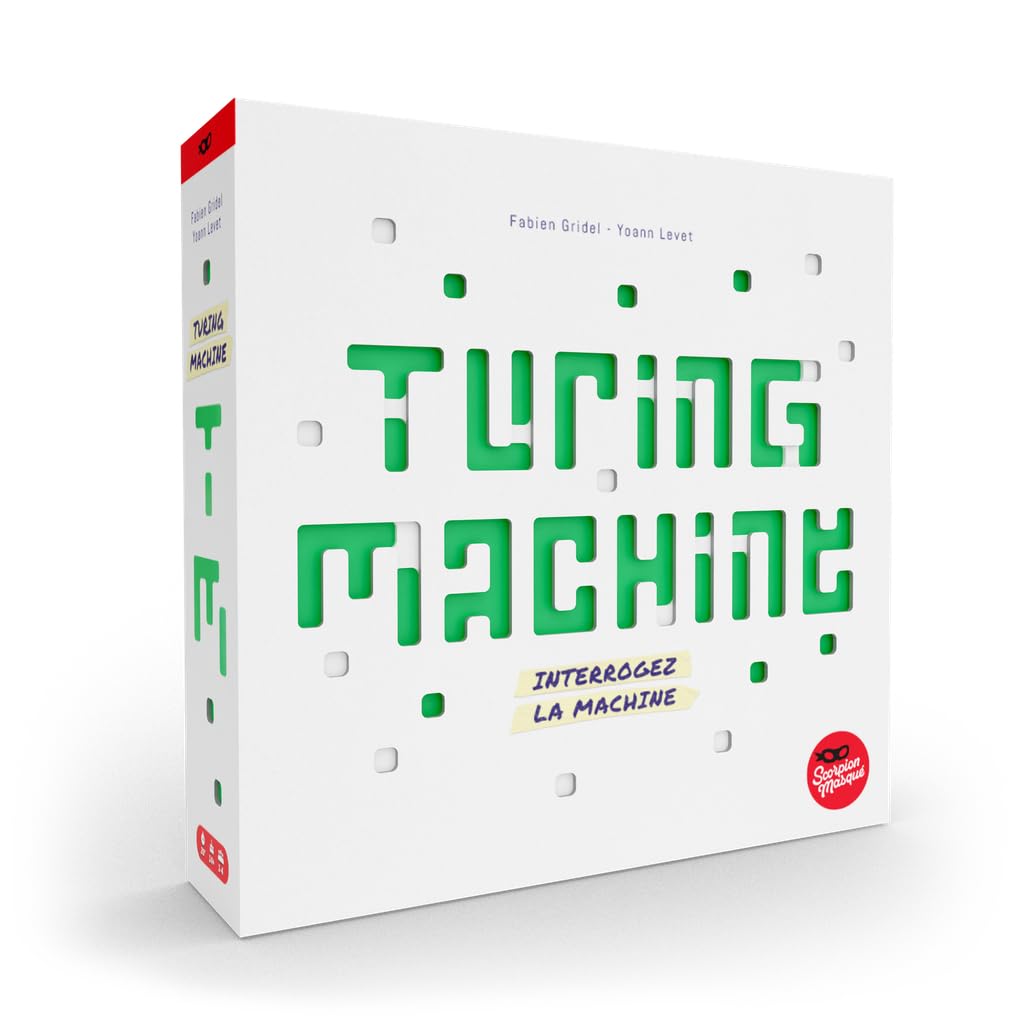
Turing Machine redefines the deduction genre by using an analog punch-card system as a stand-in for a thinking machine. Players create a three-digit code and then query the “machine” by stacking punch cards, each of which tests a different logical condition—like “is the number odd?” or “are the digits in ascending order?” The result is a pure, abstract logic workout that feels closer to a programming exercise than a typical board game.
What makes this title exceptional for cognitive development is its multi-modal approach. You must formulate hypotheses, track clues across multiple rounds, and use process-of-elimination reasoning. The online problem generator provides over seven million unique setups, meaning even daily players will encounter fresh puzzles for years. The four-player competitive mode adds a timing element that sharpens decision speed.
Component quality is stellar, with thick cardboard players and a clever machine tile that feels satisfying to manipulate. The rulebook is concise, and most players grasp the core loop within a single round. The only potential drawback is the setup time—about one to two minutes to reset between games—but the depth of cognitive engagement more than compensates.
Why it’s great
- Unmatched replay value with over 7 million possible puzzles.
- Teaches systematic hypothesis testing in a tactile, screen-free way.
- Excellent solo mode for independent cognitive practice.
Good to know
- Requires an internet-connected device for the online puzzle generator.
- Multiplayer mode feels like parallel solitaire rather than true head-to-head deduction.
2. Archduke

Archduke packs a surprising amount of cognitive load into a fifteen-minute play session. The core mechanic asks you to build a tableau of cards while keeping track of their positions, then swap them around to sabotage opponents. The twist is that you must hold the location of multiple targets in your working memory while simultaneously planning your next move, making it a fantastic exercise for short-term memory and divided attention.
The screen-printed wood tokens elevate the tactile experience far beyond standard cardboard chits. The slim box fits easily into a coat pocket, making it a go-to for travel or lunch-break mental workouts. With 104 cards and 24 tokens, the variety is solid, and the round-based format means you can play several quick games in a row, each time exercising your memory recall and strategic adaptation.
While the recommended age is 12+, families report that younger children aged 6 and up can grasp the basic rules with a little guidance. The fast pace—rounds typically last under 15 minutes—keeps attention spans engaged and reduces the sting of a bad hand, as a new game starts moments later. The production quality is premium, and the unique memory-swapping mechanic ensures no two rounds play the same.
Why it’s great
- Intense working memory training in a compact, portable format.
- High-quality screen-printed wood tokens provide a satisfying tactile feel.
- Fast rounds allow for repeated play, reinforcing cognitive skills through practice.
Good to know
- May feel chaotic at higher player counts due to constant card swapping.
- The memory element can be challenging for very young or new players.
3. Smart Farmer

Smart Farmer from SmartGames is a pure spatial-reasoning puzzle disguised as a farm. Players must place fences on a grid to separate each animal species into its own pasture, using the animals as physical obstacles. This demands that you visualize how shapes fit together within a confined space, a skill that directly translates to geometry and early engineering concepts.
The 60-challenge booklet progresses from beginner to expert, ensuring that children as young as five can start successfully while older kids and even adults will find the later puzzles genuinely difficult. The 3D animal pieces are charming and sturdy, and the game board is compact enough to travel. The solutions booklet at the back empowers independent learning, so a child can check their own work or get unstuck without needing an adult.
Teachers and parents consistently praise this game for building planning and concentration. The puzzles require trial-and-error, which teaches persistence and the value of revisiting a problem from a new angle. It is a rare screen-free activity that simultaneously entertains and exercises the executive functions of a developing brain.
Why it’s great
- Perfect for introducing spatial planning and geometric thinking to young children.
- 60 progressive challenges provide a clear skill-building path.
- Sturdy, travel-friendly components with a self-checking solution booklet.
Good to know
- Single-player only—no head-to-head or cooperative mode.
- Some younger children may need initial guidance to understand the fence placement mechanic.
4. The Tea Dragon Society Card Game
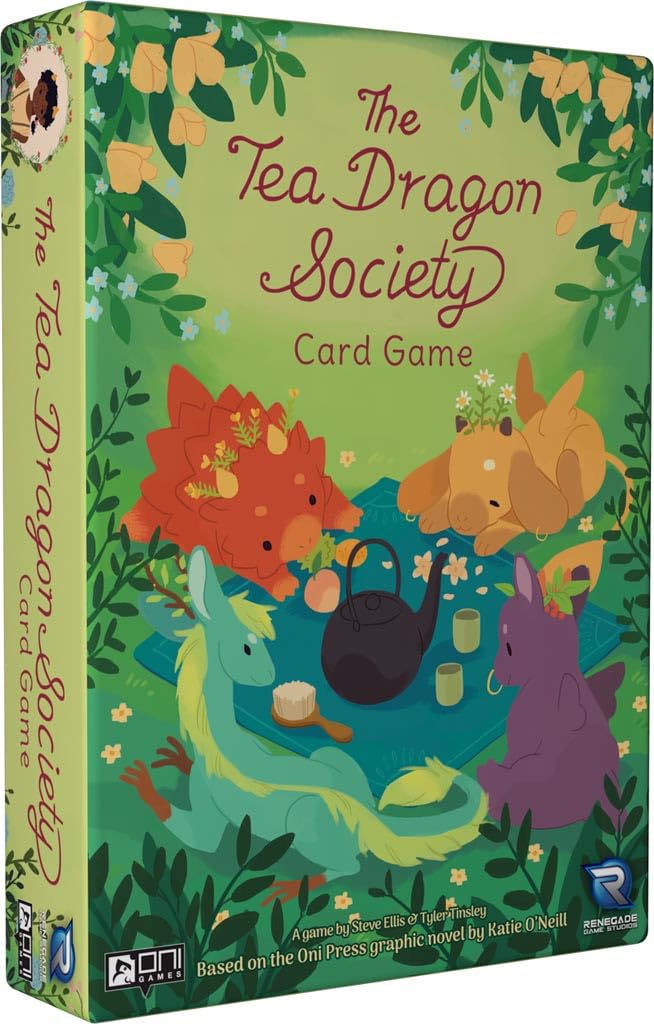
Don’t let the adorable art fool you—The Tea Dragon Society card game asks players to make meaningful strategic decisions each round. Over the course of four seasons, you build a deck by acquiring cards that represent bonds with your Tea Dragon. This requires thinking several turns ahead about which synergies to pursue and how to allocate resources efficiently.
The deck-building mechanic naturally exercises strategic planning and decision-making, as each purchase closes off other options. The game supports two to four players and takes about thirty to sixty minutes, making it an ideal weekend activity that encourages social interaction without the pressure of direct competition. The hand-drawn art from Katie O’Neill’s graphic novel is a visual delight that adds emotional investment to the gameplay.
Customer feedback notes that the instructions could be clearer—some new players report initial confusion about the turn flow. However, once the rules click, the game loops smoothly. The theme of nurturing and seasons makes it a gentle introduction to strategy games for players who might be intimidated by war-themed or high-conflict titles. It is a beautiful tool for practicing long-term planning within a low-stress setting.
Why it’s great
- Teaches resource management and forward-planning through a gentle, cooperative theme.
- Stunning hand-drawn artwork that makes the game visually rewarding.
- Supports family game night with a moderate 30-60 minute play time.
Good to know
- The rulebook is not perfectly clear, requiring an initial learning session.
- some players find the base game content a bit sparse for the investment.
5. Perfection Pop Up

Perfection Pop Up is the classic race-against-the-clock shape-sorting game, updated with an innovative grid partition that allows for over 250 different tray configurations. The core task—identifying the correct hole for each shape and pressing it into place before the timer pops everything out—is a direct workout for visual processing speed, shape recognition, and fine motor dexterity.
This version supports both solo and multiplayer modes, and the customizable tray means the challenge changes each time, preventing the brain from simply memorizing fixed positions. For young children aged five and up, the game builds hand-eye coordination and the ability to work under gentle time pressure. Older kids enjoy the competitive rush, and parents appreciate the screen-free, nostalgic fun.
The pop-up mechanism is durable enough for repeated use, and the onboard storage compartment keeps all pieces contained. The main cognitive benefit comes from the “beat the clock” pressure, which trains the brain to make quick decisions and recover from errors—a valuable transferable skill. For a low-cost, high-engagement tool for building processing speed in young minds, this is a reliable choice.
Why it’s great
- Excellent for developing speed-of-processing, shape recognition, and fine motor skills.
- Customizable tray with 250+ configurations extends replayability.
- No reading required, making it accessible to pre-literate children.
Good to know
- The pop-up mechanism can startle very sensitive children on the first few attempts.
- Once the timer is mastered, some players may lose interest without a time-pressure variation.
FAQ
What is the best age to start playing cognitive development board games?
Can board games really improve memory and problem-solving skills?
Final Thoughts: The Verdict
For most users, the best card or board games for cognitive development winner is the Turing Machine because it delivers unmatched depth in deductive logic and hypothesis testing, with virtually infinite replayability. If you want a game that sharpens working memory and can be played in short bursts, grab the Archduke. And for a child’s first foray into spatial planning with zero screen time, nothing beats the Smart Farmer.

Mo Maruf
I created WellFizz to bridge the gap between vague wellness advice and actionable solutions. My mission is simple: to decode the research and give you practical tools you can actually use.
Beyond the data, I am a passionate traveler. I believe that stepping away from the screen to explore new environments is essential for mental clarity and physical vitality.