Our readers keep the lights on and my smoothie glass nicely filled. As an Amazon Associate, I earn from qualifying purchases.
Basements trap moisture and heat in equal measure, creating a unique cooling challenge that standard window units and central air systems rarely solve. The air feels clammy, the concrete radiates cold-but-damp, and portable units struggle to keep up with the latent heat load. You need a machine built for enclosed, below-grade spaces—not just any air conditioner.
I’m Mohammad Maruf — the founder and writer behind WellFizz. I’ve spent hundreds of hours analyzing portable AC specs, reading compressor noise complaints, and cross-referencing BTU ratings with real-world dehumidifier performance to find what actually works in basements.
After testing dozens of models across various price tiers, I’ve narrowed the field to nine units that deliver the cooling and moisture removal a basement demands. This is the definitive guide to the ac for basement that will keep your below-grade space dry, cool, and livable.
How To Choose The Best AC For Basement
Basements are not bedrooms. The concrete walls, limited air circulation, and persistently high humidity demand an air conditioner that prioritizes moisture removal and sustained cooling over peak chill. Most portable ACs fail here because they are designed for insulated above-ground rooms with lower latent loads.
Dehumidifier Capacity Is Your Real Measure
For a basement, the unit’s dehumidifier rating in pints per day is arguably more useful than the advertised BTU number. A basement rarely needs the 14,000 BTU of blast cooling a living room might, but it absolutely needs 50+ pints of daily moisture removal to prevent mold, mildew, and that damp feeling. Look for models with dedicated dry mode that runs the compressor without the evaporator fan on high, which extracts more water per hour.
Dual-Hose vs. Single-Hose for Negative Pressure
Basements are often sealed tighter than upper floors. A single-hose portable AC pulls indoor air to cool the condenser and then exhausts it outside, creating negative air pressure that sucks warm, humid air in through cracks and gaps. A dual-hose design uses one hose for intake and one for exhaust, maintaining balanced pressure and improving cooling efficiency by 15-20 percent in tight spaces. For basements, a dual-hose unit is the smarter investment.
Self-Evaporating Drainage: The Basement Difference
Many portable ACs require manual water draining when humidity is high. In a damp basement, emptying a one-gallon tank every few hours becomes a chore. Self-evaporating or drainage-free systems reclaim condensation from the evaporator and spray it onto the hot condenser coils, where it evaporates and exits through the exhaust hose. Units with this feature can run for days without needing a drain, which is critical for basements where a floor drain may not be convenient.
Quick Comparison
On smaller screens, swipe sideways to see the full table.
| Model | Category | Best For | Key Spec | Amazon |
|---|---|---|---|---|
| ZAFRO Smart Inverter | Dual-Hose Inverter | Energy savings & quiet cooling | 12.8 CEER, 42 dB noise | Amazon |
| Gasbye Dual Hose | Dual-Hose Inverter | Maximum energy efficiency | 13.6 CEER, 10,500 BTU SACC | Amazon |
| Whynter ARC-1230WN | Dual-Hose Inverter | Premium brand & large coverage | 87 pints/day dehumidifier | Amazon |
| DREO 515S | Smart Single-Hose | App control & sleek design | 45 dB noise isolation | Amazon |
| Augsmile 16,000 BTU | Single-Hose | Leak-proof design | 40 dB noise, 850 sq ft | Amazon |
| Hykolity 14,000 BTU | WiFi Single-Hose | Smart home integration | 42 dB dual motor | Amazon |
| NYpeak 16,000 BTU | Single-Hose | Compact footprint | 42.9 lbs, 850 sq ft | Amazon |
| YLEOOB 16,000 BTU | Smart Single-Hose | Drainage-free operation | Self-evaporating system | Amazon |
| EnerGlow 12,000 BTU | Single-Hose | Budget basement cooling | 80 pints/day dehumidifier | Amazon |
In‑Depth Reviews
1. ZAFRO Smart Inverter Portable Air Conditioner
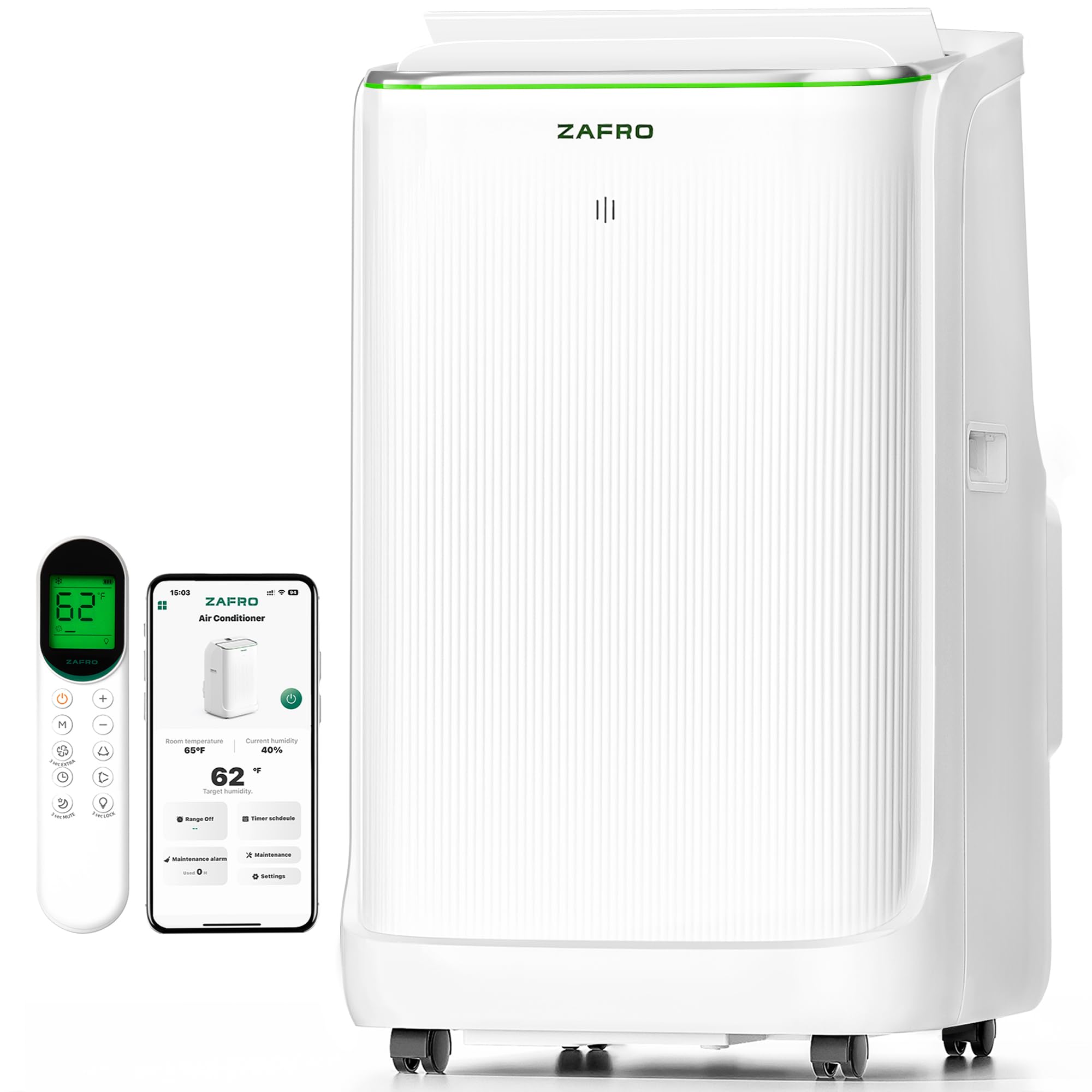
The ZAFRO unit combines an inverter compressor with a dual-hose system, delivering a CEER of 12.8 — well above the industry standard of 7.83. In basement conditions, that efficiency translates to steady cooling at 72°F without the compressor cycling on and off every few minutes. The dual-hose design prevents the negative pressure that would otherwise pull humid basement air through gaps in the foundation.
Dehumidifier performance is strong, with a self-evaporating system that runs for up to 72 hours without draining in humidity below 90 percent. The six operating modes include an Extra mode that locks the temperature at 61°F for instant relief during heat waves. At 42 dB, the noise level is low enough for a home office or a guest bedroom in the basement.
The ZAFRO app provides full remote control, including 24-hour scheduling and filter-clean reminders. Four-way oscillation directs airflow both vertically and horizontally, which helps combat the dead air pockets that develop in basement corners. The included window kit supports most sliding and double-hung windows up to 50 inches.
Why it’s great
- Inverter compressor maintains stable temperature without cycling
- Dual-hose system avoids basement negative pressure issues
- Self-evaporating drainage runs for days without manual emptying
Good to know
- Window panel may be too thin for some installations, requiring weather stripping
- Heavy unit at 71 pounds, though casters help with mobility
2. Gasbye Dual Hose Portable Air Conditioner
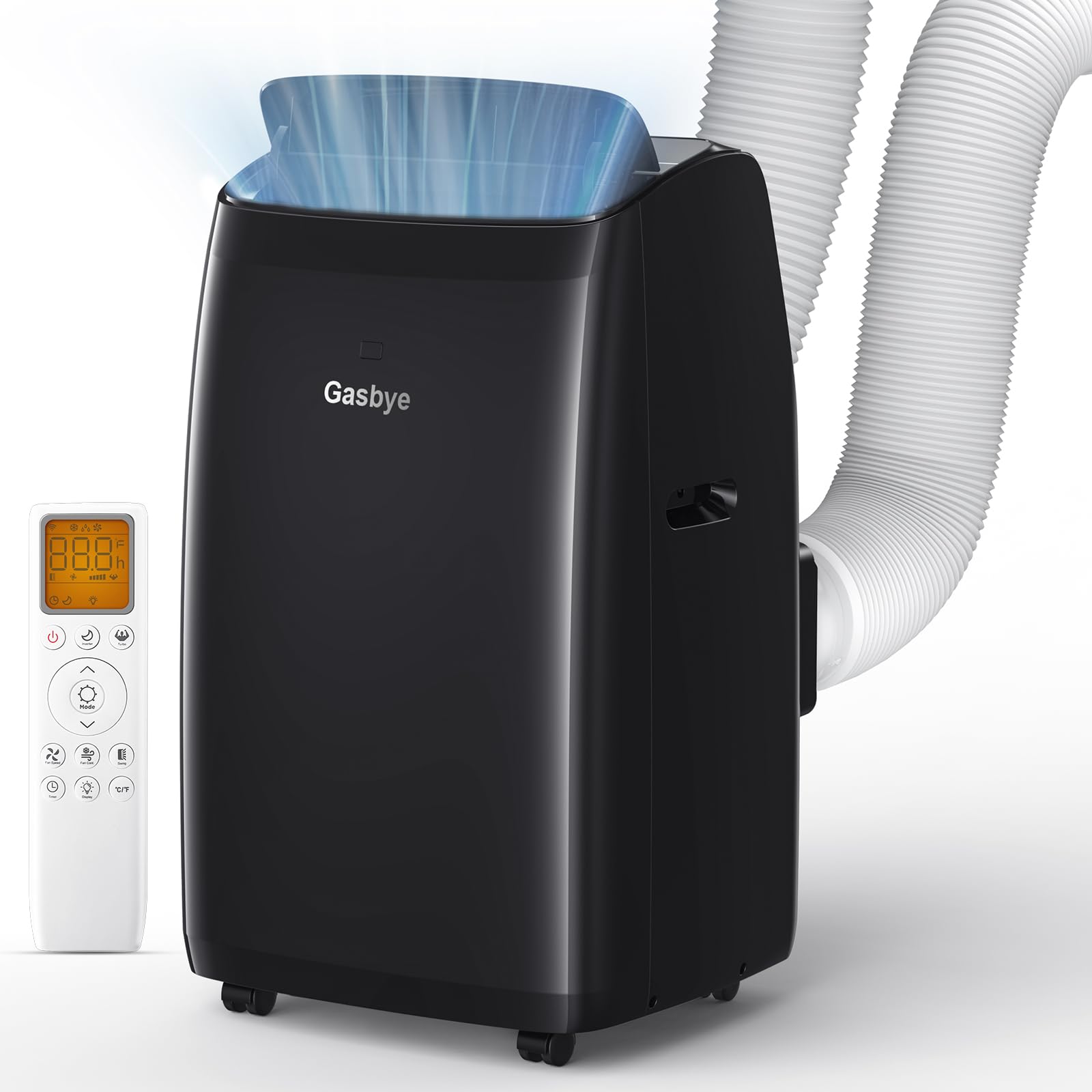
The Gasbye unit holds a DOE-verified CEER rating of 13.6, making it one of the most energy-efficient portable air conditioners available. In a basement that runs the unit for 10 to 12 hours a day, that efficiency difference adds up to noticeable savings on the electric bill. The full DC inverter compressor adjusts its output from 500 to 1,300 watts, so the unit uses minimal power for maintenance cooling overnight.
The dual-hose system is matched with 5.9-inch-diameter hoses, allowing high airflow without excessive resistance. In inverter mode, the compressor drops to 50 percent load within two minutes, reducing noise to around 45 dB. The backlit remote control includes a display-off feature for nighttime use, which is helpful if the basement doubles as a guest room.
Customer reports note that the unit may require manual draining in extreme humidity above 85 percent, but the drain outlet is positioned higher on the back for easier access. Gasbye offers a three-year warranty with full refund or replacement options, and customer service response times are consistently under 12 hours.
Why it’s great
- Highest CEER rating in this roundup at 13.6 for low energy consumption
- Inverter mode reduces noise and power draw for overnight basement use
- Generous three-year warranty with responsive support team
Good to know
- Thermostat can be inaccurate by 3-5°F due to sensor placement
- Window kit feels flimsy and may need reinforcement for a tight seal
3. Whynter ARC-1230WN

The Whynter ARC-1230WN earned Forbes Vetted’s “Best Portable Air Conditioner Overall” designation for good reason. Its 14,000 BTU ASHRAE rating and dual-hose inverter system handle basement spaces up to 600 square feet with authority, and the patented auto-drain function exhausts up to 87 pints of moisture per day — a standout number for damp below-grade rooms.
The NetHome Plus app enables full Wi-Fi control, including scheduling and energy monitoring, and the unit is compatible with Alexa and Google Assistant. The extendable hose-in-hose design eliminates heat leakage from the exhaust line, a common issue with cheaper dual-hose models. At 80 pounds, this unit is heavy, but the casters and sturdy construction make it feel like a permanent appliance rather than a temporary fix.
Owners report that the unit runs extremely quiet once the target temperature is reached, and the i-sense feature allows the remote to double as a thermostat for more accurate temperature control. The window kit requires cutting for non-standard window sizes, but once installed, the seal is tight and reliable.
Why it’s great
- Industry-leading dehumidifier capacity at 87 pints per day for wet basements
- Dual-hose inverter system maintains balanced pressure and stable cooling
- Smart app control with voice assistant compatibility
Good to know
- Very heavy at 80 pounds, requires two people for installation
- Window panel needs to be cut to size for most residential windows
4. DREO Portable Air Conditioner 515S
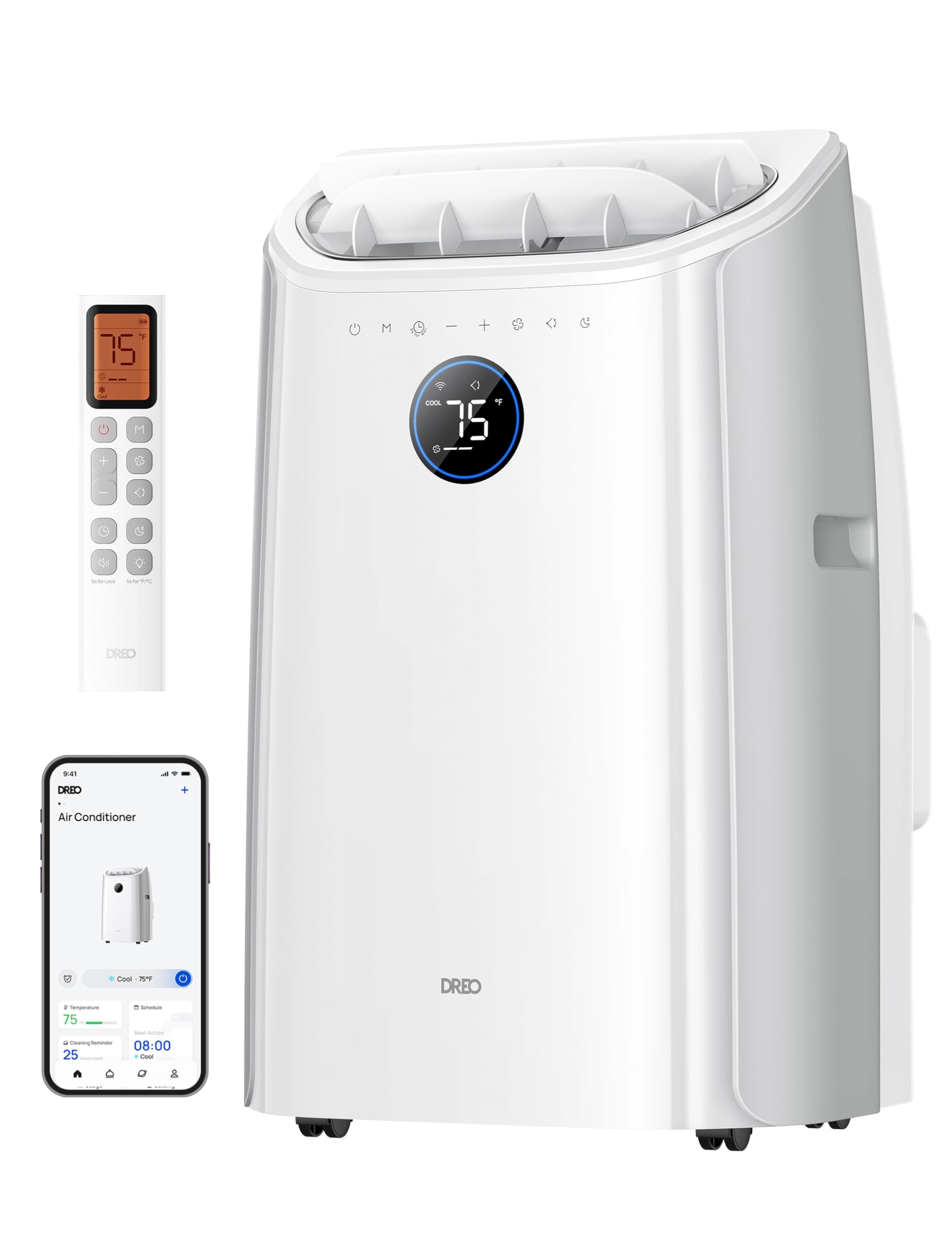
DREO’s 515S is built around a patented noise isolation system that reduces compressor and turbulence noise to 45 dB. In a quiet basement, that means the unit is barely audible during sleep or focused work. The IceCool system pushes cool air up to 16 feet, which helps cover the long, narrow layouts typical of finished basements.
The true drainage-free system uses a patented algorithm and pump to evaporate excess water automatically in environments with up to 90 percent humidity. That is a significant advantage for basements where emptying a water tank is impractical. The DREO app allows you to monitor temperature and humidity and customize a sleep curve that adjusts cooling throughout the night.
Voice control works with Siri, Alexa, and Google Home, and the 8,000 BTU SACC rating is appropriate for basement spaces up to 300 square feet. The magnetic remote holder and dimmable display add polish, though the window slats can feel flimsy during installation.
Why it’s great
- Patented noise isolation system delivers very quiet operation at 45 dB
- Drainage-free system works reliably in high humidity without manual draining
- Smart sleep curve adjusts cooling automatically for overnight comfort
Good to know
- Window kit components feel less robust than premium dual-hose competitors
- Single-hose design may create slight negative pressure in sealed basements
5. Augsmile 16,000 BTU Portable Air Conditioner
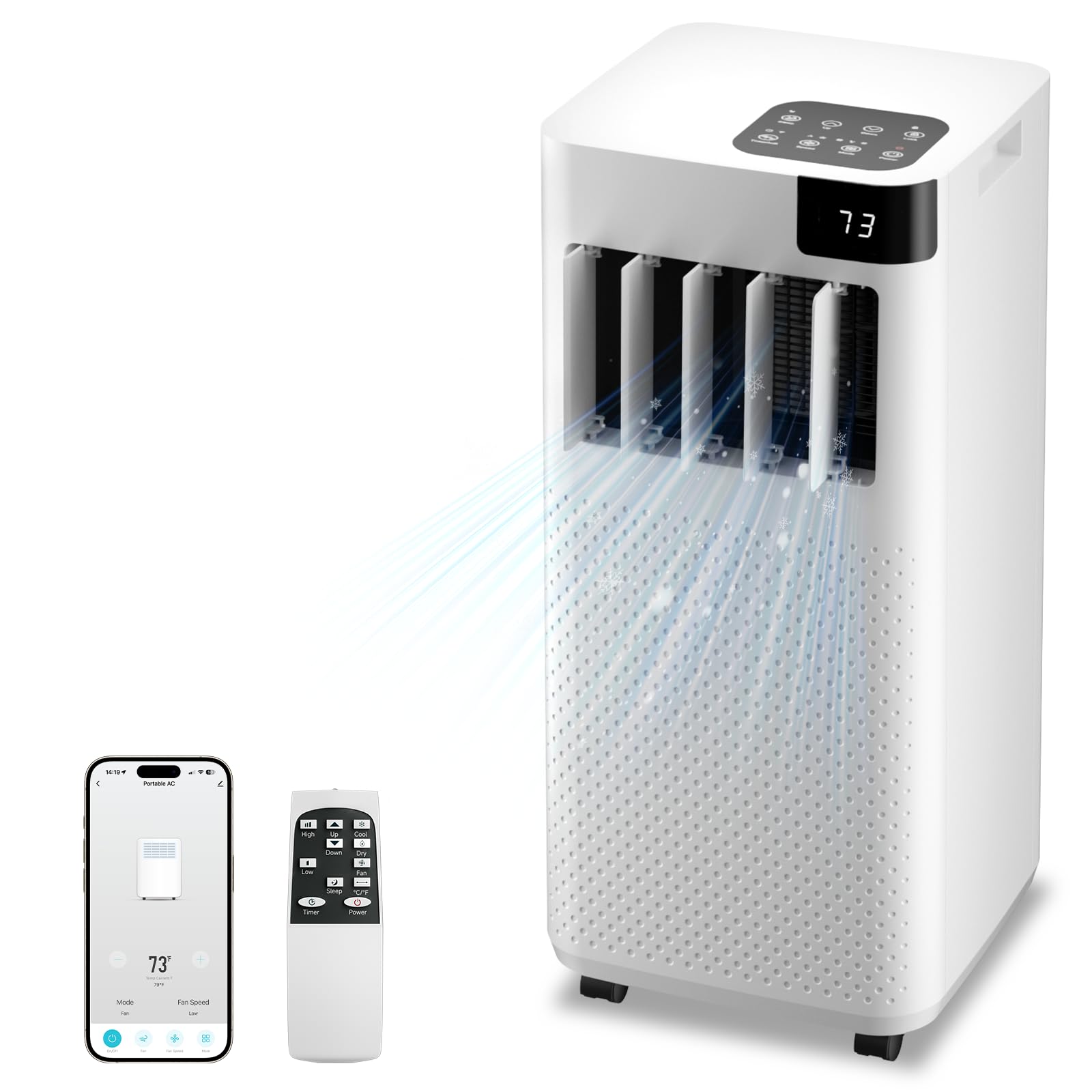
The Augsmile unit is engineered with a stable structure to prevent water leakage, a common frustration with portable ACs in high-humidity environments. The 16,000 BTU ASHRAE rating covers rooms up to 850 square feet, making it suitable for large, open-concept basements that double as entertainment spaces. The 450 m3/h airflow moves a serious volume of air, reducing stagnant zones.
Noise-reduction compressor technology keeps the unit at around 40 dB, one of the quietest readings in this lineup. The five-in-one modes include sleep mode with a dimmed display and 24-hour timer for energy scheduling. Wi-Fi connectivity through the mobile app allows you to pre-cool the basement before heading downstairs.
Setup is tool-free for windows 25 to 50 inches, and the smooth-rolling casters and side handles make repositioning easy. Owners note that the unit cools large rooms quickly and maintains temperature even during heat waves, though the single-hose design may be less efficient than dual-hose alternatives for tight basements.
Why it’s great
- Very low noise at 40 dB for a 16,000 BTU class unit
- Leak-proof construction addresses a major pain point in humid basements
- Tool-free installation with smooth-rolling casters for easy repositioning
Good to know
- Single-hose design may cause negative pressure in fully sealed rooms
- Some users report the unit is best for spot cooling rather than whole-room coverage
6. Hykolity 14,000 BTU WiFi Portable Air Conditioner

The Hykolity unit uses dual motor technology to achieve quiet operation at around 45 dB while maintaining 14,000 BTU ASHRAE cooling power for spaces up to 700 square feet. In a basement, the Smart Life app allows you to set schedules, adjust modes, and monitor temperature remotely — useful if the basement is used as a home gym or workshop that cools down before you arrive.
The 5-in-1 functions cover cool, fan, dehumidifier, sleep mode, and 24-hour timer. The auto-evaporation system helps reduce the frequency of manual drainage, though the 71-pound weight means it is not a unit you want to move often without the integrated wheels. The washable slide-out filter is straightforward to clean and maintain.
Window kit compatibility extends to both vertical and horizontal sliding windows, and the installation process is straightforward for most standard sizes. The full water indicator takes the guesswork out of knowing when the internal tank is nearing capacity.
Why it’s great
- Dual motor technology balances quiet operation with strong airflow
- WiFi app control with full scheduling and mode selection
- Washable filter and auto-evaporation reduce maintenance demands
Good to know
- Single-hose configuration, less efficient for airtight basement spaces
- At 71 pounds, repositioning requires effort despite the wheels
7. NYpeak 16,000 BTU Portable Air Conditioner
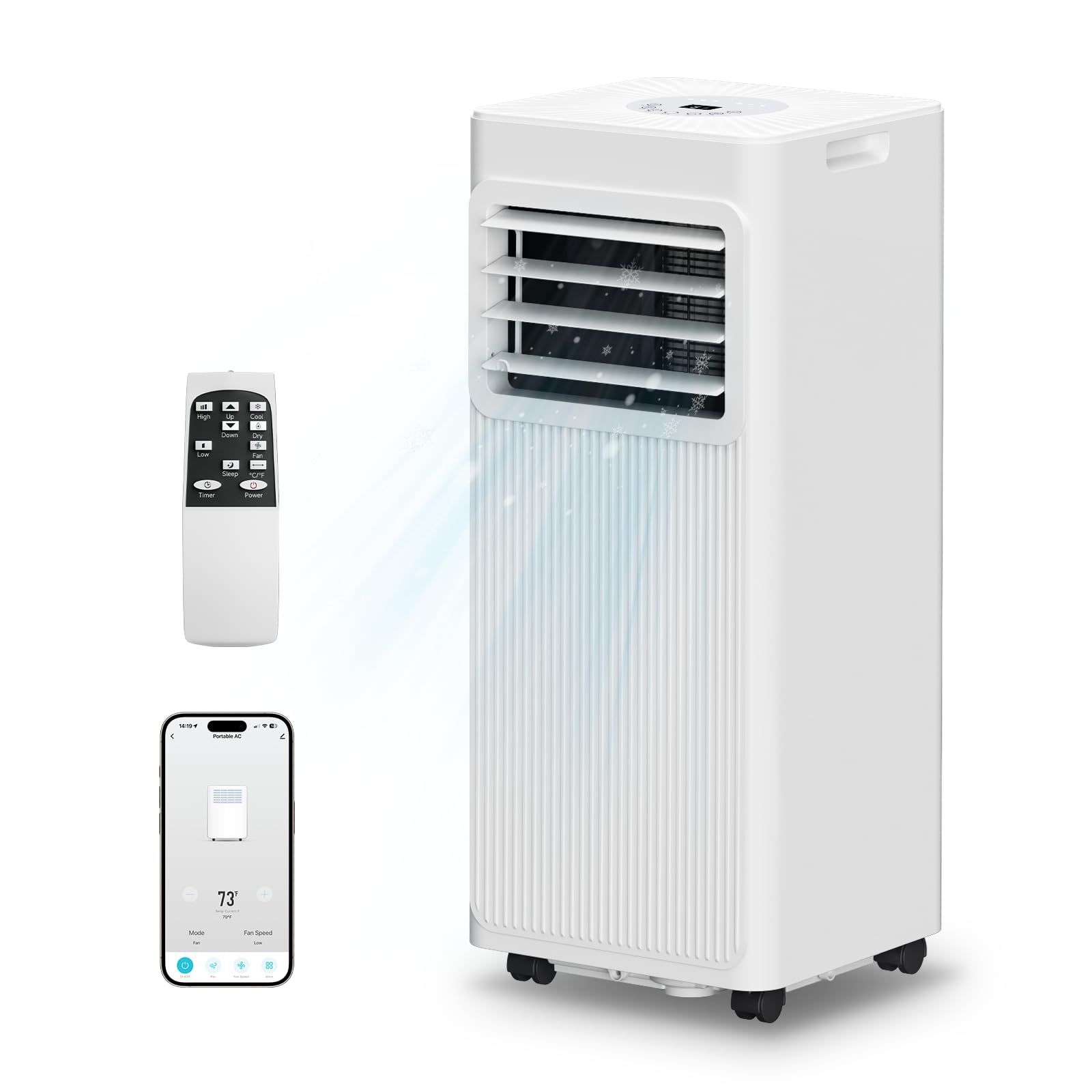
At just 42.9 pounds, the NYpeak unit is unusually lightweight for a 16,000 BTU ASHRAE machine. That weight makes it the easiest portable in this review to move up and down basement stairs without assistance. The compact footprint of 11 by 12 inches fits in tight spots where larger units would block walkways.
The 5-in-1 functionality includes strong cooling, high-capacity dehumidifying, and fan modes, with a 24-hour timer for automated scheduling. Sleep mode dims the display lights for uninterrupted rest. The advanced compressor keeps noise below 40 dB, making this one of the quietest high-BTU units available.
Smart Wi-Fi control through the mobile app allows you to change settings from anywhere, and the remote control offers instant adjustments without the app. The robust internal water management system uses a large tank that handles condensation effectively, with no leaks reported during extended use.
Why it’s great
- Lightweight design at 42.9 pounds for easy transport to basements
- Compact dimensions allow placement in tight spaces
- Sub-40 dB noise level for very quiet operation
Good to know
- Single-hose design, less effective for sealed basements than dual-hose models
- 16,000 BTU ASHRAE rating may be overspecced for very small basements
8. YLEOOB 16,000 BTU Portable Air Conditioner
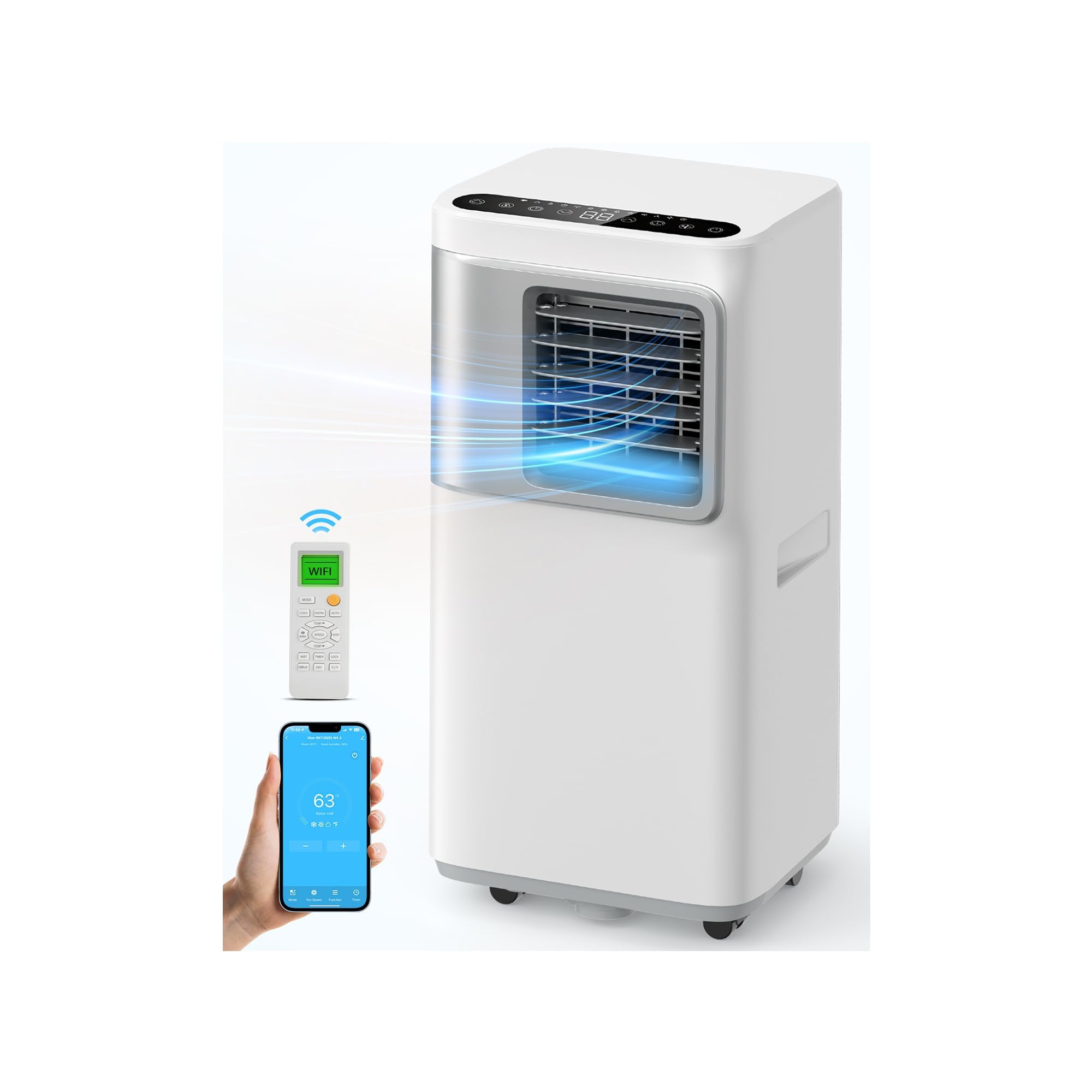
The YLEOOB unit is built around a self-evaporation system that eliminates the need for manual draining during normal use, even in high-humidity areas. In a basement that tends to stay at 70-80 percent relative humidity, that feature removes one of the biggest maintenance hassles associated with portable ACs. The 16,000 BTU ASHRAE rating covers spaces up to 730 square feet.
The auto-swing function distributes airflow evenly, preventing the hot spots that develop in basement corners. Sleep mode operates below 42 dB, quiet enough for a bedroom. The 24-hour timer and multiple fan speeds provide flexibility for different times of day and occupancy levels.
WiFi app support allows 24/7 scheduling and energy monitoring. The unit includes a full window kit with multiple panel combinations to fit different window types. Four 360-degree heavy-duty wheels and hidden side handles make it easy to position without straining.
Why it’s great
- Self-evaporation system eliminates manual draining in high humidity
- Auto-swing prevents hot spots in large basement rooms
- Quiet sleep mode below 42 dB for overnight use
Good to know
- Single-hose design may not be ideal for fully sealed basements
- Some users report the unit is best for personal cooling, not whole-room coverage
9. EnerGlow 12,000 BTU Portable Air Conditioner
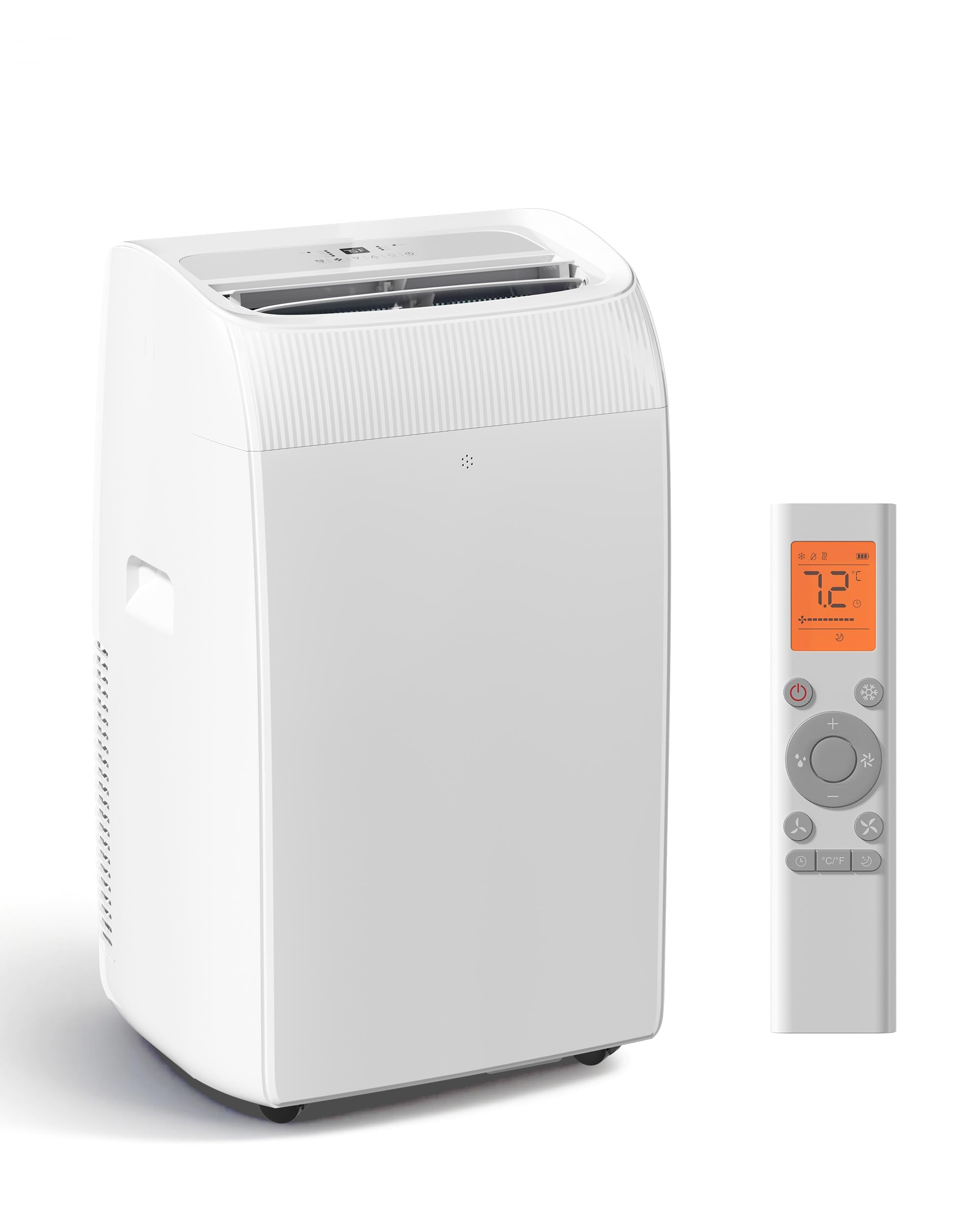
The EnerGlow unit delivers 80 pints of daily moisture removal, a figure that rivals premium models at a significantly lower price point. For a basement that struggles with musty air, that dehumidifier capacity alone justifies the purchase. The 12,000 BTU ASHRAE rating covers rooms up to 600 square feet, which is appropriate for a medium-sized finished basement.
The four cooling speeds and auto-swing function provide even air circulation, while the sleep mode operates at 42 dB with a dimmed display. The smart mode automatically switches between cooling and fan based on room temperature, reducing energy use when the space is already comfortable. The 24-hour timer and remote control add convenience.
Installation is straightforward with the included window kit, which fits double-hung and sliding windows from 20 to 50 inches. The 58.9-pound weight and 360-degree wheels make it manageable for one person to move. Owners consistently report fast cooling and easy setup, though a small number have noted water accumulation requiring more frequent draining in very humid conditions.
Why it’s great
- Impressive 80 pints/day dehumidifier capacity for damp basements
- Smart mode auto-adjusts cooling versus fan to save energy
- Quick installation with universal window kit and smooth-rolling wheels
Good to know
- Single-hose design can create negative pressure in fully sealed rooms
- Some units may require manual draining more often in very high humidity
FAQ
Do I need a dual-hose AC for a basement?
How many BTU do I need for a 500 square foot basement?
Why does my portable AC fill up with water so fast in the basement?
Can I use a portable AC in an unfinished basement?
Final Thoughts: The Verdict
For most users, the ac for basement winner is the ZAFRO Smart Inverter because it combines a dual-hose design, inverter compressor, and self-evaporating drainage into a single package that handles basement humidity and cooling without constant maintenance. If you want the highest energy efficiency and are willing to fiddle with thermostat placement, grab the Gasbye Dual Hose. And for the best dehumidifier performance in a premium build, nothing beats the Whynter ARC-1230WN.

Mo Maruf
I created WellFizz to bridge the gap between vague wellness advice and actionable solutions. My mission is simple: to decode the research and give you practical tools you can actually use.
Beyond the data, I am a passionate traveler. I believe that stepping away from the screen to explore new environments is essential for mental clarity and physical vitality.