Our readers keep the lights on and my smoothie glass nicely filled. As an Amazon Associate, I earn from qualifying purchases.
The leap from a standard bulb or LED projector to a laser light source changes everything about home cinema — instant-on brightness, no lamp replacements, and a color palette that rivals OLED. But the “4K Laser Projector” market is flooded with spec sheets that prioritize lumens over real-world picture quality, leaving buyers staring at washed-out blacks or distracting rainbow artifacts. This guide breaks down the 13 most compelling models on the market, sorting the true cinematic performers from the also-rans.
I’m Mohammad Maruf — the founder and writer behind WellFizz. I spend hundreds of hours each year analyzing the optical engines, contrast architectures, and color gamut claims of laser projectors, parsing technical datasheets so you don’t have to.
After cross-referencing brightness measurements, contrast ratios, input lag figures, and real-user feedback across 13 models, the verdict is clear: the right 4k laser projector is the one that balances raw lumens with native contrast, accurate HDR handling, and a flexible lens system that fits your room without compromise.
How To Choose The Best 4K Laser Projector
Choosing a 4K laser projector is a multi-variable equation where brightness, contrast, color technology, and installation flexibility all compete for your budget. The right pick depends on whether your room has ambient light, how large you want the image, and whether gaming or movie accuracy takes priority.
Light Source: Single Laser vs. Triple Laser vs. Laser Phosphor
The light source determines the color volume you see. Single-blue laser phosphor systems (found in many mid-range models) produce decent brightness but often clip reds and greens. Triple-laser engines — using independent red, green, and blue diodes — unlock the widest color gamuts, often covering 110% of BT.2020. If color accuracy and vibrancy matter, a triple-laser architecture is the only serious option.
Brightness: ANSI vs. ISO Lumens and the Ambient Light Factor
Brightness claims are the most manipulated spec in this category. ANSI lumens measure a specific grid pattern, while ISO lumens are slightly different and often higher on paper. For a living room with some ambient light, you need at least 2500 lumens to maintain a punchy image on a 120-inch screen. Dedicated dark-room theaters can thrive with 2000 lumens or less, provided the native contrast is high enough to preserve black depth.
Contrast: Native vs. Dynamic and the Black-Level Ceiling
A projector’s ability to render deep blacks separates a good image from a great one. Native contrast (measured panel-to-panel) is the real indicator — dynamic contrast via a laser dimming iris can help, but aggressive dimming creates pumping artifacts during scene transitions. Epson’s 3LCD and Sony’s SXRD panels naturally deliver higher native contrast than DLP, which is why they dominate in dedicated theater setups.
Installation Flexibility: Lens Shift, Zoom, and Throw Ratio
Fixed-position projectors are a headache. Motorized lens shift with vertical (and ideally horizontal) adjustment, paired with a 1.3x or wider optical zoom, lets you place the projector on a shelf, ceiling mount, or coffee table without geometry distortion. Ultra-short-throw models eliminate the need for ceiling mounting but demand a flat wall and often an ALR screen.
Quick Comparison
On smaller screens, swipe sideways to see the full table.
| Model | Category | Best For | Key Spec | Amazon |
|---|---|---|---|---|
| Valerion VisionMaster Max | Standard Throw | Cinema & Gaming Hybrid | 3,500 ISO Lumens, 50,000:1 Dynamic Contrast | Amazon |
| XGIMI Horizon 20 Max | Standard Throw | Daytime Viewing | 5,700 ISO Lumens, 20,000:1 Contrast | Amazon |
| Epson LS11000 | Standard Throw | Dedicated Theater | 2,500 Lumens, 1,200,000:1 Dynamic Contrast | Amazon |
| AWOL VISION Aetherion Max | Ultra Short Throw | Ambient Light Rooms | 3,300 ISO Lumens, 6,000:1 Native Contrast | Amazon |
| Sony VPL-XW5000ES | Standard Throw | Native 4K Purity | 2,000 Lumens, Native SXRD 4K Panel | Amazon |
| Nebula X1 by Anker | Standard Throw | Portable Indoor/Outdoor | 3,500 ANSI Lumens, 5,000:1 Native Contrast | Amazon |
| Hisense PX3-PRO | Ultra Short Throw | Premium UST Setup | 3,000 Lumens, Triple Laser, 110% BT.2020 | Amazon |
| NexiGo Aurora Pro MKII | Ultra Short Throw | Value UST with Iris | 2,400 Lumens, 30,000:1 Dynamic Contrast | Amazon |
| Formovie Theater | Ultra Short Throw | Award-Winning UST | 1,800 ISO Lumens, ALPD 4.0 RGB+ Laser | Amazon |
| Epson LS800 | Ultra Short Throw | Bright Room UST | 4,000 Lumens, 3LCD, No Rainbow | Amazon |
| BenQ TK710 | Standard Throw | Gaming on a Budget | 3,200 ANSI Lumens, 4ms @ 240Hz | Amazon |
| Hisense C2 Laser Mini | Standard Throw | Versatile Gimbal Setup | 2,000 ANSI Lumens, Triple Laser, 1700:1 Native | Amazon |
| ViewSonic LX700-4K | Standard Throw | Budget Gaming/Cinema | 3,500 ANSI Lumens, 240Hz, 4.2ms | Amazon |
In-Depth Reviews
1. Valerion VisionMaster Max 4K Laser Projector
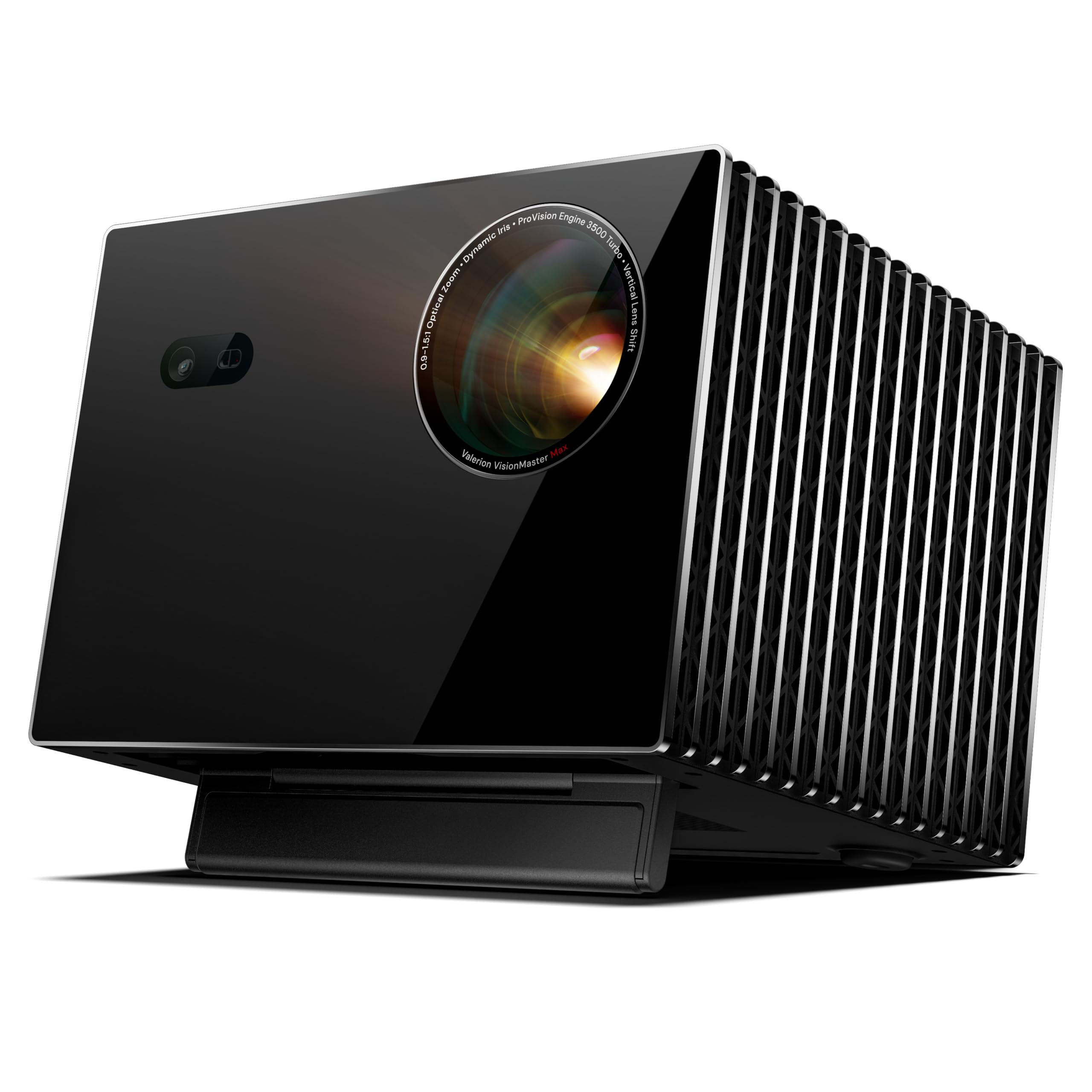
The Valerion VisionMaster Max hits the sweet spot where brightness, contrast, and feature set converge. Its 3,500 ISO lumens triple-laser engine is bright enough for dim daytime viewing, while the NoirScene Dark Field Engine — combining an EBL algorithm with a precision IRIS aperture — delivers a 50,000:1 dynamic contrast ratio that approaches OLED-like black depth for a projector. The 0.9–1.5:1 optical zoom and ±105% vertical lens shift give you enormous placement flexibility without digital keystone distortion.
Gamers get a full suite: 4ms input lag at 240Hz, VRR, ALLM, and support for Dolby Vision Gaming. The anti-rainbow effect (RBE) technology is a genuine breakthrough for DLP-sensitive viewers, reducing artifacts by 99.99% based on customer feedback. Built-in Google TV, AirPlay 2, and Apple HomeKit integration make it a true smart hub.
The Iris dimming can produce a slight pulsation on panning shots in very dark scenes according to some early adopters, and the power cord is shorter than ideal for ceiling mounts. But at this price, the combination of optical precision, black-level performance, and gaming readiness is unmatched in the standard-throw category.
Why it’s great
- Industry-leading black levels with precision IRIS
- Nearly zero rainbow effect for DLP-sensitive users
- Extremely flexible lens shift and optical zoom
Good to know
- IRIS can cause subtle pulsation on dark panning scenes
- Power cord is short; may need extension for ceiling mount
2. XGIMI Horizon 20 Max 4K Projector
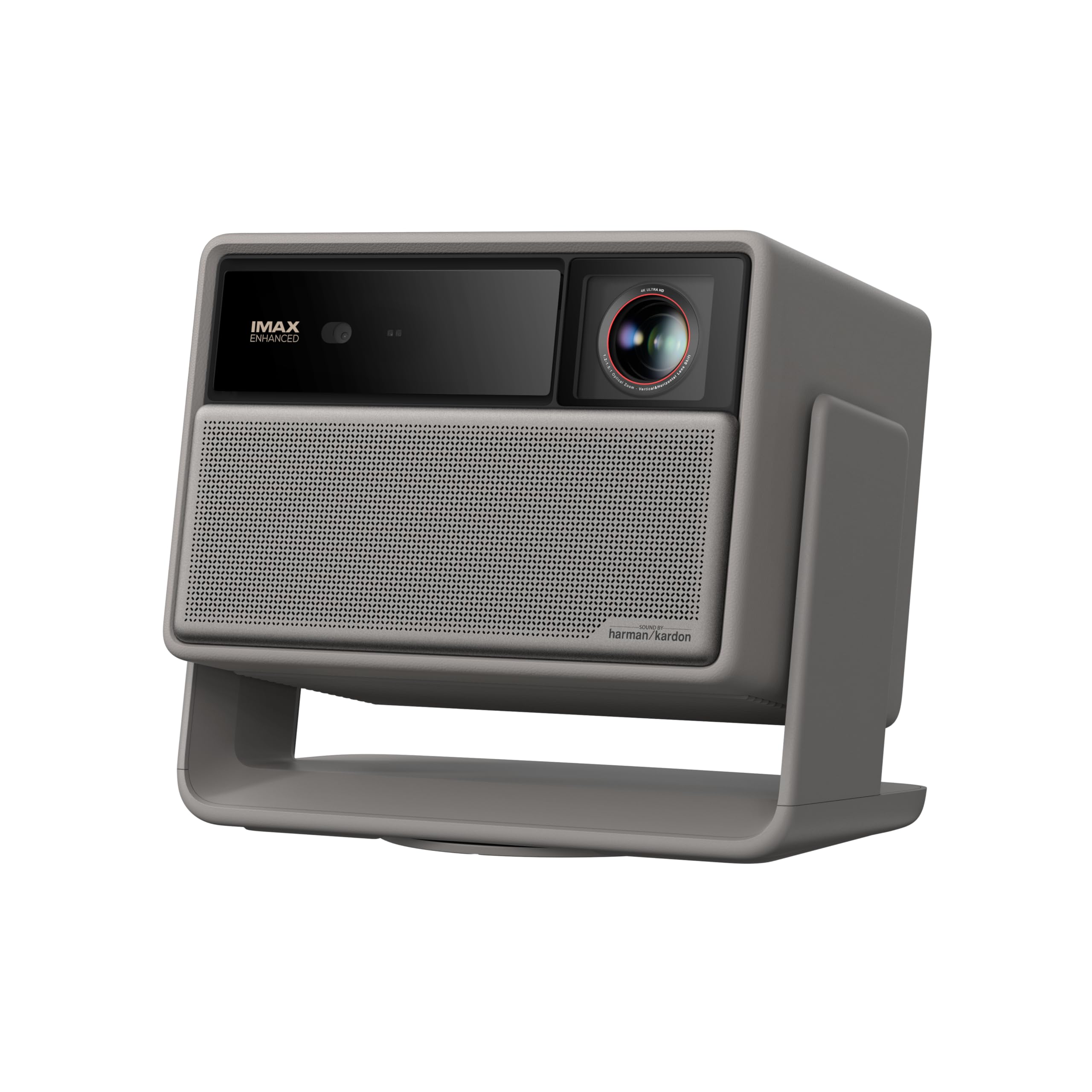
The XGIMI Horizon 20 Max is a brute-force brightness champion. Its X-Master RGB triple laser engine claims 5,700 ISO lumens — the highest in this lineup — which translates to a watchable image even with curtains partially open on a 170-inch ALR screen. Real-world testing by customers reports an actual brightness closer to 3,600–3,900 lumens in standard 4K mode, but that still outpaces most competitors. The 20,000:1 contrast ratio and 110% BT.2020 color coverage produce vibrant, punchy visuals.
Motorized lens shift and optical zoom give you precise placement without sacrificing image clarity, a rare combination at this brightness level. The built-in Google TV OS is snappy and supports all major streaming apps natively. Harman Kardon speakers deliver clear, neutral sound that can fill a medium-sized room.
Some users report noticeable laser speckle in white skies and bright uniform areas, and a few sensitive viewers see rainbow effect in high-contrast menus. The HDR mode is noticeably dimmer than the standard picture mode, requiring some adjustment. But for anyone who needs a projector that performs in ambient light without breaking the bank compared to true flagship models, the Horizon 20 Max is a compelling choice.
Why it’s great
- Exceptional brightness for daytime viewing
- Motorized lens shift and optical zoom
- Snappy Google TV integration
Good to know
- Laser speckle visible in bright, uniform areas
- HDR mode dimmer than standard mode
3. Epson Home Cinema LS11000 4K PRO-UHD Laser Projector

The Epson LS11000 is the reference standard for those who prioritize cinematic authenticity over peak brightness. Its 3-chip 3LCD architecture delivers zero rainbow effect and 100% of the RGB color signal continuously — a critical advantage for viewers sensitive to DLP artifacts. The dynamic contrast ratio exceeds 1,200,000:1 thanks to a laser array that suppresses stray light, producing inky blacks that rival much more expensive projectors.
The Epson Cinema Lens uses a multi-element precision glass structure with zero light leakage, providing edge-to-edge focus uniformity even on 150-inch screens. The 4K PRO-UHD pixel-shifting system produces a sharp 8.29-million-pixel image without the brightness penalty of native 4K DLP designs. HDMI 2.1 supports 4K at 120Hz for gaming, though input lag is higher than DLP competitors.
At 2,500 lumens, it’s not designed for bright rooms — this is a dark-room champion. The large chassis (it’s a big unit) requires a sturdy ceiling mount or shelf. Some users report occasional startup “snow” after extended use, so an extended warranty is wise. For a dedicated theater with controlled lighting, the LS11000’s contrast and color accuracy are hard to beat.
Why it’s great
- Superior native contrast with no rainbow artifacts
- Exceptional lens quality with edge-to-edge sharpness
- Reliable, consistent laser brightness over time
Good to know
- Requires a light-controlled room for best black levels
- Large and heavy; needs a strong mount or shelf
4. AWOL VISION Aetherion Max 4K Projector
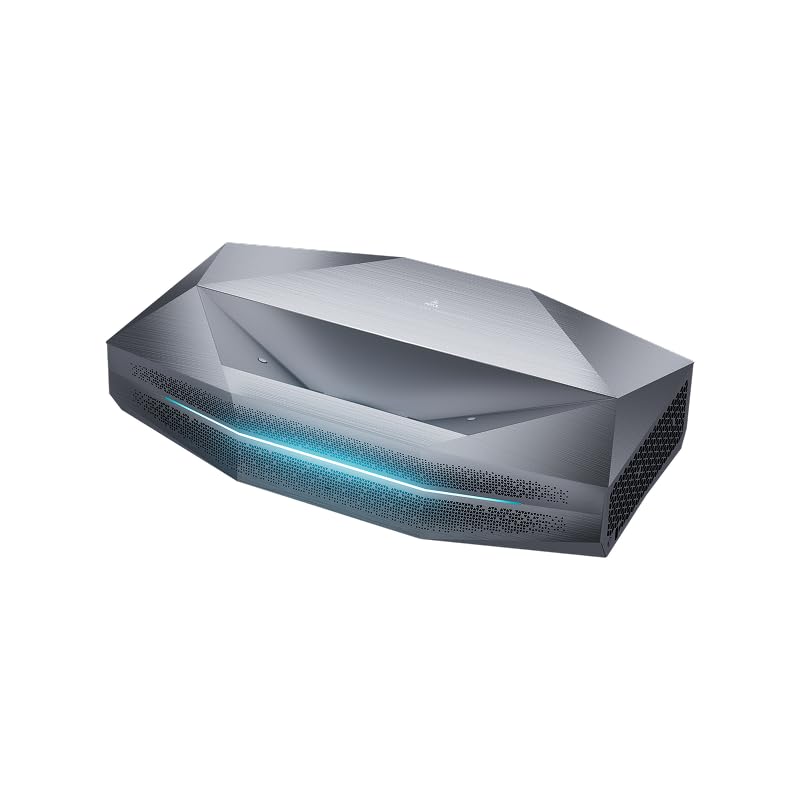
The AWOL VISION Aetherion Max is the ultra-short-throw (UST) projector that breaks the bright-room barrier. At 3,300 ISO lumens with a 6,000:1 native contrast ratio (expanding to 60,000:1 dynamically via Noirscene System II), it delivers deep blacks and punchy highlights even with ambient light — no blackout curtains required. The RGB triple-laser engine covers 110% of Rec.2020, producing lifelike greens and accurate skin tones that lamp-based USTs simply cannot match.
Gamers benefit from a 1ms-class input lag at 240Hz with VRR, ALLM, and Dolby Vision Gaming support. Three HDMI 2.1a ports and a DisplayPort 1.4a let you connect a PS5, Xbox Series X, and gaming PC simultaneously without cable switching. The Anti-RBE technology is industry-first in the UST category, almost eliminating rainbow artifacts entirely — a huge win for sensitive viewers.
The built-in speakers are surprisingly robust for a UST, though serious home theater enthusiasts will still want an external audio system. The 0.2:1 throw ratio means it sits inches from the wall, making installation incredibly simple. Some early units had dead pixel issues, but AWOL’s two-year warranty and responsive support handle replacements promptly. This is the UST to beat for living-room-first buyers.
Why it’s great
- High native contrast with strong ambient light performance
- Industry-leading anti-rainbow technology in UST
- Three HDMI 2.1a inputs and DisplayPort for multi-console gaming
Good to know
- Built-in audio is good but not a substitute for a sound system
- Rare dead pixel reports covered under warranty
5. Sony VPL-XW5000ES 4K HDR Laser Home Theater Projector

Sony’s VPL-XW5000ES is the only projector in this roundup with a native 4K SXRD panel — no pixel-shifting, no interpolation. The result is a level of detail and clarity that pixel-shifted rivals cannot replicate; pores on actors’ faces are visible from the front row of a 200-inch screen. The X1 Ultimate for Projector processor drives TRILUMINOS PRO color mapping, displaying over a billion colors with natural, not oversaturated, reproduction.
The Wide Dynamic Range Optics achieve 95% DCI-P3 color gamut with 2,000 lumens of brightness. That sounds modest compared to the XGIMI or AWOL, but in a dedicated theater with controlled lighting, the Sony’s superior contrast and color volume create a more immersive, cinematic image.
Downsides: the 28-pound chassis requires a heavy-duty mount, and the startup is slow — about one minute from cold to picture. The lens shift is manual (no motorized option), and there is no keystone correction, so precise placement is mandatory. The HDR brightness is merely adequate, not spectacular. If you prioritize absolute picture purity over peak lumens and don’t mind a meticulous setup, this is the gold standard.
Why it’s great
- Native 4K panel with unmatched sharpness and detail
- Superb color accuracy with TRILUMINOS PRO
- Dead-silent fan operation
Good to know
- Heavy; requires a very sturdy mount
- Slow startup and manual-only lens adjustments
6. Nebula X1 4K Projector by Anker

Anker’s Nebula X1 brings triple-laser performance to a compact, portable form factor without sacrificing brightness. With 3,500 ANSI lumens, a 5,000:1 native contrast ratio (56,000:1 dynamic), and Dolby Vision certification, this projector delivers vibrant, accurate images indoors and outdoors. The auto-alignment gimbal system handles keystone and focus adjustments in one click, making it ideal for spontaneous backyard movie nights or camping trips.
The ISF-calibrated color accuracy ensures cinematic tones out of the box, and the 14-element all-glass lens produces sharp edge-to-edge clarity on screens up to 300 inches. TÜV Rheinland certification across brightness, color accuracy, contrast, and blue light levels means long viewing sessions are more comfortable on the eyes. The built-in Google TV OS provides a seamless streaming experience.
Some users report inconsistent quality control — a few units arrived with a pink tint or washed-out colors, requiring calibration or exchange. The remote lacks a dedicated Input Select button, and the power-on sequence can be unreliable via remote. The 60Hz input cap also limits high-frame-rate gaming potential. Still, for its versatility, brightness, and autofocus system, the Nebula X1 is the best portable 4K laser projector available.
Why it’s great
- Excellent brightness in a portable, gimbal-stabilized design
- Auto-alignment makes setup effortless
- ISF-calibrated color and Dolby Vision support
Good to know
- 60Hz input only; not ideal for competitive gaming
- QC inconsistencies in initial units
7. Hisense PX3-PRO Ultra Short Throw Triple Laser Projector

Hisense’s PX3-PRO is the UST projector that marries the company’s LPU (Laser Processing Unit) technology with a pure triple-laser engine. At 3,000 lumens and a 3,000:1 native contrast ratio, it delivers vivid, well-saturated images even in rooms with some ambient light. The 110% BT.2020 color gamut coverage and a ΔE≈0.9 color accuracy rating mean skin tones and natural scenery are reproduced with remarkable fidelity.
The ultra-short-throw design projects an 80- to 150-inch image from just inches away, making it a TV replacement that fits on a standard media console. Dolby Vision, IMAX Enhanced, and HDR10+ ensure compatibility with the widest range of HDR content. The 240Hz high refresh rate and designed-for-Xbox certification make it a capable gaming companion, though input lag is higher than dedicated gaming projectors.
The built-in Harman Kardon speakers are decent for a UST, but external audio is recommended for an immersive experience. Some users report a slight rainbow effect that may bother sensitive viewers. The automatic keystone correction requires snapping a photo of the screen via a phone app — a cumbersome process compared to competitors with full auto-alignment. For its color volume and brand reliability, the PX3-PRO is a strong UST contender.
Why it’s great
- Exceptional color accuracy with 110% BT.2020 coverage
- Powerful LPU triple-laser engine
- IMAX Enhanced and Dolby Vision certified
Good to know
- Auto keystone setup requires phone app and photo capture
- Some minor rainbow effect in high-contrast scenes
8. NexiGo Aurora Pro MKII 4K Tri-Color Laser UST Projector

The NexiGo Aurora Pro MKII brings ALPD 5.0 laser technology and a Scene Adapt Engine (SAE) with a Dynamic Iris and Dynamic Laser Dimming to the UST category at a price that undercuts many competitors. The SAE adjusts laser output in real time based on content, achieving a >30,000:1 dynamic contrast ratio while reducing energy consumption by roughly 70%. The result is deeper blacks in dark scenes and brighter highlights in action sequences.
The 2,400-lumen brightness is adequate for medium-lit rooms but not as intense as the AWOL or Hisense PX3-PRO. The 0.21:1 throw ratio projects up to 150 inches from inches away, and the ALPD 5.0 engine covers 107% BT.2020 with a ΔE≈1 color accuracy. Gaming performance is strong, with 4.2ms to 8ms input lag at 4K 120Hz in Gaming Mode.
Some users report an overheating issue that causes the unit to shut down, and the remote is said to require precise pointing. The built-in 60W speakers with Dolby Atmos are decent but lack the low-end punch of dedicated systems. The auto-focus sometimes needs a manual nudge at startup. For the price, the dynamic contrast performance is impressive, but long-term reliability is still being proven.
Why it’s great
- Impressive dynamic contrast with real-time iris adjustment
- ALPD 5.0 delivers wide color gamut
- Aggressive pricing for a UST with dynamic iris
Good to know
- Some units experience overheating and shutdowns
- Remote sensitivity could be better
9. Formovie Theater Ultra Short Throw 4K Laser Projector

The Formovie Theater is the first-place winner of ProjectorCentral’s 2022 and 2023 Laser TV Showdowns, and for good reason. Its ALPD 4.0 RGB+ triple-laser light source outputs 1,800 ISO lumens with a 3,000:1 FOFO contrast ratio. While 1,800 lumens is modest compared to newer UST competitors, the color volume is outstanding — 107% Rec.2020 coverage — and the Bowers & Wilkins-tuned dual 15W speakers produce surprisingly rich, detailed audio that can replace a basic soundbar.
Dolby Vision and Dolby Atmos support ensure the projector handles demanding HDR content with proper tone mapping. Android TV 11.0 with Chromecast built-in offers a familiar, app-rich smart platform. The 0.23:1 throw ratio means it sits close to the wall, making it one of the most compact high-performance UST options.
Reliability concerns temper the enthusiasm: multiple customers report dead pixels on the DMD chip after 1-2 years, and the remote takes AA batteries and lacks a backlight. The Android TV interface can feel sluggish compared to newer Google TV systems. For those who prioritize picture quality and audio out of the box over raw brightness and future-proofing, the Formovie Theater remains a compelling, if aging, choice.
Why it’s great
- Award-winning picture quality with excellent color
- Bowers & Wilkins speakers eliminate need for dedicated audio
- Compact and easy to place
Good to know
- DMD chip dead pixel reports after 1-2 years
- Sluggish Android TV interface
10. Epson LS800 Ultra Short Throw 3-Chip 3LCD Smart Streaming Laser Projector

The Epson LS800 is the bright-room UST champion for viewers who cannot tolerate rainbow artifacts. Its 3-chip 3LCD architecture displays 100% of the RGB color signal continuously — the image is completely free of the color breakup that plagues DLP laser projectors. With 4,000 lumens of both color and white brightness, it’s the brightest UST in this lineup, maintaining a vibrant, watchable image even with windows open or overhead lights on.
The ultra-short-throw design projects up to 150 inches from just a few inches away, and the multi-point picture adjustment system and individually adjustable feet make leveling simple. The built-in Yamaha 2.1-channel speakers deliver clear, room-filling audio with notable bass for a projector. Android TV provides standard streaming functionality.
The 4K PRO-UHD pixel-shifting system is not true 4K — text and menus can appear slightly softer than native 4K DLP rivals. The game mode locks picture adjustments, preventing calibration for low-latency gaming. Some users report HDMI port failures and Android TV performance issues after extended use. The LS800 is a specialized tool: outstanding for bright, rainbow-sensitive households, but less ideal for cinephiles seeking reference black levels.
Why it’s great
- Zero rainbow effect with consistent color brightness
- Highest UST brightness at 4,000 lumens
- Versatile placement with adjustable feet
Good to know
- Pixel-shifted 4K is softer than native 4K competitors
- Reported HDMI port and OS reliability issues
11. BenQ TK710 4K Laser 3200 Lumens Movie and Gaming Projector

The BenQ TK710 is the entry-level 4K laser projector that punches well above its weight for gaming. Its 3,200 ANSI lumens and 4ms response time at 1080p/240Hz make it one of the fastest laser projectors on the market, ideal for competitive shooters and racing games. The 16ms input lag at 4K/60Hz is still very responsive for console gaming on PS5 and Xbox Series X.
The laser light source eliminates lamp replacement and provides instant-on brightness. HDR10 and HLG support, combined with a dynamic contrast function that adjusts the light source in real time, deliver solid shadow detail in dark scenes. The vertical lens shift and 1.3x optical zoom make installation flexible, and the 3D keystone correction helps when placement is not perfectly level.
Black levels are average for a DLP laser projector — dark scenes appear more grey than black, especially compared to Epson or Sony offerings. The built-in 5W mono speaker is basic and should be paired with an external audio system. Some gamers note that HDR support can be finicky when passing through certain AV receivers. For the price, the TK710 delivers excellent gaming performance and reliable brightness.
Why it’s great
- Fast 4ms response at 240Hz for competitive gaming
- Solid 3,200-lumen brightness for mixed lighting
- Vertical lens shift and 1.3x zoom for flexible setup
Good to know
- Black levels are mediocre for dark-room viewing
- Basic audio output; external sound recommended
12. Hisense Laser Mini Projector C2 4K Triple Color Laser

The Hisense C2 is a unique entry that combines a true triple-color laser engine with a full-motion gimbal mount. The 360° horizontal rotation and 135° vertical tilt let you project on walls, ceilings, or any surface without needing a tripod or ceiling mount. The 2,000 ANSI lumens and 1700:1 native contrast ratio produce a bright, colorful image with genuine black depth — the triple laser delivers 110% BT.2020 coverage with a ΔE≈0.9 accuracy rating.
Dolby Vision and HDR10+ support ensure excellent HDR handling, and the AI-powered 4K upscaler improves lower-resolution content convincingly. The JBL-tuned speakers with DTS Virtual:X provide clear, room-filling audio. The 240Hz refresh rate with 12ms input lag and ALLM make it a capable gaming projector in a form factor that rivals do not offer.
Some laser speckle is visible on white walls — a matte ALR screen significantly reduces this. The black level, while good for a portable laser, is not competitive with dedicated theater models in a dark room. The auto-alignment system relies on TOF and gyroscope sensors that work well but require a clear path to the screen. If you need a projector that can go from the living room ceiling to the bedroom wall in minutes, the C2 is unmatched.
Why it’s great
- Full gimbal mount for projection on any surface
- Triple laser with superb color accuracy
- Strong gaming performance with 240Hz and ALLM
Good to know
- Laser speckle visible on smooth white walls
- Black levels lag behind dedicated theater projectors
13. ViewSonic LX700-4K 3500 Lumens 4K Laser Projector

The ViewSonic LX700-4K is the most affordable 4K laser projector in this lineup, and it focuses its limited budget on gaming performance. With a 240Hz refresh rate at 1080p and a 4.2ms input lag, it’s one of the fastest-scanning projectors available, purpose-built for competitive console and PC gaming. The 3,500 ANSI lumens (tested closer to 4,000 by a reviewer) provide ample brightness for daytime TV and movie viewing on a 100-120 inch screen.
The 1.3x optical zoom and H/V keystone correction make placement flexible, and the 360-degree projection capability allows for ceiling or wall projection in unconventional setups. Golf Mode supports major golf simulators, adding a niche use case for sim enthusiasts. SuperColor technology and HDR10/HLG compatibility deliver vibrant, watchable HDR content in a lit room.
The black levels are average — dark scenes in a dark room show a lifted, greyish black. The mono 5W speaker is barely usable for casual viewing. HDR handshake issues have been reported when using external AV receivers, requiring direct connection to the source device. The rainbow effect is present and noticeable to sensitive viewers. For the price, the LX700-4K is a capable gaming-focused projector that makes clear compromises in picture refinement and audio.
Why it’s great
- Fastest input lag in this lineup at 4.2ms
- Excellent brightness for the entry-level price
- Flexible installation with 360-degree projection
Good to know
- Black levels are mediocre in dark rooms
- HDR handshake issues with some AV receivers
FAQ
Do I need a special screen for a 4K laser projector?
What is the difference between pixel-shifted 4K and native 4K?
Can a 4K laser projector replace my TV?
What is rainbow effect (RBE) and should I worry about it?
Final Thoughts: The Verdict
For most users, the 4k laser projector winner is the Valerion VisionMaster Max because it marries a genuine high-contrast optical system with flexible lens options and gaming-grade input lag, all while nearly eliminating the rainbow effect that has historically kept DLP-sensitive viewers away. If you want the brightest image for daytime viewing without paying flagship prices, grab the XGIMI Horizon 20 Max. And for a dedicated theater room where black-level purity and native 4K resolution are non-negotiable, nothing beats the Sony VPL-XW5000ES.

Mo Maruf
I created WellFizz to bridge the gap between vague wellness advice and actionable solutions. My mission is simple: to decode the research and give you practical tools you can actually use.
Beyond the data, I am a passionate traveler. I believe that stepping away from the screen to explore new environments is essential for mental clarity and physical vitality.