Our readers keep the lights on and my smoothie glass nicely filled. As an Amazon Associate, I earn from qualifying purchases.
That familiar sting of a forming blister turns any walk, hike, round of golf, or travel day into a painful chore. The friction between your skin and shoe or handle doesn’t just cause discomfort—it sidelines you until the wound heals. The right barrier tape changes that equation entirely, letting you stay active without the downtime.
I’m Mohammad Maruf — the founder and writer behind WellFizz. I’ve spent years analyzing adhesive technologies, fabric weaves, and hydrocolloid layers to understand exactly what keeps skin intact under high-friction conditions. This guide breaks down the real-world performance you can expect from the top contenders.
Whether you are breaking in new boots, logging long miles on cobblestone streets, or gripping a club for eighteen holes, choosing the right blister prevention tape means understanding adhesion, stretch, and cushioning against your specific friction point.
How To Choose The Best Blister Prevention Tape
Three specifications separate a tape that stays put for hours from one that bunches up and fails. Focus on the adhesive base, the material’s stretch factor, and whether the cushion needs to be active (hydrocolloid gel) or passive (cotton/nylon weave).
Adhesion Strength and Water Resistance
The wrong adhesive peels off at the first sweat droplet or morning shower. Look for tape that explicitly states it can withstand water immersion or prolonged perspiration. A secure bond prevents the tape from shifting mid-activity, which itself creates new friction points and defeats the purpose.
Stretch Factor and Conformability
A rigid tape cracks over knuckles and curved heels. Four-way stretch material wraps around your joints without cutting circulation or leaving gaps. This is critical for finger and toe placement, where the skin flexes repeatedly throughout the day.
Cushion Type: Passive Fabric versus Hydrocolloid Gel
A cotton-based fabric tape (moleskin) provides a fixed cushion layer that absorbs friction through its thickness. Hydrocolloid gel pads actively absorb wound fluid and create a moist healing environment for an existing blister. Choose fabric if you want prevention only; choose hydrocolloid if you need both protection and recovery for an active hot spot.
Quick Comparison
On smaller screens, swipe sideways to see the full table.
| Model | Category | Best For | Key Spec | Amazon |
|---|---|---|---|---|
| URSA Tape Soft Strips | Fabric Moleskin | Multi-day walking and CPAP comfort | 30 strips, 8 x 2.5 cm, waterproof cloth | Amazon |
| RockTape Blister Kit | Cotton/Nylon Strip | Hiking and long treks in boots | 14 strips, three sizes, strong adhesive | Amazon |
| BirdieWrap Golf Sports Tape | 4-Way Stretch | Golf and construction grip protection | 110 pre-cut strips, 4-way stretch | Amazon |
| Promifun Hydrocolloid Variety Pack | Hydrocolloid Gel | Healing active blisters on feet and toes | 32 pads, four shapes, waterproof seal | Amazon |
| Kimihome Hydrocolloid Bandages | Hydrocolloid Gel | Travel blister protection in new shoes | 30 heel pads, individual wrapping | Amazon |
In‑Depth Reviews
1. URSA Tape Soft Strips
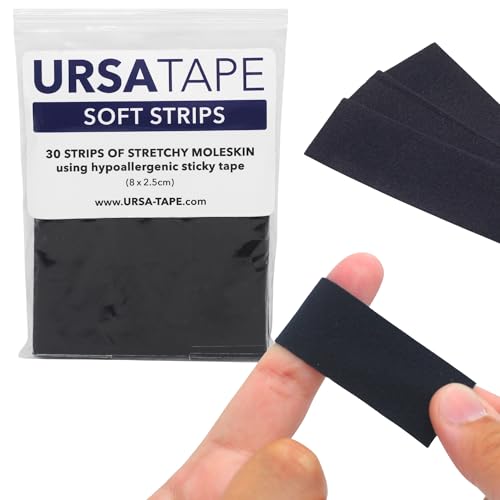
The URSA Tape Soft Strips use a moleskin fabric construction that feels like a second skin once applied. Each strip measures 8 by 2.5 centimeters, which is wide enough to cover a standard heel or toe zone without excess material bunching around the edges. The adhesive is hypoallergenic and bonds aggressively to dry skin, yet peels off completely without leaving sticky residue behind.
Reviewers consistently report that these strips survived two weeks of daily walking in Italy with no blister formation. The fabric is thin enough to fit inside snug shoes without creating uncomfortable bulk, but it provides enough thickness to absorb friction before it reaches the skin. Several users also repurpose these strips as CPAP cushion protectors, which speaks to the gentle adhesion on sensitive facial skin.
The black color makes them nearly invisible on the inside of dark shoes or on stage wear. Because the tape lacks hydrocolloid gel, it is strictly a prevention tool rather than a treatment for existing open blisters. For pure friction defense that lasts through multiple days and showers, this is the benchmark product.
Why it’s great
- Hypoallergenic and residue-free removal
- Thin fabric fits in tight shoes without rolling
- Rated waterproof for multi-day wear through showers
Good to know
- No hydrocolloid gel for healing active blisters
- Pre-cut size may not cover very large raw zones
2. RockTape Blister Prevention and Treatment Kit

RockTape built its reputation on kinesiology tape for athletes, and this blister kit adapts that same stretch-friendly fabric to foot protection. The kit includes ten-inch strips for wrapping around the arch, six-inch strips for heel cups, and three-inch strips for individual toes. The material mix of 97 percent cotton and 3 percent nylon breathes well while providing a soft grip that stays planted even during sweaty summit pushes.
Hikers who tested this tape on Camp Muir and multi-day treks in Alaska reported zero blisters despite wearing boots that were not fully broken in. The adhesive holds firm against the constant rubbing of a stiff boot collar, and the stretch lets you wrap around the ankle contour without gapping. A minor glue residue remains after removal, similar to a standard bandage, but it does not irritate the skin.
This is not a hydrocolloid bandage, so it works best as a preventive layer on healthy skin. Apply it to known hot spots before the friction begins, and the cotton weave will absorb the shear force that normally causes a blister to form. The kit format gives you enough strips for a full week-long trip.
Why it’s great
- Three strip sizes fit every part of the foot
- Breathable cotton/nylon weave for long hikes
- Adhesive stays locked during heavy perspiration
Good to know
- Leaves a slight glue residue on skin
- Not designed to treat existing broken blisters
3. BirdieWrap Golf Sports Tape Wrap
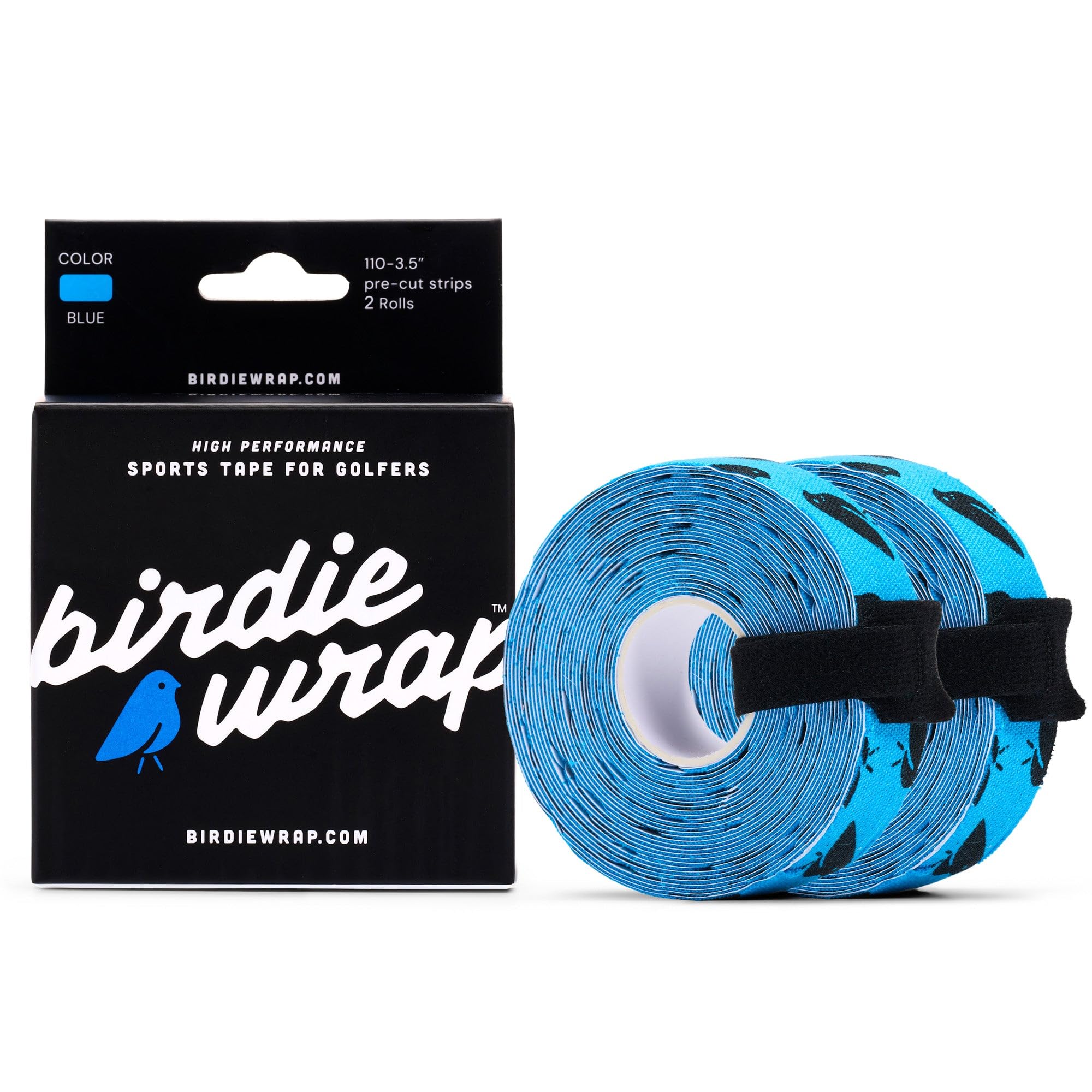
BirdieWrap was designed specifically for the repetitive grip motion of a golf swing, but its 4-way stretch fabric makes it equally effective for construction workers and anyone who depends on their hands all day. The tape molds over the knuckles without cutting off blood flow, which is the common failure point of rigid athletic tape. Each roll contains 110 pre-cut strips, so you have enough for an entire season of weekend rounds.
Golfers who play without a glove report that the tape stays intact for all 18 holes with no peeling at the edges. The adhesion holds against the rotational friction of a club grip, and the material does not stretch out of shape after repeated swings. A small storage issue: the roll can unspool inside a golf bag if not stored in a sealed pocket, so keep the roll at home and carry only the strips you need for that round.
This product excels on fingers and the palm side of the hand where the skin shears against grip surfaces. It offers less cushioning than a thick moleskin strip, so it is best suited for preventing nicks and hot spots rather than protecting deep blisters on the heel.
Why it’s great
- 4-way stretch wraps knuckles without restricting blood flow
- Superb adhesion through 18 holes of rotational friction
- Massive 110-strip count for long-term use
Good to know
- Roll unspools easily in a bag if not secured
- Minimal cushioning compared to moleskin or gel pads
4. Promifun Hydrocolloid Gel Blister Bandages Variety Pack

The Promifun pads use sealing adhesive hydrocolloid technology that delivers 25 percent more cushioning than standard bandages. The four different shapes included in the 32-count pack target the heel, toe, ball of the foot, and finger joints, so you are not forced to cut a single rectangular pad for curved zones. The gel layer actively absorbs fluid from a forming blister, which both protects the area and speeds the healing cycle.
Reviewers who wore these on cobblestone streets in Europe reported that the pads stayed in place for five to eight hours of continuous walking without rolling or peeling. The waterproof seal holds up through sweaty conditions and light shower exposure, though extremely long hikes may cause the edges to fray before the pad fails. Users with adhesive sensitivities noted no allergic reaction, which points to a skin-friendly backing layer.
This is the best choice for someone who already feels a hot spot developing and wants a product that can both prevent the blister from worsening and accelerate recovery. The padding is thicker than fabric tape, so it works best in shoes that have a little extra volume around the heel and toe box.
Why it’s great
- 25 percent extra cushioning versus standard bandages
- Four anatomical shapes for precise placement
- Hydrocolloid gel heals blisters while preventing new ones
Good to know
- Thicker profile may feel bulky in tight shoes
- Edge fraying possible during very long activity sessions
5. Kimihome Hydrocolloid Blister Bandages for Feet
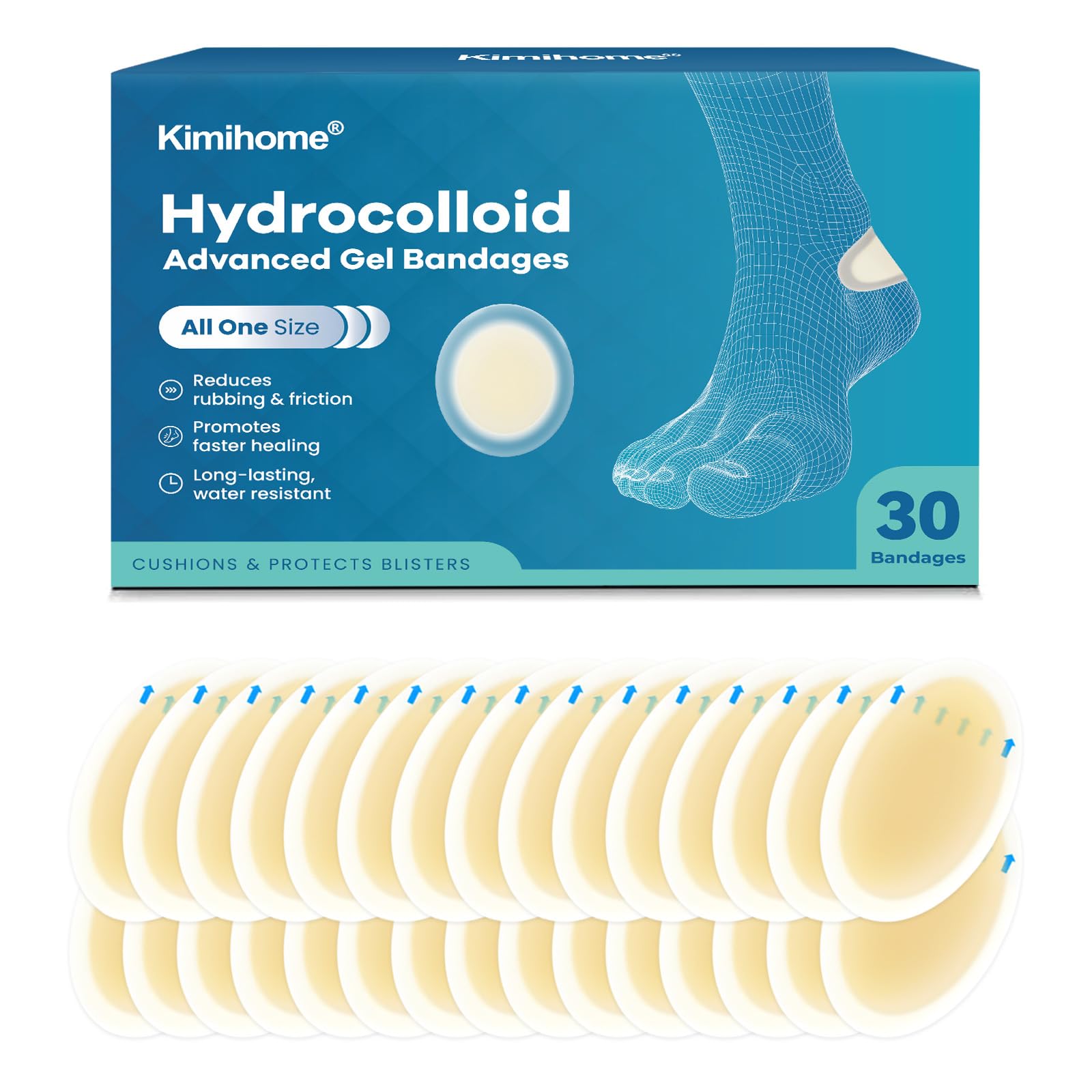
Kimihome’s blister bandages come individually wrapped, making them the most portable option in this roundup. Each heel-shaped pad provides 25 percent more cushioning than a standard bandage and creates a gel cushion that conforms to the contour of the back of the foot. The water-resistant backing keeps the pad secure during light swimming or showering, which is a common requirement for travelers breaking in rental shoes or new sandals.
Many customers use these pads as an instant callus barrier for new shoes that rub the heel bone. The adhesive holds for multiple days on the same spot, allowing the blister underneath to heal without repeated peeling and reapplication. However, a subset of users found that the adhesion fails on the ankle area where the skin flexes during walking, and the pads can peel off in the shower if not pressed firmly down onto completely dry skin.
For quick access in a carry-on or daypack, the individual wrappers keep each pad sterile and protected from pocket lint. The gel cushioning is effective for superficial blisters, but the shape is optimized for the heel only, so you cannot use these on the toe or the arch without bending the pad out of its intended contour.
Why it’s great
- Individually wrapped for sterile travel portability
- 25 percent extra gel cushioning versus basic bandages
- Water-resistant backing survives light shower exposure
Good to know
- Adhesion can fail on highly flexible ankle skin
- Heel-only shape limits application to other foot zones
FAQ
Can I use blister tape on an open wound?
How long does a single strip of fabric blister tape last?
Does hydrocolloid tape work better than moleskin for prevention?
Final Thoughts: The Verdict
For most users, the blister prevention tape winner is the URSA Tape Soft Strips because it combines thin moleskin fabric, hypoallergenic waterproof adhesive, and residue-free removal in a single pre-cut package that works for feet and body. If you want active healing gel for an already-forming hot spot, grab the Promifun Hydrocolloid Variety Pack. And for hand and finger protection during golf or grip-intensive work, nothing beats the BirdieWrap Golf Sports Tape.

Mo Maruf
I created WellFizz to bridge the gap between vague wellness advice and actionable solutions. My mission is simple: to decode the research and give you practical tools you can actually use.
Beyond the data, I am a passionate traveler. I believe that stepping away from the screen to explore new environments is essential for mental clarity and physical vitality.