Our readers keep the lights on and my smoothie glass nicely filled. As an Amazon Associate, I earn from qualifying purchases.
Finding an athletic shoe that actually supports a flat foot without feeling like a brick is a rare alignment. Most “supportive” sneakers collapse under your arch or force your ankle into an unnatural angle, turning every run or walk into a battle against overpronation.
I’m Mohammad Maruf — the founder and writer behind WellFizz. I’ve spent years analyzing the biomechanics of stability footwear, digging into midsole compounds, heel counter rigidity, and medial post geometry to separate genuine support from marketing claims.
This guide zeroes in on the models engineered to correct excessive inward roll and provide lasting arch engagement. After combing through thousands of verified user experiences and technical specs, this breakdown of athletic sneakers for flat feet delivers clear direction for anyone tired of guessing which shoe actually works.
How To Choose The Best Athletic Sneakers For Flat Feet
Flat feet change the way force travels through your kinetic chain. Without a natural arch to absorb shock, your foot rolls inward (overpronation), which stresses the plantar fascia, ankles, and knees. The right sneaker counteracts this mechanically, not just with soft foam. Here’s what separates a real flat-foot sneaker from a generic neutral trainer.
Stability Architecture: Posts, Rails, and Frames
Not all stability shoes create stability the same way. Traditional medial posts use a denser foam block under the arch to slow pronation. Modern guide rails (like Brooks’ GuideRails or Hoka’s J-Frame) use firmer foam walls that cradle the heel and allow a more natural gait transition. Flat feet with severe overpronation often respond better to a firm medial post, while mild to moderate pronators prefer the less intrusive feel of guide rails. The key is matching the rigidity level to how much your arch collapses.
Midsole Density and Stack Height
A flat-foot runner needs a platform that won’t deform unevenly under load. Too-soft foam (like a pure max-cushion trainer) can actually worsen overpronation by letting the foot sink medially. Look for a dual-density midsole where the firmer foam sits on the arch side. Stack height (the amount of foam between your foot and the ground) also matters — a lower stack (under 30mm) offers more ground feel and inherent stability, while a higher stack (over 35mm) provides more cushion but requires a stiffer support frame to remain stable.
Heel Counter Rigidity and Toe Box Volume
Flat feet often have hypermobile heels. A stiff, structured heel counter locks the rearfoot in place and prevents excessive heel tilt during the gait cycle. Run your thumb around the inside of the heel cup — if it collapses easily under light pressure, it won’t control pronation. Toe box volume is equally critical: a narrow toe box can exacerbate overpronation by forcing the foot into a supinated position to fit, while generous toe space allows the foot to splay naturally and engage the arch reflex.
Width Availability and Insole Compatibility
Flat feet tend to be wider through the midfoot, especially if you have a collapsed arch that spreads the foot. Shoes available in 2E, 4E, or even 6E widths allow your foot to sit properly on the platform without overflowing the side of the midsole. A shoe that fits correctly on the width will engage its stability features far better than a narrow shoe sized up for width. Removable insoles are also a must for anyone who uses custom or over-the-counter orthotics — look for at least 5mm of depth under the insole to accommodate an orthotic without raising your heel too high.
Quick Comparison
On smaller screens, swipe sideways to see the full table.
| Model | Category | Best For | Key Spec | Amazon |
|---|---|---|---|---|
| Brooks Beast GTS 26 | Stability | Severe overpronation, heavy runners | Firm medial post, 4E wide | Amazon |
| Hoka Arahi 7 (Men’s) | Stability | Mild overpronation, daily training | J-Frame support, 30mm stack | Amazon |
| Hoka Arahi 7 (Women’s) | Stability | PTTD recovery, narrow feet | J-Frame support, 30mm stack | Amazon |
| Brooks Glycerin GTS 23 | Supportive Neutral | Plush cushion with GuideRails | GuideRails, DNA Loft v3 foam | Amazon |
| New Balance Fresh Foam X Vongo V6 | Stability | Wide feet, orthotic-friendly | Fresh Foam X, 4E available | Amazon |
| ASICS Gel-Cumulus 27 (Men’s) | Neutral | Mild flat feet, heel strikers | Rearfoot Gel, 10mm drop | Amazon |
| New Balance Fresh Foam X More V6 | Max Cushion | All-day standing, wide feet | Fresh Foam X, 4E wide | Amazon |
| ASICS Gel-Cumulus 27 (Women’s) | Neutral | Narrow heels, Morton’s neuroma | Rearfoot Gel, 10mm drop | Amazon |
| Hoka Arahi 7 (Men’s, Alternate) | Stability | Heavy users, plus-size runners | J-Frame support, 30mm stack | Amazon |
In‑Depth Reviews
1. Brooks Men’s Beast GTS 26 Supportive Running & Walking Shoe
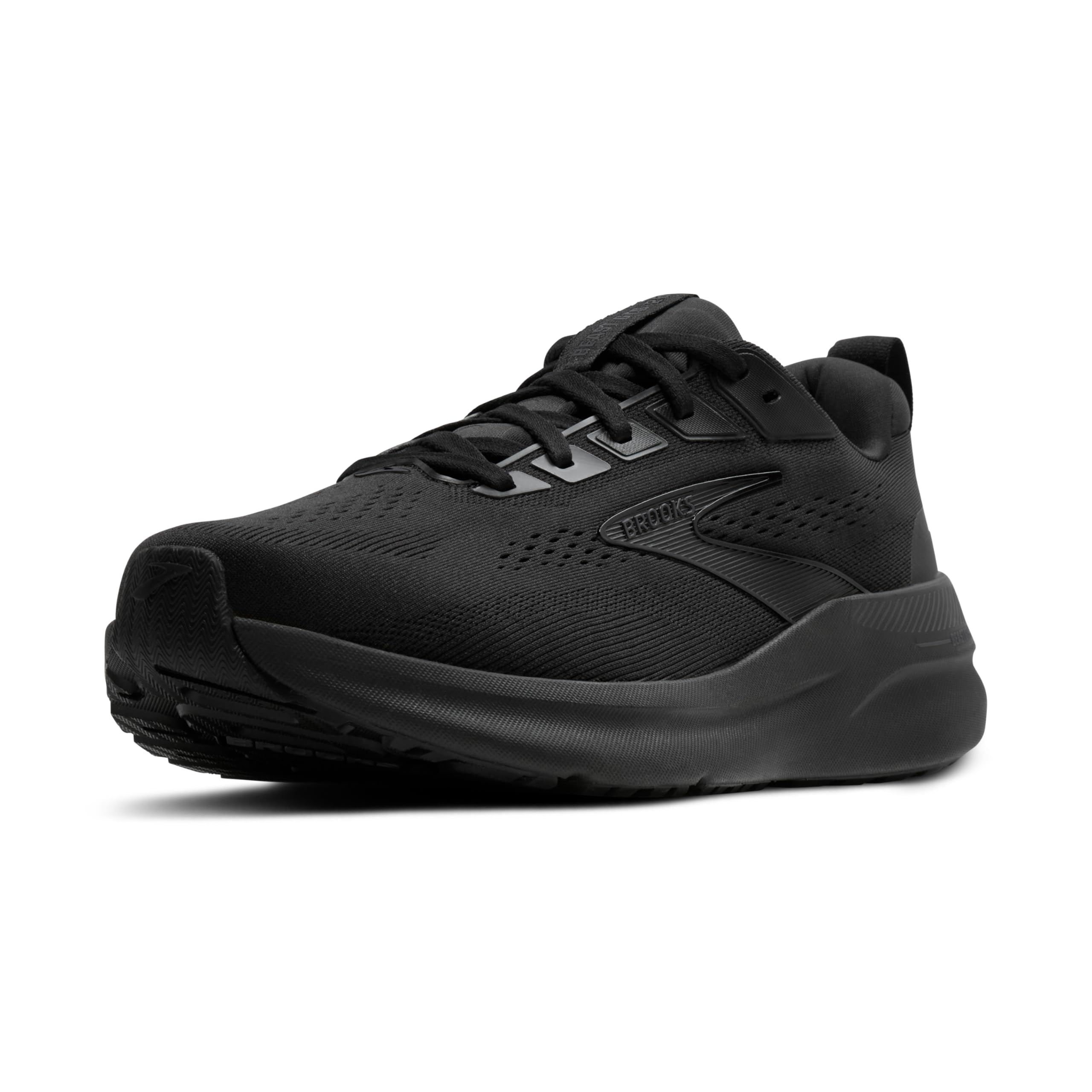
The Beast GTS 26 is the benchmark for severe overpronators who need maximum stability without sacrificing durability. Its firm medial post extends through the full midfoot, preventing the arch from collapsing even under heavy load — a clear advantage over softer guide-rail systems. The outsole features a thick one-piece rubber unit with slip-resistant tread and a slight flare under the forefoot to widen the landing platform, which directly counters the inward roll.
Longtime users who have worn the GTS20 for 25 years report that the 26 retains the same reliable fit in size 12.5W (2E). The padded collar and flat eyelets offer a secure lockdown, and the rubber toe bump protects against stubs. For runners and walkers with large, wide flat feet (including bunions), the generous toe box provides the splay room needed to avoid pinching while maintaining rearfoot control.
The only recurring complaint comes from extra-wide (4E) users who find the stock 48-inch laces too short for a proper heel lock. Swapping to 57-inch laces solves the issue. The insole is firmer than the plush squish of Hoka, but that firmness translates to longer structural integrity — the shoe does not go dead after 300 miles. If your flat feet need a true motion-control anchor, this is the pair.
Why it’s great
- Firm medial post provides exceptional pronation control for severe overpronators.
- Wide toe box accommodates bunions and splay without pressure points.
- Durable outsole and midsole hold structure well past 300 miles.
Good to know
- Stock laces are too short for heel-lock tying in 4E sizes.
- Firm cushion feel may be too stiff for runners who prefer max plushness.
2. Hoka Arahi 7 (Men’s)
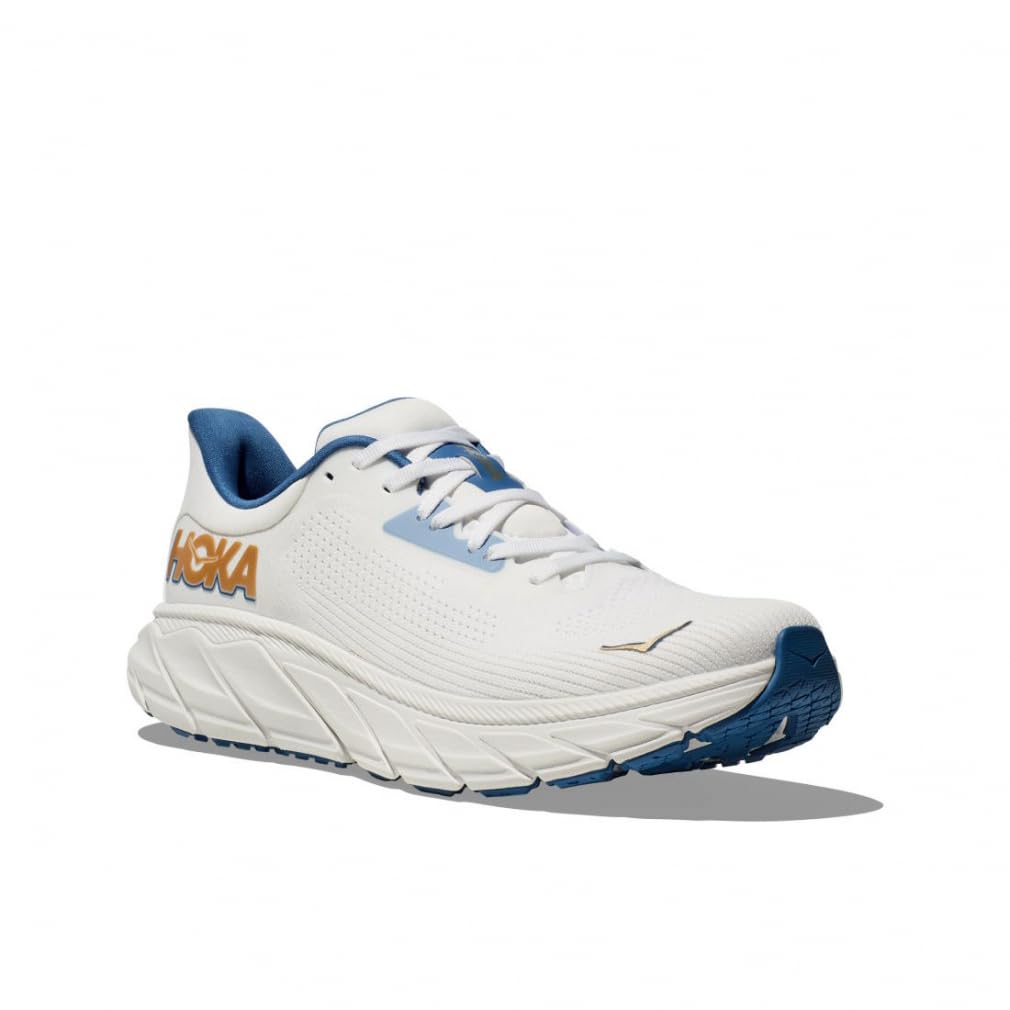
The Arahi 7 uses Hoka’s J-Frame technology — a firmer foam density that wraps around the heel and extends along the medial side — to provide light stability without a hard medial post. This makes it ideal for mild to moderate overpronators who find traditional stability shoes too aggressive. The 30mm stack height offers generous cushion while the J-Frame prevents the foot from sinking into excessive inward tilt.
First-time users note that the Arahi fits true to size with a snug heel counter that locks the rearfoot, but the overall shape leans narrow. Those with narrow or standard-width feet find the fit exceptional, while wide-footed users report the toe box is too restrictive. For walkers logging 10,000+ steps a day, the midsole remains responsive without packing out quickly, and the 5mm heel-to-toe drop encourages a natural midfoot strike.
The heel counter has a hard external backing that some users find uncomfortable when sitting with feet tucked. That aside, the Arahi 7 delivers a rare combination: noticeable stability that does not announce itself with every step. For flat-footed runners who want a modern, lightweight feel without the clunk of traditional motion-control shoes, this is a top contender.
Why it’s great
- J-Frame stability provides subtle pronation control without a hard post.
- Lightweight build (under 10 oz) for a stability shoe.
- Excellent heel lockdown for narrow to standard-width feet.
Good to know
- Not suitable for wide feet — toe box runs narrow.
- Hard heel counter backing can dig in when seated or driving.
3. Brooks Women’s Glycerin GTS 23 Supportive Running Shoe
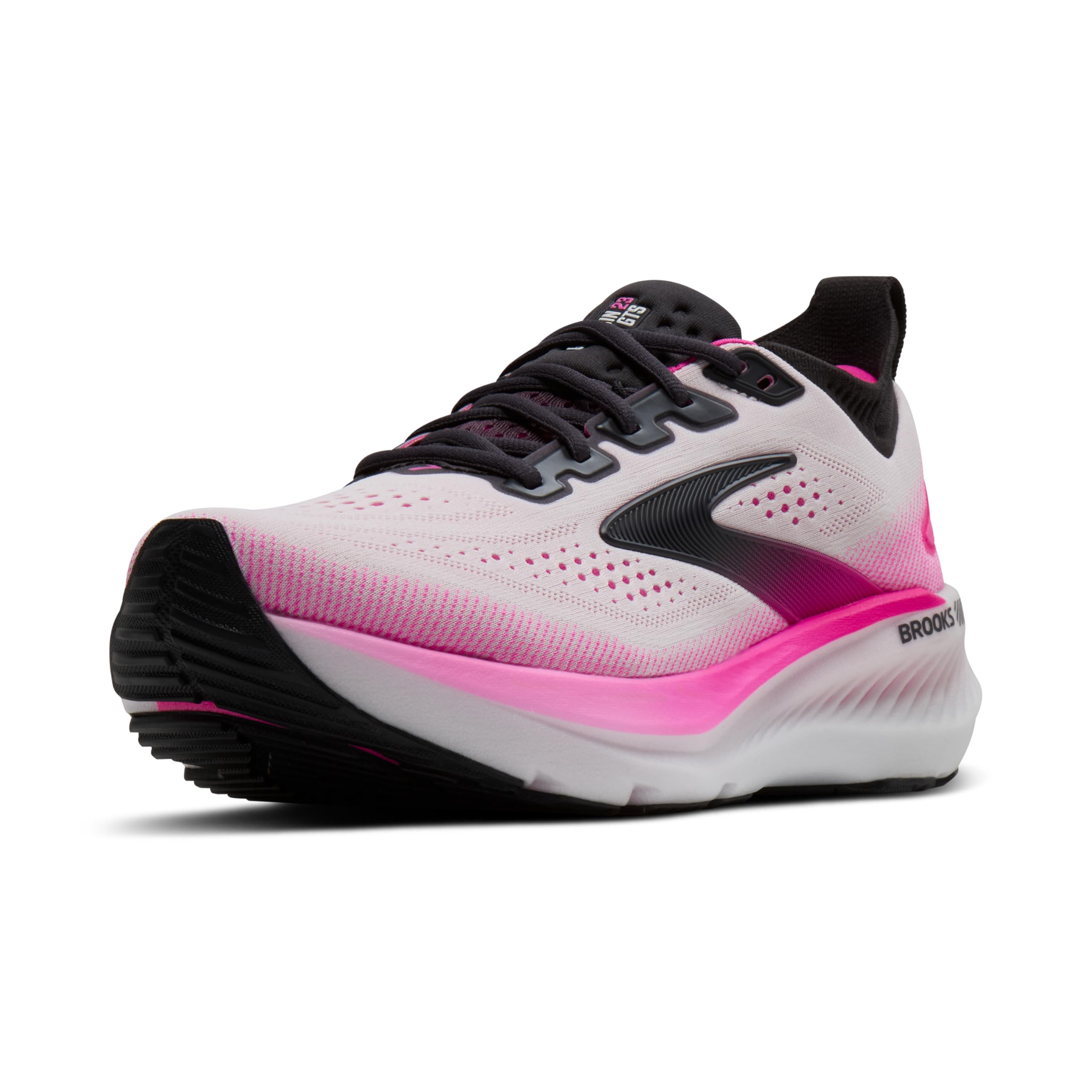
The Glycerin GTS 23 pairs the plush DNA Loft v3 foam (Brooks’ softest midsole compound) with their GuideRails holistic support system. Unlike a hard medial post, GuideRails use firmer foam blocks on the medial and lateral sides of the heel to gently correct excess motion without interfering with the natural gait. This makes it a strong choice for flat-footed runners who want a luxurious, bouncy ride but still need pronation guidance.
The wide-width option is a standout feature — users with 4E feet report no discomfort even after four-mile walks, and the arch support is present without feeling stiff or intrusive. The removable insole allows easy swap-in for custom orthotics, and the upper breathes well with engineered mesh. Several users report instant relief from plantar fasciitis pain after switching from neutral trainers.
The main limitation appears during very long walking days (9,000+ steps). The soft foam, while delightful for everyday wear, can allow some heel and toe rubbing on extended excursions due to minor heel slippage. For daily training and casual wear, the Glycerin GTS 23 is exceptionally comfortable. The price sits at the premium end of the spectrum, but the construction quality justifies the investment for runners who prioritize cushion with subtle stability.
Why it’s great
- GuideRails provide effective pronation control without a harsh post.
- DNA Loft v3 foam offers a plush, bouncy ride ideal for daily training.
- Excellent wide-width availability (up to 4E) with true sizing.
Good to know
- Soft midsole can lead to minor heel rubbing on very long walking days.
- Light color options show dirt quickly.
4. New Balance Fresh Foam X Vongo V6
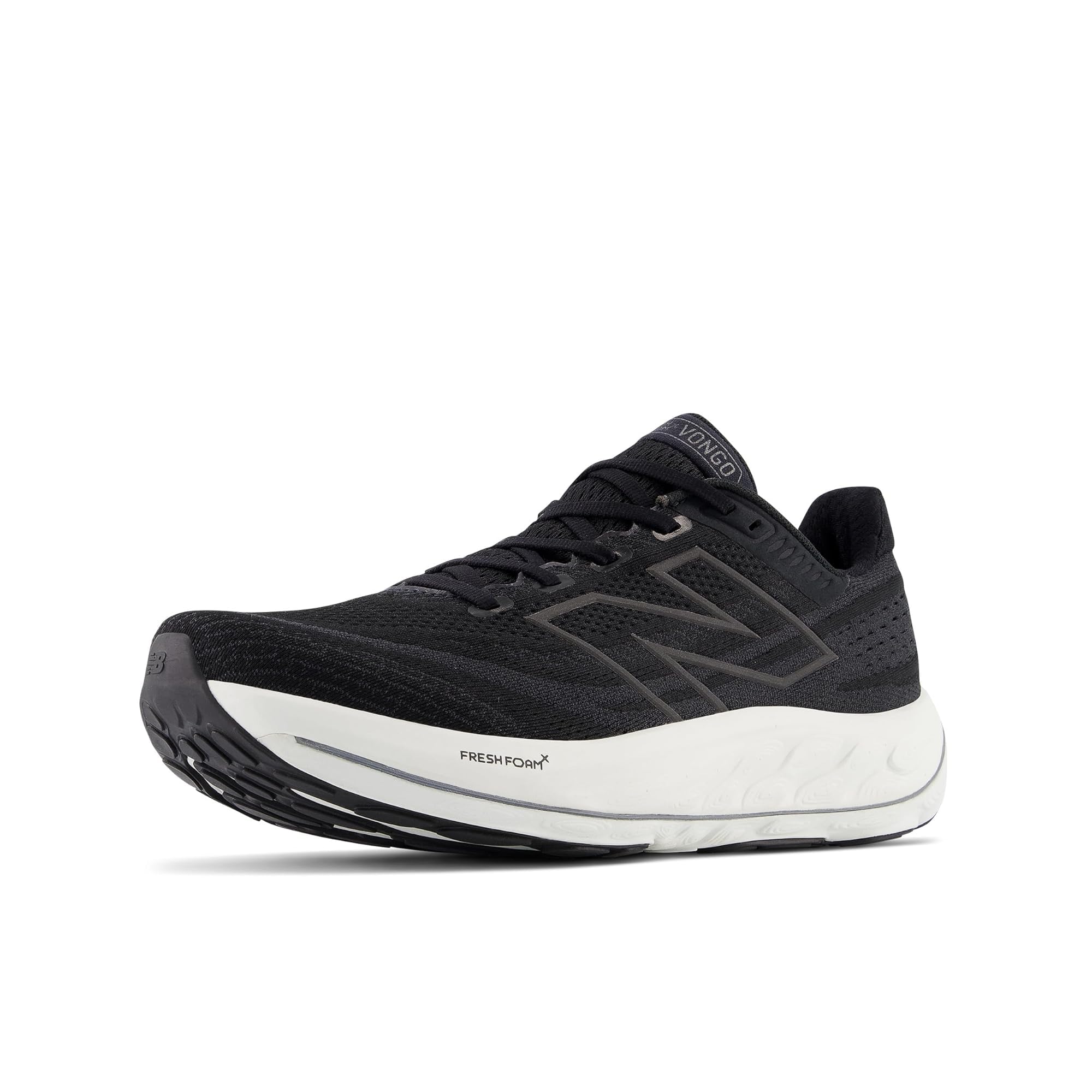
The Vongo V6 positions itself as a stability shoe for runners who need arch support but also demand substantial toe box room. The Fresh Foam X midsole is moderately firm — denser under the arch than the lateral side — and works well for flat feet with high arches or plantar fasciitis. The medial post is not as aggressive as the Brooks Beast, making it suitable for moderate overpronators.
Podiatrists frequently recommend the Vongo line for patients with wide feet and collapsed arches. The removable insole has enough depth to accommodate inexpensive over-the-counter orthotics (users report success with – inserts that match – alternatives). The outsole flexibility is praised by those who find other stability shoes too stiff — the Vongo bends naturally with the foot’s motion through toe-off.
The heel counter has a slightly looser fit than competitors; a small percentage of users experience heel slip if not laced tightly. This is more prevalent in standard-width models than the 4E version. For those who prioritize midfoot volume and insole compatibility over absolute heel lockdown, the Vongo V6 is a reliable workhorse that has evolved consistently over seven generations.
Why it’s great
- Generous toe box and 4E width accommodate flat, splayed feet.
- Removable insole with good depth for custom orthotics.
- Natural outsole flex reduces the stiff “stability shoe” feeling.
Good to know
- Heel counter can feel loose for some users, requiring careful lacing.
- Medial support is moderate — not enough for severe overpronators.
5. New Balance Fresh Foam X More V6
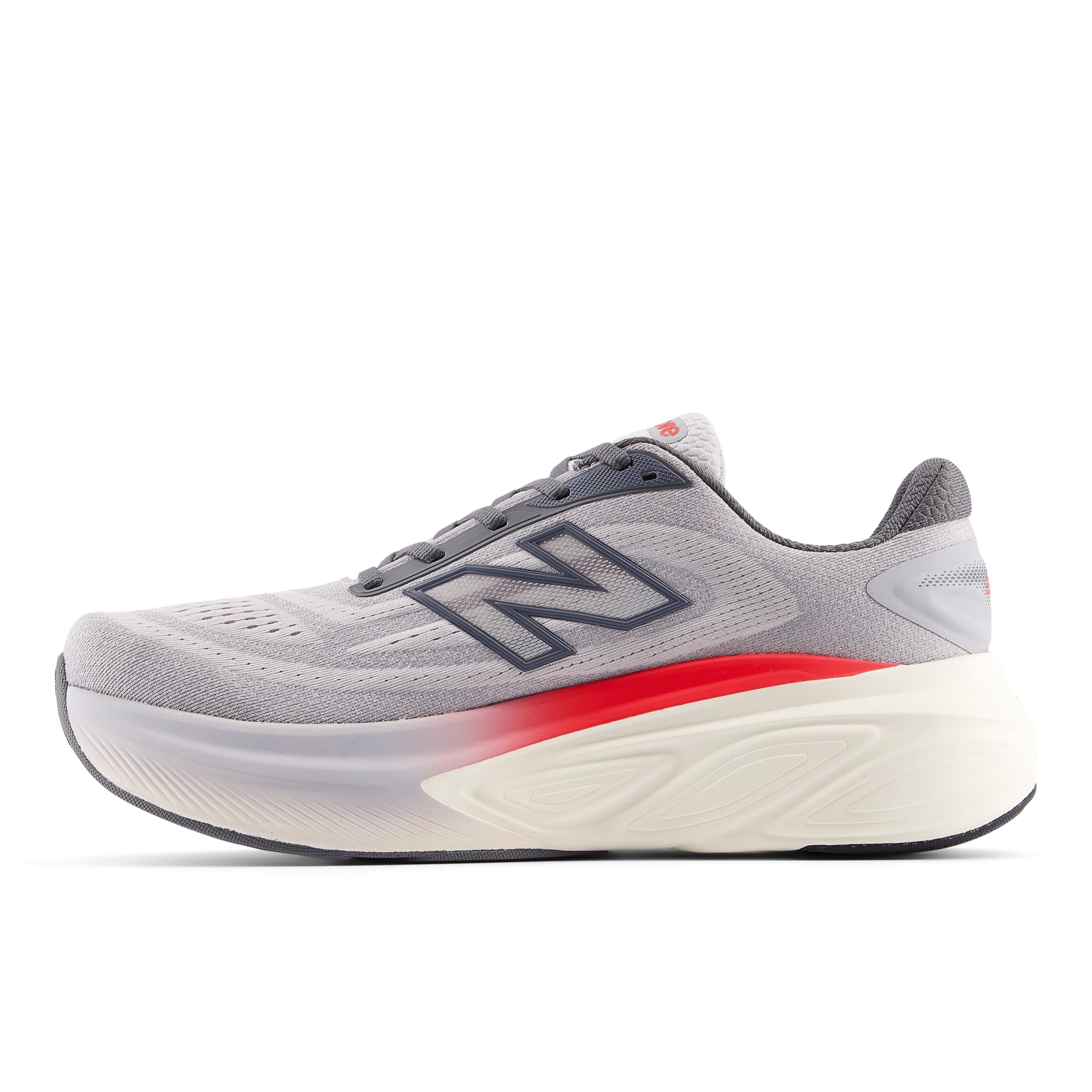
The Fresh Foam X More V6 is a max-cushion cruiser that works surprisingly well for flat feet — but only for users whose overpronation is mild. The massive stack of Fresh Foam X is incredibly soft (“like walking on a pillow,” as one user describes), but the platform is wide enough to provide inherent stability without a medial post. The 4E width option ensures the foot sits centered on the foam rather than spilling over the edge.
This shoe shines for all-day standing and high-mileage walking (20,000 steps daily). Users with wide feet report zero blisters or hotspots, and the plushness effectively absorbs ground shock that would otherwise travel up the kinetic chain. The heel-to-toe drop of roughly 4mm encourages a natural stride, and the rocker-shaped sole smooths the transition from heel strike to toe-off.
The major downside is tread durability. The soft foam outsole wears down noticeably faster than traditional rubber — some users report visible flattening of the tread pattern within a few months of heavy use. This is the trade-off for the extreme softness. For flat-footed walkers who prioritize comfort over mileage longevity, the More V6 is a game-changer. For runners who need durable traction, look to a denser stability shoe.
Why it’s great
- Extremely plush Fresh Foam X provides exceptional impact absorption.
- Wide platform and 4E width offer inherent stability for mild pronation.
- Rocker geometry smoothens transitions for all-day walking comfort.
Good to know
- Outsole tread wears down quickly compared to traditional stability shoes.
- Not suitable for moderate to severe overpronators without a medial post.
6. ASICS Gel-Cumulus 27 (Men’s)
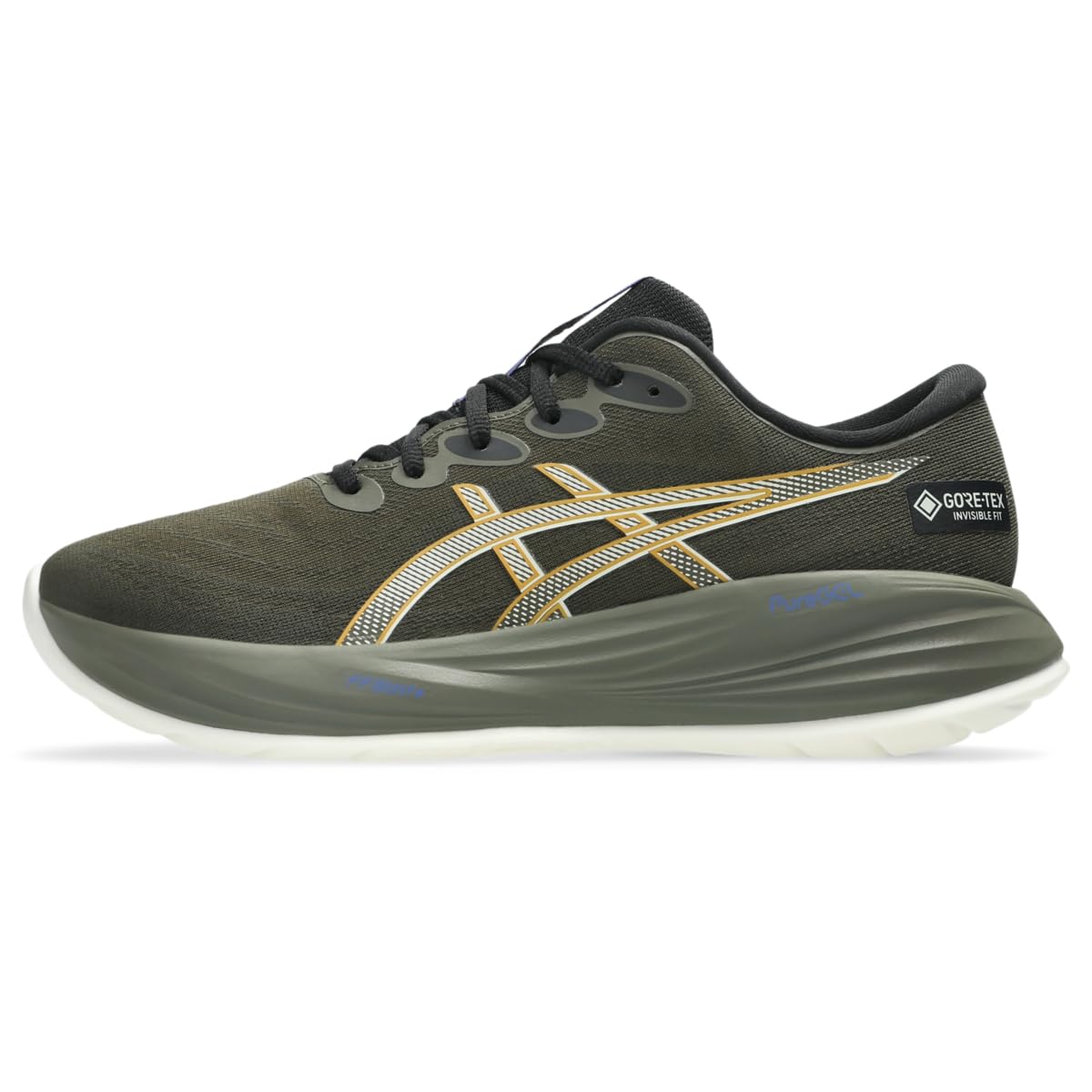
The Cumulus 27 sits in ASICS’s neutral cushioning line, but its high 10mm heel-to-toe drop and rearfoot Gel unit make it a viable option for flat-footed heel strikers who have mild pronation. The higher drop encourages a heel-first landing pattern that some flat-footed runners find more natural, and the Gel absorbs the initial impact that would otherwise stress the arch.
Users transitioning from overly soft shoes (like Skechers) report immediate elimination of mid-toe pain when switching to the Cumulus. The toe cap is generous enough to prevent toe mashing during long runs, and the upper breathability is excellent for warmer weather. At roughly 9.5 oz, it is lighter than most stability shoes, which appeals to runners wanting a faster feel.
However, the Cumulus lacks a dedicated medial stability feature. Flat-footed runners with moderate or severe overpronation will find their arch collapses over time, especially as the foam breaks in. It works best as a daily trainer for flat feet that only mildly roll inward. For those with a neutral gait who just happen to have flat arches, the Cumulus 27 delivers a smooth, responsive ride.
Why it’s great
- Rearfoot Gel provides excellent shock absorption for heel strikers.
- 10mm drop reduces strain on the Achilles for flat-footed runners.
- Lightweight and breathable upper for comfortable daily training.
Good to know
- No medial post or guide rail — not for moderate to severe overpronation.
- Toe box runs slightly narrow for some users with splayed flat feet.
7. ASICS Women’s Gel-Cumulus 27 Running Shoes
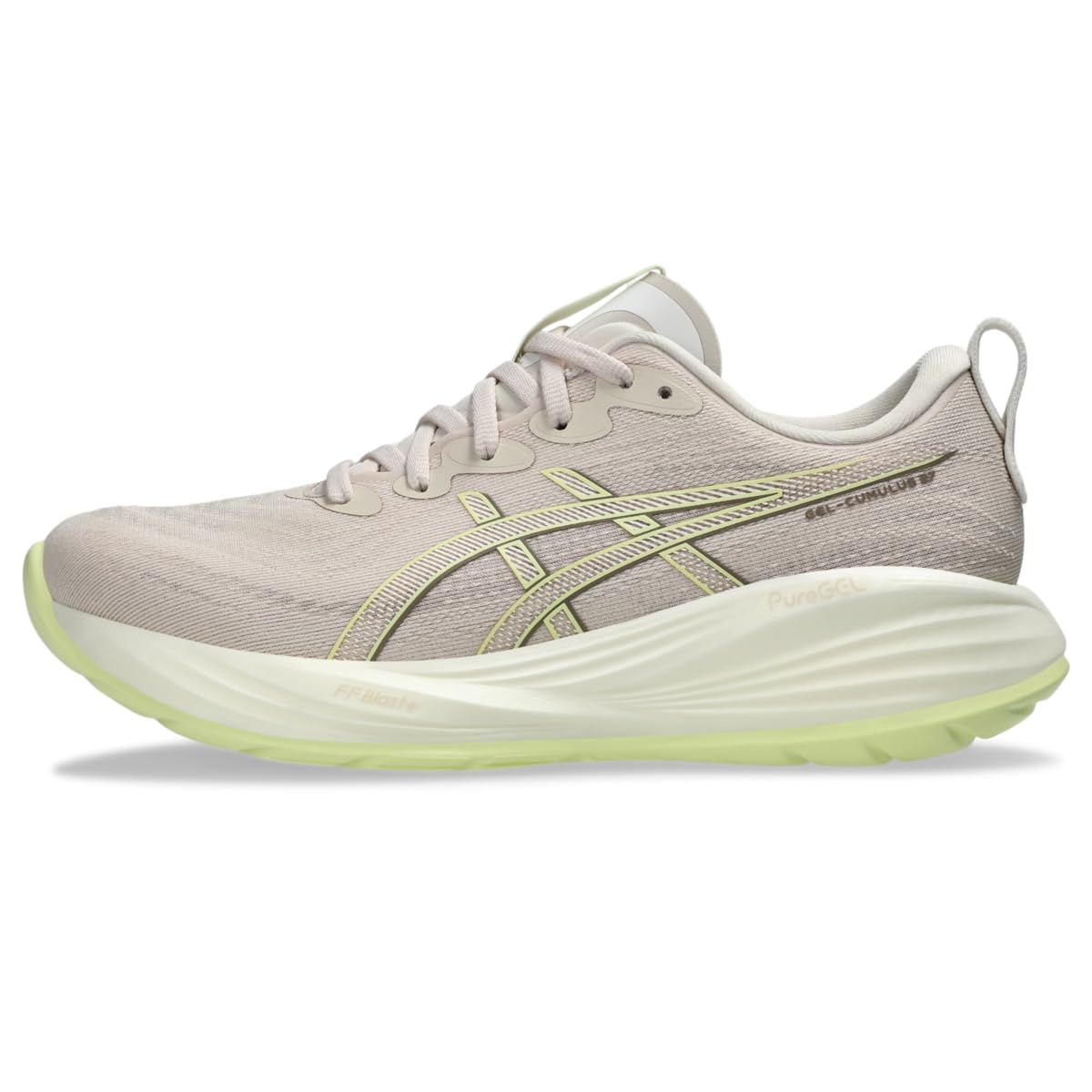
The women’s version of the Cumulus 27 shares the same neutral platform and 10mm drop as the men’s, but the upper is sculpted to fit a narrower heel cup. This makes it an unexpected ally for flat-footed women with narrow heels who struggle with heel slip in standard cuts. The rearfoot Gel capsule is still present, providing the same impact damping for heel strikers.
Reviews from users with Morton’s neuroma and foot alignment issues report doctor recommendations for this model. The fit is described as “like a glove” for narrow heels, with a toe box that offers enough room for toe splay — a critical detail for flat feet that widen upon weight bearing. The medium cushion level avoids the instability of max-cushion shoes while still feeling plush for daily walks and short runs.
Like the men’s version, the Cumulus 27 lacks any pronation-control feature. It is best suited for women whose flat feet cause minimal overpronation and who need a reliable neutral shoe with a secure heel fit. For those requiring arch support, the removable sockliner can accommodate a thin orthotic, but there is no built-in medial wedge.
Why it’s great
- Narrow heel cup eliminates slip for women with narrow heels.
- Rearfoot Gel and 10mm drop smooth out heel-strike impact.
- Removable sockliner allows orthotic integration.
Good to know
- No medial stability feature — not for moderate to severe overpronation.
- Toe box can feel tight for women with wider forefeet.
8. Hoka ONE ONE Womens Arahi 7
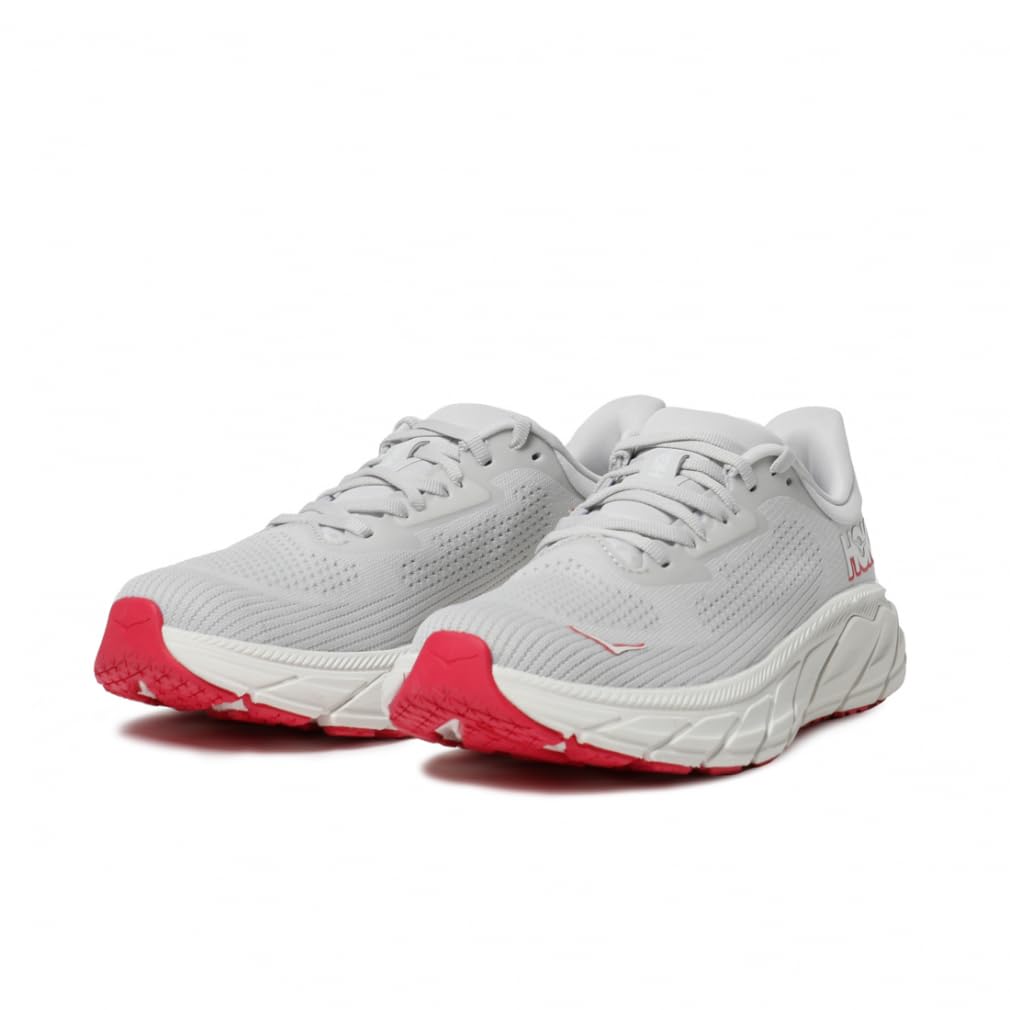
The women’s Arahi 7 mirrors the men’s J-Frame stability system but is tuned for a woman’s typically narrower heel and higher instep. It has become a go-to shoe for posterior tibial tendon dysfunction (PTTD) recovery, with multiple users reporting significant pain reduction during rehab. The J-Frame cradles the medial arch without adding bulk, and the early-stage Meta-Rocker helps transition weight forward smoothly.
At roughly 8.5 oz, it is one of the lightest stability shoes on the market, making it suitable for everything from store runs to daily walks. The upper uses a breathable creel jacquard mesh that flexes with the foot’s natural expansion during activity. Color options are more vibrant than typical stability shoes, appealing to style-conscious users who still need serious support.
The same width caveat applies: the Arahi 7 runs narrow, and wide-footed users will find the toe box restrictive. The heel counter is structured but not rigid, providing a balance between lockdown and comfort. For women with flat feet who need stability without a heavy, clunky shoe, the Arahi 7 is a standout choice that many buy in multiples.
Why it’s great
- J-Frame stability aids PTTD recovery and arch support.
- Lightweight construction (under 9 oz) for a stability shoe.
- Meta-Rocker encourages smooth gait transitions.
Good to know
- Narrow fit — not ideal for wide or swollen feet.
- Higher price point compared to equivalent stability models.
9. HOKA ONE ONE Mens Arahi 7 (Alternate Spec)

This alternate listing of the Hoka Arahi 7 carries the same J-Frame stability platform as the first men’s entry but is often found at a lower price point in previous model year colorways. The construction is identical: 30mm stack of compression-molded EVA, J-Frame medial wall, and a 5mm drop. The key differentiator is that this version frequently ships in the original factory box with never-been-tried-on condition — important for buyers who want unused pairs.
The shoe is particularly well-reviewed by heavy users (250 to 350 lbs) who report that the Arahi 7 maintains its structural integrity under significant load better than most max-cushion alternatives. The J-Frame does not pack out or become mushy after months of daily wear, and the wide platform provides a stable base. Users play pickleball, walk daily, and wear them for all-day standing without the shoe feeling dead after a month.
One consistent weakness across all Arahi 7 models is traction on wet or oily surfaces — the outsole rubber compound does not grip polished floors or damp pavement as well as competitors like Brooks. For indoor court sports or walking on slick surfaces, this is a real consideration. For general outdoor use on dry terrain, the Arahi 7 is a superb stability shoe that proves flat feet do not need a heavy boot to stay aligned.
Why it’s great
- J-Frame stability holds up well under heavy users (250+ lbs).
- Never-been-tried-on condition ensures zero break-in wear.
- Lightweight feel despite robust cushion stack.
Good to know
- Poor traction on wet or oily surfaces.
- Narrow fit compared to Brooks or New Balance wide options.
FAQ
Can flat feet wear neutral running shoes?
How do I know if I need a stability or motion-control shoe?
Do flat feet need a higher or lower heel-to-toe drop?
How often should I replace sneakers for flat feet?
Final Thoughts: The Verdict
For most users, the athletic sneakers for flat feet winner is the Brooks Beast GTS 26 because it delivers the most aggressive pronation control with a firm medial post and durable construction that holds up under heavy use. If you want a lighter, more modern feel with J-Frame stability, grab the Hoka Arahi 7. And for those who need maximum cushion with wide-width availability for all-day standing, nothing beats the New Balance Fresh Foam X More V6.

Mo Maruf
I created WellFizz to bridge the gap between vague wellness advice and actionable solutions. My mission is simple: to decode the research and give you practical tools you can actually use.
Beyond the data, I am a passionate traveler. I believe that stepping away from the screen to explore new environments is essential for mental clarity and physical vitality.