Our readers keep the lights on and my smoothie glass nicely filled. As an Amazon Associate, I earn from qualifying purchases.
A backpacking jacket is the single most debated piece of gear in a hiker’s pack because it must juggle three conflicting demands: packability, insulation, and weather protection. Choosing wrong means either shivering in camp or sweating through your base layer on the ascent.
I’m Mohammad Maruf — the founder and writer behind WellFizz. I’ve spent over a decade analyzing technical outdoor apparel, comparing fill powers, denier shell fabrics, and hydrostatic head ratings to separate marketing hype from real trail performance.
Whether you need a belay parka for alpine ice or a windproof softshell for ridge walks, this guide breaks down the thermal and water-resistant specs that matter most. If you’re searching for the right backpacking jacket, you need honest data on warmth-to-weight ratios and durable waterproof membranes.
How To Choose The Best Backpacking Jacket
A backpacking jacket lives at the intersection of warmth, weight, and weather resistance. Unlike a casual coat, it must compress into a stuff sack smaller than your sleeping bag and still keep you alive when the temperature drops at camp. The wrong choice adds ounces you’ll curse on every switchback.
Insulation Type: Down vs. Synthetic
Down offers the highest warmth-to-weight ratio — 800-fill goose down packs smaller and traps more heat per gram than any synthetic alternative. But down loses all insulating value when wet and takes hours to dry. Synthetic insulation like PrimaLoft or Thermarator retains warmth when damp and dries quickly, but it’s heavier and less compressible. For wet environments or high-output activities where sweat is inevitable, synthetic wins. For dry alpine trips where every gram counts, down is the clear choice.
Shell Fabric and Weather Resistance
The outer fabric’s denier (D) directly correlates with durability. A 10D face fabric feels silky and packs tiny but tears against sharp granite. A 40D-plus shell withstands brush, rock, and pack strap abrasion but adds weight. For weather protection, look for a hydrostatic head rating of at least 10,000 mm for a waterproof-breathable membrane, and a durable water repellent (DWR) finish that beads water off the face fabric. Non-PFC DWR finishess are now standard on premium models and are better for the environment.
Packability and Weight
Every serious backpacking jacket should include either a stuff sack or the ability to pack into its own pocket. Total weight for a mid-layer insulating jacket typically ranges from 8 to 16 ounces. A full waterproof shell with insulation will run heavier. Before buying, check the jacket’s weight against your base layer and mid-layer system — the sum must fit your pack’s volume budget.
Quick Comparison
On smaller screens, swipe sideways to see the full table.
| Model | Category | Best For | Key Spec | Amazon |
|---|---|---|---|---|
| Arc’teryx Atom Hoody | Synthetic Insulated | High-output alpine treks | Coreloft Continuous synthetic insulation | Amazon |
| Mountain Hardwear Ghost Whisperer/2 | Down Hoody | Ultralight packability | 8.2 oz (Medium) / 800-fill down | Amazon |
| Rab Microlight Alpine Hoody | Down Hoody | Alpine trekking & ski touring | 700-fill down / Pertex Quantum shell | Amazon |
| Rab Valiance Down Jacket | Waterproof Down | Wet, cold winter mountaineering | Waterproof membrane / 650-fill down | Amazon |
| The North Face McMurdo Parka | Waterproof Down Parka | Extreme cold & static use | 600-fill down / DryVent 2L shell | Amazon |
| Columbia Men’s Powder Lite II | Synthetic Puffer | Budget-friendly warmth | Omni-Heat reflective lining / Thermarator | Amazon |
| Columbia Big & Tall Ascender II Softshell | Windproof Softshell | Wind resistance & breathability | Windproof softshell / adjustable hood | Amazon |
| Orolay Women’s Packable Down Coat | Down Puffer | Travel & mild-cold layering | Lightweight duck down / packable | Amazon |
| Frogg Toggs Cascades Sportsman’s Pack | Waterproof Rain Shell | Fishing & wet-weather protection | Waterproof / multiple zippered pockets | Amazon |
In‑Depth Reviews
1. Arc’teryx Atom Hoody Men’s
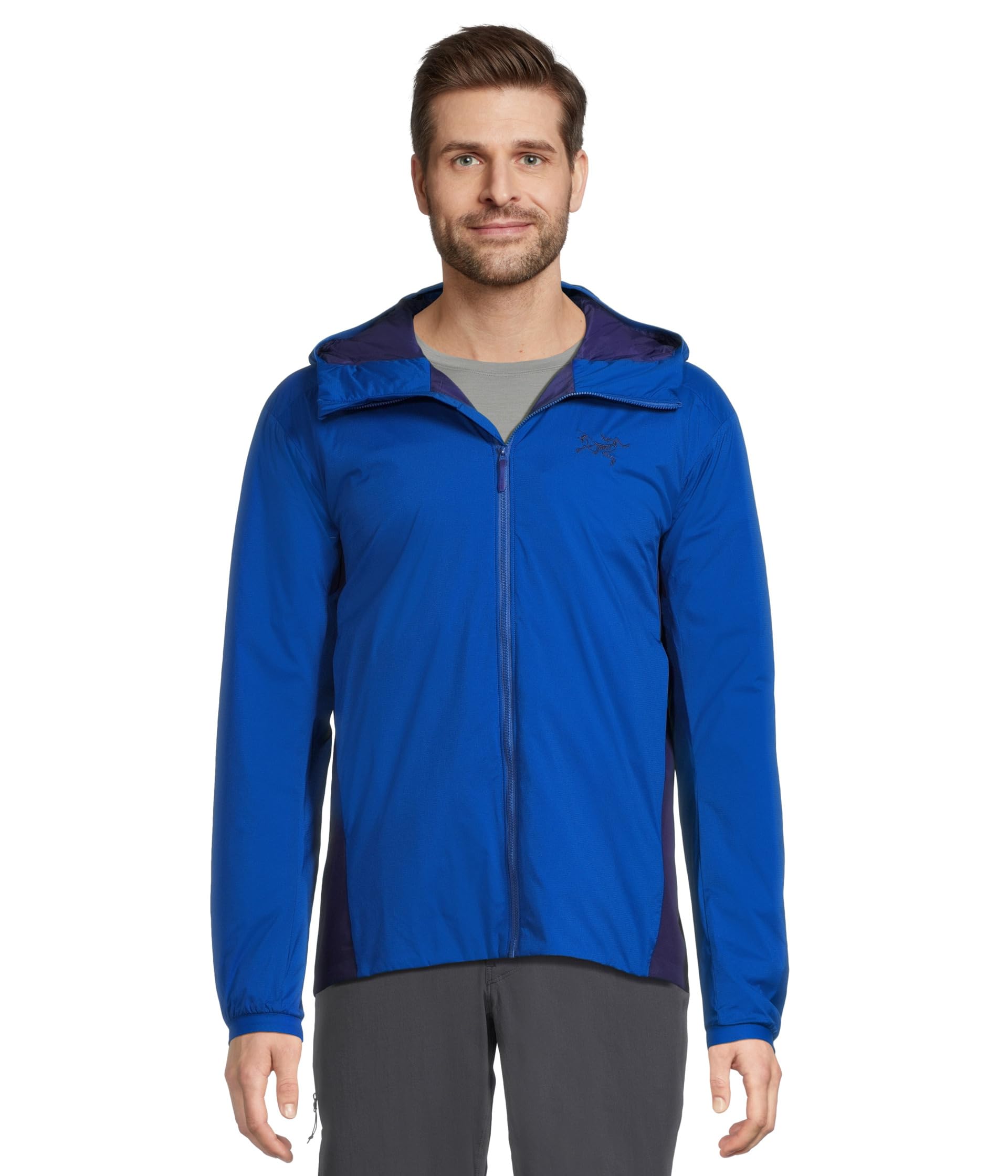
The Arc’teryx Atom Hoody is the benchmark for synthetic insulation in a backpacking context. Its Coreloft Continuous 60g insulation breathes exceptionally well during high-output hiking while providing enough warmth for camp stops down to the mid-30s Fahrenheit. The outer Tyono 20 denier face fabric offers light wind resistance and a DWR finish that beads off light precipitation, though it is not a fully waterproof shell.
Tested in Greenland’s 30-40°F windy conditions and daily New York winter commutes, the Atom Hoody delivers consistent warmth without bulk. The stretch-woven side panels dump heat aggressively when you’re working hard, a design trait that prevents the clammy feeling common in less breathable jackets. Its mobility is excellent — the articulated arms allow full reach for scrambling or ski touring without riding up your waist.
The trade-off is that the Atom Hoody is not a standalone piece for extreme cold. Below freezing, you will need a fleece or heavier baselayer underneath. The hood is helmet-compatible but lacks a stiffened brim, so it flops in heavy rain. Overpriced relative to its insulation weight, but the breathability and freedom of movement justify the premium for active users.
Why it’s great
- Exceptional breathability for high-output aerobic activity
- Lightweight and highly mobile for scrambling or climbing
- Coreloft synthetic insulation retains warmth even when damp
Good to know
- Not a standalone jacket for sub-freezing temperatures
- Hood lacks a stiff brim for rain deflection
- Premium price compared to synthetic puffers of similar weight
2. Mountain Hardwear Ghost Whisperer/2 Hoody
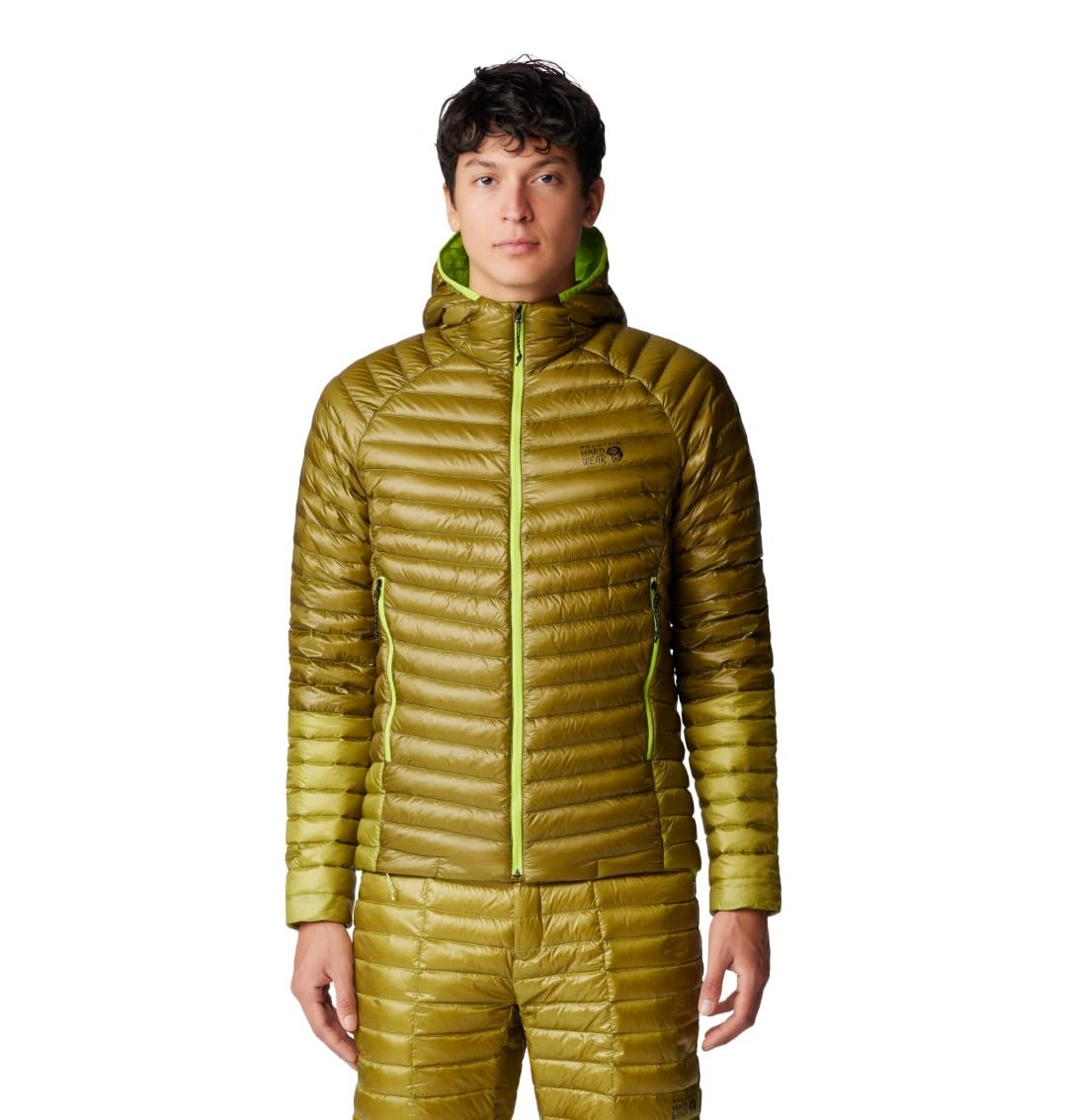
The Mountain Hardwear Ghost Whisperer/2 is the ultralight standard — an 8.2-ounce jacket (size Medium) that stuffs down to the size of a grapefruit and delivers remarkable warmth for its weight. Using 800-fill goose down with a 10D nylon shell, it provides an unmatched warmth-to-packability ratio for thru-hikers and fast-and-light alpine missions.
Users have tested this jacket in Antarctica with proper layering and reported excellent thermal retention. The slim athletic cut layers cleanly under a hardshell without bunching, and the updated baffle construction keeps down evenly distributed. The jacket’s minimalism is its strength — no extra zippers, no heavy pocket liners, just pure insulation where you need it.
The 10D face fabric is delicate. Branches, pet claws, and even aggressive pack strap buckles can snag and tear the shell. The hood lacks adjustability, so it does not cinch down tightly in high wind. The Ghost Whisperer is not waterproof and loses insulation value quickly when wet. It excels in dry, cold environments where weight is the primary constraint.
Why it’s great
- Incredible 8.2 oz weight with outstanding compressibility
- 800-fill goose down delivers high warmth-to-weight ratio
- Slim cut layers seamlessly under a hardshell
Good to know
- 10D face fabric tears easily from brush or pet claws
- Hood has limited adjustability in windy conditions
- Not waterproof and loses all insulation value when wet
3. Rab Men’s Microlight Alpine 700-Fill Down Hooded Jacket
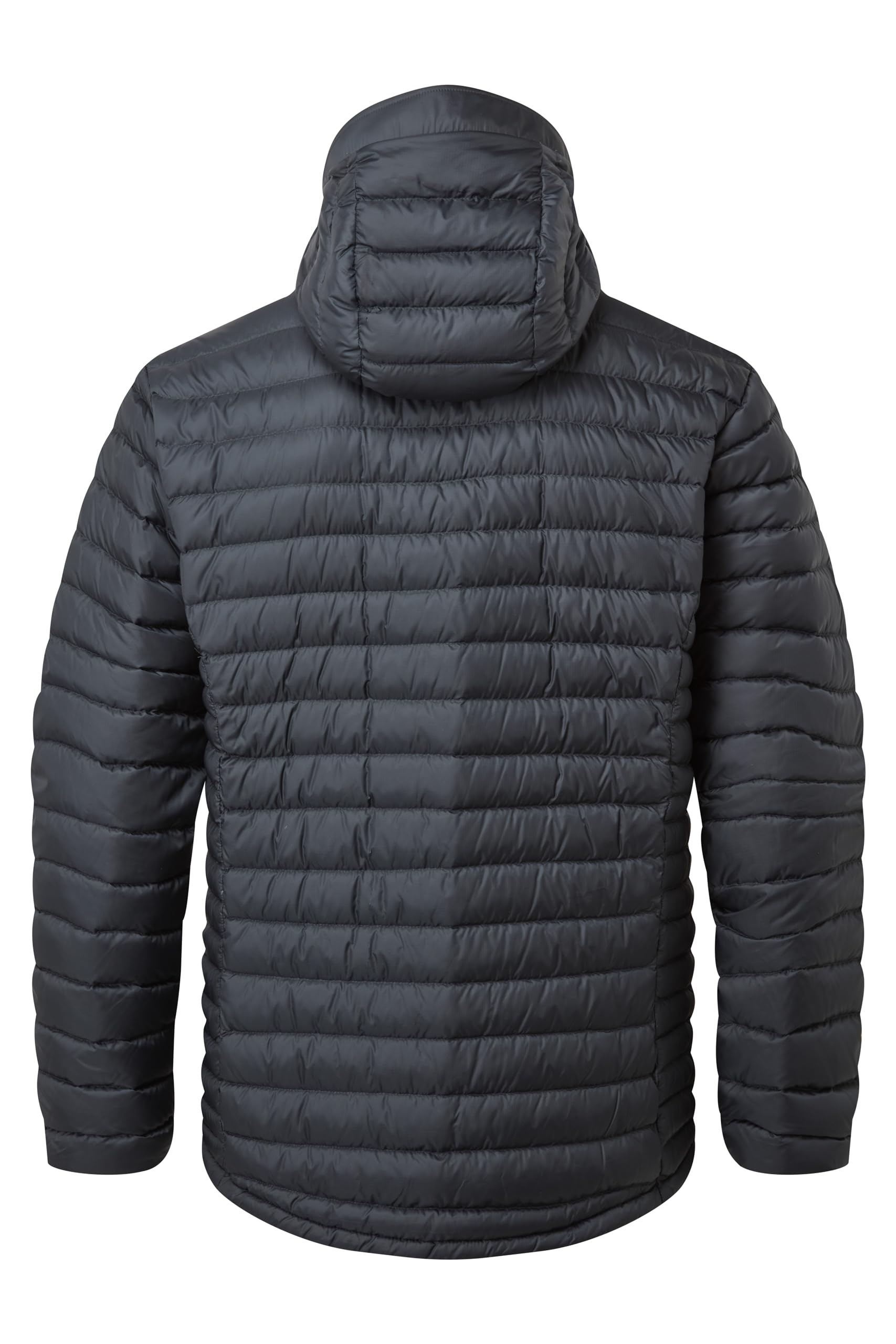
The Rab Microlight Alpine Hoody is a benchmark down jacket for alpine trekking, combining 700-fill goose down with a Pertex Quantum 20D shell that resists light wind and snow. Users who tested it on the W and O circuits in Patagonia praised its excellent warmth-to-weight ratio and compact packability, stuffing into its own pocket for easy storage in a climbing pack.
The fit is athletic and designed for layering over a baselayer or fleece. The hood fits well under a helmet, and the secure drawcord keeps it in place during gusty ridge walks. The Pertex Quantum fabric feels soft against the skin but is surprisingly durable for a 20D shell, surviving brush contact without tearing during the Patagonia test.
The jacket struggles in sustained rain — the down loses loft if the DWR wets out, though it dries faster than higher-fill-power downs. The zipper pull is small and stiff, and some users noted a tight fit over a thick sweater, requiring a size exchange. Above 25°F with a baselayer, it is remarkably warm; below 20°F, you will need an additional mid-layer.
Why it’s great
- Pertex Quantum shell offers excellent wind resistance for its weight
- Stuffs into its own pocket for easy pack storage
- Helmet-compatible hood with secure adjustability
Good to know
- Down loses insulation value if the DWR wets out in sustained rain
- Tight fit over heavy layers may require sizing up
- Zipper pull feels wimpy compared to the rest of the build
4. Rab Men’s Valiance Down Jacket
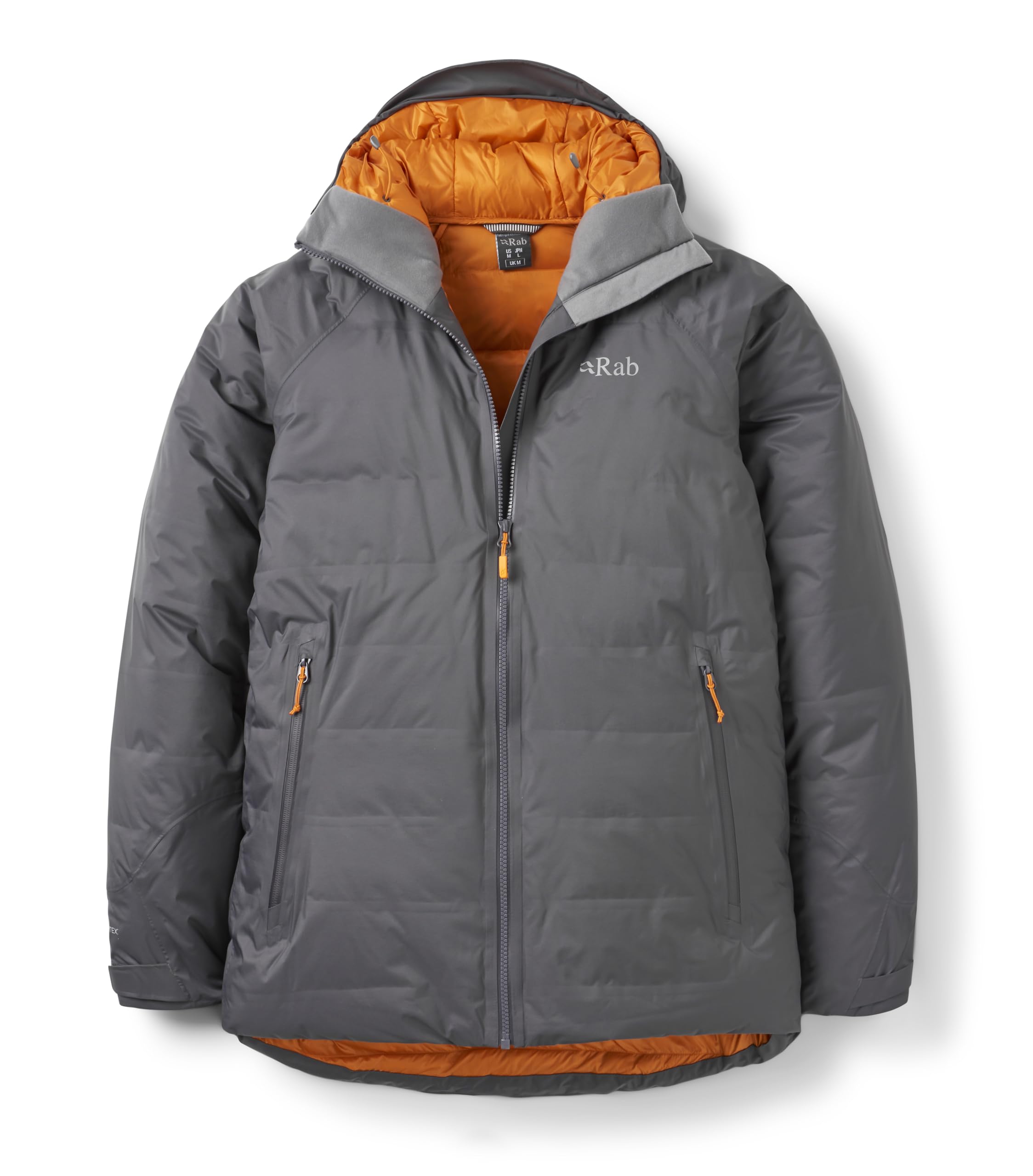
The Rab Valiance Down Jacket is a unique hybrid: a fully waterproof and windproof membrane bonded to a 650-fill down jacket that solves the longstanding problem of down losing insulation in wet weather. Tested at 0°F with only a t-shirt underneath, users reported comfortable warmth, making it a standout option for wet, cold winter climbing and mountaineering where you need one jacket to do everything.
The external fabric uses a waterproof-breathable membrane with fully taped seams and a DWR finish, meaning this jacket can serve as both your insulating layer and your hardshell in cold conditions. The down is treated with a water-resistant finish, and the 650-fill is less prone to collapse than higher-loft downs when damp. The hood is helmet-compatible and the pockets are huge, large enough to stash gloves and a hat.
The jacket is heavy for a down piece — 1.44 pounds — and not suited for fast-and-light missions. The hood makes a crinkly noise against the ears, and there is no way to roll or pack it away. The zipper is on the left side (European style), which some buyers found disorienting. It is warmer than the Microlight Alpine but less packable and significantly heavier.
Why it’s great
- Fully waterproof membrane eliminates the need for a separate shell
- Tested comfortable at 0°F with minimal layering
- Massive hand pockets for gloves and accessories
Good to know
- Heavier than most down jackets at 1.44 pounds
- Hood makes noise against the ears and cannot be stored away
- European left-side zipper may feel backwards to some
5. The North Face Men’s McMurdo Parka
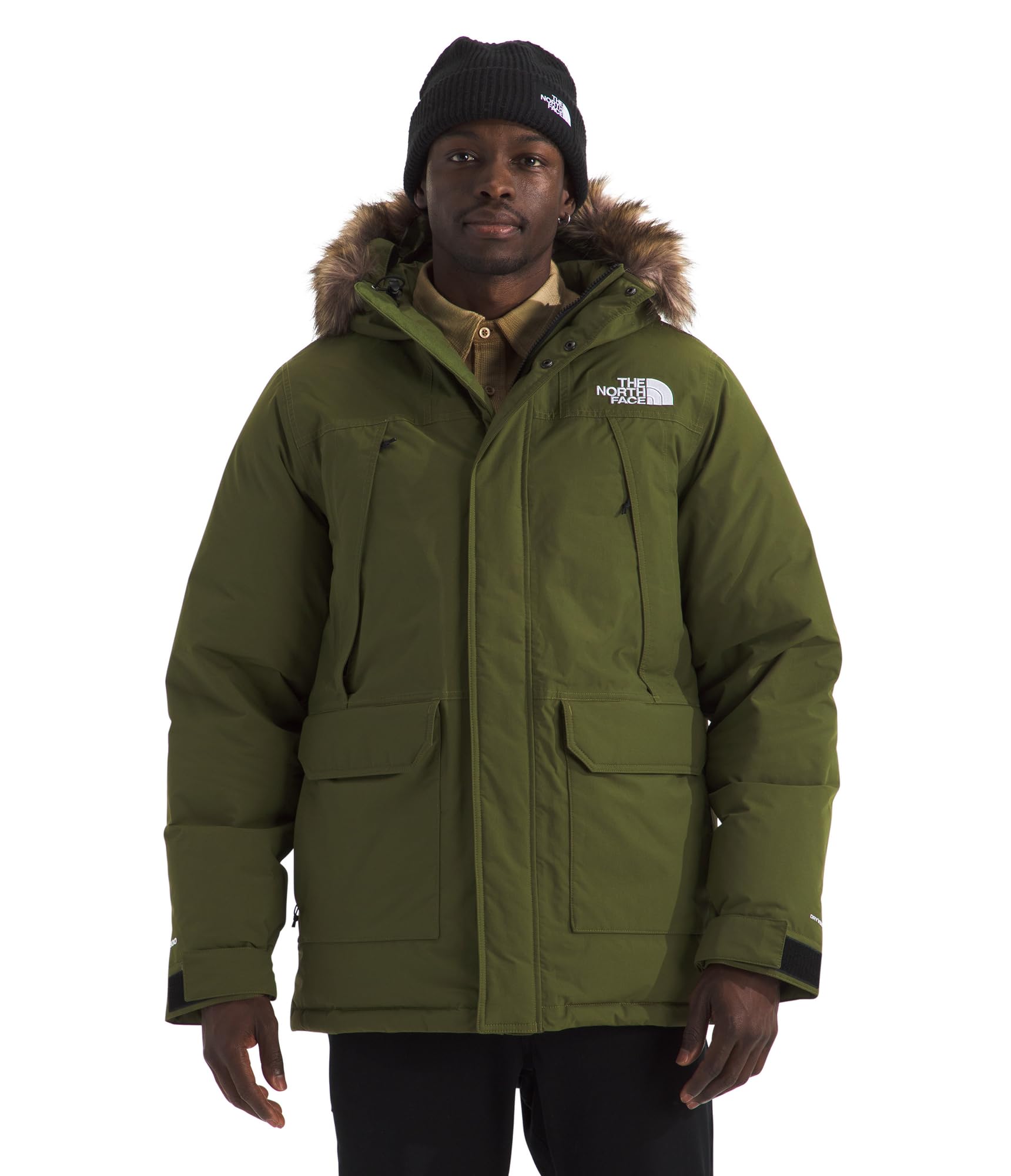
The North Face McMurdo Parka is a heavyweight, long-length winter jacket built to handle extreme cold and precipitation. With a waterproof DryVent 2L shell, 600-fill recycled down insulation, and a removable faux-fur ruff on the adjustable hood, it is designed for static use in sub-zero conditions rather than active backpacking. Tested at -48°F wind chill, users confirmed it delivers exceptional warmth and windproofing.
The relaxed fit hangs away from the body, making it ideal for layering over a heavy fleece. The recycled nylon shell with non-PFC DWR finish is stout and durable, capable of shrugging off brush and snow without damage. The two secure-zip chest pockets and two dual-entry hand pockets provide ample storage for everyday or expedition logistics.
The McMurdo Parka is heavy and bulky — not a jacket you want in a backpack for a multi-day hike. It is best used as a camp jacket or for winter base camps where weight is less of a concern. The hood is large and does not fold away cleanly, and the long length limits leg movement for climbing or scrambling. It is overbuilt for mild winter weather.
Why it’s great
- Exceptional warmth in verified sub-zero wind chills
- Waterproof DryVent shell with fully taped seams
- Recycled down and nylon construction for sustainability
Good to know
- Too heavy and bulky for backpacking or climbing
- Hood does not fold or store away neatly
- Relaxed fit limits range of motion for active use
6. Columbia Men’s Powder Lite II Jacket

The Columbia Powder Lite II Jacket offers a compelling warmth-to-weight ratio at an accessible price point, using Thermarator synthetic insulation combined with an Omni-Heat reflective lining that bounces body heat back.
Users consistently praise its warmth across fall temperatures and mild winter days. The reflective lining makes a noticeable difference in windy conditions, creating a radiant heat barrier that feels like a warm bubble. The jacket fits true to size and is long-sleeve friendly for taller hikers. One user at 6’4” reported that the XL fits with long arms and provides sufficient warmth in 8°F with layering underneath.
The jacket lacks a hood, which is a significant omission for backpacking where you need head coverage in wind and precipitation. There is no internal wind flap behind the zipper, so cold air can leak through the front seam. The nylon shell is not waterproof — only DWR-treated for light mist — meaning you need a separate rain shell for wet conditions.
Why it’s great
- Omni-Heat reflective lining provides noticeable radiant warmth
- Lightweight, compressible, and machine-washable
- Great fit for tall men with long arms (size XL)
Good to know
- No hood — requires a separate hat or shell hood for head coverage
- No wind flap behind the zipper, allowing drafts
- Not waterproof; only DWR-treated for light mist
7. Columbia Big & Tall Ascender II Hooded Softshell Jacket
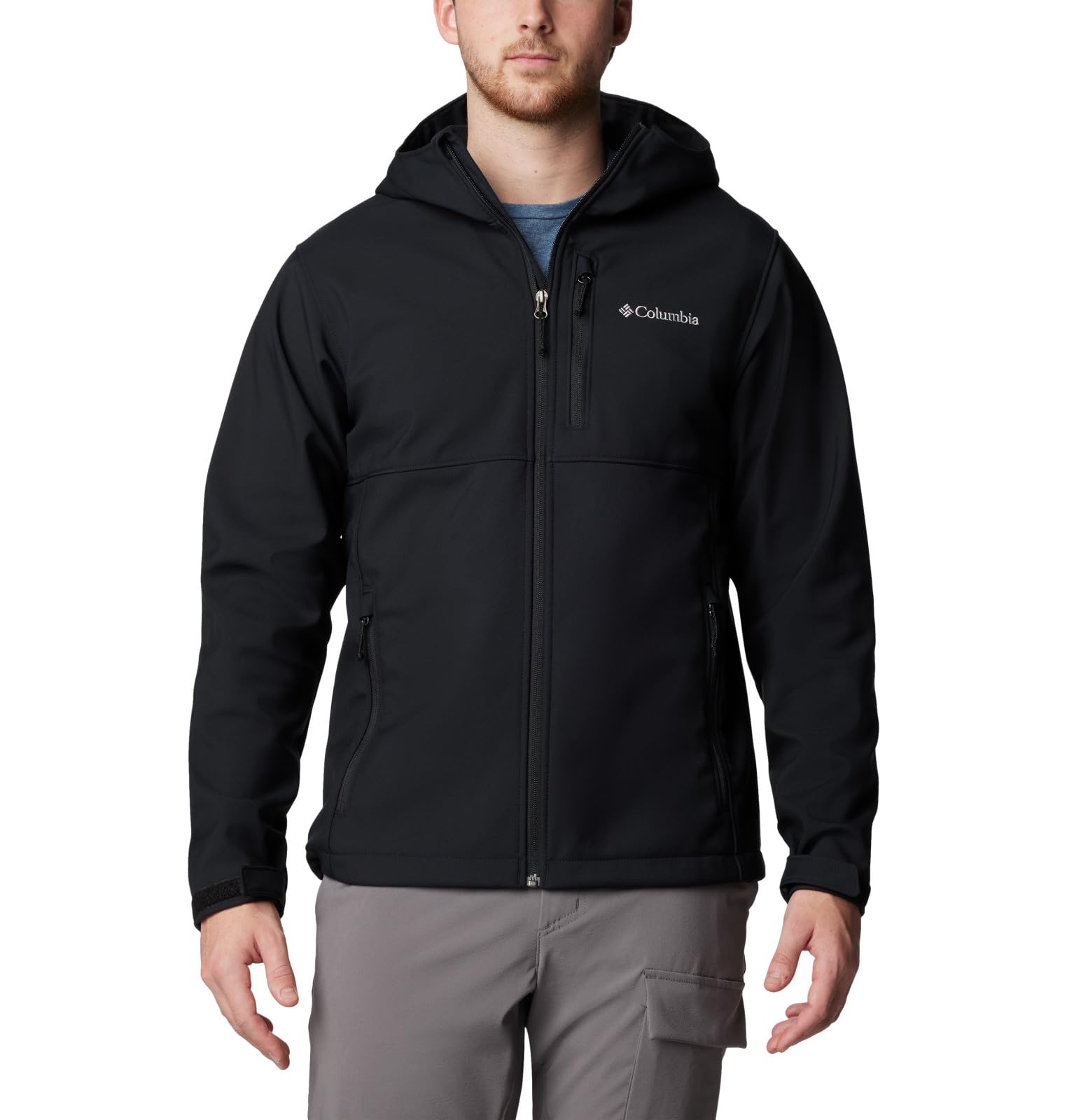
The Columbia Ascender II Hooded Softshell Jacket occupies a different niche than the insulated puffers on this list — it is a windproof, water-resistant softshell designed for active movement in mild conditions. Its quiet, non-rustling fabric makes it ideal for hikers who value stealth and freedom of movement over extreme insulation. Users report excellent wind blocking in temperatures around 15°C (59°F) when worn over a baselayer.
The hood is adjustable and the external chest pocket provides quick access to a phone or map without unzipping the main cinch. The softshell fleece inner lining adds minimal warmth but manages moisture well, preventing the clammy feeling common in less breathable shells. The fit is true to size and suitable for layering without bulk.
The Ascender II is not a winter jacket. It offers very little insulation and is not waterproof — the DWR treatment sheds light snow but will wet out in rain. The zipper sticks on some units and may require lubricant to operate smoothly. It is best used as a three-season outer layer for windy ridge hikes or as a camp mid-layer under a hardshell.
Why it’s great
- Quiet, non-crinkly fabric ideal for stealth hiking
- Excellent wind resistance for exposed ridge lines
- Moisture-wicking fleece lining prevents clamminess
Good to know
- No insulation — provides warmth only through layering
- Zipper can stick and may need lubricant
- Not waterproof; the DWR fails in sustained rain
8. Orolay Women’s Lightweight Packable Down Jacket

The Orolay Women’s Lightweight Packable Down Jacket is a budget-tier down puffer built for travel and mild cold-weather layering rather than serious backcountry performance. Filled with duck down and featuring a stand collar, it compresses into a small stuff sack and provides comfortable warmth in the 40°F to 60°F range. Users consistently note its excellent quality-to-price ratio — the fabric feels substantial and the stitching is clean.
The fit is flattering and tailored, with sleeves and hem lengths that suit average female proportions (5’5”, 142 lbs in a Large fits comfortably). The jacket layers well under a rain shell and resists light rain and sun thanks to its DWR coating. The quilted baffles keep the down evenly distributed without cold spots, and the color options are more sophisticated than many outdoor-specific brands.
The Orolay is not designed for wintry conditions. At temperatures below 40°F, you will need significant layering underneath. The duck down has a lower fill power than goose down, resulting in a less compressible and slightly heavier pack. It is not waterproof and the DWR is light, meaning a soaking rain will flatten the down quickly.
Why it’s great
- Excellent value with clean stitching and quality fabric
- Packs small for travel and layers under a shell
- Tailored fit with flattering color options
Good to know
- Best suited for mild weather above 40°F
- Duck down is less compressible than goose down
- Not waterproof; DWR is only effective for light mist
9. Frogg Toggs Waterproof Cascades Sportsman’s Pack Jacket
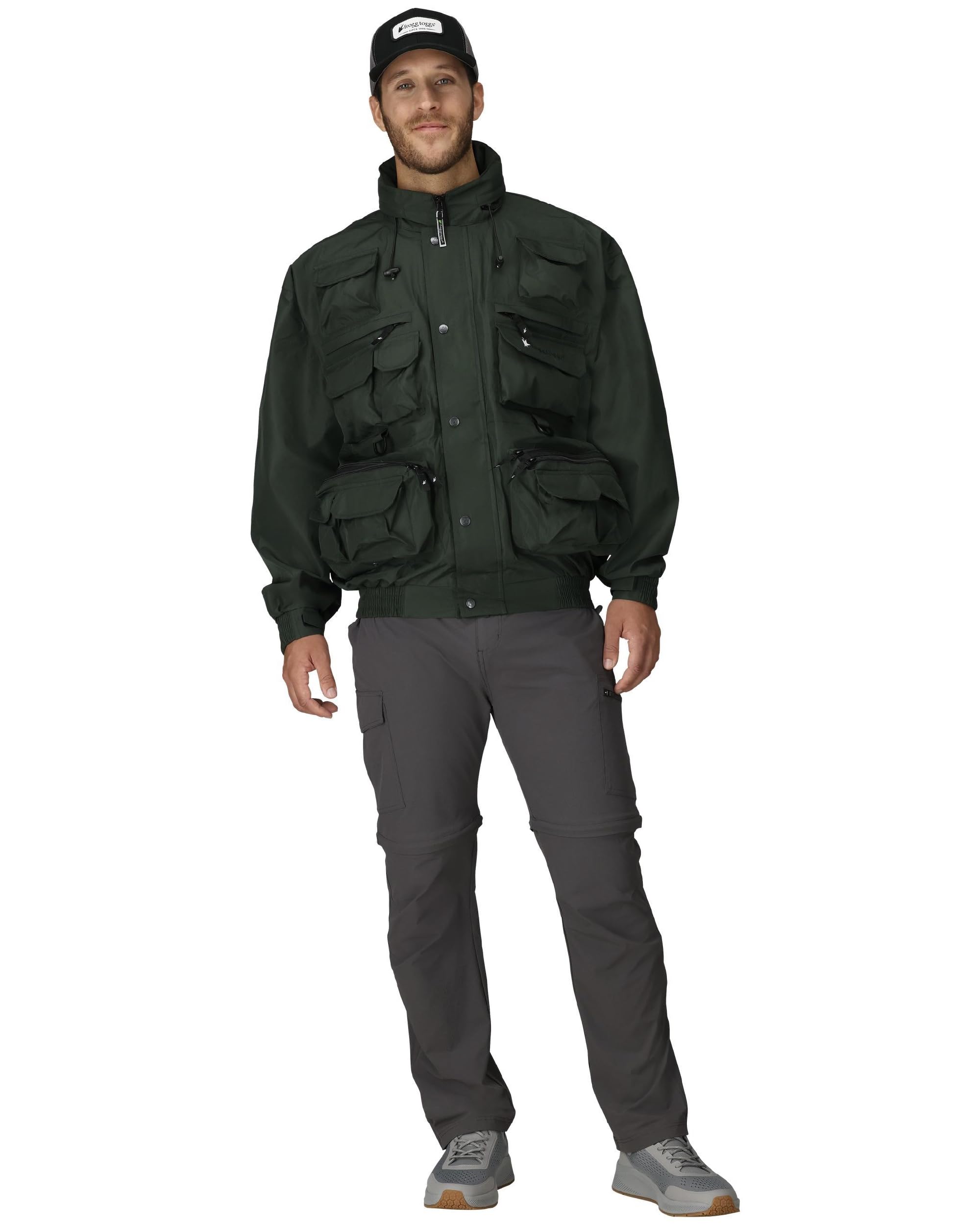
The Frogg Toggs Cascades Sportsman’s Pack Jacket is an entry-level waterproof shell designed for anglers and outdoor workers who need reliable rain protection without investing in a premium membrane. Tested in a week of continuous rain and Alaskan downpours, users reported staying completely dry, with the only moisture ingress occurring at the wrist cuffs in driving rain. The shell is thin and lightweight, folding into a compact package for pack storage.
The standout feature is the abundance of pockets — multiple waterproof zippered compartments that can hold tackle boxes, bait containers, and fishing tools. One user filled the pockets with all their fishing tackle and still had room for a hood and gloves. The shell breathes adequately for low-output activities like fishing or hiking at a moderate pace, and the loose fit allows for layering underneath.
The Cascades Jacket is not insulated and offers no warmth on its own — it is strictly a rain shell. The thin material can feel fragile and susctible to snagging on branches or sharp tackle. The hood has no stiffened brim, so it flops and reduces visibility in heavy rain without a baseball cap underneath. The fit is boxy and not tailored for athletic movement.
Why it’s great
- Packs small and is lightweight for emergency rain protection
- Numerous waterproof pockets ideal for fishing and gear storage
- Keeps you dry in sustained rain with proper wrist management
Good to know
- No insulation — provides zero warmth on its own
- Thin material tears easily on brush and sharp gear
- Hood needs a cap underneath to stay out of your eyes
FAQ
What fill power do I actually need for a backpacking jacket?
Can I use a down jacket in wet weather without a separate shell?
How do I choose between a hooded and non-hooded backpacking jacket?
What denier shell should I look for in a backpacking jacket?
Final Thoughts: The Verdict
For most users, the backpacking jacket winner is the Arc’teryx Atom Hoody because of its unmatched breathability for high-output hiking and its ability to resist moisture with synthetic insulation. If you want ultralight packability, grab the Mountain Hardwear Ghost Whisperer/2. And for wet, cold winter mountaineering, nothing beats the Rab Valiance Down Jacket.

Mo Maruf
I created WellFizz to bridge the gap between vague wellness advice and actionable solutions. My mission is simple: to decode the research and give you practical tools you can actually use.
Beyond the data, I am a passionate traveler. I believe that stepping away from the screen to explore new environments is essential for mental clarity and physical vitality.