Our readers keep the lights on and my smoothie glass nicely filled. As an Amazon Associate, I earn from qualifying purchases.
Nothing ruins a summit push faster than feet swimming in their own moisture inside a pair of boots that just won’t let air through. The specific agony—soggy socks, that rubbing sensation, the smell on the drive home—is the sign you bought a boot that prioritized waterproofing at the expense of all airflow. The right boot for warm-weather trekking, hot rock scrambles, or multi-day summer hikes doesn’t trap sweat; it actively vents it, using mesh panels, permeable membranes, and lighter constructions to keep your foot temperature regulated even under load.
I’m Mohammad Maruf — the founder and writer behind WellFizz. I’ve spent over 1,500 hours analyzing trail footwear data, cross-referencing ventilation claims against real-world user reports, and tracking which sole compounds actually grip when your feet start to heat up.
This guide isolates the nine models that genuinely solve for airflow without sacrificing the lateral support and lug depth a real trail demands, so you can stop guessing and start moving. The single best tool for warm-weather trail days is a properly chosen pair of breathable hiking boots.
How To Choose The Best Breathable Hiking Boots
Breathability in a hiking boot is not a luxury feature—it is a thermal-management necessity on any trail where the temperature crosses 60°F or the grade demands sustained effort. The selection process revolves around three core elements: upper construction, membrane strategy, and sole ventilation path. Ignore any of these and you will end up with a boot that seals moisture in rather than moving it out.
Upper Material: Mesh vs. Leather vs. Synthetics
The upper is your first ventilation gate. Full-grain leather blocks almost all airflow—great for cold mud, bad for summer switchbacks. A high percentage of open mesh, especially when backed by a thin synthetic overlay rather than a thick liner, allows lateral air exchange. Look for boots where the mesh covers at least 40% of the upper surface; this is the single fastest way to gauge ventilation potential before you even lace up.
Membrane Selection: When Waterproofing Hurts
Waterproof membranes (OutDry, Gore-Tex, Omni-Tech) are semi-permeable: water vapor can theoretically escape, but the layer itself creates a resistance barrier that slows evaporation. On hot, dry trails where you won’t step into a creek, a non-waterproof vented boot actually moves moisture out 2 to 3 times faster than a membrane-equipped model. If rain is unlikely, skip the membrane and prioritize direct mesh airflow.
Outsole Vent Path & Footbed Drainage
Few people check the sole, but a solid rubber slab seals the bottom of your foot completely. Some modern boots integrate drainage ports or use a highly porous EVA midsole that allows air to circulate underfoot. While no boot is perfectly “breathing” through the bottom, multi-directional lug patterns with deep channels can help water and heat evacuate laterally. Every square millimeter of open path matters when your foot is producing heat for hours.
Quick Comparison
On smaller screens, swipe sideways to see the full table.
| Model | Category | Best For | Key Spec | Amazon |
|---|---|---|---|---|
| Merrell Moab 2 Vent | Mid-Range | All-day breathability + Vibram grip | Vented mesh upper, 1.1 lb | Amazon |
| Merrell Speed Strike 2 Mid | Premium | Waterproof + breathable balance | Waterproof membrane, 2.5 lb | Amazon |
| KEEN Hightrail Mid | Premium | Zero break-in, alpine-ready | Waterproof, lightweight build | Amazon |
| Merrell Wrapt Mid | Premium | Breathable + durable for work/hike | Flexible upper, EVA midsole | Amazon |
| Columbia Geoterra Outdry Ltr | Premium | Urban-to-trail with OutDry waterproofing | OutDry membrane, Vibram sole | Amazon |
| Timberland White Ledge Mid | Mid-Range | Tough terrain + waterproof leather | Full-grain leather, 1.1 lb | Amazon |
| Timberland Flume Mid | Mid-Range | Classic leather boot with modern EVA | Full-grain leather, 3.0 lb | Amazon |
| Under Armour Hovr Dawn 2.0 | Premium | Lightweight, sneaker-like comfort | HOVR cushioning, 2.4 lb | Amazon |
| Columbia Crestwood | Budget | Value pick for daily trails | Mesh upper, 1.25 lb | Amazon |
In‑Depth Reviews
1. Merrell Men’s Moab 2 Vent Hiking Shoe

The Moab 2 Vent is the gold standard for breathable trail footwear because Merrell prioritized ventilation directly in the name: a full mesh upper that exchanges air laterally, paired with the company’s signature Vibram TC5+ outsole for reliable grip on dry rock, gravel, and packed dirt. At 1.1 pounds per shoe, these sit in the lightweight zone that prevents the heavy-foot fatigue you get from leather-clad alternatives. Users consistently report that the ventilated mesh keeps feet noticeably cooler than membrane-lined boots during sustained uphill efforts.
The fit runs generous in the toe box, which is a deliberate design choice—when your feet swell on a hot afternoon, the extra width prevents rubbing without needing to crank the laces tighter. The Vibram sole is not just marketing here; dozens of reviews mention thousands of miles of use on slickrock and canyon walls without delamination. The heel-to-toe drop is moderate enough to allow a natural stride, and the padded collar reduces the risk of hot spots around the Achilles.
One quirk is the round shoelace—real users report it can loosen during the day. Replacing the factory laces with a flat, quick-tie style eliminates this annoyance. Also note that the Vent model is not waterproof; if you expect creek crossings, you will get wet feet fast. But for dry, warm trails where foot temperature is your primary enemy, this boot is remarkably effective.
Why it’s great
- Wildly breathable mesh upper keeps feet cool on long ascents.
- Vibram sole delivers excellent traction on dry and rocky terrain.
- Roomy toe box accommodates foot swell on hot hikes.
Good to know
- Round laces may untie easily; swap for flat laces.
- No waterproofing—wet crossings mean soaked feet.
2. Merrell Men’s Speed Strike 2 Mid Waterproof

The Speed Strike 2 Mid is the rare waterproof boot that does not feel like a sauna. Merrell engineered a waterproof membrane that breathes well enough for warm-weather use, provided you pair it with moisture-wicking socks. The compression-molded EVA midsole absorbs shock without adding heft—at 2.5 pounds for the pair, it is heavier than a pure vent boot but significantly lighter than a traditional all-leather hiker. Users who took these on trips through Europe found zero break-in required, even on cobblestone streets.
The sole uses a deep, multi-directional lug pattern that grips well on wet forest floors and loose gravel. The arch support is noticeable—some reviewers with high arches found it comfortable out of the box, a rare claim for a boot in this weight class. The fit is true to size with enough room in the toe box to accommodate a thicker wool sock without compression. The olive-green colorway is a nice break from the black/brown monotony that dominates this segment.
A few buyers noted that the initial stiffness took a few miles to break in, but none reported blistering. The waterproofing holds up above the ankle, which is a big deal when you step into a hidden puddle. The membrane does add a slight thermal barrier, so if your primary environment is dry desert, a non-waterproof vent model will still be cooler. But for mixed conditions where you get rain and heat in the same hike, this is a strong compromise.
Why it’s great
- Waterproof membrane that breathes far better than average.
- Excellent ankle support for uneven terrain.
- Attractive styling works for town and trail.
Good to know
- Initial stiffness requires short break-in walks.
- Not as airy as a pure mesh vent boot in hot, dry conditions.
3. KEEN Men’s Hightrail Mid Waterproof Hiking Boots
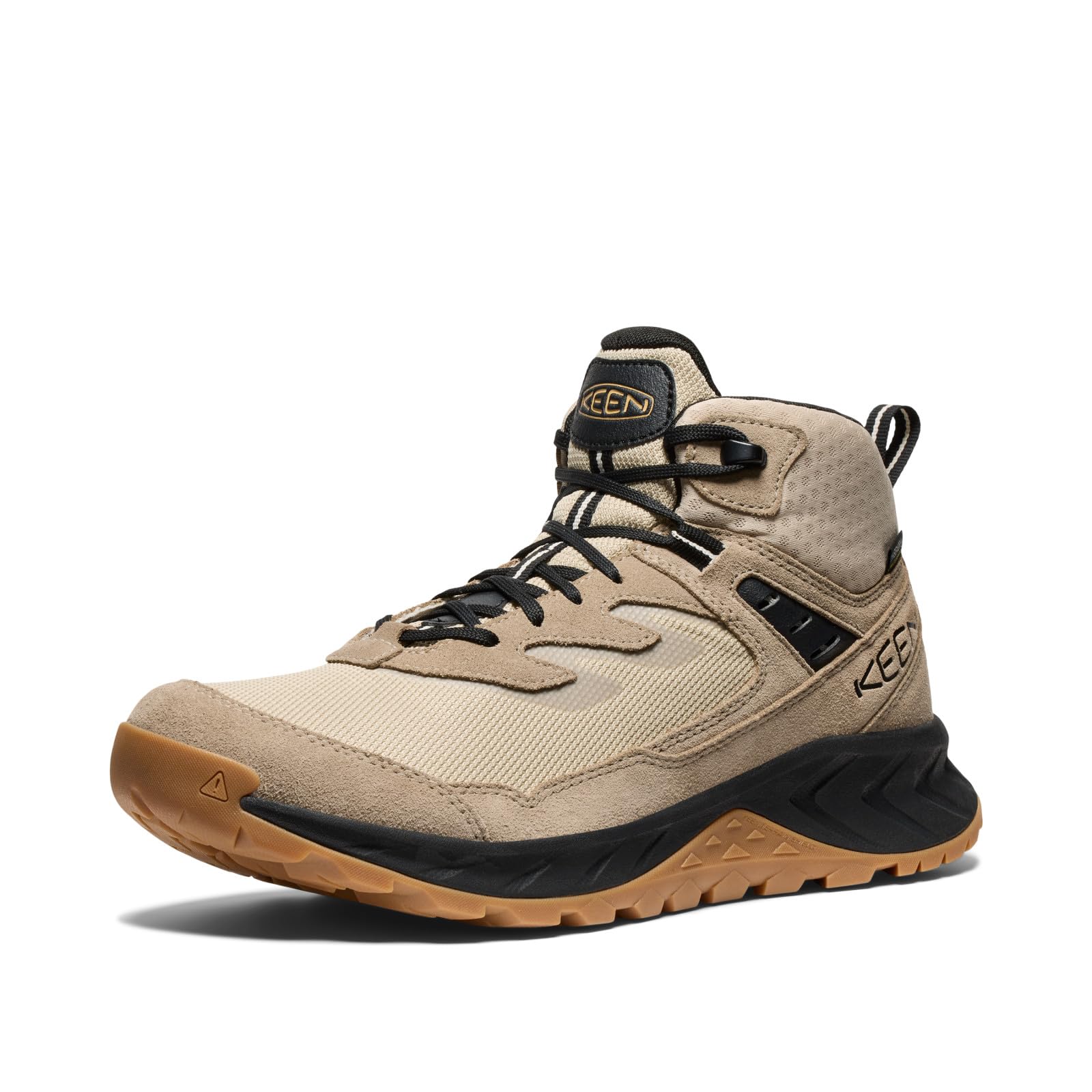
The Hightrail Mid debunks the notion that waterproof boots require a painful break-in period. KEEN engineered these with a low-density EVA midsole and a supple synthetic upper that flexes immediately. The waterproof KEEN.Dry membrane does sacrifice some airflow compared to an open mesh, but the boot compensates with a highly breathable lining and a moisture-wicking footbed. One tested them boot-deep in snow above the Swiss Alps tree line and reported stable footing with zero foot fatigue after hours of hiking.
The fit is true to size—size 11 fits a 10.5 comfortably, as reported by users—and the easy-lace system makes adjustment quick. The toe box is characteristically KEEN: roomy enough to splay your toes without feeling like a duck shoe. For bigger hikers (over 280 pounds), several reviews praise the midfoot support and cushioning that holds up without collapsing. The outsole tread is moderately aggressive, handling loose dirt and wet rock without excessive slipping.
The main limitation is the membrane’s thermal ceiling. On very hot days (above 85°F) with intense exertion, the KEEN.Dry layer will trap more heat than a non-waterproof alternative. Some users also noted slight discomfort on steep descents, though they attributed this to downhill forces rather than a boot flaw. For mixed weather where you need waterproofing and lightweight comfort in one shoe, the Hightrail Mid is hard to beat.
Why it’s great
- Comfortable straight out of the box, no blisters.
- Lightweight and stable for a waterproof mid boot.
- Excellent for all-day wear with minimal foot fatigue.
Good to know
- Waterproof membrane is less breathable on scorching days.
- Downhill performance may feel slightly less supportive for some.
4. Merrell Mens Wrapt Mid Waterproof
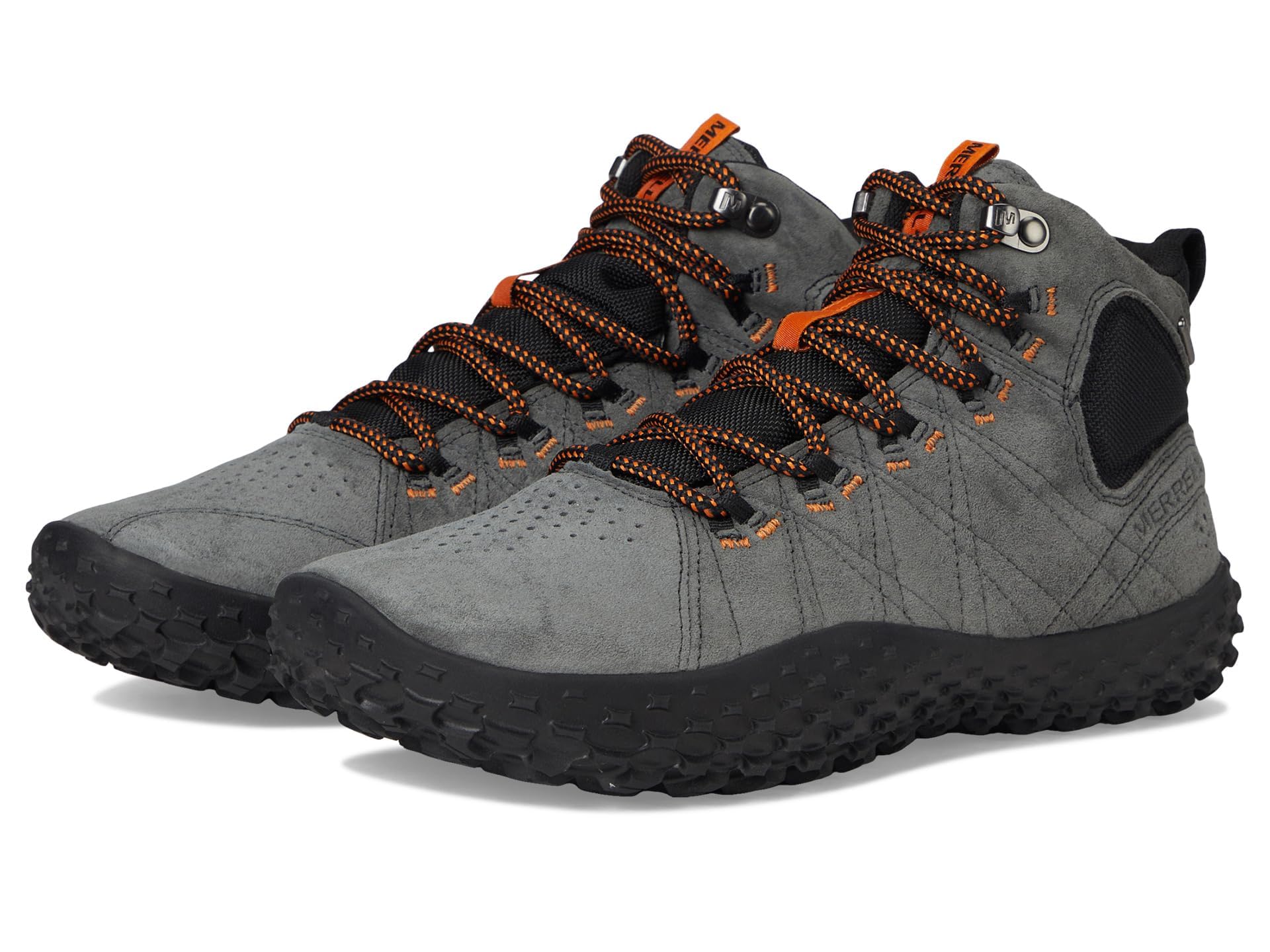
The Wrapt Mid is Merrell’s answer to the hiker who needs boot toughness without the suffocation of a rigid leather upper. The synthetic and mesh combination upper flexes with your stride while maintaining structural integrity for side-hilling. The EVA midsole is thick enough to absorb sharp rocks but not so thick that you lose ground feel. Users who wore these for full workdays—including extended standing on concrete and trail hikes in Arizona—reported excellent breathability and no foot ache.
The fit is slightly roomier than earlier Merrell models, which works well for wide feet or for layering thicker socks. The waterproof membrane works well in wet grass and light rain, though it is not designed for total submersion. The outsole uses Merrell’s own sticky rubber compound, which gripped well on dry and slightly damp surfaces in real-world tests. The boot’s flexible nature makes it comfortable for casual walking, eliminating the stiff “clomp” that some leather mids have.
A critical note: this boot features an arch support that some users with high arches found intrusive. If you are accustomed to zero-drop or minimalist footwear, the raised arch may feel like a rock under your midfoot. The materials and build quality are excellent—durable Merrell construction—but the arch design is a polarizing element that you should confirm before purchase. For most hikers with average arches, this is a very capable, breathable boot.
Why it’s great
- Breathable mesh upper with flexible comfort.
- Durable build that works for both hiking and daily work wear.
- Lightweight for a waterproof mid boot.
Good to know
- Pronounced arch support may not suit high arches.
- Not designed for full waterproof submersion.
5. Columbia Men’s Geoterra Outdry Ltr

The Geoterra Outdry Ltr sits at the intersection of a rugged hiker and a lifestyle boot, and Columbia’s OutDry technology is the star here—a waterproof membrane bonded directly to the leather upper rather than applied as a separate layer. This construction reduces the moisture-trapping air gap between leather and liner, improving heat dissipation compared to traditional waterproof leather boots. The Vibram outsole is heat-sealed to the midsole, which users confirm holds up well after repeated wear on urban pavement and hunting trips.
The fit runs true to size, with several buyers noting that half-sizing down provided a snugger heel lock for narrow feet. It works best as a crossover boot: breathable enough for winter urban walking and light trail days, but not ideal for the hottest summer hikes. The craftsmanship is solid—hardware finishes are clean, and the heat sealing on the sole prevents the early delamination that plagued earlier Columbia designs.
Some reviewers found the OutDry layer less breathable than advertised during extended walking in high temperatures. Also, the styling is more “heritage hiker” than technical trail runner, which may not appeal to everyone. If your use case includes both the office commute and weekend dirt paths, the Geoterra is a versatile middle ground, but pure summer trail runners should look to mesh-dominant alternatives.
Why it’s great
- OutDry membrane improves breathability over standard waterproof leather.
- Vibram sole is heat-sealed for durability.
- Versatile styling works for town and trail.
Good to know
- Leather upper still restricts airflow compared to mesh boots.
- OutDry can feel warm during sustained summer exertion.
6. Timberland Men’s White Ledge Mid Waterproof Hiking Boots

The White Ledge Mid is the boot you buy when you expect sharp scree, patchy snow, and wet grass in the same trip. The full-grain leather upper is thick enough to stop abrasions, and the seam-sealed construction keeps moisture out during stream crossings. But leather is inherently less breathable than mesh, so this boot trades some airflow for ruggedness. The fit is generous—order a half size down unless you plan to layer heavy socks—and the EVA midsole delivers a cushioned stride that makes the weight feel less onerous.
Users who treated these with mink oil found the leather developed a solid water barrier, though the care requirement is real: after soaking, the boots need air drying and re-treatment. The outsole rubber compound handles snow and ice well, though it can slip on algae-slicked rocks. The mid height provides solid ankle support without the stiffness that causes shin rub during break-in. Many reviewers reported hundreds of miles on these across varying terrain (grass, pavement, gravel, sand) with the sole holding up for well over a year.
The major downside for breathability is obvious: full-grain leather simply does not vent. If your primary goal is to keep feet cool, this is not the right pick. However, for mixed-weather hiking where toughness and waterproofing matter more than maximum airflow, the White Ledge Mid is a time-tested workhorse that will outlast many lightweight mesh boots.
Why it’s great
- Extremely durable full-grain leather withstands sharp terrain.
- Excellent grip on snow, ice, and loose gravel.
- Comfortable for all-day wear after short break-in.
Good to know
- Leather upper restricts airflow—not for hot summer hikes.
- Requires regular mink oil treatment to maintain waterproofing.
7. Timberland Men’s Flume Mid Waterproof Hiking Boot

Timberland built the Flume Mid on a premise that many long-time hikers swear by: premium full-grain leather offers unmatched durability, and a compression-molded EVA midsole removes the need for a painful break-in. The boot wears true to size, with a padded collar that locks the heel without squeezing the instep. The rubber lug outsole uses a hard plastic compound that grips dry trails and wet pavement competently, though some users note it gets slick on wet rock.
One reviewer reported owning a previous generation of the Flume for over twenty years, stating the replacement pair showed no downgrade in quality. That kind of longevity is rare in the hiking boot market, but it comes with a breathability cost: leather does not breathe. The Flume is best suited for light to moderate hikes in cool-to-moderate weather where foot temperature is not the primary concern. For daily wear on concrete or office-to-trail commuting, it works well because the leather’s lack of airflow is less noticeable in short exposures.
The tread compound, while long-lasting, is harder than a Vibram Megagrip and provides less bite on wet, algae-covered surfaces. Also, the weight is noticeable at 3 pounds per pair—noticeably heavier than the mesh-based options on this list. This boot is a fine choice for durability-focused buyers who value a classic look and are willing to sacrifice maximum ventilation for a boot that will not wear out in a season.
Why it’s great
- Premium full-grain leather offers exceptional durability.
- No break-in required for the padded collar and EVA midsole.
- Timeless styling with long-term construction.
Good to know
- Not breathable—feet will get warm in summer conditions.
- Hard rubber outsole can be slick on wet surfaces.
8. Under Armour Hovr Dawn 2.0 Boots
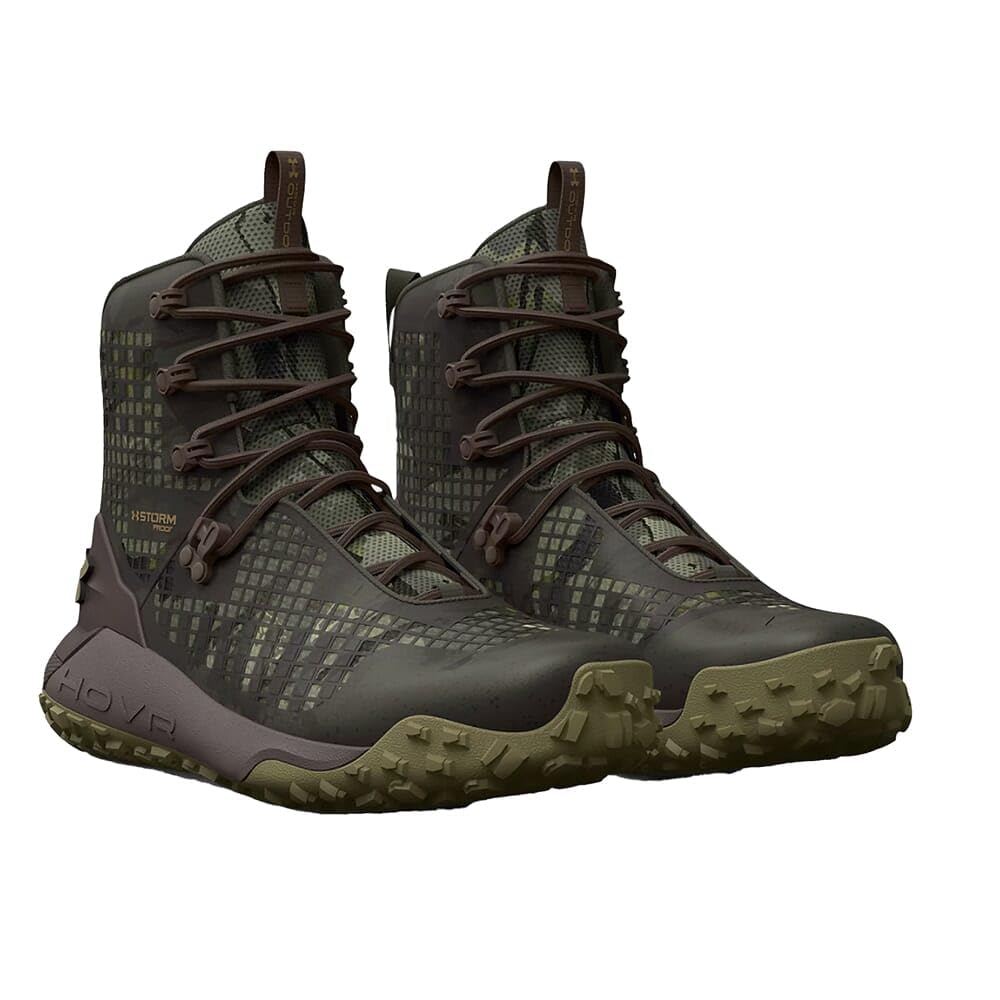
The Hovr Dawn 2.0 blurs the line between trail runner and hiking boot. Under Armour’s HOVR cushioning midsole returns energy like a running shoe, meaning you feel less “thud” with each step, which translates to lower foot fatigue on long days. The upper is a mix of mesh and synthetic overlays that prioritize airflow while maintaining enough structure for moderate ankle support. Users describe it as feeling like a sneaker that happens to have an aggressive tread.
The outsole uses an aggressive tread pattern that handles mud, snow, and rocky climbs effectively. Several hunters reported wearing these through tall grass, weeds, and up boulders with solid traction. The boot is not insulated, which is a feature for warm-weather users—your foot does not overheat even under physical exertion. One reviewer accumulated multiple hunting seasons and noted the sole began to tatter after a week of very heavy use, which suggests the rubber compound is slightly softer (for grip) at the expense of long-term durability.
The lacing system uses a clip mechanism that some users found difficult in the dark, but once secured, the laces stay tied. The ankle stability is good but not exceptional—this is a lighter boot, so if you need heavy lateral support for load-bearing backpacking, a taller leather boot may be safer. But for fast-and-light day hiking where every ounce counts and you want as much breathability as possible, the Hovr Dawn 2.0 is a compelling, modern option.
Why it’s great
- Sneaker-like cushioning reduces foot fatigue dramatically.
- Highly breathable mesh and synthetic upper.
- Aggressive tread handles mud and loose terrain well.
Good to know
- Outsole rubber may wear faster under intense daily use.
- Ankle support is lighter than a traditional leather boot.
9. Columbia Men’s Crestwood Hiking Boots
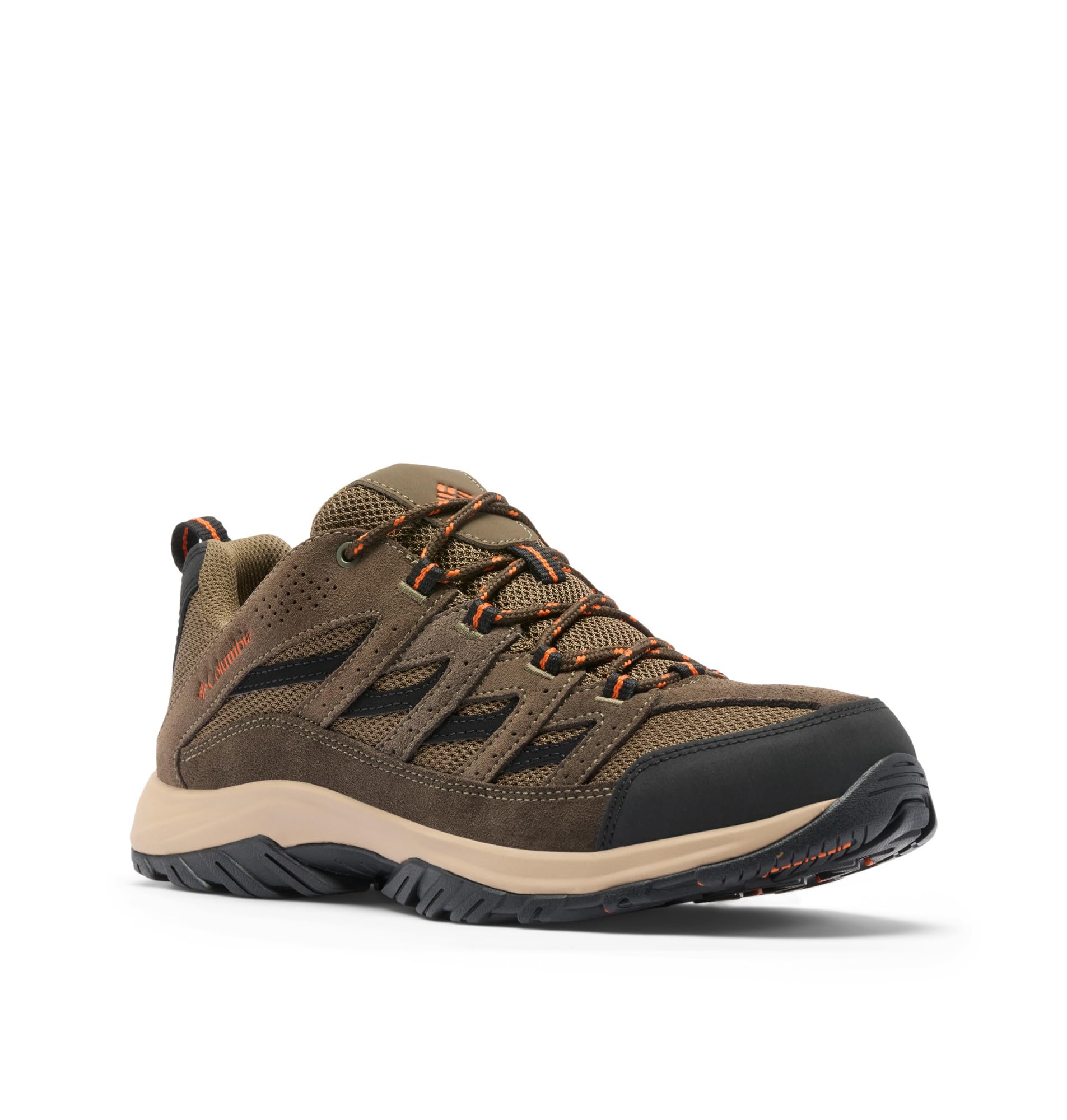
The Crestwood is the boot that proves you do not need to spend heavily to get solid breathability. The mesh and synthetic upper provides good airflow for the price point, and the TechLite midsole offers decent shock absorption without the weight penalty of a denser foam. One buyer logged over 1,300 miles on a single pair, replacing only the laces, which speaks to the build quality relative to the actual cost. The fit is generous—wide-footed users with mild bunions reported zero pain after a week of hiking rocky terrain.
The outsole uses Columbia’s Omni-Grip system, which handles trails and pavement in dry conditions well, though it loses some bite on wet mud. The heel and arch support are adequate for day hikes but not load-bearing treks. Reviewers who wore these for daily trail walking noted that the boots outlasted the laces—the laces wear down before the sole or upper fails. The boot is not waterproof, which actually helps breathability: moisture escapes through the mesh rather than pooling inside.
The main trade-off is the support level. The Crestwood is a light hiker, best for maintained trails and urban walking rather than off-trail scrambling. The midsole does not have the same energy return as a premium boot, so long days on hard-packed surfaces may feel less cushioned. But as an entry-level breathable boot that gets the fundamentals right—mesh ventilation, reasonable weight, a proven brand—the Crestwood is a smart budget-conscious pick.
Why it’s great
- Great airflow from the mesh and synthetic upper.
- Remarkable durability for the cost; many users exceed 1,000 miles.
- Generous fit works well for wide feet.
Good to know
- Laces wear out faster than the rest of the boot.
- Limited support for heavy backpack loads or off-trail use.
FAQ
Can I use waterproofing spray on a mesh hiking boot?
How often should I replace the insoles for maximum breathability?
Do Gore-Tex boots breathe well enough for hot summer hiking?
Final Thoughts: The Verdict
For most users, the breathable hiking boots winner is the Merrell Moab 2 Vent because it combines a fully vented mesh upper with a Vibram outsole that grips reliably on dry trail—giving you the best airflow-to-traction ratio in this lineup. If you want waterproofing without turning your feet into saunas, grab the Merrell Speed Strike 2 Mid. And for a budget-friendly option that still prioritizes mesh ventilation, nothing beats the Columbia Crestwood.

Mo Maruf
I created WellFizz to bridge the gap between vague wellness advice and actionable solutions. My mission is simple: to decode the research and give you practical tools you can actually use.
Beyond the data, I am a passionate traveler. I believe that stepping away from the screen to explore new environments is essential for mental clarity and physical vitality.