Our readers keep the lights on and my smoothie glass nicely filled. As an Amazon Associate, I earn from qualifying purchases.
Every winter, the same hidden hazard appears: a glassy sheet of black ice that turns a simple walk to the mailbox into a balancing act. The wrong footwear—a standard boot with a shallow tread—provides zero bite on pure ice, leaving you relying on luck rather than traction. The solution isn’t a magical sole compound; it’s a dedicated design with exposed cleats or deep lugs engineered to penetrate the frozen surface.
I’m Mohammad Maruf — the founder and writer behind WellFizz. I spend weeks each season analyzing customer stress tests, spike materials, rubber durometers, and real-world fit data so you can find gear that actually prevents a fall, not just one that looks the part on a product page.
Whether you manage an icy driveway, walk a mail route, or just want to stay upright walking the dog, finding the right pair means understanding stud count, tungsten vs. steel carbide durability, and how the binding handles mixed terrain. This guide cuts through the noise to help you choose the best anti slip ice boots for your specific conditions and body mechanics.
How To Choose The Best Anti Slip Ice Boots
Most people grab the first insulated boot with a thick tread and assume it will handle ice. It won’t. Pure ice requires something that can physically dig in — either a boot with an aggressive outsole or a set of add-on cleats. The choice comes down to how much time you spend on glare ice versus snow-covered ground and whether you need to walk indoors on hard floors without removing your gear.
Cleat or Integrated Sole?
Add-on cleats like the Korkers Apex or STABILicers Maxx 2 bolt onto your existing winter boot. They provide the most aggressive bite on pure ice because the spikes are fully exposed. The downside: you have to take them off before walking on tile, linoleum, or hardwood, or risk damaging floors and dulling the spikes. Integrated anti-slip boots, such as the Men’s Winter Snow Boots or XPETI Crest Thermo, use deeply spaced rubber lugs and embedded studs that offer mixed-terrain versatility—you can walk from ice to concrete without switching footwear—but they rarely match the pure-ice bite of a dedicated crampon-style cleat.
Spike Material and Durability
Steel cleats are the baseline. They bite well on ice but wear down faster when you hit bare pavement or gravel. Tungsten carbide studs, found on products like the Low-Pro Ice Cleat, last significantly longer against concrete and grit, making them the smarter choice for anyone who walks on mixed surfaces daily. The trade-off is cost: tungsten carbide models sit at a higher price tier, but they often survive an entire season of heavy use without losing their edge.
Bindings: Stretch Fit vs. Strap-Down
Stretch-to-fit TPR frames (like the Korkers Apex) slip over your boot quickly and work best when you share a single pair of boots all winter. They’re fast on and off but can loosen over time. Strap-down systems (the STABILicers design) use hook-and-loop straps from heel to toe, giving a more secure hold on tall or heavily insulated boots. If you wear size 13 or larger boots with thick insulation, a strap-down binding is almost mandatory — stretch-fit frames often won’t reach or stay seated.
Quick Comparison
On smaller screens, swipe sideways to see the full table.
| Model | Category | Best For | Key Spec | Amazon |
|---|---|---|---|---|
| STABILicers Maxx 2 | Add-on Cleats | Heavy-duty work on ice | 15 heat-treated steel cleats per boot | Amazon |
| Winter Walking Low-Pro Cleat | Add-on Cleats | Mixed terrain (ice + concrete) | 26 tungsten carbide studs per pair | Amazon |
| Korkers Apex Ice Cleat | Add-on Cleats | Versatile daily commuting | 20 multi-directional steel cleats | Amazon |
| XPETI Crest Thermo | Integrated Sole Boot | Hiking and outdoor winter wear | High-top insulated, rubber sole | Amazon |
| Womens Snow Boots (WellFizz Pick) | Integrated Sole Boot | Everyday winter wear for women | Anti-slip rubber outsole, fur lining | Amazon |
| Womens Mens Barefoot Boots | Integrated Sole Boot | Zero-drop, wide-toe box wearers | Zero drop sole, wide toe box | Amazon |
| Men’s Winter Snow Boots | Integrated Sole Boot | Budget-friendly winter daily | 7.1-inch height, water-resistant | Amazon |
In‑Depth Reviews
1. STABILicers Maxx 2 Heavy-Duty Traction Cleats

The STABILicers Maxx 2 is the gold standard for anyone who faces pure sheet ice as part of their job. Each boot carries 15 heat-treated steel cleats across a full-sole TPR platform, giving you 30 contact points that bite into glare ice with authority. Field reports from railroad crews, postal carriers, and delivery drivers confirm that these hold steady even when you’re carrying heavy loads across icy asphalt. The SureFit binding system uses adjustable hook-and-loop straps from heel to toe, so the cleat stays locked on tall insulated boots without shifting side to side.
These are not casual walkers. The aggressive steel cleats will mark up hardwood floors and tile, so you must remove them before stepping inside. The strap system takes about 30 seconds to fit per boot—faster than most crampons but slower than a stretch-fit design. That trade-off pays off in security: even during a full sprint on ice, the Maxx 2 feels like part of the boot rather than a loose attachment.
Owners report that the cleats remain flexible down to -45°F, and the alloy steel spikes show minimal wear after an entire season of daily use on salted sidewalks. If you only want one pair of ice cleats to survive years of harsh winters, this is it. The primary complaint is that the rubber sides have been revised and may not fit extremely wide insulated boots (size 13 EE or larger) quite as snugly as the previous generation.
Why it’s great
- Industrial-grade steel cleats offer best-in-class bite on pure ice
- Full-sole strap binding stays secure even during high-activity work
- Tested flexible to -45°F, ideal for extreme cold climates
Good to know
- Must remove before walking indoors on wood or tile flooring
- Newer design may not fit oversized or heavily insulated boots as well as the original version did
2. Low-Pro Ice Cleat by Winter Walking

The Low-Pro Ice Cleat solves the classic ice cleat problem: steel spikes that dull after a few weeks of walking on bare concrete or plowed roads. Winter Walking uses 26 permanent tungsten carbide studs per boot—tungsten is significantly harder than steel, so it resists abrasion from grit, salt, and pavement without losing its edge. Users have logged over 12 miles on mixed concrete and ice terrain with barely measurable wear on the studs.
The “dual elasticity” design means the upper rubber stretches for easy on/off, while the sole section is firmer to resist abrasion and keep studs planted. This is the cleat to pick if your walk includes a mile of pavement before you hit the icy trail. Reviewers specifically note that the low-profile studs provide transitional traction—you don’t feel like you’re walking on golf cleats indoors, though you should still remove them to avoid floor scratches. The sizing chart is accurate, and the pull tabs make fitting straightforward even with winter gloves on.
One nuance: some users with size 13+ boots report that the cleat fits securely on tall boots but feels loose on low-top shoes. Also, the carbide studs can feel slick on hard re-frozen ice (the kind that forms after a thaw-freeze cycle), where a longer steel spike might penetrate deeper. This is a mixed-terrain specialist, not the ultimate pick for solid blue ice.
Why it’s great
- Tungsten carbide studs outlast steel by seasons on concrete and grit
- Low-profile design transitions from ice to pavement without feeling wobbly
- Stretch-fit upper is easy to put on and pull off with cold hands
Good to know
- Carbide studs can feel less aggressive on polished re-frozen ice compared to steel spikes
- Fits large boots better than low-profile shoes
3. Korkers Apex Ice Cleat
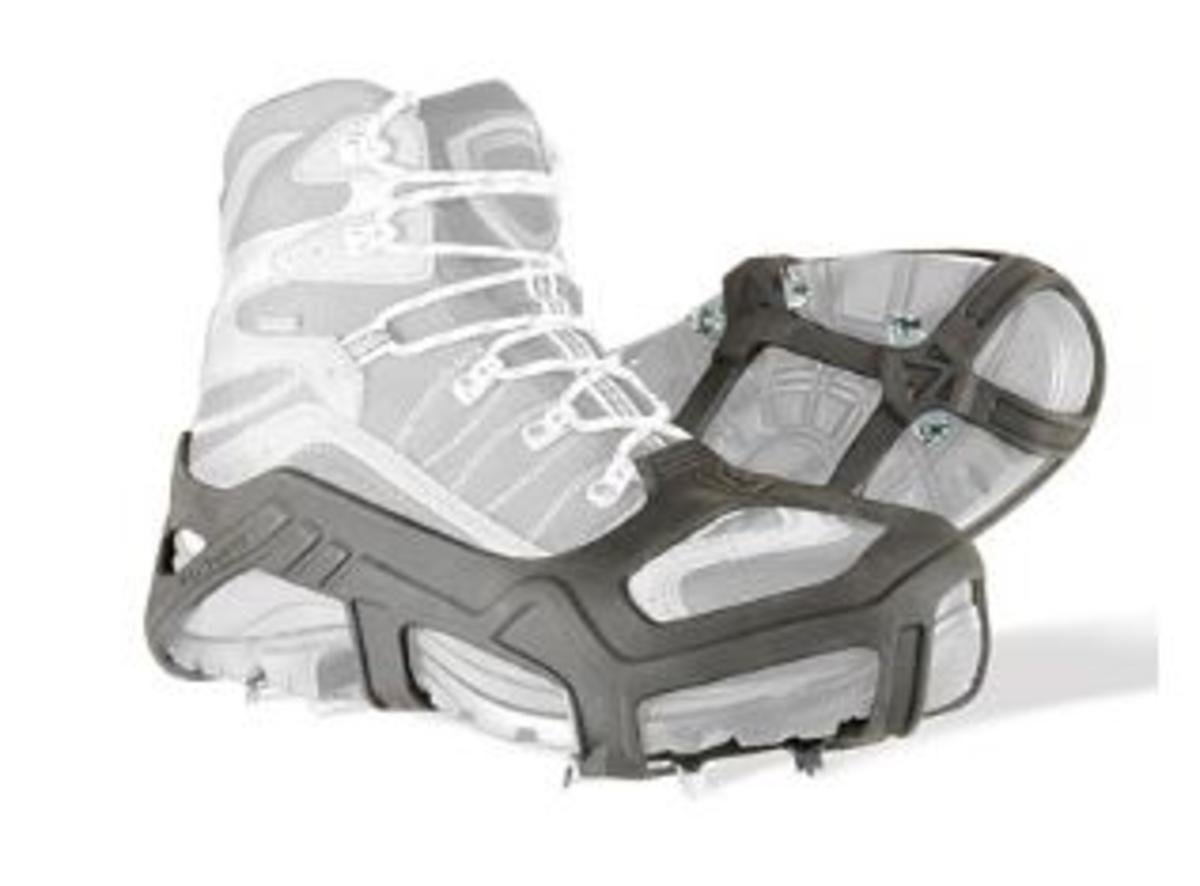
The Korkers Apex strikes a balance between all-out ice bite and daily convenience. It uses 20 multi-directional saw-tooth stainless steel cleats injection-molded into a pliable TPR platform. The result is a cleat that grabs ice securely from any foot angle—a benefit when you’re walking on uneven terrain where you often land on the side of your foot. The stretch-fit frame slides over most standard boots in seconds and holds snugly without straps.
Users in upstate New York and Michigan report that the Apex handles Muck boots, standard winter work boots, and even some extra-wide sizes (up to 15 EEE) with no issues. The frame is thin enough to not feel clunky underfoot, and the low weight (13.5 ounces per pair) means you can keep them in a car or backpack without noticing the bulk. The steel cleats are replaceable if they wear down, though most users get a full season of heavy use before noticing degradation.
The trade-off for that instant on/off convenience is security. The stretch-fit binding is excellent for casual walking, shoveling, and errands, but it may not hold as firmly as a strap-based system during high-exertion activities like snowblowing on steep slopes. A few reviewers found that the Apex can slide slightly on extremely polished ice if the fit is not snug, so be precise with sizing (S/M for men’s 5–9, L/XL for 9.5–13, XXL for 13.5–16).
Why it’s great
- Injection-molded steel cleats cover multi-directional foot strikes for reliable grip on uneven ice
- Ultra-light TPR frame fits Muck boots and oversized work boots without straps
- Replaceable cleat design extends the product’s usable life
Good to know
- Stretch-fit binding may loosen slightly over time with repeated use on heavy boots
- Not as secure as strap-down systems for intense, high-torque activity on steep ice
4. XPETI Men’s Crest Thermo High-Top Winter Hiking Boots

If you prefer an integrated solution rather than an add-on cleat, the XPETI Crest Thermo is a serious contender. This high-top winter hiking boot uses a deep, multi-directional rubber outsole that delivers solid bite on packed snow, icy grass, and mud, though it is not designed to grip pure sheet ice like a spike-based cleat. The boot is insulated for temperatures as low as 6°F, and the all-rubber construction is flexible enough to move naturally while providing good ankle support for uneven winter trails.
Reviewers consistently note that sizing up by half to a full size is necessary to accommodate thick wool socks and orthotic insoles. Once dialed in, the boot feels comfortable immediately with zero break-in period. The rubber sole cleans easily after muddy hikes, and the upper shows good resistance to thorns and abrasion. For hikes, parking lot snow, and suburban winter walks, the XPETI eliminates the need to carry separate cleats.
The catch is water resistance. While the boot handles light snow and rain well, the lacing eyelets and upper seam can let moisture through during heavy, sustained exposure to slush or deep snow. It is not a fully waterproof boot for standing in a half-foot of snow for hours. Keep this in mind if your winter routine includes long treks through wet, melting snow rather than cold, dry powder.
Why it’s great
- Deep rubber lugs provide confident traction on snow, mud, and icy grass without needing add-on cleats
- Zero break-in period, comfortable out of the box with thick socks
- Versatile enough for light trail hiking, daily commuting, and suburban winter walks
Good to know
- Not waterproof for deep slush or heavy rain; moisture can seep through the lace area
- Outsole lacks the aggressive bite needed for polished sheet ice
5. Womens Snow Boots Warm Fur Lined Winter Boots

This women’s specific snow boot combines a warm fur lining with a sturdy anti-slip rubber outsole that handles icy sidewalks and packed snow well for a boot in its tier. The mid-calf height keeps deep snow out, and the synthetic upper provides enough water resistance for hours of play in the snow. Multiple users confirm that the boot keeps feet toasty even during long sessions of outdoor winter work, and the sole offers noticeably better grip than standard fashion winter boots.
The fit runs true to size, with enough room for a thick sock without feeling cramped. The boot is lightweight compared to insulated work boots, making it a comfortable choice for errands, school drop-offs, and shoveling short driveways. The plush lining is soft against the ankle and provides a cozy feel that users consistently describe as “like wearing a blanket.”
The key limitation is the long-term durability of the sole bond. A small number of owners reported that the glue between the rubber outsole and the upper weakened after exposure to strong chemical de-icers or vinegar-based cleaning. If your winter mix includes heavy salt or calcium chloride, you may want to rinse the boots after use. Also, the traction is excellent on snow and light ice, but it won’t match a dedicated add-on cleat on steep, polished ice.
Why it’s great
- Plush fur lining offers immediate warmth and comfort for cold winter days
- Lightweight build and anti-slip outsole work well for daily errands and suburban snow use
- True-to-size fit accommodates thick wool socks without pinching
Good to know
- Glue bond between sole and upper may weaken with heavy exposure to chemical de-icers
- Traction is not aggressive enough for pure sheet ice; best paired with add-on cleats for those conditions
6. Womens Mens Barefoot Boots Shoes Winter Snow Boots
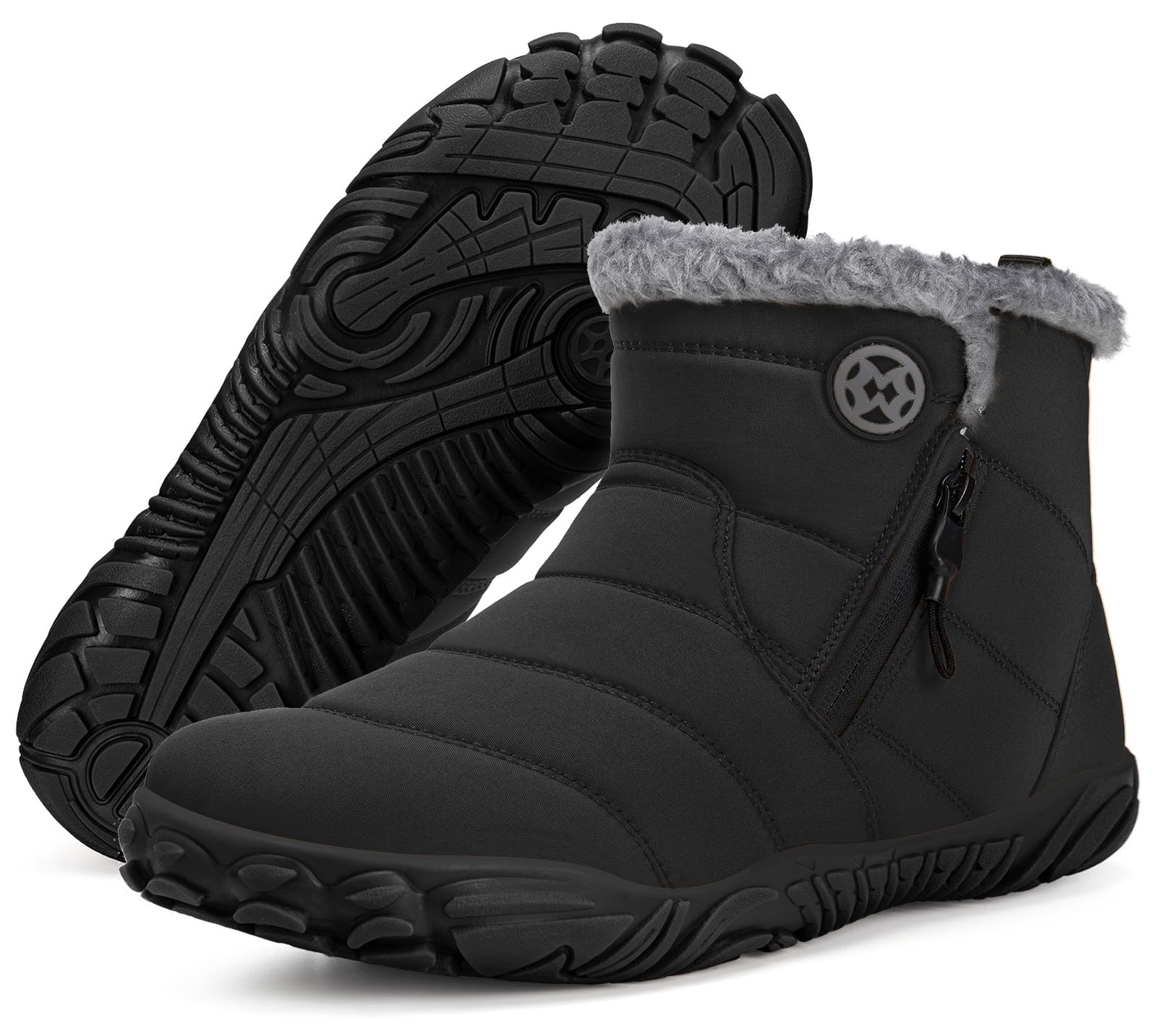
For those who prioritize foot health and natural movement during winter, these barefoot-style boots deliver a zero-drop platform with a wide toe box that lets toes splay naturally. The sole is flexible enough to feel the ground while providing a serviceable tread on snow and icy patches. Owners with hammer toes, bunions, or simply wide feet report that this is the only winter boot that doesn’t cause pain or numbness during extended wear.
The boot is lined with a soft fleece interior that adds warmth without overheating, and the exterior offers effective water resistance for light rain and moderate snow. The anti-slip outsole uses a lug pattern that grips well on icy surfaces, though it is not designed for pure ice. Reviewers appreciate the easy on/off zipper and the absence of the heavy clunkiness typical of insulated boots. It feels like a sneaker but with the insulation and water protection of a winter boot.
The main trade-off: the insert is narrow with a high arch, which contradicts the barefoot philosophy. If you remove the insert, the boot becomes true zero-drop and roomy, but you lose arch support. Also, water resistance is limited to light precipitation; an hour in a heavy downpour can wet through the upper. This boot is ideal for indoor-outdoor use, casual winter errands, and people with specific foot geometry needs, not for deep snow or monsoon rain.
Why it’s great
- Wide toe box and zero-drop sole accommodate foot conditions like hammer toes and bunions without pain
- Lightweight, flexible build feels like a sneaker with winter-level insulation
- Easy zipper entry removes the struggle of lacing up cold boots
Good to know
- Not fully waterproof; heavy rain or deep slush can soak through after prolonged exposure
- Included insert is narrow with firm arch support, contradicting the barefoot design
7. Men’s Winter Snow Boots Water Resistant Non Slip

The Men’s Winter Snow Boots are the definition of a solid entry-level winter boot that punches above its tier. The 7.1-inch shaft keeps snow out, and the water-resistant upper handles slushy parking lots and light snow with no issues. The traction outsole is genuinely effective on packed snow and slush—multiple users confirm zero slipping during harsh winter conditions—though pure ice requires careful stepping. For the price, the warmth-to-weight ratio is excellent; feet stay comfortable even at -30°F according to one reviewer, and the boot is light enough to wear all day without fatigue.
The fit runs wide, which is a blessing for those with broader feet or who want to layer thick socks. The inner material is soft and fuzzy, adding comfort. The flexible sole makes walking feel natural, and the loose lacing allows for quick on/off once the boot is broken in. Owners who use these as daily drivers report that they hold up well for the entire winter season without significant wear to the outsole or upper.
The most notable limitation is traction on wet, polished indoor floors. While the boot grips snow and grass confidently, the same sole can feel slick on a mopped tile surface. If your commute involves walking from a snowy sidewalk into a building with wet floors, you need to be careful. For pure outdoor use in snow, slush, and cold, these boots deliver impressive value that outpaces many alternatives at twice the price.
Why it’s great
- Excellent warmth for freezing conditions without heavy bulk or weight
- Wide fit accommodates thick socks and broad feet comfortably
- Flexible sole and loose lacing allow natural gait and easy on/off
Good to know
- Sole loses grip on wet, polished indoor floors—take care on tile after stepping in from snow
- Water resistance, not waterproof; deep snow submersion over time can wet through
FAQ
Can I leave add-on ice cleats on my boots all winter?
What is the difference between steel and tungsten carbide spikes for ice?
Will ice cleats damage my hardwood or tile floors?
Final Thoughts: The Verdict
For most users, the best anti slip ice boots winner is the STABILicers Maxx 2 because its strap-down binding and 15 steel cleats per boot deliver unmatched security on pure ice for daily work and commuting. If you walk a mixed route of ice and pavement and want a cleat that lasts longer without dulling, grab the Winter Walking Low-Pro Cleat. And for a versatile integrated boot that handles snow and icy trails without the need to carry separate cleats, nothing beats the XPETI Crest Thermo — just know its limits on polished ice.

Mo Maruf
I created WellFizz to bridge the gap between vague wellness advice and actionable solutions. My mission is simple: to decode the research and give you practical tools you can actually use.
Beyond the data, I am a passionate traveler. I believe that stepping away from the screen to explore new environments is essential for mental clarity and physical vitality.