Our readers keep the lights on and my smoothie glass nicely filled. As an Amazon Associate, I earn from qualifying purchases.
Winter air and autumn wind strip moisture faster than any lotion can counter. For those with Vata constitution, the result is parched skin, restless sleep, and a nervous system that hums too loud. A proper body oil does more than lubricate—it anchors, warms, and seals the moisture barrier.
I’m Mohammad Maruf — the founder and writer behind WellFizz. I have spent years dissecting Ayurvedic formularies, analyzing carrier oil extraction methods, and tracking the real difference between herb-infused bases versus synthetic fragrance blends marketed as “dosha-friendly.”
After cross-referencing base oils, herb ratios, and user consistency feedback across hundreds of reviews, these five oils emerge as the most reliable options for anyone seeking a body oil for vata dosha.
How To Choose The Best Body Oil For Vata Dosha
Vata dosha is ruled by air and ether—dry, light, cold, and mobile. A counterbalancing oil must be heavy, warming, nourishing, and grounding. That means the base oil and the herbal infusion matter more than brand prestige or packaging. Below are the three factors that separate a truly effective Vata oil from a bottle that sits unused.
The Base Oil Must Be Sesame
Ayurvedic texts consistently name sesame oil as the primary carrier for Vata because of its inherently warming, penetrating, and tissue-nourishing qualities. Almond and coconut oils are lighter and cooling, making them less effective for Vata pacification. A real Vata body oil lists sesame (til) oil as the first ingredient—not fractionated coconut or grapeseed. The refinement level matters too: unrefined sesame carries a stronger, nutty aroma that some find overpowering, while refined sesame offers a neutral scent with the same therapeutic glide.
Herbal Infusions That Actually Pacify Vata
The herbs macerated into the base oil amplify its dosha-balancing effect. Look for warming, nervine herbs such as Ashwagandha (Withania somnifera), Shatavari, Brahmi (Bacopa monnieri), and Dashamoola. These herbs address the root Vata imbalances—anxiety, muscle tension, and restless sleep. Oils that only list botanical fragrances or essential oils without herb-infused solids typically provide cosmetic scent rather than therapeutic depth. The best oils spend weeks simmering herbs in the base oil to extract fat-soluble constituents.
Absorption and Texture
A Vata oil must absorb at a pace that allows deep massage without leaving a greasy film that stains clothes or bedding. The oil should warm easily between the palms and glide across the skin for at least five minutes before gradually sinking in. If it pools on the skin or requires vigorous rubbing to absorb, the molecular weight of the base oil may be too heavy or the refinement process may be inadequate. Conversely, an oil that dries instantly has likely been blended with volatile, fast-evaporating carriers that do not deliver sustained tissue nourishment.
Quick Comparison
On smaller screens, swipe sideways to see the full table.
| Model | Category | Best For | Key Spec | Amazon |
|---|---|---|---|---|
| Banyan Botanicals Organic Refined Sesame Oil | Pure Base | DIY custom blends & daily Abhyanga | Refined sesame, 16 oz bottle | Amazon |
| Banyan Botanicals Vata Massage Oil | Herbal Infusion | Stress relief & nervous system calming | Infused with Ashwagandha + Shatavari | Amazon |
| Bindi Vata Massage Oil | Herbal Infusion | Warming full-body massage & bath oil | Brahmi, Ashwagandha, Geranium essential oil | Amazon |
| Kerala Ayurveda Balaswagandhadi Thailam | Traditional Thailam | Muscle tone & deep tissue rejuvenation | Sahasrayogam formula, 6.76 oz | Amazon |
| RITUALS The Ritual of Ayurveda Dry Oil VATA | Dry Oil Mist | Quick morning moisture & subtle fragrance | Dry oil spray, 3.38 oz | Amazon |
In‑Depth Reviews
1. Banyan Botanicals Organic Refined Sesame Oil
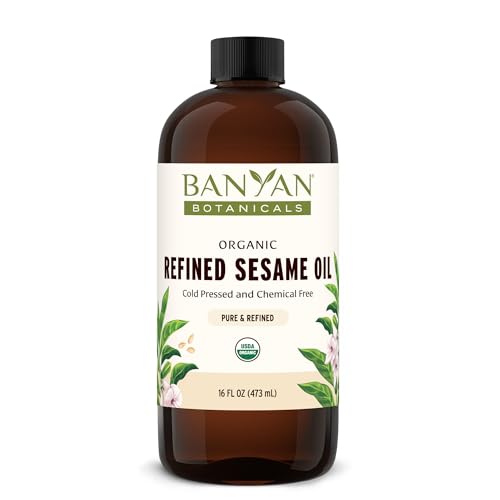
This is the foundational oil—a pure, refined sesame base that gives you complete control over your Vata massage blend. Unlike unrefined oils that carry a strong, nutty scent that some find distracting during Abhyanga, this refined version strips out the solids and impurities while retaining the thermal and penetrating properties of the sesame. The result is a lightweight, warm glide that sinks into dry Vata skin without leaving a sticky residue. Multiple users note that even with consistent daily use, the oil does not clog pores or stain towels, which is a common complaint with heavier cold-pressed blends.
The USDA Organic certification and chemical-free cold-pressed extraction process mean you are not applying pesticide residue or hexane traces to your largest organ. Many experienced Ayurvedic practitioners use this as their staple base for customizing with Ashwagandha powder, Brahmi, or Dashamoola decoctions. The 16-ounce bottle is generous enough for a full month of twice-daily self-massage, making this the most practical option for anyone committed to a consistent routine. Because it is a pure base, you can also use it as a carrier for essential oils without worrying about conflicting herb profiles.
One caveat: because it is refined, it lacks the deeper earthy aroma that unrefined sesame provides. If you value that traditional scent as part of your grounding ritual, you may prefer the unrefined version from the same brand. However, for absorption speed, glide, and compatibility with sensitive skin, this refined oil is the gold standard. It also mixes well with castor oil for those looking to thin out a thicker blend for scalp application.
Why it’s great
- Chemical-free cold-pressed extraction retains antioxidant profile
- Refined texture allows superior glide for long Abhyanga sessions
- Organic, non-GMO, and third-party lab tested for purity
Good to know
- No herbal infusion—you must add your own herbs for therapeutic depth
- Refined profile lacks the strong earthy aroma of traditional unrefined sesame
2. Banyan Botanicals Vata Massage Oil
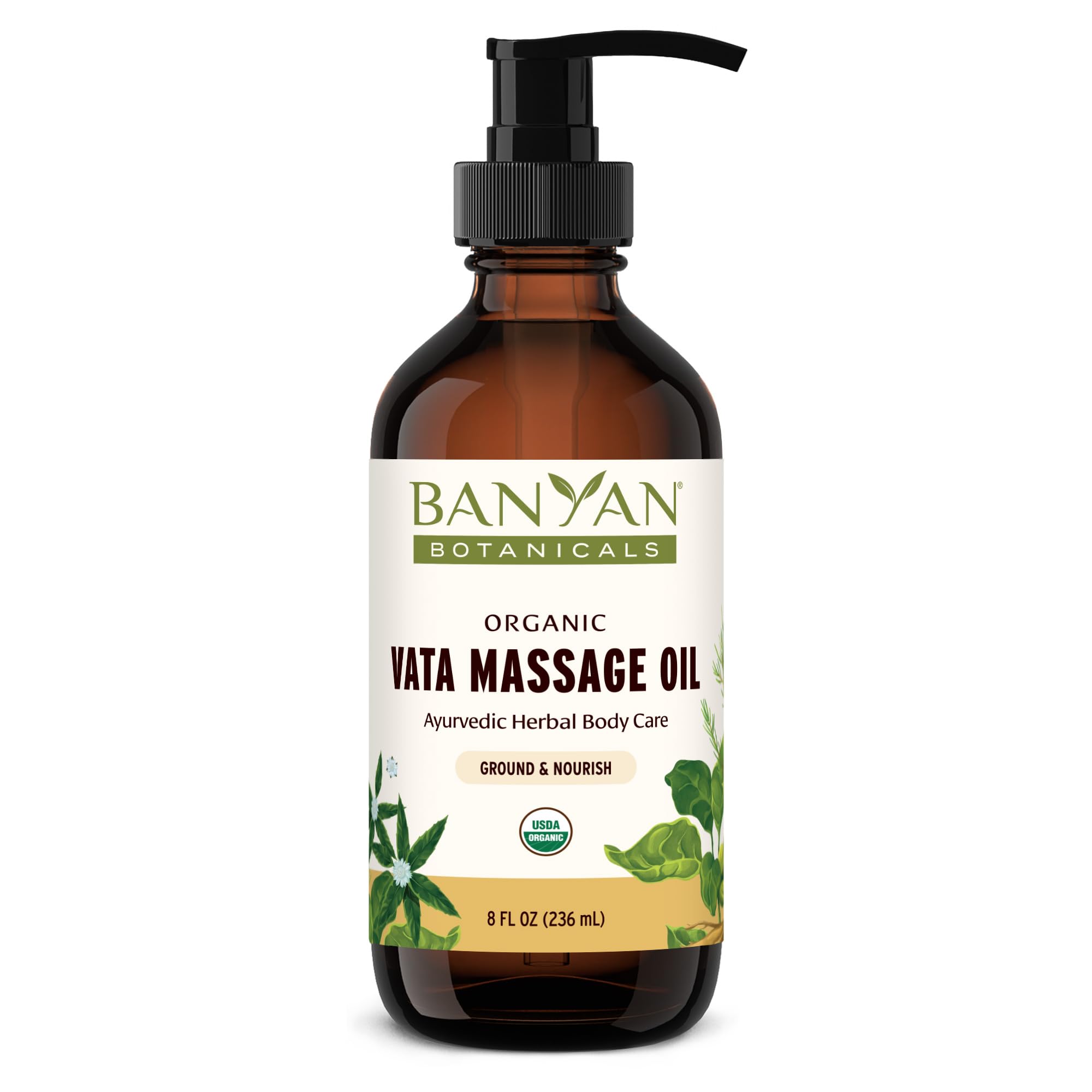
Banyan Botanicals takes their sesame base one step further with this purpose-formulated infusion designed specifically for Vata pacification. The ingredient list reads like an Ayurvedic Materia Medica entry: organic Shatavari for reproductive tissue nourishment, Ashwagandha root for nervine support, Bhringaraj for hair and scalp vitality, and passionflower for its calming alkaloids. Together, these herbs create a synergistic effect that addresses the mental and physical restlessness characteristic of Vata imbalance.
The earthy, grounding scent is unmistakably herbal—users describe it as “forest floor” or “medicinal”—and it works beautifully when warmed before application. Many reviewers with diagnosed Vata constitution report that this oil helps them fall asleep faster when used as a foot massage before bed, and a few mention that it reduces the urge to fidget during the day. The 8-ounce size is more compact than the pure sesame bottle, which makes travel easier but also means heavier users may need to restock more frequently if they perform daily full-body massage.
The primary trade-off is the strong herbal aroma. Some users find it pleasant and grounding, while others compare it to unrefined sesame oil and note that it lingers on the skin for hours. If you plan to apply the oil and dress immediately, the scent may be too assertive for your environment. It is also worth noting that this oil works best when washed off after 20–30 minutes rather than left on as a leave-in moisturizer, as the herb solids can feel slightly gritty if not massaged thoroughly into the skin.
Why it’s great
- Targeted Vata formula with Ashwagandha, Shatavari, and Bhringaraj
- Earthy, grounding aroma that deepens the ritual experience
- USDA certified organic and sustainably sourced
Good to know
- Strong medicinal scent that not everyone enjoys
- 8-ounce bottle is small for twice-daily full-body use
3. Bindi Vata Massage Oil
Bindi’s Vata formulation distinguishes itself through a well-calibrated blend of warming herbs and uplifting essential oils. The base is likely sesame (common for Vata oils at this tier), infused with Brahmi for cognitive grounding, Ashwagandha for stress resilience, and Shatavari for tissue moisture. The addition of Geranium and Lemon essential oils shifts the aromatic profile away from the purely earthy spectrum toward something brighter and more floral—many users specifically mention that the scent helps “warm” their mood during cold months.
This oil is versatile in application: it works as a full-body massage oil, a bath additive (a few capfuls in warm water softens dry Vata skin instantly), or a post-shower moisturizer if applied lightly. The texture is medium-weight, absorbing within 10–15 minutes of massage, which makes it practical for morning routines when you need to dress soon after application. One massage therapist reports blending it with fractionated coconut oil to extend glide during longer sessions without diluting the therapeutic herbs.
The main drawback is packaging inconsistency. A notable number of customer reviews mention bottles arriving without tamper seals or appearing previously opened. While this appears to be a supply-chain issue rather than a product quality problem, it introduces a trust barrier. Once the bottle passes inspection, the oil itself performs consistently. The Lemon-Geranium scent, while pleasant, is not traditional Ayurvedic—so purists who prefer the heavy, herbal olfactory experience may find this too cosmetic in character.
Why it’s great
- Bright, warming essential oil profile (Geranium + Lemon) lifts mood
- Versatile for massage, bath, or leave-in moisturizer
- Hypoallergenic and free from synthetic chemicals
Good to know
- Occasional reports of tampered or unsealed bottles
- More cosmetic scent that may not satisfy Ayurvedic purists
4. Kerala Ayurveda Balaswagandhadi Thailam

This is a classical Ayurvedic preparation drawn directly from the Sahasrayogam text—not a modern wellness blend. The formula includes Himalayan Cedar, Water Lily, Ashwagandha, Indian Sarsaparilla, and Turmeric, all slow-cooked into a sesame oil base using traditional methods. This is not a massage oil in the Western cosmetic sense; it is a medicine designed to penetrate deep into the muscle tissues and nervous system. Users recovering from illness or long hospitalization often find this oil uniquely restorative because of its dense herb-to-oil ratio.
The texture is noticeably heavier than the refined Banyan oil, and the herb solids are more concentrated, meaning the oil feels almost gritty if not massaged thoroughly. Reviewers note that it must be washed off after 20–30 minutes or left on for an extended period before bathing—never used as a leave-in moisturizer. The scent is intensely herbal, with the sesame base dominating. Some users find this authentic and transportive, others describe it as “just smelling like plain sesame oil” because the herbs are fully integrated rather than suspended as visible particles.
Packaging quality is the weak point. Several customers report receiving bottles without a pump mechanism that fits, or without a sealing cap. This is frustrating given that the product itself is high-grade. Additionally, the 6.76-ounce bottle is smaller than most competitors, so if you perform daily full-body massage, you will go through it in two to three weeks. For occasional therapeutic use or targeted joint and muscle application, it performs exceptionally well.
Why it’s great
- Formulated from the classical Sahasrayogam Ayurvedic text
- High herb-to-oil ratio for deep tissue nourishment
- Excellent post-illness recovery support for muscles and nerves
Good to know
- Bottle often arrives with missing or ill-fitting pump
- Small size and heavy texture not ideal for daily full-body use
5. RITUALS The Ritual of Ayurveda Dry Oil VATA

This is a modern, Western take on an Ayurveda-inspired body oil. The “dry oil” format means it sprays on as a fine mist and absorbs almost instantly—no massage, no waiting, no residue. For someone who wants a quick sensory moment of grounding without committing to a full 20-minute Abhyanga routine, this delivers convenience. The fragrance is the star here: users consistently describe it as sweet, warm, and long-lasting, with notes that evoke saffron doughnut and graham cracker from earlier production runs.
The ingredients do not prioritize therapeutic herb infusion. The base likely includes a lightweight carrier such as caprylic/capric triglyceride rather than traditional sesame oil, which means the Vata-pacifying thermal properties of sesame are absent. The Ayurvedic claim here is more about fragrance and brand positioning than systemic dosha balancing. That said, the dry oil format is genuinely useful for maintaining skin hydration between proper oil massage sessions, and the scent can be psychologically uplifting, which is not nothing for Vata.
The major concern is formulation inconsistency. Multiple long-term users report that the scent changed dramatically between bottles—what was once a sweet, bakery-like fragrance became cloyingly floral in later purchases. This suggests that the essential oil blend has been altered, possibly due to supply chain changes or reformulation. At this price point, a single bottle is small and expensive, and without a consistent fragrance profile, it is hard to justify repurchasing. It is best considered an entry-level novelty rather than a serious Ayurvedic tool.
Why it’s great
- Instant-absorb dry oil spray – no massage required
- Warm, pleasant fragrance that creates a mood boost
- Compact and travel-friendly bottle
Good to know
- No therapeutic herb infusion – used as a cosmetic scent oil
- Fragrance reformulation has made the scent unpredictable between bottles
FAQ
Can I use coconut or almond oil for Vata instead of sesame?
Should I wash off the oil after Abhyanga or leave it on?
Why does my Vata body oil smell sour or rancid?
Final Thoughts: The Verdict
For most users, the body oil for vata dosha winner is the Banyan Botanicals Organic Refined Sesame Oil because it provides a pure, high-quality base that you can customize with your own herbs while delivering the ideal absorption rate for daily practice. If you want a ready-to-use herbal infusion that targets stress and insomnia, grab the Banyan Botanicals Vata Massage Oil. And for traditional deep tissue work or post-illness recovery, nothing beats the Kerala Ayurveda Balaswagandhadi Thailam.

Mo Maruf
I created WellFizz to bridge the gap between vague wellness advice and actionable solutions. My mission is simple: to decode the research and give you practical tools you can actually use.
Beyond the data, I am a passionate traveler. I believe that stepping away from the screen to explore new environments is essential for mental clarity and physical vitality.