Our readers keep the lights on and my smoothie glass nicely filled. As an Amazon Associate, I earn from qualifying purchases.
Climbing a trail above 8,000 feet, the sharp pinch in your temples and the sudden shortness of breath announce one thing: the air no longer carries enough oxygen for your body’s needs. Canned oxygen offers a portable solution for exactly that moment — a compact metal canister delivering a concentrated burst of O2 to alleviate acute mountain sickness symptoms without prescription or bulky equipment.
I’m Mohammad Maruf — the founder and writer behind WellFizz. I’ve spent years analyzing health and wellness hardware specifications, from air filtration efficiency to altitude gear metrics, distilling which measurable specs actually translate into real-world relief.
This guide breaks down five options and explains the key specs that separate a genuine altitude aid from an accessory. Whether you’re planning a Colorado ski trip or a high-altitude trek, these insights will help you find the right canned oxygen for altitude sickness.
How To Choose The Best Canned Oxygen For Altitude Sickness
Altitude sickness hits when the barometric pressure drops and your body can’t extract enough oxygen from thin air. Canned oxygen fills that gap, but not all cans maintain their pressure or deliver the stated volume. Focus on three factors to avoid finishing a can in three breaths.
Liter Capacity and Breath Count
The most frequent complaint across budget-tier cans is that the oxygen depletes far faster than advertised. A standard 10-liter canister claims roughly 150 to 200 one-second inhalations, but actual breath count depends on inhalation depth and canister pressure retention. Larger capacities like 12 liters extend the window, especially if you plan to use the can over multiple days. Match the liter size to your trip — a weekend hike needs less than a week-long expedition.
Oxygen Purity Percentage
Premium cylinders typically fill with 95% to 99.99% oxygen. The higher the percentage, the less ambient nitrogen you inhale, which directly raises the partial pressure of oxygen entering your bloodstream. Anything below 95% starts to crowd the can with filler gas, reducing effectiveness for acute altitude symptoms.
Seal Integrity and Multi-Use Design
Mid-range and premium models often include a nozzle valve that reseals after each use. Cheaper cans frequently leak pressure after the first session, turning a multi-day supply into a single-use item. Check reviews for the phrase “lost pressure” — that’s the red flag for seal failure.
Quick Comparison
On smaller screens, swipe sideways to see the full table.
| Model | Category | Best For | Key Spec | Amazon |
|---|---|---|---|---|
| Boost Oxygen 12L Rapid Response 2‑Pack | Premium | Multi-day altitude trips | 225 inhalations per can | Amazon |
| Boost Oxygen Natural 10L 2‑Pack | Mid-Range | Daily respiratory support | 99.5% O₂ purity | Amazon |
| O2 Blast 10L 3‑Pack | Mid-Range | Sports & altitude training | 99.99% O₂ purity | Amazon |
| Portable Oxygen Can 10L 2‑Pack (O2 Energy) | Entry-Level | Emergency backup | 10L capacity per can | Amazon |
| Real Science Oxygenate Miracle Capsules | Supplement | Daily breathing comfort | 60 capsules per bottle | Amazon |
In‑Depth Reviews
1. Boost Oxygen Extra-Large Rapid Response 12L Canister (2‑Pack)
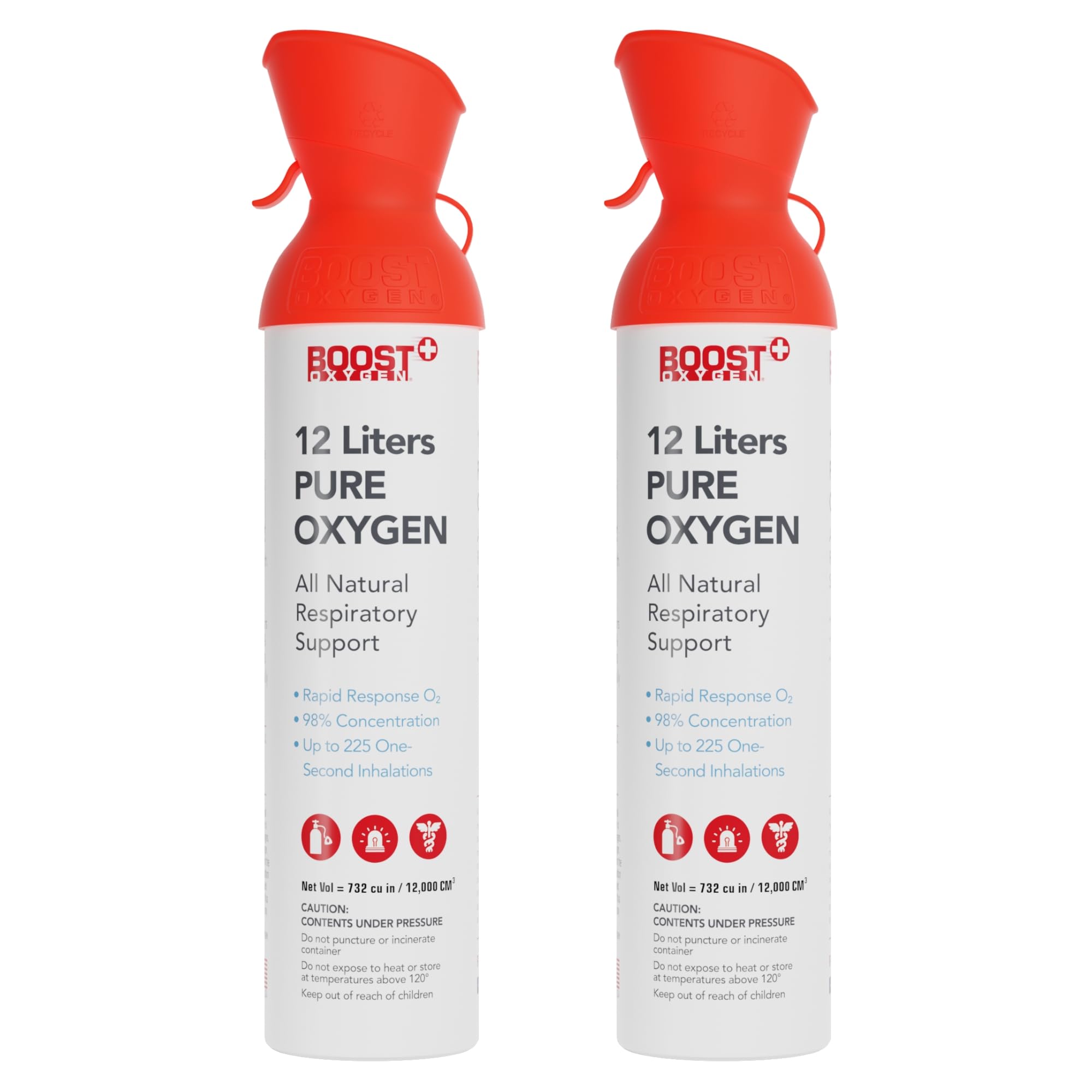
Boost Oxygen’s 12-liter Rapid Response is the largest consumer canister in the brand’s lineup, delivering up to 225 controlled one-second inhalations per can. The 2‑pack configuration gives you nearly 450 total breaths — enough for a week-long high-altitude trip without restocking. Real users highlight the valve seal as a standout: unlike many budget models, these cans hold pressure between uses, so a can lasts multiple sessions on the trail or in the car between drives up the mountain.
At 98% oxygen concentration, the fill leans toward the premium side, and the aluminum construction keeps each can lightweight despite the larger volume. Multiple customer reviews specifically mention zero pressure loss even after a week of intermittent use, which addresses the single biggest failure in this category. The included mask has a wide mouthpiece compatible with beard hair, a small but appreciated detail for male users at altitude.
The only trade-off is that a few users report the valve can feel stiff on the first press, and the 12‑liter can is slightly longer than a standard 10‑liter, making pocket storage less convenient. For extended altitude exposure, the extra capacity and seal integrity make this the strongest all-round pick.
Why it’s great
- Valve seal prevents pressure loss between sessions
- 225 breaths per can extend multi-day usability
- 98% oxygen purity delivers effective acute relief
Good to know
- 12‑liter canister is slightly longer, less pocket-friendly
- A few reports of initial valve stiffness on first press
2. Boost Oxygen Natural 10L Canister (2‑Pack)

Boost’s Natural formula is the most reputable mid-range option in the altitude oxygen market, with a 99.5% purity fill that approaches medical-grade concentrations. The 10‑liter 2‑pack is nearly identical in form factor to the O2 Blast products but benefits from Boost’s longer production history — the company has manufactured oxygen canisters in Connecticut since 2007 and appeared on Shark Tank. Customer reviews consistently mention effectiveness for altitude-induced shortness of breath and mild asthma relief, which speaks to the 99.5% concentration making a tangible difference.
The canisters are fully recyclable and the mask design is straightforward, with no additional aromatherapy scents — it’s just pure oxygen. One customer noted the price has increased recently, but per-liter cost still falls below the premium tier. The main durability concern is that many users report the can lasts exactly as advertised, with no leakage if stored upright and capped after each use.
The downside appears when compared directly against the 12‑liter Rapid Response: at altitude the 10‑liter runs out faster, and heavy users may need a second pack for a week-long trip. For shorter weekend excursions or daily home respiratory support, this is the efficient middle-ground choice.
Why it’s great
- 99.5% oxygen purity for effective altitude symptom relief
- Trusted brand since 2007 with solid manufacturing track record
- Recyclable cans and simple mask design
Good to know
- 10‑liter capacity depletes faster on longer trips
- Recent price increases make per-liter cost less competitive
3. O2 Blast 10L 3‑Pack with Custom Breathing Mask
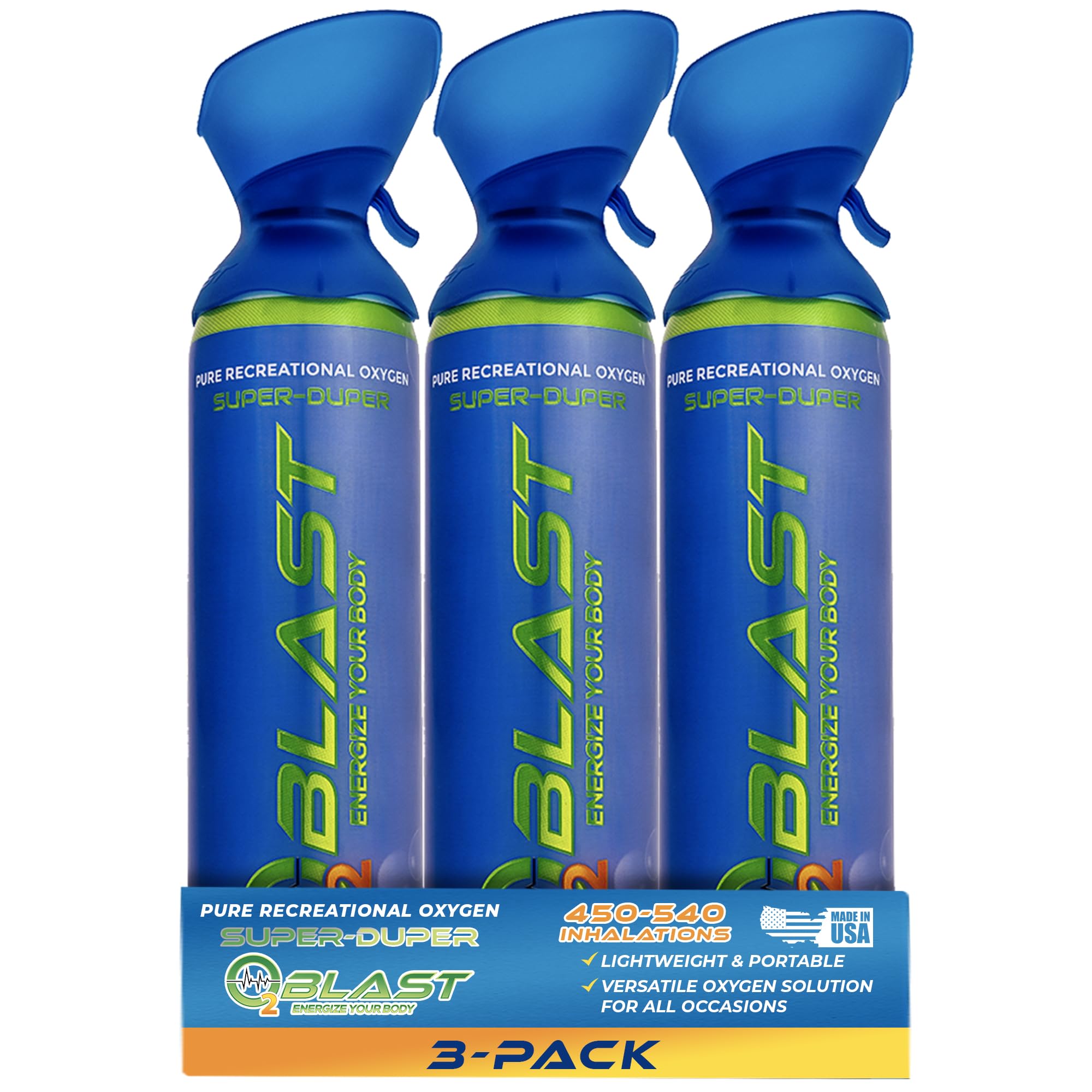
O2 Blast pushes the purity ceiling to 99.99% — the highest oxygen concentration among the canisters reviewed here — which in theory maximizes the partial pressure gradient for rapid absorption at altitude. The 3‑pack format provides three separate 10‑liter cylinders, making it a good quantity buy for groups or extended stays above 8,000 feet. The custom breathing mask fits snugly and the nozzle design is straightforward with no complex activation.
The brand positions these cans for athletes and high-altitude adventurers, and multiple customers confirm the product works for altitude anxiety and post-exercise recovery. The can dimensions match the standard 10-liter footprint, so it fits easily in a backpack side pocket or vehicle glove box.
However, the real-world breath count draws criticism: several users report getting only half the stated volume, and some cans lose pressure after the first session. Compared to Boost, the seal integrity appears less reliable, with reports of the nozzle trigger occasionally malfunctioning near the cone. If you prioritize absolute purity above all else, this is the pick; if consistent multi-session use matters more, the Boost 12‑liter is safer.
Why it’s great
— 99.99% oxygen purity is the highest in the review
— 3‑pack is convenient for group altitude trips
— Compact 10L form factor fits in backpacks easily
Good to know
— Inconsistent breath count; some cans deplete faster than advertised
— Seal integrity may not match premium competitors
4. Portable Oxygen Can 10L 2‑Pack (O2 Energy)
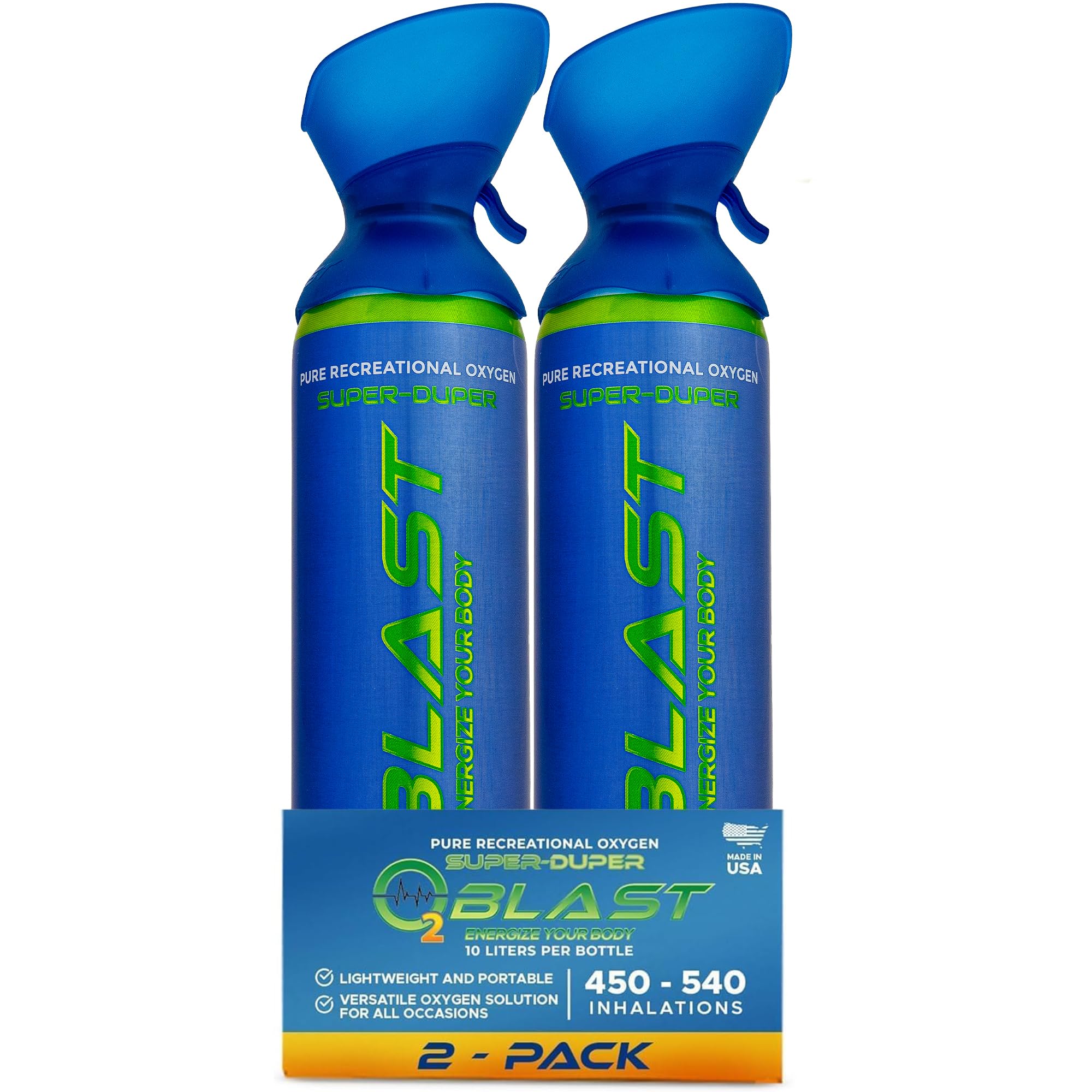
The O2 Energy portable oxygen can is the entry-level option in this comparison, offering two 10‑liter canisters at a favorable per-can price. The product claims over 180 controlled inhalations per can, and the package includes a custom mask and compact 10.5 × 3.15-inch body. The 99.99% purity fill matches the premium O2 Blast on paper, making the spec sheet look strong for the price tier.
Several customers describe the product as a reliable emergency backup and adequate for occasional use. It’s easy to carry, and the mask fits standard adult faces without issue. The idea of keeping a set in the car or a daypack for unexpected altitude discomfort is where this product makes sense.
The catch appears in durability: multiple reviews report far fewer breaths than the packaging suggests, and one customer measured the can empty after just five days of minimal use. The valve seal also seems to leak over time — a known issue with budget-tier aluminum cans. For a single-use altitude emergency on a short day hike this could suffice, but for multi-day reliance the failure risk is noticeable.
Why it’s great
- Low cost entry point for emergency altitude use
- 99.99% oxygen purity on the label
- Compact dimensions for easy carry
Good to know
- Inconsistent retention; many cans lose pressure after first use
- Actual breath count often far below advertised 180
5. Real Science Oxygenate Miracle — Daily Lung & Circulation Support Capsules

Oxygenate Miracle is not canned oxygen — it is an oral dietary supplement in capsule form that targets daily respiratory comfort through nitric oxide support. The formula contains Vinitrox, GABA, and antioxidants intended to promote oxygen flow and circulation. For someone with chronic conditions like COPD who struggles with consistent breathing comfort, this could be an alternative to the transient burst provided by aerosolized oxygen cans.
Customer reviews paint a mixed but leaning-positive picture: users with COPD report significant improvement in shortness of breath during activity, and several singers note easier breathing for vocal performance. The two-capsule daily routine is simple, and the clean-label manufacturing (GMP-certified, non-GMO) appeals to health-conscious consumers.
However, this product does not address acute altitude sickness the way a pressurized oxygen can does. Capsules require hours to metabolize and cannot provide immediate relief during a high-altitude headache or sudden dyspnea. Some users also report zero noticeable benefit, particularly for COPD. It works best as a daily support tool rather than a rescue inhaler for altitude emergencies.
Why it’s great
- Supports breathing comfort and energy without cans or masks
- Positive results reported for COPD and vocal performance
- Simple two-capsule daily routine with clean-label ingredients
Good to know
- Not a substitute for immediate canned oxygen at altitude
- Effectiveness varies; some users see no measurable benefit
FAQ
How many breaths should a 10-liter can realistically deliver at altitude?
Can canned oxygen prevent altitude sickness or only treat symptoms?
Why do some cans feel empty even though the label says 10 liters?
Is there a difference between Boost oxygen cans and generic brands for altitude?
Final Thoughts: The Verdict
For most users, the canned oxygen for altitude sickness winner is the Boost Oxygen 12L Rapid Response 2‑Pack because the 12-liter capacity and reliable valve seal support multi-day altitude use without pressure loss. If you want the highest recorded oxygen purity, grab the O2 Blast 10L 3‑Pack. And for a daily breathing support alternative when you’re not at altitude, nothing beats the Real Science Oxygenate Miracle capsules.

Mo Maruf
I created WellFizz to bridge the gap between vague wellness advice and actionable solutions. My mission is simple: to decode the research and give you practical tools you can actually use.
Beyond the data, I am a passionate traveler. I believe that stepping away from the screen to explore new environments is essential for mental clarity and physical vitality.