Our readers keep the lights on and my smoothie glass nicely filled. As an Amazon Associate, I earn from qualifying purchases.
Finding a television that genuinely anchors a living room means balancing two things that rarely cooperate: cinematic immersion and everyday livability. The right 65-inch screen doesn’t just deliver a sharp picture in the dark — it handles afternoon sunlight bouncing off a window, integrates with your sound system without a rat’s nest of cables, and sits in your space without dominating it. That balance is harder to strike than most buyers realize, which is why so many living rooms end up with a TV that’s either overpowering in the light or underwhelming in the dark.
I’m Mohammad Maruf — the founder and writer behind WellFizz. Over years of researching home entertainment hardware, I’ve compared hundreds of panel technologies, backlight configurations, and processor capabilities to understand what actually separates a living room workhorse from a bedroom impulse buy.
This guide cuts through the specs war to surface the models that earn their place in a room you actually live in. Whether browsing or nearly ready to buy, here is the definitive breakdown of how to choose a 65 inch tv for living room that truly fits.
How To Choose The Best 65 Inch TV For Living Room
Living room lighting is the most underrated variable in the TV-buying process. A panel that looks spectacular in a dedicated home theater can look washed out and milky in a room with a large window to the south. Before you zero in on resolution or refresh rate, lock down the right technology for your ambient light level. High-end QLED and mini-LED panels push peak brightness high enough to cut through reflected sunlight, while OLED excels in darker spaces where its per-pixel black levels can actually be seen. If your couch faces a wall of windows, a premium mini-LED set with aggressive anti-glare treatment will deliver a far more satisfying image than an OLED fighting a losing brightness battle.
Brightness, Glare, and the Anti-Reflection Factor
Measured in nits, peak brightness determines how well a TV holds onto contrast in a lit room. A set hitting 600 nits will look fine with the blinds drawn, but a living room with open curtains demands 1,000 nits or more to keep specular highlights from disappearing into ambient wash. Anti-glare coatings add another layer: a matte finish scatters light to reduce mirror-like reflections, while a glossy panel with a good anti-reflection layer preserves deeper blacks at the cost of being more susceptible to direct light spots. Some of the best living room TVs combine both a high-nit panel and a sophisticated anti-glare treatment — the Hisense U7’s dual-layer screen is a standout example of this approach.
Smart Platform and Living Room Integration
The operating system running your TV determines how many clicks it takes to start a show — and whether that experience stays smooth over years of software updates. Google TV offers broad app compatibility and strong voice search, but its insistence on account integration can feel intrusive. Fire TV is fast and familiar for Amazon households but serves ads alongside content. LG’s webOS and Samsung’s Tizen are polished and ad-light, though their app selection occasionally lags behind the Android-based platforms. A living room TV should also support Apple AirPlay and Google Cast for easy phone-to-screen sharing, and ideally include a cable-management solution like Samsung’s One Connect Box to keep the wall clean.
Quick Comparison
On smaller screens, swipe sideways to see the full table.
| Model | Category | Best For | Key Spec | Amazon |
|---|---|---|---|---|
| Samsung QN70F | Neo QLED | AI upscaling in bright rooms | NQ4 AI Gen2 Processor | Amazon |
| LG C5 OLED | OLED evo | Cinematic contrast | α9 AI Processor Gen7 | Amazon |
| Sony BRAVIA 5 | Mini LED | PS5 optimization | XR Backlight Master Drive | Amazon |
| TCL QM7K | QD-Mini LED | Value with high brightness | Up to LD2500 Dimming | Amazon |
| Hisense U7 | Mini-LED ULED | Bright rooms and gaming | Native 165Hz Refresh | Amazon |
| Amazon Ember | Mini-LED QLED | Fire TV ecosystem | 512 Dimming Zones | Amazon |
| Samsung Frame LS03D | QLED Art TV | Design-focused spaces | Matte Display | Amazon |
| Hisense CanvasTV | Hi-QLED Art TV | Art mode on a budget | Hi-Matte Display | Amazon |
| Sony BRAVIA 8 OLED | OLED | Dark room movie watching | XR Contrast Booster 15 | Amazon |
| LG G4 OLED | OLED evo Gallery | Ultra-slim flush wall mount | a11 AI Processor | Amazon |
| Panasonic W70 | LED 4K | Budget-conscious shoppers | HDR10+ Support | Amazon |
In‑Depth Reviews
1. Samsung 65-Inch Class Neo QLED QN70F (2025)

The Samsung QN70F earns the living room crown because it solves the three biggest pain points most buyers face: moderate ambient light handling, cable clutter, and upscaling of non-4K content. The NQ4 AI Gen2 processor uses 20 neural networks to analyze and enhance every frame, which means your cable news and older streaming content gain noticeable sharpness and color depth without looking artificial. The Quantum Matrix mini-LED backlight delivers measured peak brightness above 1,000 nits, so afternoon sports remain punchy even with blinds partially open.
For gamers, the Motion Xcelerator 144Hz mode keeps fast pans smooth without tearing, and the Samsung Gaming Hub consolidates cloud services without needing a console. The slim profile and One Connect box — which routes all cables through a single thin line — make wall mounting exceptionally clean, a detail that matters enormously in a visible living room location. Samsung TV Plus offers over 2,700 free channels out of the box, which offsets the absence of a full cable subscription for many households.
Some users report the remote feels small initially, though its minimalist layout becomes natural within a few days. A handful of buyers noted shipping damage from poor packaging, so inspect the box before signing. If you want a living room television that balances picture quality, smart features, and aesthetic integration without demanding a dedicated dark room, the QN70F is the most complete package available this year.
Why it’s great
- Outstanding AI upscaling sharpens older content effectively
- One Connect box eliminates visible cable mess
- 144Hz VRR with low input lag for serious gaming
Good to know
- Thin chassis requires careful handling during setup
- Smart platform is ad-supported on the home screen
2. LG 65″ C5 OLED evo (2025)

The LG C5 is the reference standard for picture quality in a controlled-light living room. With over 8.3 million self-lit pixels, contrast is essentially infinite: stars against deep space have no halo, and subtitles in a letterboxed film don’t bleed grey into the black bars. The α9 AI Gen7 processor’s Brightness Booster pushes OLED luminosity higher than previous generations, though this set still works best with some light control — a south-facing window will push it to its limits. The inclusion of four full HDMI 2.1 ports makes it a no-compromise hub for PS5, Xbox Series X, and a soundbar simultaneously.
LG’s webOS 25 has shed much of its earlier sluggishness, with quick app launches and a clean home screen that doesn’t bury your services behind ads. The Magic Remote pointer is still polarizing — some love the air-mouse cursor, others find it imprecise — but voice search via Alexa and Google Assistant both work reliably. The Dolby Vision and Dolby Atmos support is fully specified, delivering a genuine cinema experience when paired with even a modest sound system.
The bundled package here includes a wall mount, surge protector, HDMI cables, and a 26-month extended protection plan covering burn-in, which is a meaningful addition given OLED’s theoretical susceptibility to static image retention. The stand is notoriously difficult to assemble solo — plan for two people and a clear workspace. For buyers who prioritize reference-level black levels and gaming performance and can manage their room’s ambient light, the C5 is the definitive OLED choice.
Why it’s great
- Per-pixel control delivers perfect blacks and infinite contrast
- Four HDMI 2.1 ports handle all modern consoles and audio gear
- Bundled protection covers burn-in risk
Good to know
- Stand is very difficult to install alone
- Peak brightness still trails premium mini-LED in bright rooms
3. Sony BRAVIA 5 65″ Mini LED (K-65XR50)

The Sony BRAVIA 5 takes a different approach from the LG C5: instead of pixel-level black, it uses thousands of mini-LEDs driven by the XR Backlight Master Drive to produce high brightness with precise local dimming. In a bright living room, this set has an advantage — its peak output holds up against direct window light, and the XR Triluminos Pro color gamut keeps faces natural even in challenging conditions. The XR processor’s AI upscaling is arguably the best in class for 1080p and 720p content, making it a strong choice for households that watch a mix of new streaming and older broadcast material.
For PlayStation 5 owners, this is the only TV that supports Auto HDR Tone Mapping and Auto Genre Picture Mode natively — the TV detects the PS5 and adjusts settings frame-by-frame without any manual configuration. The Game Menu dashboard consolidates VRR, motion blur reduction, and crosshair overlays in a single overlay. The built-in speakers are surprisingly capable for a slim panel, though a soundbar still elevates the Dolby Atmos experience significantly. Google TV integration is smooth, with voice search through Google Assistant responding quickly to natural language commands.
A meaningful limitation: only two of the four HDMI ports support HDMI 2.1’s full 48Gbps bandwidth, which matters if you plan to connect both a PS5 and a high-end soundbar with eARC simultaneously. Some users reported intermittent auto on/off quirks that required a service menu adjustment. For a living room where brightness, upscaling, and PS5 integration are the top priorities, the BRAVIA 5 delivers where many competitors fall short.
Why it’s great
- Best-in-class upscaling breathes life into older content
- Exclusive PS5 auto-calibration features are genuinely useful
- High peak brightness handles bright rooms well
Good to know
- Only two of four HDMI ports are full 2.1
- Occasional auto on/off firmware quirks reported
4. TCL 65″ QM7K Series (2025)
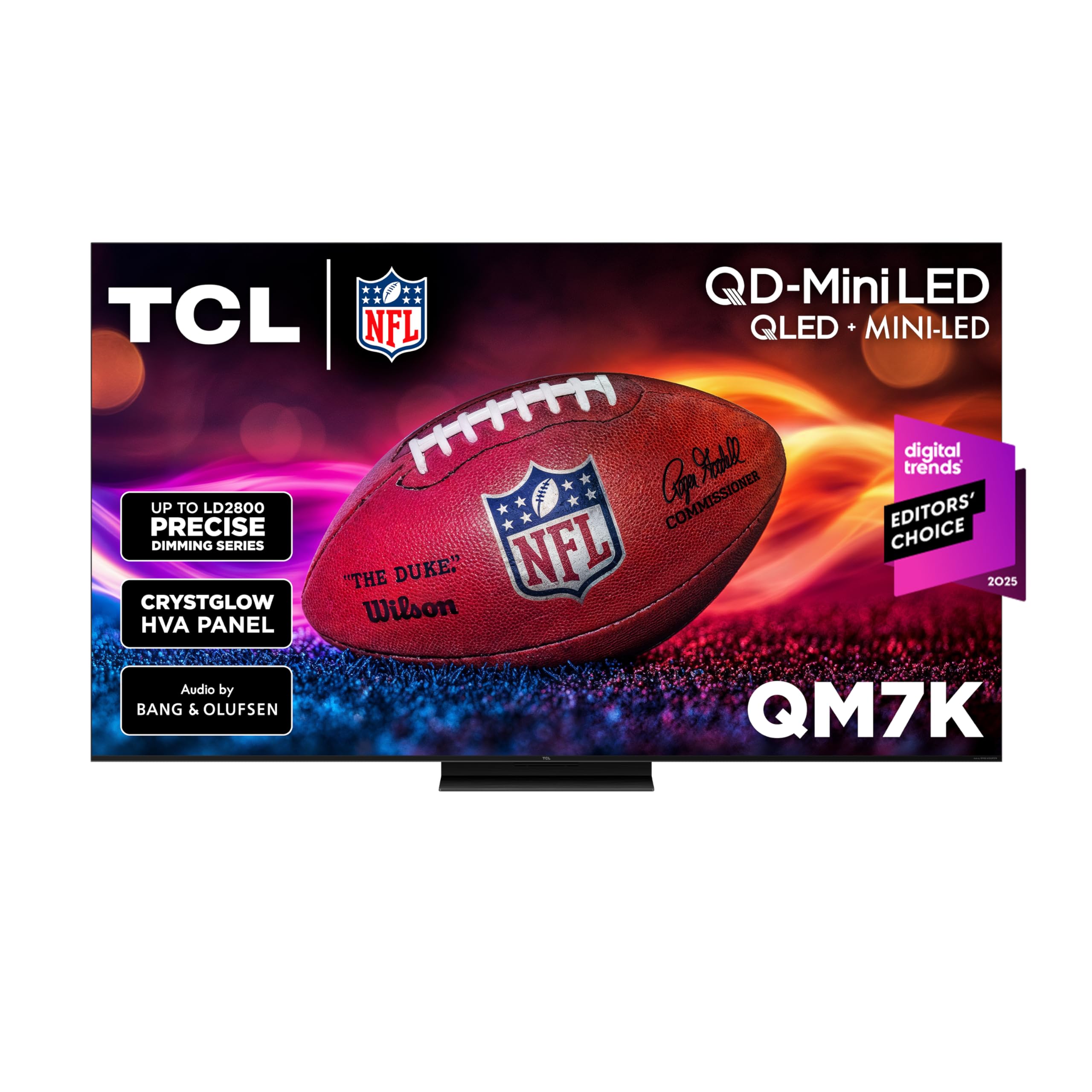
The TCL QM7K is the model that forces every other mid-range set to justify its price premium. Using TCL’s QD-Mini LED technology with up to 2,500 local dimming zones, it delivers black levels and brightness that approach last year’s flagship OLEDs at a fraction of the cost. The CrystGlow HVA panel includes an effective anti-reflective layer that cuts glare in bright rooms, and the 144Hz native refresh rate with VRR makes it a strong companion for both console and PC gaming. Google TV is responsive out of the box, though the remote feels cheaply constructed — a common complaint that doesn’t affect picture quality.
In real-world use, the QM7K excels in mixed-content households: sports look fluid with minimal motion blur, HDR movies hold specular highlights well, and SDR content is upscaled cleanly without introducing noise. The Onkyo-tuned 2.1-channel audio system is a step above what most sets in this bracket deliver, with enough bass presence to skip a soundbar in smaller rooms. The stand assembly is refreshingly simple, and the overall build quality feels solid for the price point.
The catch is that Google TV’s bloatware and sponsored rows can clutter the home screen, and users who prefer a clean interface may want to use an Apple TV 4K as the primary input. A few reports mention very slight halo blooming around bright subtitles in dark scenes, though this is a characteristic of Mini-LED backlight systems rather than a defect. If budget is a primary concern but you refuse to compromise on brightness and dimming zone count, the QM7K is the obvious answer.
Why it’s great
- Exceptional black levels and peak brightness for the price
- Anti-reflective screen works well in bright living rooms
- 144Hz native refresh with VRR for smooth gaming
Good to know
- Remote feels cheap and lacks backlight on basic model
- Google TV home screen has pre-loaded bloatware
5. Hisense 65″ U7 Mini-LED ULED (2026)
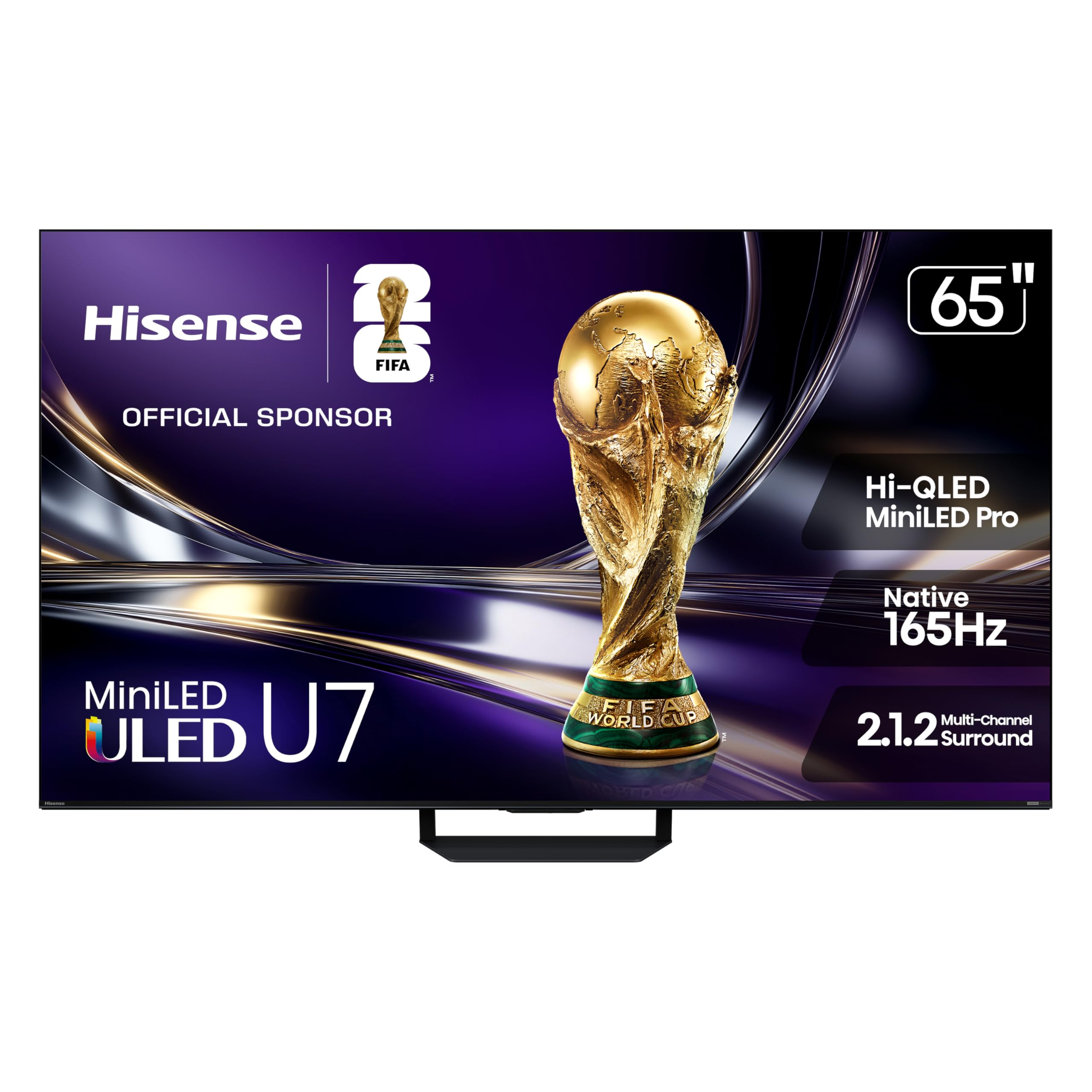
The Hisense U7 is engineered for one specific enemy: the bright living room. With a peak brightness approaching 3,000 nits and a dual-layer anti-glare screen that minimizes reflections from overhead lights and windows, it creates a vibrant image in conditions that would wash out most OLED sets completely. The Hi-QLED Mini-LED Pro backlight uses thousands of tiny LEDs to maintain high contrast even when displaying bright white clouds against a blue sky on a sunny afternoon. The native 165Hz refresh rate is a genuine differentiator for competitive gaming, and VRR support up to 330Hz makes it future-proof for the next console generation.
Google TV integration is seamless, and the included Filmmaker Mode preserves director intent for night-time movie watching. The 2.1.2-channel audio system with Dolby Atmos support delivers room-filling sound that outperforms many soundbars in the sub-200-dollar range — dialogue is clear, bass is present without distortion, and height effects are convincing. The Hi-View AI Engine Pro continuously adjusts color and contrast per scene, and while some purists may prefer to disable it, its default setting handles mixed content well without introducing soap opera effect.
Downsides are minor but real: the stand is wide and requires a surface at least 48 inches across, and the remote’s button layout takes a few days to learn. Some users report the motion smoothing default can feel aggressive in sports mode, but this is adjustable in the settings menu. For any living room with significant natural light, the U7 is arguably the best-performing television in its price tier.
Why it’s great
- Ultra-bright panel cuts through direct sunlight effectively
- Excellent anti-glare layer minimizes reflections
- Native 165Hz refresh with 330Hz VRR support
Good to know
- Wide stand requires a large surface
- Default motion smoothing may need adjustment
6. Amazon Ember 65″ Mini-LED Series (2026)

The Amazon Ember is built for the household that lives inside the Amazon ecosystem. The new Fire TV interface (2026 update) is faster and less cluttered than previous iterations, and with Alexa+ built into the TV itself, you can ask the TV to find shows, control smart lights, or check Blink camera feeds without reaching for a remote. The mini-LED QLED panel with 512 dimming zones and up to 1,400 nits of peak brightness produces punchy HDR with good contrast, and the Dolby Vision IQ support adjusts tone mapping based on ambient room light — a feature that genuinely improves daytime viewing.
For gamers, the 144Hz panel with AMD FreeSync Premium Pro certification delivers smooth, tear-free gameplay. The 2.1-channel speaker system with Dolby Atmos provides clear dialogue and surprising bass depth for an all-in-one design. The Omnisense sensor wakes the screen when you walk into the room — a nice living room touch that makes the TV feel responsive and alive. The design is clean and modern, with a slim profile that mounts flush or sits on low-profile feet.
The main friction point is software: the Fire TV home screen is heavily ad-supported, with promoted content rows interrupting the app grid. Some early units shipped with firmware that caused sluggish menu performance until a software patch was applied. If you’re already using Amazon services, Blink cameras, and Alexa throughout your home, the integration is compelling enough to overlook these quirks. For Android or Apple-centric households, Google TV or webOS may feel more natural.
Why it’s great
- Deep Alexa integration with hands-free control and camera feeds
- Bright QLED mini-LED with Dolby Vision IQ
- 144Hz FreeSync Premium Pro for smooth gaming
Good to know
- Home screen includes heavy ad placement
- Early firmware units had menu lag issues
7. Samsung The Frame 65″ LS03D (2024)

The Frame is the television for people who hate televisions. In Art Mode, it displays museum-quality images from the Samsung Art Store on a UL-certified matte screen that genuinely looks like a printed canvas rather than a glowing display. The included Slim Fit Wall Mount lets it sit flush against the wall, and the One Connect box hides all cables behind a single thin wire. Pantone Validated ArtfulColor ensures that displayed artworks maintain accurate hue and saturation, and the anti-reflection matte finish means a bright living room doesn’t create glare spots on your “art.”
When it’s time to actually watch something, the QLED 4K panel with Quantum HDR delivers vibrant, detailed images. The matte display diffuses ambient light so effectively that you can watch with curtains open and still see deep blacks — a rare quality in a living room TV. The sound system is impressive for a frame-style TV, with clear vocals and enough low-end to avoid needing a soundbar in most rooms. The customizable bezels (sold separately) allow you to match the frame to your actual picture frames on the wall.
The criticism is fair: the Art Store requires a subscription after the initial free trial, and uploading your own photos involves a convoluted process through the SmartThings app. Some users find the TV’s insistence on displaying art or ads when turned off frustrating — if you want a truly black screen, the light sensor must be disabled manually. For the design-conscious living room where aesthetics are as important as performance, The Frame remains the benchmark that others imitate.
Why it’s great
- Matte display actually looks like a canvas in art mode
- Flush wall mount and One Connect box eliminate cable clutter
- Pantone validated colors for accurate art reproduction
Good to know
- Art Store requires paid subscription for full access
- Uploading personal photos is overly complicated
8. Hisense 65″ CanvasTV S7 Series (2026)
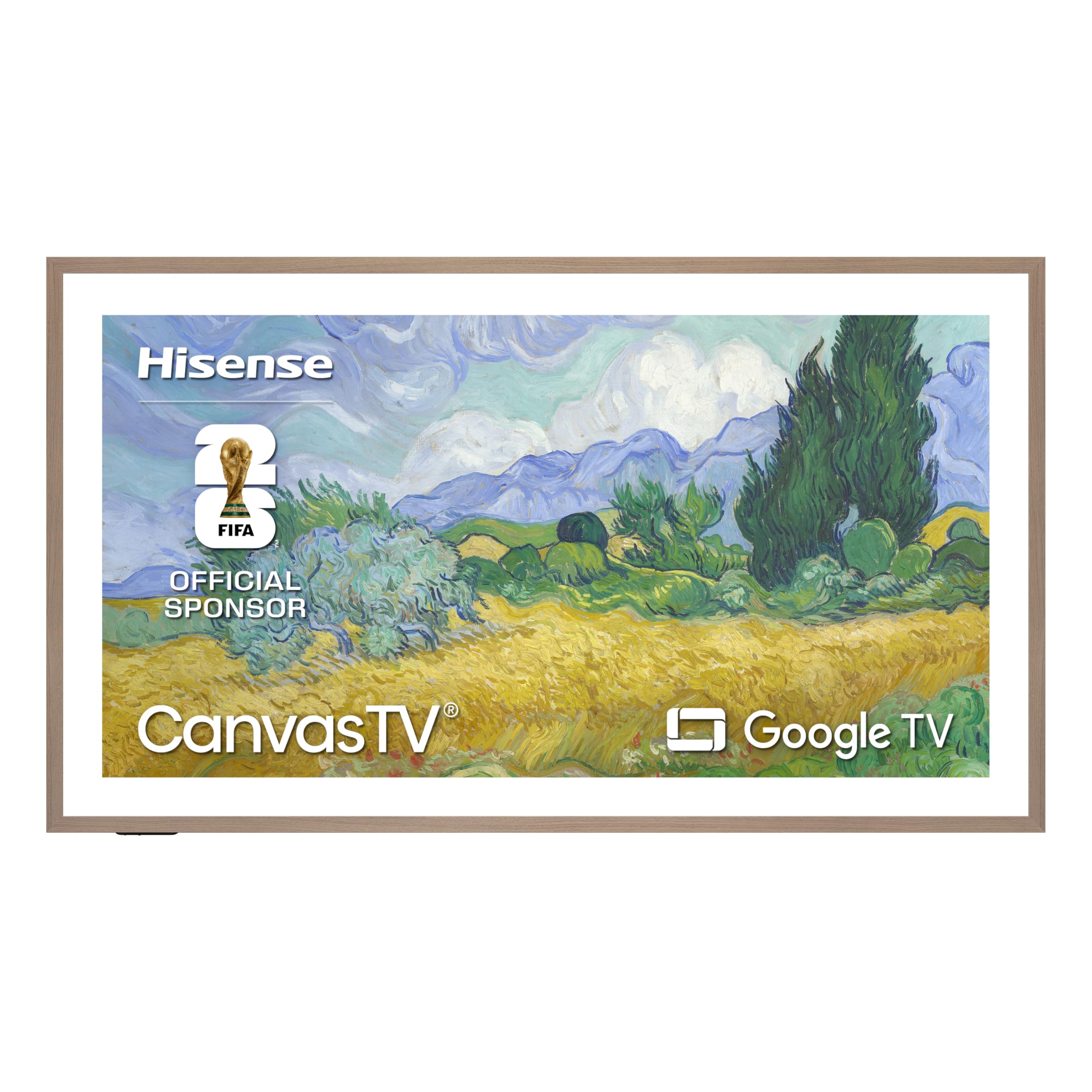
Hisense took direct aim at The Frame with the CanvasTV, and the result is a compelling alternative at a lower entry point. The Hi-Matte display is just as convincing in art mode as Samsung’s offering, with a UL-like certification that scatters ambient light effectively. The included Teak magnetic bezel attaches securely and looks genuinely furniture-grade — and the wall mount is included in the box, which Samsung charges separately for. Over 1,000 free art pieces are available without a subscription, and the motion sensor wakes the display when you enter the room, creating the same living gallery effect as The Frame.
As a television, the CanvasTV holds its own with a native 144Hz refresh rate and AI Smooth Motion for clear sports and action content. The 2.0.2-channel sound with DTS Virtual:X creates a surprisingly wide soundstage, though dialogue clarity is slightly less refined than the Frame’s. Google TV integration is smooth, and the inclusion of both 144Hz and 60Hz HDMI ports handles modern gaming consoles without issue. The AI Ambient Light Sensor automatically adjusts brightness and color temperature to match the room’s current light, which makes the art mode look natural at any time of day.
Weaknesses: the flush wall mount offers no angle adjustment, which means you’ll need a perfectly flat wall or a recessed outlet to achieve the intended look. Some users report that the art mode still looks like “a TV showing a picture” rather than a real canvas in very bright rooms — though this gap narrows significantly in moderate light. For buyers who want the Frame’s aesthetic appeal without the premium price and subscription, the CanvasTV is a well-considered alternative.
Why it’s great
- Includes wall mount and magnetic bezel in box
- Over 1,000 free art pieces with no subscription needed
- AI light sensor adjusts art brightness to room conditions
Good to know
- Wall mount has no tilt or swivel adjustment
- Art mode less convincing in very bright rooms
9. Sony 65″ BRAVIA 8 OLED (K-65XR80)

The BRAVIA 8 is Sony’s answer for the viewer who treats a living room as a theater. Its OLED panel, enhanced by XR Contrast Booster 15, produces inky blacks alongside impressively bright highlights — a combination that makes candlelit scenes and neon-drenched night shots look staggeringly realistic. XR Triluminos Pro covers a wide color gamut with the accuracy that Sony is known for, and the OLED Motion Clarity system keeps fast pans smooth without the flickering that plagues some OLED competitors. Google TV runs fluidly, and the inclusion of the Sony Pictures Core app with 5 free movie credits adds immediate content value.
For PlayStation 5 owners, Auto HDR Tone Mapping and Auto Genre Picture Mode eliminate the fiddly calibration work that other TVs require. The Acoustic Surface Audio+ technology uses the screen itself as a speaker, creating sound that feels like it’s coming from the action on screen rather than from below — it’s a genuinely immersive effect that works especially well for dialogue. The build quality is excellent, with a sturdy metal stand and a premium finish that justifies its place in a well-furnished room.
Where the BRAVIA 8 struggles is in bright spaces. Even with the contrast booster, an OLED panel emits less total light than a mini-LED set, and a sun-drenched living room will wash out shadow detail. The Google TV platform’s insistence on multiple privacy consent screens during initial setup frustrated some users, and a minor subset reported intermittent sound dropout issues that required a factory reset. If your living room has moderate light control and you value film-accurate picture quality above all else, this is the most cinematic OLED in the list.
Why it’s great
- Stunning OLED contrast with bright, punchy highlights
- Acoustic surface audio creates immersive on-screen sound
- Excellent PS5 integration with auto tone mapping
Good to know
- Limited peak brightness struggles in bright rooms
- Initial setup requires multiple privacy consent screens
10. LG 65″ G4 OLED evo (2024)

The LG G4 is designed for the wall. Its One Wall Design makes it sit virtually flush against the surface — no noticeable gap, no protruding back panel — creating the illusion of a painting that happens to show video. The Brightness Booster Max technology pushes OLED evo brightness higher than any previous LG OLED, meaning this set can hold its own in a brighter living room better than the C5 or the Sony BRAVIA 8. The a11 AI Processor handles upscaling, motion smoothing, and tone mapping with the authority expected from a flagship, and the 100% Color Volume ensures that even bright scenes maintain rich, accurate saturation.
Gaming performance is top-tier: four HDMI 2.1 ports, NVIDIA G-Sync and AMD FreeSync support, and a 120Hz panel with super-low latency. The webOS Re:New Program promises 5 years of software updates, addressing a common complaint about smart TV longevity. Dolby Vision and Dolby Atmos are fully supported, and Filmmaker Mode preserves the director’s intent for movie watching. The G4 is also the first OLED to include the a11 AI Processor’s AI Director Processing, which analyzes scene composition and adjusts picture parameters to match the creator’s style.
The pain point: the G4 does not include a stand in the box — it is a wall-mount-only design. Buyers who do not plan to wall mount must purchase a separate stand, which adds cost and complexity. A few users reported receiving the newer G5 model instead of the G4, which while better in performance, caused confusion about the stand situation. If you want the ultimate wall-mounted OLED for a living room where design and picture quality are both uncompromised, the G4 is the pinnacle — but be prepared for the wall-mount commitment.
Why it’s great
- Flush wall mount design with zero visible gap
- Brightness Booster Max makes OLED viable in brighter rooms
- Five years of webOS software updates promised
Good to know
- No stand included — wall mount only
- High cost may be hard to justify for casual viewers
11. Panasonic W70 Series 65″ (2025)

The Panasonic W70 is the proof that a budget television doesn’t have to be bad. At its core is a solid 4K LED panel with HDR10+ support and a HDR Bright Panel that delivers respectable brightness for the price range. The 4K Studio Color Engine with MEMC keeps motion reasonably smooth, and the inclusion of an HDMI 2.1 port is a welcome surprise at this level — it opens the door to 4K 60Hz gaming from current consoles without compression artifacts. The Fire TV built-in is fast and responsive, with Alexa voice control via the included remote, and the app selection is as broad as any streaming platform.
The build quality punches above its weight: the stand is metal rather than plastic, and the bezels are thin enough that the TV doesn’t look dated. Four HDMI ports provide enough connectivity for a soundbar, game console, and streaming box simultaneously. For a secondary living room or a primary TV in a low-light controlled space, the image quality is perfectly watchable — colors are natural, black levels are acceptable for an LED-backlit LCD, and the HDR10+ support adds extra dynamic range in compatible content.
The compromises show in the processor: smart TV navigation can feel sluggish compared to the premium sets on this list, and app switching takes visible time. A minority of buyers reported defective units with black screens or crashing Fire TV software, though Panasonic’s customer support responsiveness varied. The design is plain and the bezels are slightly bulkier than premium alternatives. For the budget-conscious shopper who needs a reliable 65-inch living room TV without sacrificing smart features or basic picture quality, the W70 delivers exactly what it promises — no more, no less.
Why it’s great
- Strong value proposition with HDMI 2.1 and HDR10+
- Metal stand feels more premium than the price suggests
- Fire TV integration is responsive for the category
Good to know
- Processor feels sluggish during app navigation
- Higher defect rate reported in early production units
FAQ
Is OLED or mini-LED better for a bright living room?
How important is a 120Hz or 144Hz refresh rate for a living room TV?
Can I use a 65-inch TV in a small living room?
Final Thoughts: The Verdict
For most living rooms, the best 65 inch tv for living room is the Samsung QN70F because it combines high mini-LED brightness, AI upscaling that improves all content, and a cable-hiding One Connect box that keeps the room looking clean. If you want the deepest black levels and cinematic movie watching in a dimmer room, grab the LG C5 OLED. And for a living room flooded with afternoon sunlight, nothing beats the Hisense U7 with its 3,000-nit brightness and dual-layer anti-glare screen.

Mo Maruf
I created WellFizz to bridge the gap between vague wellness advice and actionable solutions. My mission is simple: to decode the research and give you practical tools you can actually use.
Beyond the data, I am a passionate traveler. I believe that stepping away from the screen to explore new environments is essential for mental clarity and physical vitality.