Our readers keep the lights on and my smoothie glass nicely filled. As an Amazon Associate, I earn from qualifying purchases.
Every step you take on an uneven sidewalk, a slightly loose trail, or even a polished gym floor becomes a gamble when your ankles lack natural joint stability. The wrong shoe — one with a narrow heel cup, a soft foam midsole without a medial post, or a too-low collar — can amplify that instability and turn a simple walk into a painful roll. That is why the market for athletic shoes for weak ankles has shifted toward engineering that actively resists excessive inversion and eversion, rather than just cushioning the foot.
I’m Mohammad Maruf — the founder and writer behind WellFizz. I spend my days dissecting the biomechanical structures of footwear, comparing heel counter rigidity, midsole guide rails, and outsole geometry to separate truly corrective designs from marketing claims.
After analyzing the collar heights, stability platforms, and real-world feedback on dozens of models, I have narrowed down the list to the seven pairs that genuinely reduce rolling risk. These are the contenders for the title of best athletic shoes for weak ankles.
How To Choose The Best Athletic Shoes For Weak Ankles
Not every supportive-looking sneaker delivers true ankle security. You have to look past the marketing and check the specific structural elements that prevent the foot from tipping sideways. Here are the three factors that separate a real ankle-saver from a fashion sneaker.
Heel Counter Rigidity and Heel Cup Depth
Pinch the back of the shoe just above the sole. If the material caves in easily, that shoe has a soft heel counter — it won’t lock your calcaneus in place during lateral movement. A rigid, extended heel counter combined with a deep heel cup cradles the rearfoot and reduces the lever arm that makes ankles roll. Look for models that explicitly describe a structured external heel counter or a “heel lockdown” system.
Midfoot Platform Width and Guide Rail Systems
A narrow platform under the arch is a stability disaster. Shoes designed for weak ankles spread the midfoot wider than typical trainers, creating a larger base of support. Many premium stability models now use plastic guide rails (like Brooks’ GuideRails or Saucony’s medial posts) that sit along the medial and lateral sides of the heel. These rails allow natural motion but intervene when the joint approaches a dangerous angle. This is the single most effective feature for preventing ankle rolls without restricting natural gait.
Ankle Collar Height and Lacing Architecture
A mid- or high-top collar alone won’t save you if the lacing system can’t pull the upper tight around the malleoli. Look for a combination of a padded collar that rises at least two inches above the heel and a lacing system that allows independent tensioning across the midfoot and the ankle. Shoes with asymmetrical lacing — where the eyelets are pulled toward the medial side — help lock the heel deeper into the pocket. A standard low-top with a flimsy tongue and wide-spaced eyelets will never provide the tactile feedback your ankle needs.
Quick Comparison
On smaller screens, swipe sideways to see the full table.
| Model | Category | Best For | Key Spec | Amazon |
|---|---|---|---|---|
| Saucony Guide 17 | Stability Trainer | Daily walking & light jogging | Wide heel platform + medial post | Amazon |
| FitVille High-Top | High-Top Basketball | Court sports & heavy bodies | 8-inch collar + extra-wide toe box | Amazon |
| ASICS Gel-Cumulus 27 | Neutral Cushion | Long runs & forefoot strikers | Rearfoot GEL + 10mm drop | Amazon |
| Saucony Hurricane 24 | Max Stability | Overpronators & recovery runs | Center-path guidance frame | Amazon |
| UA Flow Highlight Ace | High-Top Volleyball | Volleyball & multi-directional sports | Ankle-hugging Flow foam midsole | Amazon |
| Brooks Adrenaline GTS 23 | Supportive Road | Daily training & half marathons | GuideRails holistic support system | Amazon |
| Brooks Ariel GTS 23 | Max Support | Flat feet & post-surgery recovery | Wide 2E/4E + extended guide rails | Amazon |
In‑Depth Reviews
1. Saucony Women’s Guide 17
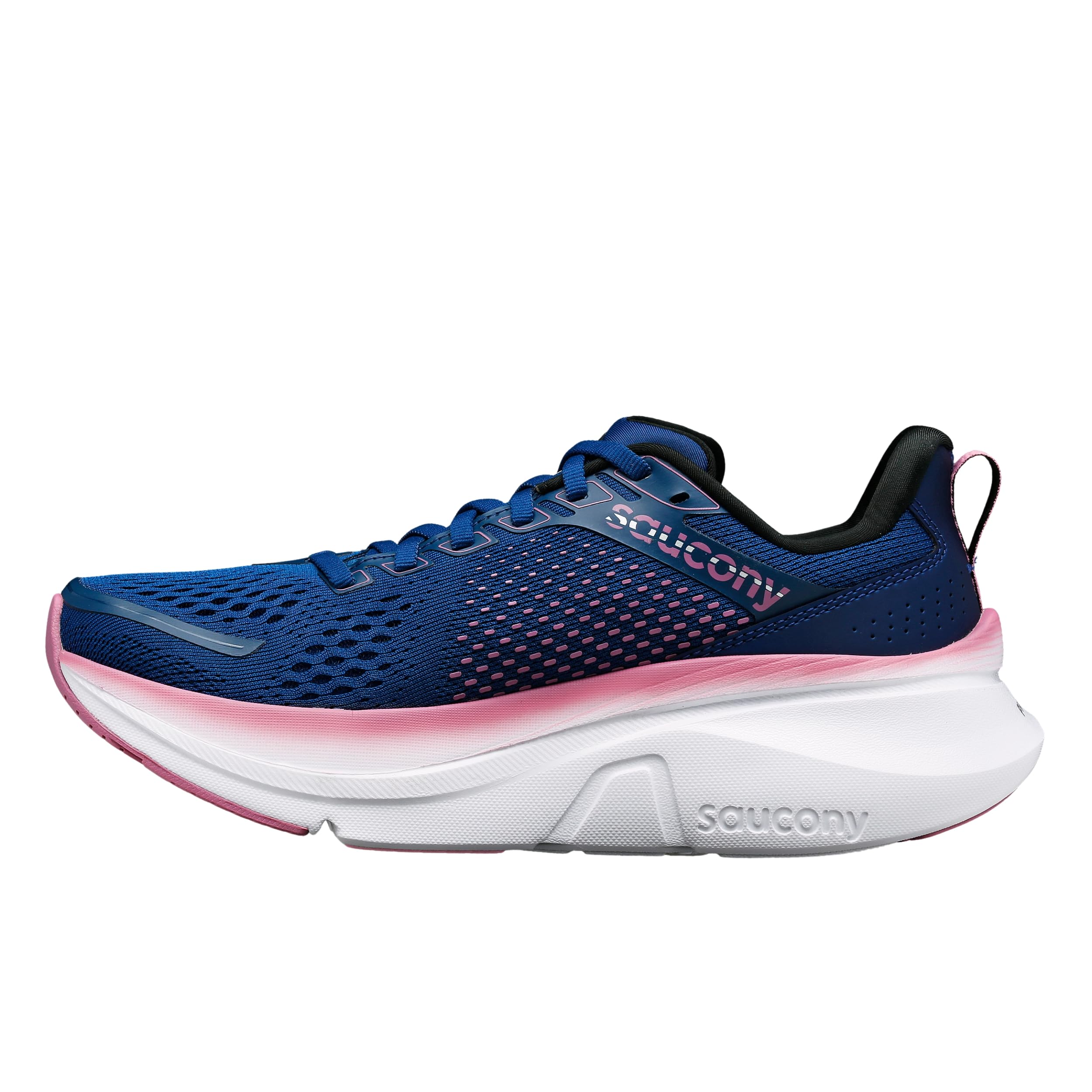
The Guide 17 is the balanced stability trainer that weak-ankle buyers often overlook in favor of max-cushion models. Its medial post runs from the heel through the midfoot, creating a firm ramp that resists inward collapse without feeling like a wooden block under the arch. The heel counter is rigid enough to pass the pinch test, and the platform widens noticeably under the lateral side — exactly where your foot wants to spill over during an inversion moment.
Users with post-brain-injury gait issues and post-bunion surgery sensitivity report that the Guide’s combination of a roomy toe box and structured heel hold eliminates the micro-adjustments that normally trigger ankle fatigue. The 4mm offset keeps the center of mass low, reducing the leverage that a higher-drop shoe can exert on a vulnerable ankle joint.
The upper uses engineered mesh that wraps the midfoot without pressure points, and the lacing system allows you to isolate tension over the top of the foot. It is not a high-top, but the low-profile design works because the chassis does the stabilizing work — the collar is just a secondary restraint. For daily walking and light jogging, this is the most complete package.
Why it’s great
- Non-intrusive medial post that guides rather than forces
- Very wide heel platform for its weight class
Good to know
- Women’s sizing only; men may need to size up 1.5
- Not intended for trail or wet surfaces
2. FitVille Wide Basketball Shoes for Men High-Top

FitVille’s high-top sneaker is built around a simple premise: if your ankle is unstable, surround it with material. The collar rises a full eight inches above the heel, and the lacing system continues up to the top eyelet, allowing you to crank the upper tight around the malleoli. This is not a fashion high-top — the ankle foam is dense enough to provide real resistance against lateral tipping.
Reviewers weighing up to 250 pounds report that the sole padding holds its shape under load, and the X-wide option accommodates a forefoot that would be cramped in a standard D-width. The outsole grip performs well on both dry courts and wet pavement, which matters when an unexpected slip is what triggers the roll in the first place.
The original insole is thin, so most users swap in a custom orthotic or a thicker aftermarket insole — but the midsole itself has enough structural foam that you do not bottom out. The trade-off is weight; this is a heavy shoe. If you need ankle security for standing, walking, or court sports and you have wide feet, the FitVille delivers security that a low-top stability shoe cannot match.
Why it’s great
- True high-top collar that locks the ankle
- Excellent for heavy individuals and wide feet
Good to know
- Short laces — you may need longer replacements for the top eyelets
- Heavier than most running-style trainers
3. ASICS Men’s Gel-Cumulus 27
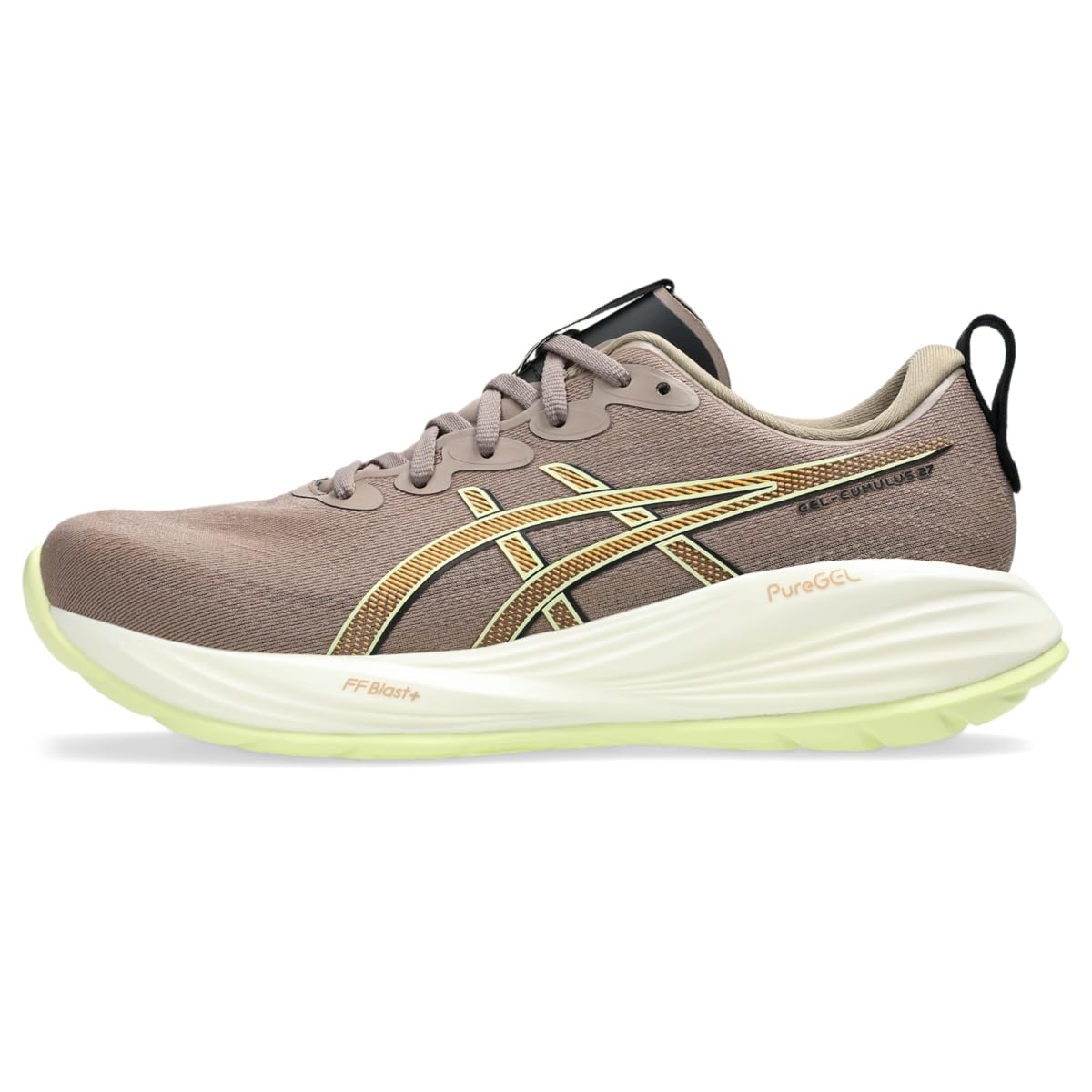
The Gel-Cumulus 27 sits in a tricky spot for weak-ankle buyers. It is a neutral trainer, meaning it lacks a medial post or guide rails — so it does not actively correct overpronation. However, its 10mm drop shifts your center of mass forward, which reduces the dorsiflexion load on the Achilles and, by extension, the inversion leverage on the ankle joint. For runners whose instability manifests during heel strike, this geometry can be protective.
The rearfoot GEL capsule absorbs impact well, and the heel counter is more rigid than previous Cumulus models. Users with forefoot pain under the middle toe report that the generous toe cap eliminates the compensatory gait shifts that often lead to rolled ankles later in a run. The fit runs slightly generous in the toe box, which is good for toe splay but means you must lace tightly to prevent heel slip.
This is the best option for runners who want a soft, high-mileage daily trainer and whose weak ankles are a secondary concern — not the primary biomechanical issue. Pair it with a support insole if your ankles need active correction. The value proposition is strong: similar cushioning to premium ASICS models at a noticeably lower entry price.
Why it’s great
- Excellent impact absorption for long runs
- Roomy toe box reduces compensatory gait issues
Good to know
- Neutral platform — no built-in ankle stability
- Heel counter may feel loose for very narrow feet
4. Saucony Men’s Hurricane 24
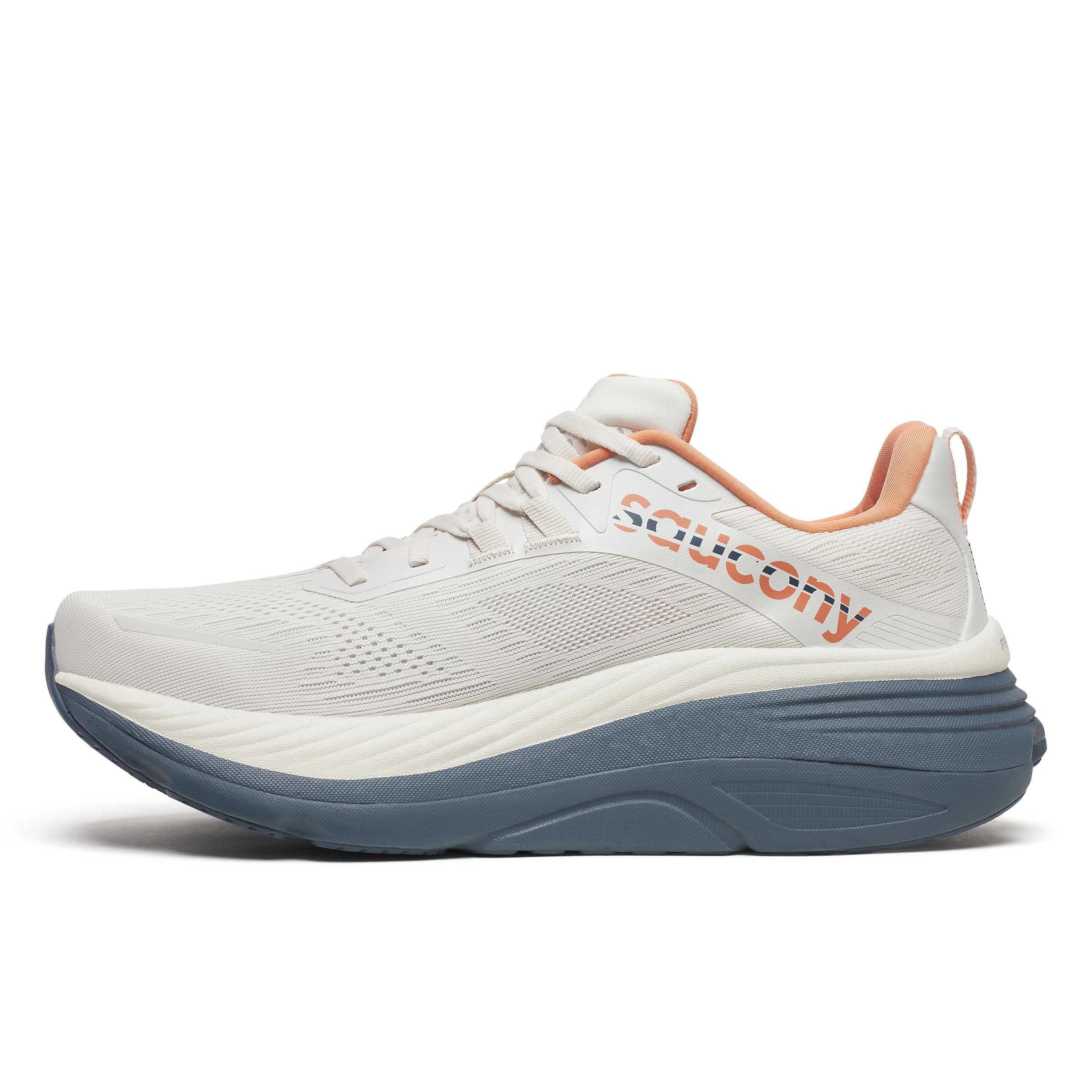
The Hurricane 24 is Saucony’s answer to the runner who needs max stability without the harsh, plank-like feel of older motion-control shoes. The Center-Path guidance frame uses a combination of a medial post and a wider sole flare that cradles the foot from heel to toe. The result is a shoe that resists inversion without forcing your foot into a fixed position — it feels like running on a gently banked track.
Long-distance runners report that the Hurricane handles 20-plus miles without losing its structural integrity, and the cushioning stays consistent even after hundreds of miles. The heel counter is stiff, and the internal heel pocket is deep enough to hold a narrow heel securely. Users with patellar tendonitis and flat feet find the stable platform reduces compensatory rotation at the knee and ankle.
It is heavier than a typical daily trainer, and the stack height is generous — you will feel closer to the ground than in a maximalist shoe, but not as low as a racing flat. The build quality varies slightly between production batches, with some pairs running firmer out of the box than others. That inconsistency aside, the Hurricane is a top-tier choice for anyone whose weak ankles need a reliable chassis.
Why it’s great
- Non-intrusive guidance that feels natural
- Excellent durability for high-mileage runners
Good to know
- Heavier — not ideal for speed work
- Some batch variation in firmness
5. Under Armour Women’s Flow Highlight Ace

The Flow Highlight Ace was designed for volleyball, a sport full of lateral cuts, jumps, and hard landings — exactly the movements that punish weak ankles. The high-top upper wraps around the ankle with a snug, almost sock-like fit, and the Flow foam midsole eliminates the need for a rubber outsole, reducing weight while maintaining grip on indoor surfaces.
Users with extremely flat feet and hammer toes report that the Ace holds the foot securely without requiring an additional ankle brace. The heel counter is integrated into the upper rather than bolted on, which gives a smooth internal surface that does not rub the Achilles. The toe box is narrower than the FitVille, so wide-foot buyers should try before buying or size up.
It runs small — most reviewers recommend going up half a size from your normal athletic shoe size. Once you find the right fit, the Ace provides a locked-in feel that few low-top stability shoes can match. For multi-directional sports, this is the strongest ankle protector on the list. It is not ideal for long-distance walking or running due to the stiffer midsole.
Why it’s great
- Excellent ankle wrap without needing a brace
- Lightweight for a high-top court shoe
Good to know
- Runs small — go up half a size
- Narrow toe box may not suit wide feet
6. Brooks Men’s Adrenaline GTS 23

The Adrenaline GTS 23 is the shoe that podiatrists recommend more than any other stability model, and for good reason. Brooks’ GuideRails system uses firm plastic rails along both sides of the heel that allow natural motion but intervene the moment the ankle begins to tilt. This is a more forgiving approach than a rigid medial post — it keeps your ankle safe without fighting your natural gait cycle.
In colder climates, the Gore-Tex version (the GTX) keeps feet dry through snow and slush, which is critical for weak ankles because wet feet inside a shoe reduce proprioception and increase roll risk. The standard mesh version breathes well in summer but lets moisture through in wet conditions. Users report the GuideRails significantly reduce knee pain from overpronation, and the heel counter locks the foot securely without pressure points.
The Adrenaline is a daily workhorse. It handles 500-plus miles before the midsole degrades, and the outsole grip remains reliable on pavement and light gravel. The toe box is roomy enough for a standard orthotic, and the lace system allows you to tension the midfoot separately from the ankle. If you run half marathons or walk five miles a day with weak ankles, this is the safest bet.
Why it’s great
- GuideRails prevent ankle roll without restricting natural motion
- Exceptional durability — 500+ mile lifespan
Good to know
- Standard mesh is not waterproof
- Initial break-in period for the midsole
7. Brooks Women’s Ariel GTS 23
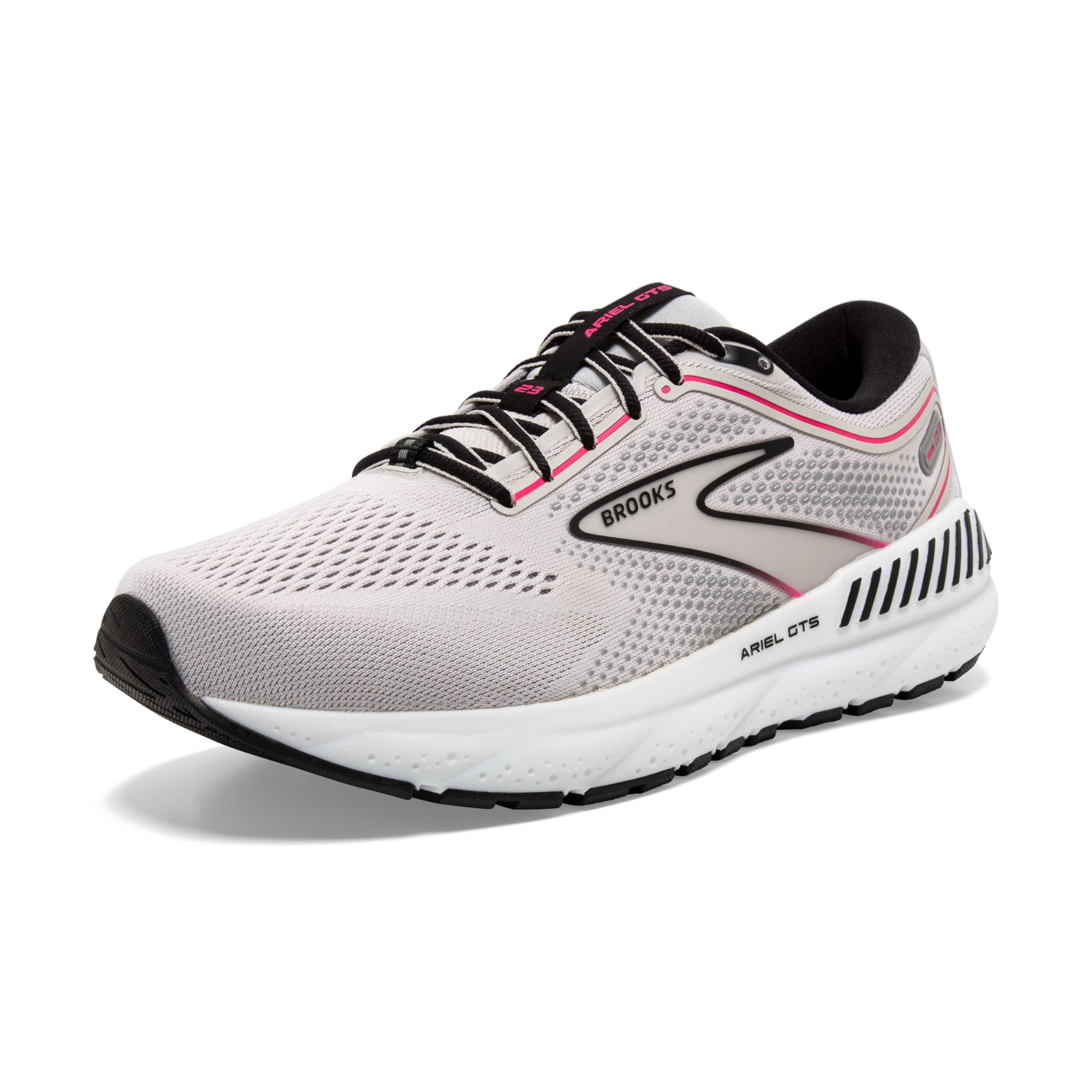
The Ariel GTS 23 is the heavy-duty sibling of the Adrenaline, built specifically for flat feet, high body weight, and post-surgical recovery. It uses the same GuideRails system but extends the plastic rails further along the midfoot and adds a wider last (available in 2E and 4E widths) to accommodate the broader splay that often accompanies flat-arched, unstable feet.
Users who have undergone plantar fascia release surgery or who live with chronic ankle instability report that the Ariel’s increased platform width — both in the heel and the forefoot — creates a base that feels nearly impossible to tip over. The midsole is firm, not bouncy, which provides the proprioceptive feedback weak ankles need to self-correct. The heel counter is the stiffest on this list, and the internal heel pocket is deep and plush.
It is a lot of shoe. The weight is noticeable, and the stack height is moderate rather than low, so you do not get the ground feel of a minimalist trainer. But for the user whose primary goal is preventing a roll — not chasing a PR — the Ariel delivers unmatched security. The colors lean sporty and subtle, and multiple pairs last for years when rotated.
Why it’s great
- Widest platform on the list for maximum roll resistance
- Podiatrist-recommended for post-surgery and severe overpronation
Good to know
- Heavy — not for speed or racing
- Firm midsole may feel too rigid for casual walkers
FAQ
Can a high-top shoe fully prevent ankle rolls?
Should I get a stability shoe or a neutral shoe with an orthotic?
How do I know if a shoe has a rigid heel counter?
Final Thoughts: The Verdict
For most users, the athletic shoes for weak ankles winner is the Brooks Adrenaline GTS 23 because its GuideRails system delivers reliable roll prevention without feeling restrictive, and it works for walking, daily training, and half marathons. If you want the widest platform and maximum chassis security, grab the Brooks Ariel GTS 23. And for court sports or heavy bodies that need a high-top collar, nothing beats the FitVille High-Top Basketball Shoe.

Mo Maruf
I created WellFizz to bridge the gap between vague wellness advice and actionable solutions. My mission is simple: to decode the research and give you practical tools you can actually use.
Beyond the data, I am a passionate traveler. I believe that stepping away from the screen to explore new environments is essential for mental clarity and physical vitality.