Our readers keep the lights on and my smoothie glass nicely filled. As an Amazon Associate, I earn from qualifying purchases.
A dead phone halfway through a summit or a drained power bank on a multi-day trek isn’t just an inconvenience—it can be a safety risk. A backpack solar panel is the only way to keep your navigation, communication, and headlamp batteries topped up without lugging a heavy power station, but the market is flooded with panels that promise high wattage but fail in real-world, partially-shaded trails. The difference between a good day and a dangerous night often comes down to conversion efficiency, portability, and the ruggedness of the panel’s construction.
I’m Mohammad Maruf — the founder and writer behind WellFizz. I specialize in analyzing the real-world specs of outdoor and off-grid gear, focusing on how conversion efficiency, cell type, and connector compatibility actually translate to usable power on a backpacking trip.
Whether you need to charge a phone, a GPS unit, or a small power bank while moving, this guide cuts through the marketing to find the best backpack solar panel that delivers reliable energy without weighing you down or failing in damp conditions.
How To Choose The Best Backpack Solar Panel
Choosing a backpack solar panel requires balancing a few key trade-offs: you want enough power to charge your gear, but you don’t want to carry a brick. The following factors will help you zero in on the right panel for your hiking style, whether you’re a weekend warrior or a long-distance thru-hiker.
Conversion Efficiency and Cell Type
The cell technology directly determines how much power you get from a given amount of sunlight. Older polycrystalline panels hover around 18-20% efficiency. Modern panels with N-Type or PERC (Passivated Emitter and Rear Cell) technology push that number to 23-25%. This jump in efficiency is critical for a backpack panel, because you have a smaller surface area to work with. A 25% efficient panel will charge your battery bank faster in the same sunlight—or charge it at all on a cloudy day when a lower-efficiency panel might produce zero usable current.
Connector Type and Compatibility
Not all solar panels let you plug directly into a phone. Many higher-wattage panels use an 8mm or DC barrel connector designed for a power station, then offer a USB-A or USB-C port via a hub. Others include built-in USB ports for direct device charging. For backpacking, where you likely aren’t carrying a large power station, a panel with a built-in USB-C PD port (Power Delivery) is the most versatile. Look for panels that include an XT60, Anderson, or MC4 adapter if you plan to pair it with a power station later.
Waterproof Rating and Build Durability
Backpack panels live on the outside of your pack, exposed to rain, dust, and physical abrasion. An IP67 rating means the panel is fully protected against dust and can be submerged in 1 meter of water for 30 minutes. IP68 extends that to deeper, longer submersion. Critical for long-term reliability is the lamination—ETFE film is more durable and lets in more light than cheaper PET film. Also check the stitching; fully laminated construction without sewn seams is less likely to let water seep into the cell layers.
Weight, Folded Size, and Attachment System
Every ounce matters on a long hike. A panel like the Jackery SolarSaga 40W Air weighs under 2 lbs and folds to book size, making it easy to stash in a pack. Other 100W panels might weigh 8 lbs and require a dedicated carry bag. Consider how you will attach the panel: grommets for carabiners let you hang the panel from your backpack, while kickstands are useful for setting it up at camp. If you plan to charge while hiking, a lightweight, flexible panel that straps easily to your pack is essential.
Quick Comparison
On smaller screens, swipe sideways to see the full table.
| Model | Category | Best For | Key Spec | Amazon |
|---|---|---|---|---|
| FlexSolar 100W | Ultra-Light | Backcountry power stations | 4.1 lbs, 23% efficiency | Amazon |
| HQST 100W N-Type | Ultra-Light | RVers & campers | 5.9 lbs, 25% efficiency | Amazon |
| ELECOM NESTOUT 28W | Design Award | Ultralight hiking | 1.2 lbs, SunPower cells | Amazon |
| SOKIOVOLA 100W | High Output | Power station topping | 8.5 lbs, IP68, built-in controller | Amazon |
| EF ECOFLOW 45W | Compact Premium | Hiking with EcoFlow gear | 3.1 lbs, 25% efficiency | Amazon |
| Jackery SolarSaga 40W Air | Ultralight Bifacial | Thru-hiking & kayaking | 1.98 lbs, bifacial PERC | Amazon |
| Goal Zero Nomad 20 | Reliable Legacy | Emergency kits & day hikes | 2.3 lbs, 20W, 8mm + USB | Amazon |
In‑Depth Reviews
1. FlexSolar 100W Portable Solar Panel
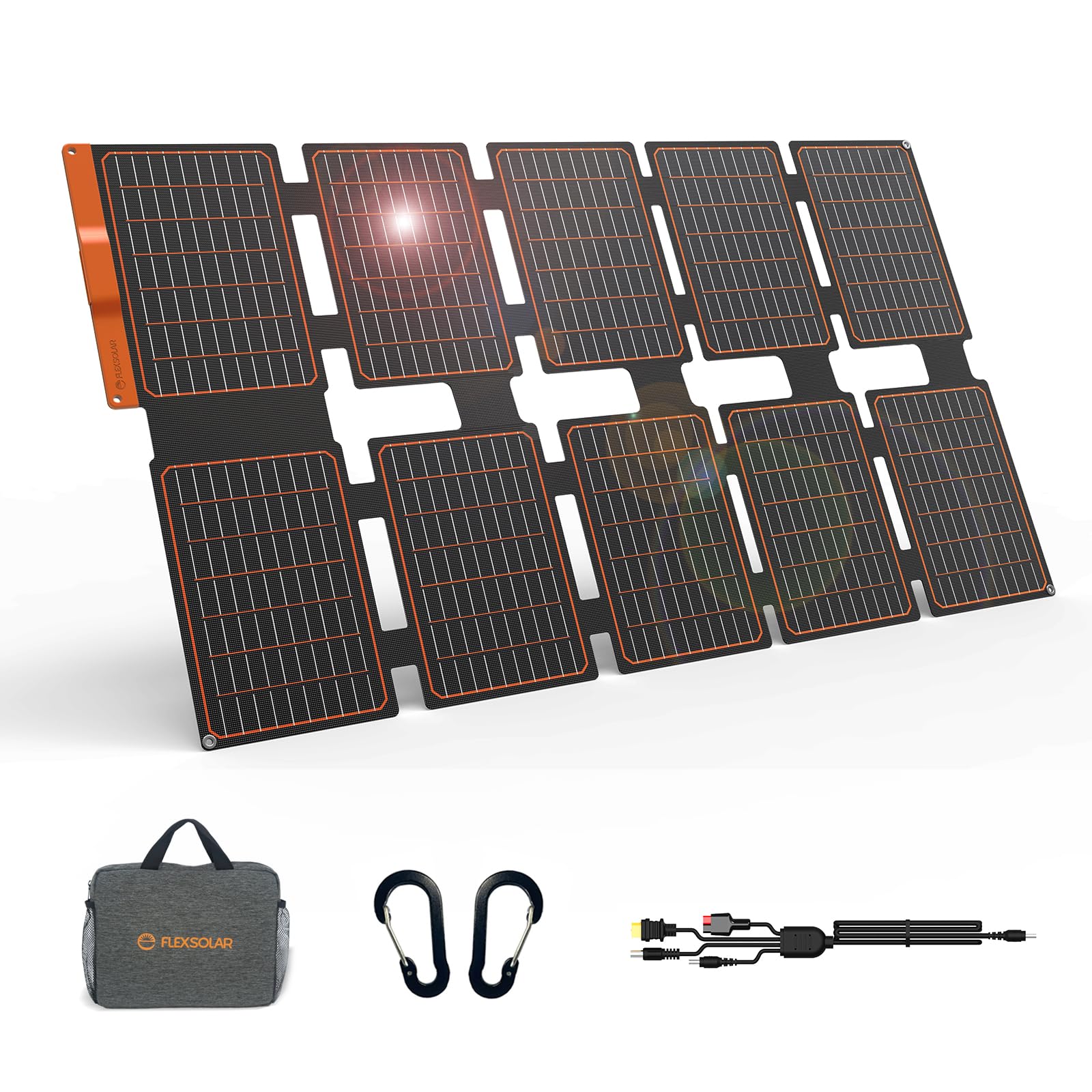
The FlexSolar 100W hits the sweet spot for backpack-adjacent solar. At just 4.1 lbs, it is remarkably light for a 100W panel, folding down to a compact 12.99 x 10.43 x 2.17 inches. The included padded carry bag makes transport easy, and the built-in PD3.0 USB-C port delivers up to 45W directly to phones, laptops, or power banks without needing an external controller. The monocrystalline cells achieve 23% efficiency, and the 4-in-1 cable (DC5521, DC7909, Anderson, XT60) ensures compatibility with virtually any power station.
Real-world testing shows the panel delivers near its 100W rating via DC output—reviewers measured 90W DC and 56W USB-C in good sunlight. The IP67 rating means this panel can survive a rain shower or a splash from a river crossing. Hikers have successfully recharged CPAP batteries (6-8 hours for a full cycle) and kept phones running on multi-day trips by hanging the panel from a tent using the corner carabiners.
The primary durability concern is the DC output plastic connector, which can get hot when drawing over 60W. Long-term reliability remains unproven, but early adopters report solid construction. If you need a power-station-ready panel that still fits in a backpack, this is the benchmark.
Why it’s great
- Ultra-light for a 100W panel at 4.1 lbs.
- PD3.0 USB-C delivers 45W for direct device charging.
- IP67 waterproof, handles rain and dust.
- Universal 4-in-1 cable works with most power stations.
Good to know
- DC output connector can get hot under high load.
- Long-term durability after heavy use is unknown.
- No built-in kickstand; requires propping or hanging.
2. HQST 100W Ultra-Light N-Type Portable Solar Panel
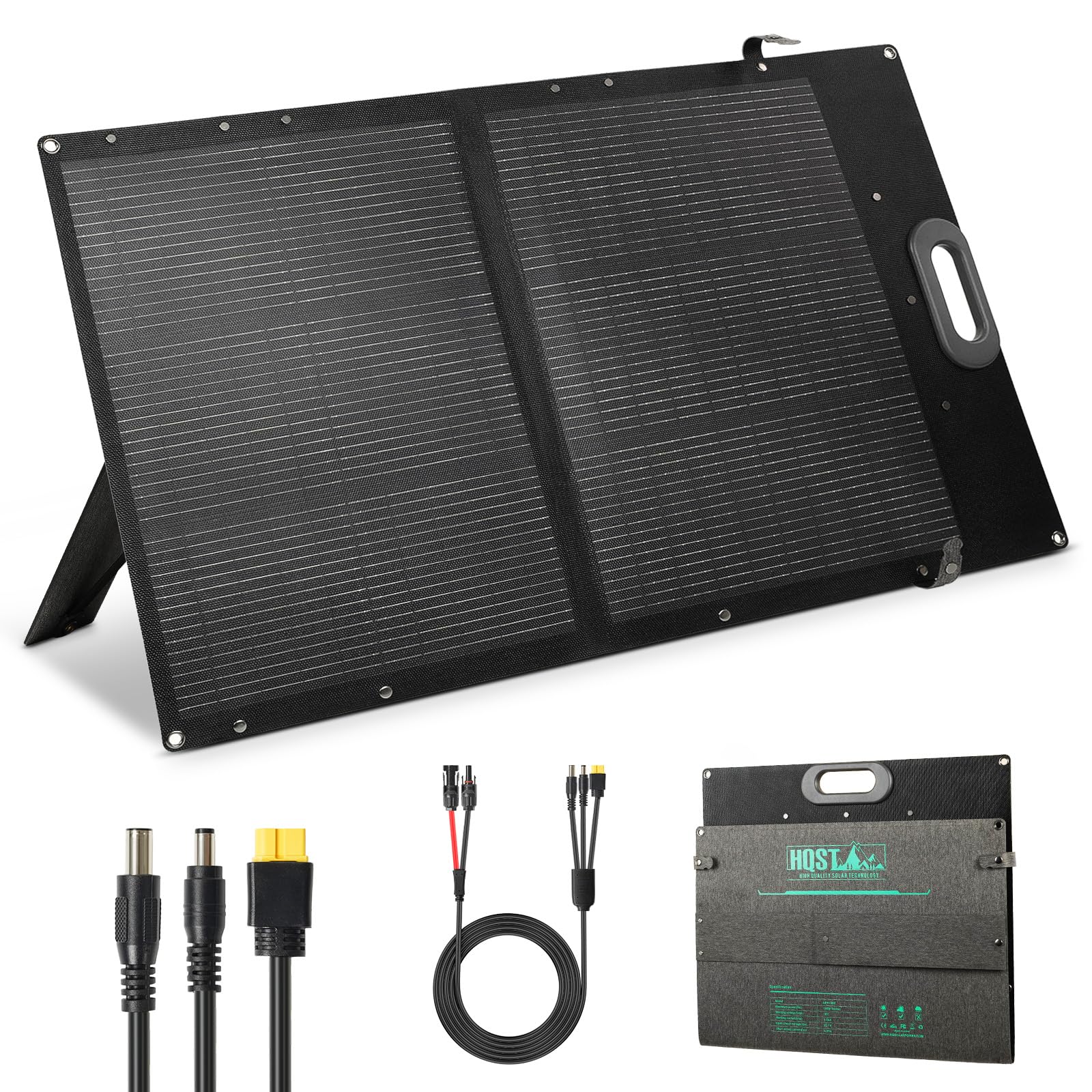
The HQST 100W is a compelling mid-range option, particularly for RV owners and car campers who can use the two adjustable kickstands (40° to 70° range) to quickly angle the panel toward the sun. The 5.9 lb weight is 40% lighter than many rigid panels of similar wattage, and the N-Type cells deliver a class-leading 25% conversion efficiency. This translates to faster charging in low-light conditions compared to standard PERC panels, a real advantage during overcast mornings or late-afternoon shade.
The included 4.9 ft 3-in-1 adapter cable (XT60, DC7909, DC5521) provides wide compatibility with power stations from Jackery, EcoFlow, BLUETTI, and Anker. Real-world field tests show the panel producing 5.5A in clear sun, with the bypass diodes keeping power flowing even when a portion of the panel is shaded by tree branches. The IP67 waterproof rating and PVDF-coated outer layer provide good resistance to scratches and wear over time.
Some users reported dents in the frame from shipping, though performance was unaffected. The panel is heavier than the FlexSolar, and the kickstand design, while sturdy, adds bulk. However, for those who set up camp for a day and need reliable solar generation, the HQST offers excellent watt-per-dollar value.
Why it’s great
- 25% efficiency N-Type cells for low-light performance.
- Two adjustable kickstands for optimal sun angle.
- Wide compatibility with popular power stations.
- IP67 waterproof with durable PVDF coating.
Good to know
- Heavier than other 100W foldable options.
- Some shipping damage reported on frames.
- No built-in USB ports for direct phone charging.
3. ELECOM NESTOUT 28W Portable Solar Panel

The ELECOM NESTOUT is an IF Design Gold Award winner, and it shows in the thoughtful engineering. This 28W panel is designed specifically for ultralight backpacking. Weighing just 1.2 lbs, it folds to about the size of a small notebook and fits neatly into an external mesh pocket on your pack. The SunPower MAXEON cells offer a 24% efficiency boost over standard cells, maximizing power from the limited surface area. The 2-panel design features an adjustable stand for propping up at camp.
The dual USB-A ports are ideal for charging phones, GPS units, and power banks. A unique built-in current checker LED display shows real-time output, so you know if you are getting enough sunlight. In testing, users reported charging a 5000mAh power bank in about 2.5-3 hours. The ripstop nylon exterior is water-resistant and includes a zippered storage pouch for cables and accessories. Exterior loops allow you to hang the panel from a tree or your backpack while hiking.
One limitation is the lack of a USB-C port—all you have are two USB-A ports. Also, the 28W maximum is modest; it won’t charge a laptop or a large power station quickly. It is best paired with a small power bank for topping off phone and headlamp batteries during a multi-day trek. The price premium over basic 20W panels is noticeable, but the build quality and modular ecosystem make it a top pick for the weight-conscious.
Why it’s great
- Ultralight at 1.2 lbs, perfect for backpacking.
- High-efficiency SunPower MAXEON cells.
- Built-in current checker LED display.
- Water-resistant ripstop nylon and modular design.
Good to know
- No USB-C port, only dual USB-A.
- Modest 28W output, not for power stations.
- Premium price compared to similar wattage panels.
4. SOKIOVOLA N-Type 16BB 100W Portable Solar Panel
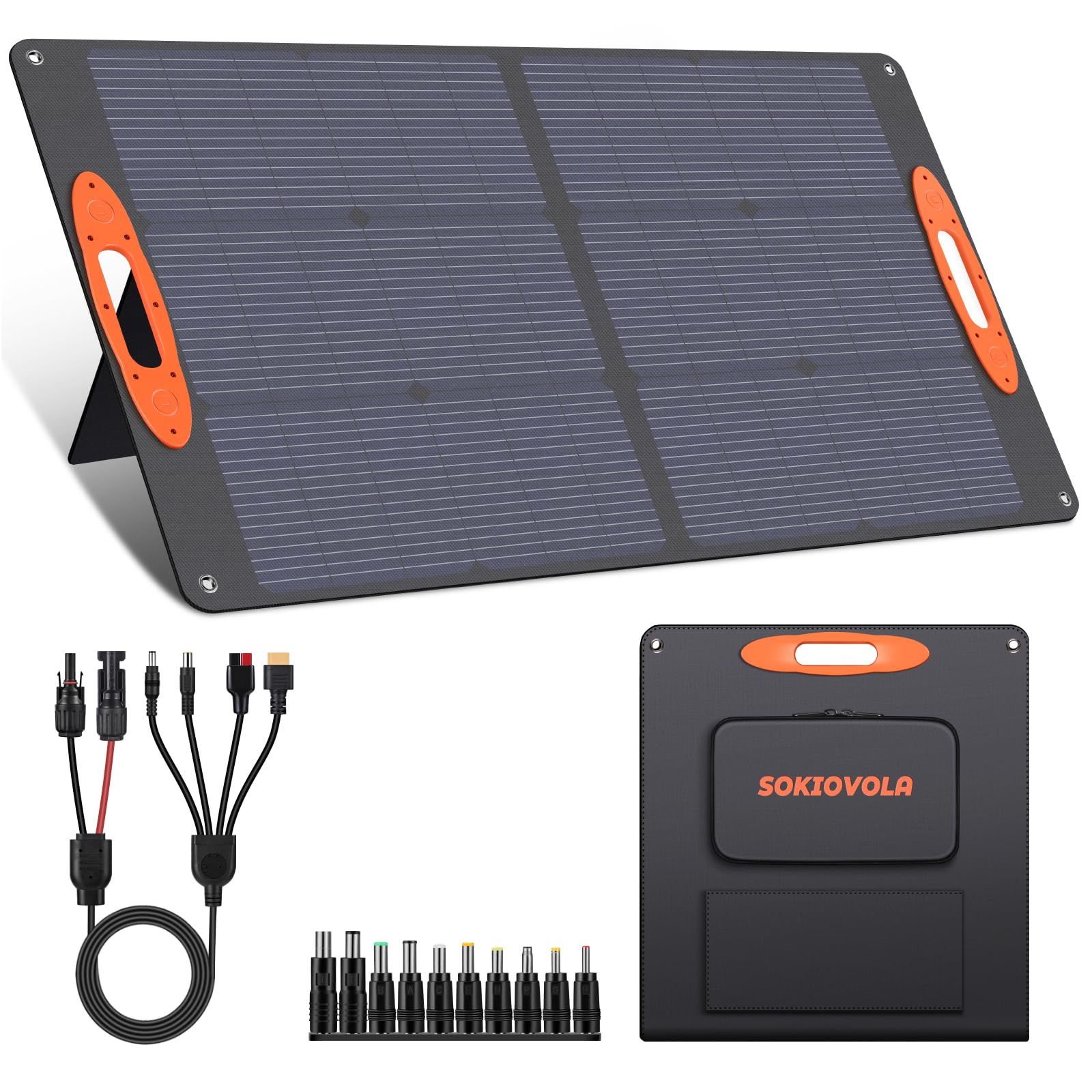
The SOKIOVOLA 100W is built for those who need maximum power output and don’t mind the extra weight. At 8.5 lbs, this is the heaviest panel in the roundup, but it compensates with a built-in controller that includes two USB-A ports and a USB-C PD port. This means you can plug devices directly into the panel without needing a separate power station. The 25% efficient N-Type cells with 16 busbars provide excellent current collection, and the ETFE coating offers IP68 waterproofing—fully submersible and dust-tight.
Field testing shows this panel can deliver over 100W in good sunlight, with users reporting 140W peak output when properly angled. It works seamlessly with EcoFlow, Daran, and other power stations via the included 4-in-1 cable (XT60, Anderson, DC5521, DC7909). The two kickstands let you adjust the angle from 0 to 90 degrees. The panel folds to 21.49 x 22.67 inches, which is relatively large, so it is best suited for car camping or basecamp setups rather than day hikes.
Some users noted that the MC4 cables are exposed on the back, which could be a snag hazard. Additionally, after prolonged sun exposure, the panel can become quite hot and slightly difficult to fold. The built-in controller hub is also not waterproof, so you need to keep it dry. However, for sheer watt-per-dollar performance and the convenience of built-in USB PD, this panel is a strong contender.
Why it’s great
- High output, often exceeding 100W in good sun.
- Built-in controller with USB-A and USB-C PD ports.
- IP68 waterproof, fully dust and water-sealed.
- Includes comprehensive adapter kit for power stations.
Good to know
- Heavy at 8.5 lbs, not for ultralight hiking.
- Exposed MC4 cables can be a snag risk.
- Controller hub is not waterproof.
5. EF ECOFLOW 45W Portable Solar Panel

The EF ECOFLOW 45W is a premium compact panel designed to pair perfectly with the EcoFlow RIVER power station series. It uses the same N-Type solar cell technology found in larger panels, achieving 25% conversion efficiency. When folded, it measures a tiny 8.8 x 12.2 x 1.6 inches and weighs just 3.1 lbs, making it one of the most packable 45W panels available. The four-panel folding structure is clever—it opens flat and includes four pre-cut grommets and carabiners for hanging on your backpack or tent.
Exact real-world output is solid: users report that the panel charges a RIVER 2 Pro from empty in about 4-5 hours of direct sun, matching the claimed specs. The included DC5521 to XT60i cable provides a direct connection to EcoFlow power stations. The IP68 waterproof rating means you can hike in the rain without worrying about the panel failing. The ETFE film is highly durable and resists scratches from bushwhacking.
The main drawback is the 45W limit—this panel is designed for topping off smaller power stations and charging phones/tablets, not for powering a full off-grid setup. It also lacks a built-in USB port, so you must connect it to a power station or use a separate adapter to charge devices directly. For dedicated EcoFlow users or ultralight backpackers who need a reliable, compact panel, the ECOFLOW 45W is a top-tier choice.
Why it’s great
- Extremely compact and lightweight at 3.1 lbs.
- 25% efficiency N-Type cells for fast charging.
- IP68 waterproof, handles rain and submersion.
- Includes carabiners for easy backpack hanging.
Good to know
- 45W maximum output; not for large power stations.
- No built-in USB ports for direct device charging.
- Best value when used with EcoFlow ecosystem.
6. Jackery SolarSaga 40W Air Solar Panel
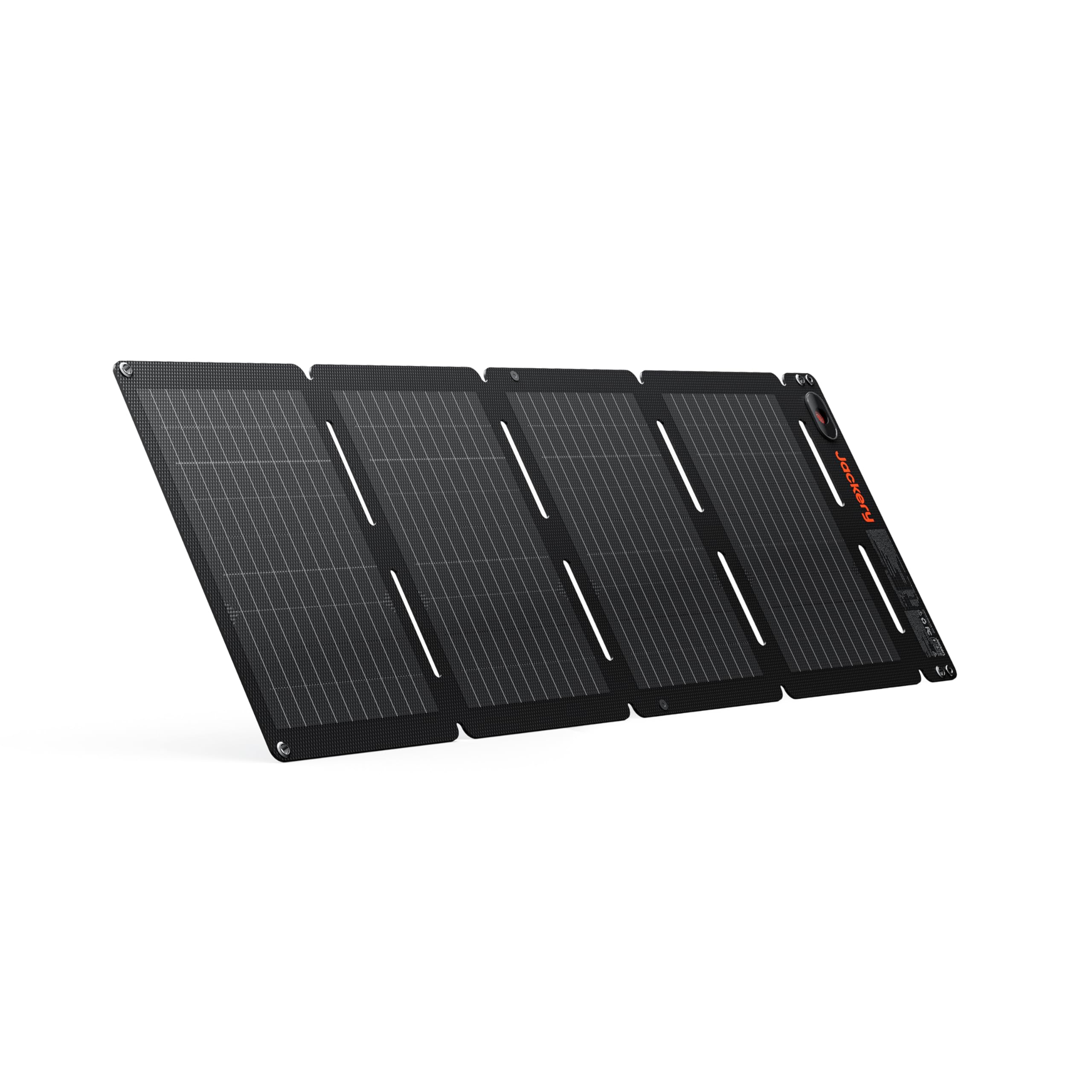
The Jackery SolarSaga 40W Air is the lightest panel in this review at just 1.98 lbs, and it brings a unique party trick: bifacial solar generation. This means the panel’s back side can capture reflected light from the ground or a tent fly, boosting total output by up to 15% in ideal conditions. With advanced PERC cells delivering 23% conversion efficiency, this panel performs well even in partial shade. The W-fold design collapses to a book-sized package that easily slips into a backpack side pocket.
The panel is IEC TS 63163 Class I certified, which means it passed rigorous drop, humidity, and freezing tests, plus 4,000 folds. The build quality is excellent, with aluminum frames and tempered glass. The dual USB ports (one USB-A, one USB-C) allow you to charge multiple devices simultaneously. In practical testing, users achieved 23W of charging in overcast conditions while lying flat. The panel also comes with a DC8020 to USB-C adapter and carabiners for hanging.
The 40W output is the ceiling here—this panel is best for charging phones, power banks, and small USB gear. The power cord is not compatible with older Jackery Explorer 240 units (it works with the 300 via USB-C). It is also not designed for connecting to large power stations. For thru-hikers and kayakers who prioritize minimum weight over maximum power, the SolarSaga 40W Air is the ideal companion.
Why it’s great
- Ultralight at under 2 lbs, ideal for long treks.
- Bifacial cells capture light from both sides.
- Rugged IEC certification with 4,000 fold cycles.
- Compact W-fold design fits in a backpack.
Good to know
- 40W max output, not for power stations.
- Cable not compatible with older Jackery 240.
- Prioritizes portability over raw power output.
7. Goal Zero Nomad 20 Solar Panel

The Goal Zero Nomad 20 is a classic foldable panel that has been a standard in the backpacking community for years. At 20W and 2.3 lbs, it is heavier and less powerful than newer alternatives, but its reliability and simplicity are unmatched. The monocrystalline panel delivers 18-22V output through an integrated 8mm cable and a USB port. The 8mm connector allows you to daisy-chain multiple Nomad panels for more power, or connect directly to a Goal Zero Yeti power station.
In a winter sun test, the Nomad 20 charged a phone to about 30% before the sun angle became too shallow. In the Bahamas, it recharged an iPhone and speakers to 60% in about 2 hours. The 180° adjustable kickstand makes it easy to angle the panel. When folded, it measures 11.5 x 7.4 x 1.25 inches—about the size of a thin hardcover book. The build quality is solid, and users report it surviving years of camping trips without failure.
The downsides are clear: 20W is the minimum viable for charging a phone, and it will not charge a power station in any reasonable timeframe. The USB port is standard 5V/2.4A, not USB-C PD. Some users noted that the panel stops charging in partial shade or when it overheats. For emergency kits or day hikes where you just need a phone top-off, the Nomad 20 is a proven, trustworthy option, but for modern multi-day trips, you’ll want more wattage.
Why it’s great
- Proven reliability and simple operation.
- 8mm port allows daisy-chaining panels.
- 180° adjustable kickstand for easy setup.
- Compact folded size fits in any pack.
Good to know
- 20W output is low by modern standards.
- No USB-C, only standard USB-A.
- Stops charging in partial shade or heat.
FAQ
Can I charge my phone directly from a backpack solar panel?
How many watts do I need for a backpacking trip?
Is a bifacial panel worth the extra cost?
What does IP67 mean for a solar panel?
Final Thoughts: The Verdict
For most users, the best backpack solar panel winner is the FlexSolar 100W because it delivers a rare combination of high wattage (100W), ultralight weight (4.1 lbs), and direct USB-C PD charging, all at a price that undercuts premium competitors. If you need the absolute lightest option for a long thru-hike, grab the Jackery SolarSaga 40W Air for its book-sized form factor and bifacial efficiency. And for those who need maximum power output and a built-in controller for direct device charging, the SOKIOVOLA 100W is the powerhouse that can handle sun-up to sun-down charging.

Mo Maruf
I created WellFizz to bridge the gap between vague wellness advice and actionable solutions. My mission is simple: to decode the research and give you practical tools you can actually use.
Beyond the data, I am a passionate traveler. I believe that stepping away from the screen to explore new environments is essential for mental clarity and physical vitality.