Our readers keep the lights on and my smoothie glass nicely filled. As an Amazon Associate, I earn from qualifying purchases.
Nothing kills a travel memory faster than shaky, poorly-lit footage that looks like it was shot inside a washing machine. The right travel camcorder solves this with a combination of built-in stabilization, long battery endurance, and a size that doesn’t scream “I’m a tourist.”
I’m Mohammad Maruf — the founder and writer behind WellFizz. I’ve spent years researching the hardware specifications of consumer electronics, with a particular focus on the image sensors, stabilization systems, and battery architectures that separate a travel-ready camcorder from a stationary studio device.
Whether you’re hiking a mountain trail, walking through a bustling market, or capturing family moments on a cruise, you need a device that won’t weigh you down or quit mid-shot. This guide breaks down the best options to help you find the ideal camcorder for travel that matches your specific needs and shooting style.
How To Choose The Best Camcorder For Travel
Travel camcorders live in a world of trade-offs. A larger sensor captures better low-light footage but often means a bigger body. A longer zoom range is handy for wildlife but can introduce more shake. The best travel camcorder is the one that balances these factors for your specific itinerary and style.
Stabilization is Your Best Friend
Shaky footage ruins the immersive feel of a travel video. You have two main options: electronic image stabilization (EIS) and mechanical gimbal stabilization. EIS crops the frame and can introduce a warping effect in fast motion. A 3-axis mechanical gimbal, on the other hand, physically counteracts every bump and sway, leaving the full sensor data intact for smooth, natural-looking pans during walking shots or from a moving vehicle.
Battery Endurance for the Full Day
The most frustrating travel camera is one with a dead battery by lunch. Look for a device that offers at least two hours of continuous recording at standard 4K resolution. Many premium options now offer over 2.5 hours, and some action-style cameras push past seven hours. Always consider whether the battery is replaceable in the field or if you’ll need a power bank and USB-C charging to top off between destinations.
Sensor Size and Low-Light Performance
Travel often means shooting indoors, at dusk, or in cloudy weather. A larger sensor, such as a 1-inch CMOS, collects more light per pixel, resulting in cleaner video with less digital noise. Smaller 1/2.3-inch sensors, common in budget action cameras, perform adequately in bright daylight but struggle as light levels drop. For evening city walks or indoor dining shots, sensor size directly determines whether your footage looks filmic or grainy.
Portability and Build
A travel camcorder should slip into a coat pocket, a fanny pack, or the side pocket of a daypack. Weight matters less than volume — a compact, rectangular body that fits flat against your gear is more travel-friendly than a larger unit with awkward protrusions. Look for devices with integrated stands or clip systems that eliminate the need for a separate tripod for tabletop or group shots.
Quick Comparison
On smaller screens, swipe sideways to see the full table.
| Model | Category | Best For | Key Spec | Amazon |
|---|---|---|---|---|
| DJI Osmo Pocket 3 | Premium | All-around travel vlogging | 1-inch CMOS / 3-Axis Gimbal | Amazon |
| Canon PowerShot V10 | Mid-Range | Ultra-portable point-and-shoot | 1-inch CMOS / 19mm f/2.8 | Amazon |
| ORDRO M5 | Mid-Range | Budget gimbal stabilization | 5K / 3-Axis Gimbal | Amazon |
| AKASO 360 | Mid-Range | Creative 360-degree shots | 5.7K 360 / Dual 48MP Sensors | Amazon |
| Feiyu Pocket 3 Kit | Mid-Range | Wireless remote operation | 4K60fps / 3-Axis Gimbal | Amazon |
| SJCAM C400 | Budget | Long battery life adventures | 4K / 7-Hour Battery | Amazon |
| ORDRO M3 | Budget | Pocket-friendly daily carry | 5K / 3250mAh Battery | Amazon |
| FlyFrost 8K Camcorder | Budget | Entry-level feature-packed kit | 8K (15fps) / 18X Zoom | Amazon |
| Canon VIXIA HF R700 | Premium | Traditional long-zoom camcorder | 57x Advanced Zoom / OIS | Amazon |
In-Depth Reviews
1. DJI Osmo Pocket 3 Creator Combo
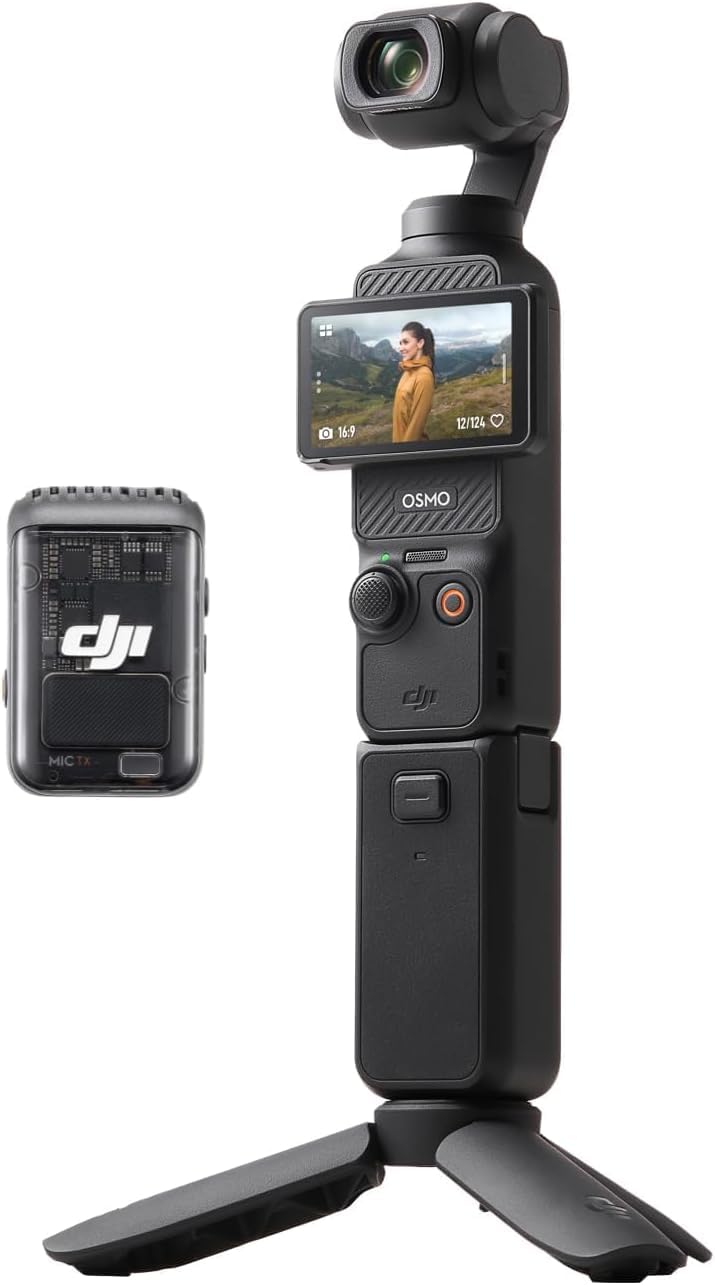
The DJI Osmo Pocket 3 is the gold standard for a travel camcorder in its class. Its 1-inch CMOS sensor captures 4K video at up to 120fps, delivering significantly better low-light performance and dynamic range than any 1/2.3-inch sensor camera. The 3-axis mechanical gimbal provides a level of stabilization that electronic systems simply cannot match, making walking shots look as smooth as dolly tracks. The 2-inch rotatable touchscreen flips on instantly and switches seamlessly between horizontal and vertical shooting, ideal for cross-platform content creators.
The Creator Combo adds the DJI Mic 2 transmitter, a battery handle, a wide-angle lens, and a mini tripod — each accessory solving a real travel problem. The Mic 2 eliminates ambient noise during crowded market scenes, while the battery handle nearly doubles the standard 166-minute runtime. ActiveTrack 6.0 locks onto a subject and keeps it centered in the frame, which is invaluable for solo travel vloggers who have no cameraperson. The D-Log M color profile with 10-bit depth allows for serious post-production flexibility without a bulky rig.
On the downside, the gimbal head is exposed and feels somewhat delicate compared to a sealed action camera. The 2x digital zoom is practically unusable; you’ll rely on getting physically closer to your subject. It’s also a mid-range investment, but the combination of sensor quality, stabilization, and accessory ecosystem justifies the cost for anyone who prioritizes footage quality on every trip.
Why it’s great
- Best-in-class 3-axis mechanical gimbal stabilization for smooth walking footage
- 1-inch CMOS sensor with excellent low-light performance and 10-bit color
- Rotatable touchscreen enables effortless vertical/horizontal switching
Good to know
- Gimbal head is exposed and may feel fragile without a protective case
- Digital zoom is weak; framing requires physical repositioning
- Premium price point compared to entry-level camcorders
2. Canon PowerShot V10

The Canon PowerShot V10 is a radical departure from traditional camcorder designs. It’s a vertical, pocket-sized brick with a retractable front-facing screen and a built-in stand that folds in both directions. The 1-inch 15.2-megapixel back-illuminated CMOS sensor is a massive step up in low-light performance from action-camera sensors, and the fixed 19mm wide-angle f/2.8 lens (35mm equivalent) captures expansive travel scenes without distortion. The lack of a zoom lens is a deliberate trade-off to maintain a truly pocketable footprint.
For solo travel vloggers, the V10 is remarkably simple. Flip the screen forward, set the built-in stand on a table, and record hands-free without any tripod. The stereo microphones include a third center mic that actively rejects background wind and crowd noise, so your voiceover stays clear. After recent firmware updates, the V10 now offers three image stabilization modes (Off, On, and Enhanced), making handheld walking shots usable in good light. The USB-C charging is a huge plus — one cable charges both the camera and your phone.
The compromises are real: no optical zoom means you can’t capture distant subjects without cropping in post, and the battery lasts around an hour of continuous recording, so a power bank is essential for day trips. The image stabilization is electronic, not mechanical, so it’s not as smooth as a gimbal system during active movement. But if you value the absolute smallest package with a large sensor, the V10 is a unique travel companion.
Why it’s great
- Extremely compact and pocketable with a built-in folding stand
- 1-inch CMOS sensor provides superior low-light video quality
- USB-C charging and simple file transfer to computers
Good to know
- No optical zoom; all framing is fixed wide-angle
- Battery life around one hour; external power bank needed for full-day use
- Electronic stabilization less effective than mechanical gimbal systems
3. ORDRO M5 5K Gimbal Vlogging Camcorder

The ORDRO M5 enters a price bracket where 3-axis mechanical gimbal stabilization is almost unheard of. Most cameras in this range rely on electronic software stabilization, but the M5 physically counteracts every hand tremor and walking step, producing footage that looks stable without the cropped-in or warping artifacts typical of EIS. The 5K resolution (4096 x 2160 at a usable frame rate) captures more detail than standard 4K, which is useful for cropping in post-production or reframing shots.
The 3.5-inch rotating touchscreen is generous for a camera of this size, and it rotates fully for self-recording. The 120-degree wide-angle lens is wide enough for immersive travel shots without the extreme fisheye distortion of action cameras. IR night vision provides usable black-and-white footage in near-total darkness, which is surprisingly handy for night markets or late-evening walks. The face tracking works reasonably well, keeping a subject centered during movement, though it can be fooled by quick turns.
User reports indicate the built-in microphone audio is subpar, with low volume and limited range. An external 3.5mm mic is strongly recommended for any vlogging. The 3-hour battery life is adequate but not class-leading, and the gimbal can glitch under heavy vibration from hiking or trail running. For relaxed travel vlogging — city breaks, museum visits, casual hikes — the M5 offers remarkable stabilization for the cost, but serious audio upgrades are a must.
Why it’s great
- 3-axis mechanical gimbal at an accessible price point
- 5K resolution allows post-production cropping flexibility
- Rotating touchscreen and IR night vision for low-light scenes
Good to know
- Built-in microphone audio is quiet and thin; external mic is necessary
- Gimbal can glitch under intense vibration or jarring movement
- Battery life of 3 hours; replaceable but requires backup batteries
4. AKASO 360 Action Camera Creator Combo
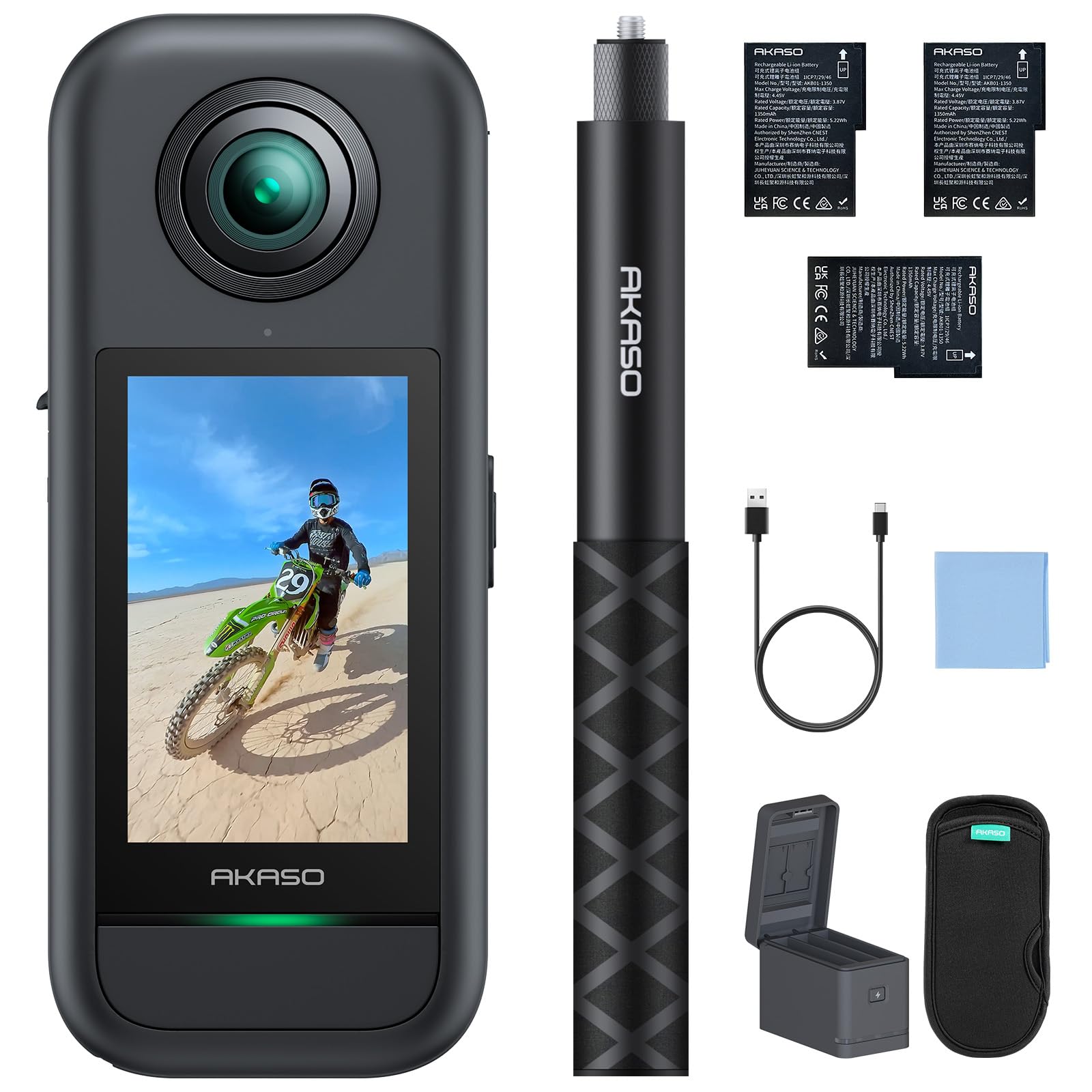
The AKASO 360 is a 360-degree action camera that brings creative freedom to travel vlogging. The dual 1/2-inch 48MP sensors capture 5.7K 360-degree video, which means you never have to pre-framing a shot — just set the camera on the included invisible selfie stick and record everything around you. In post, you use the AKASO 360 Studio app or desktop software to choose the best angle, reframe, and crop. This is a game-changer for solo travelers who want third-person, drone-like shots of themselves without a cameraperson.
The 360-degree Horizon Lock keeps the horizon perfectly level, no matter how much the camera spins or flips during walking. The AI subject tracking software detects a person and keeps them centered in a reframed 1080p or 4K export. The invisible selfie stick effect — which automatically removes the stick from the footage — creates the illusion of floating camera angles that look far more dynamic than a standard handheld shot. The weatherproof design held up in light rain and dusty environments during testing.
The major drawback is battery life: roughly 54 minutes of continuous recording, which is insufficient for a full day out. The AKASO 360 relies on the battery handle in the Creator Combo or external power for longer sessions. Low-light performance is also mediocre — the dual sensors lose detail and introduce noise in evening scenes. The app can occasionally lag or freeze during file transfer. For daylight-centric travelers who want truly unique, reframable footage, it’s an incredible creative tool, but it demands careful power management and editing workflow.
Why it’s great
- 360-degree capture means you never miss a moment; reframe in post
- Invisible selfie stick creates unique third-person shots solo
- Strong horizon lock and AI subject tracking work reliably
Good to know
- Battery life under one hour; not suitable for extended outings without backup
- Low-light image quality drops significantly in dim conditions
- App-based editing required; can be slow and occasionally buggy
5. Feiyu Pocket 3 Kit

The Feiyu Pocket 3 Kit distinguishes itself with a detachable camera head and a wireless remote handle. The camera head is a small, magnetic module that can be removed from the gimbal handle and placed on any ferromagnetic surface — a metal railing, a car hood, a park bench — for creative low-angle or hands-free shots. The remote handle provides a live video feed on its integrated screen, letting you adjust framing from up to 30 feet away. This wireless separation is unique in this price range and opens up angles that standard action cameras cannot achieve.
The 1/2.3-inch CMOS sensor captures 4K video at up to 60fps with a 130-degree ultra-wide field of view. The 3-axis mechanical gimbal provides gimbal-quality stabilization for walking shots, comparable to the more expensive DJI Osmo Pocket 3 but without the large sensor. The magnetic mount base with onboard magnet is cleverly designed for travel — it sticks to any steel surface instantly, eliminating the need for a tripod in many scenarios. The AI face tracking works well for keeping a single subject centered in the frame during solo recordings.
Issues reported by buyers include occasional remote control lockups, where the screen goes black and the system reboots mid-shoot. The audio from the built-in microphone is poor, described as “horrible” by multiple users, so an external mic is necessary for acceptable voice quality. The small sensor struggles in low light, producing noisy footage in evening conditions. For creative travelers who prioritize unique shot angles over raw image quality, the Feiyu Pocket 3 offers a modular experience, but reliability and audio issues are real concerns.
Why it’s great
- Detachable magnetic camera head for hands-free and low-angle placement
- Wireless remote handle with live video preview from distance
- Compact gimbal form factor with gimbal-quality stabilization
Good to know
- Remote control can lock up and reboot during use
- Built-in microphone audio quality is very poor
- Small sensor limits low-light performance significantly
6. SJCAM C400 4K Travel Vlogging Camera
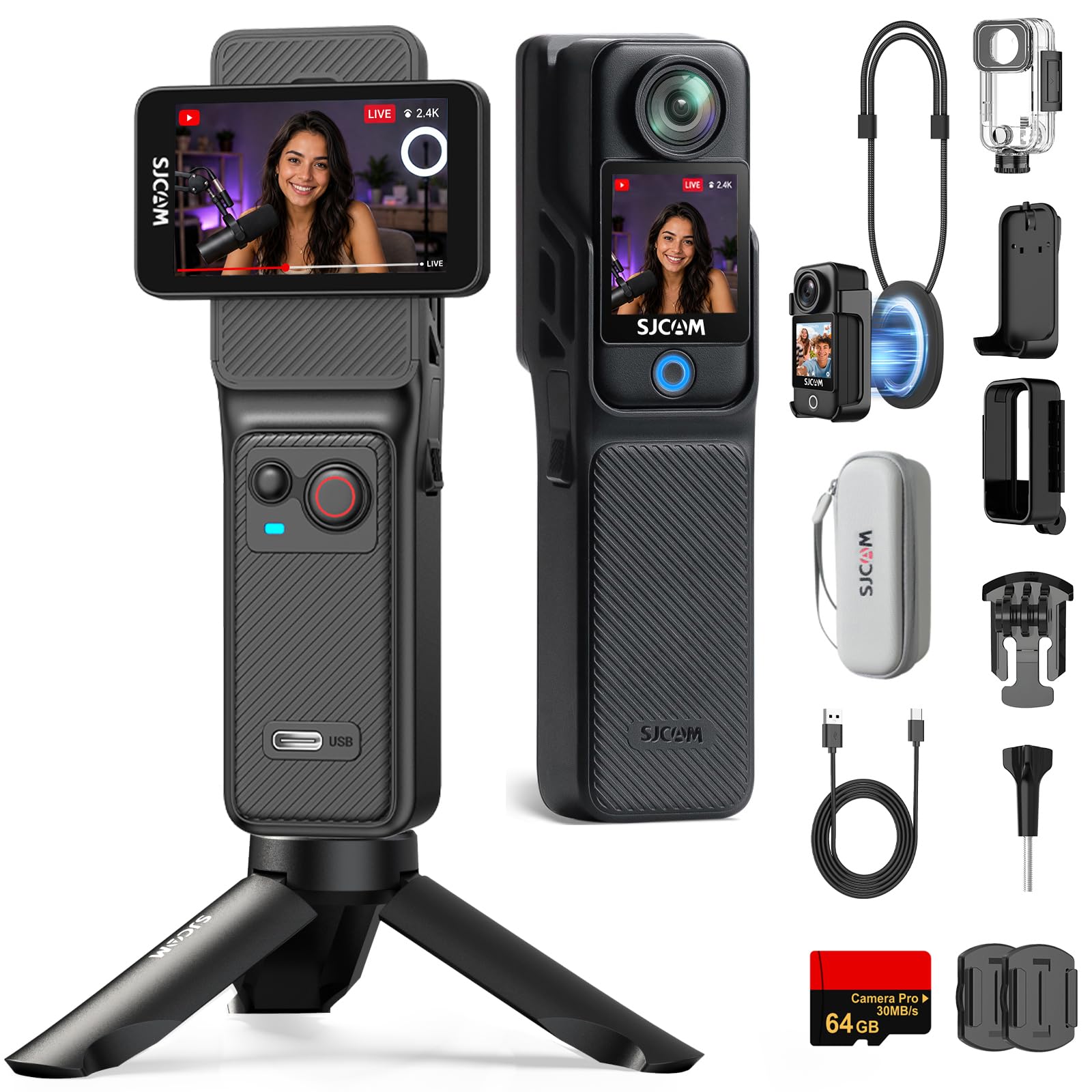
The SJCAM C400 is built for endurance. It offers up to 7 hours of continuous recording from a single charge, making it the longest-lasting camera in this roundup by a wide margin. This is critical for day-long hiking trips, all-day city tours, or extended live-streaming sessions where you cannot access charging points. The 6-axis electronic image stabilization (EIS) with horizon correction provides a level of stability that rivals some gimbal systems, though it does crop into the frame slightly to achieve that effect.
At 189g with a compact form factor, it offers both handheld and magnetic chest-mount wearability. The 154-degree distortion-free wide-angle lens captures expansive travel scenes, and the f/2.0 aperture helps in moderate low light. The 5G WiFi module transfers high-definition files quickly to the app for editing and sharing. The included 64GB memory card covers the basics out of the box, and the camera supports the full accessory ecosystem of standard action camera mounts.
The trade-off is image quality. The 4K footage at 30fps from its smaller sensor looks notably softer and less detailed than the output from a 1-inch sensor camcorder, and several users noted the video quality does not match the brand name alternatives. The 8x digital zoom is more of a marketing spec than a usable function. For travelers who absolutely need non-stop recording capacity rather than cinema-grade quality, the C400 is a practical, budget-friendly workhorse. But serious videographers will find the image quality lacking.
Why it’s great
- Class-leading 7-hour battery life for all-day recording
- 6-axis EIS with horizon correction for stable handheld shots
- Lightweight and versatile mounting options (handheld or chest magnetic)
Good to know
- 4K video quality is softer than 1-inch sensor competitors
- Digital zoom is low-quality; avoid using it for critical shots
- Small sensor struggles in dim lighting conditions
7. ORDRO M3 5K Video Camera Camcorder
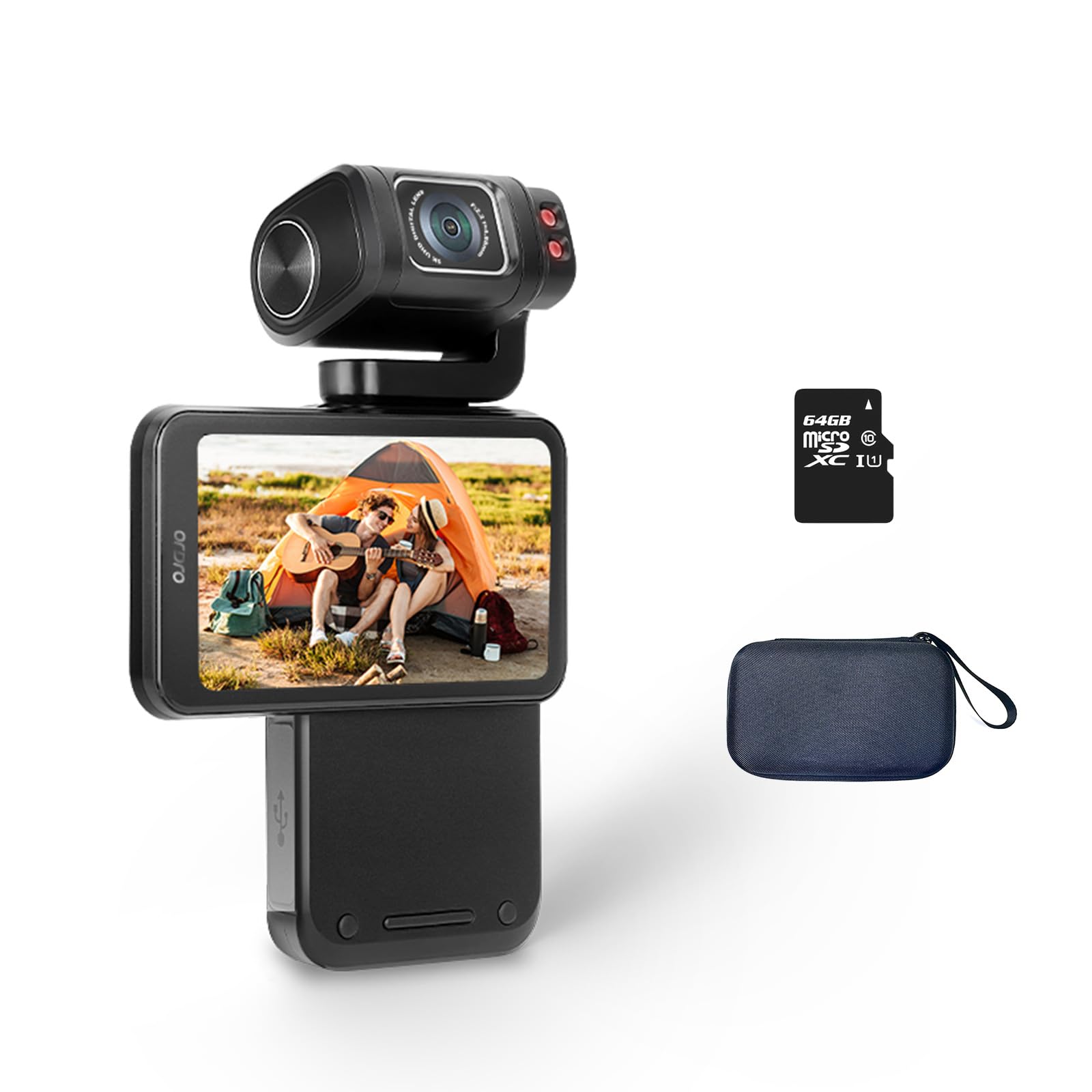
The ORDRO M3 is an ultra-compact camcorder that fits easily into any pocket or bag. Its dimensions of 5.3 x 2.2 x 1.5 inches make it one of the smallest fully-featured video cameras available. It records 5K video at 30fps and 4K at 60fps, with a 48MP image sensor. The 3.5-inch flip touchscreen can rotate 180 degrees to face the front, which is ideal for self-recording vlogs. The 180-degree rotating lens adds physical flexibility for awkward mounting angles in tight travel spaces.
The built-in 3250mAh battery provides enough power for several hours of casual recording, and the camera supports pass-through charging via USB-C, which is essential for long travel days. It offers a 10x digital zoom, webcam functionality, time-lapse, slow motion, and IR night vision for dark scenes. The included 64GB MicroSD card means you can start recording immediately without an additional purchase. The compact body includes a 3.5mm external microphone jack for upgrading audio quality.
Video quality is acceptable for its price tier but shows noticeable compression artifacts in high-contrast scenes. The digital zoom degrades quality significantly past 3x. Image stabilization only works in standard modes and disables in 4K 60fps mode. Some users reported units that stopped working after the first charge, and brand support can be slow. For a budget-conscious traveler who needs a compact, functional camera with good battery and touchscreen usability, the M3 is a capable option. But it’s not built for rugged handling or high-end video work.
Why it’s great
- Extremely compact and pocketable at 5.3 inches long
- Rotating lens and flip touchscreen for self-recording flexibility
- Includes 64GB card and USB-C charging with pass-through support
Good to know
- Video quality shows compression in high-contrast scenes
- Digital zoom degrades quality sharply beyond low zoom levels
- Reliability concerns reported; some units fail after initial use
8. FlyFrost 8K Video Camera Camcorder

The FlyFrost 8K Camcorder is an entry-level kit that covers all the basics for a beginner travel videographer. The package includes the camera body, an external microphone, a handheld stabilizer, a lens hood, a remote control, two batteries, a 32GB memory card, a camera bag, and a cleaning cloth. It’s the definition of an all-in-one starter bundle, removing the need to buy any single accessory separately. The 8K claim (7680 x 4320) at 15fps is more of a marketing spec than a practical resolution, but it does shoot smooth 4K at more standard frame rates.
The 18x digital zoom provides framing flexibility, but the quality drop is severe past 5x. The included handheld stabilizer and external microphone are cheap but functional for improving basic audio and stability without any extra cost. The WiFi transmission via the iSmart DV2 app allows remote control and file transfer to a phone, which is convenient for quick social media sharing. The IR night vision captures black-and-white footage in complete darkness, useful for low-light camping or evening tours.
The major issue is connectivity: many users report that the USB connection crashes File Explorer and the WiFi is unreliable for file transfer. The stabilization filter and microphone are budget-tier and may not survive heavy travel abuse. The 8K resolution at 15fps is a spec-sheet number that doesn’t translate to usable video — stick to 4K modes for actual recording. For an absolute beginner on a strict budget who wants a full kit to learn the basics of travel videography, this is a functional starting point. But experienced travelers will quickly outgrow its limitations.
Why it’s great
- Complete kit with microphone, stabilizer, remote, and bag included
- IR night vision for dark scenes and evening travel shots
- WiFi transfer allows phone-based sharing without cables
Good to know
- USB and WiFi connectivity can be unreliable for file transfer
- Accessories (mic, stabilizer) are budget-tier and not durable
- 8K resolution at 15fps is not practically usable; stick to 4K
9. Canon VIXIA HF R700 Camcorder

The Canon VIXIA HF R700 is a traditional camcorder designed for one primary purpose: reaching distant subjects with a massive 57x Advanced Zoom (32.5–1853mm equivalent). This is the device to bring to a safari, a mountain wildlife trip, or any scenario where you cannot physically walk closer to your subject. The SuperRange Optical Image Stabilizer is specifically tuned to keep the image steady at the telephoto end, which is where zoom shake is most pronounced. It records Full HD 1080p at 60fps, not 4K, but the optical zoom range is unmatched by any compact or action camera in this price bracket.
The 3.28-megapixel Full HD CMOS sensor paired with the DIGIC DV 4 image processor produces clean 1080p video in good light. The 3-inch capacitive touchscreen has an improved interface for navigating menus and reviewing footage. The camcorder writes directly to SD memory cards, which are affordable and widely available. It has a standard tripod mount and an external microphone jack, both of which are essential for serious travel videography.
The sensor is small by modern standards, and the camera is poor in low light — footage becomes grainy and loses color accuracy as light drops. The maximum optical zoom is 32x; the 57x number uses the digital zoom, which degrades quality. The battery charges over many hours (up to 10 hours for a full charge), which is inconvenient for quick top-ups during travel. The plastic body feels dated and lacks the premium feel of modern action cameras. For travelers whose number-one need is extreme optical reach and reliable 1080p recording in daylight, the VIXIA HF R700 is a specialist tool. For most modern travel vloggers, the lack of 4K and the large physical size are dealbreakers.
Why it’s great
- Unmatched 57x Advanced Zoom for distant wildlife and sports shooting
- SuperRange Optical Image Stabilizer keeps telephoto shots steady
- Reliable 1080p 60fps recording from a trusted Canon brand
Good to know
- Only records 1080p; no 4K resolution capability
- Poor low-light performance due to small CMOS sensor
- Battery charges slowly; requires overnight charging for full use
FAQ
Why does the megapixel count in my travel camcorder spec matter less than the sensor size?
Can I use a travel camcorder as a webcam for video calls when I return home?
How important is a flip-out screen for a travel camcorder?
Final Thoughts: The Verdict
For most users, the camcorder for travel winner is the DJI Osmo Pocket 3 because its 1-inch sensor and 3-axis gimbal deliver pro-level stabilization and low-light quality in a pocketable form. If you want the absolute smallest device with a large sensor, grab the Canon PowerShot V10. And for creative 360-degree footage that allows reframing in post-production, nothing beats the AKASO 360 for solo traveler creativity.

Mo Maruf
I created WellFizz to bridge the gap between vague wellness advice and actionable solutions. My mission is simple: to decode the research and give you practical tools you can actually use.
Beyond the data, I am a passionate traveler. I believe that stepping away from the screen to explore new environments is essential for mental clarity and physical vitality.