Our readers keep the lights on and my smoothie glass nicely filled. As an Amazon Associate, I earn from qualifying purchases.
An ill-fitting seal around an exterior window or door is the single largest source of energy loss in most homes, silently bleeding conditioned air into the outdoors while inviting moisture, dust, and pests inside. The wrong caulk can crack within a single freeze-thaw cycle, forcing you to redo the work and exposing your framing to rot. The right sealant bonds tenaciously to vinyl, wood, and masonry, flexes under extreme temperature swings, and stays watertight for years without peeling away from the joint.
I’m Mohammad Maruf — the founder and writer behind WellFizz. I’ve spent years analyzing construction chemistry, ASTM curing standards, and adhesion testing data to help homeowners select sealants that actually perform in real-world exterior conditions.
Whether you are sealing a drafty door frame or protecting a window flange from wind-driven rain, finding the right caulk for exterior windows and doors means choosing a formula that resists UV degradation, stays flexible at sub-zero temperatures, and bonds without priming on common exterior substrates. The following guide breaks down the most durable options across every use case.
How To Choose The Best Caulk For Exterior Windows And Doors
Exterior sealants face brutal conditions: direct UV exposure, rain, snow, ice, and the constant expansion and contraction of building materials. Selecting the wrong chemistry leads to cracking, adhesion failure, and water intrusion. Focus on three factors that determine real-world longevity.
Pure Silicone vs. Acrylic Latex: Which Adhesion Profile Wins Outside?
Pure silicone offers unmatched flexibility (−80°F to +400°F range) and stays waterproof for decades without cracking, but it is not paintable. Acrylic-latex caulks, including siliconized blends, accept paint beautifully and clean up with soap and water, but they cannot match silicone’s long-term UV resistance or movement tolerance. For high-expansion joints on exterior door frames and window flanges, a 100% silicone formulation typically outlasts any latex alternative.
Movement Capacity and Joint Size Compatibility
A sealant’s ability to stretch and compress without tearing is measured as a percentage of the joint width. Exterior windows and doors can experience up to 25% movement due to thermal cycling and wind load. Look for a maximum gap fill rating of at least ½ inch. A product that supports a 12.7 mm gap fill, such as the GE GE500, is well-suited for standard residential gaps, while thicker joints may require a gasket-style approach.
Cure Time and Weather Resistance
Fast-curing caulks (surface dry in 30 minutes) allow you to paint or expose the joint to rain sooner, but full cure can take 24 to 48 hours depending on humidity. Pure silicone sealants often require the longest cure periods but provide the most durable bond. Check the temperature tolerance range — a good exterior caulk handles extremes from −40°F to +300°F without hardening or going brittle.
Quick Comparison
On smaller screens, swipe sideways to see the full table.
| Model | Category | Best For | Key Spec | Amazon |
|---|---|---|---|---|
| PAULINN Silicone Caulk 4-Pack | Pure Silicone | Long-term waterproof sealing | Full cure in 48 hours | Amazon |
| GE GE500 Silicone 2+ | Pure Silicone | Small repairs and touch-ups | 2.8 oz squeeze tube | Amazon |
| M-D Silicone Gasket Seal | Gasket Strip | Gaps wider than ½ inch | 20 ft length, ½” width | Amazon |
| Akfix AS606 12-Pack | Acrylic Latex | Paintable finish on trim | 10.1 fl oz per cartridge | Amazon |
| Stanley S501 12-Pack | Acrylic Latex | Budget-friendly paint jobs | 10.1 fl oz per cartridge | Amazon |
In‑Depth Reviews
1. PAULINN Silicone Caulk White (4-Pack)
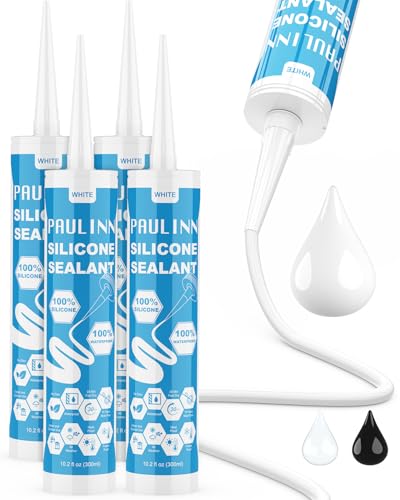
PAULINN’s 100% silicone formulation excels where water exposure is constant. The white sealant cures into a flexible, rubber-like barrier that resists mold, UV rays, and extreme heat up to 302°F. Users report no shrinkage or yellowing even after six months in high-moisture shower and door frame applications, proving its exterior-grade durability.
The 10.2-ounce cartridges deliver a thick, gap-filling consistency that holds shape on vertical surfaces without sagging. Lab tests confirm a 48-hour full cure, but the surface sets in just 30 minutes — fast enough to weather a sudden afternoon rain. The four-pack covers multiple windows or a full door perimeter in one session, eliminating mid-job trips to the store.
One minor trade-off is the viscosity: the same thickness that fills big gaps also makes tooling a bit more challenging than thinner acrylic caulks. A utility knife cut on the nozzle tip helps control flow. For homeowners prioritizing a permanent, waterproof seal over paintability, this is the most reliable silicone option on the list.
Why it’s great
- 100% silicone won’t crack or shrink in freeze-thaw cycles
- Surface dry in 30 minutes for rain-safe exterior work
- Four-pack value for covering multiple openings
Good to know
- Extremely thick consistency requires strong caulk gun and careful tooling
- Not paintable — must remain white after cure
- No storage cap included on cartridge
2. GE GE500 Silicone 2+ Window and Door Caulk (2-Pack)

GE’s GE500 is a 100% silicone sealant in a small 2.8-ounce squeeze tube designed for quick fixes rather than full-project coverage. The clear formula dries transparent, making it an invisible repair for glass-to-frame joints, small cracks in door jambs, or sealing around window weep holes without leaving a white smear.
Multiple users noted that the tube stays fresh and flexible even after being opened and stored for several years, a testament to the formula’s stability. The maximum gap fill of 12.7 millimeters suits standard residential gaps found around vinyl window flanges and pre-hung door frames. Complete curing takes about 24 hours, though the silicone remains pliable enough to accommodate seasonal wood expansion.
The squeeze tube design eliminates the need for a caulk gun, but the 2.8-ounce volume runs out quickly — this pack of two covers roughly one average-sized door frame. It is the right choice for a focused sealing project where you want a clean, clear, and painless application, but it is not economical for whole-house sealing.
Why it’s great
- Dries crystal clear for invisible exterior repairs
- Squeeze tube works without a caulk gun
- Remains fresh in tube for years after opening
Good to know
- Very small volume — only suitable for spot repairs
- Takes longer than 24 hours to fully cure in humid conditions
- Clear finish shows any debris trapped in the joint
3. M-D Building Products Silicone Gasket Seal (20 ft)

Not all exterior gaps can be bridged with a caulk bead. For uneven door jambs, warped frames, or gaps wider than half an inch, M-D’s silicone rubber gasket provides a mechanical seal that no caulking gun can replicate. The 20-foot strip has a teardrop cross-section that compresses against the door or window stop, blocking drafts and moisture without any curing time.
The premium silicone rubber stays flexible in extreme cold and does not stiffen or crack the way foam or vinyl weatherstripping does. Installation requires no hardware — peel and stick directly to the frame. It adheres well to painted wood, metal, and vinyl, though users note the instructions are sparse and the adhesive is moderately strong rather than permanent.
Because this is a gasket rather than a sealant, it works best as a primary weather barrier on door perimeters and window sashes rather than as a gap filler for structural joints. Pair it with a silicone caulk for corners and flange connections to create a complete air-sealing system around any opening.
Why it’s great
- Compresses to seal gaps that standard caulk cannot fill
- Zero cure time — effective immediately after installation
- Withstands temperature swings without losing flexibility
Good to know
- Not a direct caulk substitute for flange or corner joints
- Thin profile may not bridge very large gaps exceeding ½ inch
- Adhesive is not repositionable — careful alignment required
4. Akfix AS606 Acrylic Latex Caulk (12-Pack)
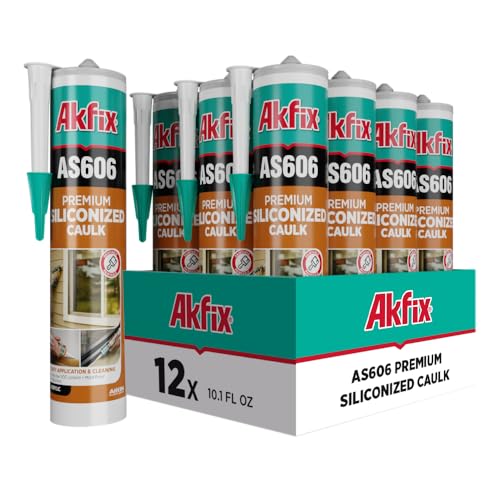
Akfix AS606 delivers professional-grade flow control at a per-cartridge cost that undercuts most big-box store brands. The siliconized acrylic latex formula handles up to 15% joint movement and cures to a waterproof, flexible finish that accepts latex and oil-based paints without discoloration. Professionals favor it for baseboards and trim because it stops flowing instantly when the gun trigger is released — no annoying drips.
The 10.1-ounce cartridges are low-odor and solvent-free, meeting LEED EQc4.1 criteria for indoor air quality. While marketed for interior use, the waterproof cured film holds up well on covered exterior applications like door trim and window casing where direct rain exposure is minimal. Users report no shrinkage or cracking after months of seasonal temperature swings.
The included nozzle requires a clean cut at the tip for proper bead size, and some users find the threading between tube and nozzle sits too loose. Overall, the 12-pack provides enough volume to seal an entire home’s interior and exterior trim, making it the smart choice for paint-ready sealing projects.
Why it’s great
- Excellent flow control — stops immediately when pressure is released
- Fully paintable with any latex or oil-based paint
- Low-odor, low-VOC formula ideal for occupied homes
Good to know
- Not recommended for fully exposed exterior joints with direct rain
- Nozzle attachment feels looser than competing brands
- Requires a utility knife cut for proper 45-degree angle
5. Stanley S501 Acrylic Latex Caulk (12-Pack)

The Stanley S501 is a no-frills siliconized acrylic latex caulk aimed at DIYers covering large surface areas on a tight budget. Each 10.1-ounce cartridge delivers a non-shrinking, paintable bead suitable for window frames, door casings, baseboards, and siding corners. The solvent-free formula cleans up with soap and water, avoiding the mineral spirits mess associated with pure silicone.
Stanley rates this caulk for both interior and exterior use, and customer reviews confirm it applies easily, dries within 24 hours, and grips well on porous surfaces like wood and drywall. The white color provides a clean finish against white trim, though the acrylic base may yellow faster than 100% silicone after extended UV exposure on south-facing windows.
The 12-pack format keeps per-cartridge costs low, making it a solid choice for large renovation projects where you need to seal multiple rooms. For critical exterior joints that face direct rain or high UV, the Stanley S501 works better as a secondary seal behind a primary silicone bead rather than as the sole weather barrier.
Why it’s great
- Extremely cost-effective for whole-house projects
- Easy water cleanup — no harsh solvents needed
- Paints over cleanly with any latex or oil-based paint
Good to know
- Acrylic base may yellow faster than silicone in direct sun
- Not ideal for joints with constant water exposure
- Smaller bead volume compared to premium silicone options
FAQ
Can I paint over pure silicone caulk on exterior windows?
How long should exterior caulk cure before heavy rain exposure?
Why does my exterior caulk keep cracking every winter?
Final Thoughts: The Verdict
For most users, the caulk for exterior windows and doors winner is the PAULINN Silicone Caulk 4-Pack because its 100% silicone chemistry delivers unmatched waterproofing, UV resistance, and flexibility across extreme temperatures. If you need a paintable finish for interior-adjacent trim, grab the Akfix AS606 12-Pack. And for oversized gaps that no caulk bead can bridge, nothing beats the M-D Silicone Gasket Seal as a primary draft barrier.

Mo Maruf
I created WellFizz to bridge the gap between vague wellness advice and actionable solutions. My mission is simple: to decode the research and give you practical tools you can actually use.
Beyond the data, I am a passionate traveler. I believe that stepping away from the screen to explore new environments is essential for mental clarity and physical vitality.