Our readers keep the lights on and my smoothie glass nicely filled. As an Amazon Associate, I earn from qualifying purchases.
Finding a matcha that delivers a vibrant green color and smooth, grassy flavor without the bitterness—all while staying within a reasonable budget—can feel like searching for a needle in a haystack. The market is flooded with options that turn a disappointing brown or leave a chalky, astringent aftertaste, making your morning ritual feel more like a chore.
I’m Mohammad Maruf — the founder and writer behind WellFizz. I’ve spent over a decade analyzing matcha sourcing, harvest methods, and grading standards to separate the truly good value from overpriced hype.
After sifting through dozens of consumer reviews and lab results, the clear winning best budget matcha balances authentic Japanese first-harvest leaves with an accessible price that the whole family can enjoy over a daily cup.
How To Choose The Best Budget Matcha
Not all budget matchas are created equal. The cheapest bag may save you a few dollars upfront but cost you in taste, color, and energy consistency. Here are the three most important factors to weigh before clicking “add to cart.”
Grading: Ceremonial vs. Culinary
Ceremonial grade uses the youngest, shade-grown leaves picked at the first flush (Ichibancha), yielding a sweeter, smoother sip with a vibrant jade hue. It’s ideal for drinking straight as a traditional tea or a latte. Culinary grade comes from later harvests, has a more robust, slightly astringent flavor, and works perfectly in smoothies, baked goods, and cooking. Many budget-friendly options blur this line, so check the label carefully.
Origin and Harvest
Authentic Japanese matcha from regions like Uji, Kagoshima, or Nishio generally offers superior flavor and a brighter green color because of strict growing and processing standards. First-harvest leaves (Ichibancha) contain higher levels of chlorophyll and L-theanine, which contribute to that creamy, umami taste and calm energy lift. Powder from China may be cheaper but often lacks the same smoothness and vibrant color.
Freshness and Storage
Matcha is highly sensitive to light, heat, and oxygen. A vacuum-sealed, resealable pouch or an opaque tin keeps the powder fresh for up to two months after opening. If the powder looks dull brown, gray, or yellow upon opening, it’s likely stale. Always check the “Best Used By” date and plan to consume within 30–60 days of opening for optimal taste and antioxidant potency.
Quick Comparison
On smaller screens, swipe sideways to see the full table.
| Model | Category | Best For | Key Spec | Amazon |
|---|---|---|---|---|
| Green Foods Ceremonial Grade | Ceremonial Grade | Daily drinking, hot/cold tea | 1,774 ORAC per serving | Amazon |
| Jade Leaf Barista Blend | Ceremonial Grade | Lattes, beginners, coffee switchers | 225 lattes per pouch | Amazon |
| Naturebell Culinary Grade 1lb | Culinary Grade | Baking, smoothies, bulk usage | 16 oz (1 lb) bulk supply | Amazon |
| Jade Leaf Culinary Grade | Culinary Grade | Baking, lattes, smoothies, skin care | 3.53 oz resealable pouch | Amazon |
| Sunfood Superfoods Organic | Daily Value | Lattes, smoothies, coffee alternative | 4 oz resealable bag | Amazon |
In‑Depth Reviews
1. Green Foods Organic Ceremonial Grade Matcha

This ceremonial grade matcha comes from small family farms in Japan and is certified organic, making it an excellent entry point for anyone wanting a premium drinking experience without overspending. Customers consistently note the bright green color and smooth, non-bitter taste, which holds up equally well in hot water, cold drinks, and smoothies.
With a reported 1,774 ORAC per serving, this powder packs a serious antioxidant punch. The resealable 5.5-ounce pouch offers great volume for daily use, and reviewers say it dissolves easily in both thick and thin liquids without clumping.
One reviewer described it as “smooth taste & trusted ingredients,” pointing to the absence of aftertaste and the clean energy boost it provides without jitters. A few users note they wish the container were larger, but overall satisfaction remains very high across hundreds of ratings.
Why it’s great
- Authentic Japanese ceremonial grade with bright green color
- High ORAC value (1,774 per serving) for strong antioxidant content
- Versatile for hot tea, iced drinks, and smoothies
Good to know
- Some users want a larger container size
- Occasional feedback about mild bitterness if over-steeped
2. Jade Leaf Matcha Barista Blend Ceremonial Grade
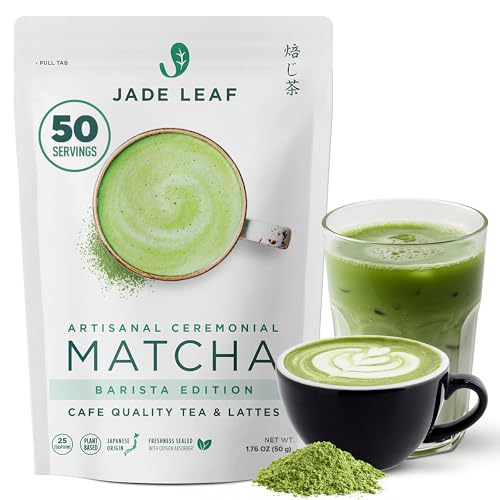
Jade Leaf’s Barista Blend is a ceremonial grade matcha designed specifically for lattes, using first-harvest leaves from Uji and Kagoshima, Japan. The company claims each 1.76-ounce pouch yields up to 225 full-sized lattes, making it an incredibly economical choice for frequent drinkers.
Customer reviews highlight its smooth, non-bitter flavor with light nutty and umami notes, which blends beautifully with milk or dairy alternatives without clumping. The vacuum-sealed, resealable pouch helps preserve freshness, and many users say it’s a clear upgrade from café matcha drinks at a fraction of the cost.
Some users have reported slight inconsistency between batches, with the occasional bag tasting chalky or more bitter than usual. However, the overwhelming majority praise its creamy texture and vibrant green color, making it a top pick for those switching from coffee to matcha.
Why it’s great
- First-harvest (Ichibancha) leaves for a naturally sweet, smooth taste
- Extremely high yield — up to 225 lattes per pouch
- Resealable vacuum packaging protects freshness
Good to know
- Minor batch-to-batch quality inconsistency reported
- Smaller pouch size (1.76 oz) compared to bulk options
3. Naturebell Organic Matcha (Culinary Grade, 1 lb)
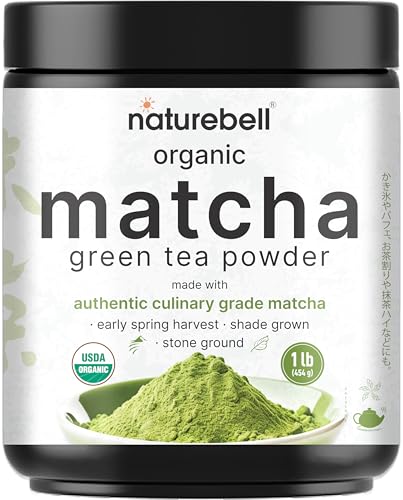
This one-pound culinary grade matcha from Naturebell is a serious bulk option for heavy users who make smoothies, bake matcha treats, or simply want a pantry-staple supply. The unsweetened, zero-sugar formula is derived from an early spring leaf harvest, giving it a more concentrated flavor than later-harvest culinary grades.
Reviewers consistently note that it mixes in super easily without becoming grainy or gritty, and that the color remains a nice, fresh green. It’s third-party lab tested to be free of GMOs, gluten, soy, and radiation, which adds peace of mind for those with dietary restrictions.
While it’s not as refined as ceremonial grade for straight drinking, users say it works great in lattes and smoothies where the flavor still shines. A few mention that it has a mild taste rather than an ultra-premium depth, but at this volume and price point, it’s hard to beat for daily use.
Why it’s great
- Massive 1 lb supply for frequent use and baking
- Mixes easily without clumps or grit
- Third-party lab tested, free of common allergens and fillers
Good to know
- Culinary grade — less refined flavor for straight drinking
- May require a frother or blender to achieve smoothest consistency
4. Jade Leaf Matcha Organic Culinary Grade

Jade Leaf’s culinary grade matcha comes from the same authentic Japanese tea fields as their ceremonial line but uses later-harvest leaves, giving it a richer, slightly more assertive flavor that holds up beautifully in baked goods, pancakes, and frosting. The 3.53-ounce resealable pouch is a practical size for home cooks who want to experiment without committing to a huge bag.
Customers highlight its vibrant green color and smooth texture, noting it mixes easily without clumps in both hot and cold liquids. Many use it for daily lattes and smoothies, and the consistent quality batch after batch earns high marks for reliability.
A small number of reviews mention that the smaller starter size feels pricey per serving compared to bulk options, but the brand’s reputation for freshness and authentic Japanese sourcing makes this a trusted pick for those who want a predictable, high-quality culinary matcha.
Why it’s great
- Authentic Japanese culinary grade with consistent quality
- Vibrant green color and smooth, non-bitter flavor
- Resealable pouch with clever design for easy storage
Good to know
- Per-serving cost higher than giant bulk bags
- Some users prefer a stronger taste for baking heavy recipes
5. Sunfood Superfoods Organic Matcha Powder

Sunfood’s Organic Matcha Powder is a USDA certified organic, non-GMO option that’s marketed as a coffee alternative with a rich, earthy taste. The 4-ounce bag offers a reasonable volume for those who want to test an organic everyday matcha without a huge commitment.
Fans of this powder say it blends great with almond milk and collagen, providing a steady energy lift without the afternoon crash. Several reviewers who switched from coffee appreciated the smooth flavor and how well it mixes into smoothies and lattes.
However, a notable number of customer reviews flag that the powder can appear yellow-brown rather than vibrant green, and some report a grainy texture that doesn’t dissolve well even with a blender. Additionally, the origin is not explicitly stated as Japan for all batches, which is a red flag for purists seeking traditional Japanese matcha. It’s a passable budget option, but not the best choice for those prioritizing color and clarity.
Why it’s great
- USDA Organic and non-GMO certified
- Good coffee alternative with clean, steady energy
- Works well in smoothies and lattes with almond milk
Good to know
- Color inconsistency — some batches are yellow-brown, not bright green
- Grainy texture reported by multiple users
- Origin may not be exclusively Japanese
FAQ
What does “ceremonial grade” actually mean for budget matcha?
How should I store my matcha to keep it fresh?
Is it normal for budget matcha to be less vibrant green?
Final Thoughts: The Verdict
For most users, the best budget matcha winner is the Green Foods Organic Ceremonial Grade Matcha because it delivers authentic Japanese ceremonial quality, a vibrant green color, and a smooth, non-bitter taste at a cost that works for daily drinking. If you want maximum value and volume for lattes, grab the Jade Leaf Barista Blend. And for bulk baking and smoothies, nothing beats the Naturebell Organic Matcha 1 lb.

Mo Maruf
I created WellFizz to bridge the gap between vague wellness advice and actionable solutions. My mission is simple: to decode the research and give you practical tools you can actually use.
Beyond the data, I am a passionate traveler. I believe that stepping away from the screen to explore new environments is essential for mental clarity and physical vitality.