Our readers keep the lights on and my smoothie glass nicely filled. As an Amazon Associate, I earn from qualifying purchases.
A long day on concrete floors, steel-toe boots, or rocky trails doesn’t have to end with burning arches and aching heels. Upgrading to a supportive insole is the single most effective way to restore energy return, stabilize your gait, and prevent the deep fatigue that settles into your feet, knees, and lower back.
I’m Mohammad Maruf — the founder and writer behind WellFizz. I’ve spent years analyzing biomechanical data, foam densities, and arch-support geometries to separate marketing claims from real structural support for demanding footwear.
To cut through the noise, I’ve evaluated five of the most popular models on the market to identify the best boot insoles for standing all day, hiking uneven terrain, and heavy-duty work environments.
How To Choose The Best Boot Insoles
Boots are already built with stiff outsoles and tall ankle collars, so your insole must compensate with targeted support in specific zones. The three factors that separate a budget insert from a serious tool are the arch profile, the heel cup design, and the foam density that governs long-term rebound.
Match the Arch Support to Your Foot Type
A high arch needs a pronounced rigid contour to prevent the midfoot from collapsing, while a flat foot requires a more moderate but stable lift that doesn’t dig into the soft tissue. Many lower-cost insoles use a generic arch bump that fits neither profile well. Curved foam profiles — like those using 3D dynamic TPU layers — mold more naturally to the foot’s transverse arch without creating pressure points during the first week of wear.
The Heel Cup Must Lock, Not Just Cradle
Boots amplify lateral forces on uneven ground. A deep, decoupled heel cup that wraps the calcaneus prevents the foot from sliding forward inside the boot on descents. This sliding action causes toe jamming, hot spots, and blisters. Look for anti-slip surfaces or non-slip heel textures that grip your sock, reducing the need to crank your laces excessively tight.
Foam Density Sets the Durability Ceiling
Lightweight open-cell foams feel plush in the store but compress permanently after 50 hours inside a work boot. Rebound foam layers — often a nitrogen-infused or high-restitution PU blend — return to shape after each step and maintain their thickness for hundreds of hours. A denser foam also dissipates ground impact more efficiently up through the kinetic chain, reducing fatigue in the knees and lower back over a 10-hour shift.
Quick Comparison
On smaller screens, swipe sideways to see the full table.
| Model | Category | Best For | Key Spec | Amazon |
|---|---|---|---|---|
| CURREX HikePro | Premium | Hiking & rough terrain | 3 dynamic arch profiles (Low/Med/High) | Amazon |
| MOVE All Day Comfort | Premium | All-day standing & walking | X-Frame Torsional Support system | Amazon |
| ARIAT Energy Max | Mid-Range | Work boots / daily wear | Agion antimicrobial moisture-wicking liner | Amazon |
| Welnove Work Orthotic | Mid-Range | Plantar fasciitis & flat feet | 3D TPU + GEL dual-layer cushioning | Amazon |
| Superfeet Hike Women’s | Premium | Women’s medium-high arches | EVOLyte carbon fiber stabilizer | Amazon |
In‑Depth Reviews
1. CURREX HikePro Insoles
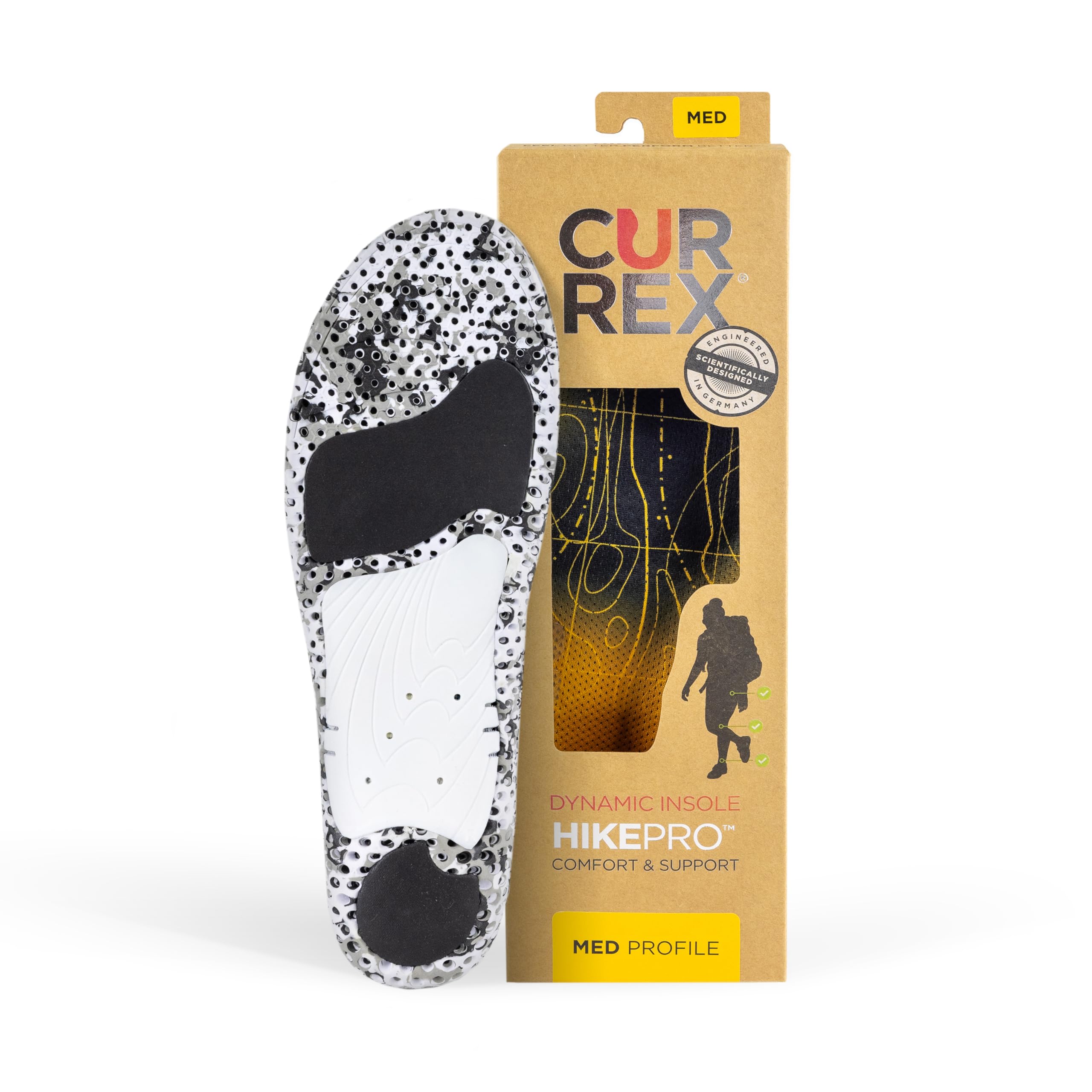
The CURREX HikePro is engineered specifically for the abuse of hiking and trail work. Its key differentiator is the 3D Dynamic Arch Technology, which offers true low, medium, and high arch profiles rather than a one-shape-fits-all foam bump. The deep decoupled heel cup wraps the calcaneus tightly and includes a SuperGrip anti-slip surface that prevents heel lift inside the boot, a critical feature on steep descents where foot slide causes toe jamming and blister formation.
The foam stack uses recycled EVA with air vent technology that breathes remarkably well, keeping moisture from accumulating over a full day of high-output movement. A premium foam layer sits under the heel and forefoot providing shock absorption that significantly reduces fatigue when carrying heavy packs or walking on hard-packed trail. Users report that the insoles eliminate the need to tighten laces mid-hike, as the heel lock does the stabilization work.
While the price point positions it as an investment piece, the HikePro outlasts lower-tier options by maintaining its structural rebound beyond 500 trail miles. The trim-to-fit design accommodates most standard hiking boots and work boots, and the firm arch support transitions comfortably after a short break-in period. For anyone who spends full days on their feet outdoors, this is the most performance-driven option available.
Why it’s great
- Decoupled heel cup with anti-slip grip locks the foot on descents
- Three distinct arch profiles prevent pressure point formation
- Moisture-wicking recycled EVA base resists odor buildup
Good to know
- Firm arch support may feel aggressive for flat-footed users during first week
- Premium pricing reflects specialized trail engineering
2. MOVE All Day Comfort Insole
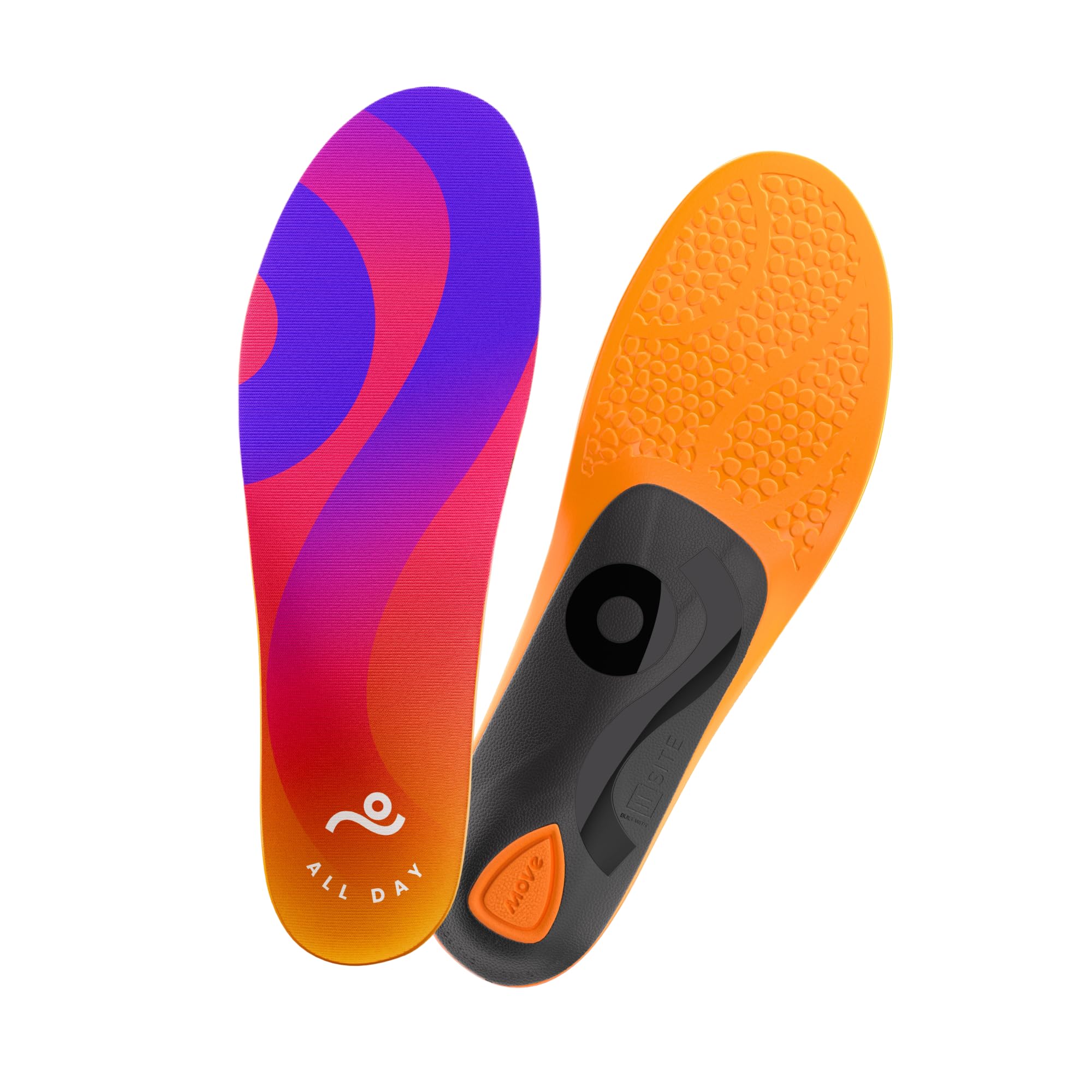
MOVE’s All Day Comfort Insole is built around a polyurethane foam formulation called Move Recharge Foam that delivers a dense, energy-returning step without the squishiness that leads to instability. The standout feature is the X-Frame Torsional Support system — a rigid midfoot plate that bridges the forefoot and heel to limit twisting while allowing natural foot flexion. This reduces the strain on the plantar fascia during long standing periods on concrete or tile floors.
The Active Heel Technology employs a cutout section under the calcaneus that lets the foam expand laterally under load, reducing compression on the fat pad and lowering peak pressure on the heel. The overall thickness adds about 6–8 mm of stack height, so these fit best in boots with removable original insoles or in shoes with generous volume. Users with high-volume work boots report that the extra thickness actually improves the boot’s fit by taking up negative space.
Reviewers consistently note that the MOVE insole eliminates the mid-day foot fatigue that forced them to swap shoes by 3 PM. The foam remains resilient after months of daily use and does not develop permanent compression zones near the heel strike area. The trade-off is that the thicker profile may not suit low-profile dress boots or snug-fitting tactical footwear without trimming the forefoot edge precisely.
Why it’s great
- X-Frame plate stops midfoot torsion without restricting toe splay
- Move Recharge Foam retains rebound after extended standing shifts
- Heel cutout technology reduces impact pressure on the calcaneus
Good to know
- Thick foam pack may crowd low-volume boots
- Premium-tier pricing in line with other performance-focused insoles
3. ARIAT Men’s Energy Max Work Insole

The ARIAT Energy Max is a direct replacement insole engineered to match the shape and thickness of the original liner found in most boot brands. The rebound foam layer provides a medium-density platform that cradles the entire foot without adding bulk, making it an ideal swap-in for ARIAT boots themselves as well as other work boot brands where space is tight. The anatomically-engineered cushioning contours to the foot’s natural geometry to distribute pressure evenly across the midfoot.
The moisture-wicking liner uses Agion antimicrobial technology, which actively suppresses odor-causing bacteria. For workers in hot environments or humid climates, this feature keeps the insole from becoming a bacterial reservoir even after a full shift. The open-cell foam layer also regulates temperature by allowing air circulation through the foam matrix instead of trapping heat, reducing the swampy feeling inside a non-breathable steel-toe boot.
Users logging 9–10 hour days on concrete report that the Energy Max significantly reduces lower back pain compared to the stock insoles. The foam does not possess the aggressive arch contour of orthotic-grade inserts, so it is best suited for users with normal foot architecture who simply need a higher-quality cushioning layer. At a mid-range investment point, it offers the most straightforward drop-in upgrade for workers who prioritize odor control and immediate comfort without a break-in curve.
Why it’s great
- Drop-in fit for most work boots without trimming needed
- Agion odor-fighting liner stays fresh through sweaty shifts
- Open-cell foam prevents heat buildup in steel-toe boots
Good to know
- Mild arch support not suited for severe overpronation or plantar fasciitis
- Foam compresses faster than dense PU options under 200+ pound users
4. Welnove Work Orthotic Insoles
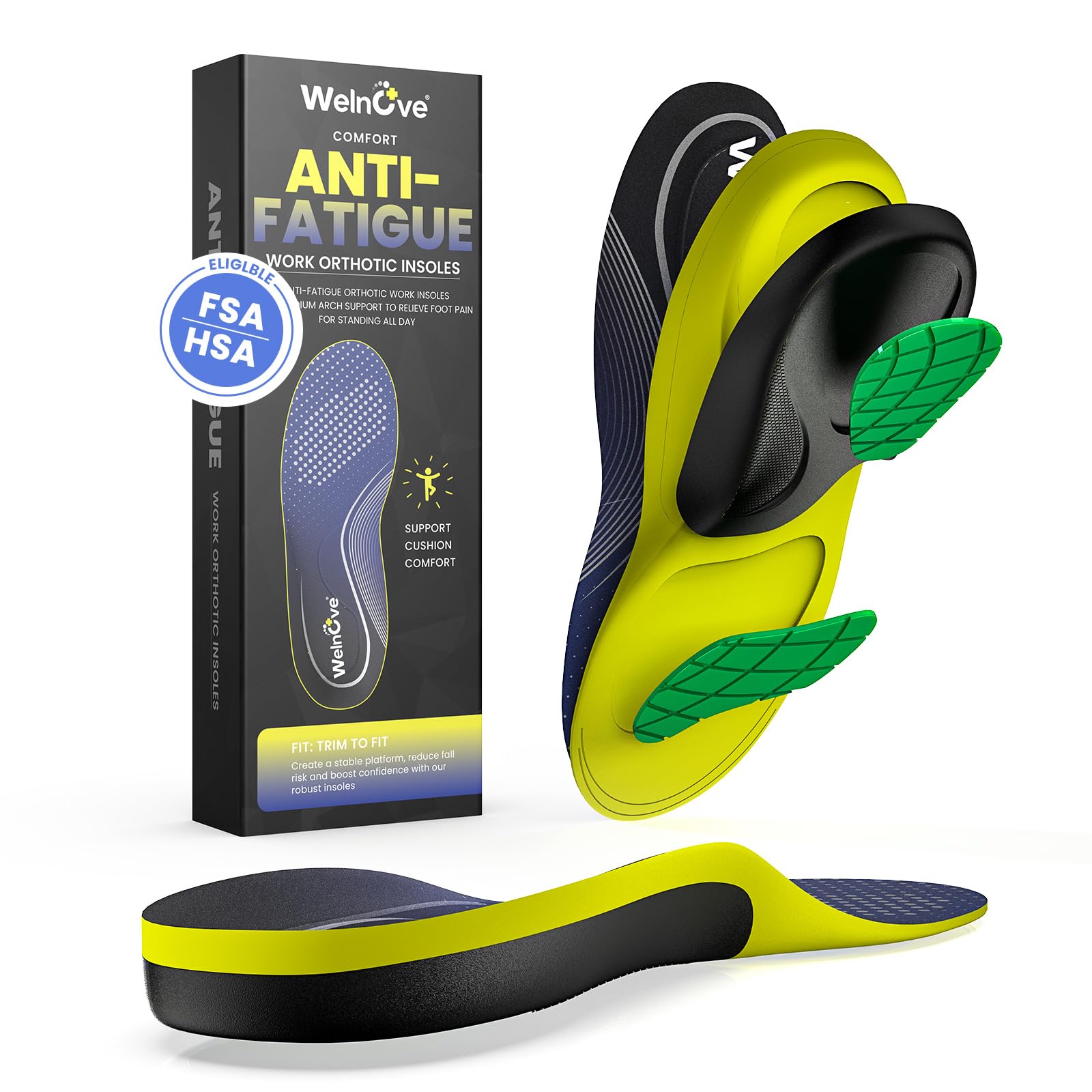
Welnove takes a dual-density approach by sandwiching a 3D dynamic TPU arch support layer between a PU foam base and a top layer that incorporates gel pads at the heel and ball of the foot. The TPU arch shell is rigid enough to force the foot into a neutral alignment without being brittle, while the gel pads handle the initial impact spike of each heel strike. This combination directly addresses the pain points associated with plantar fasciitis and flat feet by providing targeted lift under the longitudinal arch.
The deep U-cup heel design extends higher than most insoles at this price span, wrapping the rearfoot to limit excessive pronation during the gait cycle. The cushioning medium is firmer than plush foam options, which is intentional — a softer footbed would allow the arch to collapse under the load of a standing worker. The insoles do take up more volume inside the boot, so removing the factory insole is strongly recommended, and users with low-volume boots should expect to trim the forefoot section.
Customer feedback highlights the gradual break-in period as a positive design choice — the firm support prevents immediate arch soreness by allowing the foot to adapt over 3–5 days. Some reviews note that the labeling (1 pair versus 2 pairs) caused initial confusion, but the actual product delivers one left and one right insole. For those dealing with chronic heel pain or midfoot discomfort, the Welnove insoles offer a near-orthotic level of correction at a fraction of the cost of custom-fitted devices.
Why it’s great
- 3D TPU arch shell provides semi-rigid support for flat feet
- Gel pads under heel and forefoot absorb high-impact strikes
- Deep heel cup controls excessive pronation during standing
Good to know
- Firm support requires a gradual break-in period for sensitive feet
- Thicker construction may crowd boots with low instep volume
5. Superfeet Hike Women’s Support Insole
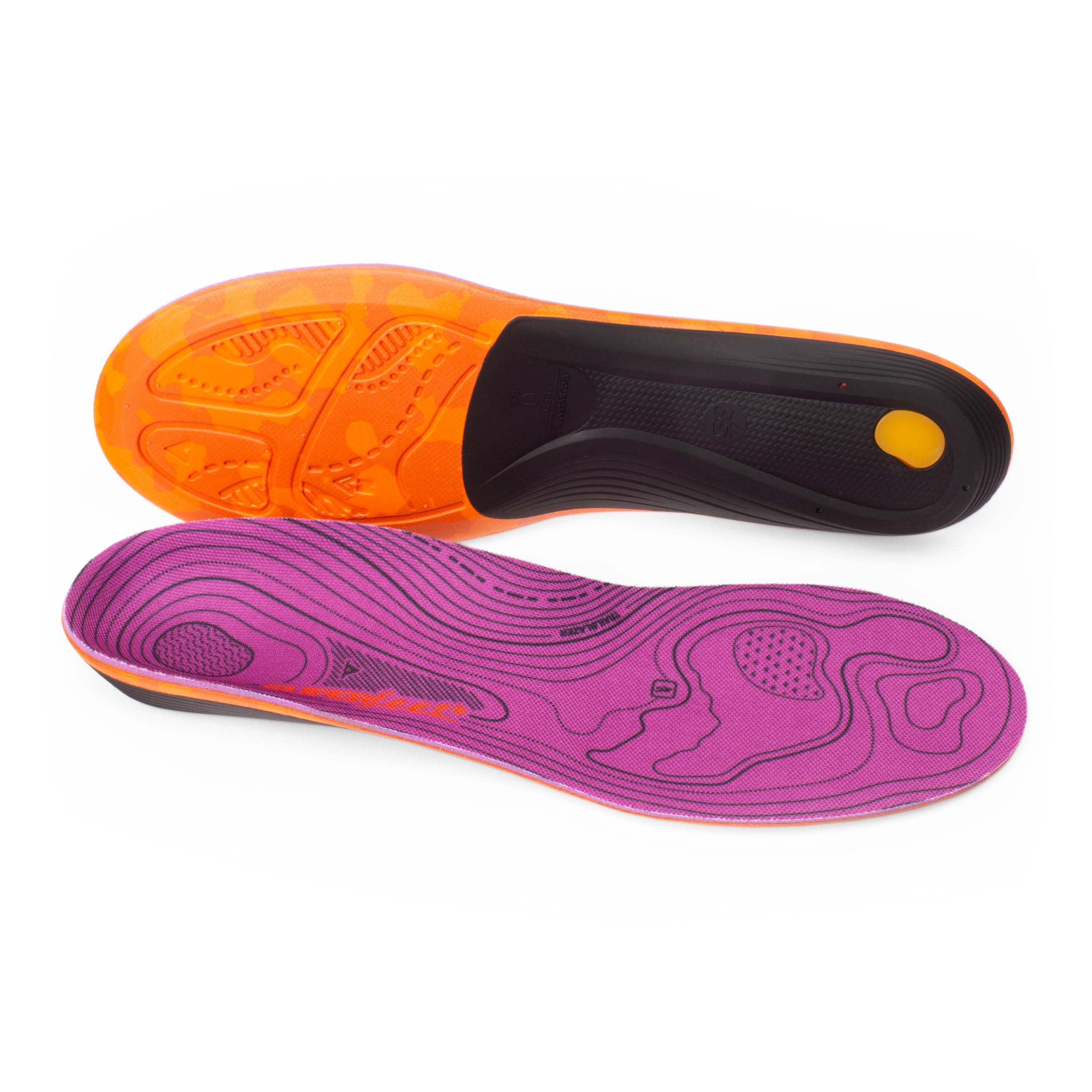
Superfeet’s Hike Women’s Support insole is a women’s-specific design with a medium-to-high arch profile and a narrower heel shape that mirrors the anatomical differences in female feet. The proprietary EVOLyte carbon fiber and polymer blend creates a rigid stabilizer plate that runs from the heel through the midfoot, providing torsional rigidity that resists twisting when stepping on uneven rocks or roots. The deep U-cup heel pocket keeps the calcaneus centered under the tibia, reducing ankle wobble on descents.
The Moisturewick top cover pulls sweat away from the foot and releases it into the sock layer, helping prevent the damp conditions that lead to blister formation. Despite the firm structural plate, the dual-layer cushioning delivers a surprising amount of impact absorption — several reviewers with psoriatic arthritis and plantar fasciitis report that these insoles allowed them to complete multi-day hikes without debilitating foot pain. The trim-to-fit sizing requires careful cutting to match the boot’s taper, and Superfeet recommends sizing up if between sizes to allow room for the cutting margin.
A notable improvement over the previous Trailblazer Comfort model (the same product with a name change) is the refined arch curvature that better accommodates medium arches without hitting the navicular bone awkwardly. The insoles are slightly thinner than the MOVE or CURREX options, making them an excellent pairing for women’s hiking boots that already have limited internal volume. The trade-off for the slim profile is that the rigid carbon polymer plate may feel stiff for users accustomed to all-foam footbeds.
Why it’s great
- EVOLyte carbon fiber stabilizer provides lightweight torsional rigidity
- Women’s-specific heel shape prevents sliding in narrower boot lasts
- Moisturewick top cover reduces blister risk during extended hikes
Good to know
- Medium-high arch may not suit flatter foot types without discomfort
- Slim profile offers less plush cushioning than thicker foam competitors
FAQ
How do I know if my boot needs a low or high arch insole?
Can I use the same insoles for hiking and work boots?
How often should I replace my boot insoles?
Final Thoughts: The Verdict
For most users, the best boot insoles winner is the CURREX HikePro because its three-profile arch system and anti-slip heel cup solve the two biggest problems boot wearers face — arch mismatch and foot slide on slopes. If you want a thick, energy-returning foam that erases mid-day fatigue on concrete floors, grab the MOVE All Day Comfort Insole. And for women needing a slim-profile stabilizer that fits tighter boot lasts without sacrificing torsional control, nothing beats the Superfeet Hike Women’s Support Insole.

Mo Maruf
I created WellFizz to bridge the gap between vague wellness advice and actionable solutions. My mission is simple: to decode the research and give you practical tools you can actually use.
Beyond the data, I am a passionate traveler. I believe that stepping away from the screen to explore new environments is essential for mental clarity and physical vitality.