Our readers keep the lights on and my smoothie glass nicely filled. As an Amazon Associate, I earn from qualifying purchases.
A headshot lives or dies on the rendering of the human face—skin texture, catchlights in the eyes, the smooth transition from a sharp eyelash to a soft bokeh background. Getting this right requires a camera with specific traits: reliable eye-detect autofocus, a sensor that handles skin tones naturally, and a lens system that can throw the background out of focus without distorting facial features. This is not about action photography or landscape resolution; it is entirely about the craft of portraiture in controlled and semi-controlled environments.
I’m Mohammad Maruf — the founder and writer behind WellFizz. My approach to evaluating headshot cameras involves stress-testing autofocus systems across different lighting conditions, analyzing color science straight out of camera, and cross-referencing lens roadmaps for shallow depth-of-field compatibility.
Whether you are building a corporate headshot studio or upgrading your freelance portrait kit, finding the right camera for headshots means prioritizing autofocus accuracy, sensor dynamic range, and access to fast prime lenses that render skin tones with natural warmth and separation.
How To Choose The Best Camera For Headshots
Selecting a camera specifically for headshots narrows your focus to a few decisive factors. You are not chasing high burst rates for sports or extreme telephoto reach—you need predictable focus on a human eye, pleasing color science, and the ability to manage depth of field.
Sensor Size and Dynamic Range
Full-frame sensors (35mm) give you the widest latitude for recovering shadow detail in a suit jacket or highlight information on a forehead. A sensor with 14+ stops of dynamic range lets you smooth skin in post without blowing out catchlights. APS-C can work with faster lenses, but you start with a depth-of-field disadvantage that requires pricier glass to match full-frame background separation.
Autofocus: Eye Detection Is Non-Negotiable
For headshots, you will shoot at wide apertures—f/1.4 to f/2.8—where the depth of field can be as thin as a few millimeters. Eye-detect autofocus that locks onto the nearest eye and tracks micro-movements is the difference between a keeper and a miss. Cameras with dedicated AI processors for subject recognition (like Sony’s Real-time Tracking or Canon’s Dual Pixel CMOS AF II) dramatically reduce retakes.
Lens Ecosystem and Focal Length
The 85mm to 135mm range on full-frame is the headshot sweet spot. It compresses facial features naturally and avoids the wide-angle distortion that exaggerates noses. Before choosing a body, verify that the mount has affordable fast prime options—an f/1.8 or f/1.4 lens in that range is essential. Mirrorless systems with short flange distances also adapt vintage portrait glass easily.
Color Science and Skin Tone Rendition
Some brands handle skin tones differently straight out of camera. Canon and Fujifilm are known for pleasing, warm skin rendition with minimal magenta shifts. Sony and Nikon are more neutral, which gives flexibility in post but demands more color grading time. For corporate headshot work where turnaround is tight, accurate out-of-camera JPEGs save hours.
Quick Comparison
On smaller screens, swipe sideways to see the full table.
| Model | Category | Best For | Key Spec | Amazon |
|---|---|---|---|---|
| Canon EOS R8 | Mirrorless Full-Frame | Entry-level full-frame headshots | 24.2MP, Dual Pixel AF II | Amazon |
| Nikon Z 6II | Mirrorless Full-Frame | Studio hybrid work | 24.5MP BSI, dual slots | Amazon |
| Sony A7 III | Mirrorless Full-Frame | Budget-friendly full-frame | 24.2MP, 693 AF points | Amazon |
| Canon EOS 5D Mark IV | DSLR Full-Frame | Corporate studio standard | 30.4MP, 61 AF points | Amazon |
| Nikon Z 7II | Mirrorless Full-Frame | High-res retouching | 45.7MP, 493 AF points | Amazon |
| Sony Alpha 6700 | Mirrorless APS-C | Travel headshots | 26MP, AI tracking | Amazon |
| Fujifilm X-H2S | Mirrorless APS-C | Hybrid video/photo studio | 26.1MP stacked, 40fps | Amazon |
| Panasonic LUMIX S5II | Mirrorless Full-Frame | Unlimited video headshots | 24.2MP, Phase AF | Amazon |
| Fujifilm X100VI | Fixed-Lens APS-C | Walkaround candid portraits | 40.2MP, IBIS, 23mm f/2 | Amazon |
| Leica Q2 | Fixed-Lens Full-Frame | Premium editorial looks | 47MP, 28mm f/1.7 | Amazon |
| Panasonic LUMIX ZS99 | Compact Point-and-Shoot | Travel convenience | 30x zoom, 1/2.3 sensor | Amazon |
In‑Depth Reviews
1. Canon EOS R8

The Canon EOS R8 is the lightest full-frame RF-mount body available, weighing just 461 grams, which reduces arm fatigue during long headshot sessions. Its 24.2MP CMOS sensor paired with the DIGIC X processor delivers excellent dynamic range, allowing you to recover shadow detail in dark suits and preserve highlight separation in bright key lights.
Dual Pixel CMOS AF II covers the entire frame with 1,053 AF zones and includes deep-learning subject detection that locks onto human eyes instantly. When shooting at f/1.4, the eye-tracking stays locked during micro-movements, which is critical for maintaining sharp focus on the iris. The vari-angle touchscreen also makes low-angle or high-angle compositions effortless in the studio.
Color science is Canon’s signature strength—skin tones come out warm and natural with minimal magenta shifts. The camera lacks in-body stabilization, but headshot work on a tripod or with strobes makes IBIS largely irrelevant. For those stepping into full-frame headshot work, this body delivers professional image quality without the bulk or complexity of higher-end models.
Why it’s great
- Exceptional eye-detect AF reliability at wide apertures
- Lightweight body reduces fatigue during sessions
- Canon color science produces pleasing skin tones out of camera
Good to know
- Single SD card slot limits backup during paid shoots
- No in-body stabilization, but not essential for studio use
- Small battery life; carry spares for extended sessions
2. Canon EOS 5D Mark IV
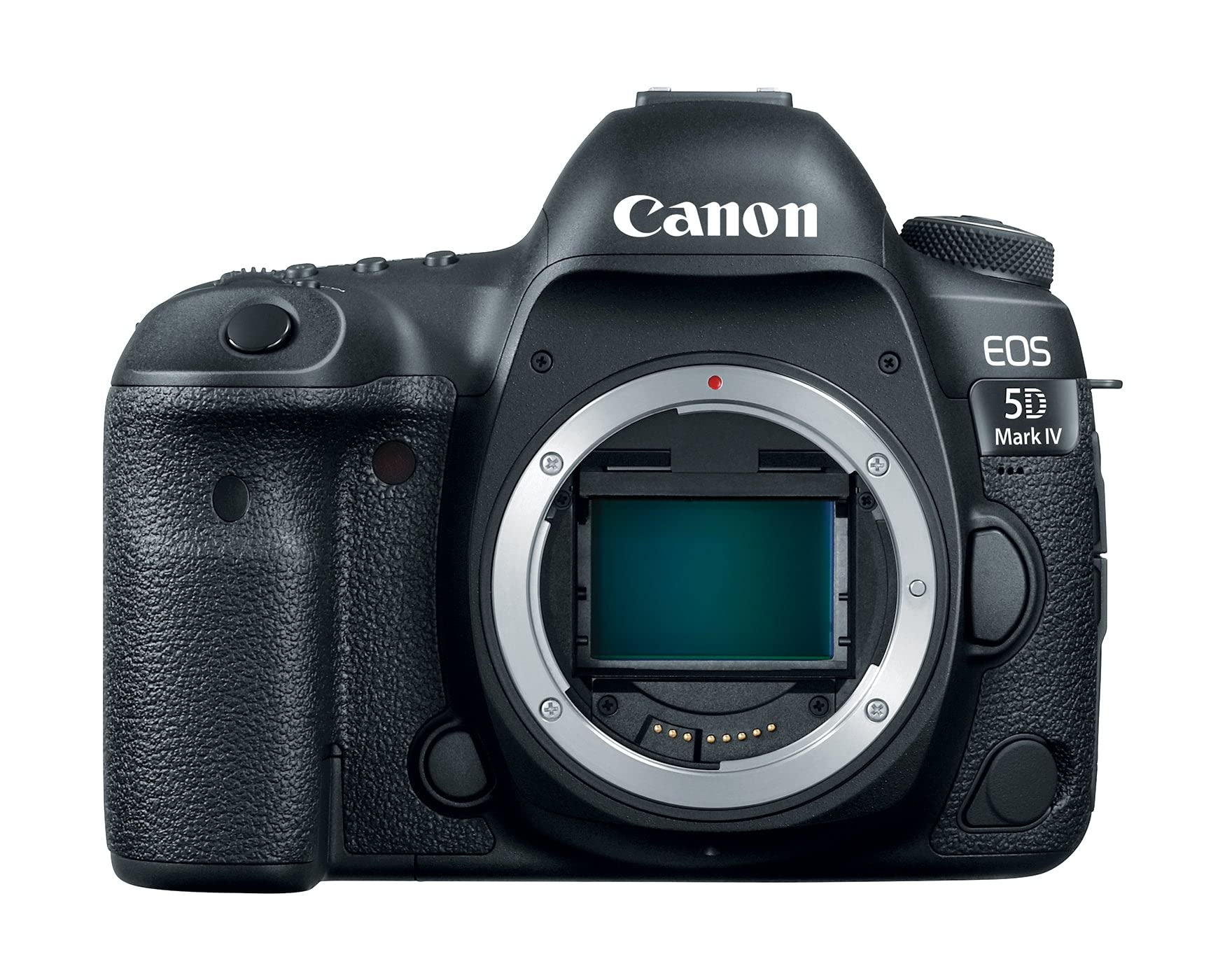
The 5D Mark IV remains a reference DSLR for headshot photographers who value optical viewfinder accuracy and rugged build. Its 30.4MP full-frame sensor offers a resolution sweet spot—high enough for advertising-grade prints but not so high that it creates massive raw files that slow down tethered shooting.
Dual Pixel CMOS AF in live view provides smooth and responsive autofocus, and the 61-point phase-detection system through the optical viewfinder is still reliable for studio work. The built-in GPS and Wi-Fi allow for seamless location tagging and file transfers, which is useful for corporate photographers shooting on-site at client offices.
Canon’s color science on the Mark IV is particularly flattering for skin tones, with accurate reproduction of warm undertones. The battery life is stellar, often lasting through a full day of headshot sessions without a swap. The trade-off is the lack of a vari-angle screen, which can make overhead or low-angle headshots more awkward compared to mirrorless alternatives.
Why it’s great
- Rock-solid build quality for daily professional studio use
- Excellent battery life for all-day corporate shoots
- 30.4MP resolution balances print quality with file manageability
Good to know
- No vari-angle screen makes alternative angles difficult
- Heavier than mirrorless options; tripod recommended
- 4K video is Motion JPEG with large file sizes
3. Sony A7 III

The Sony A7 III earned its reputation as a class-leading full-frame camera for good reason—its 24.2MP back-illuminated sensor provides 15 stops of dynamic range, which is exceptional for recovering skin texture in mixed lighting. The 693 phase-detection autofocus points cover 93% of the frame, and eye AF works reliably even in dim studio conditions.
Battery life is a standout feature, rated at around 710 shots per charge, which means you can shoot back-to-back headshot sessions without swapping. The 5-axis in-body stabilization also provides a safety net when handholding at slower shutter speeds to lower ISO for cleaner files.
Sony’s color science is more neutral than Canon’s, so be prepared to spend time grading skin tones in post if you want that warm corporate look. The kit lens (28-70mm f/3.5-5.6) is underwhelming for headshots—budget for a dedicated portrait prime like the 85mm f/1.8 to get the shallow depth of field you need.
Why it’s great
- Industry-leading battery life for extended studio days
- Excellent dynamic range for recovering highlights and shadows
- Reliable eye-detect AF even in low ambient light
Good to know
- Color science is neutral; requires post-processing for skin tones
- Menu system is complex with a steep learning curve
- Kit lens is insufficient for professional headshot work
4. Nikon Z 7II

The Nikon Z 7II’s 45.7MP sensor gives headshot photographers the ability to crop aggressively while maintaining enough resolution for full-page magazine reproduction. This resolution is particularly valuable when you need to deliver tight framing on the face without recomposing or moving lights.
Autofocus has been improved over the original Z 7 with 493 phase-detection points and enhanced eye-detect tracking. While not as sticky as Sony’s latest AI-driven system, it performs well in controlled lighting where the subject is stationary. Dual card slots (CFexpress and UHS-II SD) provide the redundancy that professional headshot work demands.
Nikon’s color rendering produces accurate, natural skin tones that are slightly cooler than Canon’s. The in-body stabilization is good for hand-held use during environmental portraits. The camera does require a high-quality portrait lens like the NIKKOR Z 85mm f/1.2 S to fully resolve its sensor, which adds significant cost to the overall setup.
Why it’s great
- 45.7MP allows for heavy cropping without resolution loss
- Dual card slots for professional security
- Excellent build quality and ergonomic grip
Good to know
- Requires very sharp glass to resolve full sensor potential
- Eye-detect AF is slightly behind Sony and Canon
- Battery life is average; plan for spares
5. Nikon Z 6II

The Nikon Z 6II strikes a balanced position between resolution and file size for headshot work. Its 24.5MP BSI sensor delivers excellent low-light performance and 14 stops of dynamic range, letting you shoot at base ISO under strobes without worrying about noise in the shadows of a dark suit.
Dual card slots (CFexpress/XQD plus UHS-II SD) give you immediate backup, which is essential when shooting headshots for paying clients—card failure on a single-slot body can destroy a session. The camera features 273 phase-detection AF points and improved buffer capacity, though the eye-detect system is not as fast as newer mirrorless competitors.
The Z 6II handles beautifully with NIKKOR Z lenses, and the FTZ adapter allows use of classic F-mount portrait glass like the 85mm f/1.4 G. Out-of-camera JPEGs are true-to-life with natural color reproduction. The main downside for headshot use is the slightly laggy eye-detect compared to Canon’s Dual Pixel system.
Why it’s great
- Dual card slots provide essential session backup
- Excellent dynamic range for studio lighting conditions
- Compact, comfortable body with great ergonomics
Good to know
- Eye-detect AF is not as fast as Canon or Sony systems
- Screen does not flip forward for self-filming
- In-camera battery life is modest; carry spares
6. Sony Alpha 6700

The Sony Alpha 6700 packs the latest AI-based subject recognition into a compact APS-C body, making it an excellent second camera for on-location headshots. Its 26MP Exmor R sensor offers great dynamic range for its size, and the dedicated AI processor enables real-time eye tracking that rivals full-frame systems.
With 759 phase-detection AF points covering nearly the entire sensor, the camera locks onto a subject’s eye even when they turn slightly or wear glasses. The body is lightweight at roughly 493 grams, making it ideal for photographers who travel to client sites and want to pack a small kit. The 4K 120p video capability also allows for extracted still frames from motion.
The trade-off for the smaller sensor is that achieving extreme background separation requires faster lenses—a Sigma 56mm f/1.4 provides a full-frame-equivalent depth of field of roughly f/2.2. The menu system remains Sony’s Achilles’ heel, with dense submenus that require practice to navigate quickly during a session.
Why it’s great
- AI-based eye tracking is incredibly sticky and reliable
- Lightweight and compact for mobile headshot setups
- Excellent video specs for hybrid portrait work
Good to know
- APS-C sensor needs faster lenses for shallow depth of field
- Menu system is complex and less intuitive than rivals
- Battery drains quickly when recording video
7. Fujifilm X-H2S

The Fujifilm X-H2S uses a stacked 26.1MP X-Trans sensor that delivers 14 stops of dynamic range and exceptional readout speed, which translates to minimal rolling shutter if you shoot headshots with electronic shutter. The stacked structure also reduces noise, giving clean files up to ISO 6400 when you need to shoot with available light.
Fujifilm’s film simulations—especially the new REALA ACE mode—produce stunning out-of-camera JPEGs with flattering skin tones that require almost no editing. This is a massive time-saver for corporate headshot photographers who deliver files directly to clients. The Subject Detection AF uses AI to recognize human faces and eyes even with masks or side profiles.
The X-H2S is also a video powerhouse, capable of internal 6.2K ProRes recording, making it a strong choice for hybrid photographers who shoot headshot videos or behind-the-scenes content. The in-body stabilization (up to 7 stops) provides smooth handheld footage. The APS-C sensor means you need faster glass to match full-frame depth of field, but Fuji’s lens lineup offers excellent portrait primes.
Why it’s great
- Film simulations deliver skin tones with minimal post-processing
- Stacked sensor offers low noise and fast readout
- Excellent video specs for hybrid portrait sessions
Good to know
- APS-C sensor requires fast lenses for shallow DOF
- Many settings can be overwhelming initially
- Only one card slot is CFexpress Type B
8. Panasonic LUMIX S5II
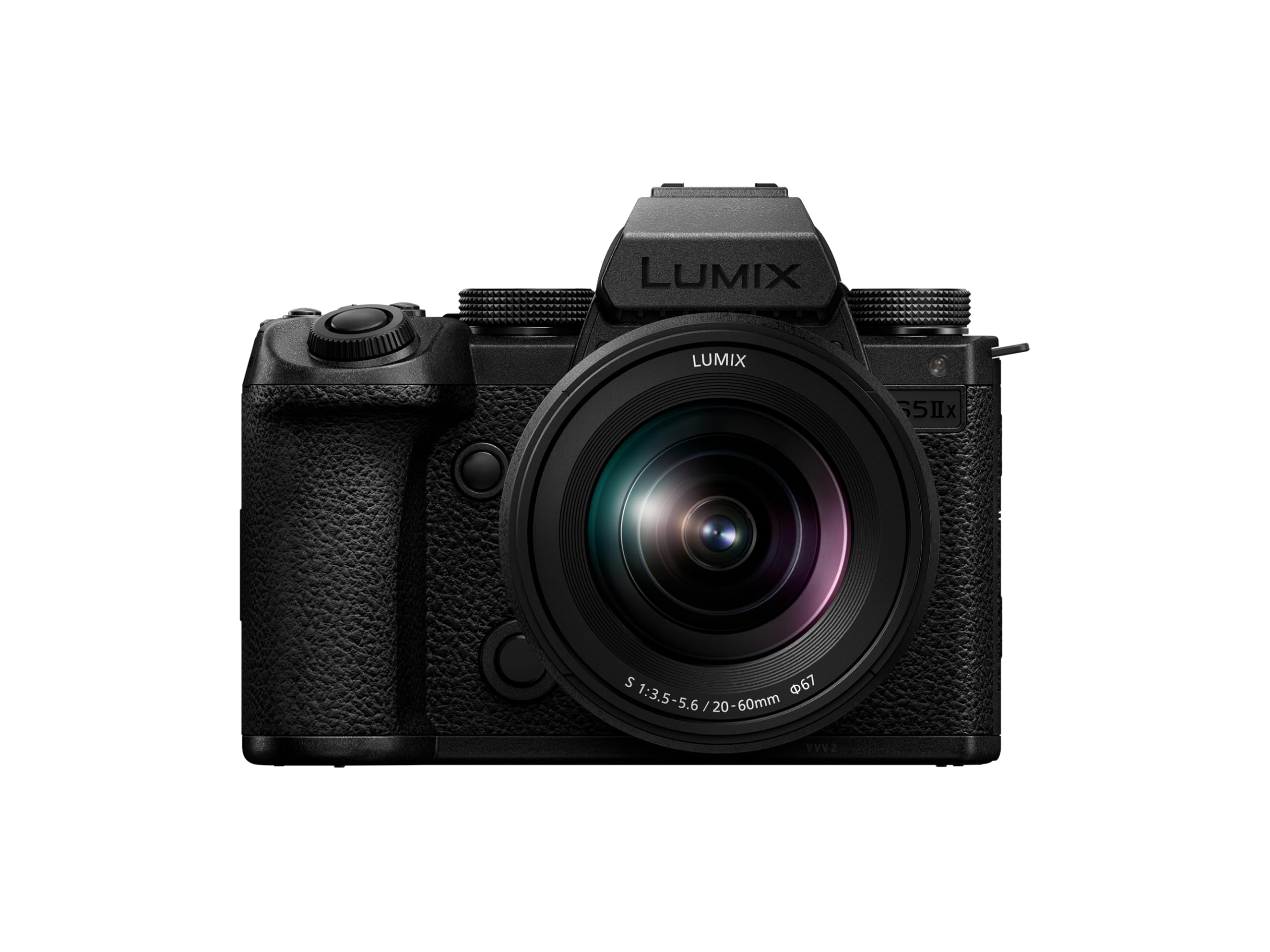
The Panasonic LUMIX S5II is the first S-series body to feature phase-detection autofocus, solving the primary criticism of Panasonic’s previous contrast-only system. The 779-point phase-detect array provides reliable eye tracking for headshot work, locking onto subjects even in challenging side lighting.
The 24.2MP full-frame sensor delivers 14+ stops of dynamic range with a natural, neutral color profile that grades well in post. The camera features Active I.S., which smooths out walking shots if you shoot environmental headshots on location. The built-in fan and heat-dissipation system allow unlimited 4:2:2 10-bit recording, making this the best option for photographers who also shoot video interviews or acting reels.
V-Log capture provides maximum flexibility for color grading, and the REAL TIME LUT feature lets you apply custom looks in-camera for immediate delivery. The battery life is the weakest point in an otherwise strong package—expect to swap batteries during a long headshot session. The Leica L-mount ecosystem includes excellent portrait lenses like the 85mm f/1.8.
Why it’s great
- Phase-detect AF finally provides reliable eye tracking
- Unlimited video recording with no overheating
- Active I.S. smooths handheld environmental headshots
Good to know
- Battery life is below average; carry multiple spares
- Body is heavier than some full-frame rivals
- L-mount lens selection is smaller than Sony or Canon
9. Fujifilm X100VI

The Fujifilm X100VI is not a dedicated headshot camera, but its 40.2MP X-Trans sensor and 23mm f/2 lens (35mm equivalent) make it an exceptional tool for environmental portraits and candid headshots. The fixed focal length forces you to move and compose intentionally, which many photographers find improves their portrait work.
The 5-axis IBIS provides up to 6 stops of shake correction, allowing you to shoot at 1/15s and keep ISO low for clean skin textures. Fujifilm’s film simulations—especially the new REALA ACE and classic PROVIA—produce beautiful out-of-camera JPEGs with warm, natural skin tones that require minimal editing.
The hybrid viewfinder allows you to switch between optical and electronic framing, which is useful for composing environmental headshots. However, the 23mm focal length introduces some perspective distortion when shooting tightly—subjects’ noses can appear slightly larger, so crop or back up for more flattering proportions.
Why it’s great
- Class-leading out-of-camera JPEG colors for fast delivery
- Compact body makes it ideal for walkaround portrait sessions
- IBIS enables sharp handheld shots at slow shutter speeds
Good to know
- 23mm lens causes mild distortion for tight headshots
- Fixed lens limits versatility for different looks
- Autofocus can be inconsistent in low contrast
10. Leica Q2

The Leica Q2 is an aspirational tool for headshot photographers who value build quality and image character above all else. Its 47MP full-frame sensor delivers exceptional detail, and the fixed Summilux 28mm f/1.7 ASPH lens is sharp wide open with a distinct micro-contrast that Leica users describe as having “three-dimensional” depth.
The 28mm focal length is wider than the traditional portrait range, so the Q2 is best used for environmental headshots that include context—a writer in a library, a CEO in an office. The f/1.7 aperture creates a soft fall-off to the background while keeping the subject sharp, but you must be careful with subject placement to avoid distortion.
Build quality is exceptional with full weather sealing, and the haptic feedback from the aperture ring and shutter dial is satisfying. The digital zoom (1.4x and 2x) allows you to simulate 35mm and 50mm crops, and the 47MP sensor retains enough resolution even after cropping for tight headshots. The price point places it firmly in the premium tier, but the image quality is unique.
Why it’s great
- Summilux lens produces unique micro-contrast and character
- 47MP sensor allows significant cropping while maintaining detail
- Exceptional build quality with weather sealing
Good to know
- 28mm lens requires careful distance management for headshots
- Fixed lens limits versatility compared to interchangeable systems
- Premium price point is significant compared to alternatives
11. Panasonic LUMIX ZS99

The Panasonic ZS99 is not designed for professional headshot work, and it should not be your primary studio camera. However, its 30x optical zoom (24-720mm equivalent) and pocketable size make it a useful companion for scouting locations or capturing reference headshots when you cannot bring your full gear.
The 20.3MP 1/2.3-inch sensor has significantly less dynamic range and low-light performance than any full-frame or APS-C camera on this list. Image quality in controlled lighting with sufficient strobe power can be acceptable for small web headshots, but the small sensor produces more noise in shadows and less separation between subject and background.
What the ZS99 offers is extreme versatility in a tiny package. The tiltable touchscreen helps with framing, and the 4K video is adequate for video headshots. If your workflow absolutely demands a camera that fits in a jacket pocket and still reaches 720mm for compressed background looks, this fills that niche—just understand the image quality limitations.
Why it’s great
- Pocketable size ideal for scouting and travel convenience
- 30x zoom range provides incredible framing flexibility
- Tiltable touchscreen aids composition from various angles
Good to know
- Small sensor limits image quality and dynamic range
- Poor low-light performance compared to larger cameras
- Not a replacement for a dedicated headshot system
FAQ
What is the ideal focal length for headshot photography?
Is a full-frame camera necessary for professional headshots?
Why does eye-detect autofocus matter more for headshots than other genres?
Can I use a kit zoom lens for headshots?
Final Thoughts: The Verdict
For most users, the camera for headshots winner is the Canon EOS R8 because it combines a lightweight full-frame body with the most reliable eye-detect autofocus system, making it easy to capture tack-sharp images at wide apertures session after session. If you want maximum resolution for cropping and large prints, grab the Nikon Z 7II. And for a hybrid studio/video workflow with unlimited recording and film simulations that deliver client-ready JPEGs, nothing beats the Fujifilm X-H2S.

Mo Maruf
I created WellFizz to bridge the gap between vague wellness advice and actionable solutions. My mission is simple: to decode the research and give you practical tools you can actually use.
Beyond the data, I am a passionate traveler. I believe that stepping away from the screen to explore new environments is essential for mental clarity and physical vitality.