Our readers keep the lights on and my smoothie glass nicely filled. As an Amazon Associate, I earn from qualifying purchases.
The search for high-fidelity sound without a four-figure receipt usually ends in disappointment or compromise. Wired headphones that claim “studio-grade” often deliver bloated bass or brittle treble, forcing you to choose between accuracy and musicality. The real challenge is finding a pair that resolves micro-details, presents a convincing soundstage, and stays comfortable for hours—all while staying within a budget that doesn’t require a second mortgage.
I’m Mohammad Maruf — the founder and writer behind WellFizz. I’ve spent thousands of hours analyzing driver topologies, frequency response graphs, and impedance curves to separate real performance from marketing fluff in this crowded market.
Whether you are building your first critical listening rig or upgrading from a gaming headset, the goal is the same: a transparent, engaging window into your music. The following guide cuts through the noise to help you find the affordable audiophile headphones that deliver genuine value without the snake oil.
How To Choose The Best Affordable Audiophile Headphones
Jumping into the world of high-fidelity headphones for the first time can feel overwhelming. The key is to focus on a few core specifications that map directly to your listening habits and gear.
Open-Back vs. Closed-Back: The First Fork in the Road
This is the single most important decision. Open-back headphones (like the Audio-Technica ATH-R50X or HIFIMAN Edition XS) use a vented earcup design that allows air and sound to pass through. The result is a natural, spacious soundstage that mimics the acoustics of a live room. The trade-off is zero noise isolation — sound leaks out, and ambient noise leaks in. Closed-back models (Shure SRH440A, beyerdynamic DT 770 Pro X) isolate you from the outside world and keep your audio private, making them ideal for recording, commuting, or noisy environments. Their soundstage is narrower, but bass often feels punchier and more immediate.
Driver Technology: Dynamic vs. Planar Magnetic
Dynamic drivers use a voice coil and a magnet to move a paper, plastic, or composite diaphragm — the same principle found in most speakers. They are efficient, lightweight, and affordable, making them the standard for budget high-fidelity models. Planar magnetic drivers (HIFIMAN Edition XS) sandwich a thin, conductive diaphragm between two arrays of magnets. This design offers lightning-fast transient response, extremely low distortion, and a wider soundstage at the cost of needing more power. If you plan to use a dedicated headphone amplifier, planars reward you with detail retrieval that dynamics simply cannot match at the same price point.
Impedance and Sensitivity: The Amp Question
Impedance (measured in ohms) and sensitivity (measured in dB/mW) together determine how loud a headphone will play from a given source. Lower-impedance models (32–48 ohms) like the FiiO FT1 or Audio-Technica ATH-M50x are designed to run well from a laptop, phone, or audio interface without an external amplifier. Higher-impedance models often require a dedicated headphone amplifier to reach their full potential. Beginners should prioritize low-impedance, high-sensitivity models to avoid the added expense and complexity of separate amplification.
Comfort and Build Quality: The Long Game
Audiophile headphones are typically worn for hours at a time. Prioritise models with replaceable earpads, detachable cables, and metal headband yokes. Velour padding (like on the Beyerdynamic DT 990 Pro X) is breathable for long sessions, while protein leather (Audio-Technica ATH-M50x) offers better passive isolation. A detachable cable with a standard connector (3.5mm or mini-XLR) extends the life of the headphones indefinitely, as the cable is the first component to fail.
Frequency Response: The Target Curve
A “neutral” or “flat” frequency response means the headphone reproduces the recording without artificially boosting or cutting any frequency range. The Shure SRH440A and Sennheiser HD 490 PRO are designed to be reference-grade monitors, revealing the true balance of a mix. Other models, like the FiiO FT1 and HIFIMAN Edition XS, lean slightly warm (elevated bass and lower mids) for a more fun, immersive listen. There is no right or wrong — your musical preferences and the genres you listen to most should guide your choice.
Quick Comparison
On smaller screens, swipe sideways to see the full table.
| Model | Category | Best For | Key Spec | Amazon |
|---|---|---|---|---|
| FiiO FT1 | Over-Ear Closed | Rich, warm listening with wood cups | 60mm dynamic driver | Amazon |
| HIFIMAN Edition XS | Over-Ear Open | Wide planar soundstage and detail | Planar magnetic driver | Amazon |
| Sennheiser IE 200 | In-Ear | Portable wired high-fidelity IEMs | 7mm TrueResponse driver | Amazon |
| beyerdynamic DT 770 Pro X | Over-Ear Closed | Studio monitoring and isolation | STELLAR.45 driver, 48 Ohm | Amazon |
| beyerdynamic DT 990 Pro X | Over-Ear Open | Spacious soundstage for mixing | STELLAR.45 driver, 48 Ohm | Amazon |
| Shure SRH440A | Over-Ear Closed | Accurate studio monitoring on a budget | Dynamic driver, 40 Ohm | Amazon |
| Audio-Technica ATH-R50X | Over-Ear Open | Lightweight open-back reference | Dynamic driver, 207g weight | Amazon |
| Audio-Technica ATH-M50x + Case | Over-Ear Closed | Iconic studio monitor with hard case | 45mm dynamic driver | Amazon |
| Sennheiser HD 490 PRO | Over-Ear Open | Uncolored precision for mixing | Dynamic driver, 5-36kHz | Amazon |
In‑Depth Reviews
1. FiiO FT1 32Ω Large Dynamic Driver Headphones

The FiiO FT1 has created a genuine stir in the budget high-fidelity community, and for good reason. Its 60mm dynamic driver uses a nano wood fibre composite diaphragm that is both lightweight and rigid, producing a warm, smooth, and highly immersive sound signature. The bass is deep and textured without becoming muddy, the mids are rich and present, and the treble rolls off gently to avoid listener fatigue.
The real surprise here is the build quality. The solid wood cups give the FT1 a premium aesthetic usually reserved for headphones costing two to three times as much. At 32 ohms impedance, it is extremely easy to drive from a laptop or dongle DAC, making it an ideal entry point for listeners who don’t own dedicated amplification. The dual cable system — with both 3.5mm single-ended and 4.4mm balanced options — is a thoughtful inclusion for future-proofing.
No headphone is perfect, and the FT1 exhibits average passive noise isolation and stock cables that transmit some microphonic noise. However, its musical, non-fatiguing tuning and excellent comfort make it the strongest all-rounder in this lineup for pure listening enjoyment.
Why it’s great
- Exceptional bass extension and texture for a closed-back at this price point.
- Beautiful solid wood cups with a premium, durable feel.
- Easy to drive with a balanced and warm tuning that works across genres.
Good to know
- Stock cable is microphonic and could be better quality.
- Average passive noise isolation compared to studio monitors.
2. FiiO FT1 32Ω (Runner-Up)
The FiiO FT1’s wood fibre composite diaphragm, sourced from 90-year-old Northern European spruce, provides a tactile, natural sound that many metal-dome drivers miss. The W-shaped independent suspension design increases effective diaphragm area by 25.8%, giving the FT1 a sense of dynamic impact normally reserved for larger over-ears.
The ball slide rail headband offers an 11-notch adjustment range, ensuring a precise fit for various head sizes. The suede-covered contact area stays breathable and comfortable during multi-hour listening sessions. The included oxygen-free copper silver-plated cables, while a bit stiff, offer a clean signal path and generous 1.5-meter length.
If you listen primarily to electronic, ambient, or cinematic music and value a non-fatiguing, rich presentation over clinical neutrality, this is the headphone to beat in its tier.
Why it’s great
- W-shaped suspension design for improved low-level detail.
- Lightweight construction despite wood cups.
- Comes with both 3.5mm and 4.4mm cables.
Good to know
- Warm tuning may not suit analytical listeners seeking absolute flatness.
- Cable microphonics are noticeable during movement.
3. HIFIMAN Edition XS Full-Size Over-Ear Open-Back

HIFIMAN’s Edition XS brings planar magnetic performance to a price point once dominated by dynamic driver models. The stealth magnet design eliminates wave diffraction turbulence, resulting in a remarkably transparent and low-distortion sound. The NEO supernano diaphragm is 75% thinner than previous generations, which translates to exceptionally fast transient response and micro-detail retrieval.
The soundstage here is genuinely wide and holographic for the money, putting you inside the recording rather than in front of it. Bass extension is full without being overbearing, and the midrange is articulate. The main downside is the headband design — it fits larger heads well but can slip on smaller ones, and the clamp force is relatively low, which may affect fit during active listening.
These headphones hunger for power. They sound good from a laptop but truly open up with a dedicated amplifier of at least 400mW per channel. If you already have a decent DAC/amp stack, the Edition XS offers resolution rivaling models that cost three times as much.
Why it’s great
- Extraordinary soundstage width and imaging for the price.
- Low distortion planar bass with excellent extension.
- Detail retrieval that competes with + headphones.
Good to know
- Requires a powerful amplifier to perform optimally.
- Headband fit can be loose on smaller heads.
4. Sennheiser IE 200 In-Ear Audiophile Headphones

The Sennheiser IE 200 proves that high-fidelity audio in a portable form factor does not require a massive budget. Its 7mm TrueResponse transducer delivers a neutral, detailed sound with controlled bass, articulate mids, and smooth treble that avoids sibilance. The dual bass-tuning system is a clever touch — you can shift the ear tips along the nozzle to toggle between a tighter, more analytical bass and a fuller, warmer presentation.
Comfort is exceptional for long sessions, with a lightweight ergonomic shell and multiple silicone and memory foam tip options. The MMCX connector standard means you can easily upgrade the stock braided cable to a balanced or higher-quality aftermarket option. The IE 200 plays well with any source, from phone dongles to dedicated DAPs.
The stock cable is not the most durable, and some users report that the MMCX connection feels delicate. The neutral tuning out of the box may sound thin to listeners accustomed to consumer V-shaped sound signatures. However, with proper tip selection and source pairing, the IE 200 offers incredible resolution and soundstage for its price.
Why it’s great
- Dual bass-tuning system offers flexibility for different tastes.
- Very comfortable and lightweight for long sessions.
- Replaceable MMCX cable for future upgrades.
Good to know
- Stock cable feels thin and may not last as long as the IEMs.
- Neutral tuning may sound uninspiring without EQ.
5. beyerdynamic DT 770 Pro X 48 Ohm Closed-Back

The beyerdynamic DT 770 Pro X upgrades the legendary DT 770 formula with the new STELLAR.45 driver, which delivers an even more detailed and balanced sound while retaining the familiar V-shaped energy that makes the 770 a studio staple. The 48-ohm impedance makes this version easier to drive than the classic 250-ohm variant, allowing it to perform well directly from audio interfaces and even some laptops.
Comfort is as good as it gets for closed-back studio headphones. The soft velour earpads and ergonomic headband distribute weight evenly for fatigue-free sessions that can stretch into eight hours. Passive noise isolation is excellent, rivaling entry-level active noise cancellation without introducing a pressure bubble. The detachable cable with a locking mini-XLR connector is a major improvement over the original’s fixed cable, dramatically increasing longevity.
The treble is still elevated — a characteristic of the DT 770 sound — which makes it slightly fatiguing for some listeners at high volumes. The soundstage is narrower than open-back alternatives like the DT 990 Pro X. But for critical recording, monitoring, and immersive listening that requires isolation, the DT 770 Pro X is a near-perfect tool.
Why it’s great
- Excellent passive noise isolation for a closed-back design.
- Detachable mini-XLR cable adds long-term durability.
- Comfortable velour pads for extended studio work.
Good to know
- Elevated treble can be fatiguing for sensitive listeners.
- Soundstage is narrower than open-back alternatives.
6. beyerdynamic DT 990 Pro X 48 Ohm Open-Back

The DT 990 Pro X is the open-back sibling of the 770 Pro X, and it leverages the same STELLAR.45 driver to deliver a wide, airy soundstage with precise spatial imaging. This is a headphone designed for critical listening and detailed mix editing — every reverb tail, panning nuance, and subtle background artifact is laid bare. The 5–40,000 Hz frequency response ensures extension far beyond the audible range, providing headroom for digital audio workstations.
The open-back design offers zero isolation, which is a feature, not a flaw — you remain aware of your room’s acoustics, helping you make mix decisions that translate better to real-world playback environments. The circumaural velour pads are plush and breathable, and the 0.64 lb weight keeps them comfortable for long studio sessions. Like its closed-back counterpart, the DT 990 Pro X uses a detachable mini-XLR cable for reliability.
The treble peak, while reduced compared to the classic DT 990 Pro, is still present and may be perceived as bright by listeners seeking a warm, laid-back sound. Bass extension is good but not as impactful as the closed-back DT 770 Pro X. If your primary use case is mixing, gaming that benefits from positional audio, or analytical listening with a spacious feel, this is a standout performer.
Why it’s great
- Wide, natural soundstage with excellent instrument separation.
- Comfortable, breathable velour pads for long sessions.
- All parts are serviceable for long-term repairability.
Good to know
- Treble peak may be bright for some listeners.
- No isolation — not suitable for noisy environments.
7. Shure SRH440A Over-Ear Studio Headphones

The Shure SRH440A is a workhorse closed-back monitor that prioritises accuracy over entertainment. Its balanced, detailed sound signature reproduces the source material faithfully, making it a reliable tool for tracking, mixing, and critical listening. The closed-back design provides solid passive isolation, reducing bleed into microphones during recording sessions.
The updated design improved ergonomics with a lighter frame and cushioned earpads that accommodate glasses wearers comfortably. The collapsible design folds flat for storage and travel, and the detachable locking cable prevents accidental disconnection during use. The 40-ohm impedance means it will play loudly from any audio interface or laptop without a dedicated headphone amp.
The sub-bass rolls off compared to bassier alternatives, and the treble is not the most extended or airy. The noise isolation, while good, is not as effective as the Beyerdynamic DT 770 Pro X. For the first-time studio buyer or budget-conscious engineer who needs a neutral reference, the SRH440A is a solid, no-frills choice.
Why it’s great
- Accurate, balanced frequency response for critical listening.
- Collapsible design for portability and storage.
- Detachable locking cable improves reliability.
Good to know
- Sub-bass roll-off may disappoint bass enthusiasts.
- Noise isolation is decent but not class-leading.
8. Audio-Technica ATH-R50X Open-Back
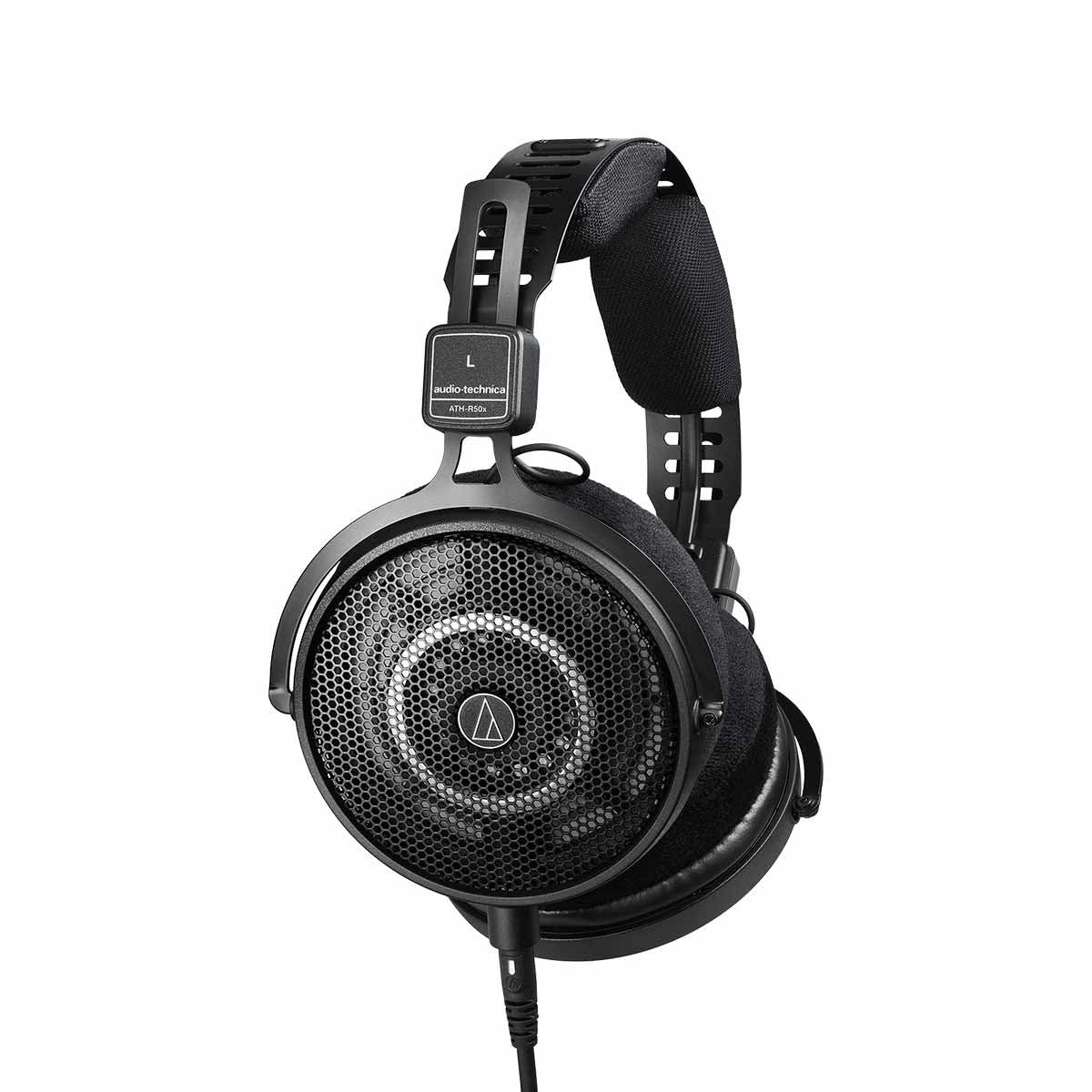
Weighing only 207 grams, the Audio-Technica ATH-R50X is the lightest open-back reference headphone in this lineup. The fully open-back design allows unrestricted airflow, eliminating internal resonance and delivering a quick transient response with a wide, realistic soundstage. This makes it an excellent tool for tracking and mixing where extended wear and natural sound are priorities.
The ATH-R50X features a new headband design that distributes weight evenly without creating hot spots. Detachable cables in two lengths (3m and 1.2m) provide flexibility for studio rack setups or portable use, and the twist-lock connector on the earcup ensures a secure connection. The build uses a plastic enclosure to keep weight down, but feels sturdy enough for daily studio use.
The sound signature leans analytical and slightly bright with tight, punchy bass and clear mids. The sub-bass has some roll-off, making it less ideal for bass-heavy monitoring. The plastic construction may not survive a heavy drop as well as metal-frame competitors. For the budget-conscious producer who values comfort and openness above all, the ATH-R50X punches above its price.
Why it’s great
- Extremely lightweight for fatigue-free long sessions.
- Open-back gives a natural, spacious soundstage.
- Dual detachable cables with twist-lock connection.
Good to know
- Sub-bass roll-off limits bass-heavy monitoring.
- Plastic build is lightweight but not rugged.
9. Audio-Technica ATH-M50x + Slappa Hard Case

The Audio-Technica ATH-M50x needs little introduction — it is arguably the most popular entry-level studio monitor headphone in history. This bundle includes a Slappa full-sized hard case, making it even more appealing for mobile producers and travelers. The 45mm large-aperture drivers deliver a slightly V-shaped sound signature with punchy bass, clear mids, and extended highs that flatter a wide range of material.
The collapsible design, detachable cable system (three cables included), and swiveling earcups make the M50x one of the most portable options in the lineup. The closed-back design provides solid isolation, though some sound does leak at higher volumes. The earpads are comfortable for most users but can cause slight pressure after four to five hours of continuous wear.
While the M50x is not the most neutral option (bass can be a bit boosted, and the upper mids have a subtle peak), its versatility for recording, tracking, and casual listening is unmatched. The hard case in this bundle protects the headphones from the rigors of travel and daily use, adding significant long-term value.
Why it’s great
- Versatile V-shaped sound that works for production and enjoyment.
- Highly portable with collapsible design and included hard case.
- Detachable cables with multiple connector options.
Good to know
- Bass emphasis and upper-mid peak deviate from absolute neutrality.
- Earpads may cause slight pressure after 4+ hours.
10. Sennheiser HD 490 PRO Open-Back

The Sennheiser HD 490 PRO is a purpose-built professional mixing tool that sets a new benchmark for neutrality in its segment. Its frequency response covers 5 to 36,000 Hz with minimal coloration, and the innovative low-frequency cylinder system delivers a full, accurate, and clearly defined low end without bloat. The open-frame architecture reduces total harmonic distortion to vanishingly low levels, making it exceptionally revealing.
Sustainability-minded design choices include washable, replaceable earpads and FSC-certified packaging. The headphone comes with two distinct sets of ear pads — one optimized for producing, one for mixing — each influencing the soundstage and frequency balance in subtle but meaningful ways. The dual ear jacks allow flexible cable routing, and the patented cable coil structure blocks structure-borne noise effectively.
The HD 490 PRO is the most expensive option in this guide, but its transparency and detail retrieval make it a genuine value for serious mixing engineers. It is also very easy to drive from a laptop or audio interface. The proprietary pad attachment system means third-party replacement pads may not be available, and the sound is intentionally uncolored, which may not suit listeners seeking euphonic warmth for pure enjoyment.
Why it’s great
- Extremely neutral and revealing for mix-critical work.
- Dual ear pad sets adapt the sound for producing vs. mixing.
- Lightweight, comfortable, and easy to drive from any source.
Good to know
- Proprietary pads limit third-party replacement options.
- Uncolored tuning may sound too dry for casual listening.
FAQ
Do affordable audiophile headphones need an external amplifier?
What is the difference between open-back and closed-back for audio fidelity?
How much should I spend on my first pair of audiophile headphones?
Can I use these headphones for gaming?
Final Thoughts: The Verdict
For most users, the affordable audiophile headphones winner is the FiiO FT1 because it delivers a premium, musical sound with 60mm drivers, solid wood cups, and effortless drivability in a package that rivals headphones costing twice as much. If you want the widest soundstage and best raw detail retrieval, grab the HIFIMAN Edition XS, especially if you have a decent headphone amplifier to drive it. And for portable high-fidelity on the go, nothing beats the Sennheiser IE 200 for its comfortable, neutral-tuned in-ear design that reveals the true potential of your music library.

Mo Maruf
I created WellFizz to bridge the gap between vague wellness advice and actionable solutions. My mission is simple: to decode the research and give you practical tools you can actually use.
Beyond the data, I am a passionate traveler. I believe that stepping away from the screen to explore new environments is essential for mental clarity and physical vitality.