Our readers keep the lights on and my smoothie glass nicely filled. As an Amazon Associate, I earn from qualifying purchases.
The quest for high-fidelity sound on a tight budget usually ends in disappointment—boomy bass, recessed mids, or sizzling treble that fatigues after one track. But there is a pocket of the headphone market where engineering discipline meets genuine musicality, and it doesn’t require a four-figure sum to access. The trick lies in knowing which compromises are acceptable and which destroy the listening experience.
I’m Mohammad Maruf — the founder and writer behind WellFizz. I’ve spent years analyzing driver materials, impedance curves, and damping structures to separate genuine value from marketing hype in the headphone market.
Whether you need closed-back isolation for late-night mixing or open-back spaciousness for critical listening, this guide distills thousands of data points into a clear path toward the right budget audiophile headphones for your specific setup and taste.
How To Choose The Best Budget Audiophile Headphones
Picking the right pair means understanding where your money actually goes. At budget audiophile price points, the most meaningful upgrades are found in driver consistency, tuning neutrality, and build longevity—not flashy features like active noise cancellation or wireless codecs.
Open-Back vs. Closed-Back
Open-back headphones let air pass through the ear cups, creating a wide, natural soundstage that mimics listening to speakers in a room. This design delivers superior imaging and depth at the same price compared to closed-back models, but leaks sound and offers zero isolation. Closed-back headphones contain the sound, making them suitable for recording, commuting, or shared spaces, but they often have a smaller perceived soundstage and can introduce internal reflections that color the sound. Ask yourself whether you need privacy or pure spatial accuracy.
Impedance and Sensitivity
High-impedance headphones (150Ω or above) require more voltage to reach a given volume level, often demanding a dedicated headphone amplifier. Low-impedance headphones (32Ω or less) are easily driven by laptops, phones, and basic audio interfaces. Sensitivity, measured in dB/mW, tells you how loud the headphones get per milliwatt of power. A pair with low sensitivity and low impedance can still be hard to drive if it needs current. If you plan to use a phone or laptop without an external DAC/amp, stick to 32Ω models with sensitivity above 100 dB/mW.
Driver Type and Materials
Dynamic drivers, found in most budget models, use a voice coil and magnet to move a diaphragm. Their sound character depends heavily on diaphragm material—beryllium-coated, bio-cellulose, or nano wood-fiber composites improve stiffness and reduce breakup distortion. Planar magnetic drivers use a thin diaphragm suspended between two magnet arrays, offering faster transient response, lower distortion at high volumes, and a different bass articulation. Planar models historically cost more, but several recent entries under have made them accessible.
Detachable Cables and Earpad Replaceability
A detachable cable is non-negotiable at this tier. The cable is the most fragile part of any headphone, and the ability to replace a worn or broken cable extends the life of the headphones indefinitely. Similarly, earpads that are available as aftermarket replacements (Brainwavz, Dekoni, etc.) allow you to refresh comfort and even tune the sound signature. Models with proprietary pad sizes or permanently attached cables become disposable when those parts wear out.
Quick Comparison
On smaller screens, swipe sideways to see the full table.
| Model | Category | Best For | Key Spec | Amazon |
|---|---|---|---|---|
| FiiO FT1 | Premium | Reference listening with deep bass | 60mm wood-fiber dynamic driver | Amazon |
| HIFIMAN Edition XS | Premium | Wide planar soundstage at entry price | Planar magnetic stealth magnet | Amazon |
| Sennheiser IE 200 | Mid-Range | Neutral IEM with dual bass tuning | 7mm TrueResponse dynamic driver | Amazon |
| Audio-Technica ATH-M50x | Premium | Professional monitoring with robust build | 45mm dynamic driver with CCAW | Amazon |
| Shure SRH840A | Mid-Range | Natural tonality in a closed-back | Controlled bass, detailed mids | Amazon |
| Audio-Technica ATH-M40x | Mid-Range | Neutral studio reference under | 40mm dynamic driver, 90° swivel | Amazon |
| Shure SRH440A | Budget | Accurate monitoring on a tight budget | Balanced frequency response | Amazon |
| Sennheiser IE 100 PRO | Budget | Reliable stage IEM for monitoring | 10mm dynamic broadband transducer | Amazon |
| Fosi Audio IM4 | Budget | Open-back IEM with spacious soundstage | 10mm beryllium-coated dynamic driver | Amazon |
In‑Depth Reviews
1. FiiO FT1

The FiiO FT1 punches far above its price tier by pairing a massive 60mm nano wood-fiber dynamic driver with real solid-wood ear cups. The W-shaped suspension design increases the effective vibrating area by 25.8% compared to conventional 60mm drivers, storing more acoustic energy for bass that extends deep without bloat and mids that feel alive rather than mechanical. The 32Ω impedance and 96 dB/mW sensitivity mean most laptops and dongle DACs can drive it to satisfying levels without a dedicated desktop amplifier.
The included accessories set a new standard for the segment: a 3.5mm single-ended cable, a 4.4mm balanced cable, both using 392-strand oxygen-free copper with silver plating, plus a 3.5mm-to-6.35mm adapter and a storage bag. The ball slide rail headband adjusts across 11 notches and is covered in suede for a breachable, secure fit. The closed-back design delivers better isolation than most open-back competitors, making the FT1 viable for home listening and light monitoring alike.
Some users report microphonics in the stock cables when rubbing against clothing, and the wood cups, while beautiful, require occasional care to prevent scratches. A few early units had fragile screws that could loosen if over-torqued. Still, for warm-tilted sound with bass authority that rivals headphones triple the price, the FT1 is the most well-rounded entry-level audiophile headphone currently available.
Why it’s great
- Deep, textured bass with clean mid-bass separation
- Premium wood cups and two high-quality detachable cables included
- Easy to drive from standard portable sources
Good to know
- Stock cables can be microphonic when moving
- Wood cups require gentle handling to avoid cosmetic damage
- Clamp force is moderate but not adjustable per side
2. HIFIMAN Edition XS

The Edition XS brings planar magnetic performance to a segment dominated by dynamic drivers, using HIFIMAN’s Stealth Magnet design that allows sound waves to pass through without diffraction interference. The result is an open-back soundstage that feels genuinely speaker-like, with instruments occupying well-defined positions in three-dimensional space. The NEO supernano diaphragm, 75% thinner than previous generations, delivers fast transient response that makes percussion attacks crisp and vocal micro-details audible without harshness.
Bass extension is excellent for an open-back planar, reaching below 20 Hz with good control, though it lacks the visceral punch of a closed-back dynamic like the FT1. The mids are transparent and slightly forward, making vocals and lead instruments stand out naturally. Treble has a subtle brightness that reveals recording flaws but rarely becomes fatiguing, especially with a gentle 4 kHz EQ shelf to tame occasional peakiness. The 18Ω impedance and 92 dB/mW sensitivity make it harder to drive than typical dynamic headphones—a decent USB DAC/amp like a Fiio KA13 or iFi Go Link improves dynamics noticeably.
Comfort is the primary trade-off. The large earcups and low clamping force feel spacious, but the headband is oversized for smaller heads, causing the headphones to slide forward when leaning back. Many users fix this with Dekoni Nuggets or a third-party suspension strap. Build quality is adequate, though the plastic yoke assembly and thin cable feel less premium than mid-range alternatives. For listeners who prioritize imaging and airiness over convenience, the Edition XS offers soundstage width that rivals models three times its price.
Why it’s great
- Exceptional soundstage depth and instrument separation for the price
- Planar bass extends low with minimal distortion
- Stealth magnet design reduces phase smearing
Good to know
- Large headband doesn’t fit smaller heads securely
- Requires a dedicated amplifier for best performance
- Plastic build feels less robust than wood or metal alternatives
3. Sennheiser IE 200

Sennheiser’s IE 200 distills the company’s professional IEM engineering into a consumer-friendly package built around the same 7mm TrueResponse transducer used in higher-end models. The sound signature is deliberately neutral, with flat midrange, smooth treble that avoids sibilance, and controlled bass that extends well without dominating. The dual-position ear tip mounting system is a clever engineering touch: full insertion yields tighter, more analytical bass, while partial insertion adds warmth and body, effectively giving you two tonalities from one driver.
The ergonomic fit is the best in its class. The over-ear cables use flexible pre-formed earhooks that stay put without feeling tight, and the small shell size fits ears of all shapes comfortably for hours. The braided MMCX cable reduces handling noise compared to standard rubber cables, though some users report the MMCX connection loosening over time—an issue that can be mitigated with a dab of repositionable adhesive or aftermarket cables from brands like Tripowin.
The IE 200’s main limitation is that its full potential requires high-quality source files and a clean DAC. On a noisy laptop jack, the sound can feel compressed and lifeless. The included silicone and memory foam tips are decent, but aftermarket Final Audio Type E or SpinFit tips improve seal and comfort noticeably. For listeners who want a neutral IEM that scales with upstream upgrades, the IE 200 is a smart foundation that won’t become obsolete as your gear improves.
Why it’s great
- Neutral, detailed sound with bass tuning options
- Extremely comfortable fit for long listening sessions
- Detachable MMCX cable allows aftermarket upgrades
Good to know
- MMCX connection may loosen over time with frequent cable swaps
- Requires a quality source for the sound to open up
- Stock cable is tangly and could be more durable
4. Audio-Technica ATH-M50x

The ATH-M50x is a well-established benchmark in professional monitoring, but its value proposition in the consumer audiophile segment depends on whether you prioritize its signature sound. The 45mm dynamic driver with copper-clad aluminum wire voice coils delivers exceptional clarity with punchy, accurate bass that extends deeply without bleeding into the lower midrange. The treble is extended and detailed, revealing cymbal textures and breath details that cheaper headphones smear—though a small sibilance peak around 8 kHz can make “S” and “T” sounds harsh on poorly mastered tracks.
The closed-back design isolates well, making the M50x suitable for recording, tracking, and listening in noisy environments. The 90-degree swiveling earcups fold flat for storage, and the three included cables (1.2m straight, 3m straight, 1.2m coiled) cover everything from portable use to studio rack setups. Build quality is sturdy, with a metal-reinforced headband and tough plastic earcup housings that survive drops that would shatter cheaper designs.
The stock earpads are the weakest link—they become uncomfortable after about 90 minutes due to moderate clamping force and shallow pad depth. Aftermarket Brainwavz hybrid or velour pads dramatically improve comfort and slightly widen the soundstage, but they also alter the frequency response by reducing mid-bass emphasis. The M50x is a polarizing headphone: praise for its excitement and detail in rock, EDM, and hip-hop, criticized for its somewhat narrow soundstage and non-neutral tuning. For listeners who want a fun, detailed closed-back that works with or without an amp, it remains a solid choice.
Why it’s great
- Excellent detail retrieval and punchy, extended bass
- Versatile with three detachable cable options
- Robust build that withstands daily portable abuse
Good to know
- Stock earpads become uncomfortable after 1–2 hours
- Narrow soundstage compared to open-back alternatives
- Slight sibilance peak can fatigue sensitive ears
5. Shure SRH840A

The Shure SRH840A delivers a natural, fatigue-free tonality that stands out in a closed-back segment often plagued by boosted bass and recessed mids. The frequency response is tuned to be reference-neutral: controlled low end that doesn’t overpower, articulate and slightly warm mids that make vocals sound realistic rather than nasally, and smooth treble that extends well without harshness. This tuning makes the SRH840A an excellent tool for critical mixing and long listening sessions where ear fatigue is a real concern.
Comfort is a standout feature. The wide padded headband distributes weight evenly, and the plush ear cushions are deep enough to accommodate glasses without breaking seal. The collapsible design folds into a compact shape for a carrying case, though the case itself is soft rather than rigid, offering limited drop protection. The detachable cable uses a locking mechanism that clicks securely into the earcup, preventing accidental disconnection during use—a small detail that speaks to Shure’s professional heritage.
The cable itself is the SRH840A’s weakest point. While durable in feel, it’s non-braided and generates noticeable microphonics when rubbing against clothing. Replacement cables are available but use a proprietary connector that limits aftermarket options. Some users also note that the headband padding compresses significantly after a year of daily use, requiring a DIY foam insert to restore comfort. For listeners who prioritize accurate tonality and vocal clarity over bass impact, the SRH840A is a compelling closed-back option.
Why it’s great
- Neutral, natural tonality with excellent vocal clarity
- Comfortable for extended wear, even with glasses
- Secure locking cable prevents accidental disconnects
Good to know
- Proprietary cable connector limits aftermarket replacement options
- Cable transmits handling noise (microphonics) during use
- Headband padding may compress within a year of daily use
6. Audio-Technica ATH-M40x

The ATH-M40x is often overshadowed by its more famous sibling, the M50x, but many audio engineers consider it the more neutral and accurate of the two. The 40mm driver with rare earth magnets produces a flatter frequency response with less mid-bass emphasis, making it more suitable for monitoring and critical mixing. The treble is detailed but not aggressive, and the midrange is open enough to judge vocal levels and instrument balance without the listener being fooled by frequency-response coloring.
The circumaural design isolates well for a closed-back in this price range. The 90-degree swiveling earcups fold flat, but the folding mechanism uses all-plastic hinges that feel lighter than the M50x’s reinforced build. The included coiled cable is long and resist tangling, while the straight cable offers flexibility for portable use. A hard-shell carrying case is also included, providing decent protection for travel.
The stock earpads are shallow and stiff, causing discomfort for listeners with larger ears. This is a well-known limitation with a straightforward fix: Brainwavz oval replacement pads (velour or hybrid) slot onto the same mounting ring and dramatically improve comfort while slightly reducing the mid-bass boominess that some users report. Without this mod, the M40x’s clamping force combined with stiff pads makes extended sessions challenging. For listeners willing to invest in earpad upgrades, the M40x offers a neutral closed-back reference that punches above its price.
Why it’s great
- More neutral tonal balance than the M50x
- Good passive isolation for monitoring environments
- Comes with hard case and two detachable cables
Good to know
- Stock earpads are shallow and uncomfortable for larger ears
- All-plastic build feels less durable than M50x
- Best with aftermarket earpad replacement for comfort and sound
7. Shure SRH440A

The Shure SRH440A is a no-frills closed-back headphone that focuses on accurate audio reproduction without gimmicks. Its balanced frequency response follows the Harman curve closely, delivering a sound signature that works well for monitoring, vocal tracking, and spoken-word content where clarity is more important than excitement. The bass is present but never bloated, the mids are open and natural, and the treble avoids the brittle peaks that plague many budget studio headphones.
The updated design improves durability over the original SRH440 with reinforced hinges and a thicker headband. The collapsible folding mechanism makes it easy to store in a backpack, though the 6.35mm threaded adapter must be attached for use with standard audio interfaces. Comfort is good for the price: the ear cushions are soft and deep enough for most ear sizes, though the clamping force is slightly higher than the SRH840A, which may cause pressure points during sessions exceeding two hours.
The cable is a fixed 3m length covered in rubber, which feels durable but can be cumbersome for portable use. There is no detachable cable here—a notable omission at this price point—so if the cable fails, repair involves soldering or replacing the entire headphone. The SRH440A also lacks a carrying case or pouch in the box, though it fits standard headphone cases. For budget-conscious buyers who need a reliable monitoring tool for a home studio and can tolerate a non-detachable cable, it delivers trustworthy sound.
Why it’s great
- Accurate Harman-curve frequency response
- Good build quality with reinforced hinges
- Comfortable for a closed-back at this price
Good to know
- Non-detachable cable limits lifespan and repairability
- Long fixed cable is inconvenient for portable use
- No carrying case included
8. Sennheiser IE 100 PRO
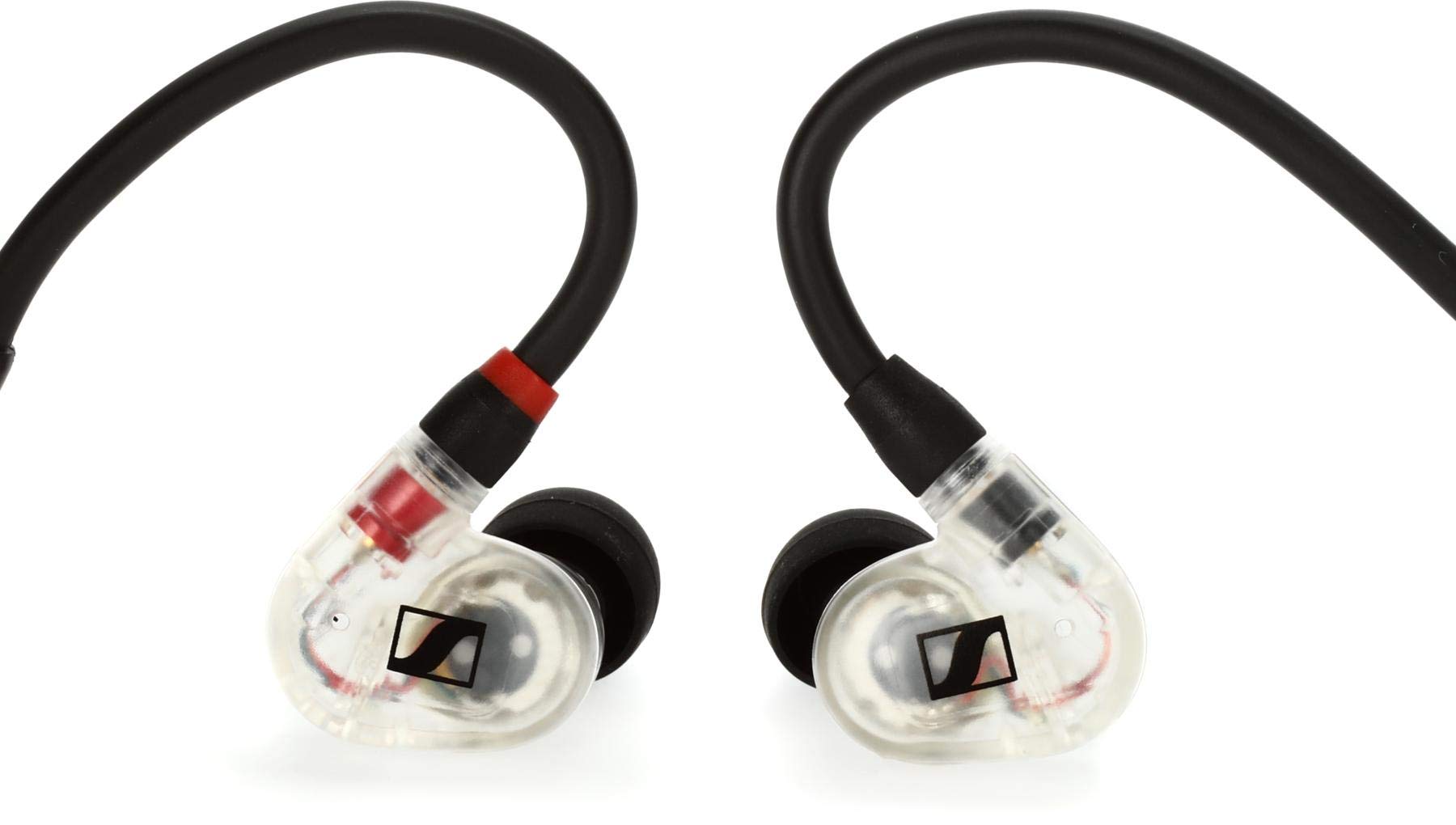
The IE 100 PRO is built around a 10mm dynamic transducer designed for stage monitoring, where clarity and isolation are essential. The tuning prioritizes vocals and midrange presence, making it easier to hear your voice or instrument without turning the monitor level dangerously high. The bass is present but rolled off compared to consumer-oriented IEMs, and the treble has an forward edge that helps cut through stage noise—this same edge can become fatiguing during purely recreational listening with bright recordings.
The earpieces are ergonomic and comfortable, with a slim profile that stays secure even during active performance. The included foam and silicone tips in multiple sizes ensure a good seal for most ear shapes. The detachable cable uses MMCX connectors and has a memory wire earhook that holds its shape after being formed to your ear. The cable itself is thin and tangle-prone, but its replaceability means the IEMs themselves will outlast several cables.
Sound isolation is excellent, thanks to the deep seal of the foam tips and the optimized earpiece housing. This makes the IE 100 PRO a solid choice for monitoring in loud environments or for use as noise-isolating travel earphones. However, the treble-forward signature and limited bass extension make it less enjoyable for genres like electronic and hip-hop. For musicians and vocalists who need a reliable monitoring tool at a low price, the IE 100 PRO is a purpose-built solution that outperforms general-consumer IEMs in its niche.
Why it’s great
- Clear vocal and midrange presence ideal for stage monitoring
- Excellent passive noise isolation with foam tips
- Detachable MMCX cable allows easy replacement
Good to know
- Treble-forward tuning can be fatiguing for recreational listening
- Bass is rolled off compared to consumer IEMs
- Stock cable is thin and prone to tangling
9. Fosi Audio IM4
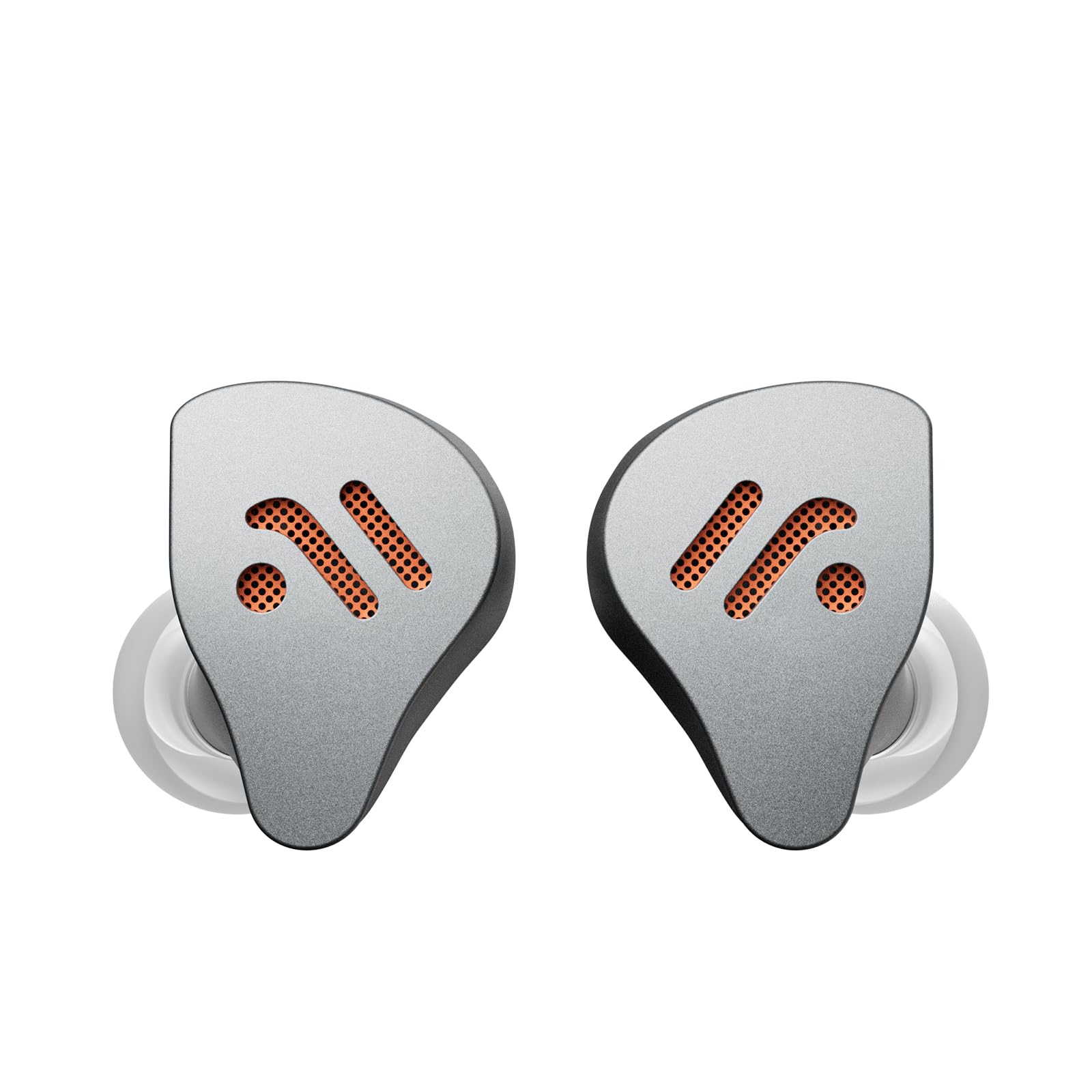
The Fosi Audio IM4 is an unusual entry in the budget IEM space: an open-back design that deliberately sacrifices isolation for soundstage width. The 10mm beryllium-coated dynamic driver, combined with a dual-chamber structure and N52 dual-magnet circuit, produces a sound that is notably airy and spacious for an IEM at this price. Instruments are well-separated, vocals feel natural and not congested, and the treble is clean without being sharp. The bass is detailed and textured but lacks the impact and extension of closed-back IEMs—a trade-off inherent to the open-back design.
Build quality is excellent for the price. The shells are precision-machined from aluminum alloy with a sand-blasted matte finish that looks and feels more premium than plastic alternatives. Each unit weighs just 7 grams, making them barely noticeable during long listening sessions. The IM4 includes three sets of silicone tips (balanced, bass, deep-bass) and two interchangeable nozzle sets (brass and aluminum) that allow you to fine-tune the treble response and bass presence without EQ.
The open-back design means sound leaks in and out, making the IM4 unsuitable for use in quiet offices or public spaces. The cable uses 2-pin 0.78mm connectors that are widely compatible with aftermarket cables, but the stock cable is basic and has a rubbery texture that retains tangles. The lack of a carrying case is also a minor oversight. For at-home listeners who value soundstage and openness over isolation and bass impact, the IM4 is a well-executed experiment that offers a unique experience in the budget segment.
Why it’s great
- Wide, airy soundstage uncommon in budget IEMs
- Excellent build quality with full-aluminum shells
- Interchangeable nozzles and tips for sound tuning
Good to know
- Open-back design leaks sound both ways
- Bass lacks impact compared to closed-back IEMs
- Basic stock cable with no carrying case included
FAQ
Do budget audiophile headphones need a separate amplifier?
What is the difference between open-back and closed-back for budget listening?
Why do some budget headphones need aftermarket earpads?
Can I use budget audiophile headphones for gaming?
Final Thoughts: The Verdict
For most users, the budget audiophile headphones winner is the FiiO FT1 because it combines deep, textured bass with a spacious soundstage and premium build at a price that undercuts its peers. If you value soundstage width and planar magnetic speed more than bass impact, grab the HIFIMAN Edition XS. And for the best portable value with a neutral, detailed sound that scales with gear upgrades, nothing beats the Sennheiser IE 200.

Mo Maruf
I created WellFizz to bridge the gap between vague wellness advice and actionable solutions. My mission is simple: to decode the research and give you practical tools you can actually use.
Beyond the data, I am a passionate traveler. I believe that stepping away from the screen to explore new environments is essential for mental clarity and physical vitality.