Our readers keep the lights on and my smoothie glass nicely filled. As an Amazon Associate, I earn from qualifying purchases.
The difference between a good landscape shot and a breathtaking print often comes down to the tools you’re holding when the light breaks. Choosing a system that can resolve distant foliage, handle extreme dynamic ranges, and survive dust or drizzle is what separates the tripod carriers from the gallery hangers.
I’m Mohammad Maruf — the founder and writer behind WellFizz. I’ve spent years analyzing sensor architectures, lens MTF curves, and real-world field testing data to help photographers build the most capable kit for their terrain and budget.
Whether you’re waking up at 4 a.m. for alpine alpenglow or chasing golden light along a coastline, finding the best camera and lens for landscape photography means balancing resolution, weather sealing, and lens versatility against the weight of your pack.
How To Choose The Best Camera And Lens For Landscape Photography
Selecting the right kit for landscape work goes far beyond megapixel counts. You need a sensor that retains shadow and highlight detail in high-contrast scenes, a body that seals out dust and moisture, and lenses that deliver sharp corners even when stopped down. Here’s what to check before you buy.
Sensor size and dynamic range
A larger sensor generally captures more light and offers a wider dynamic range — the ability to hold texture in both bright skies and dark foregrounds. Full-frame sensors (35mm) are the standard for serious landscape shooters because they provide the tonal latitude to push exposures in post without introducing noise. Cropped sensors can work well too, but you’ll hit banding on extreme edits more quickly.
Weather sealing and durability
Landscape photography happens outdoors, often in mist, light rain, or dusty trails. A body with extensive weather sealing (gaskets around battery doors, card slots, and lens mounts) and a robust shutter mechanism will outlast a sealed consumer body by years. Magnesium-alloy frames also handle the bumps of rocky terrain better than polycarbonate.
Lens sharpness and focal length coverage
A high-resolution body is wasted on a soft lens. Look for glass that holds edge-to-edge sharpness between f/8 and f/11, where most landscape apertures live. A versatile zoom in the 16-35mm or 24-105mm range covers wide vistas and compression landscapes, while a prime between 14mm and 24mm gives you corner-to-corner sharpness for grand scenes.
Quick Comparison
On smaller screens, swipe sideways to see the full table.
| Model | Category | Best For | Key Spec | Amazon |
|---|---|---|---|---|
| Canon EOS R5 | Mirrorless | High-resolution landscapes | 45 MP full-frame sensor | Amazon |
| Nikon Z 7II | Mirrorless | Detail-rich nature shots | 45.7 MP BSI CMOS | Amazon |
| Sony FE 70-200mm F2.8 GM OSS II | Telephoto Lens | Compression landscapes | F2.8 constant aperture | Amazon |
| Panasonic LUMIX S5II | Mirrorless | Hybrid photo/video | Phase Hybrid AF | Amazon |
| Canon EOS 5D Mark III | DSLR | Durable field workhorse | 61-point AF system | Amazon |
| Sony Alpha 7C II | Mirrorless | Compact travel setup | 33 MP Exmor R sensor | Amazon |
| Sony a7 III | Mirrorless | Value full-frame system | 693 phase-detection points | Amazon |
| Pentax K-1 Mark II | DSLR | Extreme weather use | 36 MP AA filter-less | Amazon |
| Panasonic LUMIX S9 | Mirrorless | Ultra-compact full-frame | 18-40mm kit lens | Amazon |
| Nikon Z 6II | Mirrorless | Low-light landscapes | 24.5 MP BSI sensor | Amazon |
| Canon EOS RP | Mirrorless | Entry-level full-frame | RF 24-105mm F4-7.1 | Amazon |
| FUJIFILM X-T30 III | Mirrorless | Compact APS-C system | 20 Film Simulations | Amazon |
| Nikon D7500 | DSLR | Value DSLR kit | 51-point AF system | Amazon |
In‑Depth Reviews
1. Canon EOS R5 Mirrorless Camera (Body Only)

The Canon R5 brings a stacked 45-megapixel full-frame sensor that delivers exceptional dynamic range and low-noise performance at base ISO. For landscape shooters, this means you can lift shadows by several stops without introducing grain, while retaining highlight detail in bright skies. The DIGIC X processor and Dual Pixel CMOS AF with 1,053 points ensure fast, accurate focus even in dim pre-dawn light.
In-body image stabilization (IBIS) is a serious advantage for handheld wide-angle work when you want to leave the tripod behind. The mechanical shutter rattles off 12 fps, and the electronic silent mode reaches 20 fps. Build quality includes robust weather sealing, making it a reliable companion for coastal mist or dusty trails.
Battery life is modest compared to a DSLR — expect around 320 shots per charge with the EVF — so pack spares for full-day trips. The 8K video and 4K 120p recording are overkill for most stills-focused landscape shooters, but the sensor’s core performance is what makes this body a top-tier choice for capturing every detail of a scene.
Why it’s great
- Excellent dynamic range for high-contrast scenes
- IBIS enables sharper handheld captures
- Weather-sealed magnesium body
Good to know
- Battery life is average — buy extras
- Body-only kit requires separate lens investment
2. Nikon Z 7II Full-Frame Mirrorless Camera

The Nikon Z 7II packs a 45.7-megapixel backside-illuminated (BSI) CMOS sensor that offers superb shadow recovery and near-zero banding when pushing exposures. For landscape photographers, this sensor is one of the most forgiving in post-production, allowing you to extract texture from deep shadows without noise penalties. The 493-point phase-detect AF covers a wide area, making composition and focus reliable even with narrow apertures.
The body includes two card slots (CFexpress/XQD plus UHS-II SD), giving you the flexibility to back up raw files in the field. The 2-axis tilt touchscreen is particularly useful for low-angle compositions on uneven terrain. Nikon’s built-in intervalometer and in-camera timelapse with exposure smoothing simplify shooting day-to-night transitions without a remote.
Battery performance is decent, though heavy users will want a spare for long sunrise-to-sunset sessions. The Z mount accepts both native Z lenses and F-mount glass via an adapter, expanding your lens choices without forcing a full system start-over.
Why it’s great
- Outstanding shadow recovery and low noise
- Dual card slots for field backup
- Excellent built-in intervalometer for timelapses
Good to know
- Battery life is moderate — extra packs recommended
- AF tracking can struggle with fast-moving subjects
3. Sony FE 70-200mm F2.8 GM OSS II Lens

The Sony 70-200mm F2.8 GM OSS II is the telephoto zoom that landscape photographers reach for when they want to compress a layered mountain scene or isolate a distant ridge. At just 2.3 pounds, it’s 29 percent lighter than its predecessor, making it a more packable option for multi-mile hikes. The constant F2.8 aperture gives you flexibility in fading light and provides beautiful subject isolation for environmental detail shots.
Four XD linear motors drive autofocus that locks quickly and tracks accurately, even when you’re following moving wildlife in the frame. The Nano AR Coating II suppresses flare and ghosting when shooting into the sun — a common scenario during golden hour. The inner-zoom design keeps the barrel length constant, which improves balance on a tripod collar and helps stabilize handheld video clips.
This lens accepts Sony’s 1.4x and 2x teleconverters for extra reach without a significant drop in sharpness. The main tradeoff is price: this is a premium investment, but the optical quality and reduced weight make it a one-lens solution for compression landscapes and distant peaks.
Why it’s great
- Exceptional sharpness even with teleconverters
- Lightweight for a 70-200mm F2.8
- Nano AR coating reduces flare effectively
Good to know
- Premium price point
- Teleconverters sold separately
4. Panasonic LUMIX S5II Mirrorless Camera
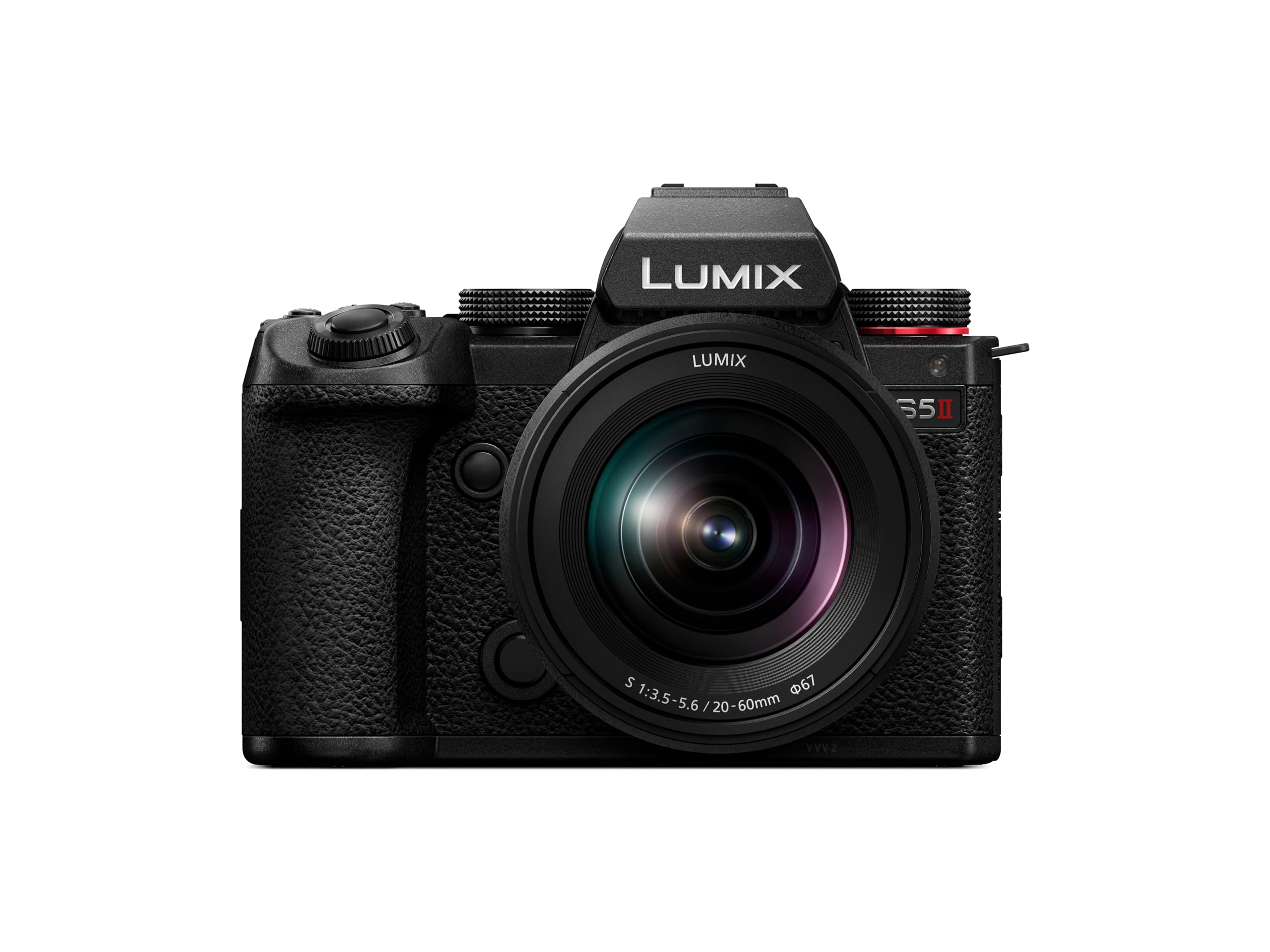
The LUMIX S5II is a 24.2-megapixel full-frame mirrorless camera that finally brings phase-detection autofocus to the Panasonic S lineup. For landscape shooters who also want strong video capability, this is the sweet spot. The 14+ stops of V-Log/V-Gamut dynamic range capture a wide tonal range, and the REAL TIME LUT feature allows you to apply color grades in-camera — useful for scouting looks directly in the field.
Active I.S. technology stabilizes the sensor during handheld walking shots, which is helpful when you’re moving between compositions without a tripod. The body includes a heat-dissipation fan, so there’s no recording time limit in 4K. The 20-60mm F3.5-5.6 kit lens covers ultra-wide to standard focal lengths, giving you flexibility for both grand landscapes and environmental portraits.
Battery life is a weak point — expect around 200-250 shots per charge. The L-mount ecosystem includes options from Panasonic, Sigma, and Leica, but native lens selection for ultra-wide primes is thinner compared to Sony or Nikon.
Why it’s great
- Phase Hybrid AF is fast and reliable
- Active I.S. for smooth handheld video
- Unlimited 4K recording with heat management
Good to know
- Battery life is below average
- Limited native ultra-wide prime selection
5. Canon EOS 5D Mark III DSLR with 24-105mm f/4 L IS USM Lens

The 5D Mark III remains a trusted workhorse for landscape photographers who value durability over the latest mirrorless features. Its 22.3-megapixel full-frame sensor delivers excellent color depth and a wide ISO range (100-25600, expandable to 102400). The 61-point high-density reticular AF system, inherited from the 1D X, provides fast and accurate focus even in dim light at dawn or dusk.
The magnesium-alloy body is extensively weather-sealed and tested to 150,000 shutter cycles, meaning this camera will handle years of exposure to sea spray, dust, and rain. The EF 24-105mm f/4L IS USM kit lens is a capable all-rounder, with built-in image stabilization that helps in low light and a constant f/4 aperture that maintains exposure across the zoom range.
The 5D Mark III lacks modern features like IBIS, a tilting screen, or high-resolution EVF. The 3.2-inch rear LCD is fixed, which makes low-angle work more challenging. For shooters who prefer an optical viewfinder and a bulletproof build over cutting-edge specs, this kit still delivers professional results.
Why it’s great
- Extremely durable magnesium-alloy body
- 61-point AF system is fast and accurate
- Kit lens offers a versatile zoom range with IS
Good to know
- Fixed rear screen limits low-angle shooting
- No IBIS or modern mirrorless features
6. Sony Alpha 7C II Full-Frame Camera

The Sony Alpha 7C II packs a 33-megapixel full-frame Exmor R sensor and a dedicated AI processor into one of the smallest full-frame bodies on the market. For landscape photographers who hike far or travel light, this camera offers 759 phase-detection AF points and advanced subject recognition — including birds and animals — which helps when wildlife wanders into your composition.
The BIONZ XR processor handles 4K 4:2:2 10-bit recording at up to 60p, making it a capable hybrid option for capturing video alongside stills. The compact size means you can pack a wider lens selection without maxing out your bag. Battery life is strong for its size, with the NP-FZ100 delivering roughly 520 shots per charge.
The lower-resolution screen and viewfinder are a compromise for the small body. There’s only one SD card slot, which is a risk for professional shoots where backup matters. For the dedicated landscape hiker who values weight savings, this setup is a near-perfect balance of performance and portability.
Why it’s great
- Extremely compact and lightweight
- AI-powered subject recognition works well
- Excellent battery life for its size
Good to know
- Single SD card slot limits redundancy
- Lower-res screen and EVF
7. Sony a7 III Full-Frame Mirrorless Camera with 28-70mm Lens

The Sony a7 III remains one of the best value entries into full-frame mirrorless for landscape work. Its 24.2-megapixel BSI sensor offers 15 stops of dynamic range — enough to recover shadows and maintain highlight detail in most natural-light conditions. The 693 phase-detection AF points cover 93 percent of the frame, giving you reliable zone and tracking focus for expansive scenes.
The 28-70mm F3.5-5.6 kit lens is a capable starter option that covers wide to short-telephoto focal lengths. The body includes 5-axis in-body stabilization, which is helpful for handheld exposures at slower shutter speeds. Battery life is excellent: approximately 710 shots per charge, meaning you can shoot a full sunrise-to-sunset session on a single battery.
The a7 III lacks a high-resolution mode and its 2.36-million-dot EVF is lower resolution than newer competitors. The menus, while improved over earlier Sonys, can still feel dense compared to Canon or Nikon. For photographers seeking proven full-frame quality at a reasonable entry point, this system delivers consistent results.
Why it’s great
- Excellent dynamic range for the price
- Long battery life for all-day shooting
- Reliable AF with wide frame coverage
Good to know
- Kit lens aperture is slow at the tele end
- Menus are dense and unintuitive
8. Pentax K-1 Mark II Full Frame DSLR

The Pentax K-1 Mark II is built for photographers who shoot in punishing conditions. The magnesium-alloy body is sealed with 87 individual gaskets, making it one of the most weather-resistant full-frame cameras available — tested to survive flooding and dust storms. Its 36.4-megapixel AA filter-less sensor is designed to maximize sharpness, and the Handheld Pixel Shift Resolution mode combines four images to produce superior color rendition and detail without needing a tripod.
The Astro Tracer function uses the built-in GPS and a sensor-shift mechanism to track celestial movement, enabling sharp, streak-free star exposures of up to five minutes. The 33-point autofocus system is fully cross-type and works well in low light. The tilt-and-swivel LCD screen has a unique cross-tilt mechanism that allows flexible positioning for portrait and landscape compositions.
The K-1 Mark II is heavier and bulkier than many mirrorless competitors, and the lens ecosystem is smaller than Canon, Nikon, or Sony. The autofocus system feels dated compared to modern phase-detect mirrorless systems, especially in continuous tracking.
Why it’s great
- Exceptional weather sealing rated for extreme conditions
- Handheld Pixel Shift for tripod-free high resolution
- Built-in Astro Tracer for night landscapes
Good to know
- Heavy body compared to mirrorless options
- Smaller lens ecosystem
9. Panasonic LUMIX S9 Full-Frame Camera with S 18-40mm Lens
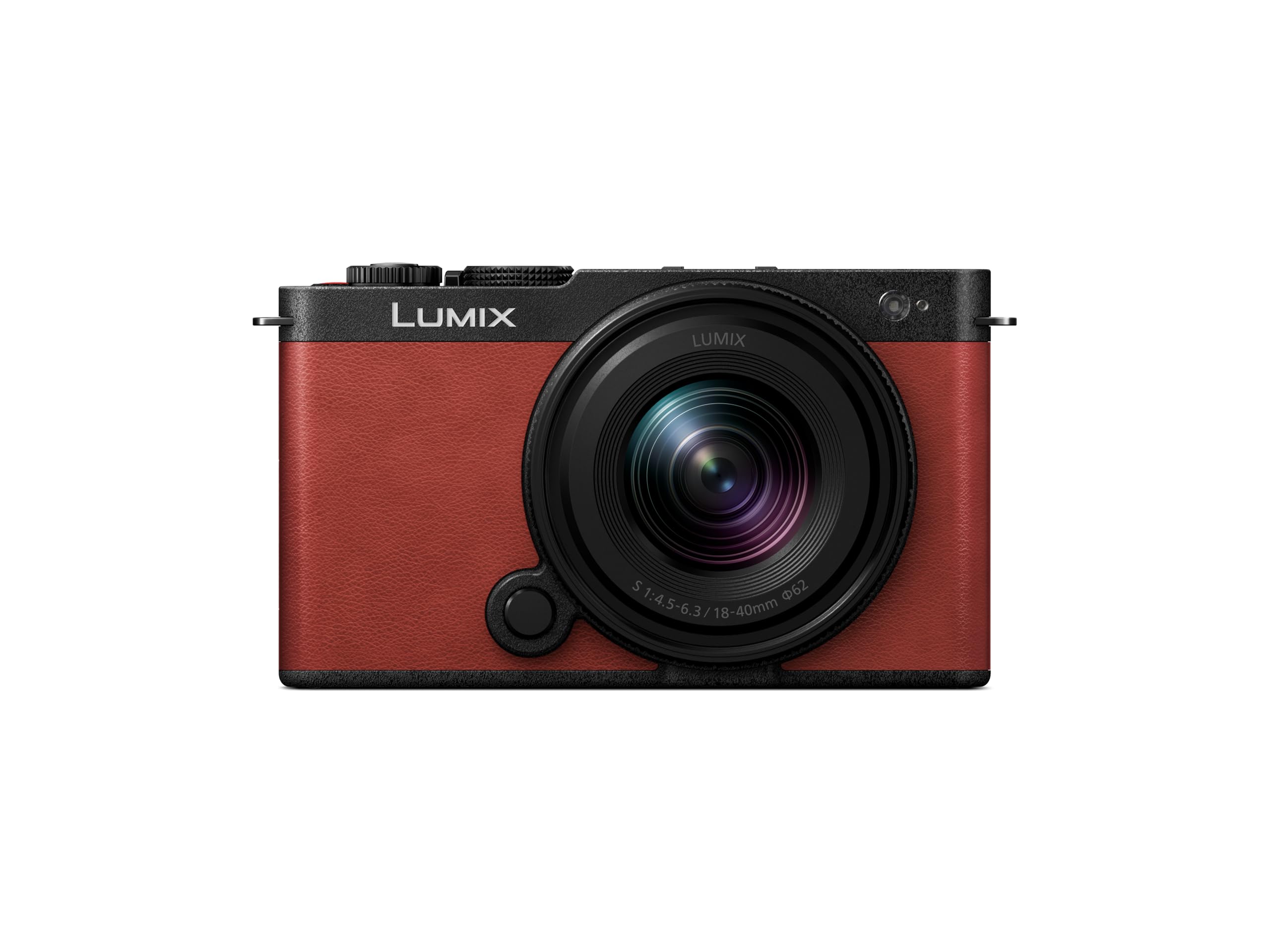
The LUMIX S9 is a full-frame mirrorless camera designed for extreme portability, packing a 24.2-megapixel sensor and a compact S 18-40mm F4.5-6.3 lens into a body that slips into most bags. For travel landscape shooters who want full-frame quality without the weight, this camera offers high image quality in low-light conditions and unlimited recording via the LUMIX Lab app for quick smartphone transfers.
The Open Gate recording mode captures 4K in all aspect ratios simultaneously, which is useful for social media content creators who shoot both vertical and horizontal stills from the same scene. The variable aperture lens adapts to lighting conditions, and the IBIS helps stabilize handheld shots during walks. The compact size makes it easy to take along routes where full-sized bodies would be a burden.
This camera lacks both an electronic viewfinder and a hotshoe for a flash, which will push some landscape photographers away. The small body can feel imbalanced with larger lenses, and the grip is minimal. For photographers who prioritize a small footprint and are comfortable composing via the rear screen, the S9 offers impressive versatility.
Why it’s great
- Extremely compact full-frame body
- Good IBIS performance
- Quick sharing via LUMIX Lab app
Good to know
- No built-in EVF or hotshoe
- Small grip can feel unbalanced with heavy lenses
10. Nikon Z 6II Full-Frame Mirrorless Camera

The Nikon Z 6II features a 24.5-megapixel BSI full-frame sensor that excels in low-light conditions, making it an excellent choice for dusk, dawn, and night landscape photography. The sensor’s back-side illumination and 14-bit raw capture deliver clean images at high ISO settings, with minimal noise even when pushing shadows in post-processing. The 273-point phase-detect AF system is responsive and accurate, even in dim light.
The body includes dual card slots (CFexpress/XQD plus UHS-II SD), which provides flexibility and redundancy for important shoots. In-body stabilization helps with handheld exposures at slower shutter speeds, and the 3.2-inch tilting touchscreen is useful for low-angle compositions. The body is weather-sealed against dust and moisture, matching the durability needed for outdoor work.
The Z 6II’s 4K UHD 60p video with full pixel readout produces sharp footage with good detail. Some users report that AF tracking can occasionally lose subjects in crowded scenes. The viewfinder is good but not class-leading, and the battery life is moderate — expect around 300-400 shots per charge in typical use.
Why it’s great
- Excellent low-light performance and clean high ISO
- Dual card slots for backup
- Good weather sealing and build quality
Good to know
- AF tracking can occasionally fail in complex scenes
- Battery life is average
11. Canon EOS RP Full-Frame Mirrorless with RF 24-105mm Lens

The Canon EOS RP is the gateway to full-frame RF-mount photography, bundled with the RF 24-105mm F4-7.1 IS STM lens. For landscape photographers moving from APS-C or wanting a lightweight full-frame kit for travel, this combination offers a versatile zoom range from wide to mid-telephoto. The 26-megapixel sensor (down to ~20 MP effective) delivers good detail and color depth for its class, with up to five stops of optical image stabilization in the lens to handle handheld shots in fading light.
The body is compact and lightweight, weighing under a pound, making it ideal for long hikes or travel where every gram matters. The 4K UHD 2160p video is serviceable but comes with a crop factor and lacks Dual Pixel AF in 4K — a limitation if video is a priority. The RF 24-105mm lens offers a minimum focusing distance of 0.43 feet in center-focus macro mode, allowing you to capture foreground detail alongside wide landscapes.
The RP’s single UHS-II card slot and smaller buffer limit burst shooting, though this is less important for landscape work. The autofocus system is reliable but slower than the Dual Pixel II system found in newer R-series bodies. For the budget-conscious photographer seeking a light, capable entry into full-frame optics, this kit provides a solid starting point.
Why it’s great
- Very light and compact full-frame kit
- Versatile 24-105mm lens for travel
- Optical stabilization for handheld shots
Good to know
- 4K video has a crop and no Dual Pixel AF
- Single card slot and small buffer
12. FUJIFILM X-T30 III Mirrorless Camera Body, Black

The Fujifilm X-T30 III is a compact mirrorless body built around an APS-C sensor, offering 20 built-in Film Simulations that give landscape images a distinctive, ready-to-share look straight out of camera. For photographers who love the organic color palettes of Fujifilm’s classic films, this camera reduces post-processing time significantly. The AI-powered subject detection autofocus tracks moving subjects reliably, including birds and vehicles that may wander into your scene.
The body is remarkably small and lightweight, making it easy to pack alongside lenses for hiking or travel. The XC13-33mm F3.5-6.3 OIS kit lens covers a wide to standard zoom range with optical image stabilization to reduce camera shake. The retro design and tactile dials appeal to shooters who prefer manual control over menu-diving. The camera connects easily via the Fujifilm app for sharing images on the go.
The APS-C sensor has a smaller dynamic range compared to full-frame sensors, especially when pushing shadows in post. Low-light performance is decent but not class-leading. The lack of IBIS means you rely on lens-based stabilization or a tripod for slower handheld exposures. This is a fun, stylish travel camera that prioritizes portability and color science over absolute technical specs.
Why it’s great
- Unique film simulations for beautiful JPEGs
- Compact and lightweight for travel
- AI subject detection is fast and reliable
Good to know
- APS-C dynamic range is limited vs full-frame
- No in-body image stabilization
13. Nikon D7500 DSLR with AF-S DX 18-140mm VR Lens

The Nikon D7500 is a 20.9-megapixel APS-C DSLR that delivers class-leading image quality and an image processing system inherited from the award-winning D500. For budget-conscious photographers entering landscape photography, this kit with the AF-S DX 18-140mm f/3.5-5.6G ED VR lens provides a wide-to-telephoto range that covers most scenic needs. The 51-point AF system with 15 cross-type sensors offers reliable focus even in lower light, and the 8 fps continuous shooting is fast enough for action in the frame.
The 3.2-inch tilting LCD touchscreen allows easy low-angle composition on uneven terrain. The 4K UHD video with stereo sound and power aperture control provides solid video capability for capturing the movement of clouds or water. The 18-140mm lens covers a focal length equivalent of about 27-210mm in full-frame terms, giving you both wide-angle vistas and compressed remote peaks in one package.
The D7500 is a 2017 model and lacks modern mirrorless features like an EVF, IBIS, or dual card slots. The build is weather-resistant but not fully sealed. The 20.9 MP resolution is lower than many modern cameras, but the high ISO performance and metering are still impressive for the price. For a budget-friendly entry with excellent optical performance, this DSLR kit remains a capable choice.
Why it’s great
- Very good image quality for the price
- Tilting touchscreen for low angles
- 18-140mm kit lens is a versatile travel zoom
Good to know
- Older model with lower resolution sensor
- No IBIS or mirrorless features
FAQ
What is the best focal length for landscape photography?
Do I need full-frame or is APS-C enough for landscapes?
How important is in-body image stabilization for landscapes?
Final Thoughts: The Verdict
For most photographers, the best camera and lens for landscape photography winner is the Canon EOS R5 because its 45-megapixel sensor, excellent dynamic range, and IBIS deliver unmatched image quality and flexibility in the field. If you want extreme weather sealing and a unique Pixel Shift mode, grab the Pentax K-1 Mark II. And for a compact, travel-ready full-frame kit, nothing beats the Sony Alpha 7C II for portability with professional results.

Mo Maruf
I created WellFizz to bridge the gap between vague wellness advice and actionable solutions. My mission is simple: to decode the research and give you practical tools you can actually use.
Beyond the data, I am a passionate traveler. I believe that stepping away from the screen to explore new environments is essential for mental clarity and physical vitality.