Our readers keep the lights on and my smoothie glass nicely filled. As an Amazon Associate, I earn from qualifying purchases.
Your flower bed’s success lives or dies three inches below the surface, where the wrong bagged soil locks roots into a haze of poor drainage, unseen pathogens, or nutrient burn. Sifting through endless bags labeled “garden soil,” “top soil,” and “potting mix” at the hardware store turns a straightforward planting morning into a guessing game, often costing you the whole season’s bloom unless you know exactly what to grab.
I’m Mohammad Maruf — the founder and writer behind WellFizz. Over the past five years I’ve analyzed hundreds of soil formulations, digging into bulk density, CEC ratings, proprietary mycorrhizae blends, and pH reports to separate bags that feed roots from bags that just fill volume.
After evaluating dozens of products against real-world flower bed conditions, the following analysis delivers everything you need to confidently select the best bagged soil for flower beds for your specific planting goals this season.
How To Choose The Best Bagged Soil For Flower Beds
Flower beds demand a soil that holds enough moisture to sustain daily evapotranspiration but drains fast enough to prevent root rot. The wrong bag — too dense or too light — creates a season-long headache. Focus on three core variables before you buy.
Organic Matter Content & Structure
Look for blends with sphagnum peat moss, composted manure, or humus listed as primary ingredients. Flower roots need a crumbly, porous matrix — not the heavy, compacted texture of cheap fill dirt. Bags containing perlite or coco coir improve aeration and prevent the soil from turning into a brick after watering.
Nutrient Profile & Mycorrhizae
Annual flowers are heavy feeders. A bag with added earthworm castings, alfalfa meal, or kelp meal provides a slow-release nutrient foundation. More important, look for mycorrhizal fungi — endo and ecto blends that colonize root systems and increase water and nutrient uptake by up to 70 percent. This single additive often separates premium soil from commodity dirt.
Drainage & pH Balance
Most flowers prefer a pH between 6.0 and 7.0. Bags that list “pH balanced” or contain lime to neutralize acidity save you from buying a test kit later. If your bed sits in a low spot that collects water, choose a mix with coco coir or coarse sand for faster percolation. Raised beds can tolerate a slightly heavier mix.
Quick Comparison
On smaller screens, swipe sideways to see the full table.
| Model | Category | Best For | Key Spec | Amazon |
|---|---|---|---|---|
| Espoma Organic Vegetable & Flower Garden Soil | In-Ground Mix | Direct flower bed planting | Myco-Tone, 1 cu ft | Amazon |
| Coast of Maine Organic Planting Soil | Organic Blend | Vegetable & flower beds | Composted manure, 20 qt | Amazon |
| MODELLOR Coco Coir Brick | Coir Base | DIY soil mixing | Expands to 18 gal | Amazon |
| Espoma Organic Potting Soil Mix (Pack of 2) | Container Mix | Containers & raised beds | Myco-Tone, 8 qt x2 | Amazon |
| Scotts Premium Top Soil | Top Soil | Filling & leveling | Organic blend, 0.75 cu ft | Amazon |
In‑Depth Reviews
1. Espoma Organic Vegetable & Flower Garden Soil

Espoma’s VFGS1 is formulated specifically for in-ground flower beds, not just containers. The one-cubic-foot bag delivers a rich blend of sphagnum peat moss, humus, earthworm castings, and the proprietary Myco-Tone — a mix of endo and ecto mycorrhizae that immediately begin colonizing root systems. Customers report that tomato and marigold seedlings planted in this soil significantly outperformed those in generic organic alternatives within the same growing period.
The texture is light enough to work into compacted clay without turning into mud, yet dense enough to retain moisture during summer dry spells. Users noted that multiple bags arrived bug-free and that the soil held structure well after heavy rains. One reviewer praised the “rich, well-structured, nutrient-dense” composition that improved moisture retention without waterlogging.
For direct flower bed planting — where you mix the bag into existing native soil — this is the most complete solution in the lineup. The bag size is generous, the organic certification is genuine, and the mycorrhizae investment pays off within the first month of root establishment. A small number of users observed fungus gnats in subsequent indoor pots, but the consensus is that the soil itself was not the vector.
Why it’s great
- Myco-Tone promotes rapid root colonization and nutrient uptake
- 1-cubic-foot volume provides excellent coverage for flower beds
- Nutrient-dense with earthworm castings and organic ingredients
Good to know
- Indoor use may require monitoring for fungus gnats
- Heavier than coco coir blends if weight is a concern
2. Coast of Maine Organic & Natural Planting Soil

Coast of Maine packs a 20-quart bag with composted manure, sphagnum peat moss, and cedar/aromatic wood shavings, creating a nutrient-rich medium that holds moisture well while draining quickly enough for raised beds and in-ground flower borders. Customers describe it as “rich dark earth” with minimal debris — noticeably less wood chunk than other organic blends at this price tier.
The formulation balances moisture retention and drainage, making it versatile for both direct sowing and transplanting. One reviewer noted it was “excellent for vegetables; holds moisture well, drains well, high in nutrients,” while another highlighted its lightweight texture compared to standard garden soil. The aroma from cedar content also appears to deter common soil insects, a side benefit that flower bed gardeners appreciate.
For anyone managing a substantial flower bed on a moderate budget, this bag delivers the best cost-per-quart ratio among the premium organic options. Some users experienced fungus gnats and recommend airing or disinfecting the soil before indoor use, but for outdoor flower beds the performance is consistent and reliable across multiple growing seasons.
Why it’s great
- High organic matter content from composted manure and peat
- Cedar aromatics help deter insects naturally
- Excellent moisture-drainage balance for flower beds
Good to know
- Price per bag is higher than basic top soil options
- Some bags may require pre-treatment to avoid gnats
3. MODELLOR Premium Super Washed Coco Coir Brick
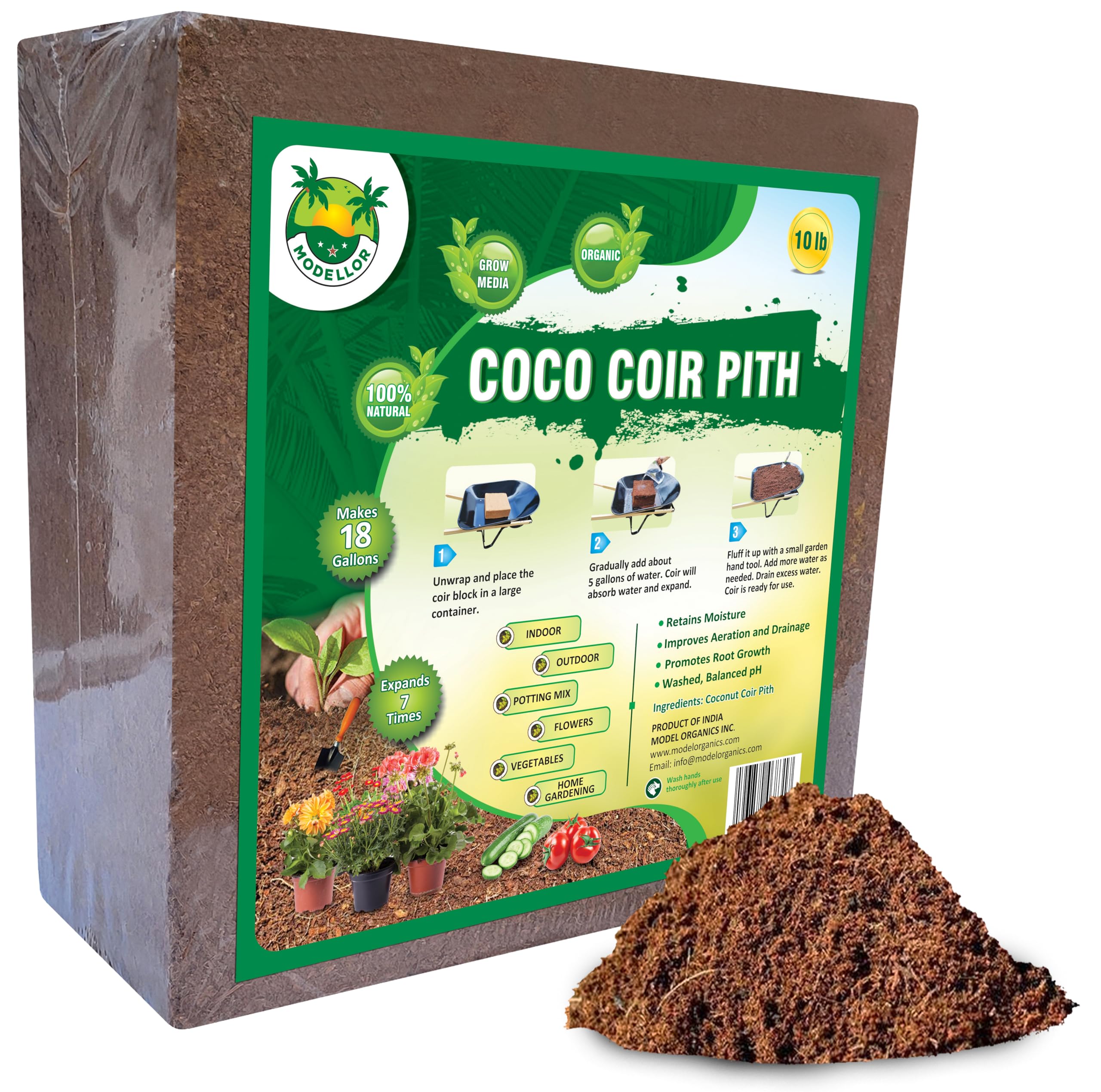
This 10-pound coco coir brick expands into 18 to 20 gallons (72 to 80 quarts) of fluffy, low-salt growing medium, making it the most space-efficient option in the roundup. MODELLOR triple-washes and pH-balances the coir, eliminating the salt residue that plagues cheaper coir brands and eliminates the need for pre-rinsing before use.
The fluffy structure balances air and water perfectly, promoting faster germination and stronger root systems than denser top soils. Customer reviews consistently highlight how clean and consistent the brick is, with one experienced gardener calling it their “go-to coco coir” for bulbs, seeds, and fast-growing flowers. The low environmental impact compared to peat moss is a strong selling point for eco-conscious flower bed gardeners.
Because this is pure coir, it works best as a base amendment rather than a standalone flower bed soil. Mix it with compost, worm castings, and a slow-release fertilizer to create a custom blend that outperforms most pre-mixed bags. For gardeners who want total control over their soil recipe, this brick is the most flexible and highest-value option per cubic foot of finished medium.
Why it’s great
- Triple-washed and pH-balanced, no pre-rinsing required
- Expands to 18 gallons from a compact 10-pound brick
- Sustainable alternative to peat moss
Good to know
- Requires mixing with fertilizer and compost for flower beds
- Hydration needs to be measured carefully to avoid over-saturation
4. Espoma Organic Potting Soil Mix (Pack of 2)

Espoma’s AP8-2 pack delivers two 8-quart bags of the same trusted Myco-Tone blend in a container-specific formulation. Unlike the in-ground vegetable and flower mix, this potting soil uses a lighter texture optimized for pots and raised troughs where drainage is critical and root space is limited. The blend features sphagnum peat moss, humus, perlite, earthworm castings, alfalfa meal, kelp meal, and feather meal for a robust nutrient profile.
Indoor gardeners and container flower enthusiasts report that plants “took to it immediately” and grew noticeably faster than in generic potting mixes. One African violet transplant responded with rapid new growth, and small variegated ivy showed the same vigor. The bags are compact enough for easy transport and storage, but the two-pack provides 16 total quarts of high-quality medium for multiple containers.
Some users note that the soil can feel dry upon opening and may require thorough wetting before use to avoid hydrophobic pockets. This is common with peat-based mixes and is easy to remedy by pre-moistening. For container flower beds, window boxes, and patio pots, this is the most balanced and nutrient-complete potting mix available in this tier.
Why it’s great
- Myco-Tone supports root development in confined containers
- Light, fluffy texture prevents compaction in pots
- Rich nutrient blend with kelp and alfalfa meal
Good to know
- Can be too dry initially for immediate planting
- More expensive than bulk options for large beds
5. Scotts Premium Top Soil

Scotts 0.75-cubic-foot top soil is a lighter blend of organic materials — rice hulls, peat moss, and screened top soil — designed primarily for leveling lawns and filling holes. Compared to the heavier, mineral-heavy top soils on the market, this bag is noticeably easier to work and mix into existing flower bed soil without creating a dense, waterlogging layer.
Customers find it effective for conditioning native soil in raised beds, with one reviewer stating “about a bag and a half per raised bed” was sufficient to improve texture and drainage. Another user described it as “a good foundation for plants” when mixed with hard, compacted diet earth. The small bag size makes it convenient for targeted filling of erosion gaps or refreshing bare patches in a flower bed without committing to a bulk load.
The trade-offs are clear: this is not a nutrient-dense planting mix. It contains no added mycorrhizae, no composted manure, and no slow-release fertilizers. Several reviewers noted the presence of large sticks that required hand removal before use. For flower beds that already have rich organic matter and just need a structural top-up, this is a solid entry-level option. For starting new beds from scratch, skip this bag and invest in a purpose-formulated flower bed mix.
Why it’s great
- Lightweight and easy to mix into native soil
- Excellent for leveling and filling erosion holes
- More affordable than premium planting mixes
Good to know
- Contains large sticks and debris that need manual removal
- Low nutrient content, works best as a structural amendment
FAQ
Can I use top soil straight from the bag for flower beds?
What is Myco-Tone and why does it matter for flowers?
Final Thoughts: The Verdict
For most flower bed gardeners, the best bagged soil for flower beds winner is the Espoma Organic Vegetable & Flower Garden Soil because its Myco-Tone, earthworm castings, and one-cubic-foot volume provide the ideal nutrient and microbial foundation for in-ground beds. If you want a lighter, container-friendly mix, grab the Espoma Organic Potting Soil Pack of 2. And for DIY mixers who want maximum control and value per cubic foot, nothing beats the MODELLOR Coco Coir Brick as a base for custom blends.

Mo Maruf
I created WellFizz to bridge the gap between vague wellness advice and actionable solutions. My mission is simple: to decode the research and give you practical tools you can actually use.
Beyond the data, I am a passionate traveler. I believe that stepping away from the screen to explore new environments is essential for mental clarity and physical vitality.