Our readers keep the lights on and my smoothie glass nicely filled. As an Amazon Associate, I earn from qualifying purchases.
Sciatica nerve pain transforms every car ride into a negotiation with your own body. The wrong seat cushion exacerbates the pinch, while the right one distributes pressure away from the piriformis and sacroiliac joint, restoring blood flow and cutting the sting. The choice between gel, memory foam, and hybrid designs determines whether you arrive at your destination relaxed or in agony.
I’m Mohammad Maruf — the founder and writer behind WellFizz. I analyze orthopedic support hardware by breaking down foam density gradients, cutout geometry, and ventilation system efficiency to separate marketing claims from measurable relief.
After evaluating dozens of options against the specific biomechanics of sciatic nerve compression, these five models represent the most effective solutions available today. This guide covers everything you need to identify the best car seat cushion for sciatica nerve pain.
How To Choose The Best Car Seat Cushion For Sciatica Nerve Pain
Selecting a cushion for sciatica means prioritizing pressure redistribution over plush comfort. A soft pillow feel lets the sit bones sink through the foam, compressing the piriformis muscle and aggravating the sciatic nerve. The right cushion keeps the pelvis slightly elevated and the coccyx free from contact.
Cutout Geometry and Tailbone Clearance
Not all coccyx cutouts are equal. A U-shaped or horseshoe style cutout (roughly 10–12 cm long) creates an open channel that removes pressure from the tailbone and the nerve bundle underneath. A narrow V-cut or shallow notch often fails to clear the bone during a natural recline. For sciatica specifically, a wider opening that spans 6 cm across gives the piriformis room to release tension during long sits.
Foam Density and Compression Set
Standard memory foam rated below 4 PCF (pounds per cubic foot) compresses 30% or more under a 180-pound load after 20 minutes, shifting support to the seat pan. High-density memory foam at 5–7 PCF resists that collapse and keeps the hips level. Look for foam that returns to shape within 3 seconds after pressure is removed — slower rebound often correlates with better pressure distribution for nerve pain.
Cooling Layer Integration
Sciatica pain worsens when skin temperature rises and inflammation flares. A gel top layer absorbs and dissipates body heat more effectively than a simple mesh cover. However, gel adds weight and can harden in cold weather. Open-cell foam with ventilated channels provides a middle ground: it breathes without the thermal conductivity shift of gel. If you park your car outdoors in winter, skip full-gel designs and choose a gel-memory foam composite.
Quick Comparison
On smaller screens, swipe sideways to see the full table.
| Model | Category | Best For | Key Spec | Amazon |
|---|---|---|---|---|
| AUVON Cooling Gel Seat Cushion | Gel-Memory Foam Hybrid | All-day driving comfort with heat reduction | 3″ thick, 11 cooling grooves | Amazon |
| Haarkalo Premium Orthopedic Seat Cushion | Coccyx Cutout Orthopedic | Tailbone and sciatica relief with posture correction | 5.8″H, 12cm x 6cm hollow | Amazon |
| LARROUS Memory Foam Car Seat Cushion | Wedge Profile | Short drivers needing height and nerve clearance | 2″ front rise, tailbone cutout | Amazon |
| Lofty Aim Car Seat Cushion | High-Density Booster | Firm support with 2.5″ elevation boost | 2.5″H, 4D mesh + PU leather | Amazon |
| OVRST Memory Foam Seat Cushion | X-Large Contour | Wide hips and total leg cradle support | 16.5″ x 16.5″, slow-rebound foam | Amazon |
In‑Depth Reviews
1. AUVON Cooling Gel Seat Cushion
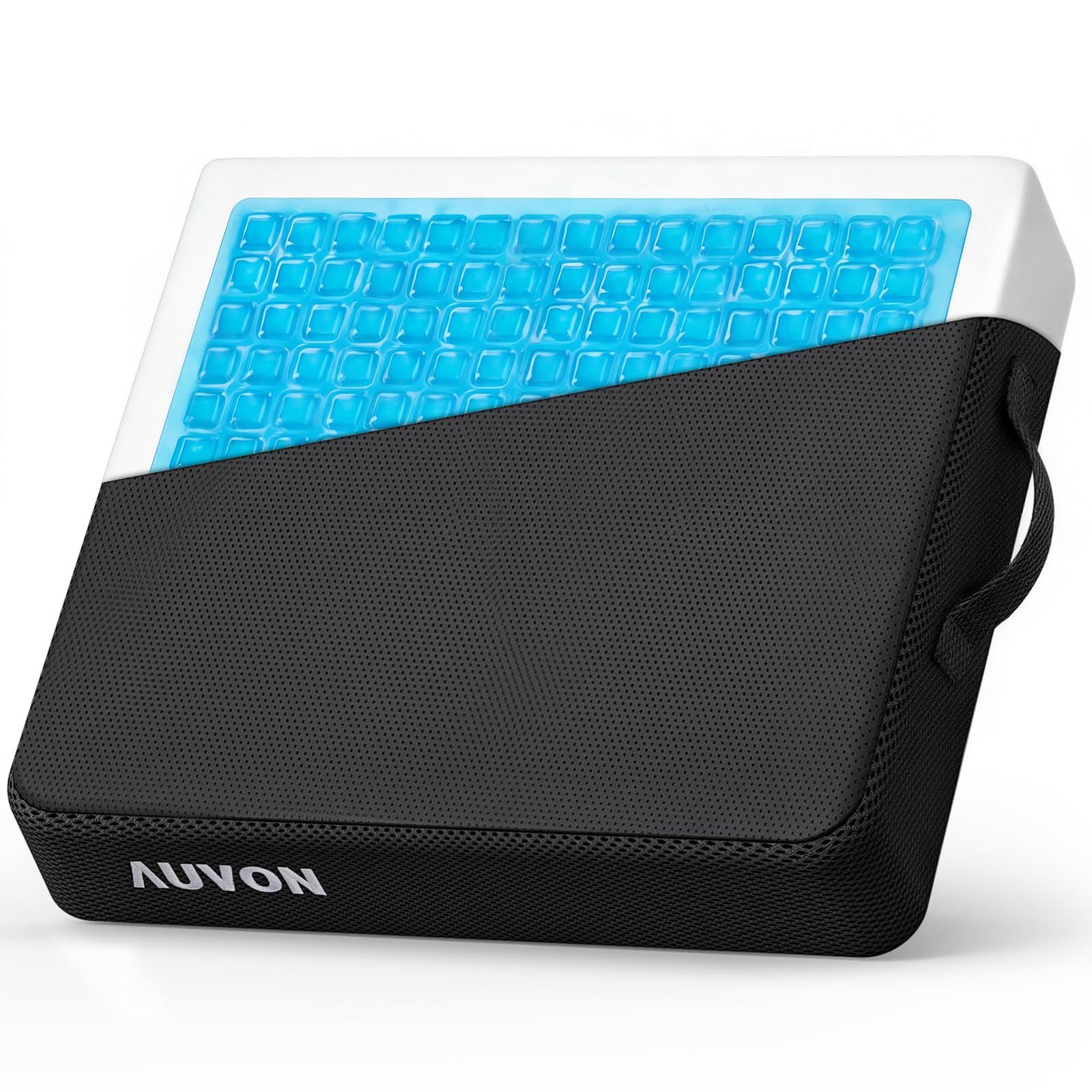
The AUVON cushion combines a large cooling gel layer with memory foam in a 3-inch thick profile that includes 11 ventilation grooves running across the surface. Those grooves create a microclimate channel underneath the thighs, pulling heat away from the sciatic region rather than trapping it. The ice-silky fabric cover wicks moisture further, which matters when long drives raise skin temperature and aggravate nerve inflammation.
At 18 x 16 inches with a 3-pound density, the foam resists bottoming out for users between 120 and 220 pounds. The composite design avoids the overly squishy feeling of pure memory foam — you get initial softness at the top layer and firm support underneath. Users report noticeable relief on standard wheelchairs and recliners, not just car seats, suggesting the pressure distribution works across different seat geometries.
The anti-slip bottom and carrying handle make it practical for daily transfer between office chair and vehicle. The cover unzips for machine washing (cold water, air dry), extending the cushion’s usable life beyond cheaper single-piece foam blocks. One caveat: the cooling effect is passive, not active — it dissipates your body heat rather than generating cold, so it won’t feel icy on a hot day, just less swampy.
Why it’s great
- Gel layer paired with memory foam prevents squishy bottom-out
- 11 ventilation grooves actively channel heat away from thighs
- Removable, machine-washable ice-silky cover for hygiene
Good to know
- Cooling is passive heat dissipation, not active refrigeration
- At 3 inches thick, some users with bucket seats may feel elevated
2. Haarkalo Premium Orthopedic Seat Cushion
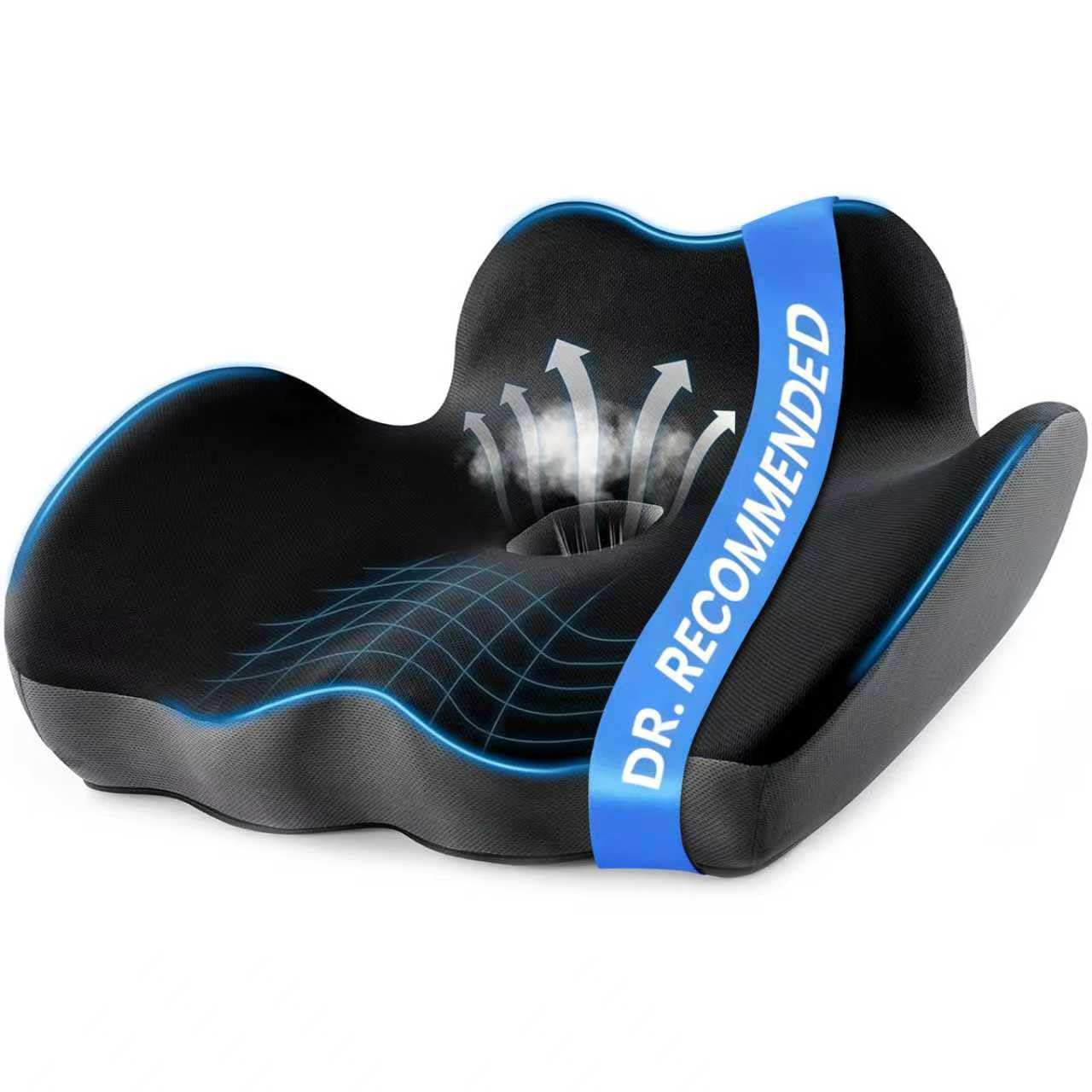
The Haarkalo cushion stands out for its aggressive coccyx relief design: a 12 cm long and 6 cm wide hollow channel that eliminates all contact with the tailbone and the sciatic nerve root directly beneath it. That open channel pairs with elevated wings on both sides that hug the glutes and encourage the hips to rotate into a neutral pelvic tilt. For sciatica sufferers whose pain spikes during the transition from sitting to standing, this shape reduces the compression spike at the sacrum.
High-density memory foam at 2.2 pounds total weight gives the cushion a medium-soft feel that molds without collapsing. The rear spine protector extends upward to support the lumbar transition, bridging the gap between a flat seat pan and the car seat backrest. Users on 10-hour patrol vehicle shifts report a substantial comfort improvement over thinner, flat pads that let the hips sink unevenly.
The glue-sprayed anti-slip bottom holds securely on leather and fabric seats alike, though the slippery cover material can shift slightly after extended use. The black fabric cover requires spot cleaning rather than full machine washing. At 5.8 inches thick at the rear, this cushion noticeably changes the seat-to-pedal distance — measure your headroom before committing if you drive a compact car.
Why it’s great
- Large 12cm x 6cm hollow opening removes tailbone contact entirely
- Elevated side wings correct pelvic tilt for nerve clearance
- Integrated rear flap supports the lumbar-sacral transition
Good to know
- Nearly 6 inches tall at the back may raise short drivers too high
- Cover material is slippery over long periods; requires occasional repositioning
3. LARROUS Memory Foam Car Seat Cushion

The LARROUS wedge profile solves two problems simultaneously: it raises the driver by 2 inches for better visibility while incorporating a coccyx cutout that relieves tailbone and sciatic pressure. The front edge measures 1.5 inches, rising to 2 inches at the rear, creating a subtle forward tilt that shifts body weight from the sacrum to the sit bones. That slight tilt matters for sciatica because it opens the hip angle and reduces tension on the piriformis muscle.
The 18 x 17 inch surface fits standard car seats and larger truck benches equally well. High-density memory foam inside the breathable 4D mesh cover allows air circulation that prevents sweat pooling — a common complaint with solid foam blocks. Multiple users report this cushion eliminating tailbone pain on 1,200-mile road trips in Toyota Highlanders and Freightliner trucks, with no leg circulation issues or numbness during 10-hour stints.
The adjustable strap and retractable buckle keep the cushion locked in place during sharp turns, though many users find the anti-slip rubber bottom sufficient without the strap. At 2 pounds, it’s light enough to fold and carry into a wheelchair or airplane seat. The cover is detachable for cleaning but requires air drying to preserve the mesh structure. Lifetime replacement policy adds long-term confidence for daily drivers.
Why it’s great
- Wedge profile tilts hips forward, releasing piriformis tension
- 4D mesh cover circulates air to prevent heat-related nerve aggravation
- Lifetime replacement warranty backs the foam core
Good to know
- Mesh stretches slightly over time; cover replacement may be needed after heavy use
- Cushion is only 2 pounds, which may feel too light for users expecting a dense, heavy orthopedic block
4. Lofty Aim Car Seat Cushion

The Lofty Aim cushion prioritizes firm, supportive foam over plush sinking — a deliberate choice for sciatica management. The high-density memory foam core resists compression under sustained load, keeping the hips elevated and the spine aligned rather than letting the pelvis drift into posterior tilt. The 2.5-inch boost helps shorter drivers see over the steering wheel while maintaining flat thigh support that prevents the knees from splaying outward.
The cover combines PU leather on the sides and 4D mesh in the center, creating a hybrid that resists moisture absorption where the body contacts the cushion but wipes clean easily on the edges. The anti-slip bottom keeps the cushion planted during acceleration and braking, though one user reported slight shifting to the right over many weeks. The 18 x 17 inch surface matches most car seats without overhang, and the 2.2-pound weight makes transfer between vehicles straightforward.
Road vibration absorption is a standout feature — the foam composition dampens frequency transfer through the seat frame, which matters for drivers with nerve sensitivity who feel every bump as a jolt through the sciatic pathway. Users note the cushion smooths rough pavement feel without sacrificing steering feedback. The PU leather edging holds up better against abuse than all-mesh alternatives, though it reduces breathability at the perimeter.
Why it’s great
- Firm high-density foam prevents hip sinking and posterior pelvic tilt
- Absorbs road vibrations that can spike sciatic pain on rough pavement
- PU leather edges resist wear from repeated entry and exit
Good to know
- May slide slightly to one side over weeks; check strap tightness regularly
- PU leather reduces breathability at the cushion perimeter during hot weather
5. OVRST Memory Foam Seat Cushion
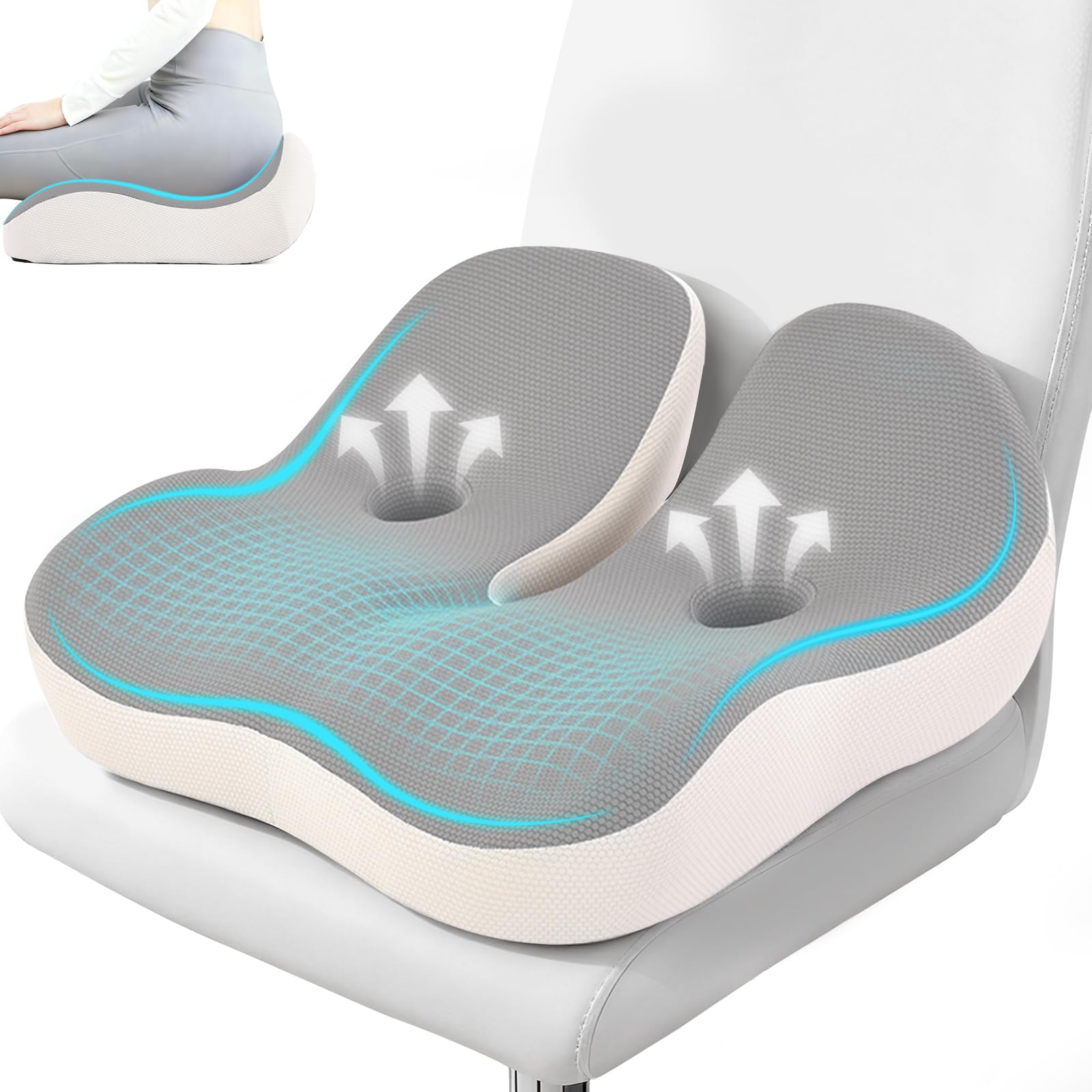
The OVRST cushion uses a rounded, oversized shape (16.5 x 16.5 inches) with an unusually thick 4.7-inch profile that cradles the entire back of the thigh and gluteal region. The slow-rebound memory foam formulation — what the brand calls high-density slow rebound cotton — creates a 3-second return time that distributes pressure evenly across a broad surface rather than concentrating it at the ischial tuberosities. This matters for sciatica because it prevents the sit bones from driving through the foam and compressing the underlying nerve branches.
The dual-hole design on the inner core improves breathability at the perineal region, reducing moisture accumulation that can exacerbate nerve sensitivity. The white lining inside the cover adds an extra hygiene barrier between the foam and the outer fabric, extending the usable life of the cushion. Users with compression fractures in the lumbar spine report that the cushion allows comfortable sitting when other pads cause sharp pain, suggesting the thick contour absorbs spinal loading during stationary sitting.
At nearly 5 inches tall, this cushion elevates the driver significantly. It works best for average-height users in vehicles with sufficient headroom. Petite users (under 5’2″) struggle to reach the pedals comfortably. The zipper closure is smooth and the bottom uses large-grain non-slip material that grips aggressively, even on slippery leather seats. The gray cotton-polyester blend cover is machine-washable but should be air-dried to prevent shrinkage of the fabric shell.
Why it’s great
- Slow-rebound foam conforms to sit bones without bottoming out
- Extra-thick 4.7-inch profile absorbs spinal compression load
- Dual ventilation holes reduce perineal moisture buildup
Good to know
- Too tall for short drivers; may interfere with pedal reach
- Oversized 16.5-inch square shape may not fit narrow bucket seats
FAQ
Is a memory foam or gel cushion better for sciatica nerve pain?
How thick should a car seat cushion be for sciatica relief?
Will a coccyx cutout cushion help piriformis syndrome pain?
Final Thoughts: The Verdict
For most users, the best car seat cushion for sciatica nerve pain winner is the AUVON Cooling Gel Seat Cushion because its gel-memory foam composite prevents bottoming out while the 11 ventilation grooves keep the nerve area cool. If you need aggressive coccyx clearance and pelvic tilt correction, grab the Haarkalo Premium Orthopedic Seat Cushion. And for short drivers needing a visibility boost without nerve compression, nothing beats the LARROUS Memory Foam Car Seat Cushion.

Mo Maruf
I created WellFizz to bridge the gap between vague wellness advice and actionable solutions. My mission is simple: to decode the research and give you practical tools you can actually use.
Beyond the data, I am a passionate traveler. I believe that stepping away from the screen to explore new environments is essential for mental clarity and physical vitality.