Our readers keep the lights on and my smoothie glass nicely filled. As an Amazon Associate, I earn from qualifying purchases.
The first flight with a new quadcopter is a moment of pure tension—you are balancing the throttle, fighting the wind, and hoping the camera feed stays stable. The wrong choice here can turn that excitement into a frustrating pile of plastic and regret. For anyone stepping into this hobby, the learning curve is not about piloting skill; it is about picking a machine that forgives your mistakes and rewards your curiosity.
I’m Mohammad Maruf — the founder and writer behind WellFizz. I’ve spent years analyzing the build quality, brushless motor specs, transmission latency data, and GPS lock reliability that separate a training tool from a toy.
Whether you are buying for a teenager or yourself, understanding the core specs—flight time, camera stabilization, and safety features—will make or break your experience. This guide breaks down the current market to help you find the most reliable best beginners drone for your specific needs and budget.
How To Choose The Best Beginners Drone
Choosing your first quadcopter is about matching three variables: your learning curve tolerance, your expected flying conditions, and your budget. A toy that flips and dives indoors is a different machine than a sub-250g GPS flier that can handle outdoor breezes. Here are the core considerations.
Motor Type: Brushed vs. Brushless
Brushed motors wear out quickly and lack the torque to fight wind. For any outdoor flying, a brushless motor is the baseline for a stable, long-lasting drone. Brushless motors deliver higher thrust, run quieter, and handle gusts up to Level 5 winds without drifting.
Camera Stabilization: Gimbal vs. EIS vs. Nothing
A 4K camera on a shaky airframe produces unusable footage. The gold standard is a mechanical 2-axis gimbal that physically counteracts movement. The next best is Electronic Image Stabilization (EIS) which crops and smooths the frame. Budget drones with no stabilization produce jello-effect video that is difficult to watch.
GPS Functions That Save Your Drone
Auto Return-to-Home (RTH) is not a luxury; it is insurance. When the signal drops or the battery runs low, a GPS-enabled drone flies back to its launch point automatically. Combined with features like Follow Me and Waypoint Flight, GPS transforms a manual toy into a semi-autonomous camera platform.
Quick Comparison
On smaller screens, swipe sideways to see the full table.
| Model | Category | Best For | Key Spec | Amazon |
|---|---|---|---|---|
| Potensic ATOM LT | GPS Entry-Level | Long flight sessions & stable GPS footage | 80 Mins (2x3000mAh) | Amazon |
| DJI Neo 2 | Ultra-Portable | Hands-free selfies & indoor/outdoor safety | 151g / Omni Obstacle Sensing | Amazon |
| Oddire HK11 | Smart GPS | Budget GPS with Follow Me & Waypoint | 48 Mins (2x1800mAh) | Amazon |
| REDRIE HK33 (4K) | Gimbal 4K | 4K video with 2-axis gimbal stabilization | 2-Axis Gimbal / 45 Mins | Amazon |
| REDRIE HK33 (Black) | Extended Range | Long range FPV with signal repeater | 500m Range / 45 Mins | Amazon |
| RELIDOL PK01 | Screen Controller | No-phone flying with built-in screen | Screen Remote / 25 Mins | Amazon |
| HONIVON T6 | Budget Toy | Indoor training for kids | 30 Mins (2 Batt) | Amazon |
In‑Depth Reviews
1. Potensic ATOM LT

The Potensic ATOM LT sets the standard for an entry-level GPS drone by delivering 80 minutes of total flight time thanks to two 3000mAh intelligent batteries. Each battery flies for 40 minutes, which is nearly double the endurance of most sub- competitors. PixSync 2.0 transmission pushes a stable HD feed up to 4 kilometers, giving new pilots the confidence to explore without losing signal.
The 2.5K EIS camera with a Sony sensor records 2560×1440 video at 30fps. While it is not true 4K, the ShakeVanish 2.0 stabilization produces smooth, watchable footage in moderate wind. The camera tilts from +20° to -90°, enabling dynamic vertical shots that are rare at this tier. Four GNSS systems (GPS, GLONASS, Galileo, BeiDou) lock quickly in open areas, and the Auto Return Home triggers reliably when the battery dips or the connection is lost.
Flight modes include Follow Me, Waypoint Fly, and Circle Fly, all accessible through a clean app interface. The drone folds to 3.5×5.6×2.3 inches, fitting into a pocket or bag. New pilots should note that the ATOM LT flies exclusively in GPS mode and requires an open outdoor space for satellite acquisition. The lack of omnidirectional obstacle avoidance means you still need to watch your surroundings, but the GPS cushion makes this a forgiving first machine.
Why it’s great
- 80-minute total flight time with two batteries
- 4-kilometer FPV transmission range
- EIS stabilization produces smooth 2.5K footage
Good to know
- Requires GPS lock before takeoff; no indoor flight
- Camera is 2.5K, not true 4K
- No omnidirectional obstacle avoidance sensors
2. DJI Neo 2
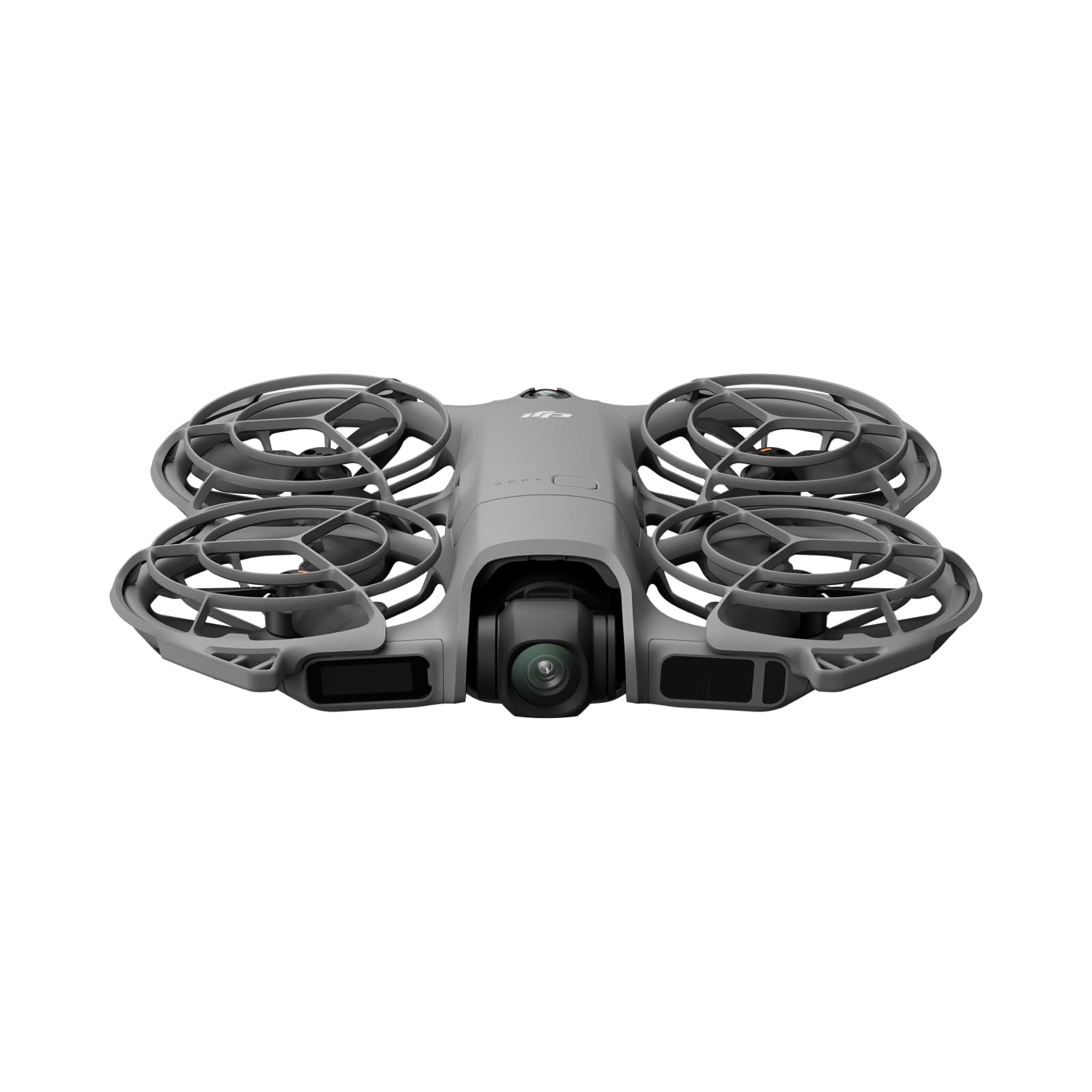
The DJI Neo 2 redefines risk-free flying at just 151 grams with full-coverage propeller guards and omnidirectional obstacle sensing. This is the only drone in this lineup that can safely fly indoors near walls and furniture while still capturing crisp 4K video. Palm takeoff and landing eliminate the need for a landing pad, and gesture control lets you wave to start recording or snap a selfie without touching the app.
ActiveTrack keeps the camera locked onto a moving subject, making this an excellent tool for hands-free vlogging or hiking documentation. The 4K imaging sensor delivers sharp, vibrant footage that overshadows the 2.5K output of the Potensic ATOM LT. However, the flight time is a firm 18-19 minutes per battery, and the package includes only one battery. Expect to buy extras if you plan longer sessions.
The built-in storage eliminates the need for a MicroSD card out of the box, and the USB-C connection makes file transfer simple. The Neo 2 is C0 certified and requires no FAA registration, matching the portability of the other sub-250g models. The trade-off is the lack of a dedicated remote in the box, though compatibility with the DJI RC-2 and smartphone control covers most needs.
Why it’s great
- Omnidirectional obstacle sensing for indoor safety
- True 4K video with excellent color and sharpness
- Palm takeoff and gesture controls for instant operation
Good to know
- Only 18-19 minutes of flight per battery
- Includes just one battery in the box
- No dedicated remote controller included
3. Oddire HK11

The Oddire HK11 packs an intelligent GPS module with Auto Return, Route Planning, and Orbit Fly into a sub-250g frame that costs less than most mid-range models. The 4K UHD camera uses an F2.15 110° wide-angle lens adjustable by 90° via the remote or app, capturing 4096x3072P images and 2048x1088P video. Two 7.7V 1800mAh batteries deliver a total of 48 minutes of flight, which beats the HK33 by a small margin and surpasses cheaper toy drones by a wide gap.
The 5G WiFi transmission with a signal repeater in the remote maintains a stable feed up to 500 meters. Brushless motors handle Level 5 wind resistance, and the 249g weight avoids FAA and Remote ID registration. New pilots appreciate the gesture photo mode and VR compatibility, which add variety beyond standard flying. The app includes built-in filters and background music for quick social media sharing.
Customer reports note that the drone beeps periodically when the compass requires recalibration, a minor quirk that is resolved with a simple stick rotation. The lack of an included SD card means you need to supply your own storage for video files. For a pilot who wants GPS Follow Me and waypoint planning without paying premium-tier prices, the HK11 offers the best balance of smart features and cost.
Why it’s great
- GPS Follow Me and Orbit Fly at an accessible price
- 48 minutes total flight with two 7.7V batteries
- Brushless motors resist Level 5 wind
Good to know
- Compass recalibration beeps can be distracting
- No SD card included for saving footage
- Video resolution is 2K, not true 4K
4. REDRIE HK33 (4K with Gimbal)
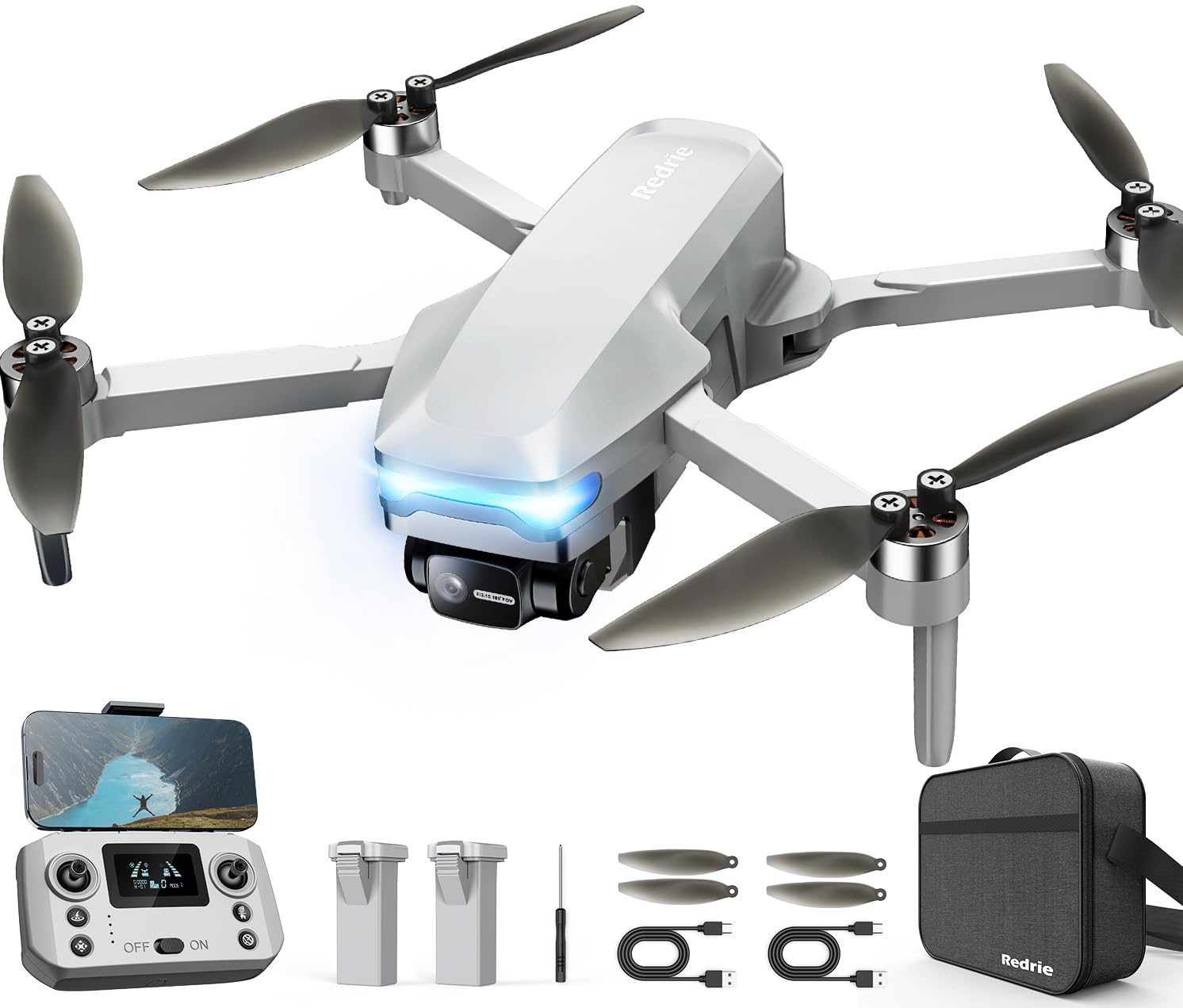
The REDRIE HK33 is the first drone at this price to include a physical 2-axis gimbal, which mechanically stabilizes the 4K UHD camera. This eliminates the rolling shutter and jello artifacts common in cheap drones that rely solely on software stabilization. The F2.15 aperture and 110° ultra-wide lens capture broad landscapes and group shots without distortion. Two 1800mAh batteries provide 40-45 minutes of total flight, enough for a full afternoon outing.
The GPS module enables Auto Return when the signal is lost or the battery runs low, a feature that saved many first-time pilots from losing their quadcopter in a tree. The 5G WiFi transmission with a signal repeater reaches up to 500 meters, though the stable video feed drops to 300 meters. The drone weighs under 250g and includes a hard carrying case, making it a ready-to-go travel companion.
Customer feedback consistently praises the customer support team, which resolves issues with replacement parts quickly. Some users note that the camera stabilization works best in light wind and that aggressive maneuvers can still introduce wobble. For a pilot who prioritizes smooth 4K footage without paying for a premium brand, the HK33 with a 2-axis gimbal is the strongest contender in its bracket.
Why it’s great
- Mechanical 2-axis gimbal for smooth 4K footage
- GPS Auto Return provides safety net for beginners
- Includes carrying case and extra battery
Good to know
- Stabilization struggles in strong gusts
- App phone holder on controller feels flimsy
- Video transmission maxes at 300m stable range
5. REDRIE HK33 (Black, Extended Range)
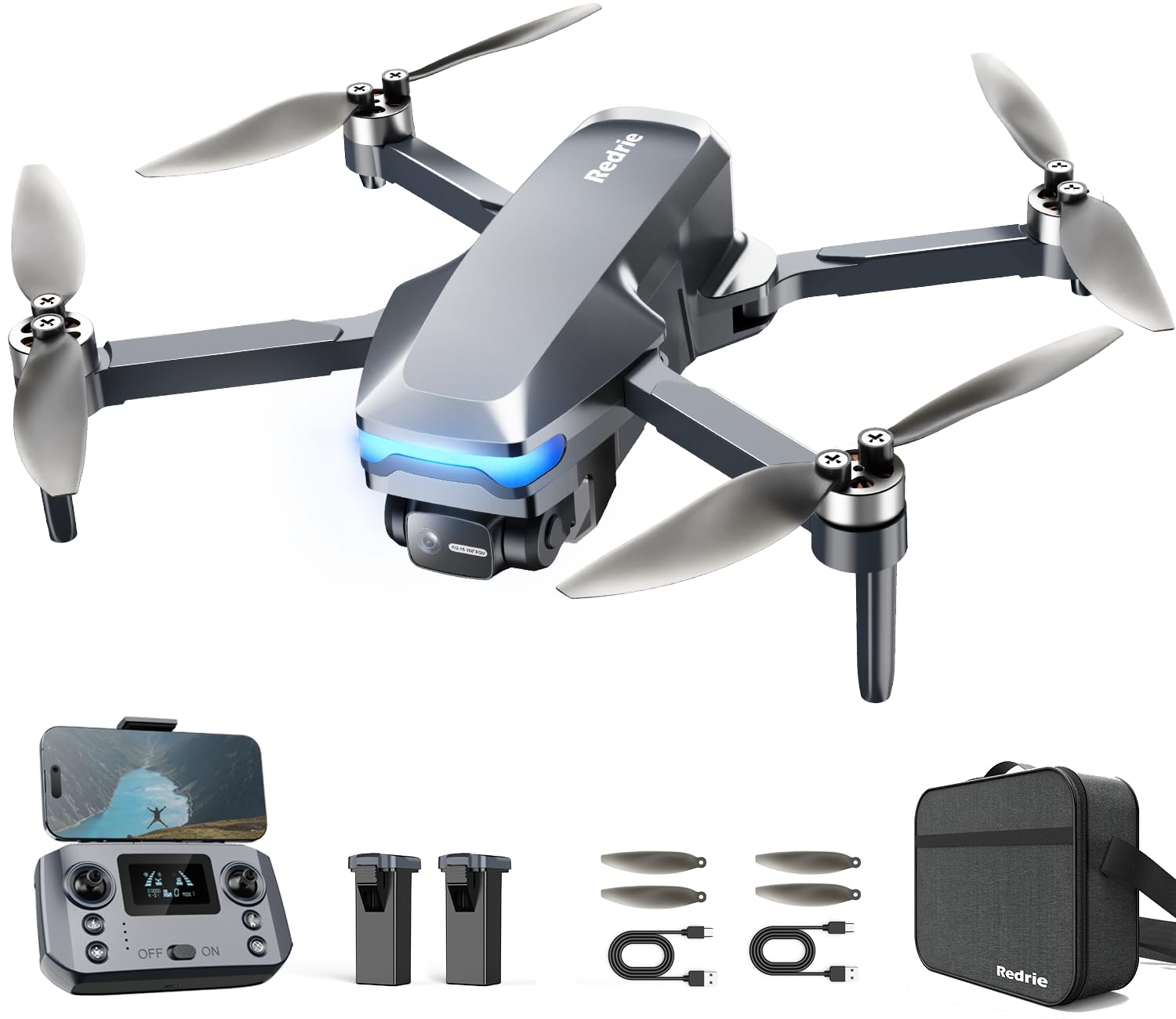
The black variant of the REDRIE HK33 focuses on transmission reach, with a built-in repeater that pushes the maximum flight distance to 500 meters and stable FPV video to 300 meters. This is the same hardware platform as the gray HK33 with the 2-axis gimbal, meaning you get the same 4K UHD camera, brushless motors, and Level 5 wind resistance. The black color reduces glare during outdoor flights, a subtle advantage for visual line-of-sight pilots.
The two 1800mAh batteries deliver 45 minutes of total flight, and the GPS intelligence suite includes Auto Return, Follow Me, Route Planning, and Fly Around. The drone folds into the included carrying case, and the 249g weight avoids FAA registration. The physical vibration reduction in the camera mount works alongside the gimbal to keep footage steady during smooth, deliberate flight paths.
Customer reviews highlight the responsive customer service and the drone’s durability after multiple crashes. The camera quality is described as “decent” rather than stunning, with sharp photos and acceptable video for social media. The phone holder on the controller is a common complaint, as it feels less secure than dedicated clamps on premium units. For a pilot who wants the same stabilized 4K platform but needs the extra transmission distance for open-field exploration, this version is the logical pick.
Why it’s great
- 500-meter maximum flight range with repeater
- Same 2-axis gimbal and 4K sensor as gray model
- Durable enough to survive multiple beginner crashes
Good to know
- Phone holder on controller is insecure
- Camera footage not true professional quality
- Battery indicator lights are small and hard to read
6. RELIDOL PK01
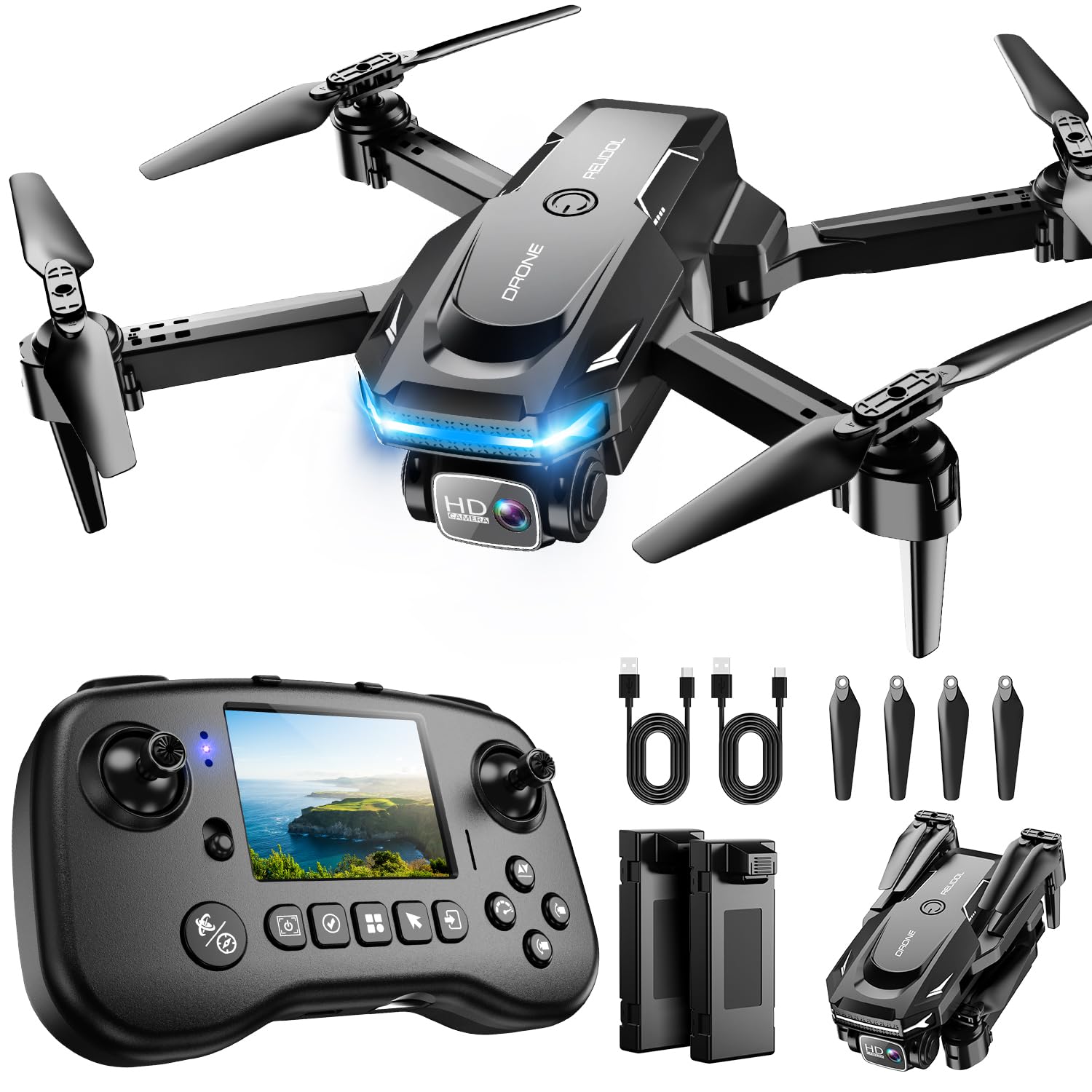
The RELIDOL PK01 stands out with a remote controller that includes a built-in screen, removing the need to mount your phone for live HD footage. This is a significant convenience for new pilots who want to focus on the sticks rather than fumbling with a phone clamp. The 1080P 80° adjustable lens captures decent footage for checking roof lines or taking selfies, though the resolution is a step down from the 4K and 2.5K cameras in the premium models.
Brushless motors provide smooth, quiet flight, and the altitude hold feature lets the drone hover in place without constant throttle adjustment. Two batteries extend the flight time to 25 minutes, which is adequate for short practice sessions. The drone includes gesture control for automatic photos and voice commands like “Take off” that work reliably within 6 meters of altitude. The 30-meter range is best suited for backyard or small park flying.
Child lock, emergency stop, and low power alarm make this one of the safest options for younger pilots. The plastic construction keeps weight down and crash damage minimal, but the camera resolution and short range limit its utility for serious aerial photography. For a family purchase where the kids want to fly without a phone, the PK01 solves that specific pain point better than any other drone in this guide.
Why it’s great
- Remote screen eliminates phone mounting hassle
- Brushless motor delivers quiet, smooth flight
- Child lock and emergency stop enhance safety
Good to know
- 1080P camera is lower resolution than competition
- Maximum range is only 30 meters
- Requires MicroSD card for saving footage
7. HONIVON T6
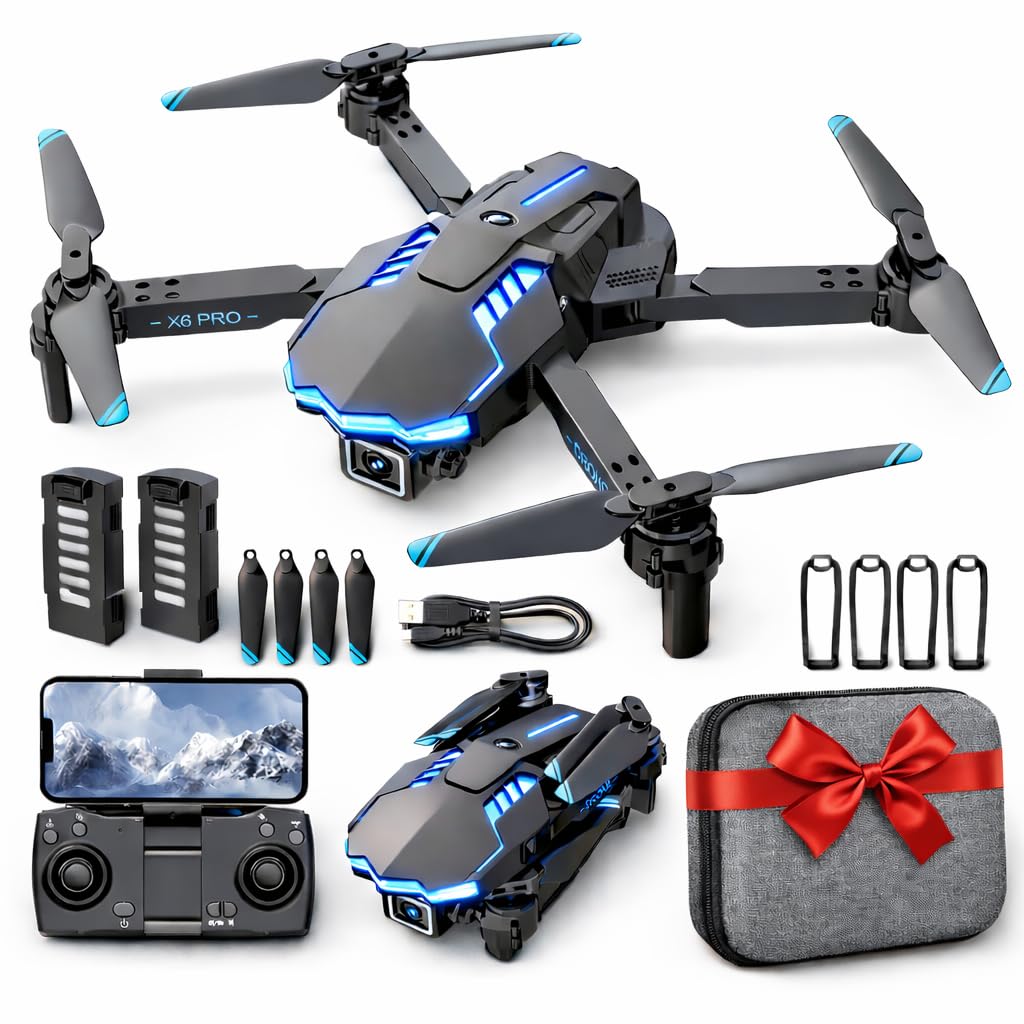
The HONIVON T6 is designed as a pure training tool for kids and complete novices. It features one-key takeoff and landing, altitude hold for stable hovering, and headless mode that removes orientation confusion. The 1080P Wi-Fi camera streams a live feed to your phone, but the footage lacks any stabilization, so expect shaky video. Two modular batteries provide up to 30 minutes of total flight, which is generous for a toy-grade quadcopter.
The drone weighs about 150g and comes with four propeller guards, making it safe for indoor flights in living rooms and hallways. The ABS plastic body survives repeated impacts with walls and floors without cracking. 360° 3D flips and gravity sensor control add entertainment value beyond simple flying, keeping young pilots engaged as they learn throttle management.
The trade-offs are clear: the camera is adequate for snapshots but not watchable video, the drone has zero wind resistance, and the brushed motors will wear out faster than brushless alternatives. This is not a tool for outdoor landscape photography or GPS-assisted flight. For a parent buying the first quadcopter for a 9-year-old who will crash it many times, the T6 offers the lowest financial risk and the highest crash survival rate.
Why it’s great
- Extremely durable ABS plastic survives crashes
- Altitude hold and headless mode simplify learning
- Lightweight and safe for indoor flying
Good to know
- Brushed motors have shorter lifespan
- No camera stabilization produces shaky video
- Completely unsuitable for windy outdoor conditions
FAQ
Do I need FAA registration for a beginners drone under 250g?
What is the most important safety feature for a first drone?
How much wind can a sub-250g beginners drone handle?
Can I fly a beginners drone indoors safely?
Final Thoughts: The Verdict
For most users, the best beginners drone winner is the Potensic ATOM LT because it combines 80 minutes of flight, 4-kilometer transmission, and GPS safety nets in a sub-250g package that requires no registration. If you want the absolute safest indoor flying experience with true 4K video, grab the DJI Neo 2. And for a budget-friendly way to teach a child the basics without breaking the bank, nothing beats the HONIVON T6.

Mo Maruf
I created WellFizz to bridge the gap between vague wellness advice and actionable solutions. My mission is simple: to decode the research and give you practical tools you can actually use.
Beyond the data, I am a passionate traveler. I believe that stepping away from the screen to explore new environments is essential for mental clarity and physical vitality.