Our readers keep the lights on and my smoothie glass nicely filled. As an Amazon Associate, I earn from qualifying purchases.
For those with compromised immune systems, the air you breathe indoors is not just about comfort—it is a daily variable in your health equation. Standard fan-and-filter units can miss the sub-micron threats (mold spores, bacterial clusters, virus-laden droplets) that a truly medical-grade air purifier is designed to capture. The wrong choice leaves gaps; the right one creates a barrier.
I’m Mohammad Maruf — the founder and writer behind WellFizz. I have spent the past decade dissecting filtration hardware, analyzing CADR metrics, and cross-referencing HEPA certifications to separate marketing claims from genuine particle-capture science, especially for households managing respiratory vulnerability and immune sensitivity.
After weeks of deep-spec analysis and cross-referencing independent lab data, I have assembled a definitive list of the best air purifier for immunocompromised patients — each chosen for its ability to deliver hospital-level particulate removal, sustained low-noise operation, and verified long-term filtration integrity you can trust with your health.
How To Choose The Best Air Purifier For Immunocompromised Patients
Selecting a purifier for immune-compromised use requires a shift from general home filtration to clinical-grade removal standards. You are not just reducing dust—you are reducing the airborne bioburden. Here is what matters most.
Filtration Grade: The HEPA Hierarchy
Standard HEPA captures 99.97% of particles at 0.3 microns. For immune-compromised users, the target particle size drops to 0.1 microns or smaller—where viruses and bacteria often reside. Look for H13 (medical-grade) or H14 HEPA. Technologies like UltraHEPA (capturing 99.99% at 0.003 microns) or dual H13 filter beds provide the extra safety margin your respiratory health demands.
Air Changes Per Hour (ACH) in Target Rooms
ACH measures how many times the purifier cycles the entire room’s air volume in an hour. For general wellness, 4 ACH is good. For immunocompromised environments (bedrooms, home isolation rooms), target 5 to 6 ACH. Calculate by dividing the unit’s CADR (clean air delivery rate in CFM) by your room’s volume in cubic feet, then multiply by 60. A higher CADR means faster pathogen removal during acute events (cooking fumes, visitor entry).
Carbon Filter Mass for Chemical & Odor Removal
Many purifiers include a thin carbon sheet—fine for minor odors but useless for VOCs from cleaning agents, paints, or new furniture off-gassing that can trigger respiratory distress. A thick, high-mass activated carbon filter (15+ pounds, as seen in premium units) or a carbon-zeolite blend is essential for neutralizing gaseous irritants without releasing trapped particles back into the air stream.
Quick Comparison
On smaller screens, swipe sideways to see the full table.
| Model | Category | Best For | Key Spec | Amazon |
|---|---|---|---|---|
| Coway Airmega 250 | Mid-Range | Everyday allergy & odor control | HEPA + washable pre-filter, 1,860 sq ft | Amazon |
| BLUEAIR Blue Signature | Mid-Range | Large open-plan living spaces | HEPASilent + smart WiFi, 3,385 sq ft | Amazon |
| LG PuriCare 360 | Mid-Range | 360-degree coverage + app control | NanoFiber True HEPA, PM 1.0 sensor | Amazon |
| BlueDri Air Shield 550 | Mid-Range | Restoration & heavy particle removal | HEPA scrubber, 1,400 sq ft, daisy-chain | Amazon |
| Nuwave OxyPure Ultra | Premium | Zero filter cost for 5 years | 5-stage, washable stainless-steel pre-filter | Amazon |
| AirDoctor AD3500 | Premium | Virus & bacteria capture down to 0.003µ | UltraHEPA + Premium Carbon, 2,520 sq ft | Amazon |
| Medify MA-112 V3.0 | Premium | Massive coverage with dual H13 HEPA | Dual H13 filter, 4,455 sq ft, 1009 CADR | Amazon |
| Air Oasis iAdapt 2.0 | Premium | Mold & biotoxin reduction + UV | H13 HEPA + UV + Ionization, 5,474 sq ft | Amazon |
| Austin Air HealthMate Plus | Premium | Maximum chemical & odor removal | Carbon/Zeolite 15 lbs, 5-year filter life | Amazon |
In‑Depth Reviews
1. Coway Airmega 250

The Coway Airmega 250 delivers an exceptional balance of filtration performance and long-term affordability. Its HyperCaptive system combines a washable pre-filter, activated carbon, and a true HEPA filter that captures 99.97% of 0.3-micron particles. The 1,860 sq ft coverage in one hour means it can handle a master bedroom plus a connected living area with a single unit—critical for immune-compromised users who want to minimize equipment footprint.
Real-world feedback highlights its ability to scrub wildfire smoke and cooking fumes within an hour, with the auto mode intelligently ramping fan speed when PM levels spike. The pre-filter is easily vacuumed, extending the main HEPA’s life to roughly one year per filter. At its price point, the replacement cost is notably lower than many premium competitors, making it a sustainable choice for ongoing immune support.
The unit runs near-silent on low setting, with the loudest fan speed still remaining conversation-friendly at around 50 dB. Some users note the touch controls are responsive but the unit lacks WiFi—a minor trade-off for its reliable mechanical simplicity. For a mid-range purifier that punches well above its weight in particle capture and odor removal, the Airmega 250 is a stellar starting point.
Why it’s great
- Washable pre-filter reduces long-term filter costs
- Auto mode precisely tracks PM 2.5 and adjusts fan speed
- Compact footprint for its coverage area (8.3″ deep)
Good to know
- No WiFi or app connectivity
- Replacement HEPA filter cost can add up over years
2. BLUEAIR Blue Signature
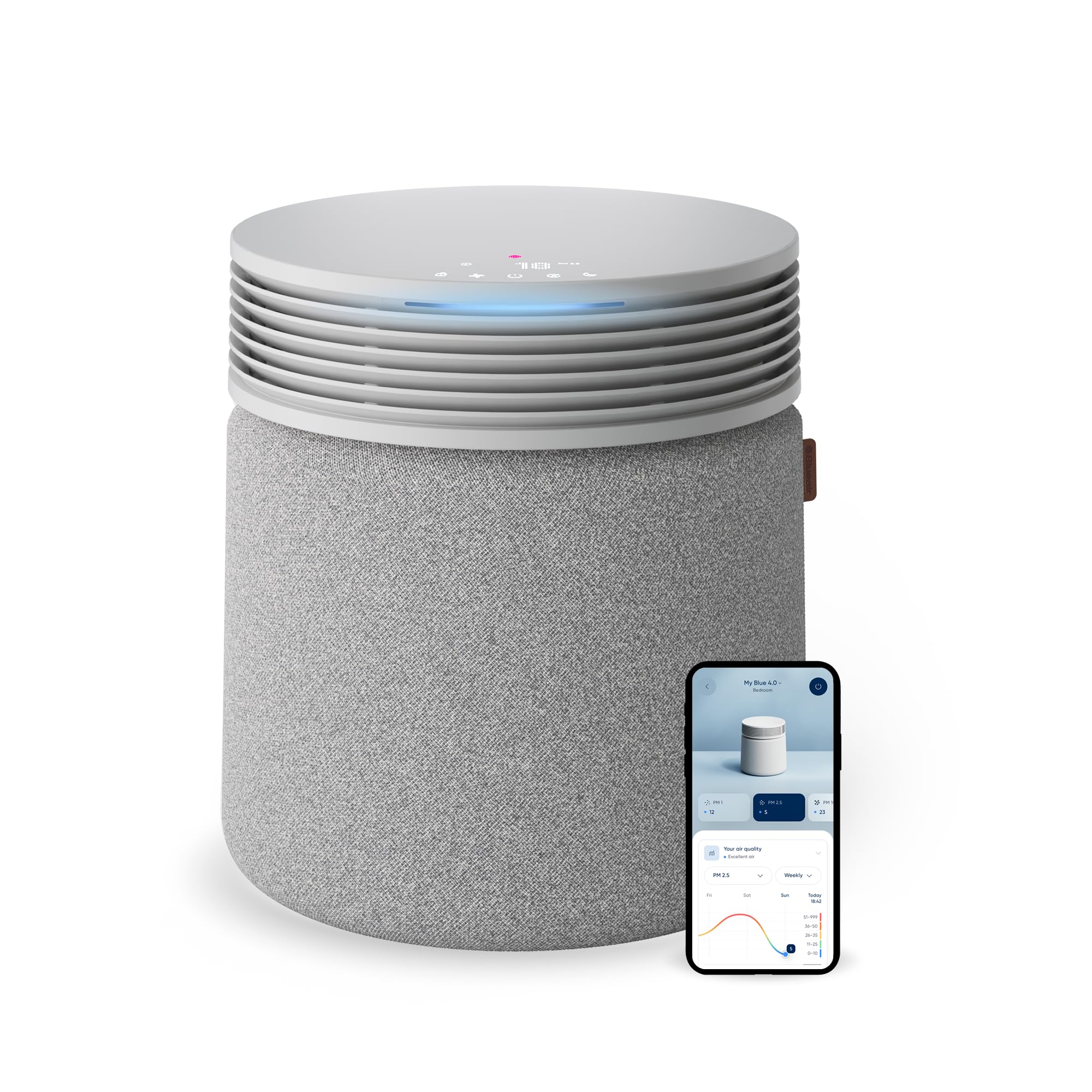
BLUEAIR’s HEPASilent technology is a clever hybrid that combines electrostatic and mechanical filtration, producing less airflow resistance while capturing fine particulates. The Blue Signature covers up to 3,385 sq ft in one hour—enough for an open-plan apartment or large basement. For immune-compromised users, this means fewer units to maintain and a lower overall noise footprint.
The unit doubles as a functional side table, making it unobtrusive in a living room or bedroom. Customers consistently praise near-silent operation on the lowest fan setting, with the auto mode using built-in sensors to speed up during cooking or when pets stir up dander. The Blueair app provides real-time air quality tracking and remote control, ideal for monitoring a room before entering.
The main downside is the cost of replacement filters, which some users find steep relative to the initial purchase price. Additionally, the app can feel sluggish compared to dedicated smart-home platforms. For those prioritizing whisper-quiet operation and aesthetic integration, the Blue Signature delivers clean air without drawing attention to itself.
Why it’s great
- Extremely quiet operation even at medium fan speeds
- Large coverage area reduces need for multiple units
- Attractive furniture-style design blends into any room
Good to know
- Replacement filters are more expensive than most mid-range options
- App interface can be slow to respond
3. LG PuriCare 360
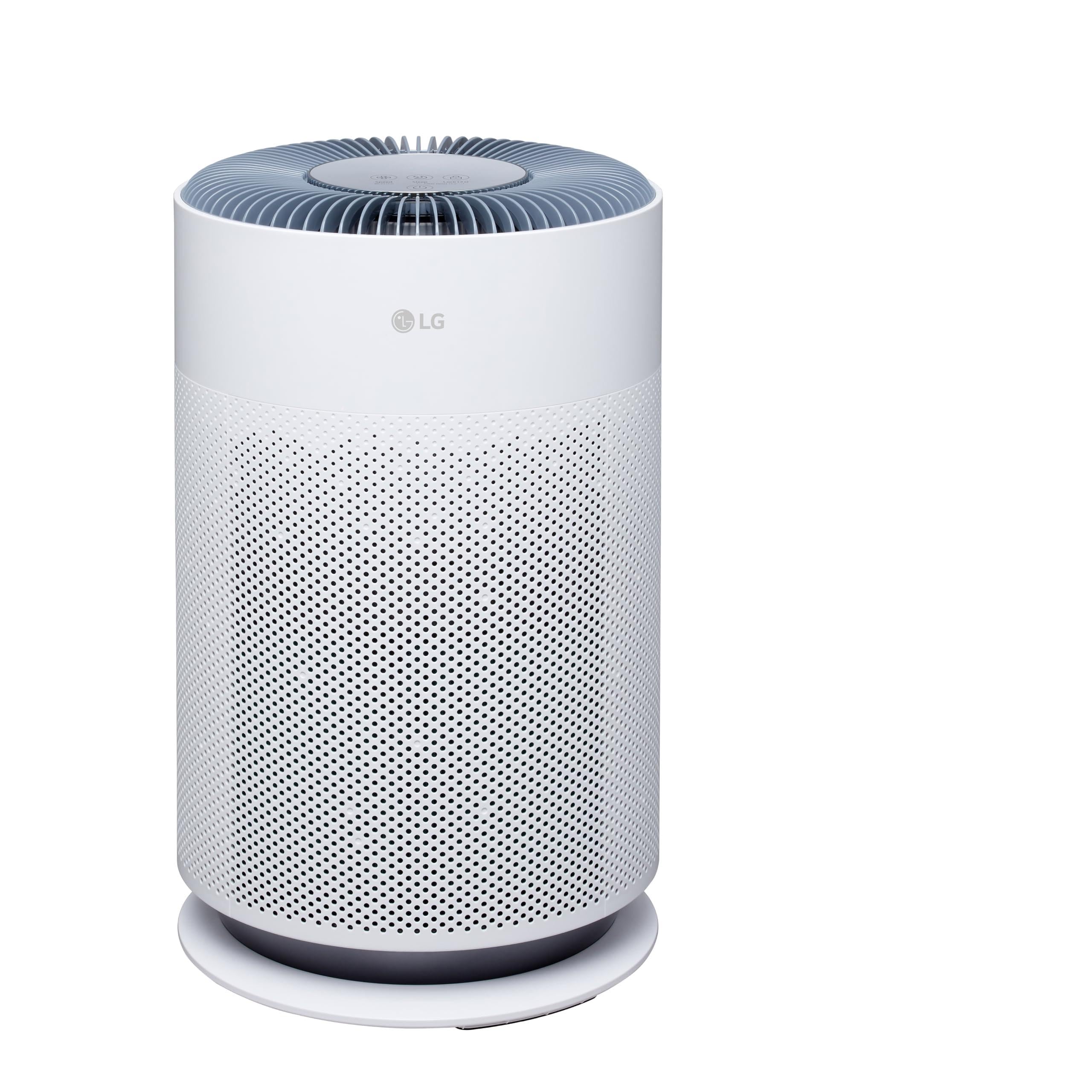
The LG PuriCare 360 uses a 360-degree intake and NanoFiber True HEPA filter to trap 99.97% of 0.3-micron particles. What sets it apart is the PM 1.0 sensor—detecting particles as small as one micron means the purifier reacts faster to ultrafine threats like bacteria and smoke nanoparticles. The unit covers up to 2,059 sq ft at one ACH or 429 sq ft at 4.8 ACH, making it suitable for a well-sealed bedroom.
Users love the whisper-quiet operation—inaudible beyond a foot on auto mode—and the convenience of the LG ThinQ app for scheduling, light dimming, and real-time air quality monitoring. The four-color LED indicator (red to green) provides instant room status without needing to check a phone. The pre-filter is also removable and washable, extending the main HEPA’s service life.
The 360-degree design means you can place it in the center of a room rather than against a wall, maximizing circulation. Some users note that the top-mounted control panel is sensitive to dust accumulation, requiring occasional cleaning. For immune-compromised users who want a compact, app-connected unit with ultrafine particle detection, the PuriCare 360 is a strong contender.
Why it’s great
- PM 1.0 sensor catches ultrafine particles early
- 360-degree intake allows flexible room placement
- LG ThinQ app with dimmable lights and schedule control
Good to know
- Touch panel can attract dust and require regular wipe-down
- Filter replacement intervals vary heavily with air quality
4. BlueDri Air Shield 550

The BlueDri Air Shield 550 is a HEPA air scrubber built for water damage restoration and construction sites, but its 550 CFM airflow and 3-stage filtration (pre-filter, HEPA, optional carbon) make it a beast for large-scale home purification. The 39-pound unit delivers at least 40% more CFM than many competitors, making it ideal for post-renovation VOC and dust control during immune-compromised recovery periods.
Users report it clears black dust-filled air in under 20 minutes during demolition, and the standard-size HEPA filter is easy to source from third-party suppliers. The daisy-chain capability lets you run multiple units from one outlet—useful for creating a negative air pressure zone in a home isolation room. On low setting, it runs quiet enough for continuous use, though high speed produces a noticeable turbine hum.
The unit is not designed for silent bedside operation; its primary strength is brute-force particle removal. The plastic housing has sharp corners, and the included carbon filter is optional (sold separately). For immune-compromised households dealing with active construction, mold remediation, or wildfire events, the Air Shield 550 offers unmatched raw particle scrubbing power.
Why it’s great
- Exceptionally high 550 CFM airflow for rapid air exchange
- Daisy-chain multiple units for zone-negative pressure setups
- Standard filter size simplifies replacement sourcing
Good to know
- Loud on high setting (turbine noise) not suitable for sleep
- No smart features or auto mode
5. Nuwave OxyPure Ultra Clean

The Nuwave OxyPure Ultra covers a massive 2,934 sq ft in one hour with a CADR of 664.6 m³/h, making it one of the most powerful residential purifiers in its class. Its 5-stage system includes a stainless-steel pre-filter (washable), an ozone emission removal filter, a Bio-Guard filter, and a HEPA/carbon combo filter. For immune-compromised users, the standout feature is the first 5 years of zero filter replacement cost—the unit ships with 4 extra HEPA/carbon filters included.
Auto mode uses particle and odor sensors to adjust fan speed across 6 levels, and the sleep mode drops to 31.4 dB—whisper-quiet for overnight use. Customers note a significant reduction in allergy symptoms within weeks and praise the WiFi app for remote monitoring. The stainless-steel pre-filter never rusts and can be vacuumed clean, eliminating the hassle of disposable pre-filters.
At 26 pounds, it is heavier than many competitors, and the 5-year filter bundle means you are paying upfront for long-term savings. Some users report the auto sensor can be overly sensitive to cooking odors, cycling to turbo mode unnecessarily. For households that want maximum coverage with the lowest long-term filter cost, the OxyPure Ultra is a compelling investment.
Why it’s great
- Zero filter replacement cost for the first 5 years (4 extra filters included)
- Washable stainless-steel pre-filter reduces waste and cost
- Sleep mode at 31.4 dB is exceptionally quiet
Good to know
- Heavy unit at 26 pounds
- Auto sensor can overreact to minor cooking odors
6. AirDoctor AD3500
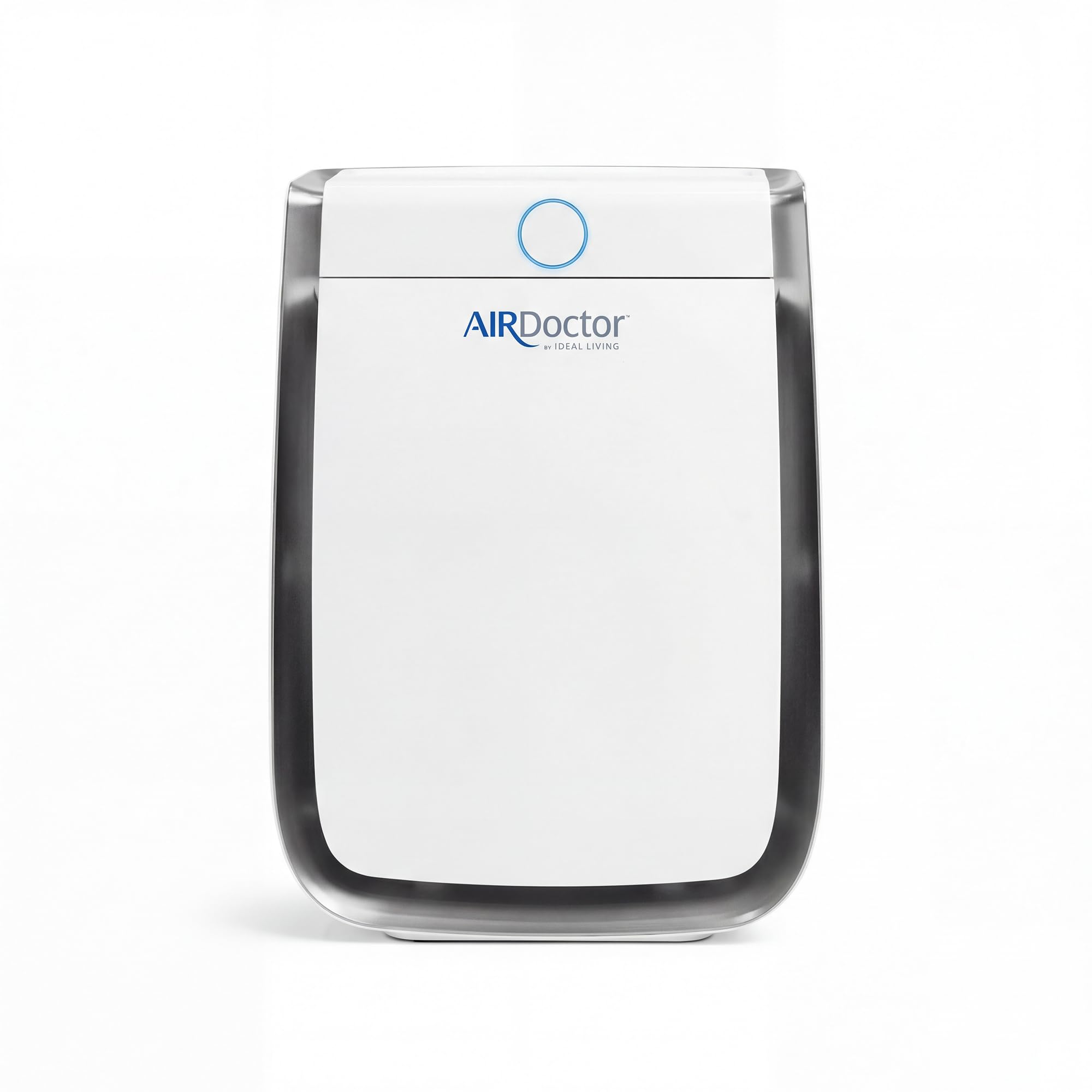
The AirDoctor AD3500 is built around UltraHEPA filtration—capturing 99.99% of airborne particles down to 0.003 microns, 100 times smaller than the HEPA standard. This level of filtration is critical for trapping individual viral particles, bacterial fragments, and ultrafine smoke particulates. The three-stage system (pre-filter, premium activated carbon with potassium permanganate, and UltraHEPA) covers up to 2,520 sq ft.
The activated carbon filter is notably thick and dense, effectively neutralizing VOCs from cleaning products, new furniture off-gassing, and wildfire smoke. The Halo PM2.5 sensor displays color-coded air quality (green to red) and adjusts fan speed in auto mode. Users with chronic respiratory issues report dramatic reductions in morning stuffiness and allergy symptoms within days of continuous use.
Replacement filters are pricey—carbon every 6 months, UltraHEPA annually—and the unit itself is heavy at 24 pounds. The white gloss finish shows fingerprints easily, requiring regular wiping. The AD3500 is FSA/HSA eligible, which helps offset the upfront cost. For immune-compromised users who need the tightest particle capture standard, the AirDoctor represents the gold standard in consumer-available HEPA technology.
Why it’s great
- UltraHEPA captures 99.99% of 0.003 micron particles
- Thick carbon filter with potassium permanganate for VOCs
- Auto mode with Halo PM2.5 sensor for real-time response
Good to know
- Replacement filter cost is high and frequent
- Glossy finish shows fingerprints and dust quickly
7. Medify MA-112 V3.0

The Medify MA-112 V3.0 leverages dual H13 HEPA filters to achieve a staggering CADR of 1009 CFM, covering up to 4,455 sq ft in one hour—enough for a whole-floor apartment or large open-concept home. The dual-fan, dual-intake design draws air from both sides and exhausts upward, preventing floor dust from being stirred up. For immune-compromised users, this means one powerful unit can serve as the primary air defense for an entire living space.
The unit includes 4 fan speeds, a sleep mode that dims all lights, a 0-8 hour timer, a dust sensor with PM2.5 indicator, and a child lock. An optional ionizer is available but should be disabled for immune-sensitive environments. Real users praise its ability to eliminate 3D printer fumes and cooking odors completely, running whisper-quiet on speed 2. The spiral top vents create excellent air circulation without drafts.
At 32 pounds and 20 inches deep, this is a substantial appliance—not a bedside unit. The replacement dual HEPA filters are expensive and need changing every 6 months (3,000 hours). Some customers have reported quality control issues with rattling panels on initial units. For households that prioritize raw coverage area over compactness, the MA-112 is a powerful workhorse.
Why it’s great
- Highest CADR (1009) in this roundup, covering over 4,400 sq ft
- Dual H13 HEPA filters for redundant particle capture
- Spiral top vents enhance circulation without floor dust
Good to know
- Large and heavy unit (32 pounds) limits placement options
- Replacement dual filter cost adds up over time
8. Air Oasis iAdapt 2.0

The Air Oasis iAdapt 2.0 brings five-stage filtration to the table: a pre-filter, H13 HEPA, activated carbon, silver ion antimicrobial treatment, and UV-C light. The silver ion layer is specifically designed to suppress microbial growth on the filter surface, and the UV-C light targets airborne bacteria and viruses. This multi-pronged approach is particularly valuable for immune-compromised users concerned about mold, bacterial, and viral contamination beyond particle capture.
The Pro size covers 5,474 sq ft in one hour with a CADR of 706 CFM, and the filter lasts up to 2 years—one of the longest service intervals in this category. Users praise the near-silent operation on low speed and the intelligent overdrive fan that kicks in when smoke or strong odors are detected. The HEPA filter removes particles down to 0.05 microns, and the unit is recommended by healthcare professionals for biotoxin illness management.
The iAdapt 2.0 uses older WiFi 5 (802.11n) with insecure protocols, requiring a separate IoT VLAN for security-conscious users. The bright top lights cannot be fully dimmed, which may be disruptive in bedrooms. At 38 pounds and 45 inches tall, it has a significant footprint. For those seeking the most complete filtration ecosystem (HEPA + carbon + UV + silver), this unit is unmatched in its science-backed approach.
Why it’s great
- 5-stage system includes silver ion and UV-C for microbial control
- Filters last up to 2 years, reducing maintenance frequency
- Recommended by healthcare professionals for biotoxin cases
Good to know
- WiFi uses insecure protocols; requires IoT network separation
- Tall design (45″) limits placement to open floor areas
9. Austin Air HealthMate Plus

The Austin Air HealthMate Plus is a tank—47 pounds of steel-bodied filtration engineered for heavy chemical and odor removal. Its 4-stage system includes a pre-filter, a large 15-pound blend of activated carbon and zeolite, and a true HEPA filter. The carbon/zeolite mass is what sets it apart: 15 pounds of adsorbent media is substantially more than almost any other residential purifier, meaning it can handle high concentrations of VOCs, smoke, and chemical off-gassing for years without replacement.
Covers up to 1,500 sq ft, making it ideal for a large master suite or home office. Users consistently report that within hours of operation, they notice reduced stuffiness, no more lingering cooking smells, and the elimination of neighbor cigarette or marijuana smoke seeping through walls. The low setting is nearly inaudible, while the high setting produces a fan flutter audible as a gentle white noise.
The filter lasts up to 5 years—a genuine long-term value, though the replacement cost is significant when it comes due. The steel body is durable but heavy (47 pounds), and the unit requires 10 inches of clearance on all sides for proper airflow. For immune-compromised users sensitive to chemical odors, off-gassing from new furniture, or smoke infiltration, the HealthMate Plus offers unmatched adsorption capacity in a sealed, hospital-reliable chassis.
Why it’s great
- 15-pound carbon/zeolite blend for superior VOC and odor removal
- Steel body construction with up to 5-year filter life
- Effectively eliminates neighbor smoke infiltration through walls
Good to know
- Very heavy (47 pounds) and large footprint
- High setting is noticeably loud (fan flutter)
FAQ
Can an air purifier reduce the risk of airborne infections for immunocompromised individuals?
How many air changes per hour do I need for a medical-grade bedroom setup?
Should I avoid air purifiers with ionizers or ozone generators?
How often should I replace the filters for an immune-compromised household?
Final Thoughts: The Verdict
For most users, the air purifier for immunocompromised patients winner is the Coway Airmega 250 because it delivers hospital-grade HEPA filtration, low noise, and a washable pre-filter that keeps long-term costs manageable—all in a compact footprint that fits easily into a bedroom or living room. If you need the most advanced particle capture available in a consumer unit, grab the AirDoctor AD3500 with UltraHEPA filtration down to 0.003 microns. And for massive whole-home coverage where you want one unit to dominate an open floor plan, nothing beats the Medify MA-112 V3.0 with dual H13 HEPA and a CADR of 1009 CFM.

Mo Maruf
I created WellFizz to bridge the gap between vague wellness advice and actionable solutions. My mission is simple: to decode the research and give you practical tools you can actually use.
Beyond the data, I am a passionate traveler. I believe that stepping away from the screen to explore new environments is essential for mental clarity and physical vitality.