Our readers keep the lights on and my smoothie glass nicely filled. As an Amazon Associate, I earn from qualifying purchases.
Nothing kills a campsite sunset faster than wrestling with a finicky antenna while your neighbors enjoy clear local news and football. RV antennas face a brutal reality: you move every few days, towers shift direction, and trees, hills, and metal roofs constantly degrade your signal. The right antenna doesn’t just grab channels—it adapts to the road.
I’m Mohammad Maruf — the founder and writer behind WellFizz. I’ve spent years analyzing consumer electronics hardware and dissecting user reports to separate genuine long-range performance from inflated marketing claims in the RV antenna space.
Whether you need a stealthy low-profile dome or a high-gain directional wing, the right antenna for rv will save you from endless cranking and missed broadcasts at your favorite boondocking spot.
How To Choose The Best Antenna For RV
Picking an RV antenna is not the same as choosing one for a stationary home. Your antenna must handle constant vibration, road debris, and unpredictable tower directions. Three decisions will determine whether you spend your trip watching TV or fighting with static.
Directional vs. Omnidirectional
Directional (Yagi/batwing) antennas pull in signals from one focused direction, giving you longer range when you know where the towers are. Omnidirectional models pick up signals from every direction simultaneously — ideal when you park in a new spot each night and don’t want to climb on the roof to rotate the antenna. Most RVers start with omni for convenience, then add a directional unit for deep-woods trips.
Amplification and LTE Filtering
A built-in pre-amplifier boosts weak signals before they travel down the coax cable, but it also amplifies noise if towers are close. Look for an antenna with a switchable amplifier or a model that includes a 4G LTE filter. That filter blocks interference from nearby cell towers, which otherwise causes pixelation or dropped channels on certain frequencies.
Build Quality and Mounting System
RV antennas live outdoors full-time. All-metal construction with weather-sealed joints outlasts plastic housings that crack after a season of sun and road vibration. Check whether the antenna uses a standard J-mount or a proprietary base — a common mount makes future replacement much easier if a low-hanging branch takes out your setup.
Quick Comparison
On smaller screens, swipe sideways to see the full table.
| Model | Category | Best For | Key Spec | Amazon |
|---|---|---|---|---|
| Antennas Direct ClearStream 2 RV | Directional | Rural & remote boondocking | 60+ mile range, 31.4″ wide | Amazon |
| Winegard Air 360+ V2.S | Omnidirectional | All-in-one RV entertainment | 55-mile omni, satellite port | Amazon |
| Winegard Sensar III | Directional Batwing | Direct replacement for classic batwing models | 55-mile range, 48.5″ boom | Amazon |
| ANTOP AT-414B | Omnidirectional | No-adjustment suburban camping | 65-mile omni, Smartpass amp | Amazon |
| Magnadyne TV-1W | Omnidirectional Wing | Direct OEM replacement | AM/FM + TV, 24″ wing | Amazon |
| 1byone 360° Omni | Omnidirectional | Budget-friendly entry point | 32ft RG6 cable, built-in pre-amp | Amazon |
| CeKay Yagi HD | Directional Yagi | Attic/basement stationary use | 70-mile range, all-metal | Amazon |
In‑Depth Reviews
1. Antennas Direct ClearStream 2 RV
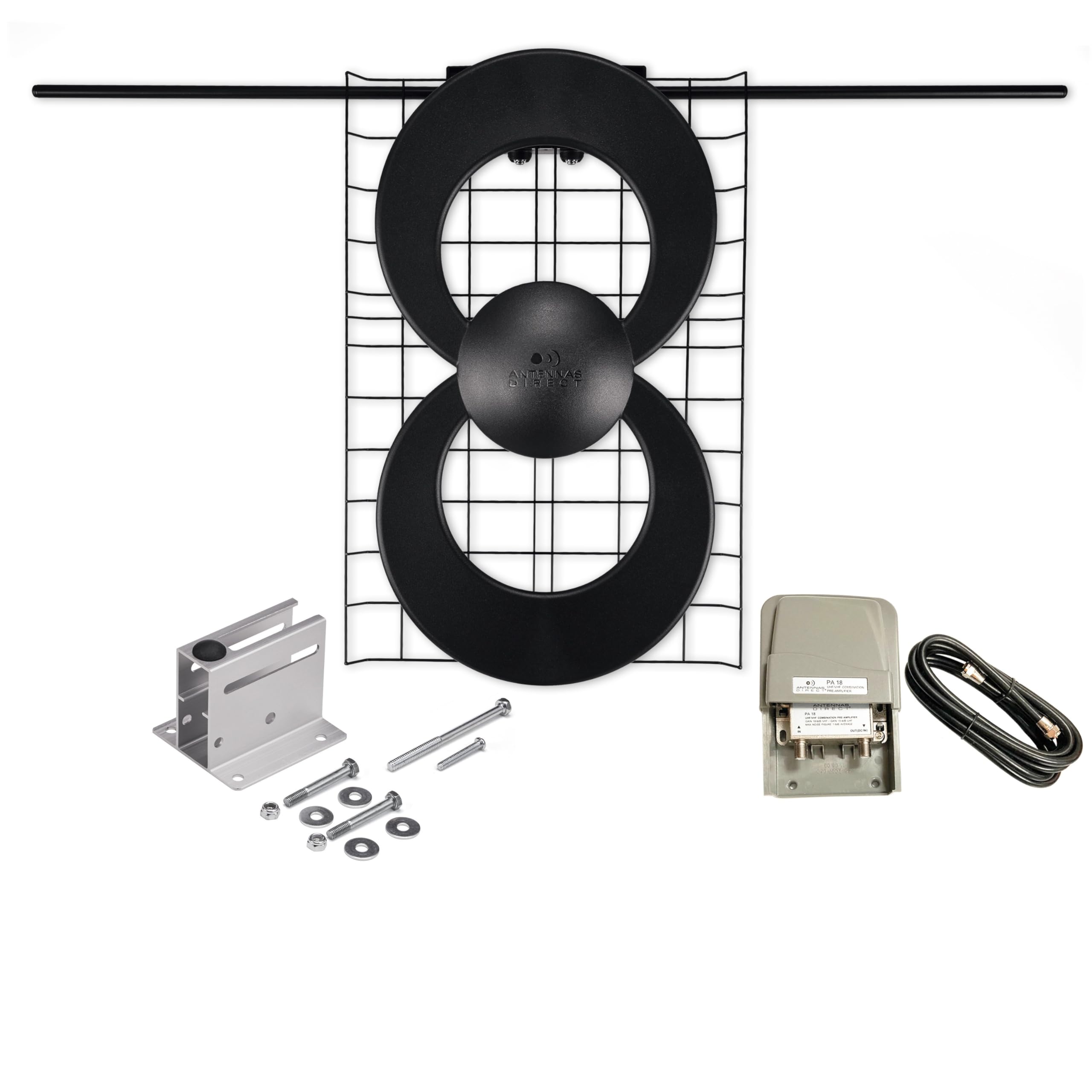
The ClearStream 2 RV earns the top spot by combining a patented dual-loop design with a purpose-built mounting bracket that adapts to existing RV mast gear. Its multi-directional pickup pattern and 60+ mile range give you consistent reception in rural and remote areas where omnidirectional units drop off. The included preamplifier boosts weak signals before they reach the coax, and the rear reflector adds forward gain while blocking interference from behind the RV.
Users consistently report seeing 40 to 60 channels in moderate terrain, with solid performance out to 60 miles even when towers sit behind tree lines. The bracket design makes it a direct replacement for Winegard batwing assemblies with minor modification — a drill and one extra hole is all it takes. It handles 4K, 8K UHD, and NEXTGEN TV signals, so your setup remains relevant as broadcast standards evolve.
At 31.4 inches wide, it is noticeably larger than a dome or wing antenna, so you must verify clearance on your roof. Some users found the included RG59 coax limits signal quality over long cable runs; upgrading to RG6 at the connection point fixes that. If you boondock in mountain or forest terrain regularly, this antenna’s focused gain makes the difference between watching a game and staring at a blue screen.
Why it’s great
- True 60+ mile directional reception with preamp
- Attachés to existing RV mast with included bracket
- 4K/8K UHD and NEXTGEN TV compatible
Good to know
- Requires drilling a mounting hole for some RV mast setups
- Large footprint at 31.4 inches wide
2. Winegard Air 360+ V2.S
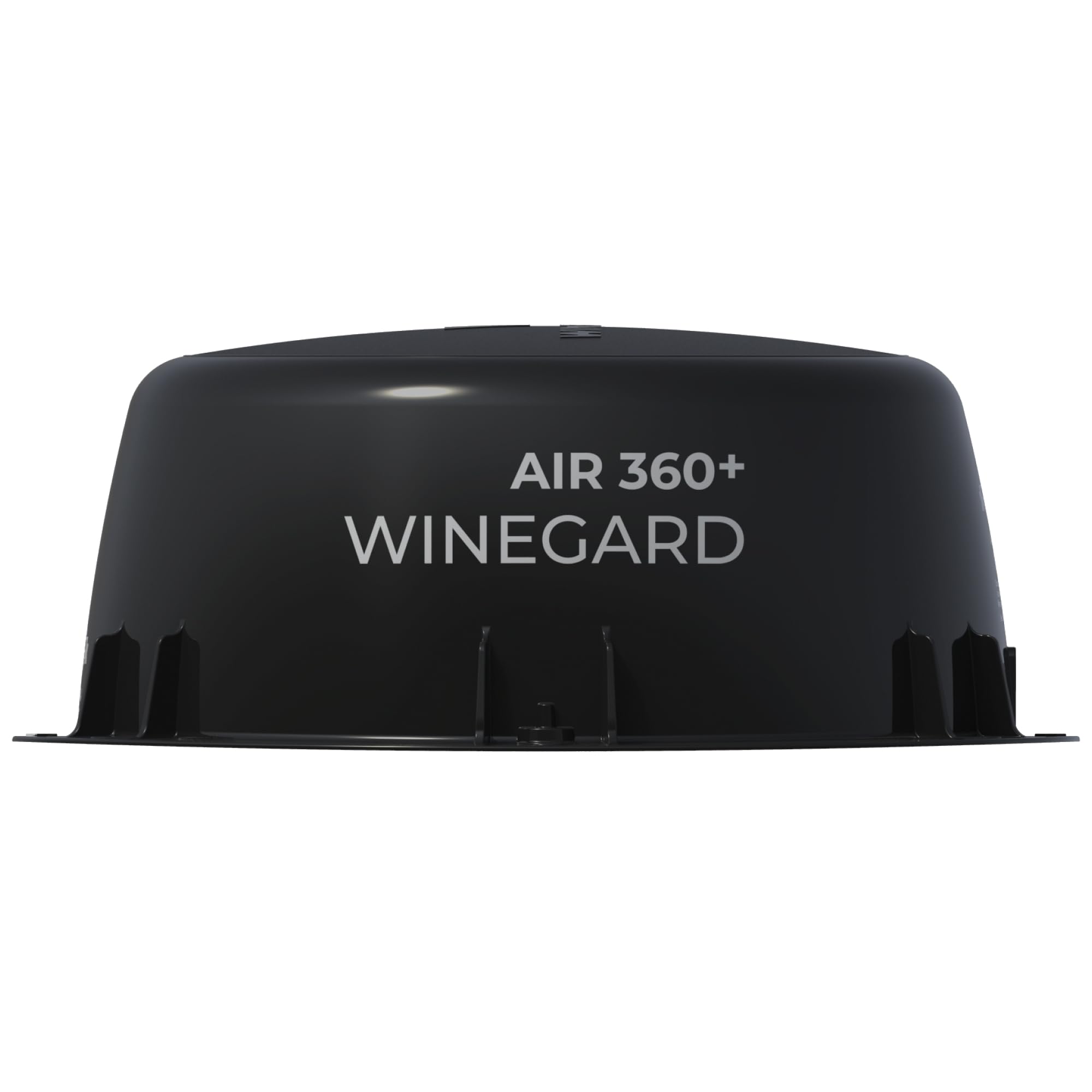
The Air 360+ V2.S is the most versatile single-roof solution available for RVers who want OTA TV, FM radio, satellite readiness, and future cellular connectivity all under one low-profile dome. Its amplified omnidirectional design captures VHF/UHF and FM signals from up to 55 miles away without any aiming — you park, scan channels, and watch. The built-in satellite port lets you add a Dish or DirecTV connection without drilling another hole in your roof.
Real-world reception matches the Winegard batwing models it replaces, but with zero manual cranking or lowering required. Users report picking up 50 to 70 channels in suburban and exurban campgrounds, with the 4G LTE filter effectively eliminating cell-tower interference that plagues older amplified antennas. The DC 12V power interface ties directly into your RV electrical system without an inverter.
Pairing the Air 360+ with a Winegard Gateway 4G router unlocks integrated Wi-Fi and cellular antenna capability — a smart hedge if you plan to add internet access later. The dome measures roughly 12 inches in diameter and stands only a few inches tall, making it one of the most aero-friendly options for travel. The trade-off is that omnidirectional range is inherently lower than a directional Yagi in deep fringe areas. If you primarily camp in open terrain with towers within 30 miles, this is the set-and-forget champion.
Why it’s great
- No aiming or cranking required at each campsite
- Built-in satellite pass-through port
- Wi-Fi and cellular upgrade path available
Good to know
- Omnidirectional range caps out around 55 miles in clear conditions
- Requires butyl tape and sealant for watertight roof installation
3. Winegard Sensar III Batwing RV-3095
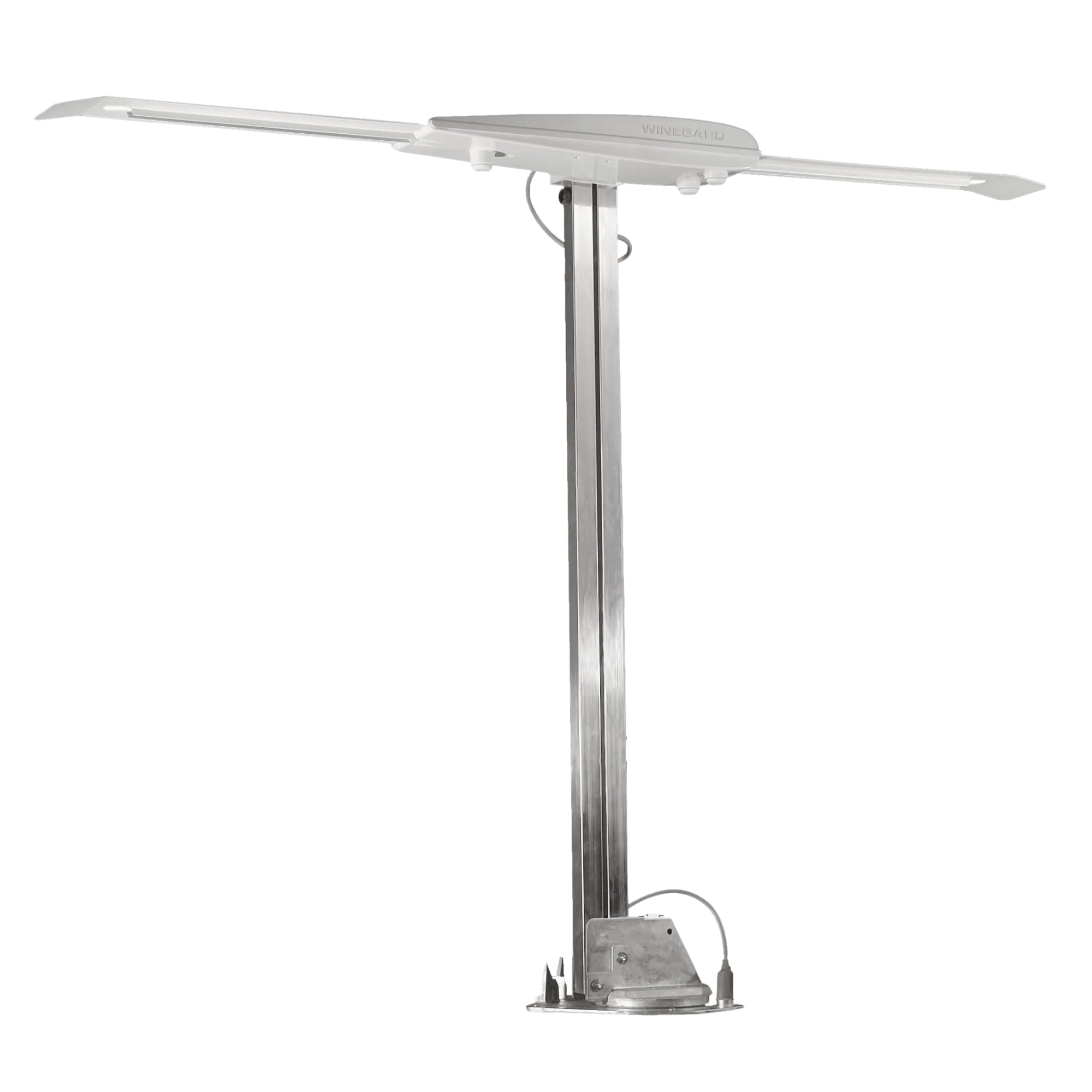
With over two decades of deployment on RV roofs, the Sensar III is the best-selling batwing-style antenna for a reason: it works reliably, replacement parts are everywhere, and installation is straightforward for anyone comfortable with basic tools. The 55-mile range is realistic in open terrain, and the amplified VHF/UHF reception handles both standard digital and 4K-ready signals.
Users replacing a worn-out batwing report picking up 50 to 60 channels immediately after swapping the head unit. The crank-up mast mechanism is simple — turn the handle inside the RV to raise and rotate the antenna toward the nearest towers. The Sensar III is also lighter than many directional competitors at 6.5 pounds, reducing strain on aging mast assemblies.
The main limitation is the directional nature: you must manually turn the antenna when you change campsites or when towers are spread across different compass points. Some users found the included amplifier marginal in fringe areas beyond 55 miles. If your RV already has a batwing crank assembly, this is the most painless upgrade you can make. For full-time travelers who prefer zero manual adjustment, an omnidirectional dome may be a better fit.
Why it’s great
- Exact drop-in replacement for older batwing antennas
- Proven 55-mile range with clear reception
- Lightweight at 6.5 lbs, easy on mast mechanisms
Good to know
- Requires manual rotation at each new campsite
- Extends to nearly 49 inches when raised
4. ANTOP AT-414B

The ANTOP AT-414B brings a clever innovation to the omnidirectional category: a switchable Smartpass amplifier that lets you toggle between short-range and long-range reception. In urban campgrounds where towers are close, turning the amplifier off prevents signal overload and pixelation. In remote spots, switching it on boosts weak signals from up to 65 miles away.
The 360-degree disc design means you mount it once and never touch it again — no cranking, no aiming, no climbing onto the roof mid-trip. The integrated 4G LTE filter reduces interference from nearby cell towers, and the weather-resistant housing keeps rain and debris out of the electronics. Users report 26 to 60 channels depending on mounting height and terrain, with particularly good VHF reception for CBS and Fox affiliates.
At a 15-inch disc size, the AT-414B is compact enough to fit on a standard J-mount without looking oversized. Some users found the mounting bracket plastic rather than all-metal, which can flex in high wind. The included RG6 coax is generous, but the power injector must be plugged into an indoor outlet. For RVers who prioritize total convenience and campground-to-campground consistency, this antenna delivers strong value without the bulk of a batwing.
Why it’s great
- Switchable Smartpass amp prevents overload near towers
- True 65-mile omnidirectional reception
- Compact 15-inch disc, low wind resistance
Good to know
- Mounting bracket materials feel less robust than premium models
- Some users experienced weak channel counts in deep fringe areas
5. Magnadyne TV-1W Wing Style

The Magnadyne TV-1W is a practical choice for RVers who need a direct OEM-style replacement for a damaged wing antenna. It combines TV (UHF/VHF) and AM/FM reception in a single 24-inch aerodynamic wing that mounts to the existing roof hole pattern — no drilling, no adapter plates. The included WS-B1 wall plate gives you dual TV outputs plus a shore cable input for campground coax hookups.
Users consistently rate this as an easy swap: remove the old wing, disconnect the coax, install the new unit, and screw down the new wall plate. Reception reports range from 40 to 83 channels, with strong AM/FM performance that eliminates the need for a separate radio antenna. The 4G LTE filter built into the amplifier cuts down on interference from nearby cell towers, which is a common complaint with older wing-style units.
Because the TV-1W is designed as a replacement for existing wing mounts, it does not include a mast or elevation crank. If your RV had a different mounting pattern, you will need to fill old holes and drill new ones. The wing surface is slightly larger than some factory units, which may catch more wind during travel. For anyone with a broken original wing antenna, this is the most straightforward and cost-effective repair available.
Why it’s great
- Exact bolt-on replacement for common wing antennas
- Combined TV and AM/FM reception
- Includes dual-output wall plate with shore input
Good to know
- Not compatible with batwing or crank-up mast systems
- Wing profile creates more wind drag than a flush dome
6. 1byone 360° Omni-Directional

The 1byone omnidirectional antenna delivers a compelling entry-level option for RVers who want 360-degree reception without spending premium money. Its Smart pass amplifier technology boosts signals right at the antenna to compensate for long cable runs, and the built-in 4G LTE filter helps keep cell tower noise out of your TV picture. The 32-foot RG6 coax cable and tool-free assembly mean you can go from box to roof in under an hour.
Users in suburban settings report 50 to 60 channels when mounting the antenna on a south-facing window or exterior wall 10 feet off the ground. In dense urban environments like Manhattan, users still pull in around 60 channels including major networks, though signal reliability varies with building obstructions. The all-plastic housing keeps weight down but raised concerns about long-term UV resistance compared to all-metal designs.
Several users reported water ingress after two years of outdoor exposure, with moisture corroding the preamp and RF connector. Sealing the seam with silicone and drilling small drainage holes extends its life significantly. For the price-conscious RVer who travels in moderate terrain and plans to replace gear every few seasons, the 1byone provides solid performance with a few durability caveats.
Why it’s great
- 360-degree reception requires no aiming
- Pre-amp and LTE filter included at a budget-friendly price
- Tool-free assembly with long RG6 cable
Good to know
- Plastic housing less durable than all-metal competitors
- Water ingress reported after extended outdoor exposure
7. CeKay Yagi HD

The CeKay Yagi HD is a classic high-gain directional antenna that excels at pulling in distant towers when you are willing to aim it manually. Its all-metal construction and 70-mile range rating make it a compelling option for RVers who park for extended periods and want to maximize channel count. The included 40-foot RG6 coax and J-mount give you flexibility for roof or ground-level deployment.
Users installing this antenna in attics and basements report 30 to 60 channels with 90-100% signal strength, even with the antenna pointed backward. The Yagi design filters out off-axis interference effectively, which is useful in areas with multiple tower clusters. Assembly requires pushing the aluminum elements into rubber holders, which can be tight — a hammer or lubricant helps. The antenna is NEXTGEN TV (ATSC 3.0) compatible, so it will remain useful as broadcast standards upgrade.
The main downside for RV use is that the CeKay is not optimized for frequent relocation. The thin aluminum elements can bend if not packed carefully during travel, and the J-mount’s pole connections feel loose for sustained highway vibration. Users who use this as a stationary attic antenna love it, but road warriors may find the setup and takedown process tedious. For the RVer who stays put for weeks at a time, this antenna offers premium reception at a budget-friendly price.
Why it’s great
- All-metal Yagi design with 70-mile range rating
- Includes 40ft RG6 coax and J-mount
- NEXTGEN TV and 4K/8K compatible
Good to know
- Fragile elements not ideal for frequent RV travel
- Pole connections can loosen from road vibration
FAQ
My RV already has a roof antenna. Can I just swap the head unit?
Will a directional Yagi antenna work better than an omnidirectional dome?
How important is an LTE filter for an RV antenna?
Final Thoughts: The Verdict
For most users, the antenna for rv winner is the Antennas Direct ClearStream 2 RV because it blends directional gain with an RV-specific bracket, giving you the longest range in a package that fits existing mast gear. If you want zero-adjustment convenience, grab the Winegard Air 360+ V2.S. And for a direct replacement of a broken batwing, nothing beats the Winegard Sensar III.

Mo Maruf
I created WellFizz to bridge the gap between vague wellness advice and actionable solutions. My mission is simple: to decode the research and give you practical tools you can actually use.
Beyond the data, I am a passionate traveler. I believe that stepping away from the screen to explore new environments is essential for mental clarity and physical vitality.