Our readers keep the lights on and my smoothie glass nicely filled. As an Amazon Associate, I earn from qualifying purchases.
Running a dry dust mop across the floor leaves a clean stripe on the hardwood, but the quarter-inch ledge where the wall meets the floor — that narrow shelf of painted wood or MDF — stays coated in a fine layer of settled dust, pet hair, and kitchen grease. A dedicated tool changes the physics of the job by swapping a flat mop head for a scrubbing panel that conforms to the baseboard profile, eliminating the need to crouch with a rag or wipe each linear foot by hand.
I’m Mohammad Maruf — the founder and writer behind WellFizz. I’ve spent years analyzing cleaning tools at the spec level, focusing on handle ergonomics, pad material performance, and head geometry that determines whether a tool actually presses into the crevice where baseboard meets carpet.
Whether you are tired of crawling along the floor with a sponge or you want a faster weekly maintenance routine, the right tool keeps you standing upright while the pad does the work. Finding the best baseboard cleaner comes down to handle reach, pad versatility, and head articulation that hugs the molding.
How To Choose The Best Baseboard Cleaner
A baseboard cleaner is essentially an extended handle with a head that presses a pad against the vertical surface of the molding. The three variables that decide whether the tool collects dust in one pass or leaves a smeared line are head articulation, pad attachment method, and total reach.
Head Articulation: Flat vs. Folding Panel
The majority of tools in this category use a flat mop head that rubs straight along the baseboard face. The more effective designs add a 180-degree folding panel or a convex ridge along the front edge that matches the profile of standard 2.25-inch to 4-inch molding. Without that fold, the pad flattens out and the top edge of the baseboard — where dust settles thickest — gets skipped. Look for a model that explicitly states a “flipped panel” or “convex part” for baseboard geometry.
Pad Material: Microfiber vs. Chenille
Microfiber pads have a tight loop structure that traps liquid when damp, making them ideal for wet-mopping greasy kitchen baseboards or scrubbing scuff marks. Chenille pads use a looser, fringed weave that generates high electrostatic attraction when dry, pulling dust and hair off the surface without scattering it. The best kits include both types so you can dry-dust first and wet-scrub as needed without buying separate pads.
Handle Reach and Locking Mechanism
Baseboard cleaners range from 56 inches to 82 inches at full extension. A 56-inch handle works for standard ceiling heights (8–9 feet) when cleaning the baseboard from a standing position. Taller individuals or anyone cleaning crown molding or ceiling corners should seek a model that reaches 68 inches or longer. The locking mechanism — threaded metal sections versus spring-button telescoping — determines stability; threaded stainless steel sections resist wobble better than plastic twist-locks.
Quick Comparison
On smaller screens, swipe sideways to see the full table.
| Model | Category | Best For | Key Spec | Amazon |
|---|---|---|---|---|
| AegisHome Wall Cleaner | Mid-Range | Longest reach + corner access | 82-inch extension, 6 pads, 360° head | Amazon |
| JEHONN Baseboard Cleaner | Mid-Range | Convex panel for molding fit | 56-inch reach, 4 pads, built-in squeegee | Amazon |
| Keyloland Wall Mop | Mid-Range | Adjustable stainless steel handle | 68-inch extendable, 2 pads, lightweight | Amazon |
| Qaestfy Baseboard Cleaner | Budget | 2-in-1 baseboard + ceiling fan duster | 63-inch fan mode, 3 pads, squeegee | Amazon |
| wlich Baseboard Cleaner | Value | Budget-friendly all-surface kit | 60-inch reach, 5 pads, includes brush | Amazon |
In‑Depth Reviews
1. AegisHome Wall Cleaner (Newly Upgraded)
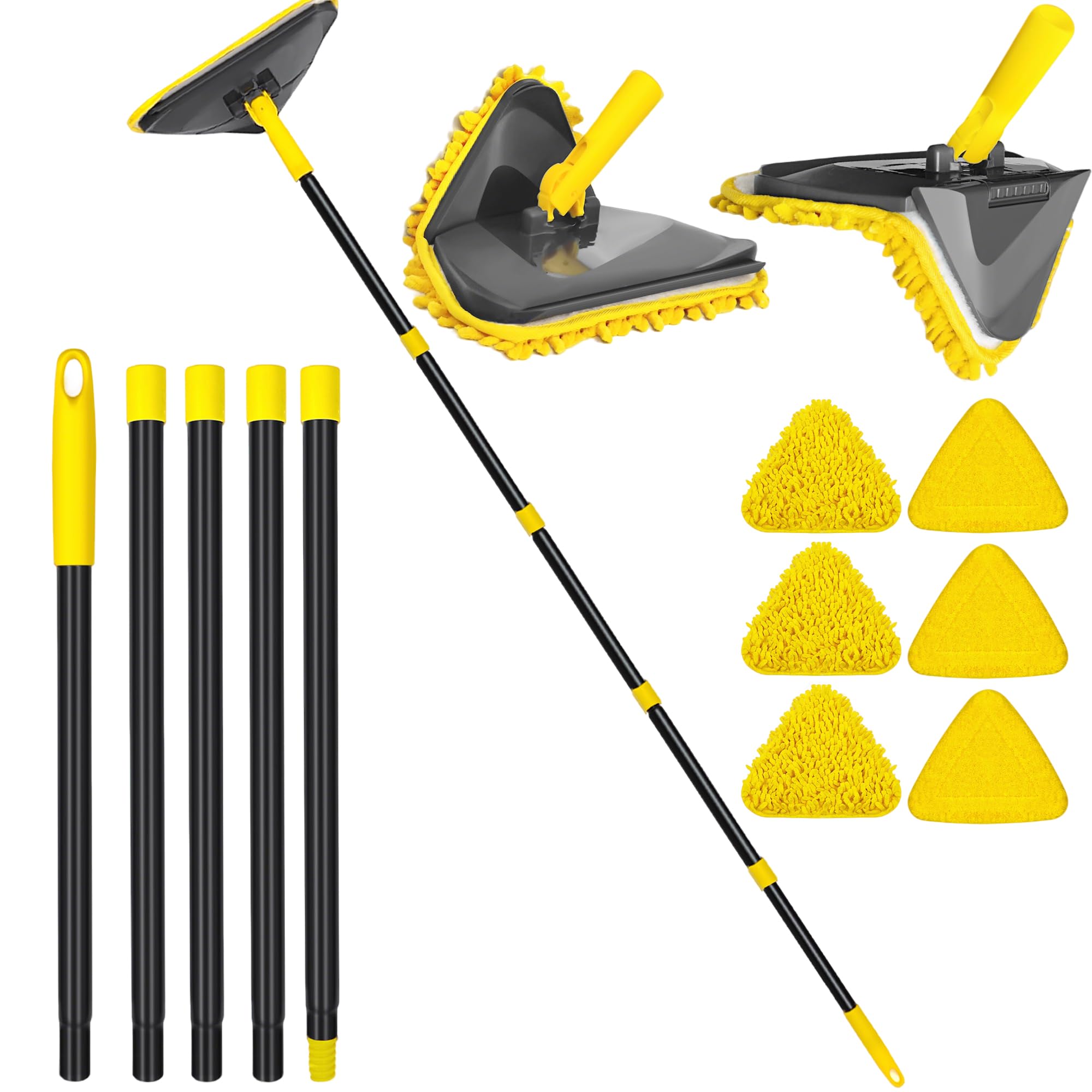
The AegisHome model is the only tool in this review that extends to 82 inches from a compact 37-inch storage length, achieved through five metal extension poles. At full reach, a person standing on a level floor can clean crown molding, ceiling corners, and tall windows without a step stool. The head features a 180-degree flipped panel that locks into a V-shape specifically for baseboard profiles, so the pad presses against both the vertical face and the horizontal top edge of the molding.
The pad kit includes three microfiber and three chenille heads — more than any other tool here. The chenille pads generate enough static cling to pull cobwebs and fine dust off painted walls without disturbing the paint. The 360-degree rotating head flexes into tight corners where baseboard meets door casing, eliminating the hand-and-rag step. Multiple reviewers over age 65 specifically noted that this tool eliminated the need to bend or kneel.
The built-in silicone squeegee on the back of the head is a practical addition for scraping water off shower walls or windows after mopping. The microfiber pads handle wet scrubbing on kitchen baseboards where grease builds up, and they release dirt easily under running water. The only trade-off is the head width — at 6.5 inches, it is wider than some competitors, which can leave a narrow strip of dust at the very bottom if the pad is not centered.
Why it’s great
- The 82-inch extension cleans crown molding and ceiling corners without a ladder.
- Six pads (3 microfiber + 3 chenille) cover both dry dusting and wet scrubbing.
- 360-degree rotation reaches into corners and around door frames.
- Built-in squeegee eliminates the need to switch tools for windows and shower doors.
Good to know
- The 6.5-inch-wide head requires careful centering to avoid missing the bottom edge of narrow baseboard.
- Five metal poles mean longer assembly time compared to two-piece handles.
2. JEHONN Baseboard Cleaner Tool with Handle
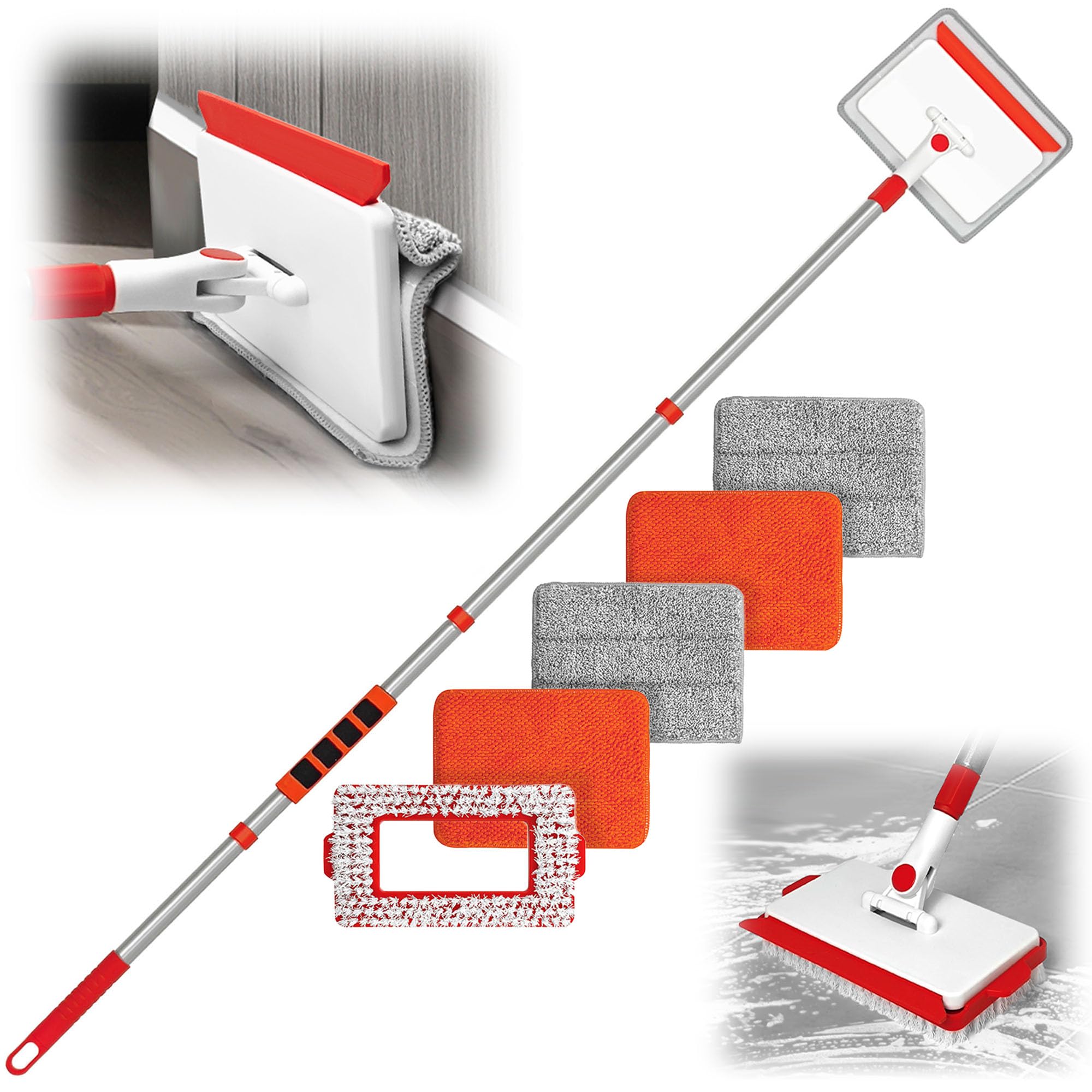
The JEHONN tool differentiates itself with a convex bump molded into the front edge of the cleaning panel. When pushed against a standard baseboard, that raised ridge conforms to the concave curve of the molding face and the top ledge, capturing dust from both surfaces in a single pass. Folding the convex panel flat converts the tool into a standard flat mop for open wall sections — a split personality that matches the typical homeowner’s need.
The kit comes with two microfiber and two chenille pads, plus a separate stiff-bristle brush for scrubbing stubborn grout lines or tile corners. The 180-degree rotating head locks in both directions, allowing the user to clean baseboard on either side of a hallway without repositioning the handle. The 55.9-inch stainless steel handle is not extendable, but at that fixed length it keeps most users between 5’4″ and 6’0″ standing upright during baseboard work.
The silicone squeegee bar integrated into the panel scrapes residue off shower doors and windows without leaving streaks. The Velcro pad attachment is secure during cleaning but requires careful alignment during pad changes — a few user reports mention the Velcro backing peeling from the panel after several washes. The brush accessory is a thoughtful inclusion for pet owners whose baseboards accumulate dried muddy paw-prints at the base.
Why it’s great
- Convex front edge hugs standard baseboard molding for more thorough dust pickup.
- Two pad types (microfiber + chenille) plus a scrubbing brush cover every surface.
- 180-degree locking head cleans both sides of a hallway without repositioning.
Good to know
- Fixed 56-inch handle limits extension; not ideal for ceiling cleaning.
- A minority of users report Velcro backing peeling from the panel after multiple wash cycles.
3. Keyloland Wall Mop

Keyloland takes a different build approach by using four stainless steel tube sections that thread together to reach 68 inches. The metal handle resists flex better than plastic telescoping poles when applying pressure during wet scrubbing. The mop head itself is a flat rectangular microfiber pad with a soft chenille alternative included, and the head pivots freely on a ball joint rather than locking into fixed angles.
At 0.73 kilograms (roughly 1.6 pounds), this is the lightest full-size tool in the lineup. The reduced weight makes a difference during overhead ceiling fan cleaning, where arm fatigue sets in faster with heavier tools. Users specifically mentioned using it to clean wicker furniture, window blinds, and vehicle interiors — the electrostatic chenille pad lifts dust without needing a separate spray wax or dusting chemical.
The lack of a folding panel means the pad stays flat against the baseboard, so it misses the top edge of the molding in a single pass. For baseboard-only work, you may need to tilt the handle to angle the pad upward. The ball-joint head is less precise than a locking hinge, which some users found frustrating when trying to scrub a specific scuff mark. But for anyone who wants one tool that dusts baseboards, walls, fans, and car dashboards without bending or climbing, the Keyloland offers the best versatility-to-weight ratio here.
Why it’s great
- Stainless steel extension poles resist bending under pressure during wet scrubbing.
- Sub-1.6-pound weight reduces arm fatigue during overhead ceiling fan and wall cleaning.
- Electrostatic chenille pad lifts dust from blinds, wicker, and car interiors without chemicals.
Good to know
- Flat pad design cannot conform to the top edge of baseboard molding in one pass.
- Free-rotating ball joint lacks the precision of a locking hinge for targeted scrubbing.
4. Qaestfy Baseboard Cleaner Tool with Handle

The Qaestfy tool reconfigures the head with a separate ceiling fan duster attachment that extends the handle to 63 inches. The baseboard mode uses a flat rectangular pad head with a lever on the panel that angles the pad to match the molding profile — a mechanical folding mechanism that locks into place. The included pad set includes two microfiber heads and one chenille head, plus the fan duster sleeve.
Users consistently praise this tool for eliminating back pain during baseboard cleaning. The extended fan mode reaches standard ceiling fan blades without a ladder, and the microfiber pad traps blade dust without scattering it. The squeegee on the back of the head handles window and shower door streaks, and the washable pads survive repeated machine cycles without noticeable fraying.
The plastic handle sections are lighter than stainless steel but introduce some flex when applying downward pressure on stubborn dirt. The head slipped off the baseboard edge for some users who reported needing to hold the pad in position with extra hand pressure — a common issue with flat heads on curved molding. At a mid-range price point, this tool works well for those who want one device for both baseboard and ceiling fan duty, but dedicated baseboard users may prefer a stiffer handle.
Why it’s great
- Ceiling fan duster attachment reaches blades without a ladder.
- Mechanical lever folds the panel to match baseboard profile.
- Washable pads hold up through repeated machine cycles.
Good to know
- Plastic handle flexes under heavy scrubbing pressure.
- Flat pad can slip off the baseboard edge without firm hand pressure.
5. wlich Baseboard Cleaner Tool with Handle
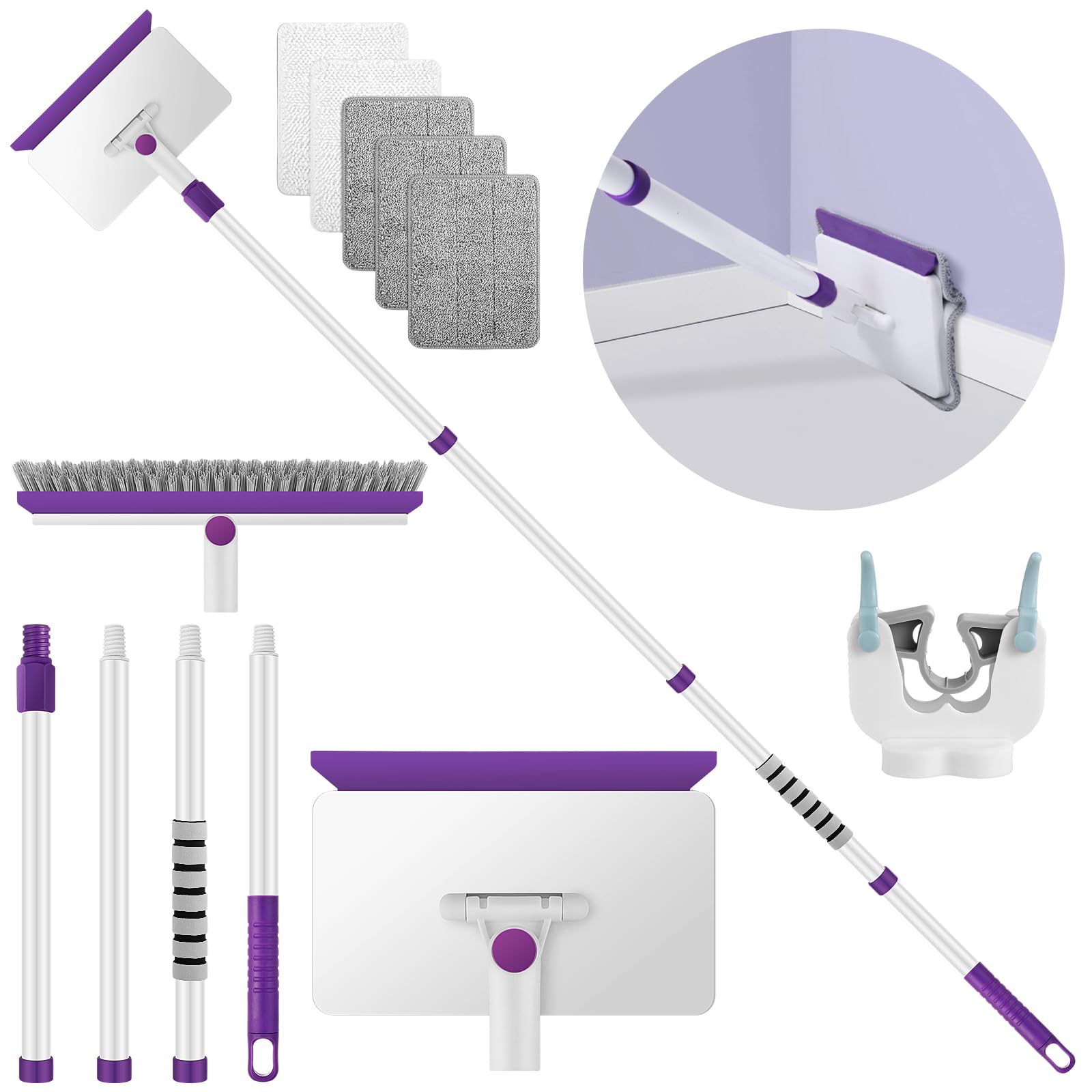
The wlich baseboard cleaner provides the most pads per dollar in this lineup — five total, split between three microfiber and two chenille heads. The handle extends to 60 inches and uses a plastic-and-iron construction that balances durability with a moderate weight of 1.2 kilograms. A matching hook is included for wall storage, which saves space in a utility closet.
This kit includes a separate scrubbing brush specifically for baseboard gaps and floor tile grout lines. The brush fills the gap where the pad cannot reach — the tight corner where baseboard meets the floor. The pad head uses Velcro attachment that users found secure during cleaning but slightly awkward to align during pad changes, particularly for users with reduced hand dexterity.
The tool works well on standard 4-inch baseboards, but users with taller molding (5+ inches) reported that the head design allowed the pad to slip off the top edge during long strokes. The plastic handle sections do not lock as rigidly as threaded metal poles, introducing a slight wobble when scrubbing at full extension. For a user with standard-height baseboards and a modest budget who wants a complete kit with extra pads and a brush, this tool delivers solid value without the premium price.
Why it’s great
- Five pads (3 microfiber + 2 chenille) provide the most replacement heads in this price tier.
- Scrubbing brush targets grout lines and the baseboard-floor gap.
- Wall-mounted storage hook keeps the tool off the floor.
Good to know
- Pad head slips off taller baseboard profiles over 5 inches.
- Plastic handle sections create wobble during extended-scrubbing strokes.
- Velcro pad alignment is fiddly for users with limited hand mobility.
FAQ
Can I use a baseboard cleaner on textured or knockdown walls without damaging the paint?
How do I keep the pad from slipping off the baseboard during long strokes?
Final Thoughts: The Verdict
For most users, the best baseboard cleaner winner is the AegisHome Wall Cleaner because its 82-inch reach, six-pad kit, and 360-degree rotating head cover baseboards, crown molding, and ceiling corners without ladders or bending. If you want a tool with a convex panel that conforms to standard molding profiles, grab the JEHONN Baseboard Cleaner. And for a budget-friendly kit that includes a scrubbing brush and five spare pads, nothing beats the wlich Baseboard Cleaner.

Mo Maruf
I created WellFizz to bridge the gap between vague wellness advice and actionable solutions. My mission is simple: to decode the research and give you practical tools you can actually use.
Beyond the data, I am a passionate traveler. I believe that stepping away from the screen to explore new environments is essential for mental clarity and physical vitality.