Our readers keep the lights on and my smoothie glass nicely filled. As an Amazon Associate, I earn from qualifying purchases.
The hunt for an affordable cell phone is less about finding a cheap price and more about finding the right compromise: you want a responsive screen, a battery that lasts the day, and a camera that doesn’t turn every snapshot into a blurry mess. You don’t need flagship bragging rights, but you also don’t want a device that stutters when you open a second app.
I’m Mohammad Maruf — the founder and writer behind WellFizz. I research value-focused mobile hardware relentlessly, analyzing processor benchmarks, display refresh rates, battery capacities, and camera sensor specs across dozens of models to separate the truly smart buys from the marketing traps.
This guide drills into nine options that deliver real everyday usability without the flagship price tag, breaking down exactly where each model shines and where it cuts corners so you can match the phone to your actual needs. Finding the right affordable cell phone means knowing which specs matter for your daily routine and which you can happily ignore.
How To Choose The Best Affordable Cell Phone
Buying an affordable cell phone forces you to prioritize. You cannot have a blazing-fast processor, a high-refresh-rate OLED, a flagship camera, and all-day battery for a low price — something has to give. The key is knowing which compromise hurts the least for your specific lifestyle. Here are the three specs that separate a smart purchase from a regrettable one.
Display Refresh Rate — The Invisible Smoothness
A 60Hz display has been the standard for years, but once you use a 90Hz or 120Hz panel, going back feels sluggish. In this price range, a 90Hz LCD (like the one on the Moto G Play or UMIDIGI G9T) provides noticeably smoother scrolling and animations without a major battery hit. The Galaxy A23 and Moto G Power offer 120Hz screens, which are even better for gaming and fast navigation. Prioritize refresh rate over resolution — a 90Hz HD+ panel feels faster in daily use than a 60Hz FHD+ one.
Processor & RAM — Real-World Multitasking
Don’t get hypnotized by core counts. A Snapdragon 680, Unisoc T606, or MediaTek Dimensity 7020 are all competent for calls, social media, and video streaming. If you play heavy games, the Dimensity 7020 and Snapdragon 695 offer notably better graphics performance. RAM is equally important: 4GB is the minimum for smooth Android operation in 2025. Many phones in this range offer virtual RAM expansion (taking from storage) which helps, but 6GB or 8GB of physical RAM makes a bigger difference for keeping apps open without reloading.
Battery Capacity & Charging Speed
Nearly every phone in this guide packs a 5000mAh battery, which is the sweet spot for all-day use. The real differentiator is charging speed. A phone that takes three hours to charge from empty is an inconvenience; one that supports 18W, 25W, 30W, or even 66W charging can be topped up during a morning shower. If you frequently run your battery low, prioritize the model with the fastest charging wattage and check whether the charger is included in the box.
Quick Comparison
On smaller screens, swipe sideways to see the full table.
| Model | Category | Best For | Key Spec | Amazon |
|---|---|---|---|---|
| Moto G Power 5G (2024) | Mid-Range | Best Overall Value | 6.7″ FHD+ 120Hz, Dimensity 7020 | Amazon |
| Google Pixel 7 | Premium | Best Camera & Software | Tensor G2, 6.3″ OLED 90Hz | Amazon |
| Motorola Edge (2024) | Premium | Best Display & Fast Charging | 6.6″ pOLED 144Hz, 68W Charging | Amazon |
| Samsung Galaxy A17 5G | Premium | Best Software Support | 6.7″ FHD+ Super AMOLED | Amazon |
| BLU Bold N4 5G | Mid-Range | Most Storage & Accessories | 512GB Storage, 66W Charger In-Box | Amazon |
| Samsung Galaxy A23 5G | Mid-Range | Reliable Samsung Ecosystem | 6.6″ FHD+ 120Hz, Snapdragon 695 | Amazon |
| Apple iPhone XR | Mid-Range | Entry-Level iOS Experience | 6.1″ Liquid Retina LCD | Amazon |
| Motorola Moto G Play 2024 | Budget | Lowest Entry Price | 6.5″ HD+ 90Hz, Snapdragon 680 | Amazon |
| UMIDIGI G9T | Budget | Extreme Budget with Expandable Storage | 6.75″ HD+ 90Hz, Unisoc T606 | Amazon |
In‑Depth Reviews
1. Moto G Power 5G (2024)

The Moto G Power 5G (2024) represents the absolute sweet spot in this category. Its MediaTek Dimensity 7020 processor delivers snappy daily performance, and the 6.7-inch FHD+ display with a 120Hz refresh rate makes scrolling and media consumption feel premium. The 50MP main camera with Optical Image Stabilization captures noticeably sharper low-light shots than most competitors in this tier, and the vegan leather back gives it a surprisingly upscale feel.
The 5000mAh battery lives up to its “Power” name, easily lasting a full day and a half on mixed use, and the 30W TurboPower charging gets you back to full quickly. The included 8GB of RAM and 128GB of storage are generous, and a microSD slot allows up to 1TB expansion. The phone ships with Android 14 (upgradable to 15) and Motorola’s near-stock software experience remains one of the cleanest, with minimal bloatware and useful Moto gestures.
Where it falls short: the LCD panel, while smooth, can’t match the contrast and black levels of OLED screens found on more expensive models. The ultrawide camera is serviceable but nothing special, and there’s no wireless charging or official IP rating beyond splash resistance. Still, for the money, you are getting a balanced package that doesn’t demand major sacrifices in any core area.
Why it’s great
- 120Hz FHD+ display feels fluid and sharp
- 50MP OIS camera captures clean low-light images
- Vegan leather back feels premium and resists fingerprints
- Long battery life with 30W fast charging
Good to know
- LCD panel lacks deep blacks of OLED alternatives
- Ultrawide camera is mediocre
- No official IP water resistance rating
- Plastic frame, though sturdy, is not premium
2. Google Pixel 7

The Google Pixel 7 is the camera king of the affordable tier. Powered by the custom Tensor G2 chip, it leverages Google’s computational photography wizardry — Magic Eraser, Photo Unblur, and Real Tone — to produce photos that rival phones costing twice as much. The 50MP main sensor and 12MP ultrawide deliver consistent, vibrant results in nearly any lighting condition, and the 8x Super Res Zoom is surprisingly usable for a phone at this level.
The 6.3-inch OLED display runs at a smooth 90Hz, and the stock Android experience is genuinely the best in class: no bloatware, timely security updates for years, and exclusive features like Call Screen and Now Playing. The 128GB storage is adequate for most users, and the IP68 water and dust resistance gives peace of mind that many competitors lack. The 5000mAh battery with Adaptive Battery management gets most users through a full day, though heavy users may need a top-up by evening.
The compromises are real: the Tensor G2 chip is not a gaming powerhouse compared to Snapdragon equivalents — titles like PUBG and Genshin Impact stutter at higher settings. The in-display fingerprint sensor is occasionally finicky, and charging is capped at 21W wired, which feels slow compared to the 30W-68W rivals. You are buying this phone for its software and camera, not its raw speed or charging speed.
Why it’s great
- Best camera system in its price bracket by a wide margin
- Clean, bloat-free Android with guaranteed update support
- IP68 water and dust resistance
- Useful Pixel-exclusive software features
Good to know
- Tensor G2 is weaker than Snapdragon for gaming
- Fingerprint sensor can be inconsistent
- Charging speed is only 21W
- Battery life is average, not class-leading
3. Motorola Edge (2024)

The Motorola Edge (2024) brings premium display and charging specs to a surprisingly accessible price point. Its 6.6-inch pOLED panel with a 144Hz refresh rate is the smoothest and most vibrant screen in this entire roundup — perfect for video consumption and mobile gaming. The Snapdragon 7s Gen 2 processor offers near-flagship-level responsiveness for daily tasks, and the 68W TurboPower charging can take the 5000mAh battery from zero to 50% in roughly 15 minutes.
The 50MP main camera with Ultra Pixel technology captures bright nighttime shots, and the 13MP ultrawide is genuinely useful. The IP68 rating means this phone can survive an accidental drop in water. The 256GB internal storage is double what most competitors offer, and the vegan leather back and curved-edge design give it a genuinely flagship aesthetic. The side-mounted Quick Button provides a useful shortcut to any app or function you choose.
The catch? The curved screen makes finding a good tempered glass protector nearly impossible, and the phone feels fragile without a case despite the IP68 rating. Motorola’s update commitment is weaker than Samsung and Google, with only two OS upgrades likely. The camera, while solid, cannot match the Pixel 7’s computational photography magic, and the phone comes with some pre-installed Motorola bloatware that can’t be fully removed.
Why it’s great
- 144Hz pOLED display is stunningly smooth and vibrant
- 68W charging is class-leading fast
- IP68 water resistance is rare at this price
- Generous 256GB base storage
Good to know
- Curved screen is hard to protect with standard screen protectors
- Software update timeline is limited
- Camera is good but not Pixel-level
- Charger not included in box
4. Samsung Galaxy A17 5G
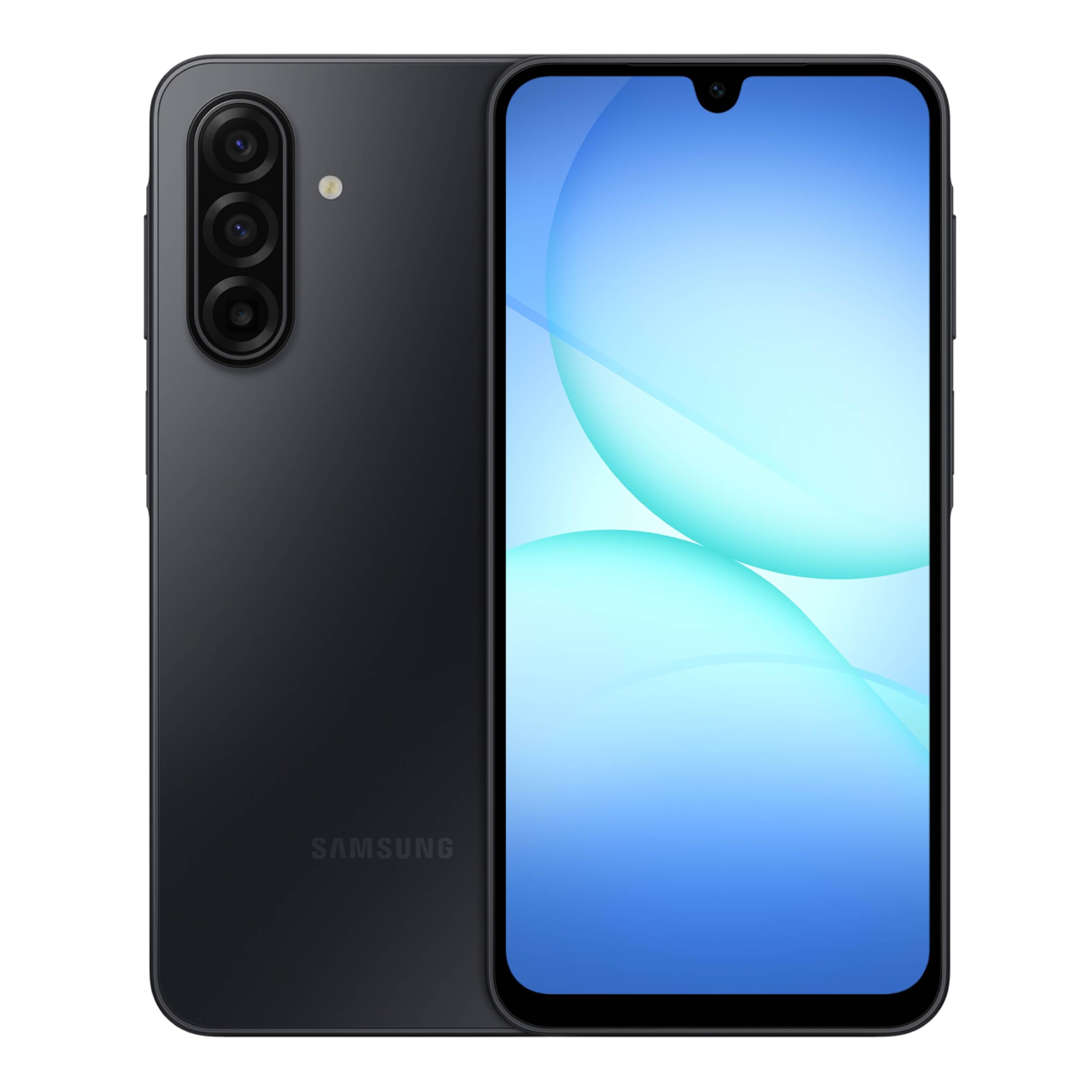
The Samsung Galaxy A17 5G differentiates itself through longevity. Samsung promises 6 OS upgrades and 6 years of security updates, which is unheard of in the affordable space and means this phone will stay secure and feature-rich until 2031. The 6.7-inch FHD+ Super AMOLED display delivers deep blacks and vibrant colors that LCD rivals simply cannot match, making it ideal for video streaming and reading.
The triple-lens camera system captures detailed photos in good lighting, and the improved IP54 dust and splash resistance adds durability. The 5000mAh battery with Super Fast Charging gets through a full day comfortably, and the expandable storage up to 2TB via microSD gives you all the room you need. Circle to Search with Google is a genuinely useful AI feature that makes looking up items on screen effortless.
The trade-off is raw performance: the processor is adequate for social media, calls, and light apps, but it stutters during heavy multitasking and gaming. The 4GB of base RAM feels tight if you keep many apps open, and the 25W charging is slower than the 68W competitors. The camera struggles in low light compared to the Pixel 7. This is a phone for someone who values a great screen and long-term software support over blistering speed.
Why it’s great
- Best-in-class software update commitment (6 years)
- Super AMOLED display is vibrant with excellent contrast
- Expandable storage up to 2TB
- Useful AI features like Circle to Search
Good to know
- Base 4GB RAM limits heavy multitasking
- Charging is limited to 25W
- Performance is sluggish for demanding games
- Low-light camera quality is average
5. BLU Bold N4 5G
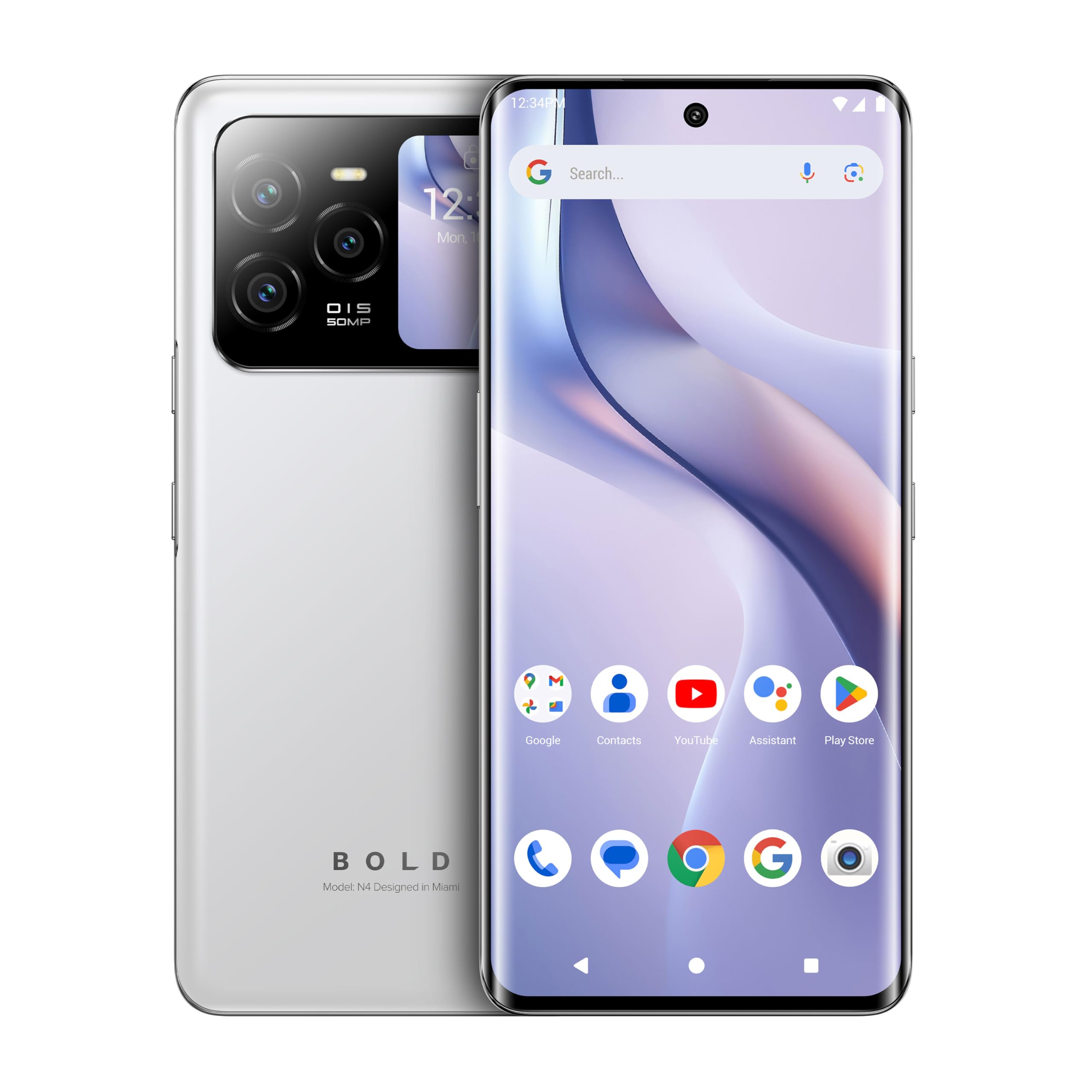
The BLU Bold N4 5G offers a value proposition that is hard to beat on paper: 512GB of internal storage, 8GB of RAM, a 6.78-inch curved AMOLED display, a secondary 1.74-inch rear display for notifications and quick selfies, and a 66W fast charger included in the box — all for a price that undercuts most flagship phones by hundreds. The 50MP main camera with a dedicated telephoto lens and 4K video recording is a genuine surprise at this price.
The 5000mAh battery, combined with the included 66W charger, gives you a full charge in roughly 20 minutes — the fastest charging setup of any phone on this list. The phone runs Android 15 out of the box with near-stock software, and NFC support means Google Pay works seamlessly. The dual-screen approach (main AMOLED plus rear display) is a unique trick that lets you check notifications or snap selfies without waking the main screen.
The downsides are significant: BLU’s software update history is poor, and the phone is unlikely to receive more than one major Android update. The main camera, while versatile, produces inconsistent results compared to the Pixel 7, with oversaturated colors and noise in low light. The curved edges make the phone feel slippery without a case, and though one is included, it adds bulk. It is also not compatible with AT&T and CDMA carriers (Verizon, Sprint), limiting your carrier choice to T-Mobile and its MVNOs.
Why it’s great
- Massive 512GB storage with 8GB RAM
- Incredible 66W fast charger included in the box
- Unique rear display is genuinely useful
- Curved AMOLED looks flagship-grade
Good to know
- Poor software update support
- Camera results are inconsistent
- Not compatible with AT&T or CDMA carriers
- Curved screen is slippery and hard to protect
6. Samsung Galaxy A23 5G (Renewed)

The Samsung Galaxy A23 5G, even as a renewed unit, offers a familiar and reliable Samsung experience with a quality 6.6-inch FHD+ display that runs at 120Hz, making scrolling and everyday navigation feel smooth. The Snapdragon 695 processor is a well-tested workhorse that handles social media, streaming, and light gaming without complaint. The 64GB storage is modest, but the microSD slot allows for expansion up to 1TB.
The 50MP main camera is paired with a 5MP ultrawide, a 2MP macro, and a 2MP depth sensor, giving you creative flexibility that rivals in this price tier often lack. The 5000mAh battery delivers the same all-day stamina as the other 5000mAh phones here, and Samsung’s One UI is feature-rich with excellent customization options. As a renewed device, this represents an entry point into 5G connectivity at a minimal investment.
The renewed nature introduces some risk: battery health and cosmetic condition vary by unit, and some buyers report inconsistent experiences. The 4GB of RAM is the bare minimum for Android in 2025, and the phone will struggle with heavy multitasking. The camera system, while versatile, lacks the computational polish of the Pixel 7. This is a solid choice if you want a reliable Samsung experience and are comfortable with the renewed marketplace.
Why it’s great
- 120Hz FHD+ display for smooth daily use
- Snapdragon 695 offers reliable, balanced performance
- Versatile quad-camera system
- Familiar One UI with excellent customization
Good to know
- Average battery health varies on renewed units
- 4GB RAM limits heavy multitasking
- Camera results are inconsistent in low light
- No official IP rating
7. Apple iPhone XR (Renewed)

The Apple iPhone XR, even as a renewed model, remains a compelling entry point into the Apple ecosystem. The 6.1-inch Liquid Retina LCD display, while not OLED, produces accurate colors and good brightness for daily use. The A12 Bionic chip, while older, still handles iOS 18 with surprising fluency for everyday tasks like messaging, browsing, and social media. Face ID is fast and reliable, and the single 12MP camera captures pleasing, natural-looking photos in good light.
The real value of the iPhone XR today lies in its software ecosystem. You get access to iMessage, FaceTime, AirDrop, and the vast App Store, which many users find irreplaceable. The renewed units tested are guaranteed to have a minimum battery capacity of 80%, and the compatibility with both GSM and CDMA networks (including Verizon and Sprint) makes it the most carrier-flexible phone on this list. The build quality is excellent, with a glass back and aluminum frame that still feels premium.
The compromises are impossible to ignore in 2025. The display is only 60Hz, which feels noticeably less smooth than the 90Hz and 120Hz Android competitors. The battery life is merely average, and the single camera lacks any ultrawide or telephoto flexibility. The Lightning port feels dated. This is a niche pick for iOS loyalists on a tight budget — you are paying for the ecosystem, not the hardware specs.
Why it’s great
- Access to full Apple ecosystem (iMessage, FaceTime)
- Works with all major US carriers (GSM & CDMA)
- Build quality is excellent with glass and aluminum
- Face ID remains fast and reliable
Good to know
- 60Hz display feels dated compared to 90Hz/120Hz rivals
- Single camera lacks versatility
- Battery life is average; varies on renewed units
- Lightning connector, not USB-C
8. Motorola Moto G Play 2024 (Renewed)

The Motorola Moto G Play 2024 proves that a truly budget-friendly phone can still be a solid daily driver. Its 6.5-inch HD+ display with a 90Hz refresh rate is a genuine standout at this price — scrolling and navigation feel far smoother than the 60Hz panels found on similarly priced competition. The Snapdragon 680 chip is efficient and capable for basic tasks, and the 5000mAh battery delivers impressive stamina, often lasting two days on a single charge for light users.
The 50MP main camera captures decent shots in good lighting, and the side-mounted fingerprint sensor is fast and well-placed. The phone runs a clean, near-stock version of Android 13, with minimal bloatware and useful Moto gestures. As a renewed unit, the price is exceptionally low, making it a viable option for a secondary phone, a first phone for a teenager, or anyone who just needs a reliable communicator without any frills.
The compromises are stark: the HD+ display is not very sharp, and the single bottom-firing speaker is tinny. The 4GB of RAM and 64GB of storage are the bare minimum, and the phone will stutter if you push it with multiple apps or games. The camera is inconsistent in low light, and the plastic build feels cheap. The renewed nature introduces some risk, with a few buyers reporting locked units or charging issues. Still, for the money, the core experience is surprisingly good.
Why it’s great
- 90Hz display at this price is exceptional
- Excellent battery life from 5000mAh cell
- Clean, near-stock Android with minimal bloatware
- Side-mounted fingerprint sensor is fast
Good to know
- HD+ resolution is not very sharp
- 4GB RAM and 64GB storage limit multitasking
- Camera is inconsistent in low light
- Renewed unit quality can vary
9. UMIDIGI G9T
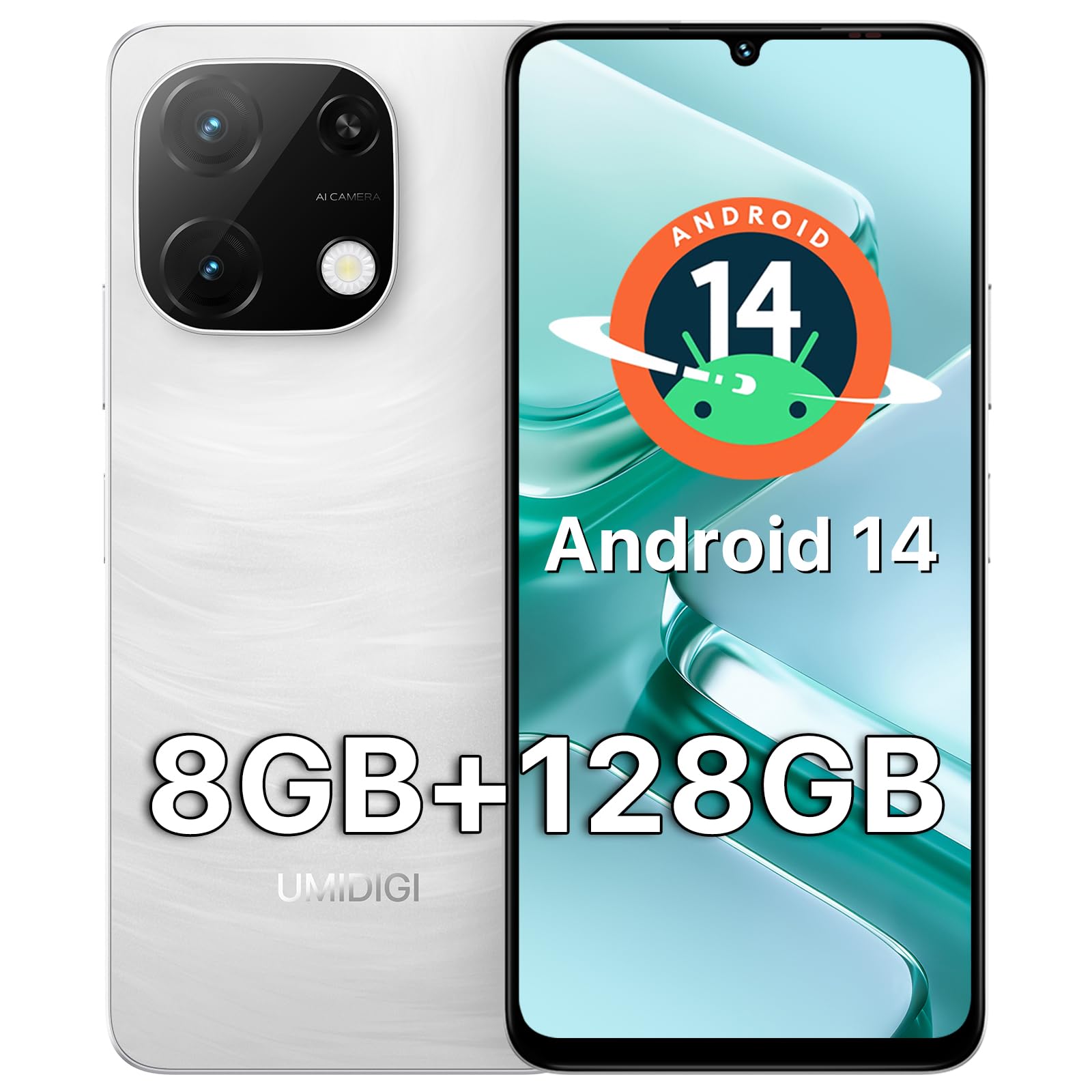
The UMIDIGI G9T is the most budget-friendly option on this list, and it surprisingly offers modern features like Android 14, a 6.75-inch HD+ 90Hz display, and a 5000mAh battery with 18W fast charging. The 128GB internal storage is generous for an entry-level phone, and the expandable storage via microSD (up to 1TB) gives you all the room you need for media. The AI Face Unlock and side-mounted fingerprint sensor provide modern biometric convenience.
The 13MP main camera is basic but functional in good light, and the phone supports dual SIM 4G connectivity with a wide range of bands. The inclusion of an FM radio receiver is a rare and welcome addition. The phone’s design is surprisingly slim at 7.9mm, and the package includes a case and screen protector out of the box, saving you an extra purchase. For a pure communicator — calls, texts, YouTube, social media — it delivers the essentials without drama.
The pitfalls are normal for this price tier: the Unisoc T606 processor is slow, and the phone will lag with multiple apps or any gaming. The camera is genuinely poor in low light, and the display’s HD+ resolution makes text look slightly soft. There are reports of random reboots and fingerprint sensor failures after months of use. The software update support from UMIDIGI is non-existent. This phone is for the most extreme budgets only — it is a functional stepping stone, not a long-term companion.
Why it’s great
- 128GB storage with microSD expansion is very generous
- 90Hz display makes scrolling smoother than 60Hz rivals
- Includes case and screen protector in the box
- FM radio receiver is a rare bonus
Good to know
- Unisoc T606 is very slow for multitasking and gaming
- Camera quality is poor, especially in low light
- Reports of reliability issues (random reboots)
- Essentially no software updates from UMIDIGI
FAQ
Can a budget phone with 4GB of RAM handle daily tasks well in 2025?
Is a 90Hz display worth it over a standard 60Hz panel on a budget phone?
Should I buy a renewed phone for this much money?
Final Thoughts: The Verdict
For most users, the affordable cell phone winner is the Moto G Power 5G (2024) because it delivers the best balance of a smooth 120Hz display, capable 50MP OIS camera, all-day battery, and clean software at a price that undercuts the competition. If you want the absolute best camera and cleanest software experience, grab the Google Pixel 7. And for the best display and fastest charging in this bracket, nothing beats the Motorola Edge (2024).

Mo Maruf
I created WellFizz to bridge the gap between vague wellness advice and actionable solutions. My mission is simple: to decode the research and give you practical tools you can actually use.
Beyond the data, I am a passionate traveler. I believe that stepping away from the screen to explore new environments is essential for mental clarity and physical vitality.