Our readers keep the lights on and my smoothie glass nicely filled. As an Amazon Associate, I earn from qualifying purchases.
For side sleepers, a standard camping pad turns the great outdoors into a great reminder of your sore hip and numb shoulder by morning. The central problem is simple: when you sleep on your side, your hip and shoulder concentrate your body weight into a small area. A pad thinner than 3 inches compresses fully under those points, transferring the ground’s hardness directly to your bones. The market offers everything from ultralight air pads to 4-inch thick foam hybrids, each claiming to solve this, but only a few actually keep your spine neutral from dusk till dawn.
I’m Mohammad Maruf — the founder and writer behind WellFizz. My approach focuses on isolating the measurable specs that matter most for side-sleeping comfort: compressed thickness under load, R-value for year-round insulation, and the structural design that prevents the dreaded bottoming-out. I analyze user reports across hundreds of nights of real-world use, not manufacturer marketing.
After comparing foam density, valve reliability, and packed size trade-offs across seven competing models, one design consistently delivered a pain-free night for hip and shoulder pressure points. This guide breaks down exactly which specs separate a restful camping pad for side sleepers from a sleepless one.
How To Choose The Best Camping Pad For Side Sleepers
Side sleepers face a unique demand: the pad must resist bottoming out where the hip and shoulder press hardest while still providing enough cushion to keep the spine aligned. Thickness, R-value, inflation type, and width all play distinct roles. Below are the criteria that actually separate usable pads from painful ones.
Thickness and Compressed Density
A 2-inch pad might sound fine until your hip sinks through to the ground. For side sleepers, 3 inches is the bare minimum, but the foam’s density or the air chamber’s internal baffle pattern matters just as much. Self-inflating foam pads offer a higher density that resists compression at the pressure points compared to pure air pads, which may require higher inflation pressure to avoid bottoming out. Look for pads with a minimum of 3 inches and read third-party reviews that mention side-sleeping comfort specifically.
R-Value for Year-Round Ground Insulation
When a side sleeper compresses the pad under the hip, the insulation layer thins out in that spot, allowing ground cold to conduct through. A high R-value (7.0 or above) means more thermal foam layers or reflective barriers built into the pad’s core. For four-season use, aim for an R-value of at least 7. For summer-only trips, a 4.0 to 6.0 rating is sufficient, but side sleepers in cold climates benefit from the extra insulation that a higher R-value provides.
Width and Length for Sleep Position Freedom
Side sleepers often shift from left to right during the night, so a pad that is too narrow causes an arm to fall off the edge, waking you up. A width of 25 inches or more is ideal, with 30-inch models offering the most freedom. Length should accommodate your height plus a few extra inches for pillow space and foot movement. Pads that measure 77 to 80 inches long generally fit most adults without hanging off the top or bottom.
Quick Comparison
On smaller screens, swipe sideways to see the full table.
| Model | Category | Best For | Key Spec | Amazon |
|---|---|---|---|---|
| Elegear CumbreX | Electric Pump | One-touch setup & thick comfort | 4” thick, 9.5 R-value | Amazon |
| Hikenture Comfort Plus | Self-Inflating | Maximum year-round insulation | 4” thick, 9.5 R-value | Amazon |
| Therm-a-Rest MondoKing 3D | Premium Foam | Car camping luxury & durability | 4.25” thick, 7.0 R-value | Amazon |
| Acacia Y-Shaped Foam | Telescopic Foam | Compact packing + thick foam | 4.3” thick, 6.0 R-value | Amazon |
| TREKOLOGY UL R7 | Ultralight | Backpacking & all-season warmth | 4” thick, 7.2 R-value | Amazon |
| Hikenture 3” Self-Inflating | Value Foam | Budget-friendly foam insulation | 3” thick, 9.5 R-value | Amazon |
| Therm-a-Rest LuxuryMap | Pressure-Mapped | Targeted support for hips | 3” thick, 6.0 R-value | Amazon |
In‑Depth Reviews
1. Elegear CumbreX Air & Foam Self Inflating Sleeping Pad
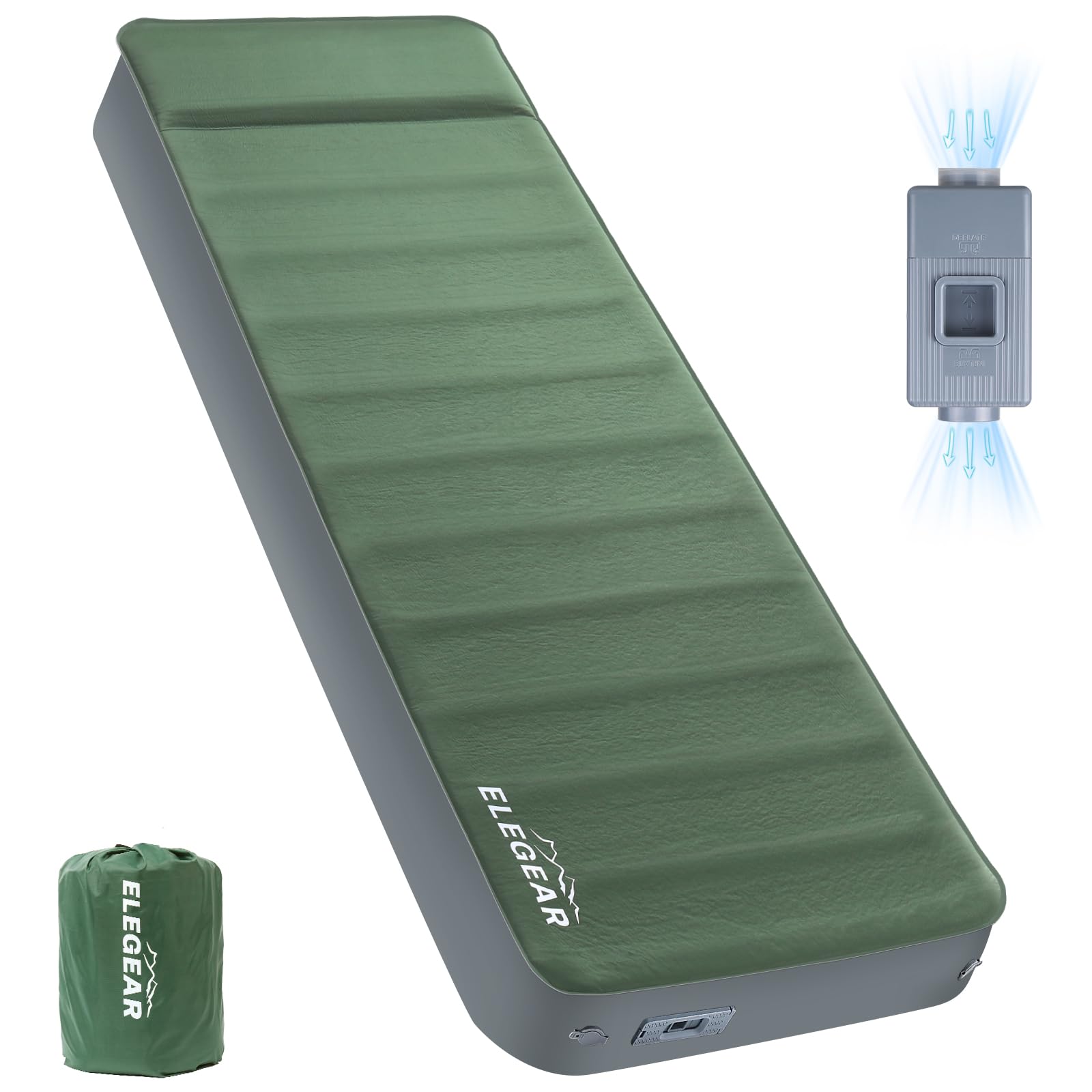
The Elegear CumbreX combines a built-in electric pump with 4 inches of 26D hollowed memory foam, eliminating the biggest pain point for side sleepers: bottoming out under the hip. One button inflates the pad in roughly one minute to a firmness you can adjust by letting out small amounts of air. The foam structure cradles pressure points while the air chamber beneath provides the lift that prevents ground contact.
An R-value of 9.5 means this pad handles winter car camping trips down to freezing and below without ground chill bleeding through the compressed foam under your shoulder. The integrated pillow is low-profile, about an inch tall, so side sleepers who need a higher loft should bring their own camp pillow, but the pad itself stays supportive and stable throughout the night. Side sleepers in reviews specifically report sleeping well on this unit, citing the foam’s ability to conform without collapsing.
The pump’s endurance limit is around 20 minutes of total run time before it needs a recharge, though inflation only takes 1 minute and deflation 2 minutes. It is not a backpacking pad — the built-in pump and foam fill add weight — but for car camping, RV trips, or glamping setups, it delivers the most foolproof inflation and thickest foam comfort in this list. The 50D knitted fabric feels soft and quiet, with no crinkle noise that could disturb a partner.
Why it’s great
- One-touch electric inflation saves time and breath effort
- 4-inch thick 26D foam resists bottoming out for side sleepers
- 9.5 R-value provides true 4-season insulation
- Variable firmness via air release
Good to know
- Pump adds weight — not suitable for lightweight backpacking
- Built-in pillow is low for stomach sleepers
- Requires USB-C charging for the pump
2. Hikenture 4 Inch Self Inflating Sleeping Pad (Comfort Plus)

Hikenture’s Comfort Plus model brings a 9.5 R-value and 4-inch thickness in a self-inflating foam-and-air hybrid that side sleepers find exceptionally supportive. The memory foam layer conforms to the hip and shoulder contour, while the air chamber underneath provides the loft that prevents ground contact. Users 6 foot 3 and above report fitting comfortably on the 80 x 28 inch surface without their feet or arms hanging off.
The patented two-way valve allows quick self-inflation in a few minutes, and the included pump sack lets you top off the firmness with a few bags of air. Deflation uses a separate channel that prevents air from sneaking back in — a common complaint with cheaper one-way valve designs. The polyester surface is soft and quiet, generating no crinkle noise during movement, which is important for side sleepers who shift positions multiple times per night.
At 6.5 pounds, it is too heavy for backpacking but reasonable for car camping, truck bed camping, and guest bed use. Several long-term users report zero air loss after multiple months of use, and the company replaced a defective unit without requiring a return, indicating solid post-purchase support. The only functional trade-off is the deflation: the high R-value foam resists air expulsion slightly, requiring a few extra rolls to fully pack.
Why it’s great
- 4 inches of foam prevents hip and shoulder bottoming out
- 9.5 R-value blocks ground cold in sub-freezing conditions
- Patented valve stops air re-entry during deflation
- Widely praised customer service for defect replacements
Good to know
- Heavy for backpacking at 6.5 pounds
- Deflation takes extra effort due to foam density
3. Therm-a-Rest MondoKing 3D Self-Inflating Pad

The MondoKing 3D from Therm-a-Rest is the thickest self-inflating foam pad in this comparison at 4.25 inches, built with StrataCore construction that alternates foam ridges with air channels. For side sleepers, that translates to targeted support at pressure points without the pad compressing fully under the hip. The 7.0 R-value is sufficient for extreme winter camping, and the 80 x 30 inch XX-Large size offers generous width for side-to-side movement.
The TwinLock valve system uses two separate one-way valves — one dedicated for inflation, one for deflation — which prevents the air rush-back problem that plagues single-valve pads. The stretch knit fabric layer on top is soft and silent, eliminating the crinkle noise that can wake a light sleeper. Users weighing up to 300 pounds report feeling completely supported with no bottoming out, and many say they slept better on this pad than on their home mattress.
At 5.5 pounds, it is lighter than the Hikenture Comfort Plus despite being thicker, thanks to the efficient foam-air hybrid core. The packed size is 31 x 10.3 inches, bulky for a backpack but manageable for car camping. The main downside reported by some users is valve durability — a small number of units arrived with a non-functioning valve, though Therm-a-Rest’s limited lifetime warranty covers that. It is the premium pick for anyone who prioritizes maximum thickness and width over packed size or cost.
Why it’s great
- 4.25 inches thick — best in class for side sleeper support
- 30-inch wide surface allows free movement without falling off
- Separate one-way valves prevent air leaks during inflation
- Limited lifetime warranty from a trusted US brand
Good to know
- Bulky packed size unsuitable for backpacking
- Occasional valve defects reported in early units
4. Acacia Y-Shaped Telescopic Foam Sleeping Pad

Acacia’s Y-shaped telescopic foam core compresses to a packed size 60 percent smaller than traditional foam pads — 7 x 7 x 27 inches — while still delivering 4.3 inches of thickness when inflated. That design addresses the main trade-off side sleepers face: thick foam support versus bulky packability. The 30D elastic fabric and TPU coating resist punctures and tears, and the heat-molded seams prevent slow leaks over multiple nights.
At 5.3 pounds, it is light enough for motorcycle camping or short backpack trips where weight matters but thickness is non-negotiable. The 6.0 R-value provides reliable three-season insulation; it is warm enough for spring and fall but may feel cool under the hip in deep winter conditions below 20 degrees Fahrenheit. Side sleepers who shift positions will appreciate the 28-inch width, though the adjustable firmness via the pump sack allows fine-tuning the air volume to prevent the hip from sinking.
One frequent note from owners: the included carry bag doubles as the pump sack, but the bag’s thin fabric requires careful handling to avoid tearing. The deflation process also takes longer than pure air pads because the foam core resists full compression. For the combination of thick foam support and relatively compact storage, the Acacia is a strong mid-range option that balances comfort with portability better than most self-inflating pads.
Why it’s great
- 4.3 inch foam with telescopic core for reduced pack size
- Adjustable firmness via pump sack attachment
- Durable 30D TPU fabric resists punctures
- Side buckles allow pairing two pads together
Good to know
- 6.0 R-value may be insufficient for extreme winter camping
- Pump sack fabric is thin and can tear under stress
- Deflation is slower than pure air pads
5. TREKOLOGY UL R7 Sleeping Pad
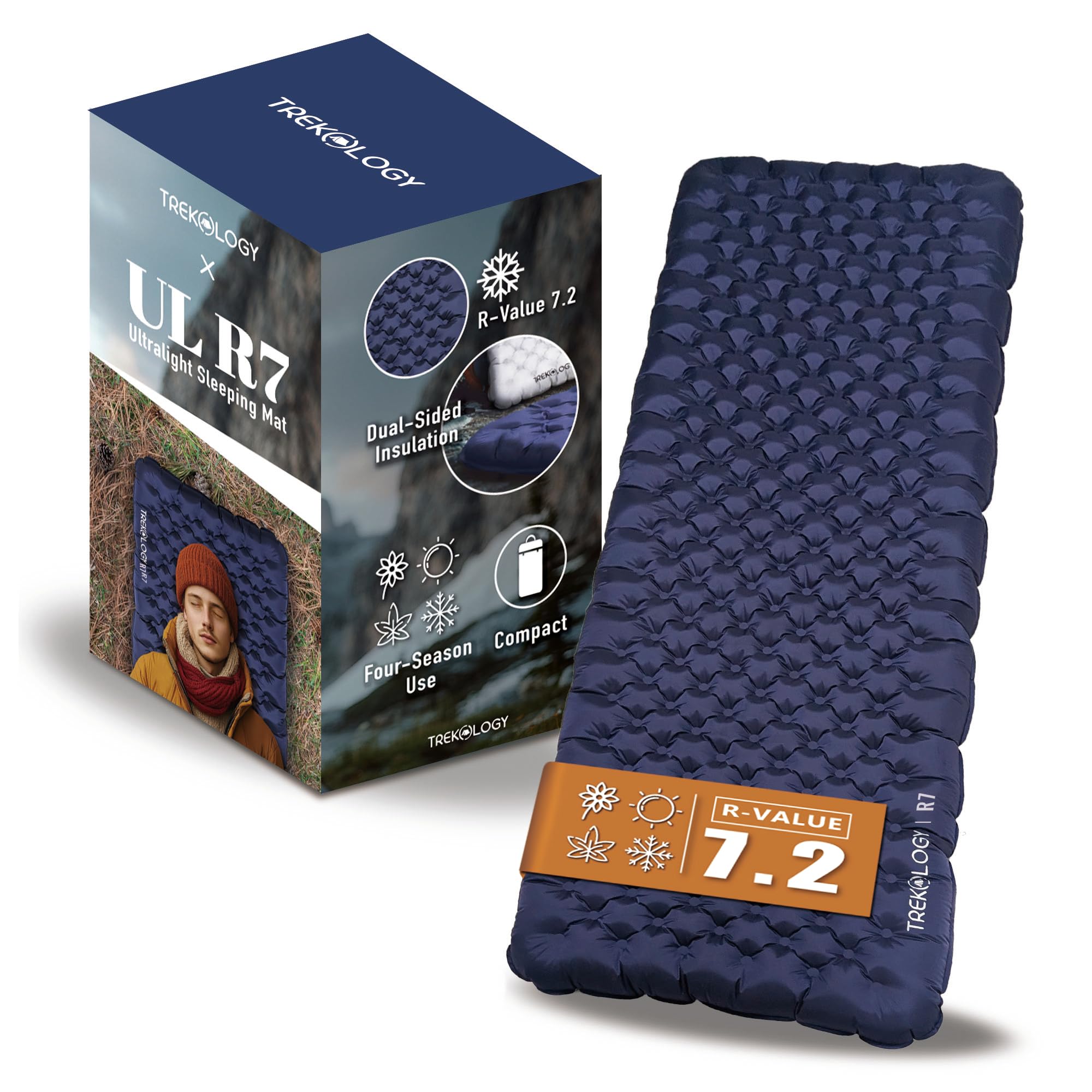
For side sleepers who backpack and count every ounce, the TREKOLOGY UL R7 achieves an impressive 2-pound weight with a 7.2 R-value and 4-inch thickness. The 40D ripstop nylon with TPU coating is durable enough to survive being set up on rocky ground, and the patented anti-leak valve prevents slow deflation overnight. The pad packs down to roughly the size of a water bottle, making it the most packable option here that still offers serious thickness.
The 24-inch width is narrower than the foam hybrid pads above, so side sleepers with broader shoulders may find their arm hanging off the side if they sleep fully extended. Reviews from 6-foot, 240-pound side sleepers confirm that the pad stays comfortable without bottoming out, as long as it is properly inflated to the higher end of its firmness range. The insulation is SGS-certified, and multiple users report staying warm without an underquilt in a hammock at low-30-degree-Fahrenheit conditions.
You need a separate pump sack (not included) for inflation, which adds a small cost and step to the setup process. The insulation layers inside create slight airflow resistance when deflating, requiring you to hold the valve open with a finger while pressing the air out. For backpackers who need a 4-inch thick pad that weighs next to nothing, this is the clear winner, but the narrower width means it suits average to slim side sleepers best.
Why it’s great
- 2.0 pounds with 4-inch thickness — exceptional weight-to-comfort ratio
- 7.2 R-value offers genuine all-season insulation for backpackers
- Packs down to water bottle size for minimal pack volume
- Durable 40D ripstop fabric handles rocky terrain
Good to know
- 24-inch width is narrow for broad-shouldered side sleepers
- Pump sack not included — sold separately
- Deflation requires holding valve open manually
6. Therm-a-Rest LuxuryMap Self-Inflating Pad

The Therm-a-Rest LuxuryMap uses pressure mapping technology to vary foam density across the pad — zones under the hips and shoulders are more supportive, while areas under the legs and head are plusher. For side sleepers, that targeted density distribution reduces the need to over-inflate the pad to prevent bottoming out. At 3 inches thick, it is not the thickest option, but the denser foam zones compensate by resisting compression at critical pressure points.
The 6.0 R-value covers three-season use comfortably, and the TwinLock valve provides separate inflation and deflation channels that prevent air from sneaking back during setup. The X-Large size measures 77 x 30 inches, offering generous width that lets side sleepers extend their arm to the side without falling off. Users with sore hips or back issues in their 60s report sleeping comfortably through the night without waking from ground contact.
One notable detail: the actual foam sleeping area is approximately 3 inches narrower than the fabric edge on each side, so the usable width is about 27 inches rather than the full 30 inches. The pad also lacks the strap system to secure it when rolled, making the stuff sack removal slightly awkward. For side sleepers who want a premium brand with targeted pressure point relief and are willing to pay for it, the LuxuryMap delivers a refined sleep surface, but budget-conscious buyers get more thickness and similar support from the Hikenture model.
Why it’s great
- Zone-specific foam density targets hip and shoulder pressure points
- 30-inch wide surface provides room for side-to-side movement
- Separate inflation and deflation valves prevent air leaks
- Made in the USA with proven longevity
Good to know
- 3-inch thickness is thinner than most premium competitors
- Usable width is closer to 27 inches due to fabric edge
- No straps for securing rolled pad in stuff sack
7. Hikenture Self Inflating Sleeping Pad (3 Inch)

The 3-inch Hikenture self-inflating pad is the entry-level foam option that still provides a 9.5 R-value — the same extreme insulation rating as the thicker Comfort Plus model. The medium-firm memory foam molds around hip and shoulder pressure points, and at 27.6 inches wide, it offers enough real estate for most side sleepers to shift without falling off. The built-in pillow is only about an inch tall, so side sleepers who need higher neck support should supplement with a separate camp pillow.
Self-inflation takes roughly 30 minutes to reach full loft, which is slower than the 4-inch models but standard for a 3-inch foam pad. The non-slip grip print on the bottom prevents sliding on tent floors, a small but meaningful detail for side sleepers who push against the pad surface while turning. Users who used this pad over 100 nights on floors and sofas report no leaks, no holes, and consistent support, which speaks to the construction quality and valve reliability.
The main trade-off is thickness: at 3 inches, a heavier side sleeper (over 200 pounds) may still feel ground contact through the hip area, especially if the pad is under-inflated. The 6.6-pound weight also makes it a car-camping-only option. For the combination of high R-value, durable foam construction, and a budget-friendly entry point, this pad remains a smart choice for side sleepers who car camp in cold weather and want extreme insulation without the premium price tag.
Why it’s great
- 9.5 R-value at a budget-friendly tier is unmatched for cold weather
- Non-slip bottom print prevents sliding on uneven terrain
- Durable construction survived 100+ nights without leaks
- Self-inflating foam molds to pressure points
Good to know
- 3-inch thickness may bottom out for heavier side sleepers
- Built-in pillow is too low for neck support
- Slow self-inflation time compared to 4-inch models
FAQ
Is a 3-inch pad thick enough for a side sleeper?
What R-value do I need for winter camping as a side sleeper?
Should side sleepers choose self-inflating foam or pure air pads?
How wide should a camping pad be for side sleeping?
Final Thoughts: The Verdict
For most users, the camping pad for side sleepers winner is the Elegear CumbreX because its built-in electric pump removes the setup hassle while the 4-inch 26D memory foam prevents hip and shoulder bottoming out. If you want year-round extreme insulation with a trusted foam core, grab the Hikenture Comfort Plus. And for backpackers who need a 4-inch pad under 2 pounds, nothing beats the TREKOLOGY UL R7.

Mo Maruf
I created WellFizz to bridge the gap between vague wellness advice and actionable solutions. My mission is simple: to decode the research and give you practical tools you can actually use.
Beyond the data, I am a passionate traveler. I believe that stepping away from the screen to explore new environments is essential for mental clarity and physical vitality.