Our readers keep the lights on and my smoothie glass nicely filled. As an Amazon Associate, I earn from qualifying purchases.
A camp kettle that rattles on an open flame or takes forever to boil can drain the joy out of a morning coffee ritual at the trailhead. The right vessel for boiling water outdoors needs to balance heat efficiency, packability, and durability—three factors that often compete against each other in a single design.
I’m Mohammad Maruf — the founder and writer behind WellFizz. I’ve spent hundreds of hours analyzing side-by-side comparisons of fuel burn rates, material heat conductivity, and volume-to-weight ratios across the most popular backpacking and car-camping kettles on the market.
After sorting through heat-exchanger fins, hard-anodized alloys, and handle-locking mechanisms, I’ve zeroed in on the models that actually deliver on their promises. This guide breaks down everything you need to know about the best camp kettle for your specific style of outdoor cooking.
How To Choose The Best Camp Kettle
Picking a camp kettle is more than just grabbing the lightest option. You need to match the volume, material, and heat interface to how you actually plan to use it—whether that’s solo backpacking with a canister stove or car camping with an open fire.
Material: The core weight and durability trade-off
Stainless steel kettles offer superior scratch resistance and handle open flames well, but they are heavier and conduct heat less efficiently than aluminum. Hard-anodized aluminum kettles (like GSI’s Halulite) provide excellent heat transfer and weigh less, but the non-stick anodized surface can degrade if left on a dry fire or scrubbed with metal tools. Pure aluminum kettles (like the Fire-Maple Petrel) are very light and heat up fast, but the base can warp or dent more easily under rough pack conditions.
Capacity: Solo versus group sizing
A 0.6-liter kettle (about 2.5 cups) is perfect for a single backpacker who only needs hot water for one cup of coffee or a dehydrated meal. A 1.2-liter to 1.8-liter kettle (5 to 8 cups) becomes necessary for two or three people sharing tea, instant soup, or washing water. The larger kettles add pack weight and bulk, so pay attention to how the handle folds and whether the body nests inside a larger cook pot.
Heat interface: Stove compatibility and fuel savings
Kettles with a heat-exchanger fin system on the base concentrate flame energy into a smaller surface area, which can reduce boil time by 30 to 40 percent and save a corresponding amount of fuel. This feature matters most for backpackers carrying small canisters. For open fire or camp stove use, a flat-bottom stainless steel kettle is simpler and less likely to damage the heat exchanger.
Handle and lid design
A locking or folding handle that stays cool during boiling is critical for safety. Kettles with metal handles that heat up quickly require a pot grabber or cloth. The lid should fit snugly so it doesn’t fall off during pouring, and a ventilation hole helps control steam release. Some kettles have a spout that directs flow without dripping, which makes a real difference when pouring hot water into a narrow mug.
Quick Comparison
On smaller screens, swipe sideways to see the full table.
| Model | Category | Best For | Key Spec | Amazon |
|---|---|---|---|---|
| Fire-Maple Petrel | Ultralight Aluminum | Solo backpackers who want fuel savings | 600ml, 162g, heat-exchanger base | Amazon |
| 10 TO 6 PICKS 1.2L | Stainless Steel | Car campers and open-fire users | 1.2L, 304 stainless, folding handle | Amazon |
| Thous Winds 0.6L | Mini Stainless | Solo ultralight campers who prefer stainless | 600ml, 197g, anti-hot locking handle | Amazon |
| GSI Glacier 1L | Premium Stainless | Family campers who want rugged build | 1L, 264g, fold-flat locking handle | Amazon |
| GSI Halulite 1.8L | Group Performance | Multi-person trips needing fast batch boiling | 1.8L, 304g, hard-anodized aluminum | Amazon |
In‑Depth Reviews
1. Fire-Maple Petrel Ultralight Pot

The Fire-Maple Petrel earns the top spot because it delivers Jetboil-level boil speed in a package that weighs only 162 grams. The heat-exchanger fins on the bottom capture flame energy from a canister stove and transfer it into the water fast—several verified reviews report boiling half a liter in roughly two minutes. That efficiency directly translates to less fuel consumption per trip, which is the single biggest recurring cost for backpackers who use small isobutane canisters.
The 600-milliliter capacity is designed for solo use: enough for a freeze-dried meal and a hot drink, but not cramped. The hard-anodized aluminum body resists scratches, and the foldable handle stays cool through the thermally insulated plastic grip. The lid includes a steam vent and fits securely enough that it won’t pop off when pouring. The whole pot nests nicely around a 100-gram fuel canister and a small stove inside your pack.
One subtle weak point noted by a long-term reviewer is that the metal hinge for the folding handle feels a little sharp to the touch. Also, if the pot gets too hot for too long without water, the anodized coating can start to degrade. For the vast majority of camp stove users who boil water and remove the pot from heat immediately, this isn’t a day-to-day issue, but it’s worth knowing if you tend to leave pots on a burner.
Why it’s great
- Heat-exchanger fins boil water faster and save fuel compared to flat-bottom kettles
- Ultralight at 162 grams, nests with a canister stove and fuel canister inside
- Insulated handle stays cool during use and folds flat for storage
Good to know
- Metal hinge at the handle fold point is slightly sharp
- Anodized coating can wear if pot is dry-fired repeatedly
- 600ml capacity is tight for two people sharing water
2. GSI Outdoors Glacier Stainless Steel Tea Kettle
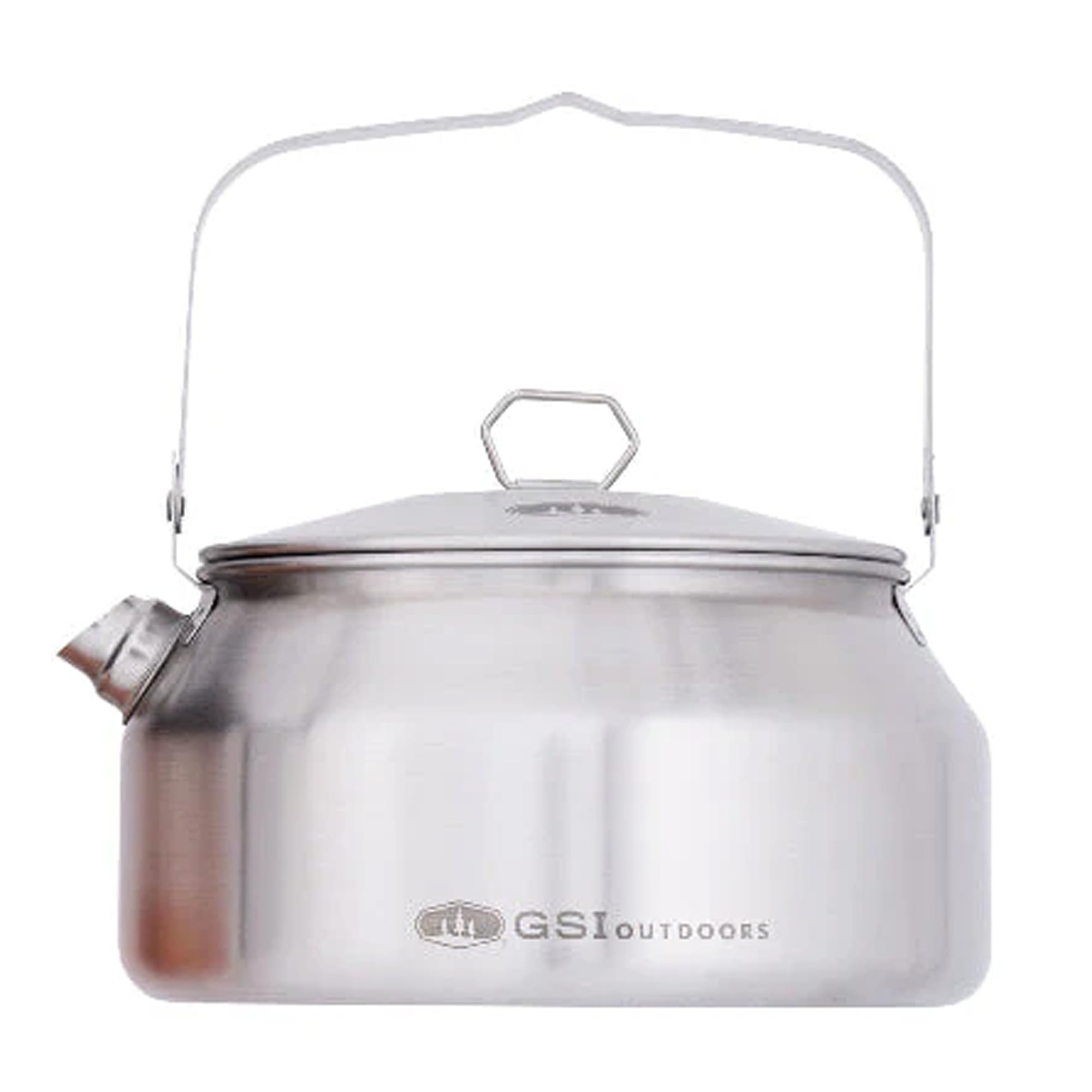
The GSI Glacier is the benchmark for a rugged, no-nonsense camp kettle that can sit directly on a campfire grate or a backpacking stove without worrying about coating damage. The body is made from 304 stainless steel that resists dents and corrosion, and the wide mouth (about 3.5 inches in diameter) allows you to fit a small camping stove or a pack of tea bags inside for storage. The locking handle folds flat against the kettle for packing but clicks into an upright position when you need to pour.
At 1 liter, this kettle holds 32 ounces of water to the brim (27 ounces to the spout), which is enough for three adults to share a round of tea or coffee after dinner. The pour is clean—no drips running down the side—thanks to the short spout design. The handle is bare stainless steel, so it will get hot if left on a fire for an extended period, but many long-term users report it stays manageable for a quick boil and pour sequence.
The lid is not friction-fit, so it can rattle or fall off if the kettle is jostled. Some buyers noted that the first unit shipped looked used, though the replacement was completely new. At just under 9 ounces, it’s heavier than an aluminum or titanium kettle of the same volume, but the added durability makes it a better fit for car camping, RV use, or family backpacking trips where weight is less critical.
Why it’s great
- Stainless steel construction withstands open flames and years of abuse without coating degradation
- Locking handle folds flat for storage and stays upright during use
- Wide mouth allows you to store a small stove or extra gear inside the kettle
Good to know
- Bare metal handle gets hot if left on a flame for more than a minute
- Lid is not friction-fit and can rattle or fall off when pouring aggressively
- Heavier than aluminum or titanium kettles of the same volume
3. 10 TO 6 PICKS 1.2L Stainless Steel Camping Kettle
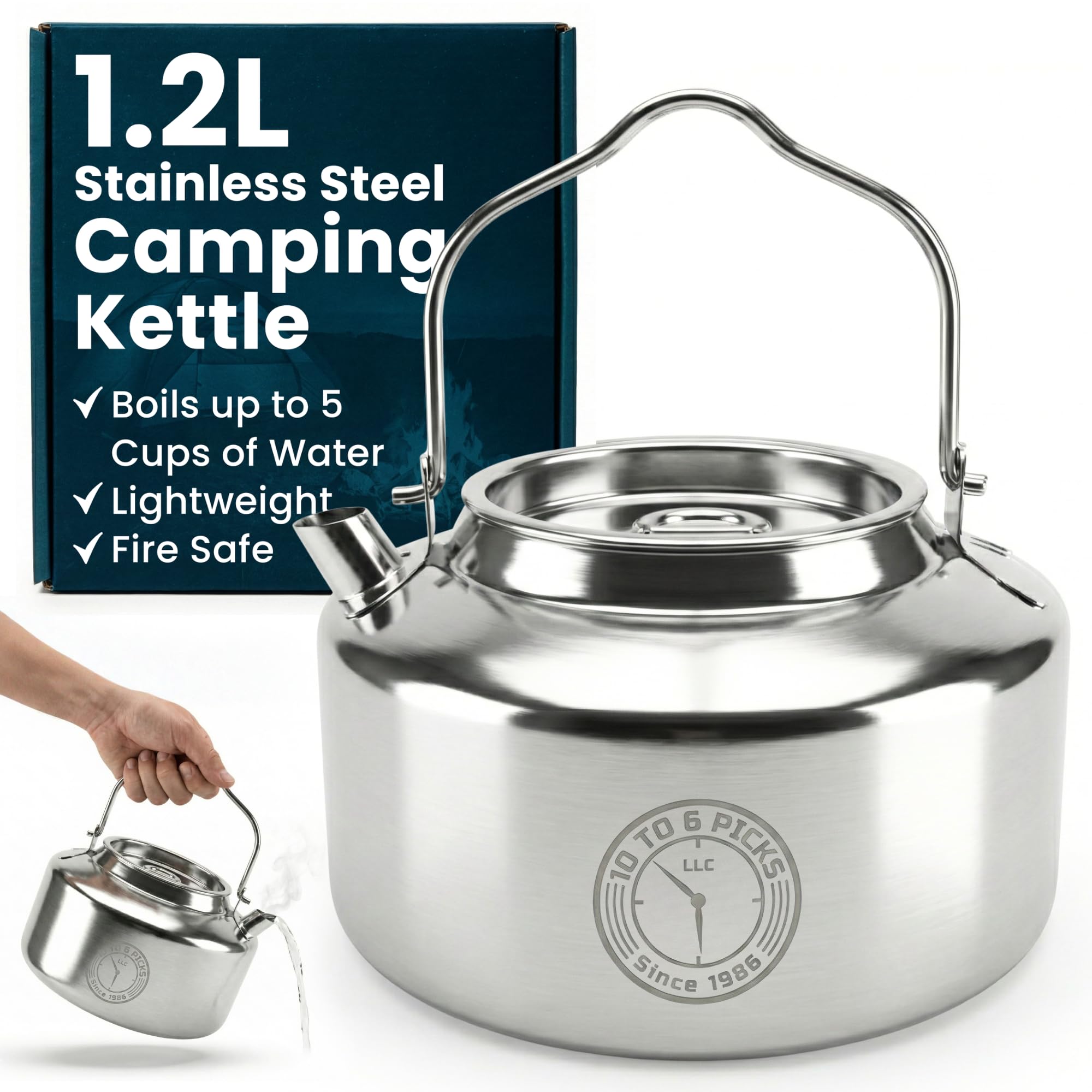
For car campers and small groups who need to boil water for multiple mugs without spending a premium, the 10 TO 6 PICKS 1.2-liter stainless steel kettle is an excellent pick. The 24-gauge 304 stainless body is fully free of any aluminum or plastic coatings, which means you can place it directly on an open campfire grate, a propane stove, or a wood-burning stove without worrying about melting or releasing fumes. The 1.2-liter capacity yields roughly 5 cups of boiling water, enough for two to three people to each have a hot drink and still have water left for instant oatmeal.
The folding handle is made of stainless steel and locks into position, though it does conduct heat if the kettle is left on the flame for a long time—most users find a quick 3- to 5-minute boil keeps the handle manageable. The deep lid fits securely during pouring and has small vapor outlets that prevent rattle while boiling. The wide opening makes it easy to reach inside for cleaning and also allows you to stash smaller items like a rag or tea bags inside during storage.
Over repeated open-fire use, the exterior will develop a dark patina, which is normal for stainless steel exposed to wood smoke. One reviewer noted that overfilling past the spout level causes minor dripping during pour. If your group is larger than four people, you’ll probably want to step up to a 1.8-liter kettle, but for couples or small families, this is a solid, durable option that won’t break the bank.
Why it’s great
- Full 304 stainless steel construction is safe for open fire, camp stove, and even home use
- 1.2-liter capacity suits couples and small families without being too bulky to pack
- Anti-scald locking handle and secure lid design minimize spill risk during pouring
Good to know
- Metal handle conducts heat if left on the fire too long
- Exterior will develop a dark smoke patina over open flame
- Overfilling past the spout level causes minor dripping when pouring
4. Thous Winds 0.6L Lightweight Stainless Steel Camping Kettle

The Thous Winds 0.6-liter kettle is a minimalist’s dream for solo camping or ultralight backpacking. It weighs only 197 grams and packs down to a 5.3-inch diameter by 2.7-inch height, making it one of the smallest kettles in this comparison. The body is made from food-grade stainless steel, so it’s safe for open flame and induction cooktops (as long as you avoid dry-firing). The 4-millimeter thick stainless handle locks into an upright position to keep your hand away from the heat—a thoughtful detail that many budget kettles skip.
The rounded, retro shape pours well, and the lid has a small plastic knob that stays cool to the touch. Several users mentioned the included carrying bag is thick and well-made, which adds protection when the kettle is tossed into a backpack. The 0.6-liter capacity holds about 24 ounces, which is ideal for one person making a hot drink and rehydrating a meal. The kettle can even fit inside a Trangia 27 cook set, offering versatility for hikers who already carry a classic alcohol stove system.
A small inconsistency: the lid knob is listed as wood in some marketing material but is actually a plastic piece, though reviewers generally found it functional. Some users reported that the kettle developed dark spots or rust stains over time, but the manufacturer offered replacements when contacted. If you prefer stainless steel for its durability and heat retention but still want a compact, lightweight package for solo trips, this is a solid contender.
Why it’s great
- Thick 4mm locking handle stays cool and provides a secure grip during pouring
- Very compact size and weight makes it easy to pack for solo ultralight trips
- Included carrying bag is thick and well-constructed for protection in a pack
Good to know
- Lid knob is plastic, not wood as some descriptions suggest
- Some units developed surface rust spots over long-term use
- 0.6L capacity is too small for more than one person’s water needs
5. GSI Outdoors Halulite Tea Kettle

The GSI Halulite is the largest kettle in this lineup at 1.8 liters, and it’s built for groups who need to boil water fast. GSI’s proprietary hard-anodized aluminum alloy (Halulite) conducts heat 30% better than titanium, which means a full kettle reaches a rolling boil in less time while burning less fuel. The 7.6-cup capacity is enough to serve hot drinks for four people, or you can boil a single batch for multiple dehydrated meals in sequence without waiting for a small pot to reheat.
Despite the large volume, the kettle weighs only 304 grams (10.7 ounces), which is competitive with many 1-liter steel kettles. The wide base sits flat on most backpacking stoves, and the short spout pours cleanly without dripping. The wire folding handle collapses flush against the body for packing, though the metal ends of the wire can be sharp against the silicone coating. The hard-anodized surface is scratch-resistant but not non-stick, so avoid stirring with metal utensils.
Two common user notes: the lid is lightweight and can fall off when pouring at steep angles unless you hold it in place, and the wire handle’s silicone grip can melt if the kettle is placed directly on a campfire or left on a high burner for too long. This kettle is optimized for backpacking stoves, not open flame. For thru-hikers and multi-day group trips where weight and boil speed are the top priorities, the Halulite delivers an unmatched performance-to-weight ratio.
Why it’s great
- Hard-anodized aluminum boils water faster and uses less fuel than stainless or titanium kettles
- 1.8-liter capacity serves a group of four without requiring a second boil
- Very lightweight for its size at just 304 grams, easy to carry on multi-day trips
Good to know
- Silicone coating on the wire handle can melt if exposed to high heat or direct flame
- Lid is loose and may fall off when pouring unless held in place
- Hard-anodized surface can scratch if cleaned with metal utensils
FAQ
Can I use a hard-anodized aluminum kettle directly on a campfire?
How do I prevent a stainless steel kettle from developing a smoke patina on an open fire?
What size camp kettle do I need for two people on a weekend trip?
Final Thoughts: The Verdict
For most users, the best camp kettle winner is the Fire-Maple Petrel because its heat-exchanger base slashes boil time and fuel consumption while keeping the weight low enough for ultralight backpacking. If you want a stainless steel kettle that can handle campfire abuse without worrying about coating damage, grab the 10 TO 6 PICKS 1.2L. And for a group trip where speed and capacity matter most, nothing beats the GSI Halulite 1.8L.

Mo Maruf
I created WellFizz to bridge the gap between vague wellness advice and actionable solutions. My mission is simple: to decode the research and give you practical tools you can actually use.
Beyond the data, I am a passionate traveler. I believe that stepping away from the screen to explore new environments is essential for mental clarity and physical vitality.