Our readers keep the lights on and my smoothie glass nicely filled. As an Amazon Associate, I earn from qualifying purchases.
The loud whir of a budget juicer at 6 AM shouldn’t sound like a lawnmower fighting a blender. Most machines under push hot, frothy juice through a cheap stainless-steel basket, leaving you with oxidized liquid that sours before you finish the glass. The real trick isn’t finding a machine that runs forever — it’s finding one that extracts clean juice without leaking oil, melting plastic, or demanding a chemistry degree to disassemble and scrub.
I’m Mohammad Maruf — the founder and writer behind WellFizz. I’ve spent years analyzing small appliance hardware, comparing motor torque curves, feed chute geometries, and pulp-dryness ratios to separate the genuinely useful from the overpriced trash.
Whether you are juicing kale for a green cleanse or crushing whole apples for a fast breakfast, the right bargain juicer balances extraction efficiency with real-world cleanability and noise levels your household can actually tolerate.
How To Choose The Best bargain juicer
Entry-level juicers cluster into two distinct engineering camps — centrifugal and masticating. Each camp forces specific trade-offs in noise, heat exposure, clean-up complexity, and produce flexibility. Picking the wrong architecture for your daily routine is the fastest way to waste money on a machine that sits in a cabinet within three weeks.
Centrifugal vs. Masticating — The Core Trade-Off
Centrifugal juicers spin a blade against a mesh strainer at 12,000–18,000 RPM, shredding produce into pulp and flinging juice outward. They finish a glass of orange juice in under ten seconds, but the high-speed motor introduces significant heat and air, which accelerates oxidation and reduces the window your juice stays fresh to about 24 hours. The same speed makes them very loud — 85–95 decibels is normal. Masticating juicers use a slow auger (typically 55–80 RPM) to literally chew produce and squeeze juice out. The quiet grinding action produces almost no heat, preserves nutrients for up to 72 hours, and yields noticeably drier pulp. The penalty: a single apple takes 15–20 seconds, and cleaning the auger and screen demands more steps than a simple centrifugal basket rinse.
Feed Chute Width and Prep Time
A standard 2.4-inch chute forces you to halve or quarter every apple, peel most carrots, and break down celery stalks into small sticks. Jut a 3-inch chute swallows a whole apple, a whole carrot, a fist-sized beet. A 5.5-inch chute handles a whole bell pepper or a bunch of kale stem-first with zero knife work. For a bargain-tier machine, every inch of chute width directly replaces minutes of cutting board time — the single biggest factor separating “daily driver” from “weekend project.”
Motor Power and Thermal Protection
Raw wattage numbers (400W vs 800W) tell only part of the story. A 400W motor with a proper overload protector and thermal cut-off switch will survive years of daily use, while an 800W motor with a cheap thermal fuse will burn out on the third batch of carrots. Look for “overload protection” or “motor protection system” in the spec sheet — those words indicate a bi-metallic switch that cuts power before the windings melt, not a one-time fuse that turns the machine into a brick. For centrifugal units, a higher wattage motor (800W+) handles dense produce without bogging down the blade speed, which directly affects juice yield consistency.
Pulp Ejection and Container Volume
Centrifugal machines eject pulp into an external bin. A tiny 1-liter bin forces you to pause and empty it mid-batch when juicing for more than one person. An 80-ounce bin (about 2.3 liters) handles a full counter of produce without interruption. Masticating juicers often use internal pulp containers that are smaller but easier to empty without splashing. The dryness of the ejected pulp is a secondary quality indicator — wetter pulp means the machine left juice behind that you paid for.
Quick Comparison
On smaller screens, swipe sideways to see the full table.
| Model | Category | Best For | Key Spec | Amazon |
|---|---|---|---|---|
| Hamilton Beach Big Mouth | Centrifugal | Daily high-volume juice | 800W motor, 3″ chute | Amazon |
| SMALLHOO Cold Press | Masticating | Nutrient-preserving juice | 55 RPM slow squeeze | Amazon |
| YOYDS Cold Press | Masticating | Minimal prep, quiet morning | 5.5″ feed chute | Amazon |
| NEWBULIG Masticating | Masticating | Nutrient-preserving juice | 4.25″ feed chute | Amazon |
| Qcen Centrifugal | Centrifugal | Fast small-batch juice | 500W motor, 3″ chute | Amazon |
| Juilist Centrifugal | Centrifugal | Budget entry-level juicing | 800W max, 3″ chute | Amazon |
| Hamilton Beach HealthSmart | Centrifugal | Compact countertop juicing | 400W, 2.4″ chute | Amazon |
In‑Depth Reviews
1. Hamilton Beach Juicer Machine, Big Mouth 3” Feed Chute

The 800-watt motor in this Hamilton Beach centrifugal unit delivers noticeably faster extraction than the typical 400–500W machines in its value tier, pulling juice from whole apples in roughly five seconds. The 3-inch feed chute accepts a whole apple or a bunch of celery without precutting — the primary reason this design has remained America’s best-selling juice extractor format for years. The 80-ounce pulp bin handles a full counter of produce without mid-batch emptying.
The steel cutting disc and micro-mesh strainer produce consistently dry pulp, meaning less juice waste than most budget centrifugal models. Reviewers consistently report using it daily for multiple months without motor degradation, though the 90+ dB noise level is genuine — it’s loud enough that early-morning users with neighbors or sleeping family members should take note. The 3-year limited warranty is unusually strong for this price bracket and signals confidence in the motor’s thermal protection system.
Cleaning is straightforward — the strainer, pulp bin, lid, and juice bowl are all dishwasher-safe top-rack. A cleaning brush is included for the mesh strainer, which is the one piece that benefits from immediate rinsing to avoid dried-on pulp. The machine does not include a juice cup, a minor oversight for first-time buyers expecting a ready-to-use kit.
Why it’s great
- 800W motor handles dense vegetables without bogging
- 3-inch chute eliminates most precutting
- Three-year warranty backs the build
- Dishwasher-safe parts for fast cleanup
Good to know
- Operating noise is loud enough to disturb light sleepers
- No juice cup included in the box
- Some vibration on startup with uneven produce
2. SMALLHOO Cold Press Juicer, 5.3″ Wide Feed Chute
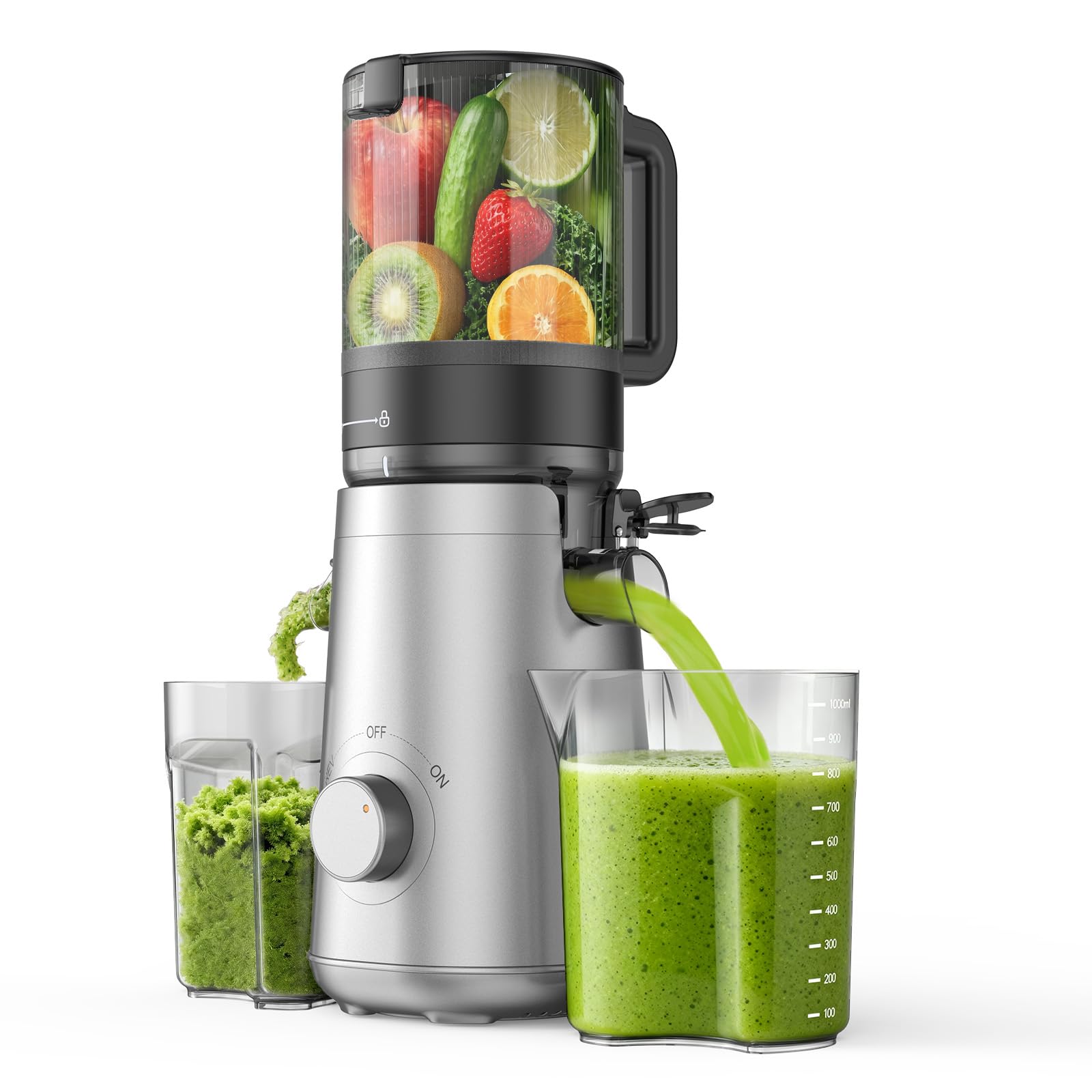
The SMALLHOO shifts the bargain paradigm by offering masticating slow-squeeze technology at a price usually reserved for noisy centrifugal models. Its 55 RPM auger generates almost no heat, producing juice that stays vibrant for up to 72 hours in the refrigerator — a real advantage if you batch-juice for the week. The 5.3-inch feed chute combined with a 60-ounce hopper enables true hands-free processing: load a batch of whole fruits and walk away while it chews through them.
The real-world juice yield is excellent, with reviewers noting remarkably dry pulp even from leafy greens and celery. The auger and screen produce a smooth, low-foam juice that tastes noticeably milder than centrifugal juice from the same produce. Users with arthritis or reduced hand strength reported difficulty with the twist-lock assembly — the hopper must be rotated into alignment with a locking symbol, which requires some grip and twisting force.
Cleaning involves three main parts and the included brush, taking roughly three minutes if done immediately. The machine is not dishwasher-safe for the auger assembly, so expect hand-washing every time. Some units emit a faint electrical or metallic smell during the first few uses, which fades after the motor brushes seat.
Why it’s great
- Slow squeeze preserves flavor and nutrients for up to three days
- Extra-wide 5.3-inch chute accepts whole vegetables
- Very quiet compared to any centrifugal model
- Dry pulp indicates high extraction efficiency
Good to know
- Assembly requires firm twisting force
- Auger parts are hand-wash only
- Motor base can warm during extended juicing sessions
3. YOYDS Cold Press Juicer, 5.5″ Wide Feed Chute
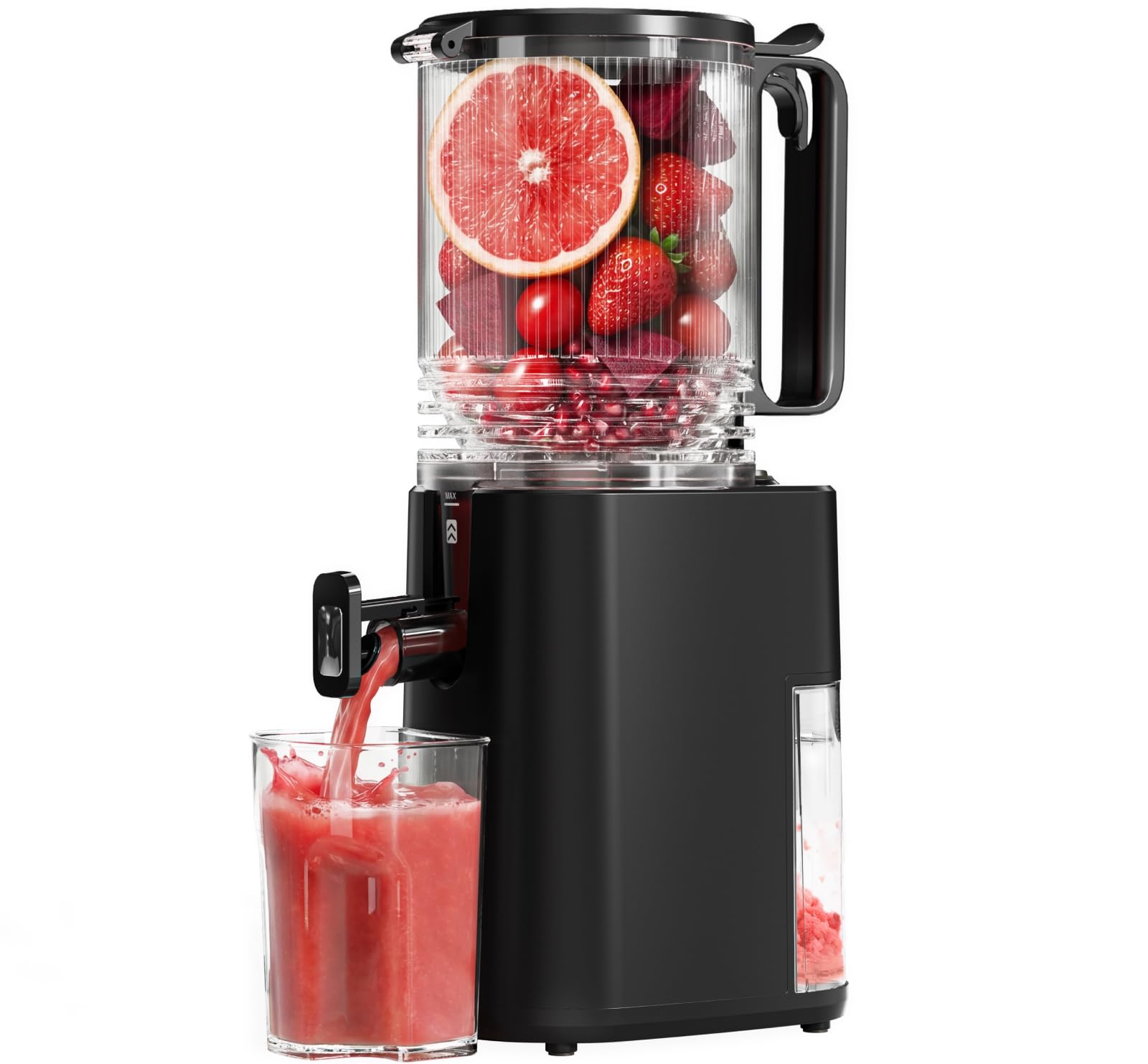
The YOYDS enters the bargain conversation with a 5.5-inch feed chute — the widest opening in this lineup — which accepts a whole bell pepper or an entire apple without a single cut. The 55 RPM cold press system operates at a whisper compared to any centrifugal unit; multiple verified buyers described it as quiet enough to use while others are still asleep in the same room. The slow masticating action produces juice that is smooth, low-foam, and higher in nutrient retention than centrifugal alternatives.
Hidden pulp container design keeps the machine visually clean on the countertop and reduces splatter during emptying. The 1-liter internal capacity requires more frequent pauses for large batches compared to the external 80-ounce bin on the Hamilton Beach centrifugal, but the trade-off is a substantially quieter and less messy operation. The included cleaning brush reaches into the filter screen easily, and most parts rinse clean under running water in under 60 seconds.
Users who juice a mix of hard roots and soft berries reported consistent performance without clogging, though very fibrous ingredients like wheatgrass require the pulp chamber to be emptied more frequently. The machine has no motor stall issues with dense carrots because the slow gear reduction provides leverage that centrifugal blades lack.
Why it’s great
- 5.5-inch chute is the widest in its price tier
- Quiet enough for early morning use in shared spaces
- Hidden pulp bin keeps the counter tidy
- Tool-free snap assembly is genuinely fast
Good to know
- Internal pulp bin fills quickly with leafy greens
- No juice container included
- Screen requires thorough brush cleaning after each use
4. NEWBULIG Cold Press Juicer Machines
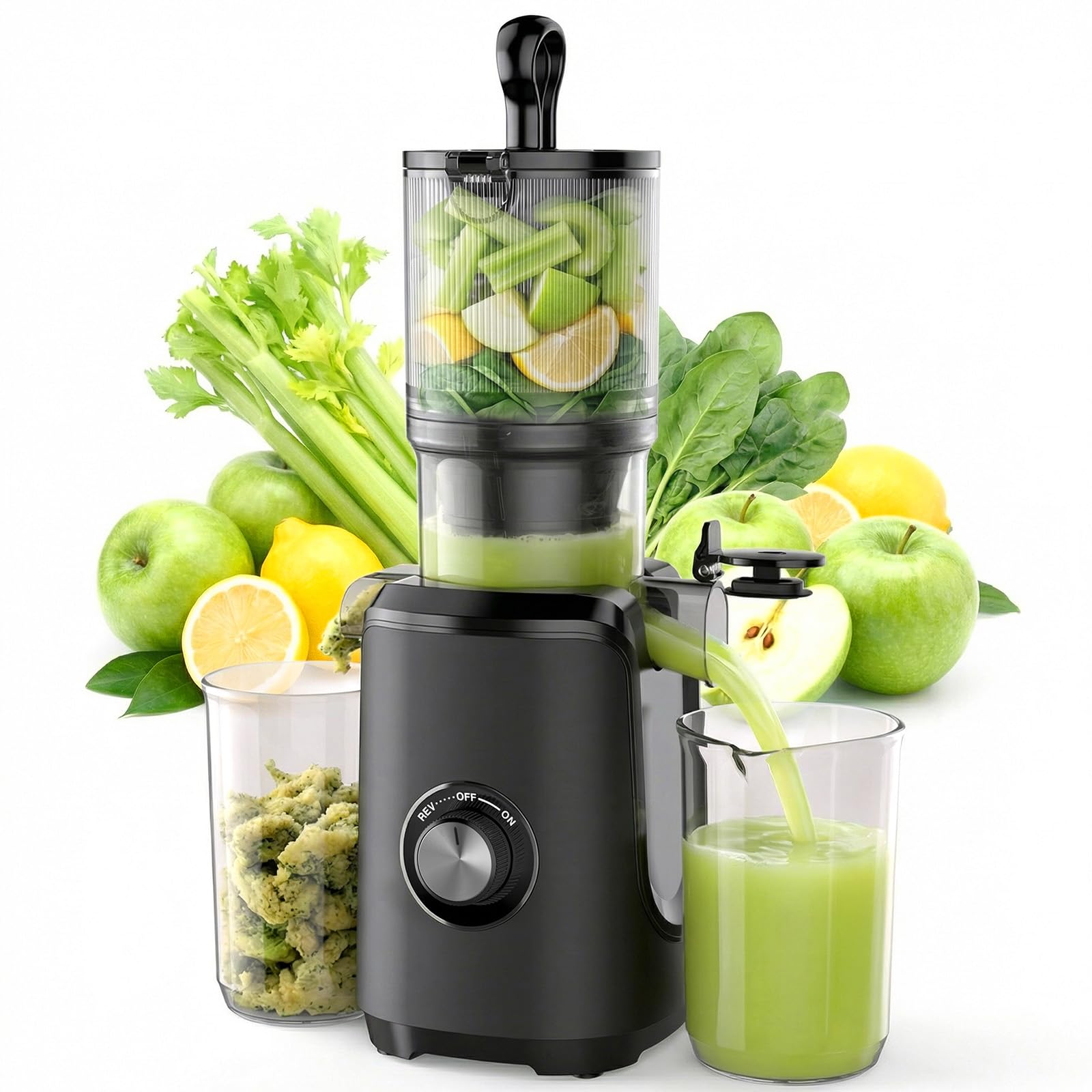
The NEWBULIG delivers masticating cold-press extraction at a price that undercuts most centrifugal alternatives. The 4.25-inch feed chute is smaller than the 5.5-inch leaders but still wide enough to accept a whole apple or a large carrot without halving. The reverse function is a practical quality-of-life feature: when fibrous greens or dense beet chunks jam the auger, pressing reverse clears the blockage in two seconds without disassembling the machine.
The safety lock arm prevents operation unless all parts are correctly aligned — a meaningful feature for households with children who might reach for the auger. The masticating system produces a smooth, low-oxidation juice with a shelf life closer to cold-pressed commercial juice than typical centrifugal output. Pulp emerges quite dry, indicating good extraction efficiency for the price point. The included pulp-cleaning brush reaches the filter screen slots effectively.
Clean-up time is roughly five to eight minutes, depending on how soon after juicing you address the auger assembly. Reviewers noted that the pulp chute can wedge slightly if not rinsed immediately, requiring a few extra seconds to clear. The ABS and polycarbonate construction feels lighter than stainless-steel-bottomed competitors, but the trade-off is a machine that is easy to lift and store.
Why it’s great
- Reverse function clears clogs without disassembly
- Safety lock prevents accidental operation
- Good juice yield with dry pulp for the price
- Compact and lightweight for easy storage
Good to know
- Pulp chute can wedge during cleaning if not rinsed immediately
- Hand-wash only — not dishwasher safe
- Some users found the physical size larger than expected
5. Qcen Juicer Machine, 500W Centrifugal Extractor

The Qcen is a direct-drive centrifugal juicer with a 500-watt motor that spins at two selectable speeds — 12,000 RPM for soft fruits and 18,000 RPM for hard vegetables. The 3-inch wide mouth feeds whole apples and large carrot segments without precutting, and the dual-speed selector lets you optimize extraction for the specific produce in your batch. The machine is notably compact, with a 13.7-inch depth that fits under most upper cabinets when stored.
Build quality uses stainless steel for the cutting disc and filter basket, with a painted plastic housing that feels sturdy enough for daily use. The overload protection system will cut power if the motor temperature exceeds safe limits, a critical feature for a 500W unit that may be used continuously for larger batches. The 3-liter pulp bin is generous for a compact machine, though users running multiple large batches will still need to empty it once mid-session.
Noise output is typical for this centrifugal class — loud enough that you will hear it through a closed kitchen door, but the actual run time per glass is short enough that it does not become irritating. The filter basket removal requires gripping the edge firmly and pulling upward; some users found this motion awkward when the basket was hot. Cleaning the mesh strainer promptly is essential — dried pulp clogs the fine holes and requires vigorous scrubbing.
Why it’s great
- Dual-speed control for different produce hardness
- Compact footprint fits small countertops
- Overload protection extends motor lifespan
- Stainless steel cutting disc and filter basket
Good to know
- Filter basket can be hot and awkward to remove
- 5-minute continuous use limit per the manual
- Some units reported motor failure after limited use
6. Juilist Juicer Machines, 3″ Wide Mouth

The Juilist is a centrifugal machine that advertises 800W max power, though its sustained motor rating is closer to 400W — the peak wattage figure refers to inrush current during startup. The 3-inch feed chute is generous for the price tier, accepting halved oranges and whole apple segments without trouble. Three speed settings let you dial in soft fruit (low), hard vegetables (high), and a pulse mode for maximum burst speed on dense produce.
The brushed stainless steel finish and plastic body look modern on the counter, and the visible window in the lid lets you watch the extraction process — a minor visual feedback detail that first-time juicers appreciate. All parts that contact juice are dishwasher-safe, which is unusual at this entry-level price point and makes post-juicing cleanup genuinely effortless. The 400ml capacity is small; you will need to empty the juice vessel for each glass.
Several reviewers noted that the machine clogs when processing large batches of high-fiber greens like celery or kale, requiring a pause to disassemble and clear the strainer. The double safety lock arms are reassuring, but they also mean the machine will refuse to run if the lid is not perfectly seated — a common frustration during initial setup. The compact base is lightweight enough to knock over if the feed chute is loaded unevenly.
Why it’s great
- Dishwasher-safe parts simplify cleanup
- Three speed settings for versatility
- Visible lid window for process monitoring
- Very compact footprint
Good to know
- Tends to clog with fibrous greens in large batches
- Peak power rating is misleading — sustained output is 400W
- Lightweight base can shift during operation
7. Hamilton Beach HealthSmart Juicer Machine, Compact 400W

The HealthSmart is Hamilton Beach’s entry-level centrifugal offering, powered by a 400W motor that is adequate for soft fruits and medium-density vegetables but will struggle with dense roots like whole beets or large sweet potatoes — precutting into smaller chunks is essential. The 2.4-inch feed chute reduces precutting by roughly half compared to narrower models, but you will still need to quarter apples and halve oranges before feeding.
The compact body measures just 6.5 inches deep and 8.4 inches wide, making it the most space-efficient option in this lineup for small apartments or crowded counters. The motor protection system adds a layer of safety that prevents overheating during extended use, though the 400W motor will naturally bog down faster than higher-wattage units when fed dense produce too quickly. The stainless steel strainer produces a consistent juice quality, though pulp is noticeably wetter than masticating alternatives.
All removable parts are top-rack dishwasher safe — the pulp bin, juice bowl, lid, and strainer rinse clean easily. The machine is simple enough that a first-time juicer can assemble and start juicing in under two minutes without reading the manual. Noise level is moderate for a centrifugal, but the compact size means less vibration damping, so the machine can walk slightly on smooth countertops during heavy loads.
Why it’s great
- Extremely compact — fits tiny counter spaces
- Dishwasher-safe parts for simple cleaning
- Motor protection system reduces burnout risk
- Low complexity — great for beginners
Good to know
- 400W motor bogs down on dense vegetables
- 2.4-inch chute still requires some precutting
- Wetter pulp means slightly lower juice yield
FAQ
How many minutes should I run a bargain centrifugal juicer continuously?
Does a masticating juicer really keep juice fresh longer than a centrifugal one?
Why does my bargain centrifugal juicer produce so much foam?
Final Thoughts: The Verdict
For most users, the bargain juicer winner is the Hamilton Beach Big Mouth 3″ Chute because its 800W motor and massive pulp bin handle daily high-volume juice without the motor bogging, and the dishwasher-safe parts keep cleaning time low. If you want nutrient-preserving cold-press quality without stepping up to a machine, grab the SMALLHOO Cold Press. And for the quietest morning routine with the widest feed chute that minimizes prep entirely, nothing beats the YOYDS Cold Press with 5.5-inch chute.

Mo Maruf
I created WellFizz to bridge the gap between vague wellness advice and actionable solutions. My mission is simple: to decode the research and give you practical tools you can actually use.
Beyond the data, I am a passionate traveler. I believe that stepping away from the screen to explore new environments is essential for mental clarity and physical vitality.