Our readers keep the lights on and my smoothie glass nicely filled. As an Amazon Associate, I earn from qualifying purchases.
Weak lungs don’t just limit your stamina—they rob you of the deep, restorative breaths that fuel focus, calm, and athletic performance. A targeted resistance trainer is the simplest way to force your diaphragm and intercostals to work harder, just like adding plates to a barbell.
I’m Mohammad Maruf — the founder and writer behind WellFizz. I’ve spent years analyzing respiratory hardware, from clinical OPEP devices to pocket-sized athletic trainers, filtering out marketing hype to find the specs that actually correlate with measurable lung function gains.
This guide compares five distinct models to help you choose the best breathing exerciser for mucus clearance, athletic endurance, or general respiratory conditioning.
How To Choose The Best Breathing Exerciser
Not all lung trainers work the same way. Your choice hinges on whether you need to clear phlegm, boost VO2 max for running, or simply strengthen your diaphragm after illness. These three factors will guide your decision.
Resistance Type: Air Valve vs. Mechanical Ball
Air-valve trainers force you to inhale or exhale through a progressively tighter opening—simple, consistent, and easy to clean. Mechanical-ball devices use a loose steel or plastic ball that rattles as you exhale, creating oscillatory vibrations that loosen mucus. If your goal is phlegm clearance, go with a flutter valve. For pure respiratory strength, an air valve is more direct.
Mode: Inspiratory vs. Expiratory vs. Dual
Many budget-friendly models only train exhalation. Premium and mid-range units offer independent IN and OUT resistance settings, which work both the diaphragm and the intercostal muscles. If you’re an athlete, dual-mode gives you a more balanced workout. If you’re recovering from congestion, a single-direction exhalation trainer may be enough.
Material and Cleanability
Silicone mouthpieces are comfortable and non-irritating, while hard PC plastic can feel rigid after extended use. For hygiene, a design that separates into three or more parts (mouthpiece, body, valve) is far easier to wash and dry than a one-piece sealed unit. Mold and bacteria buildup defeat the purpose of a breathing trainer.
Quick Comparison
On smaller screens, swipe sideways to see the full table.
| Model | Category | Best For | Key Spec | Amazon |
|---|---|---|---|---|
| Oxy Respiratory Trainer | Premium Adjustable | Full-cycle strength training | Stainless steel valve, silicone body | Amazon |
| Flutter Valve by Vopacare | OPEP Mucus Clearance | Mucus removal and bronchial hygiene | 3 steel balls for variable resistance | Amazon |
| SELENCIO Dual-Resistance | Entry Dual-Mode | Inexpensive IN/OUT training | Independent inhale/exhale knobs | Amazon |
| VIRTH Mucus Relief | OPEP Flutter Valve | Congestion and phlegm relief | Oscillatory positive expiratory pressure | Amazon |
| Nemstar Compact Trainer | Budget Air Valve | Introduction to resistance breathing | Adjustable air-only resistance | Amazon |
In‑Depth Reviews
1. Oxy Respiratory Trainer
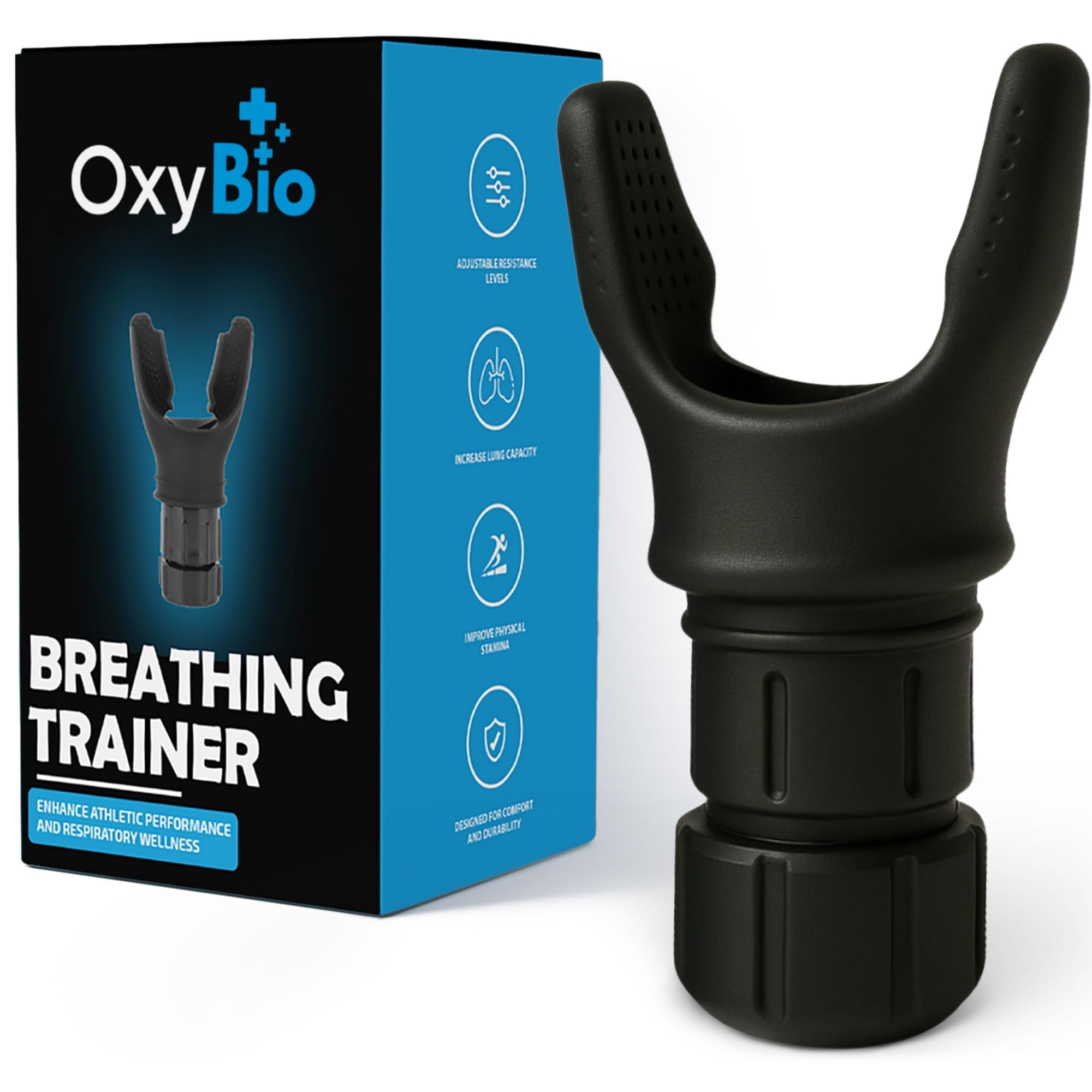
The Oxy Respiratory Trainer from OxyBio is the most complete unit in this lineup, combining a corrosion-proof stainless steel valve with a high-grade silicone body. That material choice matters—silicone stays supple against your lips even after weeks of daily use, and the metal valve will never rust or warp like cheap plastic alternatives. It offers fully adjustable resistance for both inhalation and exhalation, saving you from having to buy two separate devices.
<
Users consistently report feeling noticeably more energetic on stairs and during runs after just a few sessions. The resistance range, while not extreme, covers beginner to intermediate levels comfortably. Its compact, battery-free design fits in a gym bag pocket, and the five to ten minute daily commitment is easy to maintain.
Several reviewers noted mild drooling during intense training—a common issue with any mouth-based resistance trainer, not a design flaw. The device lacks a dedicated mucus-clearance function, so if your primary need is phlegm removal, you may want the Flutter Valve below.
Why it’s great
- Corrosion-proof stainless steel valve ensures long-term performance.
- Full-cycle (IN and OUT) training saves time versus single-direction trainers.
- Premium silicone mouthpiece provides comfortable, non-irritating contact.
Good to know
- Resistance range may not satisfy advanced users seeking very high tension.
- Not designed for oscillatory mucus clearance or OPEP therapy.
2. Flutter Valve Breathing Exercise Device by Vopacare
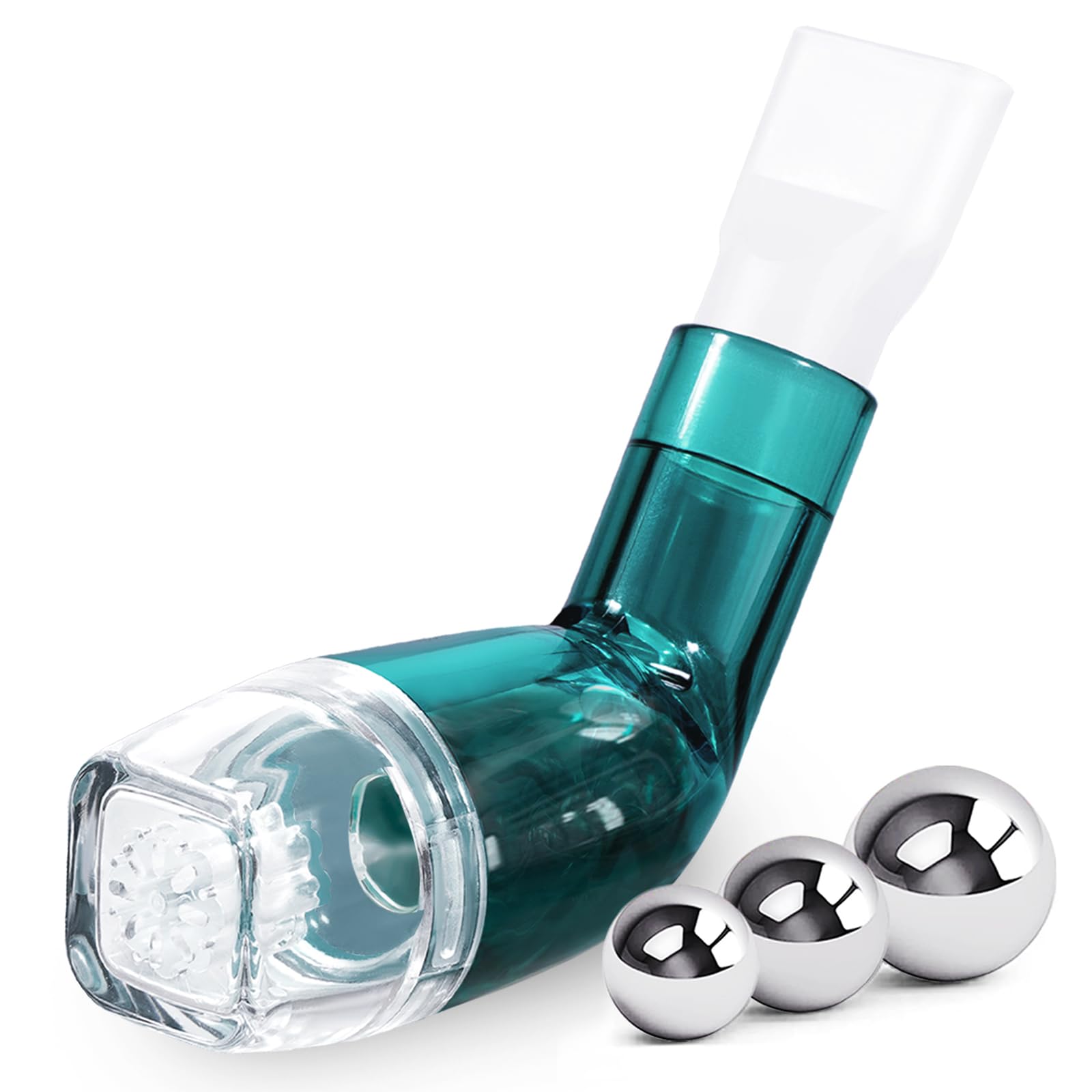
If your primary goal is loosening and expelling mucus, this flutter valve from Vopacare is the most effective tool here. Its mechanism relies on three different-sized stainless steel balls that rattle as you exhale, creating oscillatory vibrations that travel upstream into your airways. The vibration shakes mucus loose, making it much easier to cough up—a therapy called OPEP (Oscillatory Positive Expiratory Pressure) used in clinical pulmonary rehab.
The transparent medical-grade PC body lets you see the ball movement so you can gauge whether you’re generating enough oscillatory force. Users with post-nasal drip and allergy congestion report dramatic improvement within a few days, with some calling it a “miracle” for chronic mucus buildup. The device separates into three pieces for easy cleaning, and the instructions are clear enough for first-time users.
One reviewer noted that initial rhythm felt awkward and caused some chest tightness, but this resolved quickly as technique improved. The price sits at the higher end of this list, but for anyone with persistent phlegm, bronchiectasis, or COPD, it is a justified investment.
Why it’s great
- Three different steel ball sizes allow fine-tuned oscillatory resistance progression.
- Transparent medical-grade PC material enables easy visual monitoring of vibration.
- Simple three-piece construction makes thorough cleaning straightforward.
Good to know
- Requires learning the correct exhale rhythm for optimal vibration effect.
- Higher price point compared to basic air-valve trainers.
3. SELENCIO Dual-Resistance Lung Trainer
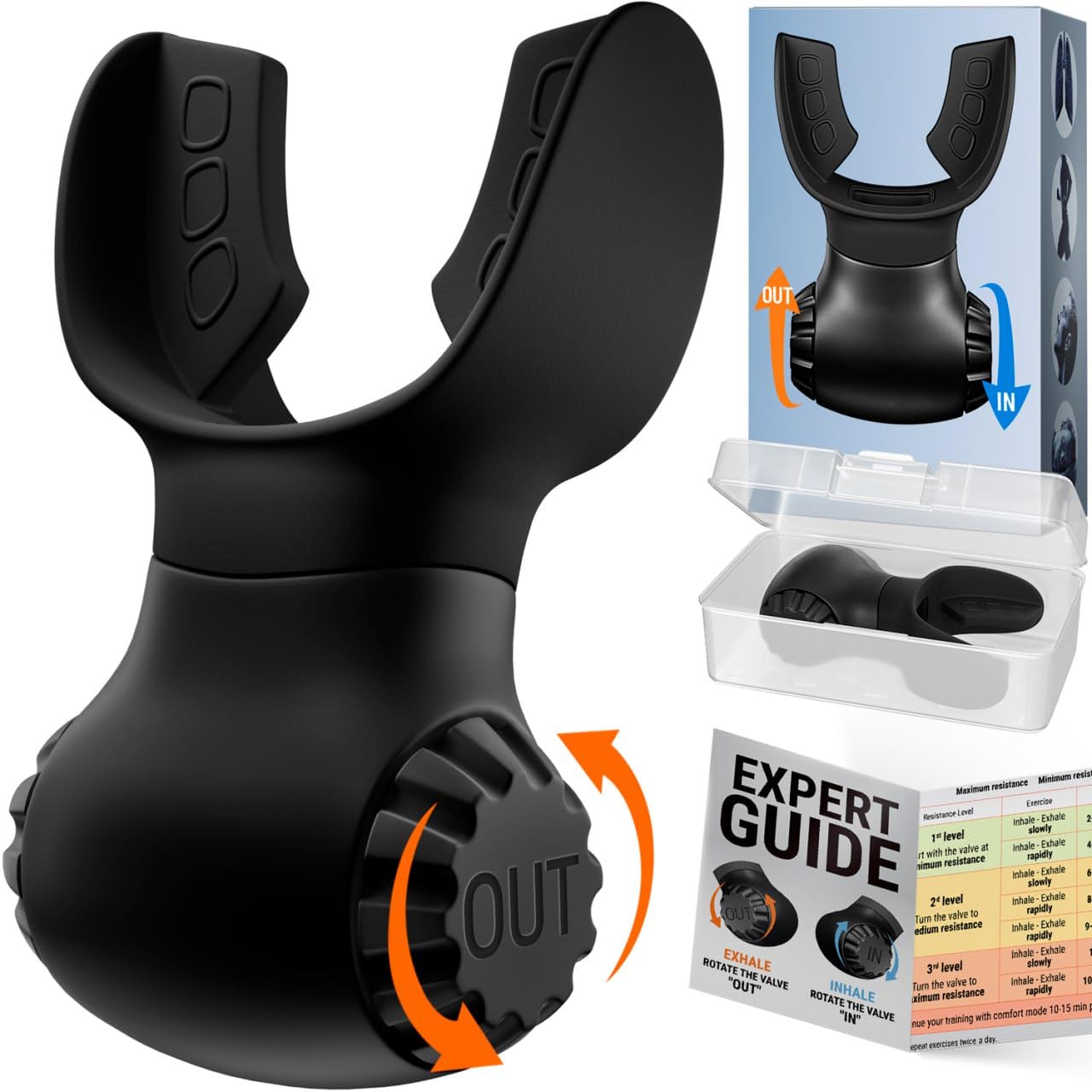
At a budget-friendly price point, the SELENCIO trainer punches well above its weight by offering independent adjustment knobs for inhalation and exhalation resistance. This dual-mode functionality is typically found in premium units, giving you a full respiratory workout from a single compact device. The mouthpiece is made of high-quality silicone, which maintains its shape and comfort over time.
The included workout guide is a standout feature for beginners who feel unsure about proper technique. Reviewers praised the step-by-step program, noting it helped them stay consistent and motivated. Several users with shortness of breath during cardio sessions reported noticeable improvement in air intake after regular use.
The build quality is respectable, though the valve mechanism lacks the tactile granularity of more expensive trainers—you won’t get a precise numerical scale, just a rotating dial. The device is lightweight and comes with a portable case, making it easy to toss into a backpack for training on the go.
Why it’s great
- Dual-mode independent IN and OUT resistance at an entry-level price point.
- Silicone mouthpiece is comfortable and durable for extended sessions.
- Detailed workout guide removes guesswork for new users.
Good to know
- Resistance adjustment lacks a precise numerical scale for tracking progress.
- Case could be slightly larger for easier daily packing.
4. VIRTH Mucus Relief Device

The VIRTH device uses oscillatory positive expiratory pressure (OPEP) therapy, similar to the Flutter Valve, but with a simpler internal design that relies on air pressure and a vibrating diaphragm rather than loose steel balls. During exhalation, the device creates a gentle back-pressure that keeps airways open while transmitting vibrations upstream to break up mucus. It is a well-established therapy for chronic bronchitis, asthma, and general congestion.
Users familiar with expensive clinical OPEP devices found VIRTH to be a capable budget alternative. One lifelong asthmatic noted that after figuring out the proper technique (extending exhale duration), the device produced significant phlegm clearance. The three-piece construction is easy to take apart and clean, and no batteries or refills are required.
The learning curve is real—several reviews mentioned that the first session felt ineffective, and finding the right tilt angle is crucial for optimal vibration. It works best for users willing to spend five to ten minutes twice daily. The price is mid-range, but it serves a specific mucus-clearance niche that basic IMT trainers cannot replicate.
Why it’s great
- Proven OPEP vibration therapy for loosening stubborn mucus and phlegm.
- No batteries, refills, or electronic components to fail.
- Easy three-part disassembly for thorough cleaning and drying.
Good to know
- Requires patience to learn the correct exhale angle and duration.
- Not effective for everyone—some users report no noticeable mucus clearance.
5. Nemstar Compact Breathing Exercise Device

The Nemstar trainer is the most affordable entry point in this guide, and it serves as a solid no-frills introduction to resistance breathing. It uses a simple adjustable air valve that creates resistance when you inhale or exhale through the device. Despite the low price, the build is sturdy, and the compact size (just one inch wide) makes it almost unnoticeable in a pocket.
Reviewers praised its ability to induce deeper, more meditative breaths, and several athletes used it effectively for Bas Rutten-style O2 training routines. It is a pure inspiratory muscle trainer (IMT)—there is no oscillatory vibration or dual-mode functionality. The valve adjustments are continuous but lack a numbered scale, so tracking exact progression is a matter of feel.
The primary drawback is that the valve has a narrow effective range; turning it slightly past the sweet spot either makes it too easy or too hard. The device also lacks an exit valve, meaning you must inhale through the mouthpiece and exhale through your nose, which some users found claustrophobic. If you want to test whether breathing exercisers work for you before spending more, this is a risk-free starting point.
Why it’s great
- Extremely compact and portable—fits easily in any pocket or bag.
- Sturdy plastic construction with a comfortable mouth feel for the price.
- Great low-cost entry point to test your interest in resistance breathing training.
Good to know
- No resistance scale makes it impossible to track precise training loads.
- Requires inhaling through mouth and exhaling through nose; no exit valve.
FAQ
Can a breathing exerciser help with asthma or COPD?
How many minutes per day should I use a lung trainer?
What is the difference between inspiratory and expiratory training?
Final Thoughts: The Verdict
For most users, the best breathing exerciser winner is the Oxy Respiratory Trainer because its stainless steel valve and silicone construction offer long-term durability with full-cycle training in one compact unit. If you need targeted mucus clearance, grab the Vopacare Flutter Valve for its effective OPEP vibration therapy. And for a budget-friendly dual-mode option that still includes a helpful workout guide, nothing beats the SELENCIO Dual-Resistance Lung Trainer.

Mo Maruf
I created WellFizz to bridge the gap between vague wellness advice and actionable solutions. My mission is simple: to decode the research and give you practical tools you can actually use.
Beyond the data, I am a passionate traveler. I believe that stepping away from the screen to explore new environments is essential for mental clarity and physical vitality.